
First Custom Hat Order: 10 Mistakes That Cost First-Time Buyers Money - Supplier Checklist
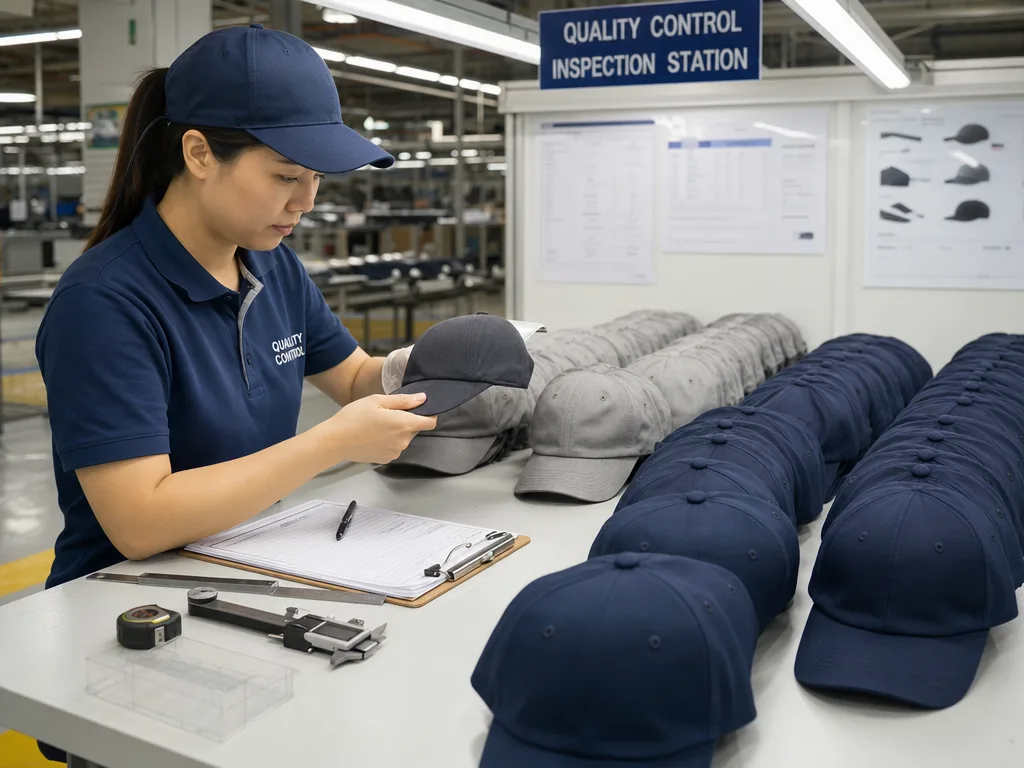
First Custom Hat Order: 10 Mistakes That Cost First-Time Buyers Money - Supplier Checklist is one of the most-asked questions we receive from international buyers, and for good reason. With dozens of factories competing for your order and an alphabet soup of technical terms in every supplier quote, even experienced importers can feel lost. This guide consolidates what we have learned producing custom hats for clients in 40+ countries.
Mistake 1: Skipping the pre-production sample (PPS)
Approving artwork instead of a pre-production sample is the fastest way for a first time hat buyer to turn a small timing shortcut into a bulk claim. A PDF can confirm logo size and placement, but it cannot show whether a 6-panel crown collapses because the front buckram is 0.4 mm instead of 0.8 mm, whether the visor arrives over-curved on a 58 cm head form, or whether embroidery starts tunneling after caps are poly-bagged and carton-stacked at 12 to 14 kg. PPS is where the factory proves the real cap profile, not just the artwork: Pantone 19-4052 TCX thread against the actual shell fabric under D65 light, a 3D puff logo holding sharp edges at 2 mm foam height, and the back seam landing cleanly under the sweatband join. If those issues are missed, they usually surface only after 500 or 5,000 units are already cut, sewn, trimmed, and packed. The 7 to 10 days saved before bulk often turns into 3 to 5 weeks of remake, airfreight replacement, or debit-note negotiation.
For standard baseball caps, truckers, and snapbacks made in China, a PPS usually costs $40 to $80 per style, and many factories credit that against orders above 300 to 500 pieces. That charge covers real inputs: fabric from the actual lot, digitizing, a Tajima or Barudan setup, cutting, sewing, labeling, and finishing on the production pattern. A proper PPS should lock down shell fabric spec such as 260 gsm brushed cotton twill or 75D polyester microfiber, closure type, visor sandwich color, eyelet alignment, top-button diameter, stitch count, and finished measurements within ±0.5 cm. For embroidery, review underlay, satin density, thread trims, foam height, and whether the logo runs cleanly at normal production speed without repeated thread breaks or registration drift. Our standard practice is to seal the approved PPS as the golden sample for inline and final inspection at AQL 2.5, because QC needs a physical benchmark with measurable tolerances, not an email thread full of subjective comments.
Mistake 2: Ordering 1,000 pieces on first run
The expensive mistake is not paying an extra $0.40 to $0.60 per cap; it is funding 700 unproven units because the 1,000-piece price looks more “serious.” A first time hat buyer might compare $3.80 FOB Ningbo at 300 pieces with $3.25 to $3.35 at 1,000 pieces for a structured 6-panel cotton twill snapback with flat front embroidery and assume the larger MOQ is smarter. It usually is not. Those extra 700 caps tie up roughly $2,275 before freight, duty, carton labeling, and domestic fulfillment. Once you add DDP shipping to the U.S., Section 301 exposure where applicable, 3PL receiving at $25 to $45 per pallet, and normal damage or claim write-offs, the real cash at risk is often $4,800 to $5,800. If the crown profile sits too high, the visor curve feels wrong at retail, or the black fabric misses approved Pantone Black 6 C beyond an acceptable Delta-E, that small unit saving disappears immediately. For a first cap order from China, 200 to 300 pieces is usually the right testing range because it buys real data on fit, sell-through, and return reasons instead of forcing markdowns at 30% to 50%.
Small first runs also keep technical corrections cheap and fast. A 3D puff logo that looks clean on a salesman sample can collapse in bulk if foam height, underlay, pull compensation, or stitch density were not tuned correctly on Tajima or Barudan heads. The same thing happens with crown depth, seam puckering on 210 to 230 gsm twill, side logo placement drifting 5 to 8 mm off spec, or snap closure tension feeling weak after transit. At 250 pieces, one digitizing revision or pattern correction is a manageable lesson; at 1,000 pieces, it becomes dead inventory. The safer sequence is simple: approve the pre-production sample against a written spec sheet, lock the bill of materials, then inspect the bulk run to AQL 2.5 with clear tolerances for embroidery placement, panel symmetry, visor shape, and color. At CrownsForge, the first PO is treated as a paid fit-and-market test, not a margin optimization exercise. Scale to 1,000-plus only after reorder data proves the SKU moves and the factory can repeat the same construction consistently.
Mistake 3: Sending only digital color references
A hex code, JPEG, or Pantone number copied from a monitor is not a production color standard for caps. On hats, color is read off dyed fabric, thread luster, pile direction, and ambient light, not backlit pixels. The same navy can shift hard between 280 gsm brushed cotton twill, 240 gsm chino twill, and 600D recycled polyester, and embroidery makes it worse because 120D rayon reflects more sheen than polyester under retail LEDs. For a first time hat buyer, the safe method is to approve one physical master: a Pantone FHI/TCX chip for textile color, plus an approved fabric swatch or sealed cap sample if the shade is brand-critical. If you release artwork with only digital references, expect another 2-3 lab dip or strike-off rounds, typically 5-10 calendar days lost and about $35-$80 per round once DHL or FedEx is included.
Most color disputes show up after bulk lands: the crown reads greener than the mockup, the underbill looks duller, or the embroidery pops too bright under D65 light. A mill can measure color with a spectrophotometer, but Delta-E is only useful when everyone is matching the same physical control. “Match the file” means nothing on a dye floor. The practical control is to lock the benchmark before sampling or bulk: Pantone TCX chip, approved fabric cutting, or sealed pre-production cap, then write tolerances by component, such as Delta-E 1.0-1.5 for main panels and up to 2.0 for secondary trims. On embroidery, thread brand and stitch construction also matter; Madeira and Gunold shades do not read identically, and fill stitching at 0.35-0.40 mm spacing on Tajima or Barudan heads can darken the visual result. When one style combines shell, visor sandwich, underbill, woven label, sweatband print, and 3D embroidery from different vendors, screenshot-based approvals are how expensive avoidable claims start.
Mistake 4: Underspecifying decoration
“Embroidered logo” is not a specification; it is a factory guess, and a first time hat buyer usually ends up paying for that guess through extra sampling, DHL charges, and a one- or two-week delay. The PO should lock five points before the sample room starts: decoration method, finished size, placement, color standard, and tolerance. For hats, that means calling out flat embroidery, 3D puff, twill applique, merrow-edge patch, woven patch, leather patch, or a mixed construction; listing the finished logo size in mm; and locating it from fixed reference points such as the center front seam, crown button, eyelet line, visor stitch line, or side seam. Color should be specified by Pantone Solid Coated or Pantone TCX, not “close to artwork,” with a realistic approval target like Delta-E under 1.5 for brand-critical shades. If the front logo must sit 12 mm above the visor seam and remain centered within plus or minus 2 mm, write that exact tolerance. On a 6-panel cap, a logo drifting even 6 to 8 mm high will make the crown look visually unbalanced at retail.
Technique also changes what is physically sewable and what it costs. A 3D puff file cannot be digitized like standard flat fill: foam requires wider satin columns, lower density, cleaner travel paths, and sequencing that will not shred foam on Tajima, Barudan, or ZSK cap frames. In practice, satin columns under 2.5 mm are unreliable for puff, and dense fills on 210D nylon or cotton twill below roughly 250 gsm will pucker unless the underlay and backing are adjusted. Most front logos land around 5,000 to 8,000 stitches; dense sports marks often run 10,000 to 12,000, and above that you start paying in sew time, thread trims, machine stoppage, and higher distortion risk. Special effects raise the reject rate fast: metallic thread runs slower, gradient tatami is harder to keep clean, and a side hit or back arch means extra hooping and more chances to miss placement at inline inspection. If a factory is controlling to AQL 2.5, these details directly affect pass rate. If you already have a DST or EMB file, send it, but never assume another factory will match the result exactly using different thread brands, backing weights, or digitizing logic.
Mistake 5: Ignoring compliance until after production
Compliance needs to be a pre-production gate, not a post-production scramble. For a first time hat buyer selling children’s caps in the U.S., anything intended for ages 12 and under immediately triggers CPSIA controls, and that changes the job flow before cutting starts. Age grading, a locked bill of materials, supplier declarations, and lab booking should be finished before bulk approval. The real checks are specific: total lead in accessible substrates, phthalates in PVC patches or plastisol prints, small-parts risk on top buttons, snaps, and rivets, plus a compliant tracking label tied to the production lot. A CPSC-accepted lab will typically charge $200 to $450 per SKU, and standard turnaround is 7 to 10 working days if the materials list stays unchanged. Change the snap supplier, patch resin, or ink system midstream, and you often need to retest because the original report no longer matches the shipped cap. That is where first-time orders go sideways: sewing finishes on schedule, but the goods cannot legally ship because the test scope and paperwork do not match the actual production lot.
EU failures usually come from trims and coatings, not the main shell fabric. REACH screening problems show up first in plastic snap closures, PU-coated twill, silicone badges, heat-transfer films, sweatband foam, and metal plating; nickel release and SVHC issues are far more common than mills admit on paper. If you ship into France, AGEC disclosure can add another documentation layer, and large marketplaces increasingly ask for traceability files before listings go live. On the factory floor, this is a BOM-control problem, not an office problem: fiber content, resin grade, ink chemistry, plating spec, and supplier declarations should be frozen at PPS stage and matched to purchase records and the approved sample. The expensive part is rarely the lab invoice. On a 300 to 500 piece order, one noncompliant trim can trigger relabeling, trim replacement, reinspection, and repeat testing, adding $600 to $1,500 fast, before counting rush air freight or a missed launch date. A disciplined first time hat buyer collects component data before cutting and checks incoming trims against the approved BOM under AQL 2.5; that saves more money than squeezing another $0.20 off the FOB price.
Mistake 6: Skipping IP/NDA protection
Send the NDA and IP clause before any supplier sees editable files. That includes AI/EPS vectors, layered PSDs, DST/EMB embroidery files, woven label artwork, packaging dielines, and licensed logo approvals. A first time hat buyer often sends the same tech pack to five or six factories on Alibaba or WeChat, then asks for protection after the files have already been forwarded through personal phones, shared drives, and sampling groups. By then, your leverage is weaker and your design is effectively circulating. The purchase terms should say, in plain language, that all customer-supplied artwork, digitized files, Pantone TCX references, strike-off revisions, molds, and packaging graphics remain buyer property even if the factory charged a sample fee or digitizing fee. If the cap uses a custom crown profile, proprietary applique layout, or branded metal trim, add a non-use clause that bars the supplier from reworking the concept for another client with only minor cosmetic changes. The real cost is usually leakage, not the legal bill. On first cap orders from China, it is common to lose $3,000 to $8,000 in sampling, product photography, launch ads, and retailer prep when pre-production samples get shown in Yiwu wholesale stalls or passed to trading companies as reference pieces. Licensed programs are riskier: unapproved league marks, collegiate logos, or branded inside taping can trigger customs detention, chargebacks, or claims from the rights holder. Your agreement should prohibit subcontracting without written approval, ban use of your logos on showroom samples, and require return or documented destruction of surplus patches, labels, hangtags, and printed cartons after shipment. Factories operating under sedex-audit-cap-supplier-guide.html">BSCI 2.0 or Sedex SMETA 4-Pillar audits will usually understand these controls immediately because asset traceability and document control are already part of their compliance routine.
Refusal to sign is a supplier-screening signal. When a factory says an NDA is “not Chinese practice,” what they usually mean is they want access to your design without a paper trail. Serious manufacturers sign a bilingual English-Chinese agreement, stamp it with the company chop, and record who received the files internally. Keep the document practical: define confidential material precisely, identify the legal entity on both sides, restrict disclosure to affiliates and subcontractors, and specify the dispute venue up front, usually CIETAC, Hong Kong arbitration, or a court selected by counsel. Vague one-page templates are easy to ignore, especially once production files have been cleaned for Tajima, Barudan, or ZSK heads and can be reused at almost zero cost. Separate ownership from manufacturing access. A factory may need to hold a sample mold, heat-transfer screen, or embroidery program for efficiency, but the contract should state that possession does not equal ownership. If you paid for custom tooling, put the amount in writing; on headwear, that can be about $150 for a simple buckle mold and $800 or more for specialized metal trim tooling. Set a clear deadline for deletion or return, typically 15 to 30 days after final shipment or PO closure, and require written confirmation for both digital files and physical components. For a first time hat buyer, that clause prevents one of the most expensive sourcing mistakes: seeing the same silhouette, panel layout, and trim package reappear six months later with someone else’s logo sewn on.
Mistake 7: Wiring 100% upfront
Paying 100% upfront kills the only leverage a first time hat buyer has once bulk production starts: the unpaid balance. In the custom cap trade, normal export terms are still 30% deposit and 70% before release of goods or against copy B/L, depending on whether the shipment moves by air or sea. That deposit is supposed to cover real exposure: shell fabric booking, sweatband stock, snap or buckle hardware, woven labels, and embroidery scheduling on Tajima, Barudan, or ZSK heads. It is not a blank check before cutting, sewing, or QC even begins. If a supplier insists on full TT for a first order from China, treat it as a risk flag unless the PO is very small—say 96 to 144 pieces—or uses genuinely non-recoverable materials such as custom-dyed fabric below mill MOQ, Pantone TCX-matched wool felt, imported YKK metal closures, or specialty 1680D ballistic nylon. Most stock cotton twill, brushed canvas, and polyester cap programs do not justify 100% prepayment.
A 50% deposit can be reasonable, but only if the factory can show exactly why. On a 200-piece order with 3D puff embroidery, molded silicone patches, inside seam-tape printing, custom woven labels, and a shell color held within Delta-E 1.5 of the approved standard, the non-recoverable portion is higher than on a basic 6-panel dad hat. Even then, tie the balance to milestones: approved pre-production sample, strike-off approval, inline production photos, then final inspection to AQL 2.5 with measurements, logo placement, carton count, assortment, barcode labels, and packing method confirmed in writing. If you are still learning supplier risk, use Alibaba Trade Assurance or another escrow-style framework for the first few POs and verify that the bank beneficiary matches the legal company name on the business license. When payment is redirected to a personal account, a Hong Kong shell, or an unrelated company, stop. Bad payment terms usually show up alongside other gaps: no signed spec sheet, no visor curve standard, no crown-height tolerance, no country-of-origin labeling plan, and no recent BSCI 2.0 or Sedex SMETA 4-Pillar audit on file.
Mistake 8: Underestimating freight + duties
FOB is where many budgets break. A $4.00 FOB cap out of Ningbo or Shanghai only covers factory price and export clearance; it does not include ocean freight, customs entry, U.S. duty, MPF at 0.3464% of customs value, HMF at 0.125% on ocean cargo, ISF filing, customs bond, broker fee, CFS handling, drayage, chassis, and final-mile delivery. For a first time hat buyer ordering 300 to 1,000 pieces, those fixed charges are the problem, not the sewing cost. A 600-piece run of basic cotton twill 6-panels packed in roughly 20 to 24 cartons might ship as 1.5 to 2.0 CBM LCL. On that volume, it is common to see $900 to $1,800 in non-factory logistics and import charges depending on season and ZIP code. That turns a $4.00 FOB cap into a real landed cost closer to $5.50 to $6.90 per unit before U.S. warehousing. If you priced the style assuming a 70% gross margin at $14.99 retail, the math can collapse quickly.
Duty is not a flat “hat tax”; it changes with HTS classification, fiber content, and construction. A brushed cotton dad cap, a polyester performance cap in 75D microfiber, and a wool-blend 5-panel can enter at different rates, and sloppy invoice descriptions make broker review slower and riskier. If the commercial invoice just says “caps,” expect questions; if it states “100% cotton woven baseball cap, 6-panel, embroidered, adjustable back strap,” classification is cleaner. Add a customs broker entry fee of $125 to $200, ISF filing around $35 to $60, a single-entry bond if you do not hold a continuous bond, plus LCL destination charges that can easily run $300 to $700. Small shipments get punished because these are mostly fixed costs. The practical fix is to cost backward from the selling price: MSRP minus channel fees, pick-pack, returns reserve, target margin, then test the style against realistic landed assumptions. At CrownsForge, we insist buyers review total CBM, carton count, gross weight, declared value, duty assumption, and final delivery ZIP before approving the PO.
Mistake 9: Not asking for a video factory tour
A dated, continuous factory walk-through exposes more truth than any PDF capability deck. For a first time hat buyer, the request should be precise: ask for a 5 to 8 minute smartphone video, shot in one take, starting at the factory entrance and ending at sealed export cartons. The camera should move through production in sequence: fabric or panel storage, cutting, embroidery, sewing, finishing, then final QC and packing. If a supplier claims 50,000 caps per month but the footage shows two single-head embroidery machines, one manual cutting table, and a handful of sewing operators, the math does not work. A credible cap factory should show real work-in-process: crown panels bundled with style tickets, visor blanks stacked by color lot, brim pressing, sweatband joining, button attaching, and active multi-head Tajima, Barudan, or ZSK machines running live orders. Edited clips, showroom-only footage, or stock B-roll usually mean you are looking at a trader, a sample room, or a subcontracted operation they do not fully control.
Make the video verifiable in real time. Ask the salesperson to say your company name, the date, and your style number on camera before walking straight onto the floor. That simple step flushes out borrowed factories and tells you whether the supplier has genuine process control or just sales-stage theater. In embroidery, look for cap frames, 3D puff foam, backing rolls, thread racks, digitizing stations, and operators checking registration, thread breaks, or jump-stitch trimming. If they cannot show that, embroidery is often outsourced, which commonly adds $0.18 to $0.45 per cap and 2 to 4 days during peak season. At QC, they should be able to show measurement points, defect segregation, in-line inspection sheets, metal detection or needle control logs, and cartons labeled to the PO. If the team really handles export production, terms like AQL 2.5, shade banding, Delta-E tolerance against Pantone TCX, and carton drop testing should not sound unfamiliar. My rule is simple: if they cannot send a dated, uncut tour within 48 hours, they stay on the backup list.
Mistake 10: Not building a relationship for repeats
Your first PO is expensive because all the non-recurring work gets front-loaded into it. On a custom cap program, that usually means embroidery digitizing at $25-$80 per logo, paper pattern tweaks for a non-standard crown height or visor curve, Pantone TCX lab dips for body fabric or twill tape, woven-label setup, strike-offs, and extra inline QC because no approved benchmark exists yet. On a 144-piece order, those fixed costs commonly add $0.70-$1.60 per cap; on a 1,200-piece repeat, the same burden often falls below $0.20. That is why a first time hat buyer should stop asking only for the lowest unit price and ask which assets carry forward: DST or EMB files, applique cutting dies, approved trim cards, woven-label setup, carton marks, and packing specs. If a supplier cannot itemize what is reusable, they usually do not run repeat production in a disciplined way. The cheapest first order is usually a controlled one with a repeat path built in. For structured baseball caps or 5-panels, 144-300 pieces across 2-3 colorways is usually healthier than 48 pieces split across six SKUs. A Tajima or Barudan embroidery line still needs hooping, thread changes, tension adjustment, first-piece approval, and final thread trimming whether you run 24 caps or 240. Material sourcing behaves the same way: 260 gsm brushed cotton twill, 600D polyester backing, custom visor sandwich colors, and branded inner taping all become slower and more expensive when volume is fragmented. Most first-order waste comes from too many styles, too many revisions, and no commitment plan, which typically cuts line efficiency and can push ex-factory timing out by 7-10 days.
Repeat business changes how a factory allocates attention, and experienced buyers use that to their advantage. Once the first bulk is approved, the production file should be frozen: logo version, stitch count, Pantone references, crown profile, closure type, sweatband spec, carton pack-out, and AQL 2.5 checkpoints. That turns the second PO into manufacturing instead of rediscovery. On stable mills and trim suppliers, holding repeat components within Delta-E 1.5 is realistic when the standard is locked and the same lot planning discipline is followed. Without that control, the second shipment is where problems show up: thread shade drift, warped PE brims, uneven crown symmetry, or sizing variance from inconsistent blocking. A first time hat buyer should treat the opening order as supplier qualification, not just a price test. Watch response time on comments, whether sample corrections are actually incorporated, how defects are dispositioned, and whether the factory can reproduce the approved sample without spec drift. Ask who keeps the master spec pack, whether embroidery runs on Tajima, Barudan, or ZSK heads, and how repeat approvals are referenced on the line. Saving $0.15 per cap on the first PO is meaningless if the second order arrives with mismatched thread, loose top buttons, or fit inconsistency that forces a rework claim or chargeback.
Frequently Asked Questions
Can I order a sample before bulk production?
Yes. We strongly recommend approving a pre-production sample before mass production. Samples are charged at 35 to 60 USD each plus express shipping, fully refundable against confirmed bulk orders over 500 pieces.
Do you support sustainability certifications?
Yes. We work with GOTS organic cotton, GRS-certified recycled polyester, OEKO-TEX Standard 100 fabrics, and are BSCI and Sedex audited. Certification documentation can be provided per order.
How long does production take?
Sampling takes 7 to 12 days. Bulk production runs 20 to 30 days depending on quantity, fabric availability and decoration complexity. Inspection and packing adds another 3 to 5 days before shipment.
What logo decoration techniques do you offer?
3D puff embroidery, flat embroidery, woven patch, leather patch, PVC patch, screen printing, sublimation, applique and laser etching, all in-house with no subcontracting.
Which shipping methods do you support?
We support FOB, CIF and DDP shipping. Air express for samples and small orders, sea LCL for 100 to 500 pieces, sea FCL for 5,000+ pieces. Door-to-door DDP available for US, EU, UK, Canada and Australia.
How does ordering baseball cap custom embroidery work?
When evaluating baseball cap custom embroidery, the key considerations are construction quality, decoration capability, MOQ flexibility and lead time. Pantone codes on a monitor look different than on dyed fabric. Always send a physical Pantone TCX chip or a printed cap sample with the target color. Without a physical reference, expect 2-3 rounds of dye lab dip adjustment before bulk. $4.00 FOB cap can land at $5.50-$7.00 after ocean, customs broker, duty, MPF/HMF, last-mile. Always estimate landed cost before committing…
How does ordering custom embroidered trucker hat work?
When evaluating custom embroidered trucker hat, the key considerations are construction quality, decoration capability, MOQ flexibility and lead time. 'Embroidered logo' on a tech-pack isn't enough. Spec: technique (3D puff vs flat), placement (x/y cm from edges), dimensions, color count + Pantone refs, stitch count if available, thread brand preference. Each ambiguity adds a revision round. First-time buyers often try to save 7-10 days by going straight to bulk after seeing a digital mock-up. Without PPS approval, every…
How does ordering custom embroidered hats new era work?
When evaluating custom embroidered hats new era, the key considerations are construction quality, decoration capability, MOQ flexibility and lead time. 'Embroidered logo' on a tech-pack isn't enough. Spec: technique (3D puff vs flat), placement (x/y cm from edges), dimensions, color count + Pantone refs, stitch count if available, thread brand preference. Each ambiguity adds a revision round. First-time buyers often try to save 7-10 days by going straight to bulk after seeing a digital mock-up. Without PPS approval, every…
How does ordering custom bucket hat embroidery work?
When evaluating custom bucket hat embroidery, the key considerations are construction quality, decoration capability, MOQ flexibility and lead time. 5-minute video walk-through of cutting, embroidery, sewing and QC areas eliminates 90% of supplier-fraud risk. Any factory that resists is a soft-fail. First-time buyers often try to save 7-10 days by going straight to bulk after seeing a digital mock-up. Without PPS approval, every bulk-production defect is your problem to live with. Sample fee ($40-$80) refundable against…
Looking for a reliable hat manufacturer in China?
CrownsForge has produced custom hats for 800+ brands across 40 countries. From 100-piece launches to 100,000-piece retail programs, we deliver on time and on spec.
Get in touchRelated guides
Wholesale Trucker Hats with Custom Logo: A Complete Bulk Sourcing Playbook
Read article →
Custom Embroidered Hats: The 2026 Sourcing & Manufacturing Playbook
Read article →
Beanies for Men: Properties, Costs and How to Spec It Right - Supplier Checklist
Read article →If you are ready to take the next step on first custom hat order: 10 mistakes that cost first-time buyers money - supplier checklist, our team can put a tailored quotation and digital mock-up in your inbox within 24 hours. Send the inquiry form on our contact page or message us directly on WhatsApp.