
Beanies for Men: Properties, Costs and How to Spec It Right - Supplier Checklist
Beanies for Men: Properties, Costs and How to Spec It Right - Supplier Checklist is one of the most-asked questions we receive from international buyers, and for good reason. With dozens of factories competing for your order and an alphabet soup of technical terms in every supplier quote, even experienced importers can feel lost. This guide consolidates what we have learned producing custom hats for clients in 40+ countries.
Corduroy Hat Men's
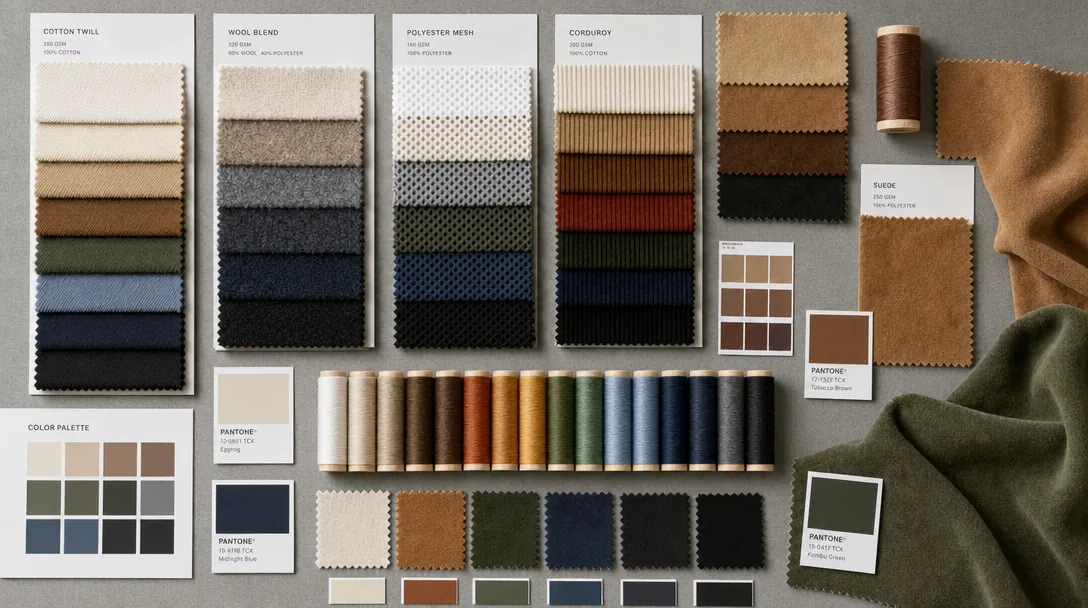
Corduroy is far less forgiving than knit, so if you sell caps alongside beanies for men, the spec needs tighter control at fabric and cutting stage than many buyers expect. Wale count is the first call, because it changes both appearance and sewability: 8-wale gives the heavier streetwear look, 11-wale is the safest commercial option, and 14-wale reads cleaner but shows seam waviness faster. For men’s caps, the fabric that runs best is usually 100% cotton or 97/3 cotton-spandex corduroy at 240-300 gsm; under about 230 gsm, the pile crushes too easily after pressing, carton loading, and ocean transit. The critical defect is not color variation but nap-direction error. If one crown panel or visor is cut against pile while the rest run with pile, the shade flips under retail lighting even when bulk fabric comes from the same dye lot. That is why the marker must show pile orientation clearly, with all crown panels, visor top, and underbill running one direction without exception. Most factories build corduroy caps on a 6-panel baseball block with fused buckram in the front panels, a 3-5 mm PE visor board, and a 180-220 gsm brushed cotton twill sweatband, but standard construction does not hide bad matching. Rib drift at the center-front seam is visible from two meters away. A usable tech pack should specify fiber content, wale count, gsm tolerance of +/-5%, shrinkage below 3% after wash, Pantone TCX target, and Delta-E under 1.5 from approved lab dip to bulk. If you add embroidery, digitizing must compensate for the channels: on Tajima or Barudan heads, lower stitch density than flat twill, use a more open underlay, and keep minimum text stroke width around 1.2-1.5 mm so details do not sink into the ribs.
MOQ and cost are usually driven by fabric availability, not sewing difficulty. In Zhejiang, stock black, navy, olive, and camel corduroy can often support 144-300 pieces per color per style, but once you ask for custom dyeing, a nonstandard wale, or a tight Pantone TCX match, the mill requirement often jumps to 500-1,000 meters. Depending on marker efficiency and visor yield, that can translate to roughly 700-900 caps before you even discuss packing ratios. A practical FOB range for a stock-color 6-panel corduroy cap with standard flat embroidery is about $2.20-$3.50; add custom interior taping, enzyme wash, metal hardware, leather strapback, or more than 5,000 stitches, and the price usually moves past $4.20. Compared with knit beanies for men, replenishment is slower because fabric lead time and shade continuity matter more than labor minutes. Inspection should target defects that product photos routinely hide: pile crush, rib mismatch between adjacent panels, seam torque, visor wave, bobbin show-through under embroidery, and crocking on dark shades. For navy and black, I would always require dry and wet rub fastness on sweat-contact zones, because rushed finishing can transfer dye onto labels, foreheads, or e-commerce packaging. AQL 2.5 is normal for final shipment, but corduroy needs stricter inline control at cutting and first-off sewing, where rib alignment and nap direction are still cheap to correct. Our standard practice is to approve both cut-panel photos and a pre-production sample before bulk starts on ZSK or Tajima lines; that catches pile orientation, center-front seam matching, and logo readability before 500 bad pieces are already packed.
Cotton Beanie Men
Cotton is the right call for beanies for men only when the brief is breathability, clean hand feel, and shoulder-season wear; it is not a cold-weather insulation play. In production, most cotton beanies are fully fashioned or panel-knitted on 12-gauge to 16-gauge flat machines using 21s/2 or 32s/2 combed cotton yarn, then closed at the crown by linking or 4-point/6-point seaming. Compared with standard 100% acrylic, 100% cotton takes Pantone TCX shades more faithfully and feels less plasticky on skin, but the tradeoff is poorer recovery at the opening and cuff. If you do not tighten stitch density or add 3% to 5% spandex, the opening will relax after fitting and retail handling. For a commercial cuffed style, I would spec finished weight at 85 to 120 grams, body height at 21 to 23 cm before wash, relaxed opening width at 20 to 22 cm, and cuff depth at 6 to 8 cm. For repeat orders, approve a lab dip first and cap bulk color tolerance at Delta-E 1.5 against the signed standard; beyond that, shade drift is obvious under 4000K to 5000K store lighting.
A usable tech pack needs more than “cotton beanie.” Lock composition as 100% cotton or 95/5 cotton-spandex with tolerance, call out knit structure such as 1x1 rib, 2x2 rib, or single jersey, define crown construction, cuff depth, label position, and decoration method, and require measurements after one wash. Cotton beanies routinely shrink 3% to 7% if steaming, compacting, or final setting is rushed, so I always want a pre-production sample measured post-wash, not straight off the machine. Decoration is where buyers get burned: direct embroidery on light cotton knits often tunnels or distorts unless the operator adjusts underlay, backing, and stitch density on Tajima, Barudan, or ZSK heads. Below roughly 100 gsm equivalent knit weight, a woven patch, merrow badge, or folded side label is usually safer than dense front embroidery. On cost, China MOQs are typically 300 to 500 pieces per color per style unless the yarn is stock-supported. A plain cuffed cotton beanie at 500 to 1,000 units usually lands around FOB Ningbo or Shanghai at $1.80 to $3.20, with woven labels adding $0.08 to $0.18 and a small front embroidery adding $0.35 to $0.90 depending on stitch count and backing. Standard bulk lead time is 25 to 35 days after lab dip, PPS, and artwork approval. Our standard practice is final inspection at AQL 2.5, checking crown symmetry, seam grin, needle lines, oil stains, yarn contamination, shade banding between lots, and size variance after pressing and packing.
Cotton Hats for Men
Most sourcing mistakes start with a bad product definition. When buyers ask for “cotton hats,” factories may quote three different builds: a cut-and-sew cotton jersey cap, a circular-knit watch cap, or a true knitted beanie. For beanies for men, the right spec usually starts with ring-spun 21s or 32s cotton yarn, knitted at 12GG or 14GG in a 1x1 or 2x2 rib, with a linked or overlocked crown depending on machine capability. Pure cotton has a cooler, drier hand than acrylic, but its elastic recovery is weaker and it will relax after laundering, especially on taller cuffs or deeper crowns. That is why many mills quietly steer buyers toward 95/5 cotton-spandex or cotton-acrylic blends even when the PO says 100% cotton. If you want consistent bulk, lock the technical points early: yarn count, gauge, stitch density, finished grams per piece, cuff height, crown depth, wash treatment, and Pantone TCX color reference. For dark shades, do not accept vague “close enough” approvals; for black, navy, or bottle green, set shade tolerance at Delta-E under 1.0 against the approved lab dip under D65 lighting, or the bulk lot will show red or green cast.
Cotton beanie cost is driven more by yarn route and knit density than by the fiber name itself. Piece-dyed cotton is usually the cheapest and fastest option, while yarn-dyed cotton gives cleaner shade continuity across lots but typically adds 5-7 days and pushes MOQ higher because the spinner must reserve the color lot. In Zhejiang, a realistic MOQ for private-label beanies for men is 144-300 pieces per color if stock yarn is available; once you request a custom yarn-dyed shade, engineered rib, or special wash, the practical starting point is usually 500-1,000 pieces per colorway. A basic single-layer cotton knit beanie at 300 pieces generally lands around USD 1.60-2.40 FOB, while a heavier 2x2 rib style with a woven label, contrast tipping, enzyme wash, or branded patch is more often USD 2.80-4.20 FOB. Compare quotes by actual grams per piece, stitch count, yarn composition, and trim count, not by silhouette photo alone. The cheapest quote often hides a looser gauge, lighter body weight, or weaker rib recovery, which is exactly where cotton programs start failing in wear tests.
Inspection should focus on what breaks after use, not what looks fine in a polybag. The recurring failure points on cotton beanies are spiraling after wash, side-seam torque on jersey cut-and-sew styles, dropped stitches, needle lines, weak cuff recovery, crown deformation, and crocking on dark shades. If the style includes embroidery or a patch, check backing weight and needle penetration closely; on a soft cotton face, high embroidery tension or a stiff backing will pucker the panel and throw the shape off-center. Our standard practice is AQL 2.5 final inspection with colorfastness to washing and rubbing, plus a wear-and-wash check on at least 3 pre-production samples before bulk approval. A competent supplier should also be able to produce sedex-audit-cap-supplier-guide.html">BSCI 2.0 or Sedex SMETA 4-Pillar audit records, azo-free dye compliance, and needle-control logs. Cotton is a solid choice when the brand wants a natural handfeel for moderate climates, but it is still a weaker thermal and shape-memory option than acrylic or wool blends when warmth retention and long-term recovery matter more.
Acrylic Yarn for Crochet Beanie
For acrylic crochet beanies, “100% acrylic” is not a workable material spec; it only names the fiber, not the yarn behavior. For beanies for men in the value and mid-tier bracket, the spec should lock yarn count, ply, bulk, twist consistency, and anti-pilling grade, because those variables decide cover, hand feel, and how quickly the hat looks cheap at retail. In Zhejiang, the common inputs for crochet styles are 28/2 Nm or 32/2 Nm high-bulk acrylic, sometimes written as 2/28 Nm depending on the spinner’s format. A finished men’s hat usually weighs 90 to 140 g, but that number means little unless you tie it to dimensions and stitch density. For a single-layer winter style with real body, set a target fabric weight around 180 to 260 gsm, finished size tolerance at plus or minus 1 cm, and stitch count per 5 cm on both wale and course equivalents used in the crochet pattern. Color control matters more with acrylic than many buyers expect. If the supplier is matching Pantone TCX shades, ask for lab dips and set Delta-E at 1.5 or tighter for core colors; for heathers, mixed melanges, and dark marl shades, I would push closer to 1.0 because barre and lot variation show up fast once hats are packed side by side. Crochet construction is also not interchangeable with circular knit. It consumes more yarn, exposes every inconsistency in bulk and twist, and varies more by operator, so your tech pack should include cuff depth, crown join method, yarn lot traceability, and wash stability after three home-laundry cycles. At CrownsForge, we lock the approved yarn lot before bulk production because even a small shift in crimp or twist changes crown shape, stretch, and visual texture.
Acrylic crochet beanies are labor-sensitive products, not machine-speed products, so quoting by composition alone is how buyers get misleading FOB numbers. MOQ is usually driven by dye lot minimums, labels, and packing components rather than the acrylic itself. For plain beanies for men with stock colors and a simple fold cuff, 300 to 500 pieces per color is realistic; once you add custom dyeing, jacquard labels, woven fold tags, pom-poms, or retail polybag-and-header packing, 800 to 1,000 pieces per color is more typical. Current Zhejiang FOB pricing for a basic acrylic crochet beanie generally lands around $1.10 to $1.90, while trimmed retail-ready programs usually sit at $1.80 to $2.80. Recycled acrylic with GRS documentation, hand-crochet sections, or blend yarns with 3% to 8% PBT or spandex for cuff recovery can push the hat above $3.00 because labor minutes rise faster than yarn cost. Inspection should target the defects acrylic hides until after packing: mixed-lot barre, uneven yarn thickness, over-softened hand from finishing, weak crown joins, fuzzing, and crocking on black, navy, or red shades. I would inspect to AQL 2.5 for visual defects, then add performance checks that actually predict returns: pilling after 2,000 to 5,000 Martindale rubs, cuff stretch-and-recovery, weight consistency by carton, and a basic wear trial to confirm the stitch is not so tight that the hat feels clammy after 20 minutes indoors. Acrylic is efficient on cost, bright on color, and easy to source, but it does not manage moisture or thermal swing like merino or a good polyester-performance blend. That tradeoff should be stated clearly in the supplier checklist, especially for men’s cold-weather retail programs where repeat orders depend on wear comfort, not just first-cost.
Cotton Beanie for Summer
A summer cotton beanie fails the moment it is engineered like a winter watch cap with lighter yarn. For beanies for men aimed at warm-weather retail, the safer build is 100% combed cotton or a cotton-rich blend using 21s to 32s yarn, knitted on 12GG to 16GG machines depending on whether you need a close skull fit or a softer slouch. In practice, the body should stay single-layer jersey or fine 1x1 rib at roughly 45 to 65 g/pc, which usually handles like a 180 to 220 gsm knit; once you push beyond that range, heat retention climbs fast and the product starts wearing like a light winter cap. If stretch recovery is an issue, plate 3% to 5% spandex into the opening or cuff only. Full-body elastane often creates torque, edge waviness, and shape distortion after laundering, especially on lightweight cotton programs. The spec sheet needs tighter control than most buyers give it. Lock finished width, crown height, cuff depth, stitch density, and wash standard before the first proto, then approve color to Pantone TCX with Delta-E held under 1.5 on repeat orders for black, navy, and olive, where lot variation shows immediately under store lighting. A workable men’s summer beanie spec is 21 to 22 cm relaxed width, 24 to 26 cm crown height, and a 5 cm self-cuff with a 1x1 rib opening that grips without creating forehead pressure. For branding, a woven damask side-seam label is usually safer than a folded label top-stitched through a light shell, because lightweight cotton can show needle marks, puckering, or panel distortion around the attachment point.
Cost only compares cleanly when suppliers are quoting the same knit density, yarn composition, and finished weight; otherwise one factory is pricing a real summer beanie and another is pricing a thin transition cap. For stock yarn, many China factories will work from 300 to 500 pcs per color, but custom-dyed cotton usually brings a surcharge unless the volume is large enough to justify a dedicated dye lot. At 1,000 pcs, realistic FOB China pricing for summer cotton beanies for men is about $1.20 to $2.40 per piece, with the spread driven by combed versus organic yarn, gauge, trim count, and packaging level. Enzyme wash, retail polybag with barcode sticker, recycled-paper hangtag, or organic cotton certification can add roughly $0.18 to $0.60 per piece. QC failures are predictable and expensive: spiraling on cut-and-sew jersey bodies, uneven crown linking, body-to-cuff shade mismatch, loose yarn tails inside the shell, and shrinkage above 5% after one home-launder test. I would hold inspection at AQL 2.5 for majors, check carton-level shade banding, and fit-test across at least three head sizes because U.S. men’s sizing exposes tight openings fast. Also watch for pilling at the fold line, visible needle lines under tension, and cuff torque after wash; those defects can look acceptable on a flat table and still fail immediately on-head. Cotton earns its place in beanies for men because it is breathable and less irritating on skin, but only when the knitting program, wash stability, and measurement tolerances are controlled from sampling onward.
Best Material for Beanie
Material choice determines whether beanies for men feel commercial or disposable after ten wears. For price-driven programs, 100% acrylic still dominates because the math works: a basic cuffed 2x2 rib beanie in 7-gauge or 9-gauge, knitted from commodity acrylic, usually lands around $1.10 to $1.90 FOB China at 500 to 1,000 pieces. The downside shows up fastest on dark shades. Low-grade black acrylic tends to show fiber fly, shade variation between dye lots, static, and crown seam grin much sooner than heather gray or marl colors. If a supplier sells “soft yarn” without giving yarn count or blend ratio, that is usually a warning sign. A more reliable upgrade is an acrylic/polyester or recycled rPET blend in 28/2 or 32/2 yarn count, which improves handfeel, moisture movement, and dimensional recovery without pushing cost into wool territory. For colder retail programs, wool blends outperform pure acrylic on warmth, resilience, and shape retention. A 30/70 or 50/50 wool-acrylic blend is the practical sweet spot: better thermal retention and spring-back, but less shrink risk and lower raw-material volatility than merino-heavy or cashmere blends. Once you move into merino-rich or cashmere content, FOB can climb to roughly $3.80 to $8.00 depending on blend ratio, gauge, and whether the body is single-layer or double-layer. Cotton works for transitional or fashion-led beanies for men, but it is a weak default for winter because insulation is lower and the body can grow after washing unless nylon or spandex is added. In factory terms, the best fiber is not the most expensive one; it is the one that matches climate, target retail, and acceptable return rate.
Do not approve a beanie from a yarn card alone. The specification should lock fiber composition by percentage, yarn count, knitting gauge, finished weight, body height, cuff height, wash method, Pantone TCX reference, and dimensional tolerances before bulk starts. For everyday cuffed beanies for men, 65 to 90 grams is a realistic finished-weight range; for denser double-layer winter styles, 90 to 120 grams is safer. Construction matters as much as fiber. Full-fashioned or linked bodies usually wear cleaner and sit flatter at the crown, while cut-and-sewn tubular knit reduces cost but often adds seam bulk and wider lot-to-lot variation. For color control, bulk production should be checked against the approved lab dip under D65 light, with a Delta-E target around 1.5 to 2.0 on solid shades. Most claim issues are small but expensive: twisted body after wash, weak rib recovery, dropped stitches near the crown, top-closure overlock opening, oil marks, and cuff-height drift beyond 1.0 cm within the same lot. If the program sits in a mid-premium channel, specify pilling performance up front instead of arguing about “quality” after shipment; ICI pilling grade 3-4 or a defined Martindale benchmark gives the factory something measurable. Final inspection should run at AQL 2.5, with special attention to head-opening stretch, crown symmetry, carton-to-carton color continuity, and logo distortion if embroidery is added after knitting. MOQ is typically 100 to 300 pieces per color on stock yarns, but custom-dyed yarn usually pushes that to 500 to 1,000 pieces per color, especially when buyers require exact Pantone matching or OEKO-TEX Standard 100 inputs.
Working with CrownsForge for beanies for men programs
Bulk consistency is the real risk in beanies for men programs; knitting capacity is rarely the bottleneck. A salesman sample can look perfect and still fail in production if the yarn, gauge, and finishing window were never frozen. The common misses are obvious on the inspection table: body height running 1.5-2.0 cm short, opening circumference 6-8% tighter, or finished weight drifting 12-18 gsm because the mill substituted yarn count or the boarding temperature changed. The fix is boring but non-negotiable: lock the yarn spec before the second sample. For a basic cuffed style, that usually means 2/28Nm or 2/30Nm acrylic, 7GG or 9GG depending on hand feel, finished weight tolerance within +/-5%, and lab dip or knit-down approval against Pantone TCX with a Delta-E target under 2.0. First proto on a standard acrylic cuff beanie is normally 5-7 working days; a PP sample after color approval takes another 7-10. MOQ should follow construction, not wishful pricing. Plain knit and jacquard beanies for men are usually stable at 300 pcs per color, but cable structures, marl yarns, recycled-content blends, and leather or molded trims tend to become commercially sane only at 500-1,000 pcs because shade-lot matching and trim wastage start to bite below that. CrownsForge typically sets measurement tolerance at +/-0.5 cm on body height and cuff depth, then checks stretch recovery after three pulls and crown-seam bulk before PP signoff. If the buyer wants recycled polyester or recycled acrylic, GRS paperwork has to be verified before yarn booking, not after the knitters are already running. That single timing mistake causes more production slips than most importers realize.
Decoration is where cap logic gets buyers into trouble. A knit cuff is not a flat 6-panel crown, so embroidery files have to be re-digitized for stretch, wale direction, and pile displacement or the cuff will tunnel and pucker. On Tajima or Barudan machines, a 6,000-8,000 stitch logo is generally the safe ceiling on a firm acrylic cuff with proper cutaway backing and controlled top-thread tension. Push that same density onto a 1x1 rib, fisherman rib, or a wool-nylon blend and you start collapsing the cuff edge and losing recovery. In those cases, jacquard-in logos, folded woven labels, chenille patches, or low-profile molded silicone usually perform better because they preserve hand feel and stop the beanie from feeling armored on the forehead. Cost should reflect the construction honestly. At 1,000 pcs, a standard 100% acrylic cuff beanie usually lands around US$1.35-US$2.10 FOB Ningbo, depending on gauge, yarn grade, and whether the cuff is plain knit or jacquard. A 5GG wool-blend rib style with custom patch, trim card, barcode label, and individual polybag is more realistically US$3.80-US$6.20 FOB, with yarn origin and wool percentage driving most of the spread. Once volume gets into the several-thousand range, process control matters more than arguing over a few cents: tech pack review, counter-costing, construction sample, PP approval, inline inspection at about 20% output, and final random inspection to AQL 2.5, with 4.0 for minor defects, before release under FOB, CIF, or DDP. For retail-facing beanies for men, BSCI 2.0 or Sedex SMETA 4-Pillar status is often mandatory, and carton drop resistance should be checked if any units are going into e-commerce fulfillment.
Frequently Asked Questions
Can I order a sample before bulk production?
Yes. We strongly recommend approving a pre-production sample before mass production. Samples are charged at 35 to 60 USD each plus express shipping, fully refundable against confirmed bulk orders over 500 pieces.
Do you support sustainability certifications?
Yes. We work with GOTS organic cotton, GRS-certified recycled polyester, OEKO-TEX Standard 100 fabrics, and are BSCI and Sedex audited. Certification documentation can be provided per order.
How long does production take?
Sampling takes 7 to 12 days. Bulk production runs 20 to 30 days depending on quantity, fabric availability and decoration complexity. Inspection and packing adds another 3 to 5 days before shipment.
What logo decoration techniques do you offer?
3D puff embroidery, flat embroidery, woven patch, leather patch, PVC patch, screen printing, sublimation, applique and laser etching, all in-house with no subcontracting.
Which shipping methods do you support?
We support FOB, CIF and DDP shipping. Air express for samples and small orders, sea LCL for 100 to 500 pieces, sea FCL for 5,000+ pieces. Door-to-door DDP available for US, EU, UK, Canada and Australia.
How do I find a reliable custom hat manufacturers usa?
When evaluating custom hat manufacturers usa, the key considerations are construction quality, decoration capability, MOQ flexibility and lead time. Cover everything buyers ask about corduroy hat men's: how it's manufactured, what specs to request from a factory, typical MOQ and pricing, common quality issues to inspect for, and how this ties back to the broader beanies for men sourcing decision. Cover everything buyers ask about cotton beanie men: how it's manufactured, what specs to request from a factory, typical MOQ…
How does ordering beanie hats custom work?
When evaluating beanie hats custom, the key considerations are construction quality, decoration capability, MOQ flexibility and lead time. Cover everything buyers ask about cotton beanie men: how it's manufactured, what specs to request from a factory, typical MOQ and pricing, common quality issues to inspect for, and how this ties back to the broader beanies for men sourcing decision. Cover everything buyers ask about cotton hats for men: how it's manufactured, what specs to request from a factory, typical…
What should buyers know about corduroy hat men's?
When evaluating corduroy hat men's, the key considerations are construction quality, decoration capability, MOQ flexibility and lead time. Cover everything buyers ask about corduroy hat men's: how it's manufactured, what specs to request from a factory, typical MOQ and pricing, common quality issues to inspect for, and how this ties back to the broader beanies for men sourcing decision. Cover everything buyers ask about cotton beanie men: how it's manufactured, what specs to request from a factory, typical MOQ…
What should buyers know about black bucket hat men?
When evaluating black bucket hat men, the key considerations are construction quality, decoration capability, MOQ flexibility and lead time. Cover everything buyers ask about corduroy hat men's: how it's manufactured, what specs to request from a factory, typical MOQ and pricing, common quality issues to inspect for, and how this ties back to the broader beanies for men sourcing decision. Cover everything buyers ask about cotton beanie men: how it's manufactured, what specs to request from a factory, typical MOQ…
Looking for a reliable hat manufacturer in China?
CrownsForge has produced custom hats for 800+ brands across 40 countries. From 100-piece launches to 100,000-piece retail programs, we deliver on time and on spec.
Get in touchRelated guides
Wholesale Trucker Hats with Custom Logo: A Complete Bulk Sourcing Playbook
Read article →
Custom Embroidered Hats: The 2026 Sourcing & Manufacturing Playbook
Read article →Cotton Beanie: Properties, Costs and How to Spec It Right - Supplier Checklist
Read article →If you are ready to take the next step on beanies for men: properties, costs and how to spec it right - supplier checklist, our team can put a tailored quotation and digital mock-up in your inbox within 24 hours. Send the inquiry form on our contact page or message us directly on WhatsApp.