
First Custom Hat Order: 10 Mistakes That Cost First-Time Buyers Money - Cost & MOQ Breakdown
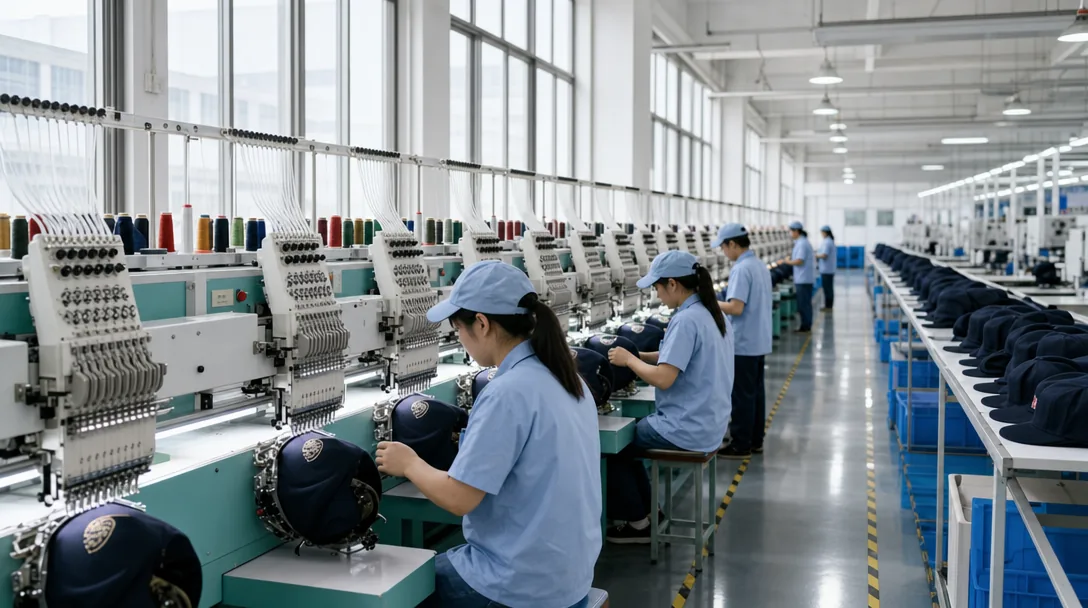
First Custom Hat Order: 10 Mistakes That Cost First-Time Buyers Money - Cost & MOQ Breakdown is one of the most-asked questions we receive from international buyers, and for good reason. With dozens of factories competing for your order and an alphabet soup of technical terms in every supplier quote, even experienced importers can feel lost. This guide consolidates what we have learned producing custom hats for clients in 40+ countries.
Mistake 1: Skipping the pre-production sample (PPS)
The fastest way a first time hat buyer loses money is approving bulk from a mockup instead of a PPS. A digital proof can confirm logo placement and panel art, but it cannot show whether the crown height is 11 cm instead of 12 cm, the PE buckram is too hard for a streetwear fit, or the visor has been pressed to a retail curve that does not match your sample photo. On the factory floor, the PPS is where construction errors become visible: center-front seam wandering 2 to 3 mm off true, eyelets sitting unevenly, sweatband join bulk, or embroidery pull on 10x10 brushed cotton twill because the digitizer used the wrong underlay, density, or stitch angle on a Tajima or Barudan run. It is also the only practical checkpoint for material approval in real light. If your body fabric is matched to Pantone TCX, a reasonable tolerance is usually Delta-E 1.5 to 2.0; above that, navy shifts purple and off-white starts reading yellow under store LEDs.
Skipping a PPS to save 7 to 10 days is false economy. A normal custom cap PPS costs about $45 to $85; once you add TPU patches, metallic thread, rope, molded metal trims, printed seam tape, or satin lining, it is common to land at $90 to $120. That is negligible against a 600-piece order at $4.20 FOB, where factory value is already $2,520 before duty and freight. If the embroidery is 8 mm too high, the closure is wrong, or the fit comes out low-profile when you sold it as mid-profile, the correction is no longer a sample edit; it becomes a rework claim, a discount, or dead stock. The PPS should also lock the details buyers forget to specify cleanly on the PO: under-visor color, inner tape copy, label direction, backstrap hardware finish, carton ratio, and polybag warning text. Those are exactly the details that trigger rejects at final inspection under AQL 2.5. Our standard practice is simple: mark revisions on the approved sample and spec sheet, then release bulk only after the hat in hand matches the hat you intend to ship.
Mistake 2: Ordering 1,000 pieces on first run
A first time hat buyer usually gets hurt by dead stock, not by a slightly higher first-run FOB. The 1,000-piece price break looks efficient in a quote sheet, but it is expensive tuition when demand is still a guess. For a structured 6-panel snapback in 100% cotton twill, a realistic range is around $4.10-$4.60 FOB Ningbo at 144 pieces, $3.35-$3.80 at 300 pieces, and $2.75-$3.20 at 1,000 pieces, depending on embroidery stitch count, visor sandwich, closure type, and whether the sweatband tape or inside taping is custom printed. On paper, saving $0.60-$0.90 per cap sounds smart. In reality, if 600 units do not move, that “saving” turns into $1,650-$1,920 of idle inventory before storage, markdowns, or write-offs. I would rather see a buyer spend an extra $180-$240 on the first PO than tie up $2,000 in hats that have not proven fit, color, or sell-through.
For an untested style, 200-300 pieces is usually the safe range. That volume is high enough to dilute fixed charges like embroidery digitizing, strike-off sampling, woven label changes, and custom buckle tooling, but still low enough to exit fast if the SKU misses. Yes, a Tajima or Barudan line runs more efficiently at 1,000 pieces, but the labor gain is not big enough to justify blind scaling on a first order. A smarter first run is one proven body—say a mid-profile 6-panel in 108x58 cotton chino at 260 gsm—with one core color, then measure actual sell-through over 45-60 days before expanding. If those 250 pieces move cleanly, the reorder can scale to 600 or 1,000 with real data: whether buyers prefer curved brim or flat visor, whether the Pantone TCX match holds within an acceptable Delta-E, and whether the front logo needs lower stitch density to prevent puckering. Ordering 250 each in four colors feels diversified; for a first time hat buyer, it usually creates four weak SKUs instead of one validated bestseller.
Mistake 3: Sending only digital color references
The expensive mistake is not picking the wrong Pantone number; it is assuming a screen proof is a color standard. A Pantone callout on an uncalibrated laptop, a WhatsApp JPEG, or an RGB value from Adobe is not reliable once that shade is dyed onto brushed cotton twill, 600D polyester, or recycled nylon taslon. In hat production, body color should be approved against a physical standard under D65 lighting, ideally with a Pantone FHI or TCX chip for textiles or, better yet, a sealed counter sample showing crown, visor, sandwich, and binding together. For a first time hat buyer, that single habit prevents most avoidable delays. Without a physical benchmark, the mill usually runs 2 to 3 lab dip rounds, and each round can add 3 to 5 working days plus roughly $25 to $60 in courier and handling. That is how a simple first custom hat order loses 10 to 14 days before cutting even starts. Color mismatch gets worse because fabric construction changes how the same shade reads in production. A navy on 320 gsm cotton canvas will usually look fuller and darker than that same dye target on 180 gsm polyester microfiber; yarn count, surface nap, finish, and dye uptake all shift the result. Piece-dyed twill, coated nylon, and brushed sueding each reflect light differently, and trims amplify the effect: white topstitching can make the crown look darker, black sandwich piping can cool the tone, and dense embroidery can visually dirty a light base color. On the factory floor, acceptable shade tolerance is normally set by program risk. Delta-E 1.0 to 1.5 is realistic for licensed or brand-sensitive work, while many commercial cap programs accept up to about 2.0. The real cost is not the lab dip fee; it is bulk fabric that gets dyed before approval and then has to be re-dyed, re-cut, or downgraded. On 300 pieces, that can burn a few hundred dollars; on 1,000-plus units, it can wreck MOQ pricing fast.
Mistake 4: Underspecifying decoration
The fastest way a first time hat buyer burns money is writing “embroidered logo” in the tech pack and leaving the sample room to guess the rest. Decoration has to be engineered, not interpreted. Call out the method clearly: flat embroidery, 3D puff, felt appliqué with satin stitch, chain stitch, or a mixed execution. Each option changes the digitizing logic, underlay, foam spec, stitch density, and machine time on Tajima, Barudan, or ZSK heads. A 3D puff design that holds well on a structured 6-panel acrylic/wool snapback with hard buckram can fail on an unstructured brushed cotton cap because the crown lacks enough support for clean foam lift. If logo size, placement, stitch type, and target look are vague, the factory defaults to house standards, which is where preventable resamples start. In practice, a revised embroidery tape usually costs $15 to $40 per version and adds 3 to 5 calendar days. On a run below 300 pcs, that delay often costs more than the digitizing fee because it pushes approvals, booking, and vessel cutoff.
Useful decoration specs are measurable. “Front center” is not a spec; “front logo 58 mm wide, artwork baseline 12 mm above visor seam, centered on CF seam” is. For side embroidery, define left-wear or right-wear, distance from seam, maximum height below eyelet, and no-stitch zones near the sweatband wrap. Color needs the same discipline: give Pantone TCX for fabric-matched tones or Pantone Solid Coated if thread conversion is already approved, then state the approval condition, such as visual match under D65 light with Delta-E tolerance agreed before bulk. Madeira rayon and Gunold polyester will not match an RGB mockup exactly, and vague notes like “cream” or “vintage red” are how sew-outs get rejected. Stitch count also affects cost: a clean flat logo may run 6,000 to 8,000 stitches, while a dense puff logo with border detail can hit 10,000 to 14,000 stitches and add roughly $0.10 to $0.35 per cap depending on volume. If lines drop below about 1.0 mm in flat embroidery or 1.5 mm in puff, detail starts to break, especially on washed twill, corduroy, or 600D polyester. Specify thread type up front too—rayon for sheen, polyester for wash and UV resistance—because decoration failures are usually specification failures, not factory mistakes.
Mistake 5: Ignoring compliance until after production
If you are a first time hat buyer selling to kids 12 and under in the U.S., compliance is not a paperwork detail you can push to the end; it changes trims, inks, labels, and sometimes the whole bill of materials. CPSIA testing is typically required at SKU level, so a youth snapback in black/camo with a metal eyelet and silicone patch is not the same compliance file as the same cap in pink twill with a PVC badge. In real factory terms, you are usually looking at $200 to $400 per SKU for third-party testing, plus 7 to 10 working days if the lab queue is normal. If the cap uses screened underbrim prints, heat-transfer labels, metallic coatings, or decorative hardware, the lab may ask for component breakdowns and separate substrate checks for lead and phthalates. That is one of the most expensive custom hat ordering mistakes because the cap may already be sewn, packed, and ready to book when you learn a children’s product certificate cannot be issued off assumptions.
EU rules create a different trap. REACH SVHC compliance is not automatically covered just because your fabric mill says the twill is "eco" or your sweatband supplier has a generic declaration on file. What matters is whether the actual materials in your finished cap, including inks, PU patches, rubber labels, adhesive backers, and plating on buckles, stay within the current restricted substance thresholds. France adds another layer with AGEC traceability, which pushes you to document material origin and waste-stream information before retail launch. On a first cap order from China, buyers often focus on embroidery strike-offs and miss the need to collect declarations from every component vendor before cutting starts. Our standard practice is to lock compliance documents during pre-production, not after bulk sewing, because upstream paperwork is far cheaper than downstream rework.
The money loss shows up fast when you discover this after production. If a lab fails a youth style because the PVC patch chemistry is non-compliant or the inner label ink lacks supporting documentation, you are not fixing a PDF; you are opening cartons, re-making components, re-sewing panels, and sending fresh samples back for another 7 to 10 day test cycle right when your retail launch date is locked. For small runs, that can erase margin entirely: a 300-piece kids SKU with a $3.80 FOB cap cost can absorb another $250 test, $180 rework labor, $60 to $120 replacement trims, and rush courier fees before you even touch air freight. Among new hat brand mistakes and common cap import errors, this one hurts most because the hats look finished, yet they are still commercially unusable. If you are planning a licensed silhouette or even a new era cap custom name style, build compliance into tech packs, material approvals, and purchase timing from day one.
Mistake 6: Skipping IP/NDA protection
Do not send editable artwork until the factory signs an enforceable NDA or, better, a China-specific NNN agreement covering non-disclosure, non-use, and non-circumvention. For a first time hat buyer, that is not legal theater; it is cheaper than rebuilding a compromised launch. The costly mistake is blasting AI vectors, layered PDFs, DST references, Pantone TCX callouts, and private-label packaging files to five factories just to compare quotes. Once those files circulate on sales reps’ WeChat accounts and shared sample-room computers, control is gone. I have seen near-identical caps reappear in wholesale markets 45 to 90 days later, usually when the original design had a recognizable underbrim print, custom woven clamp label, or character graphic that looked “license-adjacent.” A serious supplier will usually sign before receiving production files; if they stall, ask to switch the contracting entity, or push back on remedy language entirely, assume their document control on the factory floor is just as loose.
The protectable part is rarely the base cap. Nobody owns a standard 210 gsm cotton twill crown, 1680D buckram, a 3 mm sandwich visor, or routine 3D puff embroidery run on Tajima, Barudan, or ZSK heads. What gets copied is the exact combination: logo lockup, stitch order, mm-accurate placement, branded seam tape, satin label text, hangtag layout, and retail packaging dielines. Release those specs in stages: silhouette and fabric first, decoration map second, final vectors last. Watermark presentation sheets, flatten approval PDFs, and keep editable files off the quote round entirely. Also verify that the legal entity on the signed agreement matches the proforma invoice, company chop, and beneficiary bank account. If the NDA is with one company and the sample fee goes to another, you have almost no practical leverage. Cleaning up copied branding, replacing labels and cartons, and reworking launch assets can easily cost $1,500 to $8,000 before bulk production starts.
Mistake 7: Wiring 100% upfront
Paying 100% upfront is the fastest way a first time hat buyer loses leverage after sample approval. On a normal China cap order, the workable structure is 30% deposit and 70% balance after final inspection—typically against copy B/L for FOB, or before handover to the forwarder under DDP. That deposit is enough to cover actual factory exposure: outer fabric, buckram, sweatband tape, visor board, snap or metal closure, woven labels, polybags, and export cartons. On a basic 300 to 1,000 piece order in stock cotton twill, polyester, or acrylic/wool blend, a demand for full prepayment is not “policy”; it is a credit-risk signal. A legitimate supplier should be comfortable backing its terms with a Chinese business license, bank account matching the proforma invoice, recent export records, and an inspection or claims clause tied to approved specs, color standards, and packing details.
Higher upfront percentages only make sense when the factory is buying non-recoverable inputs or opening tooling specifically for your order. Examples are custom-dyed fabric matched to a Pantone TCX target with Delta-E tolerance, wool melton, washed canvas, molded logo buckles, branded inner tape, or retail packaging where MOQ starts at 1,000 sets. In those cases, 40% to 50% upfront can be reasonable, especially if trim molds cost $180 to $500 or special fabric lots are booked by the roll. Even then, lock the balance to proof of completion: pre-production sample approval, finished carton count, and ideally a third-party final inspection at AQL 2.5. Ask for the real cost drivers—fabric gsm, embroidery stitch count, appliqué or flat embroidery, closure type, label package, and Incoterm such as FOB Ningbo or DDP U.S. A first time hat buyer is far better protected by staged payment terms than by trying to chase defects after the wire has cleared.
Mistake 8: Underestimating freight + duties
The easiest way a first time hat buyer burns margin is pricing off FOB instead of landed cost. A cap quoted at $4.00 FOB Ningbo is almost never a $4.00 cap at a U.S. warehouse. On a 1,000-piece order, ocean freight typically adds $0.35 to $0.80 per cap depending on carton cube, lane, and season, and high-profile structured shapes land at the top end because they ship more air than product. Then stack on customs brokerage at $150 to $250 per entry, duty by HTS classification and fiber content, MPF at 0.3464% of entered value, HMF at 0.125% for ocean shipments, plus drayage, chassis, CFS fees, and final-mile delivery. In real numbers, that $4.00 FOB hat often lands at $5.50 to $7.00 each. I have seen buyers set wholesale pricing off the factory quote, only to discover after vessel arrival that port and delivery charges wiped out the margin. Air freight gets ugly even faster. A style that works at $5.80 landed by sea can jump above $8.50 by air once chargeable weight, fuel surcharge, terminal handling, and destination delivery are added. Carton efficiency matters more than most new importers expect: a high-profile 59FIFTY-style silhouette packs far worse than an unstructured dad cap, so freight per unit rises even when sewing cost stays flat. Before approving samples, build a landed-cost sheet with FOB unit price, carton count, carton size, CBM, mode of transport, duty estimate, MPF, HMF, customs clearance, warehouse receiving, and domestic freight to the final ZIP code. Negotiate the last $0.20 in sewing price after that, not before.
Duty errors usually start upstream in the tech pack and invoice, not at the port. Cotton twill at 260 gsm, polyester performance fabric, wool blends, and mesh-back truckers do not clear under the same assumptions, because CBP classifies on actual construction and fiber content, not the sales description. If the crown is 100% cotton but the mesh back, undervisor, or sweatband uses polyester or another blend, your broker needs a clean component breakdown and an HTS-facing description on the commercial invoice and packing list. Vague paperwork leads to holds, value queries, exams, post-entry corrections, and sometimes re-billing months later. Our standard practice is to lock fiber content, carton dimensions, unit count, and gross/net carton weight before deposit because freight mistakes usually begin during development. Keep a reserve for compliance and damage control. A third-party AQL 2.5 inspection on a 1,200-piece cap order in China usually runs $280 to $450, which is cheap insurance against crushed crowns, mixed size stickers, wrong care labels, or missing country-of-origin marks. The same caution applies to DDP terms: they sound simple, but a first time hat buyer still needs to confirm whether the quote truly includes duty, customs clearance, appointment delivery, residential surcharge, and any remote-area fee. The disciplined approach is simple: calculate true landed cost first, then set wholesale and retail pricing from that number. Doing it backward is how a decent custom hat program turns into a cash-flow problem.
Mistake 9: Not asking for a video factory tour
A live factory video tour is the fastest due-diligence check a first time hat buyer can run before sending a deposit. Ten minutes is usually enough to tell whether you are dealing with a real cap factory or a trading company recycling showroom photos. Ask for a continuous walk-through, not edited clips: start at fabric storage with roll tags showing composition, width, and weight—say 100% cotton twill 270 gsm, brushed chino 245 gsm, or recycled polyester 150D—then move through cutting, embroidery, sewing, finishing, metal detection if they use it, inline QC, and export packing. If the supplier claims in-house production, you should see semi-finished components at different stages: crown panels bundled after cutting, visors with inserted PE board, sweatbands waiting for attachment, back straps, and carton markings for active POs. When the camera keeps pausing or they avoid the workshop floor, the usual issue is not bad Wi-Fi. It is subcontracting, borrowed capacity, or weak control of lead time once your 30% deposit is booked.
The details on camera matter more than the tour itself. On embroidery, ask them to zoom in on Tajima, Barudan, or ZSK heads running actual front panels, then show thread racks, bobbins, backing types, and the underside of the stitch-out so you can spot poor digitizing, loose trims, or excessive density that will pucker a 6-panel front. On sewing, look for visor joining, sweatband setting, seam taping, eyelet stitching, and crown shaping; on QC, ask what tolerances they work to. A competent supervisor should answer with numbers: logo placement within 2-3 mm, peak length tolerance around 3 mm, color checked against Pantone TCX or TPX standards, shade variance controlled to an agreed Delta-E, and final inspection to AQL 2.5. Skipping this step does not save money for a first time hat buyer; it usually turns into embroidery pull, weak buckram, cheap hook-and-loop, remakes, and last-minute DHL or airfreight charges when a late shipment has to be rescued. sedex-audit-cap-supplier-guide.html">BSCI 2.0 and Sedex SMETA 4-Pillar reports are useful, but they do not prove your hats are being made on the line shown in the brochure.
Mistake 10: Not building a relationship for repeats
Your first PO is almost always your highest unit cost, and a first time hat buyer gets in trouble when they negotiate it like a mature repeat program. A factory cannot price 144 custom caps the same way it prices a 1,200-piece reorder because the opener still carries one-time setup: embroidery digitizing, paper pattern confirmation, Pantone TCX or TPX color approval, trim sourcing, strike-off review, carton mark setup, and extra inline QC. On a standard 6-panel brushed cotton twill cap with flat embroidery, 144 pieces usually lands around $4.80 to $6.20 FOB Ningbo; the same spec on a clean 1,200-piece repeat is more like $3.60 to $4.40 once the Tajima or Barudan file, visor curve, thread map, and packing ratio are already locked. If the first run also includes custom inner taping, woven label placement, or a non-stock metal buckle, expect another $0.15 to $0.40 per cap. Treat the first order as a paid qualification run, not the price benchmark for the next three years.
The smart move is to use PO1 to lock the production file, then use PO2 to extract the savings. For cut-and-sew baseball caps, 144 to 300 pieces per colorway is enough to validate fit, embroidery pull, sweatband hand feel, and finishing without overcommitting cash; for stock-body programs, 48 to 72 pieces can be enough. Feedback needs to be factory-grade: crown height in millimeters, buckram stiffness, sweatband gsm, stitch density, seam puckering, and whether the logo edge is clean at 3 to 4 feet. Buyers who send precise comments instead of “shape looks off” usually get better repeat pricing because the supplier can reuse trims, hold carton dimensions, reduce sampling hours, and schedule production with less risk. In practice, splitting three small runs across three factories to save $0.20 to $0.35 per cap usually costs more later in remakes, mixed fit blocks, and delayed launches. Repeat programs also tend to hold tighter shade control—often Delta-E 1.5 to 2.0 against approved fabric standards—and cleaner consistency on closure sourcing, embroidery backing, and AQL 2.5 inspection points.
Frequently Asked Questions
How long does production take?
Sampling takes 7 to 12 days. Bulk production runs 20 to 30 days depending on quantity, fabric availability and decoration complexity. Inspection and packing adds another 3 to 5 days before shipment.
What file format should I send for my logo?
Vector files (AI, EPS, PDF) are ideal. High-resolution PNG or JPG at 300 dpi on transparent background works as a fallback. Provide Pantone color references for accurate reproduction.
Can I order a sample before bulk production?
Yes. We strongly recommend approving a pre-production sample before mass production. Samples are charged at 35 to 60 USD each plus express shipping, fully refundable against confirmed bulk orders over 500 pieces.
What is the minimum order quantity (MOQ) for custom hats?
Our standard MOQ is 100 pieces per design and color, with sampling available from 1 piece. For complex multi-color logos or premium fabric upgrades, the MOQ can be lowered with a small per-piece surcharge.
Which shipping methods do you support?
We support FOB, CIF and DDP shipping. Air express for samples and small orders, sea LCL for 100 to 500 pieces, sea FCL for 5,000+ pieces. Door-to-door DDP available for US, EU, UK, Canada and Australia.
How does ordering baseball cap custom embroidery work?
When evaluating baseball cap custom embroidery, the key considerations are construction quality, decoration capability, MOQ flexibility and lead time. Pantone codes on a monitor look different than on dyed fabric. Always send a physical Pantone TCX chip or a printed cap sample with the target color. Without a physical reference, expect 2-3 rounds of dye lab dip adjustment before bulk. $4.00 FOB cap can land at $5.50-$7.00 after ocean, customs broker, duty, MPF/HMF, last-mile. Always estimate landed cost before committing…
How does ordering custom embroidered trucker hat work?
When evaluating custom embroidered trucker hat, the key considerations are construction quality, decoration capability, MOQ flexibility and lead time. 'Embroidered logo' on a tech-pack isn't enough. Spec: technique (3D puff vs flat), placement (x/y cm from edges), dimensions, color count + Pantone refs, stitch count if available, thread brand preference. Each ambiguity adds a revision round. First-time buyers often try to save 7-10 days by going straight to bulk after seeing a digital mock-up. Without PPS approval, every…
How does ordering custom embroidered hats new era work?
When evaluating custom embroidered hats new era, the key considerations are construction quality, decoration capability, MOQ flexibility and lead time. 'Embroidered logo' on a tech-pack isn't enough. Spec: technique (3D puff vs flat), placement (x/y cm from edges), dimensions, color count + Pantone refs, stitch count if available, thread brand preference. Each ambiguity adds a revision round. First-time buyers often try to save 7-10 days by going straight to bulk after seeing a digital mock-up. Without PPS approval, every…
How does ordering custom bucket hat embroidery work?
When evaluating custom bucket hat embroidery, the key considerations are construction quality, decoration capability, MOQ flexibility and lead time. 5-minute video walk-through of cutting, embroidery, sewing and QC areas eliminates 90% of supplier-fraud risk. Any factory that resists is a soft-fail. First-time buyers often try to save 7-10 days by going straight to bulk after seeing a digital mock-up. Without PPS approval, every bulk-production defect is your problem to live with. Sample fee ($40-$80) refundable against…
Need a low-MOQ test order?
We help emerging brands launch with as few as 100 pieces. Premium fabric, in-house embroidery, retail-ready packaging.
Start a small orderRelated guides
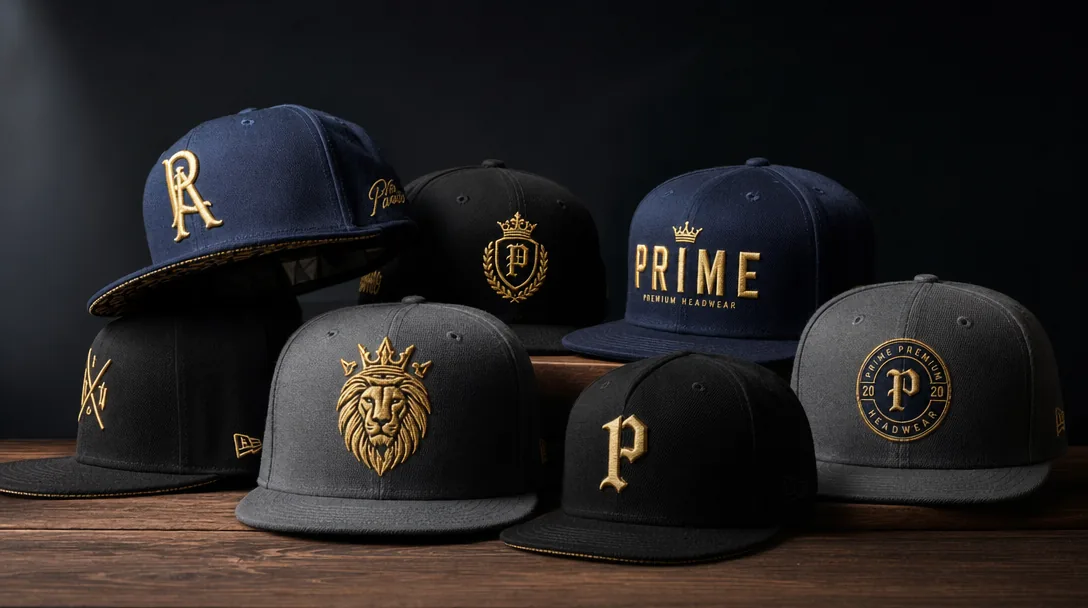
Custom Waterproof Cap Manufacturer: A 2026 B2B Sourcing Guide
Read article →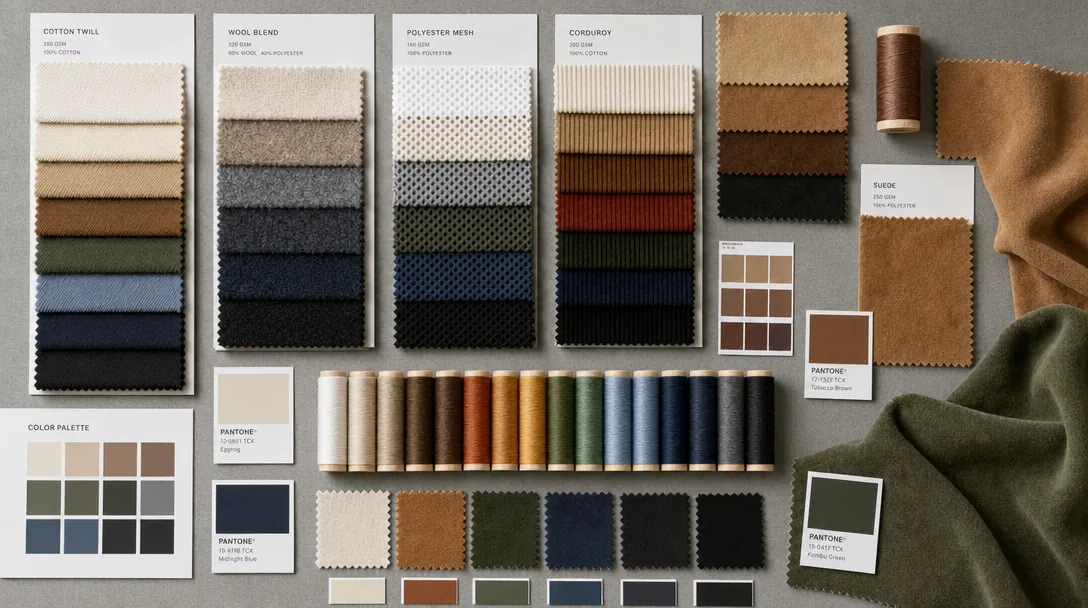
Beanies for Men: Properties, Costs and How to Spec It Right - Cost & MOQ Breakdown
Read article →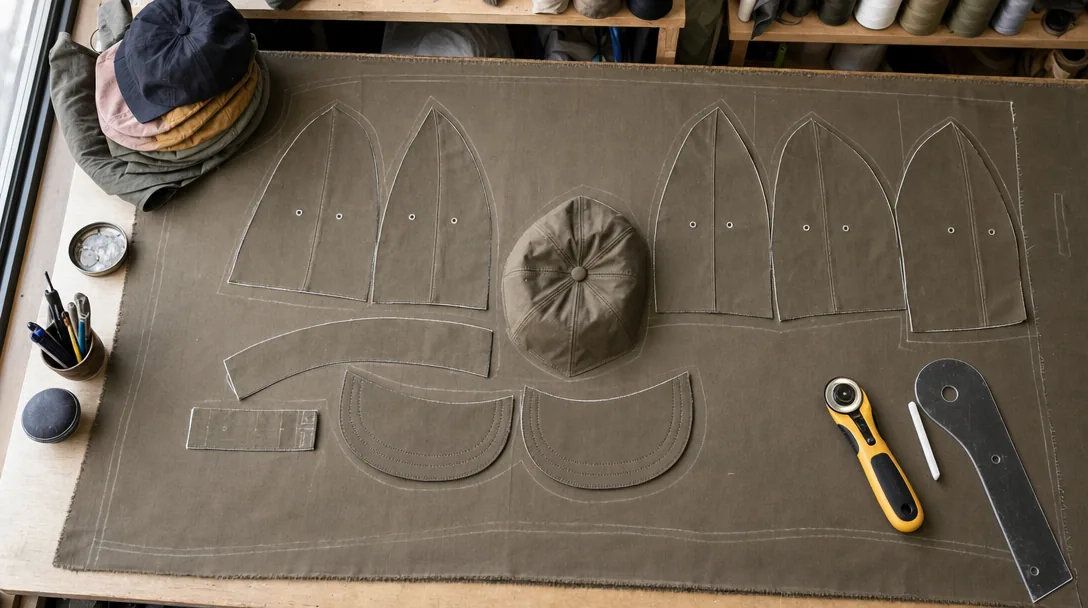
Cap Defect Catalog: 32 Production Issues to Inspect For - Cost & MOQ Breakdown
Read article →If you are ready to take the next step on first custom hat order: 10 mistakes that cost first-time buyers money - cost & moq breakdown, our team can put a tailored quotation and digital mock-up in your inbox within 24 hours. Send the inquiry form on our contact page or message us directly on WhatsApp.