
First Custom Hat Order: 10 Mistakes That Cost First-Time Buyers Money - 2026 Buyer's Guide
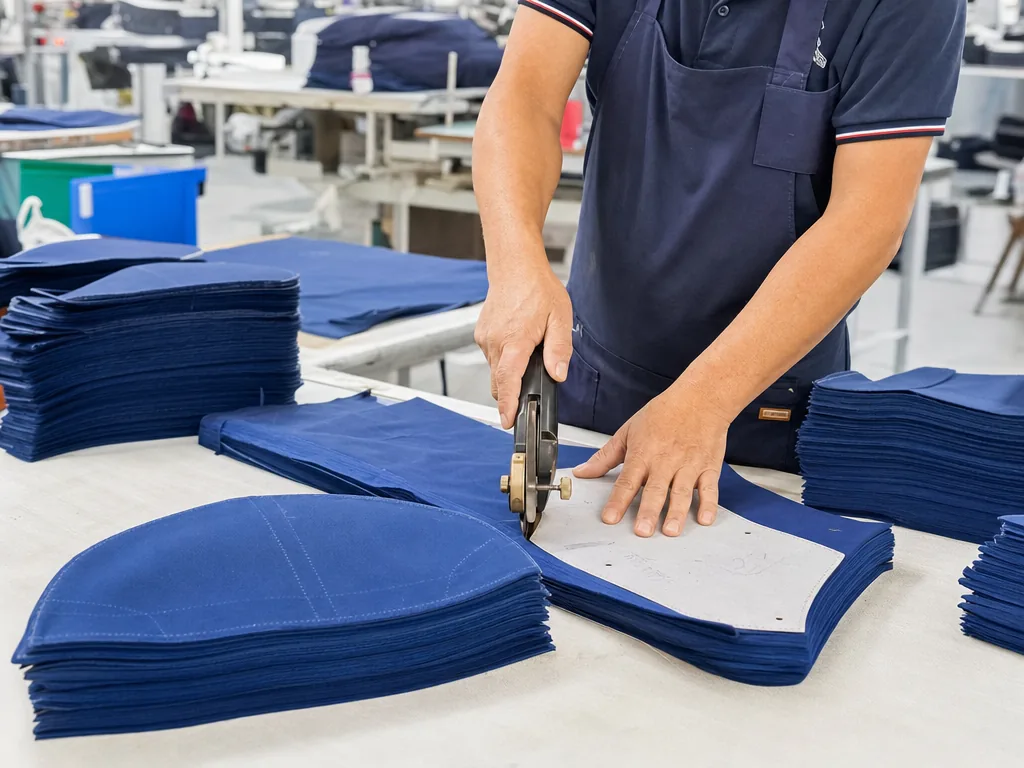
Every week, our sales team answers detailed questions about first custom hat order: 10 mistakes that cost first-time buyers money - 2026 buyer's guide. We wrote this guide so that wholesalers, streetwear brands, corporate buyers and promotional resellers can compare options with full information, and avoid the traps that show up only after production has started.
Mistake 1: Skipping the pre-production sample (PPS)
The quickest way a first time hat buyer burns cash is approving bulk from a JPEG or 3D mockup instead of a physical pre-production sample. A render can confirm logo placement, but it will not tell you if the 6-panel crown is 8-10 mm too tall, the PE visor is over-curved, the buckram is too stiff for a soft streetwear shape, or the front embroidery is sinking into 10x10 brushed cotton twill because the underlay, stitch density, and backing were digitized wrong. On screen, a logo can look centered and still sew 3-4 mm off because the center-front seam splits the artwork, eyelet spacing changes the visual balance, and fused front panels relax after blocking. Once bulk cutting starts, most factories will follow the signed approval exactly, even if the shape is commercially wrong. A PPS usually costs only $40-$80 plus DHL or FedEx, and many suppliers credit that back on orders above 300-500 pieces. That is trivial next to remaking 1,000 caps at $2.80-$6.50 each, plus dead freight, rework labor, and a missed launch window.
A proper PPS should freeze construction, materials, and tolerances before production; it is not just a logo check. Review the actual shell fabric weight and handfeel, sweatband absorbency, closure plating, visor profile, top button match, seam cleanliness, and internal taping in daylight or D65 lighting, not under harsh 6500K factory LEDs alone. If color accuracy matters, call out Pantone TCX for dyed fabric and Pantone Coated for printed trims, then set realistic tolerances: Delta-E below 2.0 for shell fabric and below 3.0 for embroidery thread, since rayon sheen always shifts perception slightly. For embroidery, inspect push-pull compensation, satin edge coverage, backing weight, and small text legibility on a Tajima or Barudan run; artwork that looks clean on screen can close up fast when the density is too high. The PPS should also lock the details buyers forget until claims start: crown height, visor length, woven label position, country-of-origin label, barcode placement, carton pack-out of 25 or 50 pieces, and measurement tolerance of plus or minus 0.5 cm on key points. That approved sample becomes the reference for bulk production and AQL 2.5 inspection, which is where preventable losses are actually controlled.
Mistake 2: Ordering 1,000 pieces on first run
The easiest way a first time hat buyer loses money is chasing the 1,000-piece price break before the style has earned any real sell-through. Yes, the unit cost looks better on a quote sheet: a structured 6-panel snapback in 10 oz cotton twill might land at $4.20 to $4.70 FOB Ningbo at 1,000 pieces, versus $5.30 to $6.00 at 200 to 300 pieces, depending on stitch count, 3D puff embroidery, closure, woven label, and printed seam tape. But that apparent $0.90 to $1.10 saving disappears fast if 600 to 700 caps sit unsold for six months. You are not just holding fabric and thread; you are tying up cash, carton space, and freight budget while betting on one silhouette and one color story before the market has validated either. On a first run, dead stock is usually far more expensive than a higher FOB. I would rather see a buyer pay $250 more on the opening PO than get trapped with $3,000 to $4,000 of inventory that has to be marked down, reworked, or written off.
A disciplined first PO is usually 200 to 300 pieces in one silhouette and no more than two colorways. That quantity is large enough for stable production on Tajima or Barudan embroidery heads, clean logo registration, and sensible carton packing, but still small enough to treat the order as a live fit-and-finish test. This is where first orders usually reveal problems that mockups hide: crown depth too shallow, PE buckram too stiff, visor curve changing after packing, sweatband foam feeling cheap, or a Pantone TCX color missing by a visible Delta-E once it is dyed on 330 gsm twill and checked under D65 lighting. I have seen bulk orders go wrong over front logos running 8 mm too tall, snap closures pinching, or a heavy twill body feeling completely wrong for summer retail. Order one small lot to validate shape, hand feel, and customer response; scale to 800 to 1,200 only after 30 to 45 days of sell-through shows at least 65% to 70% moving at full margin.
Mistake 3: Sending only digital color references
Sending only a screenshot, PDF, or Instagram post is one of the fastest ways a first time hat buyer can lose both time and money. Cap mills do not dye to RGB or HEX values; they match against physical standards, then judge the result under controlled light. If you provide only digital references, the factory is guessing through monitor calibration, ICC export profiles, phone auto-brightness, and office lighting. On real orders, that usually means 2 to 3 extra lab-dip rounds, with each round taking roughly 4 to 7 days between dyeing, cutting, courier transit, and approval. The same “navy” can shift purple on 280 gsm brushed cotton twill, while a pale stone tone can turn greenish on 150D recycled polyester because filament sheen reflects light differently than spun yarn. The right control is a physical Pantone FHI TCX chip, a signed fabric swatch, or best of all an approved cap sealed as the bulk standard. Even with the correct color reference, substrate still changes the read. A shade that looks balanced on 380 gsm wool melton can appear darker on 240 gsm chino twill, and polyester trucker mesh often lands 1.5 to 2.5 Delta-E away from the front panels because yarn-dyed mesh and piece-dyed cotton absorb and reflect light differently. Embroidery adds another failure point: Madeira Classic or Gunold polyester thread usually looks cooler and glossier than the shell fabric, even when the nominal shade match is close. On the factory floor, competent teams check color in a D65 light box and agree tolerance before sampling—typically Delta-E under 1.5 for premium retail programs and under 2.0 for mainstream bulk. Without a physical master, those tolerances are meaningless, and crown fabric, undervisor, button, sandwich, and logo thread start drifting in different directions.
The fix is inexpensive compared with a remake. Send one physical Pantone TCX chip, one swatch at least 10 x 10 cm, or one previously approved cap with the exact match area identified in writing: front crown, visor top, undervisor, closure strap, or embroidery thread. If the order needs licensed team colors, retail packaging consistency, or national-chain compliance, call that out before sampling starts. In practice, mills may need to reserve yarn from a specific dye house, match from a controlled lot, or reject stock fabric that is technically close but outside spec. Our standard practice is to lock the color reference before bulk fabric approval, not after a sample has already been praised as “close enough.” This matters because bulk color disputes are expensive and hard to win. Couriering a chip or swatch internationally usually costs $35 to $60; that is negligible against remaking 500 hats at about $4.20 to $8.50 per piece, plus lost vessel space, rebooking, and another 25 to 35 production days. I have seen buyers approve a sample under warm office lighting, then reject bulk when the same cap looks off under 4000K retail LEDs or direct sunlight. Once cartons are packed or goods are already on the water, the conversation stops being about color intent and turns into chargebacks, claims, and who owns the loss. For a first time hat buyer, a physical color standard is not extra process; it is the cheapest insurance in the order.
Mistake 4: Underspecifying decoration
“Embroidered logo” is not a usable decoration spec; it is where first-time buyers quietly lose margin. That phrase leaves the factory to guess the method, finished size, puff height, stitch direction, underlay, pull compensation, edge treatment, and what happens to small copy. On caps, those guesses become chargeable digitizing edits, another sample round, or a sew-out that is clean on the machine and wrong on the shelf. A first time hat buyer should spell out the retail intent in production terms: front-center 3D puff on the main word only, flat embroidery on outlines and small details, 3 mm EVA foam, satin columns no narrower than 1.2 mm, tatami fills with knockdown underlay, and no exposed foam after trimming. If copy drops below 4 mm cap height or line weight falls under about 0.35 mm, stop forcing embroidery and switch to a woven label, HD woven patch, or twill patch with merrow or laser-cut edge.
Placement and color also need hard numbers, not marked-up screenshots. Use cap landmarks: front logo centered on the front seam, bottom of art 28 mm above visor seam, finished width 115 mm, max height 57 mm; left-panel hit 15 mm forward of rear seam and 20 mm above the lower panel edge. Those coordinates land very differently on a high-profile 6-panel, a low-profile unstructured dad cap, and a 5-panel foam trucker, so state whether placement is fixed or scales with crown height. Color should be locked with Pantone TCX for shell fabric and Madeira Classic or Gunold Poly thread codes for embroidery; if matching matters, set an acceptable Delta-E, because polyester sheen under D65 light can make a technically matched fabric look off next to thread. Pricing follows stitch count fast: a 6,000-stitch front logo typically adds about $0.25 to $0.40 per cap, while a 12,000-stitch front logo plus side hit and rear text can add $0.80 to $1.30 in run cost from machine time, thread trims, and slower QC throughput.
Mistake 5: Ignoring compliance until after production
Lock compliance before PO release, not when finished caps are already in cartons. The most expensive failures show up in trims, not the crown fabric. For a U.S. order marketed to children 12 and under, CPSIA is not optional: you need a tracking label plus third-party testing based on the actual bill of materials, not a generic “hat test.” A first time hat buyer often underestimates how many components can trigger separate review: PVC or TPU patches, silicone heat transfers, printed sweatbands, plated buckles, cord ends, top-button coatings, and any foam or lining with added chemicals. In practice, an accredited lab will ask for substrate-level breakdowns and component declarations, then run lead, phthalates, small-parts, and sometimes total cadmium or sharp-point checks depending on construction. Typical lead time is 7 to 10 working days, and lab cost is usually $200 to $450 per SKU for a simple style, but it can move past $600 once you add mixed trims and multiple print processes. Fail after sewing a 1,000-piece run and you are paying twice: once for production, again for rework, relabeling, trim replacement, or a full remake, plus airfreight if launch dates slip.
EU compliance is less forgiving because documentation gaps surface after goods arrive, not when the sewing line starts. If you are shipping into Europe, your file should be built before cutting: REACH SVHC declarations, fiber composition sheets, dye and coating disclosures, country-of-origin traceability, and supplier records tied to each trim on the BOM. The issue is rarely the 270 gsm cotton twill shell; it is usually the PU back strap, rubber badge, heat-transfer film, water-repellent finish, azo-dyed red webbing, or nickel-releasing metal closure. France adds AGEC reporting requirements, so trying to reconstruct material history from chat screenshots after production is not a compliance system. One loose “sample hat” sent to a lab does not fix that. If development skipped approvals, you may need a new PP sample with compliant trims, revised care and origin labeling, and test-backed colorfastness or migration results, then hold bulk for 10 to 21 days while reports clear. Our standard practice is to freeze the BOM at PP stage, reject any unapproved trim substitution, and require relevant upstream documentation before bulk because unsellable inventory is a much bigger loss than sewing cost.
Mistake 6: Skipping IP/NDA protection
Most IP leakage in headwear happens before the first sample is sewn. If your program includes licensed artwork, a proprietary logo lockup, a custom patch silhouette, or a distinctive trim package, get a signed NDA before sending layered AI files, editable PDFs, DST references, or high-resolution mockups. A factory that handles serious private-label work should return an NDA within 24 to 48 hours because file control is already built into its workflow; the suppliers that drag their feet are usually moving artwork through personal WeChat accounts, freelance digitizers, or outside trim shops with no document trail. For a first time hat buyer, this is one of the cheapest mistakes to prevent and one of the most expensive to ignore. The loss will not show up on the PI. It shows up later as copied hats on 1688, Amazon sellers undercutting your launch, or a licensed customer rejecting shipment because art escaped outside the approved chain of custody.
A workable NDA has to reflect how caps are actually developed. It should explicitly cover tech packs, Pantone TCX references, embroidery punch files, 3D puff layouts, woven label art, underbill print files, packaging dielines, strike-off photos, and sample images, not just “designs.” It also needs non-use and non-circumvention clauses that bind subcontractors: embroidery houses running Tajima or Barudan heads, heat-transfer vendors, patch makers, label suppliers, and carton printers. Otherwise the leak simply moves to the weakest link. I also want written restrictions on trade-fair display, overrun sales, similar trademark filings in China, and retention of obsolete branded components after cancellation. Our standard practice is to tie those obligations to the PO, sample approval record, and ownership of digitizing files, molds, and patch dies so there is evidence if a dispute escalates.
The warning signs are operational, not theoretical. If a supplier insists on full vector art just to quote a basic 6-panel acrylic-wool snapback, asks you to blur logos until deposit, or shrugs that “China has no NDA culture,” keep looking. Any competent cap engineer can quote within a workable range from fabric spec, crown construction, visor profile, closure type, decoration method, MOQ, and packing requirements without seeing every protected asset. Send low-resolution concept sheets first, watermark preliminaries, and release editable files only after the NDA is chop-signed. On licensed programs, one unauthorized run can trigger customs seizure, retailer chargebacks, or a canceled PO. I have seen a $200 sample job turn into a $12,000 problem once copied inventory reached the market. For a first time hat buyer, IP discipline is not legal theater; it is basic cost control.
Mistake 7: Wiring 100% upfront
Wiring 100% upfront removes the only practical leverage a first time hat buyer still has after approving the PI: the unpaid balance. For a normal custom cap order—say 300 to 3,000 pieces in 270 to 320 gsm cotton twill, brushed chino, or 150D to 300D performance polyester—the standard payment term is usually 30% deposit and 70% against copy B/L for sea freight, or 30% deposit with balance before air release after final QC approval. That deposit already covers the supplier’s real front-end cost: fabric booking, trims, embroidery digitizing, sample making, and production slot reservation. If a factory asks for 50% to 100% upfront on a routine 6-panel baseball cap with flat embroidery, 3D puff, or a woven patch, I treat it as a credit-risk signal, not a policy. Fully prepaid orders also tend to drift because the supplier has no financial reason to move fast when revisions start. The common failures are not dramatic; they are expensive and annoying: crown height changed from the approved tech pack, embroidery density over-pushed on a Tajima or Barudan run, visor board swapped to a cheaper grade, or Pantone thread matching landing outside an agreed Delta-E tolerance with no urgency to correct it. On a $4.20 to $7.80 FOB cap, even a small miss across 1,000 units can erase the savings that made the quote attractive in the first place. A first time hat buyer should keep some balance unpaid until documents, inspection results, and final goods actually match the approval set.
Higher prepayment is justified only when the factory is exposed to real non-recoverable cost. That usually means custom metal buckle tooling, low-MOQ fabric dyeing below mill minimums, imported wool melton, laminated waterproof shells, or bespoke jacquard trims that cannot be repurposed. In those cases, ask for a cost breakdown with actual numbers: mold fee, dye lot surcharge, trim MOQ, and fabric commitment in meters or kilos. On a basic cotton twill cap sewn from stock fabric and embroidered on standard Tajima, ZSK, or Barudan heads, 100% advance is rarely defensible. The cleaner structure is milestone-based: deposit, pre-production sample approval, in-line confirmation if needed, passed final inspection at AQL 2.5, then balance against shipping documents. The paperwork matters as much as the percentage. The PI should lock the Incoterm, carton count, ex-factory date, Pantone TCX references, logo size, labeling method, and packaging spec, plus any test requirement such as colorfastness, needle detection, or metal salt-spray for buckles. If the supplier has sedex-audit-cap-supplier-guide.html">BSCI 2.0 or Sedex SMETA 4-Pillar audit records, that helps, but it does not replace payment discipline. For a first time hat buyer, safer channels like Alibaba Trade Assurance or a bank arrangement tied to inspection and shipping documents are usually worth the extra friction on the first few orders. It is much easier to enforce a shortage claim, fabric substitution dispute, or labeling failure when money is still tied to evidence rather than promises.
Mistake 8: Underestimating freight + duties
A first time hat buyer usually gets trapped by treating an FOB quote as a landed cost. A 6-panel structured cap priced at $4.00 FOB Ningbo can land closer to $5.70 to $6.90 per piece in a U.S. warehouse on a 1,200-piece order once you add ocean freight, U.S. duty, customs brokerage, MPF, HMF, destination terminal charges, drayage, chassis, and final-mile delivery. On small orders, packing density moves the math fast: 24 caps per export carton at 2.2 to 2.8 CBM is common, and peak-season LCL rates from Ningbo or Shanghai to Los Angeles can swing enough to add $0.35 to $0.95 per cap with no factory price change at all. I have seen buyers build a retail around a clean FOB number, then lose 8 to 12 gross-margin points because freight was treated like an afterthought instead of part of unit economics. The timing is what hurts. You often discover the gap after production is finished, the 70% balance is due, and the booking is already in motion. Forwarder quotes are rarely apples to apples: one may show port-to-port only, while another includes CFS handling, ISF filing, terminal fees, delivery appointment, and door delivery. On low-volume custom headwear, those line items decide whether the style makes money. Air freight is the real emergency tax; for caps moving China to the U.S., expedited air can easily add more per piece than the sewing, buckram assembly, and embroidery run on Tajima or Barudan heads combined.
Duty classification is where a paperwork shortcut becomes a cash loss. Headwear does not sit under one simple rate; fiber content, shell construction, and whether the cap is woven, knit, or mixed-material all affect the HTS code. A brushed cotton twill cap with polyester mesh back panels, PE sweatband, buckram front support, and a merrow-edge embroidered patch will not necessarily clear under the same classification as a 100% acrylic beanie or a 160 gsm performance-poly 5-panel. If the commercial invoice just says "custom hat," the broker is forced to interpret the product from incomplete data, and that is how entries get delayed, reclassified, or examined. Beyond duty, MPF on formal entries is 0.3464% of entered value, HMF is 0.125% on ocean freight imports, and brokerage commonly runs $100 to $175 per shipment before any exam, demurrage, or storage. The practical fix is simple: build a landed-cost sheet before paying the deposit, not after PP approval. Include FOB unit price, carton count, carton dimensions, gross weight, total CBM, freight by lane, HTS-based duty estimate, brokerage, and inland delivery, then add a 3% to 5% contingency for peak-season volatility or customs inspection. If the order includes private-label polybags, FNSKU or UPC stickers, or country-of-origin labels sewn into the sweatband, cost those in from day one because destination relabeling is slow and expensive. At CrownsForge, the cleanest method is to compare three landed scenarios—base ocean LCL, volume-based FCL if justified, and worst-case air—before a PO is locked, because import math kills more first-order margins than stitch count ever will.
Mistake 9: Not asking for a video factory tour
A same-day factory walk-through is the cheapest due-diligence step a first time hat buyer can run before sending a 30% deposit, and it exposes fake-factory risk in under 10 minutes. Do not accept a polished brand reel or a stitched montage. Ask for one continuous phone video with the date and local time visible on a second screen, starting at the exterior sign and moving straight through fabric storage, cutting, embroidery, sewing, finishing, packing, and final inspection without edits. You are not judging presentation; you are checking whether the production flow makes sense. On a real cap floor, you should see actual inputs in use: 10 oz to 14 oz cotton twill, 600D polyester, trucker mesh, buckram, PE visor boards, sweatbands, and work-in-progress bundles labeled with PO number, style code, colorway, and quantity. Capacity claims should also match the footage. If a supplier says it can ship 40,000 to 60,000 caps per month but shows only three embroidery heads, a handful of single-needle operators, and no cutting stack or semi-finished backlog, the number is inflated. That gap usually turns into late samples, unauthorized subcontracting, or missed ETD once your order is already in line.
The embroidery room tells you more than any sales PDF. A real hat factory should be able to show multi-head Tajima, Barudan, or ZSK machines running cap frames, not just flat frames used for tees, panels, or patches. Ask to see the digitizing station, thread racks, and how they approve logo colors; capable teams will reference Pantone TCX, thread cards, or lab dips and can explain acceptable shade tolerance rather than saying the match is “close enough.” In QC, have them turn over random finished caps and show crown symmetry, top-button centering, visor curve consistency, sweatband attachment, seam tape, SPI, and embroidery placement tolerance in millimeters. Listen for factory language, not salesperson language: AQL 2.5, major versus minor defects, needle control, oil-stain handling, loose-thread standard, and carton markings by size ratio and PO. If the supplier avoids a live or same-day tour, reuses the same short clip, or refuses to show cutting and packing in the same sequence, treat that as a soft fail. A staged sample is easy; repeatable bulk production is not.
Mistake 10: Not building a relationship for repeats
The expensive part of a small first order is usually development, not stitching. On a 144-piece run, a factory may charge or quietly amortize $60 to $120 for embroidery digitizing, $80 to $250 for woven-label loom setup, and $120 to $300 for a custom metal buckle mold before bulk sewing starts. Add sample-room labor for Pantone TCX lab dips, trim sourcing, pattern confirmation, and revision comments, and the real unit cost climbs fast. If the logo uses 3D puff embroidery on Tajima or Barudan heads, expect two or three sew-outs to tune underlay, foam thickness, stitch density, and pull compensation so the columns hold shape instead of collapsing. Those are legitimate one-time setup costs. They only keep repeating when the buyer keeps changing crown shape, fabric, closure, or artwork after approval.
A first time hat buyer should treat the first PO as a development order that makes repeats cheaper and safer. The payoff comes when the factory already holds the digitized file, approved logo placement map, thread chart, carton spec, and QC checkpoints by style code. Keep the first build narrow: one crown profile, one fabrication, one closure, one decoration method. A 6-panel brushed cotton twill cap at 260 to 280 gsm with a standard snapback or self-fabric strap is straightforward to stabilize; splitting the same PO across trucker mesh, corduroy, washed chino twill, and multiple closures forces new sampling and usually resets costing. Every extra variation increases approval risk, slows line planning, and keeps reorder pricing artificially high.
Relationship value is measurable when repeats start. If a factory expects another 500 to 2,000 pieces within two seasons, it is more willing to reserve matching fabric lots, keep your ZSK or Barudan program filed correctly, and catch issues before cutting instead of after packing. That reduces the failures that eat margin on first programs: logo placement drifting 3 to 5 mm, mixed top buttons, wrong interior taping copy, or thread shades falling outside an agreed Delta-E tolerance. Buyers who get lower long-term costs act like reorder accounts from day one: approve samples on time, send consolidated comments, and lock a spec pack detailed enough for bulk inspection under AQL 2.5. In practice, that is how you earn useful concessions on repeats—waived label setup, lower MOQ on color extensions, or carton counts matched to Amazon FBA or 3PL intake—not through vague loyalty talk.
Frequently Asked Questions
What logo decoration techniques do you offer?
3D puff embroidery, flat embroidery, woven patch, leather patch, PVC patch, screen printing, sublimation, applique and laser etching, all in-house with no subcontracting.
Can I order a sample before bulk production?
Yes. We strongly recommend approving a pre-production sample before mass production. Samples are charged at 35 to 60 USD each plus express shipping, fully refundable against confirmed bulk orders over 500 pieces.
What is the minimum order quantity (MOQ) for custom hats?
Our standard MOQ is 100 pieces per design and color, with sampling available from 1 piece. For complex multi-color logos or premium fabric upgrades, the MOQ can be lowered with a small per-piece surcharge.
How long does production take?
Sampling takes 7 to 12 days. Bulk production runs 20 to 30 days depending on quantity, fabric availability and decoration complexity. Inspection and packing adds another 3 to 5 days before shipment.
What file format should I send for my logo?
Vector files (AI, EPS, PDF) are ideal. High-resolution PNG or JPG at 300 dpi on transparent background works as a fallback. Provide Pantone color references for accurate reproduction.
How does ordering baseball cap custom embroidery work?
When evaluating baseball cap custom embroidery, the key considerations are construction quality, decoration capability, MOQ flexibility and lead time. Pantone codes on a monitor look different than on dyed fabric. Always send a physical Pantone TCX chip or a printed cap sample with the target color. Without a physical reference, expect 2-3 rounds of dye lab dip adjustment before bulk. $4.00 FOB cap can land at $5.50-$7.00 after ocean, customs broker, duty, MPF/HMF, last-mile. Always estimate landed cost before committing…
How does ordering custom embroidered trucker hat work?
When evaluating custom embroidered trucker hat, the key considerations are construction quality, decoration capability, MOQ flexibility and lead time. 'Embroidered logo' on a tech-pack isn't enough. Spec: technique (3D puff vs flat), placement (x/y cm from edges), dimensions, color count + Pantone refs, stitch count if available, thread brand preference. Each ambiguity adds a revision round. First-time buyers often try to save 7-10 days by going straight to bulk after seeing a digital mock-up. Without PPS approval, every…
How does ordering custom embroidered hats new era work?
When evaluating custom embroidered hats new era, the key considerations are construction quality, decoration capability, MOQ flexibility and lead time. 'Embroidered logo' on a tech-pack isn't enough. Spec: technique (3D puff vs flat), placement (x/y cm from edges), dimensions, color count + Pantone refs, stitch count if available, thread brand preference. Each ambiguity adds a revision round. First-time buyers often try to save 7-10 days by going straight to bulk after seeing a digital mock-up. Without PPS approval, every…
How does ordering custom bucket hat embroidery work?
When evaluating custom bucket hat embroidery, the key considerations are construction quality, decoration capability, MOQ flexibility and lead time. 5-minute video walk-through of cutting, embroidery, sewing and QC areas eliminates 90% of supplier-fraud risk. Any factory that resists is a soft-fail. First-time buyers often try to save 7-10 days by going straight to bulk after seeing a digital mock-up. Without PPS approval, every bulk-production defect is your problem to live with. Sample fee ($40-$80) refundable against…
Looking for a reliable hat manufacturer in China?
CrownsForge has produced custom hats for 800+ brands across 40 countries. From 100-piece launches to 100,000-piece retail programs, we deliver on time and on spec.
Get in touchRelated guides
Custom Camo Hats: Hunting, Outdoor and Tactical Cap Manufacturing (2026 Update)
Read article →
Festival Bucket Hats Decoration QC Checklist for Custom Hat Buyers
Read article →
Blank Trucker Cap Wholesale Bulk: A 2026 B2B Sourcing Guide
Read article →Sourcing custom hats does not have to be complicated. With the right manufacturing partner, clear specifications and a small upfront investment in sampling, you can launch a retail-quality product in 30 to 45 days.