
Esports Team Caps: Manufacturing Specs for Pro and Amateur Gaming Brands
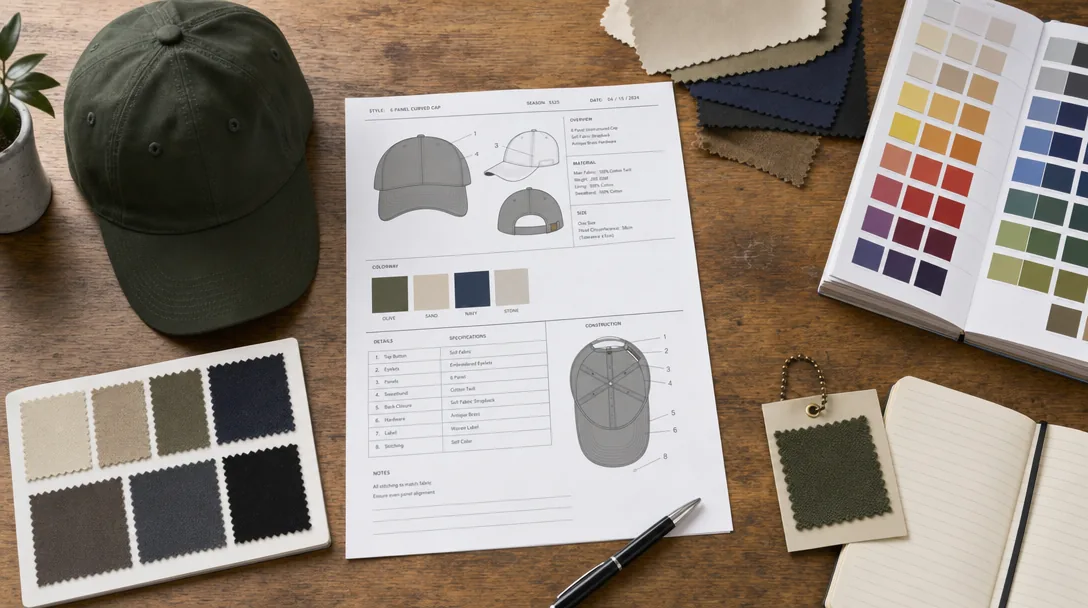
Every week, our sales team answers detailed questions about esports team caps: manufacturing specs for pro and amateur gaming brands. We wrote this guide so that wholesalers, streetwear brands, corporate buyers and promotional resellers can compare options with full information, and avoid the traps that show up only after production has started.
Why esports headwear is the fastest-growing team-sport vertical
Esports headwear is growing faster than almost any other team-sport category because it solves the two problems that kill apparel conversion: fit uncertainty and price resistance. A cap has one size adjustment, low return risk, and enough front-panel real estate for a logo that reads on camera and on streetwear shelves. In practice, that makes the esports team cap the easiest first buy for a fan who is not ready to spend $85 on a jersey. For a licensing manager, it is also the cleanest SKU to launch because the production spec is straightforward: 6-panel structured twill or washed cotton, 100% polyester or cotton-blend sweatband, and a closure choice that can be standardized across the line.
The other reason this category is outperforming mid-tier traditional sports teams is merchandising velocity. A major esports org can move a seasonal cap drop with a 300- to 500-piece minimum, while a local baseball or basketball club often needs higher commitment and slower sell-through. From the factory side, that is attractive because the BOM stays lean: $2.10 to $3.80 FOB for a basic embroidered cap in China at 500 pieces, depending on fabric weight, stitch count, and closure. If you add 3D puff, woven label, or a rubber patch, the cost rises, but the margin stack still works because the retail price usually sits in the $28 to $42 range for an esports merch hat.
For brand operators, the cap category also travels well across channels. A twitch cap merch item can be sold at event booths, bundled with digital drops, or used as a low-friction upsell in DTC carts. As a gaming cap manufacturer, we usually see better approval speed on headwear than on hoodies because Pantone TCX matching is limited to a few visible zones, and the artwork conversion is simpler for embroidery digitizing. That is why custom esports headwear is often the first product line a pro gaming cap supplier recommends: it gives the org a physical product with low technical risk, fast sampling, and enough visual impact to justify a full merch program later.
Sublimation vs embroidery for esports cap branding
Sublimation is the right call when the brand language is basically a jersey translated onto a cap. On polyester 150D to 210D, you can push full-color gradients, sponsor bars, camo blocks, and texture-heavy graphics without paying for thread changes or stitch density limits. The catch is simple: sublimation works best on light-colored panels and gives you a print-first look, not a luxury finish. For an esports team cap built for player merch tables and fast-turn tournament launches, that matters because artwork can match the kit almost exactly, down to Pantone-matched accent blocks and name-lockup placement. A serious gaming cap manufacturer will spec the blank before artwork, because dark crowns, seam breaks, and foam fronts change how the transfer lands.
Embroidery is the opposite tradeoff: fewer colors, more perceived value. A 6-color left-chest style logo on a structured 6-panel cotton twill or brushed polyester cap reads cleaner in retail than a full-surface print, especially under arena lighting and on social photos. Once you go past about 45,000 stitches on a front logo, cost climbs fast and the handfeel gets stiff, so most pro gaming cap supplier programs keep embroidery tight and deliberate. For an esports merch hat, I usually recommend 2D embroidery for flat logos and 3D puff only on bold wordmarks with enough stroke width; anything with tiny type or thin outlines will collapse. That’s why premium drops often use embroidery on the front and sublimation only on underbrim or lining details.
Most esports brands end up using both because the products serve different jobs. Sublimation fits the performance line, staff issue, and twitch cap merch aimed at younger fans who want loud graphics and lower price points. Embroidery fits the higher-margin retail cap where the buyer is paying for texture, durability, and a more legit streetwear read. In practice, a strong custom esports headwear program will separate SKUs by use case: sublimated 5-panel or trucker for event giveaways, embroidered structured snapback or dad cap for the premium tier. On factory floor planning, that split also makes QC easier; printed pieces need color approval against a strike-off and wash test, while embroidered pieces need stitch registration checks, thread tension control, and edge cleanup under AQL 2.5.
Performance vs lifestyle: two product lines for one team
The cleanest way to build an esports team cap program is to split it into two product lines and stop pretending one blank can do both jobs. The performance line should be 100% polyester, usually 150-180 gsm with a wicking finish, six-panel or five-panel depending on logo placement, and printed by full sublimation so you can keep gradients, sponsor marks, and gamer-tag details sharp without stacking heavy embroidery on a heat-sensitive shell. In practice, this is the easiest esports team cap to sell at a $25-35 retail point because the material cost stays controlled, decoration is fast, and the hand feel matches what younger buyers expect from activewear rather than heritage headwear. If the cap is for tournament staff, stream teams, or fan giveaways, I’d keep the sweatband polyester tricot or quick-dry mesh and avoid cotton altogether; cotton absorbs sweat and looks tired after one long event day. A gaming cap manufacturer that understands this category will also watch seam placement and crown tension so the cap still holds shape after repeated wear, not just in product photos.
The lifestyle line should be treated like a different SKU family, not a premium version of the same cap. A structured cotton twill build, usually 100% cotton or cotton-spandex at 260-300 gsm, gives a firmer crown, better embroidery definition, and a more streetwear-friendly profile that fits the $35-55 retail band. This is the better choice for an embroidered esports merch hat with raised 3D puff logos, dense flat stitch team marks, or a woven label at the back, because cotton twill takes needle penetration cleanly and does not show heat distortion the way cheap poly can. For color control, I’d specify Pantone TCX targets for the fabric dye and keep logo approvals within Delta-E 2.0 if the brand is serious about consistency across repeat drops. As a pro gaming cap supplier, we usually recommend reinforced buckram front panels, a matching fabric strap or metal buckle, and a lower-profile visor curve for lifestyle buyers who want something they can wear off-stage, not only at a meetup.
Cross-selling works best when the two lines are merchandised as event-and-everyday, not basic-and-premium. At tournament booths, the performance cap is the fast impulse buy: lighter, cheaper to produce, easier to size, and practical for staff, players, and fans standing under hot lights. The lifestyle cap should sit beside it as the “wear after the event” option, which is where custom esports headwear tends to earn higher margins because buyers associate it with limited drops and team identity rather than utility. If you’re planning twitch cap merch for a live event or creator collab, bundle the two styles in the same color story and keep decoration consistent across both—same main logo, different execution—so buyers understand they are choosing function versus fashion, not comparing unrelated products. That approach usually lifts average order value without forcing discounting, and it gives the brand a cleaner product ladder for repeat launches.
Limited-edition tournament drops: MOQ and timing
For a limited-edition esports team cap drop, 300 to 500 pieces is the sweet spot because it keeps risk low while still feeling exclusive. The real constraint is not sewing capacity; it is approval speed on artwork, color matching, and trim sourcing. Date-stamped graphics, event names, and finalist overlays usually add one extra round of proofing because the embroidery file or print layout has to be locked before we cut fabric. A good gaming cap manufacturer will quote the run only after confirming crown style, closure type, and decoration method, because a 5-panel foam front with sublimation behaves very differently from a structured cotton twill six-panel cap with 3D puff embroidery.
If the booking is placed early, 30 days from approved artwork to delivered product is realistic for a straightforward tournament order. That timeline assumes all primary components are in stock: cotton twill at 260-300 gsm, polyester mesh if it is a trucker build, and standard closures like Velcro or plastic snaps. Once a buyer starts asking for custom seam tape, woven labels, silicone patches, or Pantone TCX-matched thread, the calendar moves fast. On production, we usually plan one to two days for sampling approval, 7 to 10 days for bulk cutting and embroidery on Tajima or Barudan heads, then packing and export booking. A pro gaming cap supplier that understands event deadlines will not promise a 21-day lead time unless the spec is basic and the artwork is already final.
For an esports merch hat drop tied to a live tournament, the safest approach is to freeze the SKU list early and avoid last-minute style creep. One cap body, one crown color, one logo placement, and one back closure usually keeps the line on schedule and within budget. If the order is split into player edition, staff edition, and fan edition, each variation adds setup time and increases the chance of shade mismatch across lots. In practice, custom esports headwear for timed releases works best when the factory receives a clean tech pack, the buyer approves a physical pre-production sample, and the quantity is tied to confirmed sell-through rather than optimistic hype. That is the difference between a twitch cap merch drop that lands on time and a box of inventory that misses the event entirely.
Licensing and IP protection for esports IP
For an esports team cap program, IP protection starts before anyone opens a tech pack. We sign the NDA and licensing terms first, then move to logo files, color references, embroidery placements, and packaging copy. That order matters because once a vector logo, a team wordmark, or a sponsor lockup leaks into a loose sample room workflow, you can’t fully claw it back. As a gaming cap manufacturer, we keep all manufacturing IP in encrypted servers with access restricted by role; the factory floor never sees printable art files, only controlled production outputs generated for the specific order. That includes the esports merch hat artwork, patch files, and private Pantone TCX references used for lab dips and thread matching.
The practical rule is simple: no open USB drives, no WeChat file forwarding to operators, and no paper printouts pinned near sewing or embroidery stations. For custom esports headwear, we release only what is needed for the current operation, and we strip out any nonessential brand assets from the bundle. If a pro gaming cap supplier is serious about preventing leaks, they should also lock down revision control, because the most common failure is not theft but version confusion — an old sponsor logo, last season’s panel layout, or the wrong colorway gets produced because someone printed the wrong PDF. We use encrypted file storage, traceable revisions, and a job-specific permission list so each line worker sees only the minimum data required.
For licensed drops, the contract should also spell out what happens after production: file retention period, deletion protocol, sample ownership, and whether a twitch cap merch run can be re-ordered without re-approval. That is where many amateur brands get burned, because they assume the sample room or outside decorator will “keep everything safe” without writing it into the agreement. In practice, every custom esports headwear job should define who owns the artwork, who can reuse embroidery digitizing files, and who can authorize a color change for a new tournament season. An esports team cap order is not just a garment order; it is an IP workflow, and if the paperwork is weak, the factory floor will eventually expose it.
Sustainability is now a buyer concern in esports too
Gen-Z buyers notice the material story on an esports team cap faster than most brands expect. If you are selling to a college club, a creator-led roster, or a campus retail program, recycled polyester is no longer a nice-to-have; it is often part of the buying brief. The most workable spec is 100% rPET twill or athletic mesh at 180–220 gsm for structured crowns, or a 92/8 rPET-spandex blend when the team wants a softer fit with a little stretch. In practice, the fabric matters less than the paperwork: buyers ask for recycled content claims, dye lot consistency, and color match control against Pantone TCX with Delta-E kept under 2.0 on main panels.
A good gaming cap manufacturer should also pay attention to the trim package, because sustainability complaints often start with the details nobody screenshots. Recycled polyester thread is easy to source, but hook-and-loop closures, woven labels, seam tapes, and sweatband laminations are where a supposedly green product gets diluted with mixed polymers. For custom esports headwear, I prefer a simple BOM: rPET crown fabric, low-migration water-based print or embroidery, and a single-material closure where possible. That keeps the cap easier to explain to buyers and reduces sorting problems if the brand later asks for a recycling-friendly program or a limited run tied to a tournament drop.
Packaging is the other place where younger buyers are looking hard. FSC-certified hangtags, kraft mailers, and soy-based ink cartons are now common requests for twitch cap merch and broader esports merch hat programs, especially when the brand sells direct-to-consumer and posts unboxing content. In factory terms, that usually adds only a small premium: about $0.08 to $0.18 per unit for FSC paper components and $0.03 to $0.06 for simpler one-color print instead of full-coverage coated stock. Our standard practice is to keep the headwear itself clean and durable, then let the carton and insert carry the sustainability message without inflating the FOB too much for a pro gaming cap supplier order.
Frequently Asked Questions
What file format should I send for my logo?
Vector files (AI, EPS, PDF) are ideal. High-resolution PNG or JPG at 300 dpi on transparent background works as a fallback. Provide Pantone color references for accurate reproduction.
Can I order a sample before bulk production?
Yes. We strongly recommend approving a pre-production sample before mass production. Samples are charged at 35 to 60 USD each plus express shipping, fully refundable against confirmed bulk orders over 500 pieces.
What logo decoration techniques do you offer?
3D puff embroidery, flat embroidery, woven patch, leather patch, PVC patch, screen printing, sublimation, applique and laser etching, all in-house with no subcontracting.
Do you support sustainability certifications?
Yes. We work with GOTS organic cotton, GRS-certified recycled polyester, OEKO-TEX Standard 100 fabrics, and are BSCI and Sedex audited. Certification documentation can be provided per order.
Which shipping methods do you support?
We support FOB, CIF and DDP shipping. Air express for samples and small orders, sea LCL for 100 to 500 pieces, sea FCL for 5,000+ pieces. Door-to-door DDP available for US, EU, UK, Canada and Australia.
What's the MOQ for custom baseball cap no minimum?
When evaluating custom baseball cap no minimum, the key considerations are construction quality, decoration capability, MOQ flexibility and lead time. Major esports orgs now sell more merchandise than mid-tier traditional sports teams. Hats are the entry-level product (impulse purchase, low size complexity, high margin). Sublimation allows full-color jerseys-style graphics that match team kit. Embroidery limits color count but signals premium retail. Most esports brands use both — sublimation for performance line,…
What's the MOQ for custom bucket hat no minimum?
When evaluating custom bucket hat no minimum, the key considerations are construction quality, decoration capability, MOQ flexibility and lead time. Major esports orgs now sell more merchandise than mid-tier traditional sports teams. Hats are the entry-level product (impulse purchase, low size complexity, high margin). Sublimation allows full-color jerseys-style graphics that match team kit. Embroidery limits color count but signals premium retail. Most esports brands use both — sublimation for performance line,…
What's the MOQ for custom embroidered baseball caps no minimum?
When evaluating custom embroidered baseball caps no minimum, the key considerations are construction quality, decoration capability, MOQ flexibility and lead time. Performance line: polyester moisture-wicking, sublimated, $25-35 retail. Lifestyle line: cotton twill structured, embroidered, $35-55 retail. Cross-sell at tournament events. Major esports orgs now sell more merchandise than mid-tier traditional sports teams. Hats are the entry-level product (impulse purchase, low size complexity, high margin).
What should I know about wholesale baseball caps made in usa?
When evaluating wholesale baseball caps made in usa, the key considerations are construction quality, decoration capability, MOQ flexibility and lead time. Major esports orgs now sell more merchandise than mid-tier traditional sports teams. Hats are the entry-level product (impulse purchase, low size complexity, high margin). Sublimation allows full-color jerseys-style graphics that match team kit. Embroidery limits color count but signals premium retail. Most esports brands use both — sublimation for performance line,…
Ready to start your custom hat project?
Send us your tech-pack, sketch or even just an inspiration photo. We will respond with a detailed quotation and digital mock-up within 24 hours.
Request a free quoteRelated guides
Mens Beanies: Properties, Costs and How to Spec It Right
Read article →
Buckram vs Foam vs Unstructured: Cap Crown Construction Compared
Read article →
BSCI vs Sedex vs WRAP vs WCA: Compliance Audit Standards Compared
Read article →If you are ready to take the next step on esports team caps: manufacturing specs for pro and amateur gaming brands, our team can put a tailored quotation and digital mock-up in your inbox within 24 hours. Send the inquiry form on our contact page or message us directly on WhatsApp.