Esports Team Caps: Manufacturing Specs for Pro and Amateur Gaming Brands (2026 Update)
Esports Team Caps: Manufacturing Specs for Pro and Amateur Gaming Brands (2026 Update) is one of the most-asked questions we receive from international buyers, and for good reason. With dozens of factories competing for your order and an alphabet soup of technical terms in every supplier quote, even experienced importers can feel lost. This guide consolidates what we have learned producing custom hats for clients in 40+ countries.
Why esports headwear is the fastest-growing team-sport vertical
Esports headwear is growing faster than most licensed team categories because the unit economics are unusually clean. A jersey line needs graded sizes, volatile player-name inventory, and markdown risk when rosters change; an esports team cap avoids most of that. One core silhouette—usually a 6-panel structured snapback or slightly curved-brim A-frame—can cover the bulk of demand with no S-XXL split. At factory level, a standard cap in 260-280 gsm brushed cotton twill, polyester twill, or 600D performance poly with buckram front support, 8-row visor stitching, and a PP snap closure typically lands at about $3.40-$5.60 FOB China at 300-1,000 pieces. Add a woven loop label, branded seam tape, swing tag, and a 10,000-12,000 stitch flat embroidery logo, and the margin still beats most cut-and-sew esports apparel. That matters in real channels: event merch tables, Shopify drops, sponsor activations, and creator bundles all favor SKUs that replenish fast, carton efficiently, and do not trap working capital in broken size runs.
Buying patterns in gaming also make the esports team cap a better bet than heavier apparel. Fans purchase around moments—Major qualification, roster reveal, creator collab, playoffs run—not just around a fixed season calendar, so brands need speed more than depth. A factory that actually knows headwear can revise a pre-production sample in 7-10 days, run logo files on Tajima or Barudan embroidery heads, and keep approved thread shades within a practical Delta-E under 2.0 against Pantone references on critical colors. MOQ for a commercially usable test is also manageable: 144-300 pieces is enough to trial black-on-black 3D puff, high-density fill, woven patch, silicone transfer, or underbrim print without taking a hoodie-level inventory risk. Our standard practice is to inspect caps to AQL 2.5, because esports buyers care about crown symmetry, visor curve consistency, and clean stitch execution more than they care about complex garment specs. The best teams understand one more advantage: a cap keeps generating impressions on streams, boot-camp content, stage walk-ons, and daily wear long after the first sale clears.
Sublimation vs embroidery for esports cap branding
If the artwork has jersey-style complexity, sublimation is the only method that keeps it intact on an esports team cap. Gradients, glow effects, topo lines, sponsor grids, and multi-tone camo do not translate cleanly into thread; once you digitize them for embroidery, you get heavy fill areas, visible travel stitches, and simplified edges that flatten the design. True dye-sublimation also locks you into polyester-compatible materials: 100% polyester interlock, peach-skin microfiber, or warp-knit performance fabrics in the 180-220 gsm range, plus poly-laminated front panels if you need a structured 6-panel crown. On a controlled press cycle, a competent factory can usually hold color within Delta-E 2.5-3.0 against an approved Pantone TCX target or lab dip, but buyers still need printed strike-offs because RGB jersey art nearly always shifts when converted to CMYK for transfer paper. The critical control point is pre-sewing panel print alignment; if registration walks off at the center-front seam or side panel join after cutting, the whole lot becomes second-quality or scrap.
Embroidery is the better choice when the logo itself carries the value and needs shelf presence. A front logo stitched on Tajima, Barudan, or ZSK heads at roughly 5,000-12,000 stitches gives an esports team cap a tactile, premium read that sublimation cannot fake, especially on acrylic-wool serge, brushed cotton twill, or 65/35 poly-cotton twill around 240-280 gsm. The tradeoff is technical: text under 3 mm usually closes up, satin columns below 0.8 mm get unreliable, and dense fills on lightweight polyester can cause tunneling, puckering, or crown distortion unless the digitizer adjusts underlay, pull compensation, backing weight, and thread tension. On performance caps, our standard practice is to reduce stitch density, switch selectively to finer 108D or 120D polyester thread, and inspect panel shape again after hooping and steaming. In real costing at 300-1,000 pieces, embroidery typically adds about $0.45-$1.20 per cap over sublimated decoration, with the spread driven by stitch count, 3D puff foam, applique layers, and machine minutes.
The strongest programs do not force one decoration method across every SKU; they split by end use. Sublimation belongs on player-issue caps, tournament kits, and fast-turn merch where jersey matching matters more than texture. Embroidery belongs on retail drops, sponsor seeding, and licensed fanwear where buyers expect depth, crisp logo edges, and a higher perceived value at first touch. In practice, the safest specification is often hybrid: sublimated crown panels with flat or 3D front embroidery, or a printed underbrim paired with a clean embroidered crest on the face. That combination preserves artwork fidelity, avoids over-penetrating lightweight fabrics with dense needlework, and keeps unit cost under control. For most amateur and pro collections, a hybrid esports team cap also makes range planning easier because team issue, event stock, and e-commerce merch can share one visual language without forcing every style into the highest decoration-cost bracket.
Performance vs lifestyle: two product lines for one team
Performance and lifestyle should be engineered as separate SKUs, not treated as two colorways of one esports team cap. For players, coaches, and event staff sitting under LED rigs and headsets for 8 to 12 hours, the right build is usually 140 to 180 gsm polyester interlock, warp-knit microfiber, or 75D to 100D recycled polyester with a wicking sweatband and laser-perforated side panels. Sublimation is the cleanest decoration method here because it adds virtually no hand feel, avoids embroidery backing abrasion at the forehead, and holds sponsor gradients, neon outlines, and full-panel graphics without fill pull or thread-break issues. The real manufacturing risk is color drift between crown panels, visor fabric, and closure components when they come from different dye lots, so artwork should be locked to Pantone TCX references and bulk production held to Delta-E under 2.0. Lightweight caps only perform if the factory controls the hidden details: perforations must stay clear of seam allowance, sweatband stitch density cannot be too sparse, and TPU or silicone heat-transfer badges need tight temperature and dwell-time control or the front panel puckers. In practical FOB terms, a performance esports team cap usually lands around $4.80 to $7.50 at 500 to 1,000 pieces, depending on closure, custom seam tape, molded badge application, and individual polybag or box packing. AQL 2.5 is standard, but this category needs stricter checkpoints on print ghosting, side-panel symmetry, sweatband attachment strength, and crown distortion after pressing, because one skipped stitch shows immediately on a 160 gsm shell.
The lifestyle line should feel heavier, sharper, and more collectible, with specs closer to streetwear than tournament uniform. A solid baseline is 260 to 320 gsm cotton twill or cotton-poly twill, buckram-backed front panels, a pre-curved visor with 8-row stitching, and embroidery run on Tajima or Barudan heads using 40 wt polyester thread for washfastness and UV stability; rayon still has a brighter luster, but it is less forgiving in repeated wear. Raised embroidery works for simple crests and block initials, yet sponsor lockups, small type under 4 mm cap height, and mascots with tight outline breaks usually hold cleaner in flat embroidery, woven patches, or merrowed emblems. Trying to cram every logo detail into one puff file is the fastest way to make a premium cap look budget. This is the product line where finishing details justify price: sandwiched brim, custom inside taping, matching underbill, woven interior labels, metal clasp, or a clean snapback in POM or ABS. Ex-factory cost for a structured lifestyle esports team cap is more realistically $6.50 to $10.50 at 500 to 1,000 units, with washes, contrast stitching, and multiple embroidery hits pushing the upper end. Quality control shifts accordingly: check embroidery registration, visor symmetry within 3 mm, crown height consistency, seam torque on twill panels, and shrinkage after enzyme or garment wash. If a team launches both lines, keep the logo system and Pantone callouts consistent, then separate the ranges through fabric weight, trim package, and decoration language so buyers instantly understand which cap is built for wear time and which is built for resale and collection.
Limited-edition tournament drops: MOQ and timing
For limited-edition tournament drops, the real planning threshold is not design complexity but commitment timing. A 300- to 500-piece run is now the standard bracket for a date-stamped esports team cap tied to a qualifier, LAN final, or creator collaboration, because it spreads tooling cost without forcing dead stock after the event. Below 300 pieces, unit cost climbs fast once you add custom trims, inside taping, woven labels, and single-use embroidery files; above 500, most teams start asking whether the graphic should be evergreen instead of event-dated. On a typical six-panel structured snapback in 260 gsm cotton twill or 100% recycled polyester, FOB cost at 300 pieces usually lands around $4.20 to $6.80 depending on flat embroidery count, applique, brim sandwich, and packaging spec. A serious gaming cap manufacturer should be honest here: the date on the side panel or back arch sounds simple, but once you lock event-specific artwork, the leftover inventory becomes nearly worthless.
Thirty days from approved artwork to delivered cargo is achievable, but only if calendar slots are reserved before the tournament organizer finalizes the public launch. In practice, production breaks down into 2 to 4 days for tech pack review and Pantone TCX matching, 3 to 5 days for sampling or digital strike-off approval, 12 to 16 days for bulk cutting, sewing, embroidery, finishing, and AQL 2.5 inspection, then 7 to 10 days for air freight plus customs clearance under DDP terms to the US or EU. If you wait until the roster reveal to start, that 30-day promise usually collapses at the trim stage, especially when the esports merch hat includes molded silicone patches, metallic thread on Tajima or Barudan heads, or low-volume custom packaging. Our standard practice is to pre-book shell fabric, sweatband, and closure stock against forecast so the event date embroidery is the only variable item entering the line late.
The biggest mistake amateur brands make is copying streetwear MOQ logic instead of tournament logic. For custom esports headwear, you want one base body, one closure, and one crown fabric across the whole drop, then use artwork, side hits, underbrim print, or numbered swing tags to create the limited feel. That keeps setup waste low and gives a pro gaming cap supplier room to hold price even when you split 500 units across two colorways, such as 250 black/red and 250 bone/green. If the program includes twitch cap merch for stream giveaways, reserve 5% to 8% overage for sponsor requests, talent seeding, and freight damage replacements; that is much cheaper than trying to rerun 48 pieces later. CrownsForge generally treats tournament drops as fixed-deadline production, which means art freeze dates matter more than almost anything else on the PO.
Licensing and IP protection for esports IP
Get the license chain and file controls locked before sampling, not after the quote. For an esports team cap, the minimum should be a signed trademark authorization or license letter, mutual NDA, and a PO clause that states the factory cannot subcontract embroidery, patch making, or packaging without written approval. Most IP leaks happen in development, when AI/CDR logo files, Pantone TCX callouts, woven-label art, and dielines get pushed through personal WeChat accounts and freelance digitizers. A competent factory will name exactly who can open buyer files: usually the merchandiser, pattern engineer, in-house digitizer, and production manager. Access should be role-based, every revision logged, and approval PDFs watermarked. No logo should be converted into DST, EMB, or ZSK/Tajima/Barudan run files until the buyer signs off on stitch direction, fill density, underlay, and final size in millimeters.
Floor control matters as much as legal paperwork. Operators sewing a 6-panel or 5-panel esports team cap do not need source artwork; they need controlled work orders with internal style codes, seam specs, stitch count, visor curvature, fabric gsm, and QC checkpoints. The safest setup is an encrypted server or locked NAS, not USB drives, open desktop folders, or printed A4 logo sheets hanging on the line. In practice, embroidery heads run approved files from a locked workstation while rejects, strike-offs, and excess patches are counted and defaced at end of shift. CrownsForge standard practice is to write non-diversion, overrun destruction, and file-retention terms into the PO: for example, artwork backups retained 12 months unless the client instructs deletion, and overruns capped at 3 percent for QC replacement only, never spot-sold into Yiwu channels. For licensed team programs, add audit rights tied to document control under sedex-audit-cap-supplier-guide.html">BSCI 2.0 or Sedex SMETA 4-Pillar; if a supplier cannot show who accessed your logo, when, and why, assume the IP risk is real.
Sustainability is now a buyer concern in esports too
Sustainability has moved from a nice-to-have to a vendor-approval issue, even for gaming merch. Buyers sourcing an esports team cap for Shopify drops, arena merch, or sponsor kits now ask for GRS transaction certificates, recycled-content percentages by component, FSC-certified cartons, and whether single-use packaging can be reduced without crushing the crown in transit. The most usable material option is still rPET performance fabric: 140-180 gsm works for 5-panel or unstructured builds, while 180-220 gsm is safer when the cap needs a cleaner face and firmer hand. If a supplier says only “eco fabric” and cannot identify the yarn source, mill, or blend ratio, treat that claim as cosmetic. The spec should state whether recycled content applies only to the shell or to the full bill of materials, including sweatband, buckram, visor insert, woven label, and snap or hook-and-loop closure. At CrownsForge, our standard practice is to list composition at blend level—for example 96% recycled polyester / 4% spandex—because that is where weak sustainability claims usually fall apart under buyer review.
Recycled fabric also behaves differently in production, which matters once esports branding gets embroidery-heavy. Lightweight rPET shells are less forgiving than virgin polyester twill when front logos exceed roughly 10,000 stitches or satin columns run wider than 5 mm; on Tajima or Barudan cap frames, that usually means lighter stitch density, revised underlay, DBxK5 #11 needles, and tighter control of crown tension to prevent puckering around sponsor marks. If the esports team cap uses sublimated side panels, contrast rope, or sandwich brim details, color standards need to be written into the PO: Pantone TCX references, approved lab dips, and a bulk tolerance around Delta-E 1.5-2.0 for strict team palettes. The cost premium is usually manageable rather than dramatic. In current factory programs, rPET shell fabric plus FSC hangtags and recycled-content polybags adds about $0.18-$0.55 per cap, and part of that can be recovered by removing individual polybags for event runs. Packaging is the fastest real improvement, but only when the packing method, carton count, and verification points are specified clearly and checked at final inspection under AQL 2.5, backed by audits such as BSCI 2.0 or Sedex SMETA 4-Pillar.
Frequently Asked Questions
Can I order a sample before bulk production?
Yes. We strongly recommend approving a pre-production sample before mass production. Samples are charged at 35 to 60 USD each plus express shipping, fully refundable against confirmed bulk orders over 500 pieces.
Do you support sustainability certifications?
Yes. We work with GOTS organic cotton, GRS-certified recycled polyester, OEKO-TEX Standard 100 fabrics, and are BSCI and Sedex audited. Certification documentation can be provided per order.
What logo decoration techniques do you offer?
3D puff embroidery, flat embroidery, woven patch, leather patch, PVC patch, screen printing, sublimation, applique and laser etching, all in-house with no subcontracting.
What file format should I send for my logo?
Vector files (AI, EPS, PDF) are ideal. High-resolution PNG or JPG at 300 dpi on transparent background works as a fallback. Provide Pantone color references for accurate reproduction.
What is the minimum order quantity (MOQ) for custom hats?
Our standard MOQ is 100 pieces per design and color, with sampling available from 1 piece. For complex multi-color logos or premium fabric upgrades, the MOQ can be lowered with a small per-piece surcharge.
What's the MOQ for custom baseball cap no minimum?
When evaluating custom baseball cap no minimum, the key considerations are construction quality, decoration capability, MOQ flexibility and lead time. Major esports orgs now sell more merchandise than mid-tier traditional sports teams. Hats are the entry-level product (impulse purchase, low size complexity, high margin). Sublimation allows full-color jerseys-style graphics that match team kit. Embroidery limits color count but signals premium retail. Most esports brands use both — sublimation for performance line,…
What's the MOQ for custom bucket hat no minimum?
When evaluating custom bucket hat no minimum, the key considerations are construction quality, decoration capability, MOQ flexibility and lead time. Major esports orgs now sell more merchandise than mid-tier traditional sports teams. Hats are the entry-level product (impulse purchase, low size complexity, high margin). Sublimation allows full-color jerseys-style graphics that match team kit. Embroidery limits color count but signals premium retail. Most esports brands use both — sublimation for performance line,…
What's the MOQ for custom embroidered baseball caps no minimum?
When evaluating custom embroidered baseball caps no minimum, the key considerations are construction quality, decoration capability, MOQ flexibility and lead time. Performance line: polyester moisture-wicking, sublimated, $25-35 retail. Lifestyle line: cotton twill structured, embroidered, $35-55 retail. Cross-sell at tournament events. Major esports orgs now sell more merchandise than mid-tier traditional sports teams. Hats are the entry-level product (impulse purchase, low size complexity, high margin).
What should I know about wholesale baseball caps made in usa?
When evaluating wholesale baseball caps made in usa, the key considerations are construction quality, decoration capability, MOQ flexibility and lead time. Major esports orgs now sell more merchandise than mid-tier traditional sports teams. Hats are the entry-level product (impulse purchase, low size complexity, high margin). Sublimation allows full-color jerseys-style graphics that match team kit. Embroidery limits color count but signals premium retail. Most esports brands use both — sublimation for performance line,…
What team does Caps play for?
Rasmus Borregaard Winther (Danish pronunciation: [ˈʁɑsmus ˈboːɐkɒˀ ˈve̝nˀtɐ] ; born 17 November 1999), better known by his in-game name Caps, is a Danish professional League of Legends player for G2 Esports.
What is the meaning of team cap?
Team cap meaning, in plain terms A team cap is a cap designed for a group, often customized with: a team logo or emblem. team name or slogan. colors that match your identity. names, numbers, or roles (optional, but extra cool)
How many people can be on an esports team?
The standard is five active players, such as for League of Legends teams. That said, there is pretty much no limit on how many back-ups and non-starters that a team can keep. Back to the point: the structure of an eSports team varies. There is no single layout, just like traditional sports.
Ready to start your custom hat project?
Send us your tech-pack, sketch or even just an inspiration photo. We will respond with a detailed quotation and digital mock-up within 24 hours.
Request a free quoteRelated guides
First Custom Hat Order: 10 Mistakes That Cost First-Time Buyers Money
Read article →
Buckram vs Foam vs Unstructured: Cap Crown Construction Compared
Read article →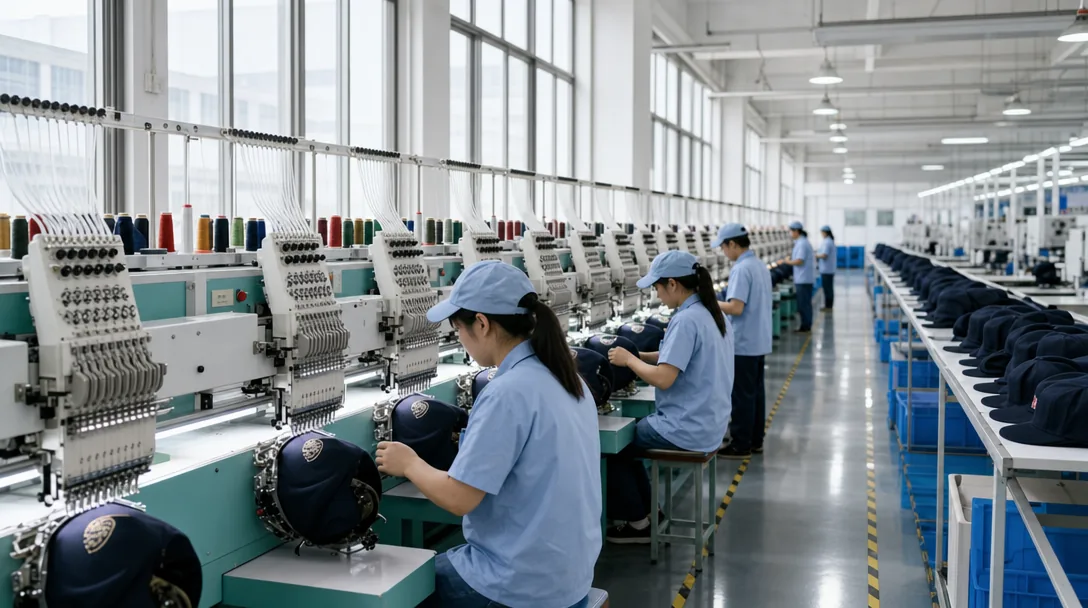
Country Hats For Men Export Shipping Checklist for Custom Hat Buyers
Read article →We hope this guide demystifies esports team caps: manufacturing specs for pro and amateur gaming brands (2026 update) and helps you move forward with confidence. If you have questions specific to your project, our English-speaking sales engineers are one message away.