
Custom Wool Blend Ball Cap: A 2026 B2B Sourcing Guide - Supplier Checklist
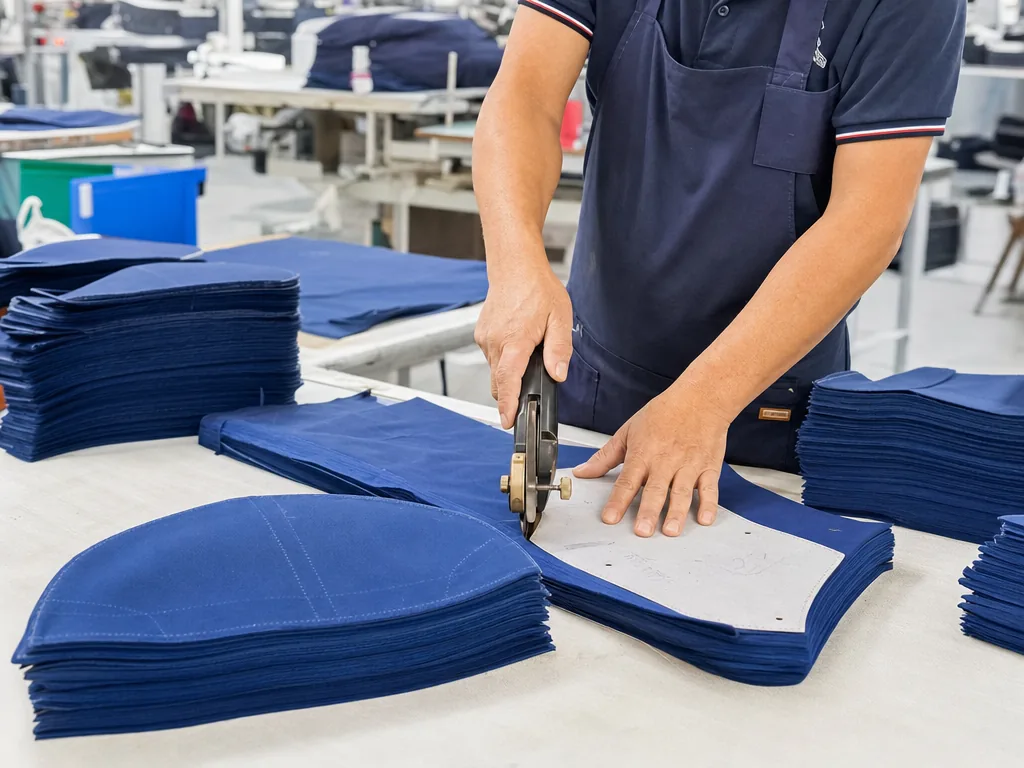
Custom Wool Blend Ball Cap: A 2026 B2B Sourcing Guide - Supplier Checklist is one of the most-asked questions we receive from international buyers, and for good reason. With dozens of factories competing for your order and an alphabet soup of technical terms in every supplier quote, even experienced importers can feel lost. This guide consolidates what we have learned producing custom hats for clients in 40+ countries.
Organic Cotton Cap Wholesale Custom
Fiber proof has to come before branding. If a supplier cannot provide GOTS or OCS transaction certificates, yarn lot traceability, and a finished fabric spec sheet, the “organic” claim is meaningless. The workable range for wholesale caps is usually 220-320 gsm organic cotton twill, chino, or brushed canvas, most often in 3/1 twill, paired with either 0.35-0.45 mm buckram for a firm front or recycled non-woven support for a relaxed crown. A serious tech pack should freeze panel count, crown height, visor curve, SPI, sweatband composition, closure hardware, and Pantone TCX references for shell, underbill, seam tape, and thread. If the same program also includes a custom wool blend ball cap, call the material tradeoffs out early: organic cotton absorbs sweat faster, loses front-panel memory sooner, and can show 2-4 percent wash shrinkage if the pattern allowance and fusing recipe are not dialed in. Embroidery is where weak suppliers get exposed. Organic cotton moves more than acrylic or poly-wool under the needle, so dense fills that run clean on a custom wool blend ball cap can pucker badly here without proper digitizing, underlay, and backing weight. Buyers should specify stitch count, satin column width, backing gsm, thread brand, and whether production runs on Tajima, Barudan, or ZSK heads. In East China, MOQ is typically 300-500 pieces per colorway for a standard 6-panel cap; 144-200 pieces is only realistic when the factory is using stocked fabric and basic trims. Current FOB pricing is usually $2.40-$4.20 for a blank style and $3.60-$6.20 for a cap with 5,000-8,000 stitches, woven label, and metal buckle, depending on certification scope, trim count, and carton ratio.
Bulk defects are predictable, so the inspection standard should be strict from the start. The repeat failures on organic cotton caps are crown asymmetry, visor peak mismatch, seam slippage at the sweatband join, skipped topstitching, embroidery tunneling, panel shading, and handling oil marks; ecru, optic white, and washed black are the colorways that expose problems fastest. AQL 2.5 is still the normal shipment standard, but for light shades I would tighten appearance checks and measure closure alignment, finished circumference tolerance, embroidery centering, and underbill stitch consistency. You should also require basic test data: Delta-E 1.5-2.0 against approved lab dips, colorfastness to crocking and perspiration, composition tolerance of plus or minus 3 percent, needle detection logs, and confirmation of visor insert material, because cheap PE inserts can warp after container exposure above 50°C. Most sourcing errors get caught at PP sample stage, not during final inspection. A rendering cannot tell you whether the front panel collapses after steaming, whether the sweatband rolls, or whether side seams torque after washing. Our standard practice is to approve a physical PP sample with strike-off, hand feel, crown angle, and wash result locked before bulk cutting. If the line also carries a custom wool blend ball cap, organic cotton usually makes sense as the lower-cost warm-weather option rather than a direct substitute. You get a softer hand and a cleaner sustainability story, but you give up some structure retention, stain resistance, and wet-weather stability unless the factory controls fusing, finishing, and final QC with real discipline.
Recycled Polyester Cap Manufacturer Bulk
The failure point on bulk recycled-poly caps is usually process control, not the recycled claim itself. Ask for the exact fiber route—100% rPET from post-consumer bottle flake, or a blend such as 65/35 recycled polyester-cotton—then lock yarn count, denier, weave, and finished weight on the PO. In cap production, 150-180 gsm is fine for unstructured 6-panel promotional bodies, but 220-280 gsm holds shape better on mid-profile athletic crowns and resists seam grin during sewing. If the mill claims water resistance, get specific: C0 DWR, PU clear coating, or a laminated film all behave differently under embroidery and crown forming. A GRS scope certificate only proves the supplier is certified; the transaction certificate tied to your PO is what connects that shipment to recycled content. For shade approval, request lab dips against Pantone TCX and hold bulk within Delta-E 1.0-1.5, because recycled lots can drift visibly on navy, charcoal, and optical white.
A usable tech pack needs to define more than “recycled cap.” Lock panel count, crown height, visor curve, buckram thickness, eyelet construction, closure type, sweatband material, stitch count per inch, and decoration limits before sampling. For embroidery, specify logo size in millimeters, expected stitch count, backing weight, and whether the face fabric can take dense fill without puckering on Tajima or Barudan heads; recycled polyester with a slick finish often needs lower density or better underlay. In Yiwu and Dongguan, stock recycled-poly bodies with one front embroidery generally start around 300-500 pieces per color, while custom shell fabric, branded taping, and metal closures are more realistically 800-1,200 pieces. At 1,000 pieces, FOB pricing usually lands around $2.10-$3.80 for standard builds and $4.50-$7.20 for taped-seam outdoor versions, depending on membrane, seam tape width, and buckle grade. Even if the hero SKU is a custom wool blend ball cap, this matters because recycled polyester frequently shows up in sweatbands, underbrims, linings, and matching seasonal styles that share trims and color standards.
Inspection should focus on the defects that actually trigger claims. Set final inspection at AQL 2.5 and measure brim symmetry, crown centering, panel matching, top-button position, closure attachment, and color continuity across shell, underbill, and strap. On bulk orders, a visor variance above 3 mm, needle shine or heat marks on black rPET, slubs on light shades, or embroidery tunneling around dense fills should be treated as majors, not waved through as normal variance. Ask for crocking results on dark sweatbands, basic carton drop performance so the visor does not collapse in transit, and real outdoor test data if the factory uses waterproof language: spray rating, hydrostatic head, or seam leakage results. A supplier that can consistently manage both recycled performance caps and a custom wool blend ball cap usually has better discipline on mixed-material sourcing, shade matching, and repeatability across a seasonal program.
Ripstop Tactical Cap Manufacturer
A capable ripstop tactical cap manufacturer should start with fabric engineering, because ripstop is a reinforcement structure, not a cap style. The useful questions are exact fiber ratio, weight, denier, yarn count, and finishing route: 100% cotton ripstop commonly runs 220-240 gsm, cotton/nylon blends 210-230 gsm, and nylon shells are often specified in 70D, 105D, or 210D depending on abrasion target and crown stiffness. Finishing matters just as much as the base cloth. C0 or C6 DWR, PU back-coating, enzyme wash, or peach finish each change handfeel, shrinkage, seam slippage, and how well front panels recover after embroidery, packing, and carton compression. On the factory floor, poor pattern control shows up immediately when the ripstop grid drifts across adjacent panels; even clean sewing looks cheap if the reinforcement box is visibly skewed. Serious suppliers control panel symmetry tightly, add bartacks at stress points, and lock down eyelet type, seam tape width, hook-and-loop grade, and seam allowance in the tech pack instead of leaving those details to line judgment. The spec sheet should be much tighter than “6-panel tactical cap.” I would want crown height in millimeters, visor curve radius, sweatband composition, buckle plating or alloy grade, stitch density, and color reference by Pantone TPX or TCX, plus test results for crocking, spray rating, and dimensional stability if water resistance is being claimed. A light DWR finish is not waterproof, and low-cost coatings often fall off sharply after a few wear cycles. Embroidery is another common failure point: on Tajima or Barudan heads, underlay, needle size, and pull compensation have to be tuned so the stitch field does not pucker the ripstop grid, especially on soft fronts or loop-patch zones. If the same supplier also makes a custom wool blend ball cap well, that is a useful audit signal; it suggests they can manage both rigid, abrasion-focused ripstop shells and softer wool-blend crowns without losing control of sizing block, front-panel recovery, or visor shape.
MOQ is usually lower than buyers expect until the trim package gets complicated. For a standard 6-panel ripstop tactical cap, 144-300 pieces per colorway is realistic; once you add molded PVC patches, printed seam tape, laser-cut loop fields, or specialty closures, many factories move the floor to 500 pieces or more. In China, a practical FOB range for a clean ripstop build is about $3.20-$5.80 per piece, while coated or water-resistant versions usually land around $4.80-$7.50 depending on fabric spec, embroidery count, seam construction, and hardware. If a supplier quotes aggressively but cannot explain denier, coating weight, stitch count, or visor board spec, that price usually gets paid back later in bulk defects, rework, or claim negotiations. Final inspection should focus on problems specific to ripstop construction: grid misalignment across panels, needle cutting on coated fabrics, visor wave, patch placement tolerance, hook-and-loop peel loss after repeated opening cycles, and shade variation above Delta-E 1.5-2.0 between body panels and visor. Use at least AQL 2.5, and check fabric bowing before sewing, not only at packed-goods stage, because a cap can pass visual inspection and still twist after assembly. That discipline also matters in a broader custom wool blend ball cap sourcing program. Wool blends fail on nap direction, fusing temperature, and crown recovery; ripstop fails on weave alignment, reinforcement integrity, and abrasion-conscious stitching. Good factories separate those material risks in process control, line setup, and final QC instead of pretending one cap workflow fits every fabric.
Working with CrownsForge for custom wool blend ball cap programs
Sampling discipline and MOQ honesty decide whether a custom wool blend ball cap program stays on calendar or turns into a month of revisions. A factory that actually controls its cap line should deliver digital mockups in 2-4 working days, then complete digitizing, tape-out, and a sewn prototype in another 5-7 days for a standard structured 6-panel cap using a 55/45 wool-poly shell at roughly 320-360 gsm, stock PE buckram, and flat embroidery on Tajima or Barudan heads. That is the realistic window. Add 3D puff, chain stitch, satin appliqué, laser-perforated side panels, printed seam tape, or a TPU-laminated membrane, and sampling usually stretches 2-3 more days because the bottleneck moves to production engineering, foam height trials, and needle-path testing. Buyers should insist that sample lead time and bulk lead time are quoted separately; when a supplier collapses both into one vague number, revision rounds get buried and delivery promises stop meaning much. MOQ needs the same level of precision. Many factories can support 144-300 pieces per colorway if they are cutting from stocked wool blend bodies, standard sweatbands, and existing closure hardware. The numbers change fast once the fabric is custom. Melton-like wool blends, brushed heathers, or custom-dyed shades often require 50-100 meters per color from the mill, which can push an efficient opening run to 288, 500, or 1,000 units depending on crown color, visor sandwich, woven label set, lining print, and buckle finish. Ask for the MOQ by component, not just by style: shell fabric, under-visor, backstrap, metal trim, and packaging can each trigger their own minimums. Our standard practice is to flag those breakpoints before sampling so the buyer sees the real landed economics, not an artificially low trial MOQ that cannot be repeated in bulk.
Decoration control matters more than a broad trim menu, because wool-blend fronts expose bad embroidery faster than cotton twill does. Clean results depend on correct underlay, reduced machine speed, balanced upper and bobbin tension, and backing weight matched to the fabric body. On structured fronts, competent operators normally run 3D puff at about 600-700 stitches per minute on Tajima or ZSK heads instead of chasing throughput and creating puckering, foam blowout, yarn fray, or needle heat marks. A reliable factory should be able to handle flat embroidery, raised embroidery, woven patches, merrowed badges, leatherette labels, silicone heat transfers, and under-visor printing without sending half the decoration package to outside workshops. Once embellishment is split across vendors, lead times loosen and defect ownership gets muddy. Compliance should be audited with the same discipline as stitch quality. For U.S. and EU programs, practical checkpoints are sedex-audit-cap-supplier-guide.html">BSCI 2.0 or Sedex SMETA 4-Pillar status, needle-control logs, broken-needle registers, metal-detection procedure where applicable, AZO-free dye confirmation, REACH SVHC screening, and CPSIA tracking for youth sizes. Color approval should be tied to a Pantone TCX reference with a defined bulk tolerance, typically Delta-E below 1.5 for visible body panels and slightly wider on heathered wool blends where fiber mix affects shade reading. The approval chain should be explicit: tech pack review, pre-production sample sign-off, inline photos or video after the first 20-30 pieces, AQL 2.5 final inspection, and carton verification before FOB release. That process is less glamorous than a mood board, but it is what keeps a custom wool blend ball cap program commercially predictable.
Frequently Asked Questions
How long does production take?
Sampling takes 7 to 12 days. Bulk production runs 20 to 30 days depending on quantity, fabric availability and decoration complexity. Inspection and packing adds another 3 to 5 days before shipment.
What logo decoration techniques do you offer?
3D puff embroidery, flat embroidery, woven patch, leather patch, PVC patch, screen printing, sublimation, applique and laser etching, all in-house with no subcontracting.
Which shipping methods do you support?
We support FOB, CIF and DDP shipping. Air express for samples and small orders, sea LCL for 100 to 500 pieces, sea FCL for 5,000+ pieces. Door-to-door DDP available for US, EU, UK, Canada and Australia.
What is the minimum order quantity (MOQ) for custom hats?
Our standard MOQ is 100 pieces per design and color, with sampling available from 1 piece. For complex multi-color logos or premium fabric upgrades, the MOQ can be lowered with a small per-piece surcharge.
What file format should I send for my logo?
Vector files (AI, EPS, PDF) are ideal. High-resolution PNG or JPG at 300 dpi on transparent background works as a fallback. Provide Pantone color references for accurate reproduction.
How do I find a reliable custom waterproof cap manufacturer?
When evaluating custom waterproof cap manufacturer, the key considerations are construction quality, decoration capability, MOQ flexibility and lead time. Cover everything buyers ask about recycled polyester cap manufacturer bulk: how it's manufactured, what specs to request from a factory, typical MOQ and pricing, common quality issues to inspect for, and how this ties back to the broader custom wool blend ball cap sourcing decision. Cover everything buyers ask about ripstop tactical cap manufacturer: how it's manufactured,…
How does ordering custom embroidered ball cap work?
When evaluating custom embroidered ball cap, the key considerations are construction quality, decoration capability, MOQ flexibility and lead time. Cover everything buyers ask about organic cotton cap wholesale custom: how it's manufactured, what specs to request from a factory, typical MOQ and pricing, common quality issues to inspect for, and how this ties back to the broader custom wool blend ball cap sourcing decision. Cover everything buyers ask about recycled polyester cap manufacturer bulk: how it's…
How does ordering baseball cap custom embroidery work?
When evaluating baseball cap custom embroidery, the key considerations are construction quality, decoration capability, MOQ flexibility and lead time. Cover everything buyers ask about organic cotton cap wholesale custom: how it's manufactured, what specs to request from a factory, typical MOQ and pricing, common quality issues to inspect for, and how this ties back to the broader custom wool blend ball cap sourcing decision. Cover everything buyers ask about recycled polyester cap manufacturer bulk: how it's…
What should I know about custom golf cap rope bulk?
When evaluating custom golf cap rope bulk, the key considerations are construction quality, decoration capability, MOQ flexibility and lead time. Cover everything buyers ask about recycled polyester cap manufacturer bulk: how it's manufactured, what specs to request from a factory, typical MOQ and pricing, common quality issues to inspect for, and how this ties back to the broader custom wool blend ball cap sourcing decision. Cover everything buyers ask about organic cotton cap wholesale custom: how it's…
Ready to start your custom hat project?
Send us your tech-pack, sketch or even just an inspiration photo. We will respond with a detailed quotation and digital mock-up within 24 hours.
Request a free quoteRelated guides
Promotional Caps & Corporate Gifts: Bulk Custom Hats for Brand Events - Supplier Checklist
Read article →
Mens Beanies: Properties, Costs and How to Spec It Right (2026 Update)
Read article →
Mesh Caps Wholesale: Trucker Cap Manufacturing Specifications and Pricing - Supplier Checklist
Read article →If you are ready to take the next step on custom wool blend ball cap: a 2026 b2b sourcing guide - supplier checklist, our team can put a tailored quotation and digital mock-up in your inbox within 24 hours. Send the inquiry form on our contact page or message us directly on WhatsApp.