
Custom Wool Blend Ball Cap: A 2026 B2B Sourcing Guide - Supplier Checklist - Cost & MOQ Breakdown
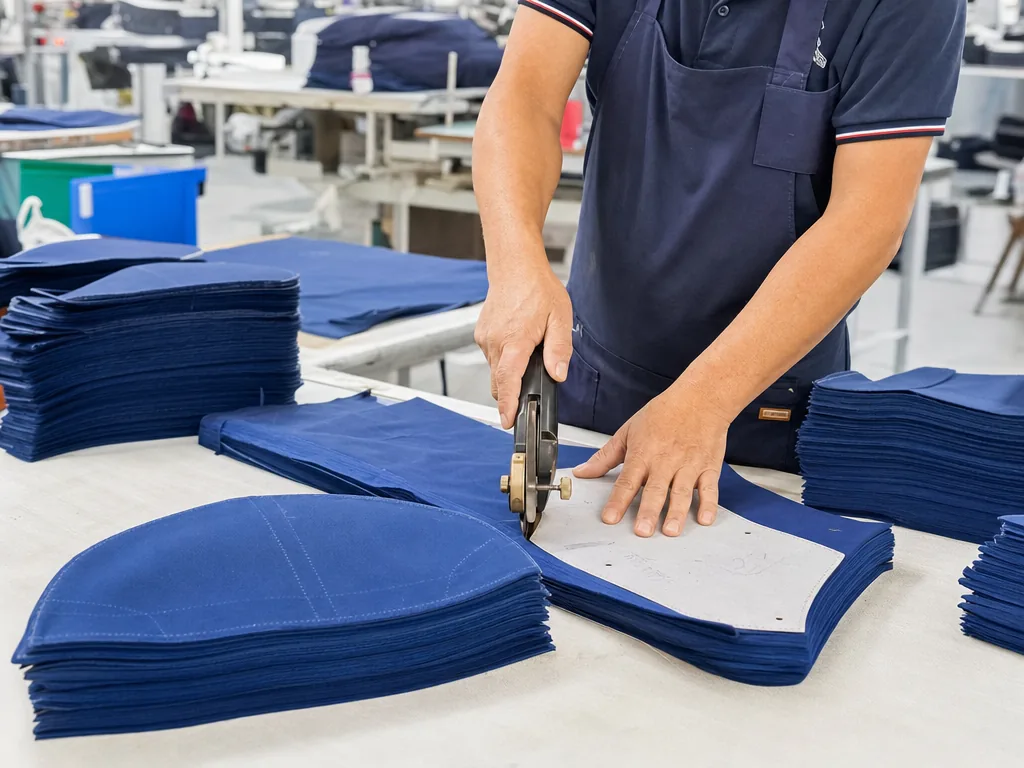
Custom Wool Blend Ball Cap: A 2026 B2B Sourcing Guide - Supplier Checklist - Cost & MOQ Breakdown is one of the most-asked questions we receive from international buyers, and for good reason. With dozens of factories competing for your order and an alphabet soup of technical terms in every supplier quote, even experienced importers can feel lost. This guide consolidates what we have learned producing custom hats for clients in 40+ countries.
Organic Cotton Cap Wholesale Custom
Lock the fabric spec before approving artwork, because “organic cotton” on a PO does not protect the buyer. Ask for GOTS or OCS transaction certificate support tied to the exact lot, fiber content tolerance within ±3%, and a cap-appropriate shell weight: 220–280 gsm brushed twill for a structured 6-panel or 180–240 gsm canvas for an unstructured dad cap. Shrinkage should stay below 3% after washing, and color approval should be tied to Pantone TCX or Pantone C with a practical Delta-E target of under 1.5 on bulk fabric and under 2.0 after wash. Most factories cut these caps from 8–10 oz twill; if you want the crown to hold shape, specify 35–45 gsm fusible interlining or light buckram, because “structured” means different things from one sample room to the next. Construction details decide whether the finished cap feels premium or looks soft and cheap on arrival. A serious tech pack should call out visor insert material, sweatband composition, seam tape width, eyelet stitch count, and closure hardware down to a 20 mm antique brass buckle or a specific hook-and-loop grade. Organic cotton shells are less forgiving than poly-cotton when operators run too much tension on Juki or Brother single-needle stations; that is when you see seam grin, crown torque, and needle heat glazing the face. For embroidery on Tajima or Barudan heads, front logos usually need lower density than on acrylic or polyester. In practice, 0.38–0.42 mm stitch spacing with proper edge-run and underlay gives a cleaner result than a dense fill that puckers the panel—especially when the buyer is comparing the handfeel and shape to a custom wool blend ball cap.
MOQ and costing tell you very quickly whether the supplier actually builds caps or just forwards quotes. For stock organic cotton bodies with custom embroidery, realistic wholesale MOQ is usually 144–300 pieces per colorway. Once you add custom patterns, dyed-to-match closures, branded seam tape, or internal labeling, most workable runs start at 500–1,000 pieces per style-color. In Zhejiang, a basic organic cotton cap with flat embroidery typically lands around $3.20–$4.80 FOB at 300–500 units; add woven labels, inside print, metal trims, wash testing, and certificate handling, and the cost usually moves to $5.50–$7.50 FOB. Our standard practice is to separate certification and lab-testing charges, because hiding paperwork costs inside the unit FOB makes quote comparisons useless. Inspection should focus on the defects that become chargebacks: visor asymmetry over 5 mm, embroidery registration drift above 1 mm, top button off-center, sweatband join bulk, oil marks near eyelets, and panel shade variation from mixed dye lots. Final random inspection at AQL 2.5 major and 4.0 minor is standard, but the more important control point is an in-line review after the first 30–50 pieces, when crown shape, puckering, and visor curve can still be corrected without scrapping the lot. From a planning standpoint, organic cotton and a custom wool blend ball cap solve different buying problems. Organic cotton fits summer promotions and eco-driven retail stories; wool blends hold shape better, feel warmer, and usually sell stronger in fall/winter, with FOB commonly running 15%–35% higher depending on wool ratio, interlining, and embroidery coverage.
Recycled Polyester Cap Manufacturer Bulk
The biggest sourcing failure on a recycled-poly cap program is treating “recycled” as the spec. It is not. Buyers need the fiber chain locked down: valid GRS or RCS scope certificate, spinner name, yarn denier and filament count, weave, finished gsm, and wet/dry colorfastness target. For cap shells, 130-220 gsm is the practical band. Under 140 gsm, the crown usually relies on fusible buckram to stand up; above 220 gsm, stitch definition softens, vent holes distort more easily, and sewing efficiency drops. A 150D x 150D rPET twill at 180-190 gsm does not behave like the 260-300 gsm melton or brushed wool-poly face cloth used on a custom wool blend ball cap, so cost comparisons are meaningless unless structure, hand feel, and finish are matched. If the quote includes “waterproof” or “performance” language, force the factory to name the finish: PU back-coating, C0 DWR, TPU film lamination, or seam sealing. Each one changes needle heat buildup, embroidery registration, front-panel stiffness, and whether 3D puff will sit cleanly or tunnel across the grain.
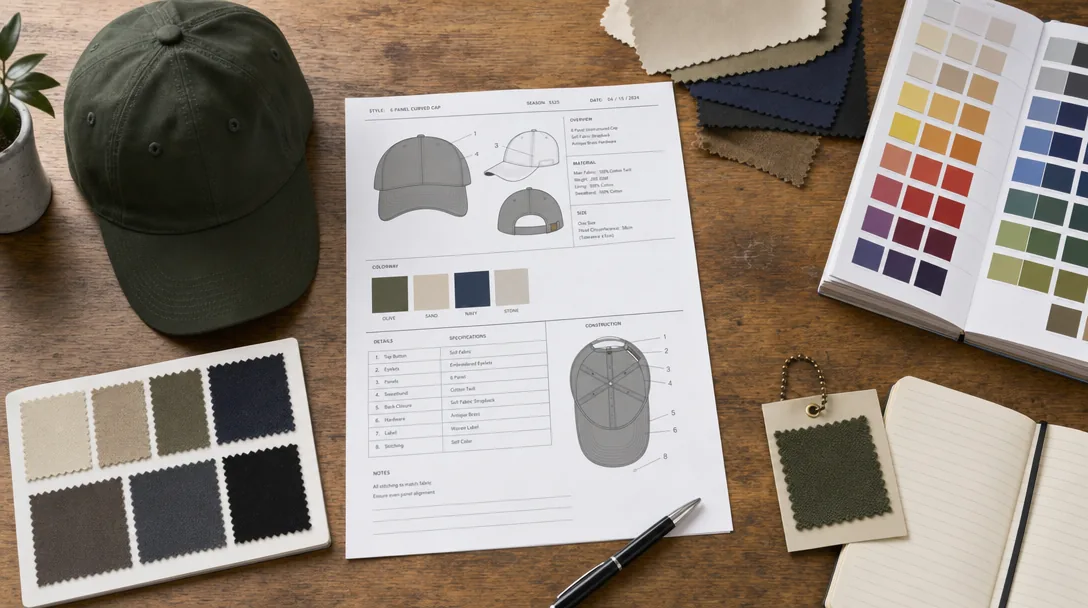
The tech pack should read like a production control sheet, not a mood board. Call out Pantone TCX or Pantone Coated reference, maximum Delta-E of 1.5-2.0 under D65 light box, crown height tolerance of +/-3 mm, visor length and curvature, sweatband composition, closure gauge, stitch density, eyelet construction, and logo stitch count. Recycled polyester runs hotter under embroidery than cotton chino and tends to shift on the frame, so the factory should confirm whether bulk will run on Tajima, Barudan, or ZSK heads, what backing weight is planned, and whether the digitizing has been compensated for low-friction shells. Our standard practice is to inspect bulk at AQL 2.5 with specific checkpoints on visor symmetry within +/-3 mm, panel-to-panel shade variation, seam puckering, coating streaks, skew, and oil marks around the needle plate. In China FOB terms, a standard 6-panel rPET cap at 500-1,000 units is typically $2.10-$3.40, with flat or 3D embroidery adding $0.25-$0.80 and lamination or ripstop upgrades adding $0.40-$1.20. Stock-fabric programs can start at 300-500 pieces per color; custom-developed laminated shells usually need 1,000+ because the mill MOQ, not the sewing line, is the real constraint.
Ripstop Tactical Cap Manufacturer
Fabric control separates a credible ripstop tactical cap supplier from a factory that only knows fashion headwear. Most tactical programs run on 210-240 gsm cotton ripstop, 220 gsm 65/35 poly-cotton ripstop, or 70D to 150D nylon ripstop when the brief prioritizes quick drying and lower pack weight. Buyers should ask for the actual grid size, yarn count or denier, finished weight tolerance within +/-5%, and the exact finish: C0 DWR for light water shedding, PU for basic coating, or TPU lamination when hydrostatic resistance is required. Construction has to match the end use as well: 5-panel crowns for larger front graphics, 6-panel crowns for a rounder fit, HDPE visor board for shape retention, sweatbands in polyester mesh or cotton terry, and bartacks at strap joints, loop panels, and side utility tabs. These are not small details. They decide whether the cap survives compression packing, sweat, and repeated field wear without twisting off-grain or collapsing at the front.
Embroidery is where ripstop exposes weak technical control, because the grid structure fights dense stitching more than brushed twill or a custom wool blend ball cap. A front panel can look stable before sewing and still pucker once you run 6,000-12,000 stitches on Tajima, Barudan, or ZSK heads with the wrong underlay, 75/11 needle, or backing weight. Good factories test stitch registration across the ripstop grid, especially on loop-patch panels and structured fronts, and they lock Pantone TCX references for shell, webbing, and hook-and-loop with Delta-E under 1.5 on the main fabric and under 2.0 on trims. In Yiwu, MOQ is usually 300-500 pieces per colorway for stock ripstop, while custom-dyed fabric generally starts around 1,000 pieces because mill minimums are the real constraint. FOB pricing for a basic ripstop tactical cap is typically $2.80-$4.20; add TPU membrane, laser-cut vents, molded patch application, or heavy embroidery, and the range moves to roughly $4.80-$7.50.
Final inspection should focus on failures that show up after wear, not just a neat sewing line on the packing table. The defects I see most often are off-grain cutting that makes the ripstop grid drift, visor mismatch above 3 mm, weak bartacks on webbing points, crown seam grin where reinforcement yarns open the needle line, and uneven DWR performance between panels. If the style carries embroidery, inspectors should also check backing show-through, thread tails inside the crown, distorted logo geometry, and whether the stitch load has warped the profile. AQL 2.5 is the practical baseline for final QC, but it should be backed by a spray test for water repellency, dry and wet crocking on dark shades, seam slippage checks, and a carton drop review for DDP shipments into Amazon or retail DCs. The supplier checklist should not be copied from a custom wool blend ball cap program, because tactical ripstop fails on abrasion, trim load, and finishing consistency, not on loft or handfeel.
Working with CrownsForge for custom wool blend ball cap programs
The biggest risk in a custom wool blend ball cap program is fabric consistency, not whether a factory owns enough sewing lines. Wool-blend caps go off-spec when the shell fabric shifts in stiffness, yarn hairiness, or shade between sample and bulk; that shows up as soft front panels, unstable brim pitch, and embroidery that sinks into the face. A realistic proto timeline is 7-10 calendar days from an approved tech pack with artwork, Pantone references, and trim callouts. If the factory is reverse-engineering a retail sample, 12-15 days is more honest because panel shape, buckram weight, visor board thickness, seam tape sequence, and closure construction all need to be rebuilt before sampling. For structured baseball caps, the most dependable starting constructions are 50/30/20 wool-poly-rayon or 40/60 wool-acrylic at roughly 280-340 gsm; both usually hold crown memory better than 100% wool melton and distort less after steaming and front-logo embroidery.
Color control needs to be specified upfront or the bulk lot will drift. The standard that actually works is approval under D65 lighting against Pantone TCX, with Delta-E below 1.5 for shell fabric and below 2.0 for underbill, sweatband, seam tape, and button wrap, since trims rarely hit as tightly as the main cloth. MOQ on a custom wool blend ball cap can start around 300 pcs per colorway for a basic 6-panel shape, but buyers should expect inefficient pricing at that level because marker utilization, embroidery digitizing, and trim sourcing are spread over too few units. Costing usually stabilizes closer to 1,200 pcs, especially if the cap includes 3D embroidery, custom woven labels, printed seam tape, or branded metal hardware. At CrownsForge, the cleaner programs are the ones that lock fabric lot, decoration method, and PPS approval before bulk booking, then run inline checks on visor curvature, panel symmetry, stitch count, and embroidery registration with final inspection at AQL 2.5.
Decoration is where wool blend separates experienced cap factories from general cut-and-sew vendors. Embroidery settings that run fine on cotton twill often fail on a wool blend face because the needle opens the yarn surface and exposes the ground. On front logos, Tajima and Barudan cap frames handle most work reliably, while smaller ZSK heads are better for side hits where tighter frame control helps on curved panels. In practice, a standard 75/11 setup is often too aggressive; opening density from about 0.42 mm to 0.45-0.48 mm and pairing cutaway backing with a lighter tear-away layer reduces tunneling without crushing the crown. When line width drops below about 0.8 mm, embroidery is usually the wrong decoration method; a woven patch, HD woven label, silicone transfer, or molded TPU patch will hold detail better and cut reject rates.
Serious buyers should audit process discipline before arguing over $0.20 on unit price. For retail and licensed programs, the baseline document stack is usually sedex-audit-cap-supplier-guide.html">BSCI 2.0 or Sedex SMETA 4-Pillar, plus REACH and California Proposition 65 declarations for shell fabric, sweatband foam, printing inks, metal trims, and packaging. Bulk should never start before PPS sign-off because wool-blend dye lots can vary in both shade and hand feel, even within the same mill batch. A capable factory will segregate rolls by lot number, record cutting spread data, and check panel matching, brim symmetry, closure attachment, and carton assortment during production rather than waiting for final QC. The order flow should be straightforward: tech-pack review in 24-48 hours, material booking after deposit, PPS approval, inline report at roughly 20% output, final inspection, then shipment FOB Ningbo or Shanghai, or DDP if the buyer wants landed-cost control.
Frequently Asked Questions
What logo decoration techniques do you offer?
3D puff embroidery, flat embroidery, woven patch, leather patch, PVC patch, screen printing, sublimation, applique and laser etching, all in-house with no subcontracting.
Can I order a sample before bulk production?
Yes. We strongly recommend approving a pre-production sample before mass production. Samples are charged at 35 to 60 USD each plus express shipping, fully refundable against confirmed bulk orders over 500 pieces.
Do you support sustainability certifications?
Yes. We work with GOTS organic cotton, GRS-certified recycled polyester, OEKO-TEX Standard 100 fabrics, and are BSCI and Sedex audited. Certification documentation can be provided per order.
What file format should I send for my logo?
Vector files (AI, EPS, PDF) are ideal. High-resolution PNG or JPG at 300 dpi on transparent background works as a fallback. Provide Pantone color references for accurate reproduction.
Which shipping methods do you support?
We support FOB, CIF and DDP shipping. Air express for samples and small orders, sea LCL for 100 to 500 pieces, sea FCL for 5,000+ pieces. Door-to-door DDP available for US, EU, UK, Canada and Australia.
How do I find a reliable custom waterproof cap manufacturer?
When evaluating custom waterproof cap manufacturer, the key considerations are construction quality, decoration capability, MOQ flexibility and lead time. Cover everything buyers ask about recycled polyester cap manufacturer bulk: how it's manufactured, what specs to request from a factory, typical MOQ and pricing, common quality issues to inspect for, and how this ties back to the broader custom wool blend ball cap sourcing decision. Cover everything buyers ask about ripstop tactical cap manufacturer: how it's manufactured,…
How does ordering custom embroidered ball cap work?
When evaluating custom embroidered ball cap, the key considerations are construction quality, decoration capability, MOQ flexibility and lead time. Cover everything buyers ask about organic cotton cap wholesale custom: how it's manufactured, what specs to request from a factory, typical MOQ and pricing, common quality issues to inspect for, and how this ties back to the broader custom wool blend ball cap sourcing decision. Cover everything buyers ask about recycled polyester cap manufacturer bulk: how it's…
How does ordering baseball cap custom embroidery work?
When evaluating baseball cap custom embroidery, the key considerations are construction quality, decoration capability, MOQ flexibility and lead time. Cover everything buyers ask about organic cotton cap wholesale custom: how it's manufactured, what specs to request from a factory, typical MOQ and pricing, common quality issues to inspect for, and how this ties back to the broader custom wool blend ball cap sourcing decision. Cover everything buyers ask about recycled polyester cap manufacturer bulk: how it's…
What should I know about custom golf cap rope bulk?
When evaluating custom golf cap rope bulk, the key considerations are construction quality, decoration capability, MOQ flexibility and lead time. Cover everything buyers ask about recycled polyester cap manufacturer bulk: how it's manufactured, what specs to request from a factory, typical MOQ and pricing, common quality issues to inspect for, and how this ties back to the broader custom wool blend ball cap sourcing decision. Cover everything buyers ask about organic cotton cap wholesale custom: how it's…
Ready to start your custom hat project?
Send us your tech-pack, sketch or even just an inspiration photo. We will respond with a detailed quotation and digital mock-up within 24 hours.
Request a free quoteRelated guides
Performance & Athletic Caps: Moisture-Wicking, UPF and Buyer Specs - 2026 Buyer's Guide - 2026 Buyer's Guide
Read article →
Country Trucker Caps: The 2026 Sourcing & Manufacturing Playbook
Read article →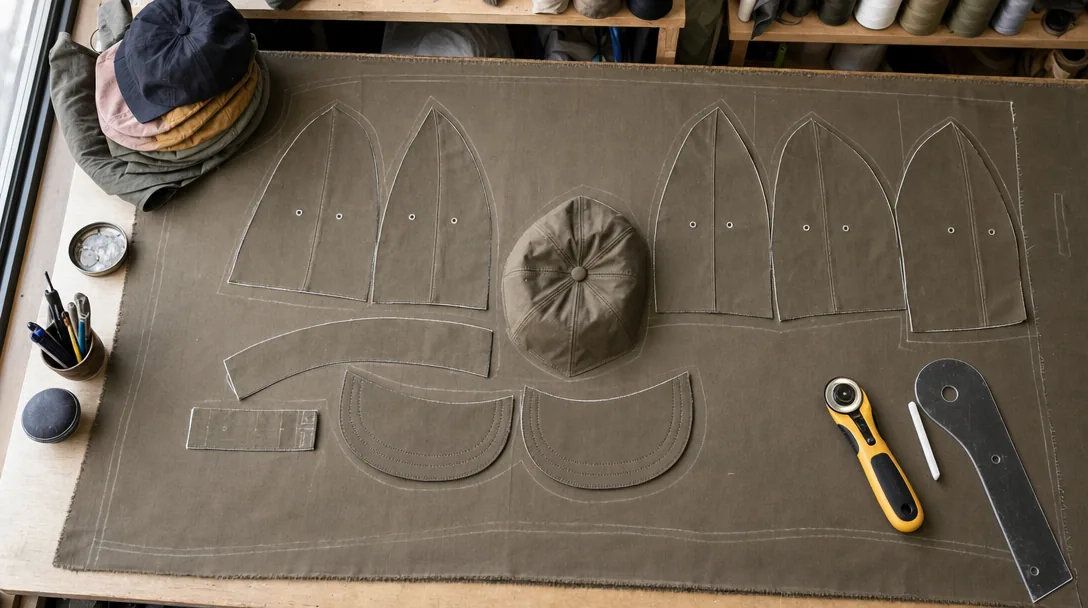
5-Panel vs 6-Panel Caps: Construction, Use Cases and Cost Compared (2026 Update)
Read article →If you are ready to take the next step on custom wool blend ball cap: a 2026 b2b sourcing guide - supplier checklist - cost & moq breakdown, our team can put a tailored quotation and digital mock-up in your inbox within 24 hours. Send the inquiry form on our contact page or message us directly on WhatsApp.