
Custom Wool Blend Ball Cap: A 2026 B2B Sourcing Guide - 2026 Buyer's Guide
Custom Wool Blend Ball Cap: A 2026 B2B Sourcing Guide - 2026 Buyer's Guide is one of the most-asked questions we receive from international buyers, and for good reason. With dozens of factories competing for your order and an alphabet soup of technical terms in every supplier quote, even experienced importers can feel lost. This guide consolidates what we have learned producing custom hats for clients in 40+ countries.
Organic Cotton Cap Wholesale Custom
Traceability is the first filter, not a marketing add-on. If a supplier cannot tie each organic cotton fabric lot to a GOTS or OCS transaction certificate, yarn count, shade batch, and mill test report, the “organic” claim is weak the moment your compliance team asks questions. In China, most cap factories buy finished twill or brushed chino from mills in Zhejiang, Jiangsu, or Shandong rather than weaving in-house, so the real risk sits in fabric specification and cutting performance. For a structured 6-panel style, 260-320 gsm organic cotton twill is the safe commercial range; below that, the crown loses shape after wash and embroidery distortion becomes harder to control. Standard build should include 0.45-0.55 mm buckram on the front panels, a 1.8-2.0 mm PE visor insert, and crown seams at 8-10 SPI with consistent seam allowance. If the program also includes a custom wool blend ball cap, keep the same pattern block, crown height, visor length, eyelet placement, and closure spec across both fabrics. Once those dimensions drift, your cotton and wool-blend SKUs will fit like two different products.
The specs that prevent claims are measurable, not subjective. Set Pantone TPX or TCX references before bulk dyeing, require panel-to-panel shade variation under Delta-E 1.5 on visible areas, hold finished circumference within +/-0.5 cm, and define wash or steam shrinkage limits up front. Embroidery matters even more on organic cotton because the surface is less forgiving than a tighter wool-poly face. Ask whether the factory runs Tajima, Barudan, or ZSK cap frames, what needle size they use, and whether backing is tear-away, cut-away, or fused support; weak digitizing will pucker 280 gsm twill long before it causes trouble on a custom wool blend ball cap. Cotton also exposes process mistakes fast: seam torque after enzyme wash, needle cutting around dense fills, visor misalignment, logo ghosting, and oil marks on pale shades all show immediately under retail lighting. For inspection, focus on sell-through defects: front-panel seam grin, crown symmetry, visor waviness, sweatband twisting, embroidery tension, and size variance within the same carton. AQL 2.5 for major defects and 4.0 for minor is the practical baseline, especially if the supplier also needs current sedex-audit-cap-supplier-guide.html">BSCI 2.0 or Sedex SMETA 4-Pillar documentation for audited retail accounts.
Pricing is driven more by fabric commitment and trim count than by the word “organic.” With stock organic cotton fabric, workable MOQ is usually 144-300 pieces per colorway; once you add custom dyeing, branded inside taping, recycled labels, or non-standard closures, the real threshold moves to 500-1,000 pieces because the mill and trim vendors want cleaner production runs. In the current East China market, a basic structured cap with flat embroidery and a zinc-alloy buckle usually lands around $3.20-$5.40 EXW at 300-500 pieces. Add high-density embroidery, woven patch application, garment wash, FSC-certified packaging, or custom metal hardware and you move past $6.50 quickly, often into the $7.20-$7.80 range when the order is split across several small colorways. That cost spread matters when you are deciding whether a custom wool blend ball cap should share trims, cartons, and packaging specs with the organic cotton style or sit on its own sourcing lane. Shared hardware can save $0.18-$0.35 per cap, but only if the cotton and wool-blend programs run on the same production calendar and quality standard.
Recycled Polyester Cap Manufacturer Bulk
A recycled-poly cap program is only as credible as its chain of custody. If the fabric mill cannot provide a valid GRS transaction certificate tied to post-consumer rPET yarn, the sustainability claim will not survive retailer compliance review, no matter how good the salesman sample looks. In practice, the most stable cap fabrics sit in narrow bands: 150D-300D plain weave for structured sports styles, 180-240 gsm brushed rPET twill for mainstream 6-panel builds, and 210D ripstop for lighter outdoor programs. Move too far outside those specs and you start losing panel memory, embroidery stability, and consistent crown shape. Recycled yarn also shows more lot-to-lot variation than virgin polyester, so bulk approval has to be tighter: Pantone TCX lab dips, colorfastness test reports, and a sealed shade standard with Delta-E held around 1.5-2.0 under D65 lighting. Against a custom wool blend ball cap, rPET usually performs better on moisture pickup, drying time, and print sharpness, but it rarely matches wool blend on hand feel, loft, or premium-retail perception.
Most sourcing mistakes happen in the RFQ. If you do not lock the fabric composition, denier, finished gsm with ±5% tolerance, crown fuse type, visor board, closure, sweatband substrate, seam tape, and embroidery stitch count, three factories will quote three different hats and call them equivalent. For outdoor builds, 3 mm grid rPET ripstop with C0 or C6 DWR is a workable commercial spec; for fashion caps, recycled twill generally runs cleaner on Tajima or Barudan heads because satin columns hold a sharper edge. MOQ is typically 300-500 pieces per colorway for a standard 6-panel cap, but it jumps to 800-1,000 when you require custom-dyed shell fabric, recycled buckram, molded rubber patches, or recycled trims throughout. Current China pricing for a basic rPET cap is usually $2.20-$3.40 FOB Ningbo; coated, seam-sealed, or membrane-backed builds move closer to $4.80-$7.50 depending on tape application, panel complexity, and packing method.
Inspection is where recycled-poly programs protect margin. The repeat defects are predictable: crown torque from unstable grain, crown-to-brim shade split caused by mixed lots, eyelet puckering, needle cutting on coated panels, and embroidery distortion when the backing is too light for a soft shell. A capable factory should run final inspection at AQL 2.5, checking peak symmetry, top-button centering, sweatband join cleanliness, stitch density, visor curve consistency, and carton-level shade variation under D65 light boxes rather than warehouse fluorescents. Dark navy, black, and saturated red need extra crocking and wash checks because rPET dye uptake still varies noticeably by mill and dyehouse. Recycled polyester is not a blanket replacement for wool programs: use it where weather resistance, lighter weight, and documented compliance matter; choose a custom wool blend ball cap where texture, warmth, and perceived value are what actually close the sale.
Ripstop Tactical Cap Manufacturer
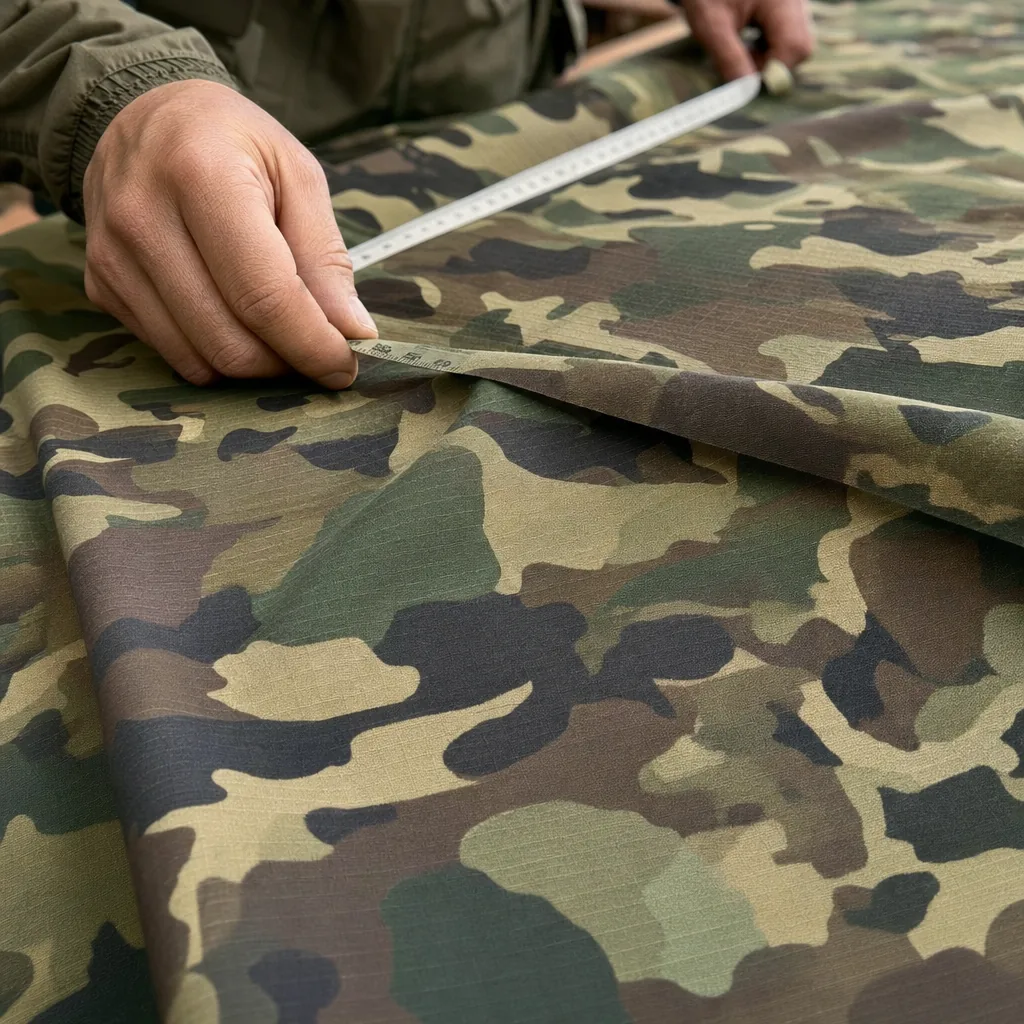
A competent ripstop tactical cap manufacturer proves itself in fabric control, not in a polished mockup. For most tactical programs, the real starting point is 65/35 poly-cotton ripstop at 210-240 gsm or 100% nylon ripstop at 150-180 gsm, usually with a 5 mm to 8 mm reinforcement grid that must stay square through cutting, fusing, and pressing. Once the grid drifts off-grain, the center front seam starts snaking, side panels torque, and loop-patch zones look misaligned even before the cap goes on a head. A serious tech pack should lock fiber content, gsm tolerance at plus or minus 5%, Pantone TCX reference, Delta-E tolerance below 1.5 if shade consistency matters, colorfastness grade 4 minimum, tear strength, seam slippage, sweatband spec, brim board thickness, and closure construction. Grid matching also needs its own tolerance: on tactical caps, a 2 mm mismatch at the front seam is already obvious, much faster than on a custom wool blend ball cap where surface texture hides minor panel variation.
Most factories get exposed once embroidery and finishing start. Ripstop is unforgiving under hoop pressure, and nylon faces will glaze or pucker if stitch density is copied from brushed cotton or wool-blend programs. On Tajima, Barudan, or ZSK heads, experienced lines usually lower density, test 65/9 or 70/10 needles, and adjust underlay so the grid is not scarred around structured fronts or loop fields. Buyers should also specify whether water resistance comes from a C0 or C6 DWR finish, PU or TPU backing, or seam sealing, because each choice changes hand feel, breathability, and embroidery behavior. In China, a practical MOQ is usually 300-500 pieces per colorway, with current FOB pricing around $2.80-$4.20 for a basic poly-cotton ripstop build and $4.50-$7.50 for nylon ripstop with branded closures or laser-cut loop panels. Final inspection should be run at AQL 2.5 with checkpoints on grid alignment, patch placement within plus or minus 2 mm, visor symmetry, bartack strength, and spray rating; if the same collection includes a custom wool blend ball cap, keep trims visually aligned but separate the QC logic completely.
Working with CrownsForge for custom wool blend ball cap programs
A custom wool blend ball cap program lives or dies on sampling discipline, not on whoever promises the shortest lead time. For a structured 6-panel shape in a 50/30/20 wool-poly-rayon shell at 340-360 gsm, a factory that actually controls its pattern room should turn digital mockups in 2-3 working days, complete the first proto in 7-10 days, and need 4-6 more days for any revision that changes the block—crown height, visor radius, front-panel buckram, seam allowance, or sweatband width. Buyers lose the most time when they approve artwork before locking fit. Moving from low profile to mid profile changes the embroidery window by several millimeters and alters front-panel tension; switching closure from a 7-hole PP snap to a brass buckle or leather strapback also shifts back-opening balance and affects carton yield. MOQ should be judged against fabric availability, not sales ambition. In stock wool-blend cloth, 144 pieces per color is realistic; if the shade is already in the mill card, 288 pieces split across 2-3 Pantone-led colorways is usually manageable for an initial launch. Once you request a custom-dyed melange, the economics change fast: many mills want 80-120 meters per shade, which can push the effective MOQ to 500-800 caps depending on marker efficiency and fabric width. Our standard practice is to freeze Pantone TCX, closure spec, embroidery size, and internal labeling before the sample is cut, because late changes at that stage are what turn a clean custom wool blend ball cap program into a three-round approval cycle.
Decoration is where wool blends expose weak factories. Melange and brushed surfaces magnify every digitizing mistake, so logo files need lower underlay, controlled stitch density around 0.38-0.42 mm, and pull compensation tuned to the actual fabric, not copied from a cotton twill file. On Tajima or Barudan multi-heads, 40 wt polyester thread is the safer default because it holds shade and abrasion better than rayon during wear testing, but front logos still need density limits or the panel starts tunneling after hooping. For the same reason, 3D puff is usually a bad bet on softer wool-forward shells; it performs more reliably on acrylic-rich blends that spring back after compression. Bulk control needs numbers, not vague promises. Before production, confirm BSCI 2.0 or Sedex SMETA 4-Pillar audit status, REACH and AZO compliance on trims, and approved color standards against Pantone TCX with a Delta-E tolerance of 1.0-1.5 on critical body panels. For a 1,200-piece order, 18-25 days after sample sign-off is normal if fabric and trims are in house. Inline QC should check panel matching, visor arc consistency, embroidery placement within ±2 mm, and shade variation under D65 light; final inspection at AQL 2.5 should also include metal trim function, sweatband stitching, carton compression, and drop testing, because a custom wool blend ball cap that lands with crushed crowns is a logistics failure, not just a production one.
Frequently Asked Questions
What is the minimum order quantity (MOQ) for custom hats?
Our standard MOQ is 100 pieces per design and color, with sampling available from 1 piece. For complex multi-color logos or premium fabric upgrades, the MOQ can be lowered with a small per-piece surcharge.
Do you support sustainability certifications?
Yes. We work with GOTS organic cotton, GRS-certified recycled polyester, OEKO-TEX Standard 100 fabrics, and are BSCI and Sedex audited. Certification documentation can be provided per order.
Which shipping methods do you support?
We support FOB, CIF and DDP shipping. Air express for samples and small orders, sea LCL for 100 to 500 pieces, sea FCL for 5,000+ pieces. Door-to-door DDP available for US, EU, UK, Canada and Australia.
What file format should I send for my logo?
Vector files (AI, EPS, PDF) are ideal. High-resolution PNG or JPG at 300 dpi on transparent background works as a fallback. Provide Pantone color references for accurate reproduction.
How long does production take?
Sampling takes 7 to 12 days. Bulk production runs 20 to 30 days depending on quantity, fabric availability and decoration complexity. Inspection and packing adds another 3 to 5 days before shipment.
How do I find a reliable custom waterproof cap manufacturer?
When evaluating custom waterproof cap manufacturer, the key considerations are construction quality, decoration capability, MOQ flexibility and lead time. Cover everything buyers ask about recycled polyester cap manufacturer bulk: how it's manufactured, what specs to request from a factory, typical MOQ and pricing, common quality issues to inspect for, and how this ties back to the broader custom wool blend ball cap sourcing decision. Cover everything buyers ask about ripstop tactical cap manufacturer: how it's manufactured,…
How does ordering custom embroidered ball cap work?
When evaluating custom embroidered ball cap, the key considerations are construction quality, decoration capability, MOQ flexibility and lead time. Cover everything buyers ask about organic cotton cap wholesale custom: how it's manufactured, what specs to request from a factory, typical MOQ and pricing, common quality issues to inspect for, and how this ties back to the broader custom wool blend ball cap sourcing decision. Cover everything buyers ask about recycled polyester cap manufacturer bulk: how it's…
How does ordering baseball cap custom embroidery work?
When evaluating baseball cap custom embroidery, the key considerations are construction quality, decoration capability, MOQ flexibility and lead time. Cover everything buyers ask about organic cotton cap wholesale custom: how it's manufactured, what specs to request from a factory, typical MOQ and pricing, common quality issues to inspect for, and how this ties back to the broader custom wool blend ball cap sourcing decision. Cover everything buyers ask about recycled polyester cap manufacturer bulk: how it's…
What should I know about custom golf cap rope bulk?
When evaluating custom golf cap rope bulk, the key considerations are construction quality, decoration capability, MOQ flexibility and lead time. Cover everything buyers ask about recycled polyester cap manufacturer bulk: how it's manufactured, what specs to request from a factory, typical MOQ and pricing, common quality issues to inspect for, and how this ties back to the broader custom wool blend ball cap sourcing decision. Cover everything buyers ask about organic cotton cap wholesale custom: how it's…
Looking for a reliable hat manufacturer in China?
CrownsForge has produced custom hats for 800+ brands across 40 countries. From 100-piece launches to 100,000-piece retail programs, we deliver on time and on spec.
Get in touchRelated guides
Compliance Documentation Checklist for First Hat Import to US/EU (2026 Update)
Read article →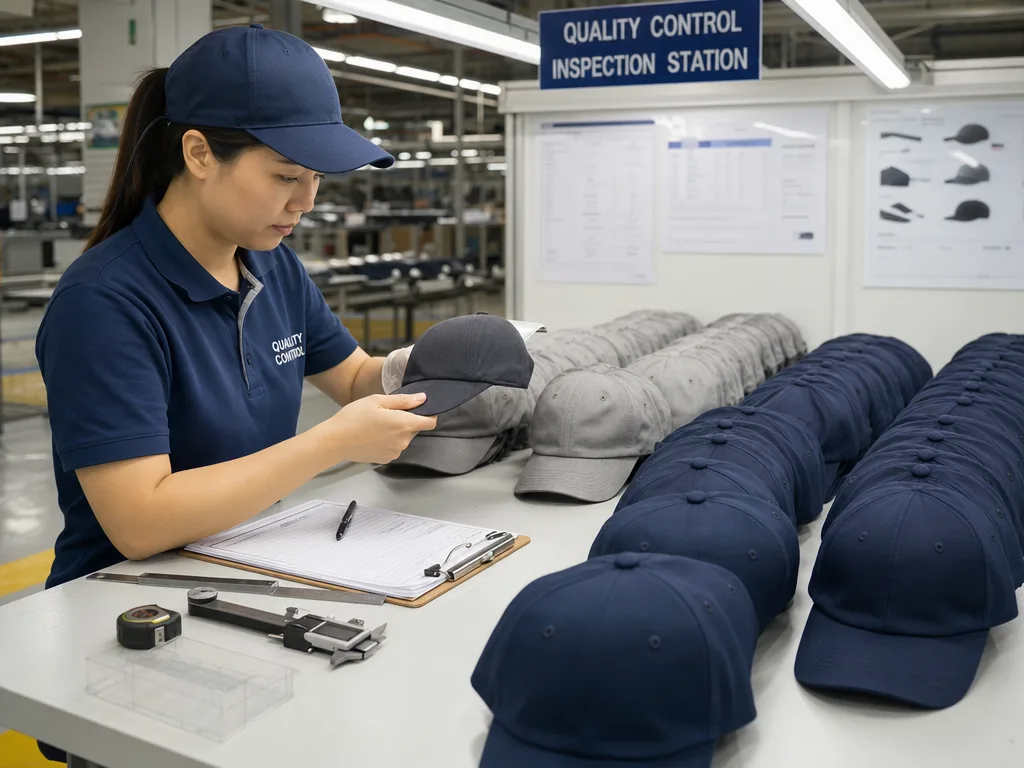
Cap Factory AQL Inspection Plan for Importers
Read article →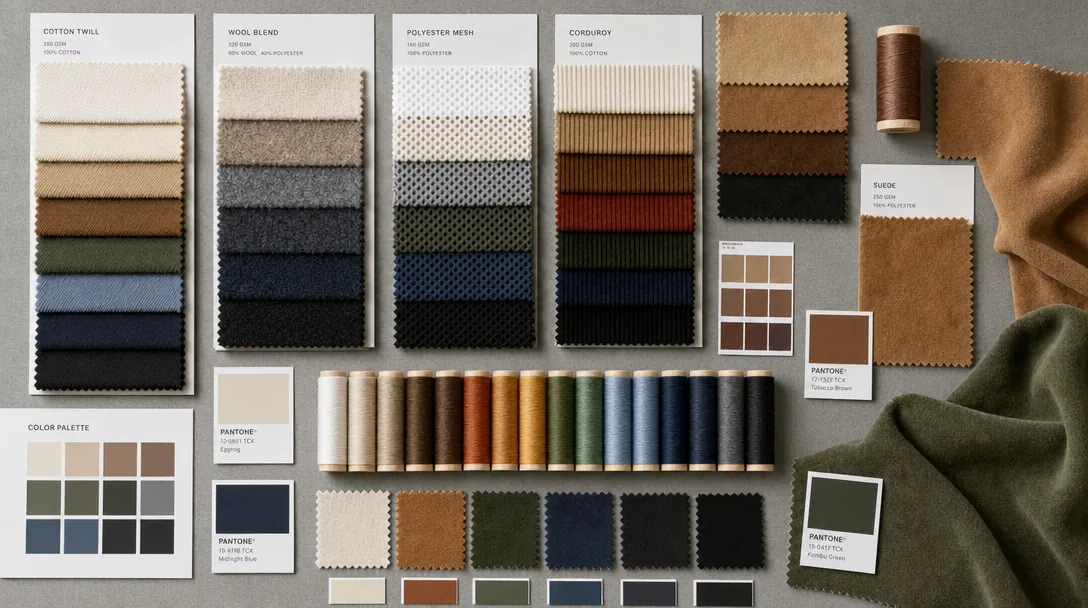
Bucket Hat Corduroy MOQ And Pricing Plan for Custom Hat Buyers
Read article →Sourcing custom hats does not have to be complicated. With the right manufacturing partner, clear specifications and a small upfront investment in sampling, you can launch a retail-quality product in 30 to 45 days.