
Custom Rope Hats: Manufacturing, Materials and Bulk Pricing - Supplier Checklist
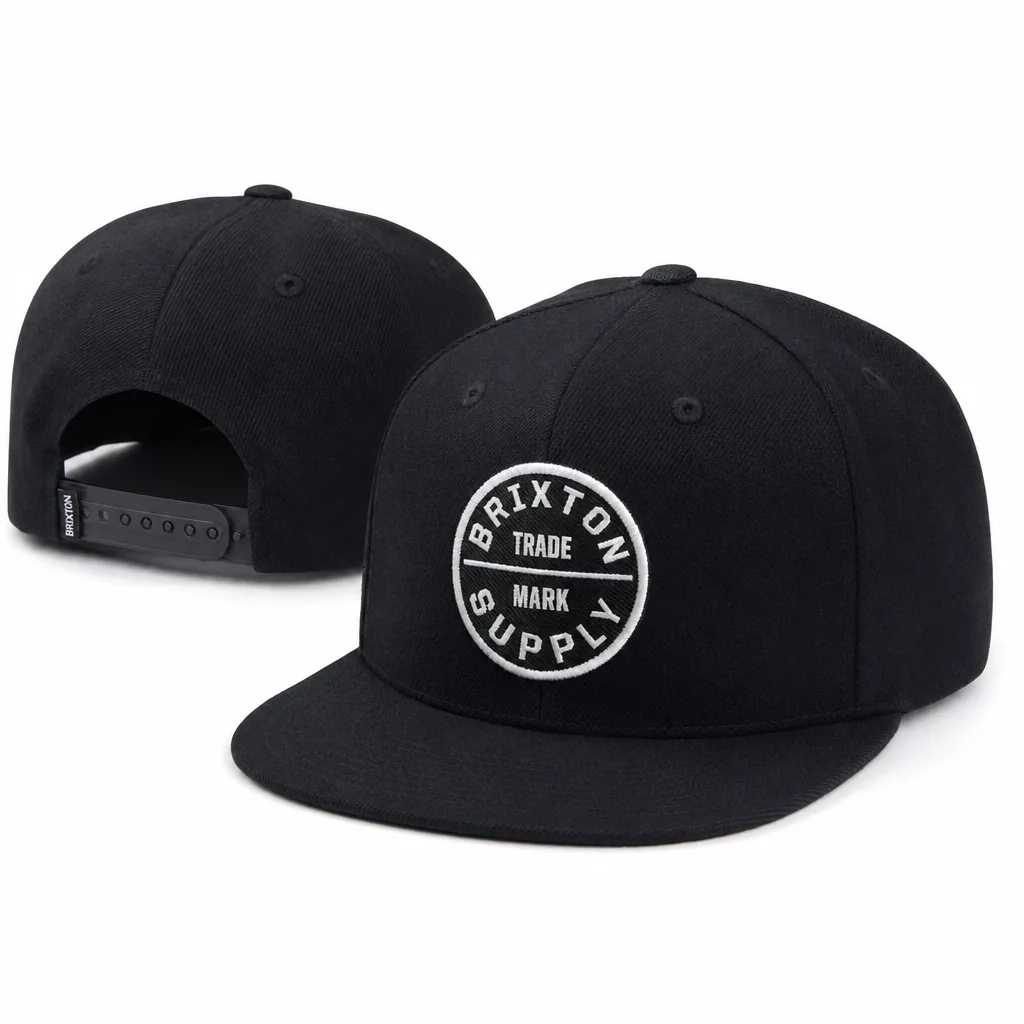
Custom Rope Hats: Manufacturing, Materials and Bulk Pricing - Supplier Checklist is one of the most-asked questions we receive from international buyers, and for good reason. With dozens of factories competing for your order and an alphabet soup of technical terms in every supplier quote, even experienced importers can feel lost. This guide consolidates what we have learned producing custom hats for clients in 40+ countries.
What a rope hat actually is (and isn't)
A rope hat is defined by one construction detail: a visible braided cord running across the lower front crown, directly above the visor seam. If that cord is missing, it is not a rope style, even if the profile leans golf, retro, or resort. In factory terms, the rope is usually a 3 mm to 5 mm braided polyester cord with a heat-cut core, though better programs sometimes use cotton-poly for a softer hand and less shine. On most custom rope hats, that cord is captured into the front panel seam or side seam before visor closing, then fixed so it sits straight under tension. The two most common bodies are a 5-panel crown with one uninterrupted front panel for larger logo placement, and a 6-panel structured crown with 0.8 mm to 1.2 mm buckram for more height and cleaner shape retention. The rope itself needs the same color control as fabric, visor board, and closure tape because contrast trim drift is obvious at first glance. Specify Pantone TCX for textile matching, approve a physical lab dip, and set a realistic Delta-E tolerance of 1.5 to 2.0 against the standard under D65 lighting. I have seen buyers approve shell fabric and forget the rope, then reject 3,000 units because the cord reads half a shade warmer than the crown. At CrownsForge, we also flag rope diameter tolerance at sampling because a nominal 4 mm cord that runs 3.2 mm in bulk looks cheap, while a 4.8 mm cord can distort the seam line on lighter crowns.
A rope hat is not a trucker cap with visor sandwich piping, not a snapback with contrast edge tape, and not a washed dad hat with decorative topstitching near the brim. Those trims are attached differently and they change the seam map, panel tension, and finishing sequence. A true rope style places the cord visibly proud above the brim line, usually secured with a 301 lockstitch and short bartacks or end tacks at both sides so it does not drift during packing, steaming, or carton compression. When buyers send reference photos without calling out that detail, factories often sample the wrong construction, and one correction cycle can add 7 to 10 days plus another $35 to $80 in sampling cost depending on fabric and decoration. The rope is the signature, but it is not the main quality risk. The real pass-fail points are crown balance, visor symmetry within 2 mm left to right, embroidery registration, and seam cleanliness around the front opening where puckering shows immediately. That matters even more on lightweight shells such as 120 gsm crinkle nylon, 130-150 gsm recycled taslon, or 140 gsm microfiber, where excess upper-thread tension or a dull needle will chew the panel before the rope is even attached. For decorated custom rope hats, I would worry more about whether a Tajima or Barudan run is holding clean satin edges on the front panel than about the cord itself. Final inspection should still be done to AQL 2.5, with special attention to rope alignment, brim centering, and recovery after compression packing.
Rope material and attachment construction
Rope trim is a small component, but on custom rope hats it is the first defect buyers spot from 2 to 3 feet away. The safest production spec is 4 mm braided polyester cord, usually a 24-carrier construction in 150D or 300D filament, because it keeps a round profile after crown pressing, resists UV yellowing better than cheap nylon, and gives more even shade depth on dark colors. Twisted nylon still has a place on retro golf and trucker styles, but it absorbs more moisture, fuzzes sooner at cut points, and tends to flatten under carton pressure. In the tech pack, rope should never be listed as “matching cord.” Call out diameter, braid type, filament denier, finish, and color control: Pantone TCX reference, approved lab dip, and Delta-E tolerance of 1.5 to 2.0 against the sealed standard. That level of detail matters because a cool optical-white rope against a warm ecru crown looks off immediately under 4000K retail lighting. Material consistency drives claim rate more than most buyers realize. Low-grade stock cord often varies in braid tension from lot to lot, so one shipment sits crisp across the front seam while the next collapses flat at center front or kicks upward at the temples. On a 3,000 to 10,000 piece run, upgrading from generic stock cord to Pantone-matched braided polyester usually adds only $0.03 to $0.08 FOB per cap, which is insignificant next to rework, chargebacks, or dead stock. If the article is about premium custom rope hats, the rope spec belongs in the same control tier as shell fabric, buckram, and sweatband—not buried as an afterthought trim note.
Attachment construction is where factory discipline shows. The cleanest method is to catch the rope inside the crown-to-brim seam with fixed seam allowance and mechanical edge guides, not freehand placement on a high-speed single-needle station. Across the front arch, the rope line should track evenly from left temple to right temple with no twist, no rise at center front, and no more than 1.5 to 2.0 mm spacing deviation side to side; beyond that, the defect is obvious on shelf. Good lines verify symmetry on a flat template immediately after brim joining, then do inline pull checks before sweatband closing, because once the body is fully assembled, rope drift usually becomes scrap or visible rework. Most rope failures come from basic process sloppiness: heat-cut ends that bloom, shallow stitch bite that lets the cord lift, or thread tension that puckers the seam after pressing. Better suppliers specify whether ends are tucked, back-tacked, or ultrasonically sealed, and they build rope anchoring, seam security, and symmetry into AQL 2.5 inspection instead of waving it off as cosmetic. On bulk programs, cleaner rope construction typically adds around $0.05 to $0.12 per cap depending on fabric thickness and labor content. That is cheap insurance, because visible trim failure can show up after carton compression, repeated wear, or as few as 10 to 20 home laundry cycles on casual-wash styles.
Rope color strategy for retail aesthetics
Rope color shifts retail price perception faster than most trims, and tonal usually sells higher when the execution is disciplined. A rope matched close to the crown reads cleaner on shelf, which is why it outperforms in golf, resort, and premium lifestyle programs. The problem is material behavior, not design intent. A 240-280 gsm cotton twill or brushed chino can usually hold a tight match; washed canvas, garment-dyed cotton, slub weaves, and heather poly blends cannot, because the braided rope face throws light differently than a flat fabric surface. For custom rope hats, digital mockups are only useful for layout. Final approval should be done against physical rope and fabric swatches under D65 lighting, with a target of Delta-E 1.5 or better on solid shades and a realistic acceptance limit closer to 2.0 in bulk. If the crown is matched to a Pantone TCX or C reference, the rope supplier still needs a separate lab dip because braided polypropylene, acrylic, or cotton cord takes color differently than woven cap fabric. Contrast rope is still the safest commercial choice because it improves read distance and frames the front logo from roughly 6-8 feet at retail. Good contrast is controlled, not random: the rope should lock to one existing element such as a 3D embroidery fill, visor sandwich, underbill, snap tab, or woven label accent. Navy/off-white and black/cream are reliable volume combinations; black/red only works when the red is tied to the embroidery thread standard and checked on-machine before bulk on Tajima, Barudan, or ZSK heads. On the production floor, contrast rope is also less forgiving. It exposes seam grin, inconsistent topstitch spacing, adhesive marks, and weak corner turns immediately, especially on 5-panel foam-front styles where needle tracks can telegraph through the face. In FOB China pricing, a standard stock single-color rope usually adds $0.08-$0.18 per cap over a comparable non-rope style, while a custom two-color twisted rope typically adds $0.20-$0.45 and can extend lead time by 5-10 days if the mill has to custom-twist instead of pulling stock cord.
5-panel vs 6-panel rope hat construction
Panel count affects decoration yield more than styling, and for most custom rope hats with a front logo wider than 90 mm, a 5-panel build is the cleaner production choice. The uninterrupted front panel avoids a center seam under the artwork, which matters for satin columns, 3D puff, TPU heat-transfer badges, and woven patches where seam bridging telegraphs every needle hole. In production, a 5-panel rope hat is usually built with 2.0-2.5 mm EVA foam or medium-weight buckram, a crown height around 8.5-9.5 cm, and a flatter front that hoops more predictably on Tajima or Barudan heads. That reduces logo skew during embroidery and lowers the chance of front-panel torque after closing and topstitching. Buyers in golf, fishing, and outdoor promo keep choosing this construction for a practical reason: the logo reads cleanly, the rope line stays visually straight, and the lower-profile shape sits comfortably with visors, sunglasses, and hearing protection.
A 6-panel rope hat trades decoration efficiency for shape retention. The split front and center seam shrink the safe embroidery window, but the construction usually carries firmer buckram and a taller 9.5-11 cm crown, giving a more structured baseball-cap silhouette that photographs better for retail and licensed programs. The technical penalty shows up fast on detailed artwork: text under 4 mm cap height, high-density fills, and 3D puff over roughly 5 mm foam need extra strike-offs because seam bounce can shift registration by 1-2 mm, even on well-tuned multihead machines. If the logo crosses the seam, expect more hand trimming, more rejected panels for left-right imbalance, and tighter centering tolerance at final inspection.
The unit-cost gap is usually small; the defect risk is not. At 1,000 pieces, a 6-panel version often costs only $0.15-$0.40 more than a comparable 5-panel hat, but it adds more variables in sewing, hooping, and QC. Under AQL 2.5, common 5-panel failures are mostly manageable—rope placement, visor stitch count, crown-height variance—while 6-panel runs add seam mismatch, off-center embroidery, and asymmetry between left and right front panels. Fabric and trim amplify the difference: a 210-230 gsm brushed cotton twill is forgiving, while wool blends, polyester taslon, suede sandwich brims, 3-5 mm contrast rope, or metal clasp closures all increase handling time. In practice, choose 5-panel custom rope hats for oversized logos and fast-turn promo runs; choose 6-panel when silhouette, shelf presence, and premium positioning matter more than maximum decoration area.
Fabric choices for rope hat programs
The shell fabric determines whether custom rope hats feel like disposable promo stock or a legitimate retail SKU; the rope only finishes the story. For golf, fishing, and outdoor programs, woven polyester is still the safest bulk choice because it holds front-panel shape, dries fast, and resists sweat, salt, and sunscreen better than cotton. In production, the most reliable window is 140-180 gsm for standard woven poly, or 110-130 gsm microfiber peach-finish polyester when the buyer wants a softer hand without collapsing the crown. If the design includes laser-perforated side or rear panels, stay in a 75D-150D filament construction: lighter than 75D often feels flimsy after sewing, while heavier yarns tend to leave darkened perforation edges instead of a clean cut. Polyester also gives the best repeatability on replenishment orders; if the mill is matching Pantone TCX correctly, a bulk-lot Delta-E under 1.5 is realistic and worth locking into color approval notes for repeat POs.
Cotton twill is the better call when custom rope hats need a broken-in lifestyle look instead of a technical finish, but fabric quality matters more than most buyers assume. Cheap brushed cotton tends to fuzz under embroidery and loses crown recovery quickly; a 100% cotton twill in a 16x12 construction around 210-260 gsm gives cleaner stitch definition and runs more consistently on Tajima or Barudan heads. That spec works well for collegiate, brewery, resort, and streetwear programs, especially with flat embroidery, chain stitch, woven patches, or lighter satin borders rather than dense fill stitching. If the cap is garment washed, enzyme washed, or pigment dyed, approve the rope color only after wash testing the shell because cotton shade shift can make an optic-white rope look harsh against a softened body color.
Textured fabrics can elevate the product, but they also raise defect risk and need tighter process control. Wool blends in the 15%-30% wool range, typically mixed with acrylic or polyester, give a denser, heritage face that suits felt appliqué, merrowed emblems, and satin-stitch lettering; corduroy pushes that texture further, with 14-wale reading more vintage and 21-wale looking cleaner and more fashion-driven. Both require disciplined panel cutting, wale or nap alignment, and reduced embroidery speed on ZSK or Barudan machines so stitches do not sink into pile. Inspection standards should be tougher too: AQL 2.5 is the right baseline, but the checklist should specifically cover nap direction, rope attachment height measured from both side seams, front-crown symmetry, panel-to-panel shade variation, and embroidery clarity under normal retail lighting. In FOB terms, wool-blend rope hats usually land around $3.60-$5.20, and corduroy often runs higher once you add structured buckram, custom taping, or patch-based decoration.
MOQ, lead time and pricing tiers
MOQ on custom rope hats is driven by material efficiency and trim booking, not the headline number on a quote sheet. On a factory floor, 100 pcs per style/color is a realistic minimum for a standard 5-panel or 6-panel build using stock 10x10 cotton twill around 260-280 gsm, one rope color, and one closure such as a PP snapback. The moment you introduce a second shell fabric, split sizing, a custom braid, or an extra logo position, the workable MOQ usually moves to 144 or 200 pcs because marker loss, trim allocation, and machine setup stop balancing. A supplier offering 50 pcs can still be legitimate, but the tradeoff is almost always somewhere else: stock colors only, shared rope trim, no custom printed taping, or a higher FOB that absorbs embroidery digitizing, cutting waste, and low line efficiency. Buyers should lock the definition of “one design” before approving cost: same crown fabric, same Pantone-approved rope, same closure, same decoration count. If any of those variables change, the MOQ for custom rope hats usually changes with it.
Lead time is mostly decided in pre-production, not in sewing. A pre-production sample normally takes 7-10 calendar days if artwork is vector-clean, Pantone TCX references are confirmed, and the braided cord is available in stock shades. If the factory has to lab-dip a rope color, source 70D Taslon, recycled poly, or brushed microfiber, add 3-5 days before sampling even begins. Bulk production for 100-500 pcs usually runs 22-28 days after sample sign-off and deposit, covering fabric and trim booking, panel cutting, embroidery on Tajima or Barudan heads, stitching, shaping, finishing, and export packing. More technical builds—3D puff embroidery, woven wrap labels, printed seam tape, or extra inline QC checkpoints to AQL 2.5—can push production closer to 30 days. FOB China pricing for custom rope hats generally falls between $3.80 and $6.80 per piece, with fabric and decoration driving the spread far more than the rope-cap silhouette itself. At 300 pcs, a basic cotton twill cap with flat embroidery, stock braid, and plastic snap closure usually lands around $3.80-$4.40 FOB. Upgrade to wool blend, perforated performance fabric, nylon Taslon, metal buckle closure, 3D embroidery, applique, woven labels, or custom sweatband print, and the same hat typically moves into the $5.60-$6.80 range. The rope itself is not a throw-in detail; it commonly adds $0.30-$0.50 per cap versus the same style without it because diameter consistency, sheen matching, straight placement above the visor seam, and clean sewing without puckering all need control. That cost should be visible in the build, not hidden in vague quote language.
Working with CrownsForge on rope hat programs
The failure point on custom rope hats is usually the attachment spec, not the rope itself. A competent factory should run separate sewing standards for 4 mm braided polyester and 5 mm twisted nylon because the feed, channel width, and crown break all change. In practice, 4 mm braided polyester is the safer commercial choice for golf, resort, and promo programs: it sits flatter across the front seam, rebounds better after carton pressure, and gives cleaner e-commerce photography. A 5 mm twisted nylon rope has more visual texture and a heavier hand, but it also puts more stress on the front-panel curve and is less forgiving on lighter shells. If a supplier treats those ropes as interchangeable, you typically see side-seam puckering, a wavy rope line, or uneven topstitch spacing within the first bulk lot. Color control matters more than most buyers expect. Stock black, white, and navy are easy; dyed-to-order rope is where programs get messy. A practical MOQ is usually 500 pieces per color, sometimes 1,000 if the mill is matching an uncommon shade. Ask for a lab dip against a Pantone TCX reference and set a Delta-E tolerance below 1.5 under D65 lighting, otherwise approval becomes a vague visual exercise under factory fluorescents. CrownsForge’s standard practice is to lock rope diameter, braid construction, stitch margin, and approved color swatch before PPS, because once rope is changed after sample sign-off, the front-panel balance and sewing tension often need to be recalibrated from scratch.
Decoration on custom rope hats has to be engineered around the rope line and crown geometry, not imported from a T-shirt layout. On a structured 5-panel cap, the single front panel carries the whole presentation, so artwork needs enough clearance above the rope to avoid tunneling, buckram collapse, or distortion at the center seam. The most reliable executions are 3D puff embroidery, flat embroidery, woven patches, and screen-printed twill appliqué. On most adult crowns, the workable decoration height is about 2.25 to 2.75 inches; push much beyond that and the logo starts fighting the crown pitch instead of sitting cleanly on it. Tajima and Barudan heads can both handle these programs well, but only if the digitizing is adjusted for the actual shell fabric, because 210 gsm cotton twill, recycled taslon, and 75D microfiber all react differently to underlay, pull compensation, and stitch density. Sampling should settle silhouette before bulk pricing is finalized. The practical way to do that is to build both 5-panel and 6-panel prototypes in the same fabric, closure, rope spec, visor board, and decoration, then compare crown height, panel pitch, and fit side by side. That step sounds expensive, but it is cheaper than changing construction after PPS approval, when pattern yield, embroidery placement, and carton ratio all move at once. A late panel change can add $0.18 to $0.45 per cap in manufacturing cost, and if it misses vessel cutoff, the real penalty is expedited freight. That is how a small aesthetic revision turns into margin loss on a bulk order.
Frequently Asked Questions
What logo decoration techniques do you offer?
3D puff embroidery, flat embroidery, woven patch, leather patch, PVC patch, screen printing, sublimation, applique and laser etching, all in-house with no subcontracting.
Can I order a sample before bulk production?
Yes. We strongly recommend approving a pre-production sample before mass production. Samples are charged at 35 to 60 USD each plus express shipping, fully refundable against confirmed bulk orders over 500 pieces.
Do you support sustainability certifications?
Yes. We work with GOTS organic cotton, GRS-certified recycled polyester, OEKO-TEX Standard 100 fabrics, and are BSCI and Sedex audited. Certification documentation can be provided per order.
How long does production take?
Sampling takes 7 to 12 days. Bulk production runs 20 to 30 days depending on quantity, fabric availability and decoration complexity. Inspection and packing adds another 3 to 5 days before shipment.
What file format should I send for my logo?
Vector files (AI, EPS, PDF) are ideal. High-resolution PNG or JPG at 300 dpi on transparent background works as a fallback. Provide Pantone color references for accurate reproduction.
What's the MOQ for custom leather patch hats no minimum?
When evaluating custom leather patch hats no minimum, the key considerations are construction quality, decoration capability, MOQ flexibility and lead time. Most ropes use 4mm braided polyester or twisted nylon cord, sewn into the seam between the crown and brim. The detail must be perfectly parallel to the brim curve and tightly stitched to prevent unraveling. Cheaply-made rope hats show the rope drift or fray after 10-20 washes. Rope tooling on file for 4mm braided polyester and 5mm twisted nylon. Custom rope colors available…
How does ordering custom hat embroidery near me work?
When evaluating custom hat embroidery near me, the key considerations are construction quality, decoration capability, MOQ flexibility and lead time. 5-panel rope hat is the golf and outdoor standard — single-panel front gives uninterrupted canvas for decoration, low-profile crown stays put under helmets or visors. 6-panel rope hat is more structured, used for streetwear capsules and premium brand drops. Rope hat MOQ 100 pieces per design/color (same as baseball cap). Sample 7-10 days, bulk 22-28 days. FOB pricing…
How does ordering custom embroidery patches for hats work?
When evaluating custom embroidery patches for hats, the key considerations are construction quality, decoration capability, MOQ flexibility and lead time. Most ropes use 4mm braided polyester or twisted nylon cord, sewn into the seam between the crown and brim. The detail must be perfectly parallel to the brim curve and tightly stitched to prevent unraveling. Cheaply-made rope hats show the rope drift or fray after 10-20 washes. Rope tooling on file for 4mm braided polyester and 5mm twisted nylon. Custom rope colors available…
How do I find a reliable custom hat manufacturer usa?
When evaluating custom hat manufacturer usa, the key considerations are construction quality, decoration capability, MOQ flexibility and lead time. 5-panel rope hat is the golf and outdoor standard — single-panel front gives uninterrupted canvas for decoration, low-profile crown stays put under helmets or visors. 6-panel rope hat is more structured, used for streetwear capsules and premium brand drops. Rope hat MOQ 100 pieces per design/color (same as baseball cap). Sample 7-10 days, bulk 22-28 days. FOB pricing…
Need a low-MOQ test order?
We help emerging brands launch with as few as 100 pieces. Premium fabric, in-house embroidery, retail-ready packaging.
Start a small orderRelated guides
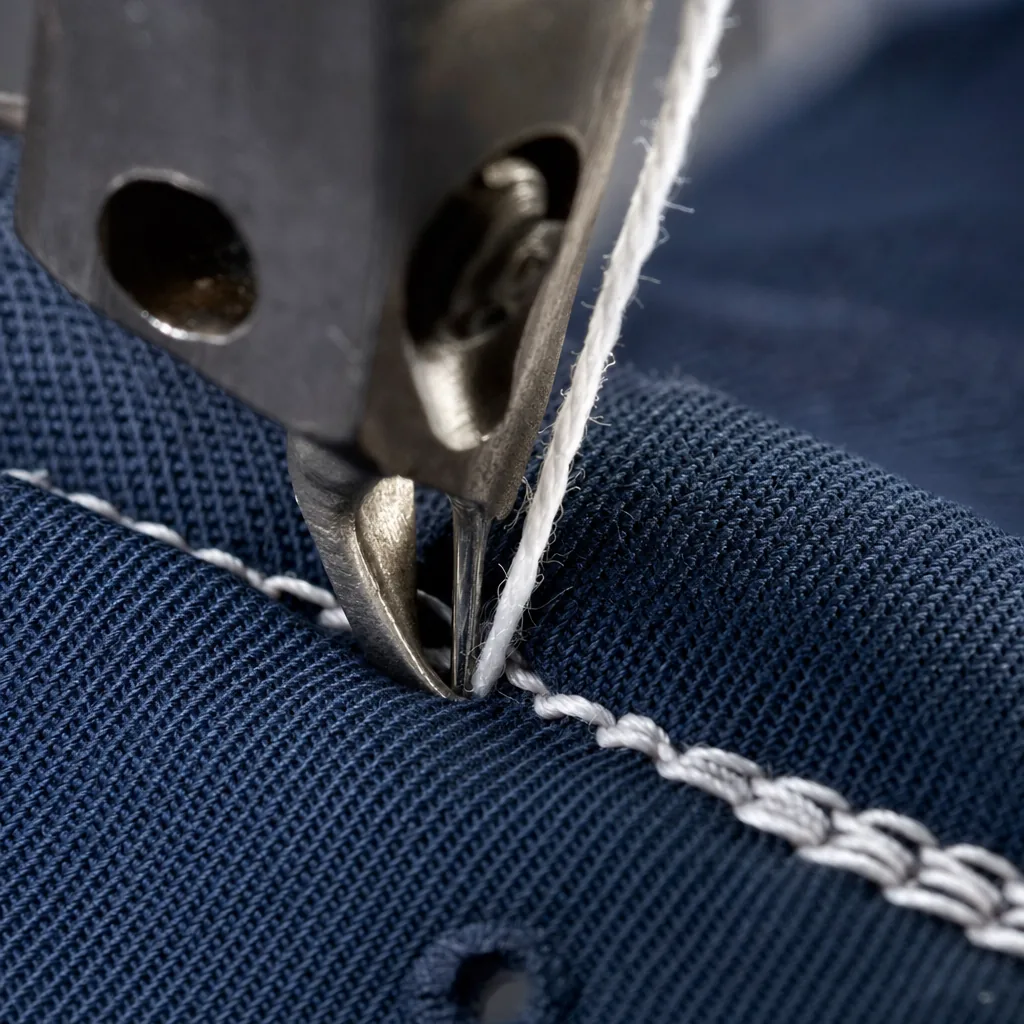
Embroidery Thread Libraries: Madeira, Isacord and What Your Cap Factory Uses
Read article →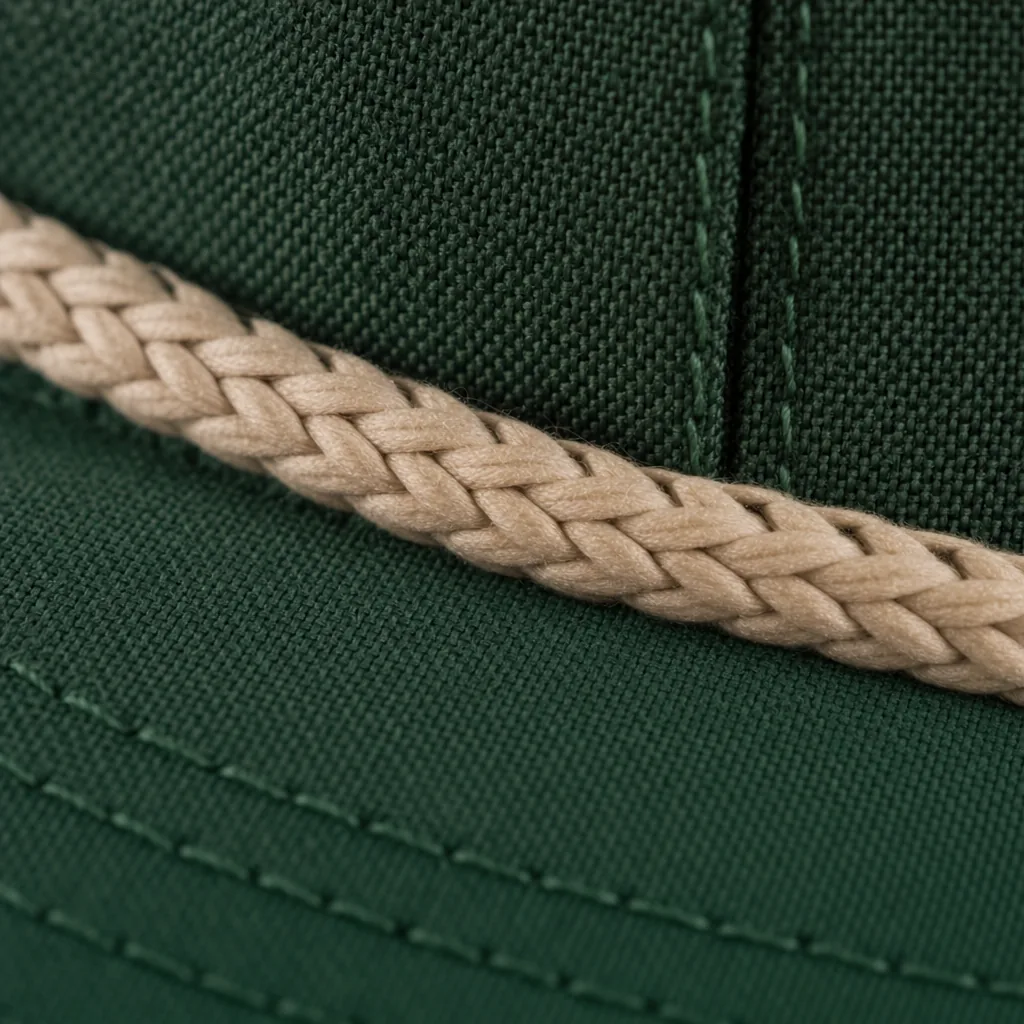
Custom Golf Hats: A Manufacturer's Guide to Performance Headwear (2026 Update)
Read article →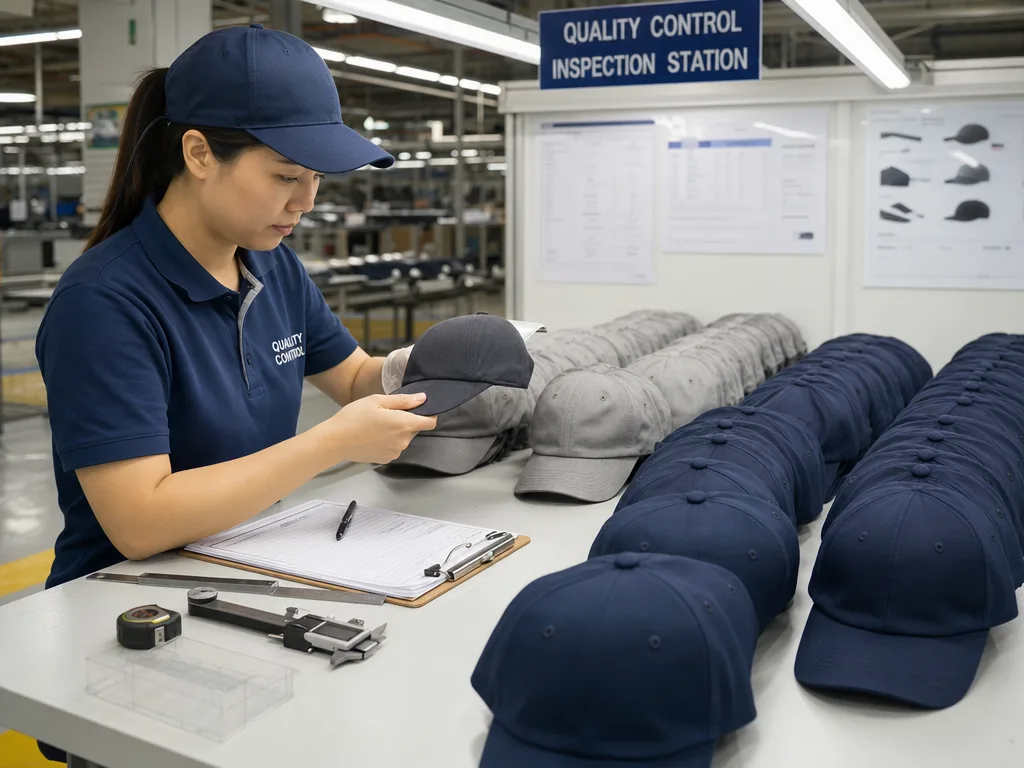
Hat Fabric Shade Control in Bulk Orders: Buyer Checklist
Read article →If you are ready to take the next step on custom rope hats: manufacturing, materials and bulk pricing - supplier checklist, our team can put a tailored quotation and digital mock-up in your inbox within 24 hours. Send the inquiry form on our contact page or message us directly on WhatsApp.