
Custom Rope Hats: Manufacturing, Materials and Bulk Pricing - Cost & MOQ Breakdown - Cost & MOQ Breakdown
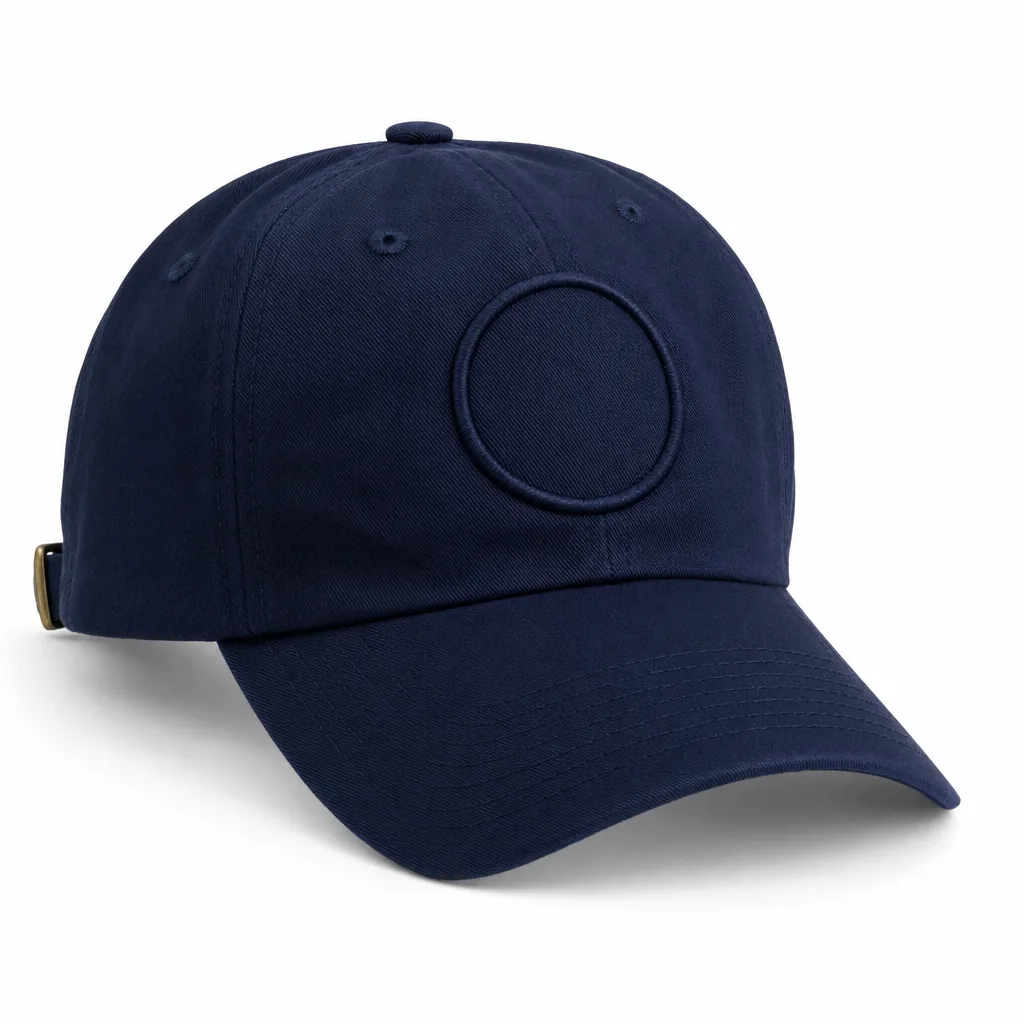
For brand owners, wholesalers and procurement teams entering the custom headwear category, custom rope hats: manufacturing, materials and bulk pricing - cost & moq breakdown - cost & moq breakdown is one of the highest-leverage decisions you will make. Get it right and your unit economics, retail story and reorder cycle all improve. Get it wrong and you carry the cost for years.
What a rope hat actually is (and isn't)
A rope hat is not a separate cap architecture; it is a standard cap body with one added trim—a braided, twisted, or knit cord running across the front crown, usually 6 to 10 mm above the visor seam. In production that cord is commonly 3 to 5 mm in diameter, most often polyester filament, polypropylene, or a cotton-poly blend, and it is either caught into the visor seam during assembly or attached in a separate topstitch operation. That matters because the rope does not control fit, crown height, or structure. Custom rope hats can be built on a 5-panel golf block, a 5-panel camper, or a 6-panel baseball pattern; the real engineering decisions are still front-panel support, crown depth, visor board, seam tape, and sweatband specification. If the front uses 0.4 mm PET-backed buckram versus a soft fusible, or the visor uses 1.8 mm PE board versus 2.2 mm recycled board, the wearer will feel that difference long before they notice how the rope was attached.
What a rope hat is not: it is not automatically a trucker, snapback, or vintage fishing cap. Those are separate choices in pattern, mesh use, closure, and crown shape. Most commercial programs put the rope on a high-crown 5-panel golf silhouette because the uninterrupted front panel takes flat embroidery, TPU logos, and woven patches cleanly on Tajima, Barudan, or ZSK heads without a center seam interfering with registration. But the same trim also works on low-profile unstructured bodies in 240 gsm brushed cotton twill, 200 gsm washed canvas, or 70D nylon taslon. On the factory floor, the rope mainly adds one trim SKU, one attachment step, and one more color-control problem. Fabric can usually be lab-dipped to a Pantone TCX target within Delta-E 1.0 to 1.5; stock rope often cannot. If you need a true match, custom dyeing the cord can add 7 to 12 days, and suppliers may require 3,000 to 5,000 meters per color even when the hat order itself is only 300 to 500 pieces.
The reason custom rope hats grew so fast after 2020 is practical, not nostalgic: they give a wide, readable front presentation without forcing every project into a foam-front trucker. The rope visually frames the logo, but the cap’s performance still comes from the bill of materials—panel count, fabric gsm or denier, closure type, sweatband composition, stitch density, and tolerance control. A competent factory writes a rope hat as a trim variation on an existing tech pack, not as a vague style request. That means specifying rope diameter, rope construction, color standard, crown height in centimeters, visor length, visor board thickness, closure, and QC limits such as AQL 2.5 for appearance and attachment security. At CrownsForge, the cleanest execution usually comes from two proven builds: a 5-panel semi-structured golf profile for retail branding and a 6-panel structured body for team, event, and promotional orders that need a more familiar fit and lower wear risk.
Rope material and attachment construction
Rope trim is a cheap component that causes an outsized share of rework on custom rope hats, so the spec has to be tighter than most tech packs show. The safest default is a 4 mm braided polyester cord made from 250D to 420D filament yarn; it holds diameter and color far better than low-cost twisted PP, which tends to ovalize in sewing and yellow after sweat, UV, or humid carton storage. On incoming inspection, diameter variation should stay within ±0.3 mm, and any visible lot-to-lot color shift against the front panel under D65 light should be rejected. On white foam, ecru canvas, and light brushed cotton, a Delta-E above 1.5 is already obvious at retail distance, so rope approval should be tied to a Pantone TCX reference and sealed to the approved dye lot. Nylon rope still has a place when the buyer wants a glossier hand and slightly softer bend, but it takes on moisture more readily and will flatten if the crown-to-visor seam is sewn with too much presser-foot pressure or thread tension.
Construction is where good custom rope hats separate from cheap ones. The rope should be captured inside the crown-to-visor seam during assembly, not top-stitched onto the front edge after the cap is closed. A competent line uses a fixed seam guide so the rope reveal tracks the visor curve within 1.5 mm across the front span; once drift exceeds 2 mm, the cap reads off-grade immediately. Rope ends should be hot-cut, tucked 8 to 12 mm into the side seam, and locked with a back-tack so they cannot creep out after wear or carton compression. On structured styles with buckram-backed fronts, the seam has to be tight enough to lock the cord without puckering the panel or distorting the visor break. The right QC point is seam security after stress, not just clean appearance at packing: AQL 2.5 visual inspection should be backed by a simple wash and carton-compression test, because one mis-set guide can throw off an entire carton before inline QC catches it. Rope application usually adds only $0.06 to $0.18 per cap, but it is one of the first places weak factories cut corners.
Rope color strategy for retail aesthetics
Rope color on custom rope hats is a retail decision before it is a trim decision. Tonal rope gives the most premium result on 270-320 gsm brushed cotton twill, 210-240 gsm recycled polyester twill, and 16-18 oz wool-blend melton because it lets crown shape, fabric hand, and embroidery quality carry the hat. The common buyer mistake is asking for an “exact match” between unlike fibers. A braided polyester rope and a cotton or melton crown can both reference the same Pantone TCX or Pantone C, then still look different because luster and dye uptake are not the same. The practical approval standard is visual match in a D65 light box, with an agreed Delta-E tolerance around 1.5-2.0 for dyed trims, not a lab-perfect promise that falls apart in bulk production. Tonal programs also expose weak sewing immediately: if the rope line waves more than 2 mm across the front panel, or bartack tension distorts the arc at the side seam, the cap loses its premium read fast.
Tonal is not the easy option. Washed cotton, enzyme-finished twill, and garment-washed canvas create most of the approval problems because stocked black, navy, or cream rope often looks too clean against a broken-in shell. On those styles, the correct process is to compare two or three rope cards against the actual crown fabric, main embroidery thread, and sweatband under controlled lighting, then sign off on a sealed trim card before bulk. Contrast rope remains the volume seller because it creates separation from 6-8 feet on shelf and photographs clearly for e-commerce. White on navy, cream on forest, and red on black consistently work on golf, collegiate, and streetwear profiles, especially when the logo palette is limited to one or two thread colors. If the rope comes from stocked cards, cost is usually flat; custom-dyed rope for tighter brand matching generally adds $0.08-$0.20 per cap and raises trim MOQ to roughly 300-500 pieces per color.
Two-color twisted rope sits in the fashion tier, and it only works when the rest of the cap is restrained. On structured A-frame snapbacks, foam truckers, and modern golf silhouettes, combinations like cream/green, black/gold, or navy/white add depth that a flat single-color braid cannot. But if the front logo already uses four or five thread colors, satin fills, and 3D puff on a Tajima or Barudan run, a busy rope usually pushes the design into clutter. Our standard practice at CrownsForge is to let the rope carry one secondary color and simplify the embroidery rather than make every component compete. Production risk is also higher with twisted rope: twist balance changes how much of each color shows, and weak suppliers can swing color dominance by 10-15% within one lot. That is obvious during AQL 2.5 inspection when cartons are opened side by side. Two-color twisted rope typically adds $0.12-$0.35 per cap over stock single-color rope, while fully custom rope can move practical MOQ from 144 pieces to 500-1,000 depending on spinner setup and dye-lot requirements.
5-panel vs 6-panel rope hat construction
For custom rope hats, the 5-panel crown is the safer engineering choice when the front logo has to read cleanly on shelf and online. One uninterrupted front panel eliminates the center seam, which is where wide embroidery starts to fight the crown. Once artwork exceeds about 85 mm wide, or uses 2 mm to 3 mm EVA foam, satin columns, chenille patches, or laser-cut twill appliqué, that seam will telegraph through the stitch lay unless the digitizing is very well tuned. On Tajima, Barudan, or ZSK heads, you see it immediately: density shifts at the seam, edge wobble on satin borders, and slight logo rotation on structured crowns with 0.8 mm to 1.2 mm buckram. That is why golf, resort, and promotional programs still lean heavily toward 5-panel builds. They are easier to center, more tolerant across mixed decoration methods, and typically produce fewer front-panel rejects during bulk runs. Material choice changes how forgiving the 5-panel face will be. A 220 to 260 gsm cotton twill gives the needle a stable bite and keeps 3D embroidery crisp, while 120 to 160 gsm nylon taslon or supplex reduces weight and dries faster but needs tighter backing control to prevent puckering. For rope placement, most factories run a 4 mm to 6 mm braided polyester rope set 8 mm to 12 mm above the visor seam; any inconsistency shows faster on a 5-panel because the front field is visually clean. In practice, custom rope hats built as 5-panel are not just a style call; they are the lower-risk option when logo integrity matters more than crown contour.
A 6-panel rope hat gives a more sculpted, athletic profile, but the center seam turns front decoration into a technical job instead of a routine one. Good results depend on split underlay, extra pull compensation at the centerline, and careful sequencing so the logo does not bridge and sink over the seam. On melton wool blends, brushed poly twill, or hard-buckram builds, that seam can actually help the crown stand taller from the side, which is why streetwear and licensed sports programs often prefer 6-panel custom rope hats. You also get better shape retention in cartons when the crown is paired with 1.8 to 2.2 mm PE visor board and a firmer front support, but the tradeoff is a narrower safe zone for embroidery, especially for clean typographic logos or merrowed patches wider than 75 to 80 mm. The cost gap between 5-panel and 6-panel is real, but it is production-driven, not cosmetic. At 1,000 pieces, a comparable 6-panel rope hat usually lands about $0.10 to $0.20 higher per cap because of the extra front seam operation, slower embroidery setup, and a higher risk of off-center or distorted front logos. Our standard QC follows AQL 2.5 with logo centering held to ±2 mm, rope alignment checked across the full crown width, and crown symmetry verified after packing and recovery testing. For 6-panel runs, I would also insist on seam-matching checks, visor-to-crown alignment within 3 mm, and shade consistency to Delta E below 1.5 if the front panels are cut from different lays. The right choice comes down to decoration method first, silhouette second, and unit cost last.
Fabric choices for rope hat programs
Fabric choice controls shape retention, embroidery performance, and repeatable shade more than the rope trim ever will. For most custom rope hats in golf, outdoor, and event channels, 100% polyester remains the lowest-risk base: plain-weave microfiber, taslan, or mechanical-stretch dobby in the 120-160 gsm range, typically with a C0 water-repellent or light wicking finish. On 5-panel, hybrid unstructured, or shallow A-frame builds, that cloth holds the front cleaner than brushed cotton when backed with 40-60 gsm tricot fusing and matched to the correct buckram stiffness. It also gives tighter color control on sublimated side panels, taps, and undervisors; with a disciplined mill, bulk lots can stay within Delta-E 1.5 against approved Pantone TCX references. On the cutting table, poly frays less, stains less from sweat or handling oil, and usually yields 2-4% better marker efficiency than softer cottons, which matters when FOB needs to stay in a workable range around $4.20-$6.80 for mid-volume programs.
Cotton twill shifts the product immediately toward a softer, more heritage look, but it asks more from the factory. The most reliable cap quality is 180-220 gsm 100% cotton twill, pre-shrunk, with finished shrinkage under 3% and crocking tested before bulk on dark shades. It suits surf, collegiate, café, and lifestyle accounts, especially on slightly curved visors with raised satin-stitch logos run on Tajima or Barudan heads. The problem is consistency: cotton shows wider lot-to-lot shade variation, absorbs moisture during sewing, and will telegraph weak bonding around the rope seam and visor break if the twill is too loose or the front fusing is under-specced. On the floor, we check seam puckering, visor buckram adhesion, and post-wash distortion at PP stage because cotton failures often appear after finishing, not during first assembly.
Premium fabric stories usually come from wool blends or corduroy, and both raise perceived value fast while increasing defect exposure. For structured A-frame custom rope hats, 50/50 or 80/20 wool-poly suiting at 15-20 oz gives a dense face, sharper merrowed appliqué edges, and better depth on chain stitch or flat embroidery than basic twill. It also punishes sloppy handling: press shine, needle heat glazing, and panel impressions show up quickly if crowns are stacked hot or operators run excessive top pressure. Corduroy is different; workable cap grades are usually 8-wale or 11-wale cotton around 250-300 gsm, and nap direction must stay perfectly consistent across crown, visor, and underbill or the hat reads off-shade under store lighting even when the dye lot is technically correct. That is why stock polyester can run efficiently from 144 pieces per color, while wool blend or corduroy programs usually need 300-500 pieces to absorb mill minimums, extra cutting controls, and higher fallout under AQL 2.5.
MOQ, lead time and pricing tiers
The real MOQ for custom rope hats is usually 100 pieces per SKU, meaning one fabric, one colorway, one logo, one closure, and one rope color. That threshold is not arbitrary; below it, the setup cost barely moves. You still pay for embroidery digitizing, paper pattern verification, Pantone TCX color matching for shell and rope, pre-production sewing, brim mold selection, and line changeover for cutting, panel stitching, rope attachment, visor binding, trimming, and finishing. On a standard 5-panel foam-front rope cap, the rope itself is cheap—typically $0.08 to $0.18 per piece for polypropylene braid—but attaching it cleanly is not. The operator has to keep the rope straight across the crown seam, bury or heat-seal the ends, and avoid drag marks, puckering, or needle pressure on foam-backed front panels. Buyers get into trouble when they total 300 units across three variations and assume they have met MOQ. On the factory floor, three fabrics or three rope colors behave like three small runs, each with its own setup loss, approval risk, and QC exposure. If a supplier accepts 48 or 60 pieces as “bulk,” the extra cost usually comes back somewhere else: a higher unit price, looser finishing, no true PPS approval, or weaker inspection on rope alignment, visor symmetry, and logo placement. Our standard practice is to judge MOQ by SKU and construction, not by the grand total on the PO, because mixed programs are where margin and quality both get distorted.
Lead time for custom rope hats is only fast when the bill of materials is simple and every trim is stock. A realistic calendar is 7 to 10 days for a pre-production sample, then 22 to 28 days for bulk after PPS approval, deposit, and final artwork lock. The clock does not start at inquiry; it starts when logo size, stitch count, crown height, visor shape, closure type, fabric code, and color standard are frozen. For a stock 10x10 cotton twill at 260 to 280 gsm, standard PP rope, flat embroidery, and a woven main label, 3 to 4 weeks ex-factory is normal. Add 3D embroidery on Tajima or Barudan heads, custom printed seam tape, inside taping, laser perforation, or imported 70D recycled nylon, and you should expect another 4 to 7 days for strike-offs, trim sourcing, and extra inline checks. FOB pricing usually lands between $3.80 and $6.80 per piece for 100 to 1,000 units, with the biggest variables being fabric, decoration, closure hardware, and packing detail—not the rope alone. At 300 pieces, a basic brushed cotton twill or poly twill style with plastic snapback and 5,000 to 7,000 stitches of flat front embroidery typically sits around $4.20 to $4.80 FOB. Move into recycled nylon, wool-acrylic blend, micro-perforated performance fabric, silicone patch, woven patch, or side and back embroidery, and the number climbs toward $6.20 to $6.80. The rope detail itself usually adds about $0.30 to $0.50 versus the same cap without rope because it creates one more manual operation and one more failure point. If the order will be inspected at AQL 2.5 or audited under sedex-audit-cap-supplier-guide.html">BSCI 2.0 or Sedex SMETA 4-Pillar sourcing rules, build in buffer time and scrutinize low quotes for downgraded sweatbands, lighter fabric gsm, weak embroidery backing, or under-spec export cartons.
Working with CrownsForge on rope hat programs
A rope-hat program gets easier when the difficult variables are already locked down: seam allowance at the crown-to-visor join, needle path over the rope, and front-panel support after heat forming. That matters more than the rope itself. For custom rope hats, the two trims that cover most demand are 4 mm braided polyester and 5 mm twisted nylon, but they do not sew the same. The 5 mm twist creates more bulk at the seam, needs a cleaner guide at the edge tape, and puts noticeably more stress on buckram-backed fronts during topstitching. On repeat constructions, proven settings typically cut development by 3 to 5 working days and keep rope-placement variation within about +/-1.5 mm across bulk, which is a realistic factory target, not a brochure number. Stock black, white, navy, and red can usually run at the same MOQ as the cap body, often 144 to 300 pieces per colorway. Once a buyer asks for custom-dyed rope, 500 pieces is the practical floor because dye-lot minimums, winding loss, and setup labor make smaller runs disproportionately expensive. If color matching is critical, use Pantone TCX for textile-facing programs and Pantone Coated when the trim is a brighter synthetic; commercially, a Delta-E of 1.5 to 2.0 under D65 is achievable, but only if the buyer signs off on the rope material first because sheen shifts perceived color faster than most teams expect.
The decoration field is where custom rope hats either look premium or look cheap. A rope line cannot rescue bad front-panel engineering. A 5-panel build usually gives the best result because there is no center seam interrupting the artwork, the usable logo area is wider, and the crown face stays flatter above the rope. On a mid-profile 5-panel, the safe art window is typically 110 to 120 mm wide by 50 to 58 mm high; push past that and you start seeing buckram buckling, tunneling at the rope seam, or a distorted read from normal retail distance. That is especially true with 3D puff, woven patches, TPU badges, and screen-printed twill applique, all of which add stiffness exactly where the crown already wants to bend. Our standard practice at CrownsForge is to reduce stitch density at the lower edge of puff embroidery and run Tajima or Barudan heads around 600 to 750 spm for cleaner foam definition; trying to run 850+ spm on puff usually costs more in rejects than it saves in output. For first orders, sampling both 5-panel and 6-panel from the same fabric lot is still the smartest spend. Expect 7 to 10 business days for samples and 25 to 35 days for bulk after approval, assuming no imported trims, no lab-dip hold, and no compliance-gated ship window tied to BSCI 2.0 or Sedex SMETA 4-Pillar.
Frequently Asked Questions
What file format should I send for my logo?
Vector files (AI, EPS, PDF) are ideal. High-resolution PNG or JPG at 300 dpi on transparent background works as a fallback. Provide Pantone color references for accurate reproduction.
What logo decoration techniques do you offer?
3D puff embroidery, flat embroidery, woven patch, leather patch, PVC patch, screen printing, sublimation, applique and laser etching, all in-house with no subcontracting.
Which shipping methods do you support?
We support FOB, CIF and DDP shipping. Air express for samples and small orders, sea LCL for 100 to 500 pieces, sea FCL for 5,000+ pieces. Door-to-door DDP available for US, EU, UK, Canada and Australia.
How long does production take?
Sampling takes 7 to 12 days. Bulk production runs 20 to 30 days depending on quantity, fabric availability and decoration complexity. Inspection and packing adds another 3 to 5 days before shipment.
Do you support sustainability certifications?
Yes. We work with GOTS organic cotton, GRS-certified recycled polyester, OEKO-TEX Standard 100 fabrics, and are BSCI and Sedex audited. Certification documentation can be provided per order.
What's the MOQ for custom leather patch hats no minimum?
When evaluating custom leather patch hats no minimum, the key considerations are construction quality, decoration capability, MOQ flexibility and lead time. Most ropes use 4mm braided polyester or twisted nylon cord, sewn into the seam between the crown and brim. The detail must be perfectly parallel to the brim curve and tightly stitched to prevent unraveling. Cheaply-made rope hats show the rope drift or fray after 10-20 washes. Rope tooling on file for 4mm braided polyester and 5mm twisted nylon. Custom rope colors available…
How does ordering custom hat embroidery near me work?
When evaluating custom hat embroidery near me, the key considerations are construction quality, decoration capability, MOQ flexibility and lead time. 5-panel rope hat is the golf and outdoor standard — single-panel front gives uninterrupted canvas for decoration, low-profile crown stays put under helmets or visors. 6-panel rope hat is more structured, used for streetwear capsules and premium brand drops. Rope hat MOQ 100 pieces per design/color (same as baseball cap). Sample 7-10 days, bulk 22-28 days. FOB pricing…
How does ordering custom embroidery patches for hats work?
When evaluating custom embroidery patches for hats, the key considerations are construction quality, decoration capability, MOQ flexibility and lead time. Most ropes use 4mm braided polyester or twisted nylon cord, sewn into the seam between the crown and brim. The detail must be perfectly parallel to the brim curve and tightly stitched to prevent unraveling. Cheaply-made rope hats show the rope drift or fray after 10-20 washes. Rope tooling on file for 4mm braided polyester and 5mm twisted nylon. Custom rope colors available…
How do I find a reliable custom hat manufacturer usa?
When evaluating custom hat manufacturer usa, the key considerations are construction quality, decoration capability, MOQ flexibility and lead time. 5-panel rope hat is the golf and outdoor standard — single-panel front gives uninterrupted canvas for decoration, low-profile crown stays put under helmets or visors. 6-panel rope hat is more structured, used for streetwear capsules and premium brand drops. Rope hat MOQ 100 pieces per design/color (same as baseball cap). Sample 7-10 days, bulk 22-28 days. FOB pricing…
Need a low-MOQ test order?
We help emerging brands launch with as few as 100 pieces. Premium fabric, in-house embroidery, retail-ready packaging.
Start a small orderRelated guides
Custom Made Trucker Hat: The 2026 Sourcing & Manufacturing Playbook (2026 Update) (2026 Update) - 2026 Buyer's Guide
Read article →
Corduroy Hat Vintage Supplier Audit Checklist for Custom Hat Buyers
Read article →
Bulk Trucker Hats Export Shipping Checklist for Custom Hat Buyers - Cost & MOQ Breakdown - Cost & MOQ Breakdown
Read article →We hope this guide demystifies custom rope hats: manufacturing, materials and bulk pricing - cost & moq breakdown - cost & moq breakdown and helps you move forward with confidence. If you have questions specific to your project, our English-speaking sales engineers are one message away.