
Custom Rope Hats: Manufacturing, Materials and Bulk Pricing - Cost & MOQ Breakdown - 2026 Buyer's Guide
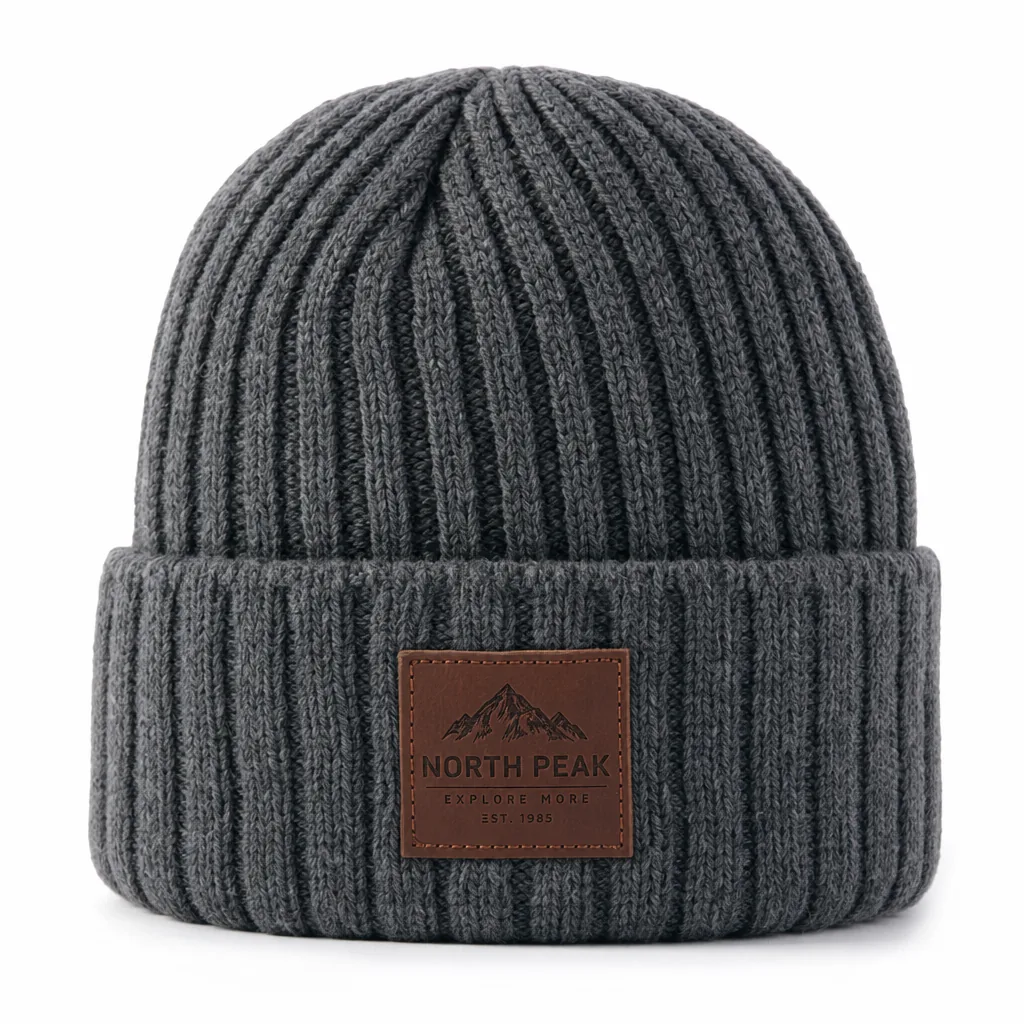
Every week, our sales team answers detailed questions about custom rope hats: manufacturing, materials and bulk pricing - cost & moq breakdown - 2026 buyer's guide. We wrote this guide so that wholesalers, streetwear brands, corporate buyers and promotional resellers can compare options with full information, and avoid the traps that show up only after production has started.
What a rope hat actually is (and isn't)
A rope hat is defined by one trim detail, not one body shape: a braided or twisted cord sewn across the front crown seam directly above the visor. In production, that cord is usually 3 to 5 mm in diameter, made from polyester filament, cotton/poly braid, or polypropylene, then anchored into the side seam or caught under the sweatband facing during crown assembly. Buyers regularly mislabel custom rope hats as a single silhouette, usually a shallow 5-panel golf cap, but that is inaccurate on the factory floor. We build rope styles on unstructured 5-panels, foam-front truckers, A-frame 6-panels, and full-buckram retail caps with either flat or pre-curved PE visor boards. The rope is only a trim package. Crown height, panel pattern, buckram weight, visor board thickness, and blocking pressure still determine whether the cap fits cleanly and holds its profile. If the front panel is soft, the seam line drifts, or the blocking is inconsistent, the rope does not hide the defect; it frames it.
What a rope hat is not matters just as much. It is not automatically a trucker, not inherently performance headwear, and not just a retro golf cap. The look became commercially familiar in fishing, marina, and resort programs because a contrast cord plus oversized front art reads well from 10 to 15 feet, then golf and streetwear brands pushed it mainstream. A proper custom rope hats program can use 220 to 260 gsm brushed cotton twill, 180 to 240 gsm poly/cotton chino, 120 to 160 gsm recycled nylon, or lightweight poly/spandex woven with laser-cut eyelets and moisture-wicking sweatbands. Many buyers say “rope hat” when they actually mean an A-frame, camper, or foam-front trucker. Those are different constructions with different seam geometry, crown angles, decoration windows, and fit outcomes.
The rope also raises the QC bar in ways inexperienced buyers miss. Because it creates a hard horizontal reference line above the visor, even small errors become obvious: a 2 mm embroidery shift, uneven visor topstitching, mismatched front-panel tension, or a wavy center seam that might pass visually on a plain cap. On Tajima, Barudan, or ZSK embroidery heads, registration has to be tighter because the logo is visually boxed in by the cord. Good factories treat the rope as a control point, not a cosmetic extra. That means agreeing rope color against Pantone TPX/TCX or coated references, holding practical Delta-E tolerance, checking dark cords for crocking, and controlling insertion tension so the braid does not bow or ripple after packing. At CrownsForge, inline QC for rope placement, embroidery centering, and visor symmetry is typically run to AQL 2.5 because this single trim can make a cap look premium or cheap faster than almost any other detail.
Rope material and attachment construction
On custom rope hats, the cord is a low-cost trim that drives a lot of perceived quality, so the spec should be tighter than most buyers give it. The commercial baseline is a 3.5 to 4.5 mm braided rope in polyester filament, typically built from 300D to 600D yarns, because polyester gives better lot-to-lot shade stability and less UV yellowing than cheap nylon blends. Twisted nylon can look cleaner on day one because it has a glossier surface and firmer hand, but it is less forgiving in dye consistency and tends to fuzz or bloom at the cut ends if the denier is too light. For retail programs, I would take a controlled polyester rope matched to Pantone TCX at Delta-E under 1.5 to 2.0 over a shinier nylon rope that drifts after a few weeks in sunlight or store display. The weak point is almost never the visible span across the front; it starts at the buried cut end, so heat sealing before insertion should be treated as a basic requirement, not an upgrade.
Attachment method matters more than fiber content. The rope needs to sit inside the crown-to-brim seam with even topstitch tension and a clean, parallel line across the front panel; if it climbs on one side or sags at center front, the cap looks off-spec immediately. On the sewing floor, misalignment usually comes from seam allowance variation beyond about 1.5 mm, poor feeding control at the station, or brim shape shifting after the rope is set. Competent factories fixture the operation with metal or acrylic guides and hold left-right symmetry from center front within +/-2 mm. The hidden end finish is where long-term failures show up: a cord that is simply cut and buried can unravel inside the seam, create a hard lump at the corner, or creep loose after wear. Better construction uses melt-sealed ends, fold-back anchoring, and a short bartack or reverse-lock stitch near the side entry point. The cost difference is usually only $0.05 to $0.12 per cap, which is cheap insurance compared with claim rates on bulk custom rope hats. Our standard practice is to inspect rope alignment in-line and again at final AQL 2.5, because buyers spot a wandering rope faster than they notice a back-seam deviation.
Rope color strategy for retail aesthetics
Rope color is the fastest visual cue separating custom rope hats built for retail from caps that look like generic promos. Tonal rope works only when the match is controlled against the actual shell fabric, not a paper Pantone card. We hold rope-to-crown variance at roughly Delta-E 1.0-1.5 under D65 light, then recheck under warm store LEDs because a 3 mm braided polypropylene or solution-dyed polyester rope throws light very differently than 210 gsm brushed cotton twill, 230 gsm chino, or a 300D recycled polyester weave. On black, stone, mushroom, and dark navy programs, even a slightly warm rope reads off-spec immediately. The practical process is lab dip approval, sealed counter sample, and bulk trim reservation by approved lot number; anything looser invites shade drift between trim supplier and fabric mill. Tonal programs also expose construction mistakes faster than buyers expect. If the rope sits 1.5-2.0 mm higher on one side of the bill seam, or the left and right bar-tacks land unevenly, the hat looks cheap before anyone notices the embroidery. On production runs, the cleaner target is a consistent rope height of about 6-8 mm above the visor seam, with side-to-side tolerance kept within 1 mm. That matters most on structured 5-panel pinch fronts, where the rope line is uninterrupted and visually rigid. Our standard practice is to inspect rope symmetry inline and again at final under AQL 2.5, because placement failure ruins a premium tonal cap faster than a minor stitch issue on the front logo.
High-contrast rope usually sells better at retail when it repeats a color already doing work elsewhere on the cap: satin stitch, woven patch merrow border, underbill, closure tab label, or back arch embroidery. If the logo is Pantone 186 C with white, a red rope on ecru, navy, or black typically reads sharper than introducing a third accent with no other anchor in the design. That is why collegiate, golf, and resort accounts keep ordering contrast-rope 5-panels and trucker bodies: from two meters away, the rope creates a clean horizontal merchandising line. It is also more forgiving in bulk production, because buyers expect visible separation, so a small shade shift is less damaging than on tonal colorways. Multi-color twisted rope can push custom rope hats into a more premium streetwear or resort tier, but only when the palette is disciplined. Black/gold, forest/cream, and navy/white twists work because both colors usually already exist in the patch or embroidery; otherwise the cap starts looking overdesigned. Trim economics are also real. Open-stock single-color rope is easy to source, but custom twisted rope often carries minimums around 3,000-5,000 meters per colorway, with lead times 10-18 days longer than stock trims. On a 1,000-piece order, that usually adds $0.10-$0.25 per cap depending on yarn denier, braid density, and scrap allowance. Always approve a pre-production sample made with actual bulk rope, not substitute cord, because gloss, twist pitch, and hand feel shift the retail look more than any spec sheet suggests.
5-panel vs 6-panel rope hat construction
If the logo is the priority, 5-panel construction is usually the better engineering choice for custom rope hats. The front panel gives you a single uninterrupted embroidery field, typically 100 to 115 mm wide and 55 to 65 mm tall on an adult mid-profile crown, so digitizing is more predictable for satin borders, tatami fills, and 2 to 3 mm EVA 3D puff. On Tajima, Barudan, and ZSK cap frames, the center seam on a 6-panel cap is where stitch columns start to spread, foam compresses unevenly, and registration drifts if the design crosses the seam. That gets worse when operators push cap programs past roughly 700 rpm to maintain line output. In production runs of 1,200 to 5,000 pieces, that difference is not academic; a clean 5-panel layout usually delivers a higher first-pass yield and keeps remake rates under about 2% at AQL 2.5.
A 6-panel rope hat earns its place when crown shape and retail silhouette matter more than decoration efficiency. The center seam builds a rounder, fuller front, and when you pair it with buckram or laminated fusible support and shell fabrics like 280 to 320 gsm cotton twill, 210 denier nylon, or 150 to 180 gsm recycled performance polyester, the cap holds its profile better through carton packing, shelf time, and repeat wear. That is why licensed sports, resort, and streetwear programs often accept the seam limitation. Fine direct embroidery under 4 mm letter height, broad fills crossing the seam, or 3D puff spanning both front panels are the usual failure points; woven patches, merrowed emblems, TPU or PVC badges, and silicone heat transfers are safer applications. A competent factory should flag those risks at tech-pack review, not after a failed strike-off.
The price difference between 5-panel and 6-panel custom rope hats is real, but panel count alone rarely moves the quote more than trims and material spec. At 3,000 units, one less seam and slightly faster sewing generally saves about $0.08 to $0.15 per cap, assuming the same fabric, rope, closure, and decoration method. A basic 5-panel in cotton-nylon blend with a 5 mm braided PE rope, plastic snapback, and standard moisture-wicking sweatband usually lands around $3.20 to $4.30 FOB China at 1,000 pieces. A structured 6-panel with printed seam tape, molded undervisor, metal buckle, custom interior labels, and fabric color controlled to Pantone TCX within Delta-E 1.5 to 2.0 is more often $4.60 to $6.80 FOB. At CrownsForge, MOQ is set more by development complexity than crown style: 144 to 300 pieces per colorway is realistic for stock fabrics, while custom-dyed rope, specialty nylon, or lab-dip approved fabric programs usually push practical MOQ to 500 or 1,000 pieces.
Fabric choices for rope hat programs
Fabric choice is what decides whether custom rope hats land as performance headwear or look like low-end promo stock, and polyester wins most programs where fit retention and replenishment matter. For golf, fishing, and outdoor retail, the safest specs are 110-160 gsm microfiber twill, peach-finish mechanical-stretch polyester, or 75D-150D woven poly laminated to a 3-5 mm EVA foam or buckram-backed front. Those constructions hold a 5-panel or semi-structured crown through container heat, while cotton crowns tend to relax after a few weeks above 45°C in transit. Polyester also resists sweat, sunscreen, and salt better, and it gives cleaner process windows for laser-perforated side panels, TPU patches, sonic welds, and heat-transfer logos. On color, piece-dyed polyester is far easier to lock for repeat orders: we normally approve against Pantone TCX with Delta-E under 1.5 under D65 lighting, while sublimated panels are judged more on print registration, seam match, and panel distortion than on shade drift alone.
Cotton is still the right call when custom rope hats need a softer hand, lower sheen, and a more casual retail story. The workable range is usually 210-260 gsm brushed cotton twill or washed chino; if the front panel has a rope, flat embroidery, and a structured profile, 7-8 oz twill performs far better than lightweight shirting fabric. The problem is repeatability. Cotton dye lots can swing enough to make replenishment orders look mismatched on shelf, so buyers should require shade-band approval, keep-out tolerances in the PO, and top-of-production swatches rather than relying on a Pantone reference alone. On Tajima or Barudan machines, firm cotton twill can take crisp satin borders and stable 3D puff, but washed surfaces pucker quickly if stitch density runs too high or the backing stack is wrong.
For premium programs, wool blends and corduroy give more shelf impact but they are less forgiving on the line. A 15/85 wool-poly or 20/80 wool-acrylic flannel usually adds about $0.60-$1.20 FOB per cap over standard cotton twill at 1,000 pieces, and buyers should expect slower sewing because crown seams bulk up fast. Corduroy, typically 8-wale to 14-wale, needs consistent wale direction across all panels, careful seam matching, and reduced hoop pressure during embroidery so the ribs do not flatten or shine. Rope trim matters more than most specs acknowledge: a glossy 5 mm braided polyester rope can look sharp on smooth microfiber, then read cheap against melton wool, while a matte cotton rope often disappears visually on wide-wale corduroy. At CrownsForge, we usually sample at least two rope diameters and two finishes before pre-production approval because that small trim decision changes perceived value more than buyers expect.
MOQ, lead time and pricing tiers
MOQ on custom rope hats is driven by trim coordination, setup loss, and QC risk, not by whether a sewing line can physically run another 50 caps. In real factory terms, 100 pcs per design per colorway is the lowest workable break when you use stock shell fabric, stock PP snap, and a standard flat braid visor rope. Once you split that 100 pcs across multiple shell colors, logo revisions, or rope colors, you create separate cutting markers, extra embroidery thread changes, and more first-piece approvals. A 100-piece order divided into three colors and two logos is not one run; it is six micro-runs, and the FOB price will reflect that inefficiency. For 5-panel custom rope hats in 10x10 cotton twill at 180-220 gsm, polyester microfiber, or nylon taslon, 144 pcs usually lands better than 100 pcs because trim yield and labor balancing improve. At 288 pcs, rope consumption, sweatband usage, and carton packing start to normalize, which is why pricing gets noticeably cleaner.
The rope trim itself is inexpensive; the added labor and defect exposure are not. Adding a visor rope normally adds about $0.28-$0.48 FOB per cap, covering the braid or cord, attachment time, trimming loss, and an extra appearance checkpoint because crooked rope alignment is visible from two meters away. On AQL 2.5 inspection, rope waviness, uneven tension, loose ends, and inconsistent seam distance are common failure points, especially on lower-skill lines. Lead time is predictable only when the tech pack is locked before sampling. A pre-production sample for custom rope hats usually takes 7-10 calendar days if the artwork is production-ready for Tajima, Barudan, or ZSK heads and the rope diameter, crown height, visor curve, and closure are already confirmed. Bulk production is commonly 22-28 days ex-factory for stock materials; custom dyeing to Pantone TCX with Delta-E under 1.5, molded rubber patches, custom jacquard sweatbands, or imported closures typically adds 5-12 days.
FOB pricing for custom rope hats at 144-576 pcs usually falls between $3.70 and $6.90 per piece, and the spread comes from fabric, decoration, and finishing complexity far more than from the rope itself. Entry-level pricing generally means commodity chino twill or mid-weight polyester, buckram-backed front panels, a standard PP snap, and one front flat embroidery or woven patch. Once you move into recycled nylon, perforated side panels, suede-touch microfiber, laser-cut venting, or 3D foam embroidery on a structured 5-panel crown, cost climbs quickly because machine time, rejection risk, and trim sourcing all increase. Extra decoration is where buyers routinely miss the budget: a front puff logo plus side embroidery and a back arch usually adds $0.45-$1.10 depending on stitch count, underlay density, and whether you run Madeira or Gunold thread. Inside seam tape printing, woven flag labels, and under-visor prints usually add another $0.15-$0.40 per cap. At CrownsForge, the most reliable way to sharpen unit cost is to consolidate to 288 or 576 pcs and standardize shell fabric across colorways rather than removing the rope detail that defines the product.
Working with CrownsForge on rope hat programs
The make-or-break variable in custom rope hats is still the rope itself, because it changes both the look and the assembly sequence on the front panel. The two trims buyers spec most often are 4 mm braided polyester and 5 mm twisted nylon, and they behave very differently once they hit the sewing line. Braided polyester is the lower-risk option for bulk production: shade control is usually achievable within Delta-E 1.5 against an approved Pantone TCX reference, the braid stays dimensionally stable, and operators can feed it more consistently during binding. Twisted nylon gives a glossier surface and fuller hand, which is why golf, marina, and resort programs ask for it, but it is less forgiving on lot-to-lot color consistency and twist uniformity if winding tension drifts at the trim supplier. In practice, custom-dyed rope only becomes economical at roughly 500 pieces per color. Below that threshold, dye-kettle minimums, winding setup, and added incoming QA typically add $0.12 to $0.28 per cap, which is hard to defend unless the rope has to match thread, patch border, or shell fabric precisely.
Decoration on custom rope hats has to be engineered around panel geometry, not just artwork scale. On a 5-panel crown, the logo zone sits in a narrow band above the rope and below the crown break, so there is very little tolerance for poor digitizing or overbuilt fills. Flat embroidery, merrowed woven patches, TPU badges, and chain stitch can all work, but dense art will torque the face panel if buckram stiffness, seam allowance, and rope placement are not locked during sampling. On Tajima and Barudan cap frames, our standard practice is to widen lettering slightly and lower the visual center of the design to control push-pull distortion near the topstitch line. A front logo around 9,000 to 12,000 stitches is usually safe; once artwork gets heavier than that on washed cotton twill, peach twill, or any shell under about 220 gsm, puckering, needle deflection, and crown warpage start showing up at final inspection.
The fastest way to de-risk a rope cap program is to sample both 5-panel and 6-panel constructions before bulk approval, because silhouette problems do not show up clearly on a tech pack. A 5-panel rope hat reads cleaner and more contemporary, with uninterrupted logo visibility, while a 6-panel shape fits rounder and usually performs better for team, resort, and promotional channels. When CrownsForge runs this comparison, we keep shell fabric, sweatband, closure, visor board, and rope color identical across both samples so the buyer is evaluating crown architecture instead of reacting to material changes. Two fully decorated prototypes normally cost $80 to $150 depending on whether the trim package includes a molded TPU badge, custom woven patch, metal clasp, or specialty rope color. That is cheap insurance on a 1,200-piece order. Ask for side-profile photos, crown height in centimeters, visor arc, head opening, and pre-production AQL 2.5 inspection photos; those details predict fit complaints and sell-through far better than a flat-lay image.
Frequently Asked Questions
Do you support sustainability certifications?
Yes. We work with GOTS organic cotton, GRS-certified recycled polyester, OEKO-TEX Standard 100 fabrics, and are BSCI and Sedex audited. Certification documentation can be provided per order.
Can I order a sample before bulk production?
Yes. We strongly recommend approving a pre-production sample before mass production. Samples are charged at 35 to 60 USD each plus express shipping, fully refundable against confirmed bulk orders over 500 pieces.
What is the minimum order quantity (MOQ) for custom hats?
Our standard MOQ is 100 pieces per design and color, with sampling available from 1 piece. For complex multi-color logos or premium fabric upgrades, the MOQ can be lowered with a small per-piece surcharge.
How long does production take?
Sampling takes 7 to 12 days. Bulk production runs 20 to 30 days depending on quantity, fabric availability and decoration complexity. Inspection and packing adds another 3 to 5 days before shipment.
What logo decoration techniques do you offer?
3D puff embroidery, flat embroidery, woven patch, leather patch, PVC patch, screen printing, sublimation, applique and laser etching, all in-house with no subcontracting.
What's the MOQ for custom leather patch hats no minimum?
When evaluating custom leather patch hats no minimum, the key considerations are construction quality, decoration capability, MOQ flexibility and lead time. Most ropes use 4mm braided polyester or twisted nylon cord, sewn into the seam between the crown and brim. The detail must be perfectly parallel to the brim curve and tightly stitched to prevent unraveling. Cheaply-made rope hats show the rope drift or fray after 10-20 washes. Rope tooling on file for 4mm braided polyester and 5mm twisted nylon. Custom rope colors available…
How does ordering custom hat embroidery near me work?
When evaluating custom hat embroidery near me, the key considerations are construction quality, decoration capability, MOQ flexibility and lead time. 5-panel rope hat is the golf and outdoor standard — single-panel front gives uninterrupted canvas for decoration, low-profile crown stays put under helmets or visors. 6-panel rope hat is more structured, used for streetwear capsules and premium brand drops. Rope hat MOQ 100 pieces per design/color (same as baseball cap). Sample 7-10 days, bulk 22-28 days. FOB pricing…
How does ordering custom embroidery patches for hats work?
When evaluating custom embroidery patches for hats, the key considerations are construction quality, decoration capability, MOQ flexibility and lead time. Most ropes use 4mm braided polyester or twisted nylon cord, sewn into the seam between the crown and brim. The detail must be perfectly parallel to the brim curve and tightly stitched to prevent unraveling. Cheaply-made rope hats show the rope drift or fray after 10-20 washes. Rope tooling on file for 4mm braided polyester and 5mm twisted nylon. Custom rope colors available…
How do I find a reliable custom hat manufacturer usa?
When evaluating custom hat manufacturer usa, the key considerations are construction quality, decoration capability, MOQ flexibility and lead time. 5-panel rope hat is the golf and outdoor standard — single-panel front gives uninterrupted canvas for decoration, low-profile crown stays put under helmets or visors. 6-panel rope hat is more structured, used for streetwear capsules and premium brand drops. Rope hat MOQ 100 pieces per design/color (same as baseball cap). Sample 7-10 days, bulk 22-28 days. FOB pricing…
Ready to start your custom hat project?
Send us your tech-pack, sketch or even just an inspiration photo. We will respond with a detailed quotation and digital mock-up within 24 hours.
Request a free quoteRelated guides
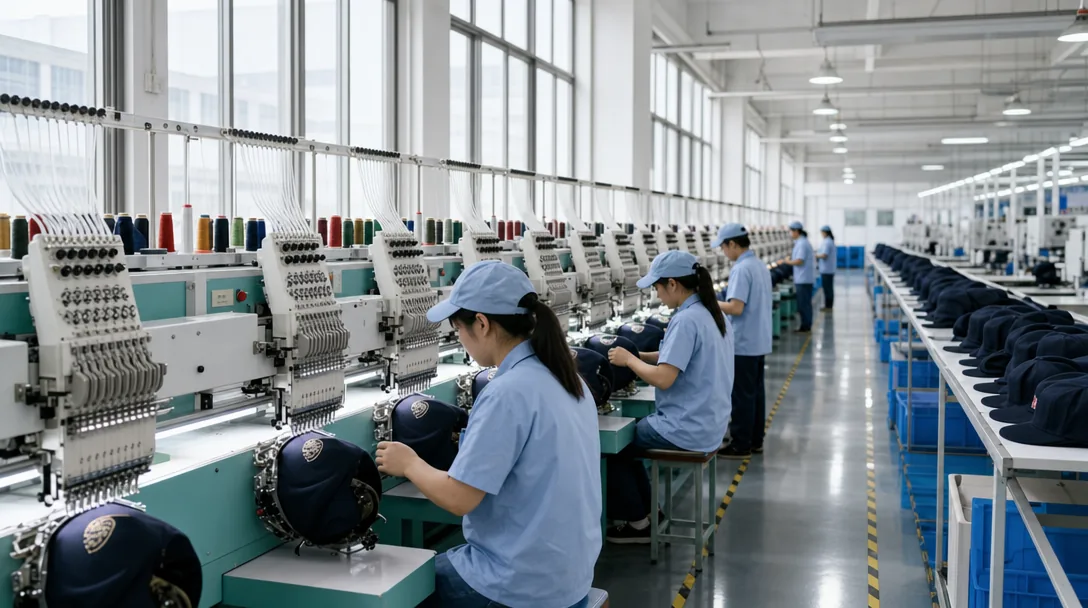
Ball Caps for Women: A 2026 Sourcing Playbook for International Buyers
Read article →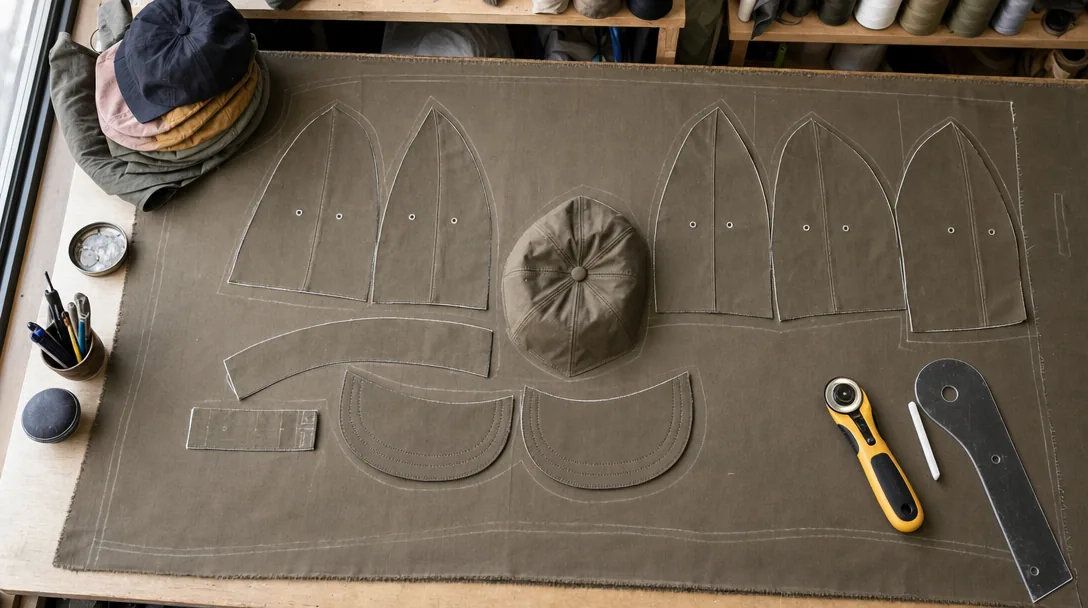
5-Panel vs 6-Panel Caps: Construction, Use Cases and Cost Compared
Read article →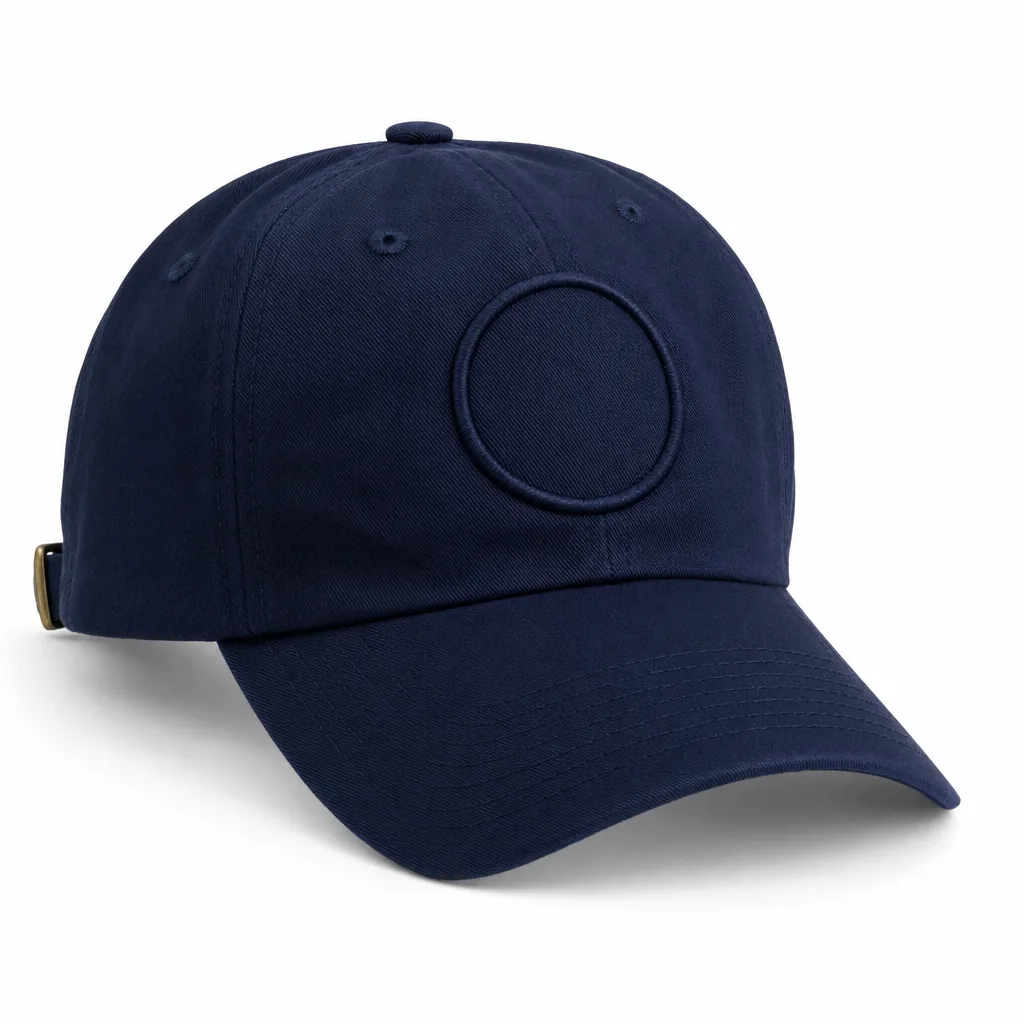
Custom Made Trucker Hat: The 2026 Sourcing & Manufacturing Playbook (2026 Update) (2026 Update) - 2026 Buyer's Guide - 2026 Buyer's Guide
Read article →Sourcing custom hats does not have to be complicated. With the right manufacturing partner, clear specifications and a small upfront investment in sampling, you can launch a retail-quality product in 30 to 45 days.