
Custom Rope Hats: Manufacturing, Materials and Bulk Pricing - 2026 Buyer's Guide
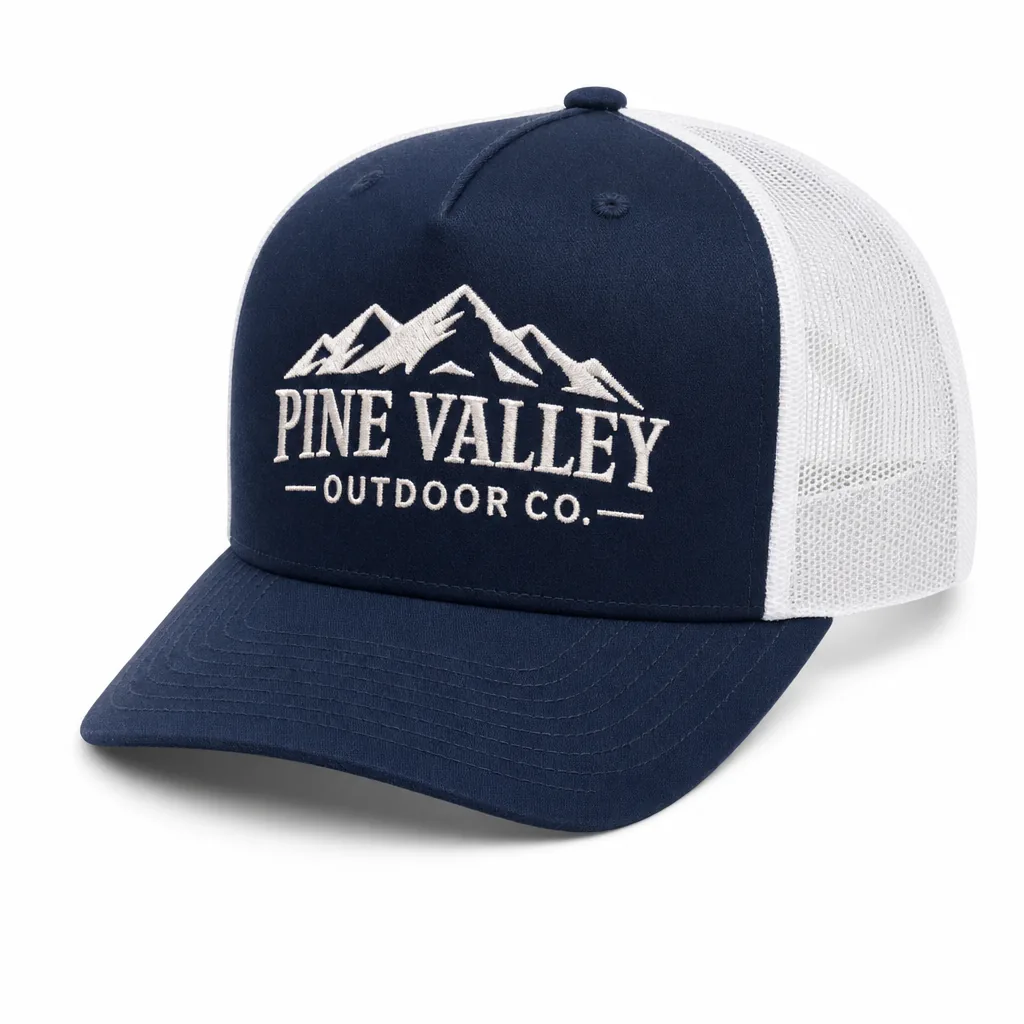
Every week, our sales team answers detailed questions about custom rope hats: manufacturing, materials and bulk pricing - 2026 buyer's guide. We wrote this guide so that wholesalers, streetwear brands, corporate buyers and promotional resellers can compare options with full information, and avoid the traps that show up only after production has started.
What a rope hat actually is (and isn't)
A rope hat is defined by the cord, not by the crown shape. On the production floor, the identifying feature is a braided rope or soutache set across the front panel seam 8 to 15 mm above the visor stitch line, usually in 3 mm, 4 mm, or 5 mm diameter. Most factories use solution-dyed polyester braid because it holds color better under UV and sweat than cheap cotton cord; a cotton-poly blend can look softer, but it pills faster and absorbs staining. The rope is normally trapped into the side seams before visor setting or caught under the lower front-panel topstitch, depending on the block and decoration sequence. If that cord is missing, it is not a rope hat. It is just a 5-panel, 6-panel, camp cap, or trucker with no rope trim. That sounds obvious, but buyers still spec custom rope hats as if they were a single silhouette. They are not. The rope is a trim-driven style layer that can sit on several cap bodies as long as the front panel geometry supports it. The reason the look sells is practical: the cord creates a visual break above the bill, which helps a 5,000- to 8,500-stitch embroidery, chainstitch script, or printed patch read more cleanly from retail distance. On structured fronts with 0.35 mm to 0.45 mm buckram, the rope also hides minor panel distortion at the visor join, which is one reason this style photographs well in e-commerce and line-sheet presentations.
What a rope hat is not: it is not automatically a foam trucker, not automatically a golf cap, and not automatically unstructured. The lineage is closer to 1970s and 1980s golf, marine, and resort headwear than the modern mesh trucker boom. In bulk production, the most common bodies are a 5-panel pinch-front for larger center logos, a structured 6-panel twill cap, and a lightweight nylon or taslon camp profile. Visors can be pre-curved or semi-flat; boards are typically PE in the 1.5 mm to 2.0 mm range, with heavier inserts used when brands want a firmer hand. Sweatbands, closure hardware, and back profiles vary exactly the way they do on any other cap category. None of those components makes it a rope hat by itself. The real make-or-break issue is proportion control. Rope placement that is off by even 3 mm will make the whole cap look wrong, especially on a tall 5-panel face with a 55 mm embroidery height or a large woven patch. Our standard practice is to hold rope position within plus or minus 2 mm across bulk sewing and check left-right seam symmetry in-line, not only at final packing. Buyers sourcing custom rope hats should ask three blunt questions: cord composition, attachment sequence relative to decoration, and inspection standard for seam alignment and rope tension. If the factory cannot answer those with specifics like AQL 2.5, Pantone-approved trim color, and visor-center tolerance, the sample may look fine but the bulk run will drift fast.
Rope material and attachment construction
Rope trim is a small bill-of-material item, but on custom rope hats it is one of the first details buyers notice at arm’s length. The two production-safe specs are 4 mm braided polyester cord and 4 mm twisted nylon cord, both cut with a hot knife so the filament ends fuse before insertion into the crown-to-visor seam. In bulk runs, braided polyester is usually the right call: lower moisture regain, better colorfastness after sweat and light laundering, and tighter shade consistency between yarn lots. On dark bodies like black, navy, or forest, a factory should be able to hold the rope within Delta-E 1.5 to the approved Pantone TCX reference under D65 lighting; beyond that, the mismatch is visible against the crown panel under retail LEDs. Twisted nylon has a cleaner sheen and softer hand, but it takes on more water and can torque if the ply balance is off, especially on unstructured styles that get crushed and reshaped in transit. I would not approve rope made from filament packs under roughly 220D equivalent because it pills too fast from visor stacking, polybag friction, and carton rub during FOB shipment.
Attachment method is where good-looking samples turn into bad production. The rope needs to be captured with a fixed guide at the crown-to-visor seam on a single-needle lockstitch station, not hand-fed by operator judgment; if the guide is missing, 2 to 4 mm of wander is normal, and the inconsistency is obvious as soon as you line up a dozen finished caps. A realistic tolerance is +/-1.5 mm from the approved seam path, with start and stop lock points buried close to the side panels so no backtack scars show on the front profile. Rope ends should extend into the seam allowance by at least 8 to 10 mm after heat sealing, not be snipped flush, because exposed fibers are the first place fray starts after wear testing. Durability depends on the entire seam package: bonded polyester sewing thread in Tex 27 to Tex 40, balanced needle and bobbin tension, and enough seam bite through the shell fabric, rope, and visor facing whether the hat body is 10 oz cotton twill or 180 gsm recycled performance polyester. In final QC, rope alignment often fails AQL 2.5 before embroidery does because the eye catches a bad curve instantly and there is no clean repair once that seam is off.
Rope color strategy for retail aesthetics
Rope color is the fastest cue that tells a buyer whether custom rope hats belong on a retail wall or in a promo carton, and the cleanest executions start with color control, not trend boards. I group rope programs into tonal, contrast, and two-color twist because each one behaves differently in sourcing and QC. Tonal is the least forgiving visually but the easiest to commercialize if you hold the match to about Delta-E 1.0-1.5 against a Pantone TCX standard and approve under both D65 and 4000K light. Store LEDs expose mismatches that warehouse daylight will miss, especially on brushed cotton twill, micro-peach polyester, and 330-380 gsm canvas where the rope sheen can read slightly brighter than the crown fabric. Tonal rope works best when the front decoration carries the value signal: low-profile 3D embroidery on Tajima or Barudan heads, a debossed suede patch, or a matte silicone transfer. If the rope, patch border, and visor stitch all compete, the cap stops reading premium and starts reading overdesigned.
Contrast rope usually sells better from six feet because it creates a visible break line across the front panel, but it only looks intentional when the accent color is repeated elsewhere on the cap. The disciplined formula is simple: pull one hue from the artwork and echo it in the rope, eyelets, satin-stitch outline, woven loop label, or back-tab embroidery. Navy with ecru, black with Kelly green, and natural canvas with cardinal are proven combinations because they create edge without turning the cap into teamwear unless that is the brief. The sourcing trap is low-volume custom dyeing. Below roughly 3,000 pieces per shade, most trim mills will push nearest-stock polyester braid rather than run a fresh lot, and braid luster can make a matched Pantone appear half a shade lighter than the crown. Physical strike-offs matter more than lab dips here. Two-color twisted rope raises perceived value fast, but it also raises reject risk, MOQ, and cost: usually $0.12-$0.25 extra per cap versus $0.03-$0.06 for stock tonal or stock contrast rope. If the yarns are mixed deniers, such as 150D bright polyester paired with a duller 100D, the twist pitch reads uneven carton to carton. Our standard practice is to check twist density, center-front alignment, and rope height at AQL 2.5, because even 2 mm drift looks sloppy on an A-frame or foam-front profile.
5-panel vs 6-panel rope hat construction
If logo readability is the priority, 5-panel construction is the safer spec for custom rope hats. The single front panel gives you a clean embroidery field with no center seam, which matters once you push beyond simple left-chest-style artwork. On an adult rope cap with a mid-profile crown, the practical decoration area is usually 95 to 110 mm wide by 45 to 55 mm high; above that, the crown curve starts pulling satin columns off angle and small counters begin to close. On the factory floor, 3D puff is where the difference shows fastest: a center seam on a 6-panel can break foam edges, create needle deflection, and leave uneven column height unless the digitizing compensates stitch-by-stitch. For block marks, tackle-twill, woven patches, and merrowed emblems viewed at retail distance, 5-panel wins because registration is more forgiving and the logo reads cleaner. The shape is also flatter and usually easier to wear in warm-weather programs. A typical finished front height is 8.5 to 9.5 cm, often backed with 0.45 to 0.60 mm buckram or left semi-structured for less forehead pressure. That lower crown is why 5-panel rope caps show up so often in golf, fishing, resort, and promo runs where comfort matters as much as branding. At CrownsForge, we normally keep seam allowance bulk away from the front logo zone on this style, which reduces embroidery bounce and helps hold a tighter sew-out tolerance on Barudan and Tajima heads.
A 6-panel rope hat is about silhouette, not decoration efficiency. The center seam creates a rounder, taller front that photographs better and feels more substantial in fashion and licensed retail. Finished front height is commonly 10.5 to 12.0 cm, with stiffer crown support from heavier fusing or 0.60 to 0.80 mm buckram, plus a more visible break line above the rope. That structure pairs well with 10-wale cotton corduroy, wool-acrylic twill, and 280 to 320 gsm brushed canvas because those fabrics can hold volume without collapsing after packing. Buyers choosing 6-panel usually want shelf presence and a fuller fit, especially for streetwear capsules, team stores, and premium merchandise where crown shape is part of the look. The tradeoff is technical and should be priced that way. Once artwork crosses the center seam, fine serif text under roughly 4 mm cap height, satin borders below 1.2 mm, and dense fill areas need split-panel digitizing to avoid gap-out and seam tunneling. On ZSK, Tajima, or Barudan embroidery heads, we usually reduce stitch density around the seam, adjust pull compensation, and sometimes reroute the underlay entirely; otherwise the logo can skew left-right by 1 to 2 mm. In bulk, that extra handling shows up in FOB cost. At 500 pieces, a 5-panel custom rope hat in chino twill or 100% recycled polyester with braided rope, flat embroidery up to 8,000 stitches, and a PP snapback typically lands around $3.10 to $4.40 FOB China. A comparable 6-panel is usually $0.25 to $0.60 higher because of extra sewing steps, reinforcement, and stricter crown matching during assembly and QC.
Fabric choices for rope hat programs
Performance polyester is the default for custom rope hats going into golf, fishing, marina, and resort programs because it holds panel geometry after sweat, UV, and salt exposure better than cotton. The spec I trust is 110-140 gsm woven poly in 75D/72F to 150D filament yarns with mechanical stretch, not spandex; elastane can distort under front-panel fusing and makes crown height less consistent after embroidery. On structured 5-panel bodies, pair that shell with 3-5 mm EVA or a laminated buckram front support, otherwise even a clean 3D puff file will show tunneling and needle-pull around dense columns. Polyester is also the better base for sublimation, TPU badges, and silicone heat transfers, especially when the artwork sits high above the rope where heavy fill embroidery tends to torque the front panel.
Color control is where buyers usually get burned. For white, stone, mist, and other light shades, I would not release bulk without approved lab dips matched to Pantone TCX and a Delta-E target below 1.5; on darker athletic colors, under 2.0 is usually commercially acceptable. Ask for crocking, lightfastness, and saltwater perspiration test data if the hats are headed to coastal retail. Material cost on a standard rope-hat build is not mysterious: shell fabric, rope cord, sweatband, snapback, eyelets, seam tape, and visor board usually land around $1.10-$1.90 per cap before decoration, cartons, and freight, with recycled poly typically adding $0.08-$0.18 depending on mill certification.
Cotton twill is still the safest all-around fabric for lifestyle custom rope hats because it gives a softer retail look without slowing sewing throughput. I usually spec 7x7 or 10x10 twill at 180-260 gsm, either enzyme-washed for immediate hand feel or pigment-dyed when the brand wants controlled fade after about 10-15 home laundry cycles. Compared with performance poly, cotton behaves better on Tajima and Barudan heads: lower-density fills, satin borders, and chain-stitch details sit flatter on unstructured or semi-structured crowns, and you can reduce underlay without losing edge definition. Stock greige-and-dye programs also help with MOQ discipline; many mills can support 144-288 pieces per color without forcing a custom dye lot, which matters for test launches, capsule drops, and regional assortments. If the target price can carry it, wool/poly blends at 250-320 gsm and 8-wale to 11-wale corduroy create a noticeably stronger shelf impression, but they also punish weak factory control. Cord nap must run in one direction across every panel or the shade will look mismatched under store lighting; wool blends show seam drift, rope tension inconsistency, and crown asymmetry immediately. A front seam off by 1.5 mm is obvious on these fabrics long before AQL 2.5 final inspection. At CrownsForge, we tighten in-line checks on premium fabrics by verifying nap orientation, panel shading, and rope placement at sewing, not just at finishing, because those defects are expensive to rework once sweatbands and closures are set.
MOQ, lead time and pricing tiers
For custom rope hats, 100 pieces per SKU is the practical factory MOQ; below that, the math gets ugly fast. The fixed work does not shrink just because the order does: embroidery digitizing, paper pattern confirmation, rope cutting, visor blocking, machine setup, needle testing, and finishing all still happen whether you run 50 caps or 500. On a standard 5-panel rope cap with a foam front, curved visor, and plastic snapback, 100 units is usually the lowest point where sewing and embroidery can run without excessive stoppage, fabric waste, and shade variation between bundles. If you split one style into three shell colors, most Zhejiang factories will count that as three MOQs unless the fabric, rope, sweatband, closure, and interior trims are identical and only the embroidery thread changes. Quotes at 50 pieces do exist, but expect a small-lot surcharge of roughly $0.60 to $1.20 per cap and less room for strict in-line QC.
Lead time should be counted from approved sample details, not from the first email. A pre-production sample for custom rope hats usually takes 7 to 10 calendar days after artwork, panel layout, logo size, and trim specs are confirmed; add 3 to 5 days for custom woven labels, printed seam tape, molded TPU or rubber patches, or rope dyed to a Pantone TCX target with Delta-E under 1.5. Bulk production normally runs 22 to 30 days from sample sign-off and deposit receipt. On this category, the defects that actually slow shipments are rope alignment across the front seam, visor shape consistency, embroidery registration on the front panel, and snapback torque or fit, so any serious factory should inspect in line at around 20 to 30 percent completion and release goods only after final inspection to AQL 2.5.
FOB China pricing for custom rope hats usually starts to normalize at 300 units. A realistic range is about $3.80 to $6.80 per piece at 300 to 1,000 units, depending on fabric, decoration, and packing standard. The low end generally means stock cotton twill or polyester, flat embroidery, standard PE bag packing, and off-the-shelf closures. The high end covers materials like nylon taslon, brushed microfiber, or suede-touch polyester, plus multi-position embroidery on Tajima or Barudan heads, custom interior taping, metal buckles, branded labels, and tighter tolerances on rope placement. Compared with the same cap without rope trim, the rope detail itself usually adds about $0.25 to $0.45 per unit once you factor in material, cutting, positioning, and a slightly higher defect rate at finishing.
Working with CrownsForge on rope hat programs
Crown construction decides whether custom rope hats look premium or compromised. A 5-panel build gives you one uninterrupted decorating field, which is why it handles 3D puff embroidery, printed twill patches, and merrowed emblems better when logos need to run about 110-120 mm wide. A 6-panel shape usually wins on familiar fit, but the center seam will break small copy, satin columns, and fine outlines once artwork crosses it, especially on structured fronts backed with 2.0-2.5 mm buckram. The practical way to evaluate this is not from a tech pack but from matched prototypes: same shell fabric, visor board, sweatband, rope diameter, and closure, built in both 5-panel and 6-panel so you can compare crown height, front-panel readability, and how the cap sits on head. That side-by-side test is usually where buyers realize a taller 5-panel has stronger retail presence for streetwear, while a lower-profile 6-panel is safer for golf, resort, and promotional programs. Decoration on rope caps has to be engineered around the rope line because it visually compresses the usable front panel. On Tajima or Barudan machines, flat embroidery is forgiving, but puff work is not: foam height, stitch angle, underlay, and pull compensation all have to be controlled so the design does not crowd the rope or tunnel the front panel after pressing. Once detail drops below about 1.2 mm stroke width, a woven patch or sublimated emblem usually reads cleaner than thread. Rope placement needs the same discipline; a 1.0-1.5 mm height shift above the visor is enough to make mixed cartons look inconsistent at retail. Our standard practice is to hold final inspection to AQL 2.5 with specific checkpoints for rope symmetry, end-tack security, visor curve consistency, seam alignment, and embroidery distortion after heat pressing.
Custom rope development only pays back when the order size supports color control. For most custom rope hats, 500 pieces per rope color is the minimum where a custom-dyed lot starts to make sense if you are matching a Pantone TCX or coated reference; below that, stock black, navy, cream, red, or forest is usually the smarter buy. Opening a custom rope lot typically adds about $80-180 in dye and setup cost before production even starts. Buyers usually compare two constructions: 4 mm braided polyester and 5 mm twisted nylon. Braided polyester is easier to keep consistent lot to lot and usually holds a tighter Delta-E in dyeing, while twisted nylon gives a glossier, heritage look but tends to show more visible shade swing under D65 lighting when dye-house control is weak. The most reliable purchasing programs keep the spec narrow: one shell fabric, one closure family, and no more than two rope colors in the opening run. That reduces trim exposure, machine resets, and reorder headaches. In the 1,000-3,000 piece range, moving from stock rope to custom-dyed rope, or from flat embroidery to a patch-plus-embroidery build, commonly changes unit cost by $0.35-1.20 depending on labor minutes and trim sourcing. Rope color should never be approved against a paper chip alone; it has to be checked against the actual body fabric, because peach cotton twill, recycled polyester microfiber, and nylon taslon all reflect sheen differently and can shift the perceived match. Buyers who lock rope diameter, attachment spacing, crown structure, and decoration method before pre-production usually avoid the preventable two- to three-week delays caused by late changes to patterns, reinforcement, or embroidery files.
Frequently Asked Questions
What is the minimum order quantity (MOQ) for custom hats?
Our standard MOQ is 100 pieces per design and color, with sampling available from 1 piece. For complex multi-color logos or premium fabric upgrades, the MOQ can be lowered with a small per-piece surcharge.
Which shipping methods do you support?
We support FOB, CIF and DDP shipping. Air express for samples and small orders, sea LCL for 100 to 500 pieces, sea FCL for 5,000+ pieces. Door-to-door DDP available for US, EU, UK, Canada and Australia.
Do you support sustainability certifications?
Yes. We work with GOTS organic cotton, GRS-certified recycled polyester, OEKO-TEX Standard 100 fabrics, and are BSCI and Sedex audited. Certification documentation can be provided per order.
Can I order a sample before bulk production?
Yes. We strongly recommend approving a pre-production sample before mass production. Samples are charged at 35 to 60 USD each plus express shipping, fully refundable against confirmed bulk orders over 500 pieces.
What file format should I send for my logo?
Vector files (AI, EPS, PDF) are ideal. High-resolution PNG or JPG at 300 dpi on transparent background works as a fallback. Provide Pantone color references for accurate reproduction.
What's the MOQ for custom leather patch hats no minimum?
When evaluating custom leather patch hats no minimum, the key considerations are construction quality, decoration capability, MOQ flexibility and lead time. Most ropes use 4mm braided polyester or twisted nylon cord, sewn into the seam between the crown and brim. The detail must be perfectly parallel to the brim curve and tightly stitched to prevent unraveling. Cheaply-made rope hats show the rope drift or fray after 10-20 washes. Rope tooling on file for 4mm braided polyester and 5mm twisted nylon. Custom rope colors available…
How does ordering custom hat embroidery near me work?
When evaluating custom hat embroidery near me, the key considerations are construction quality, decoration capability, MOQ flexibility and lead time. 5-panel rope hat is the golf and outdoor standard — single-panel front gives uninterrupted canvas for decoration, low-profile crown stays put under helmets or visors. 6-panel rope hat is more structured, used for streetwear capsules and premium brand drops. Rope hat MOQ 100 pieces per design/color (same as baseball cap). Sample 7-10 days, bulk 22-28 days. FOB pricing…
How does ordering custom embroidery patches for hats work?
When evaluating custom embroidery patches for hats, the key considerations are construction quality, decoration capability, MOQ flexibility and lead time. Most ropes use 4mm braided polyester or twisted nylon cord, sewn into the seam between the crown and brim. The detail must be perfectly parallel to the brim curve and tightly stitched to prevent unraveling. Cheaply-made rope hats show the rope drift or fray after 10-20 washes. Rope tooling on file for 4mm braided polyester and 5mm twisted nylon. Custom rope colors available…
How do I find a reliable custom hat manufacturer usa?
When evaluating custom hat manufacturer usa, the key considerations are construction quality, decoration capability, MOQ flexibility and lead time. 5-panel rope hat is the golf and outdoor standard — single-panel front gives uninterrupted canvas for decoration, low-profile crown stays put under helmets or visors. 6-panel rope hat is more structured, used for streetwear capsules and premium brand drops. Rope hat MOQ 100 pieces per design/color (same as baseball cap). Sample 7-10 days, bulk 22-28 days. FOB pricing…
Need a low-MOQ test order?
We help emerging brands launch with as few as 100 pieces. Premium fabric, in-house embroidery, retail-ready packaging.
Start a small orderRelated guides
5 Panel Hat Vintage: A 2026 B2B Sourcing Guide
Read article →
Custom Embroidered Hat: The 2026 Sourcing & Manufacturing Playbook
Read article →
Golf Hats For Men Supplier Audit Checklist for Custom Hat Buyers
Read article →We hope this guide demystifies custom rope hats: manufacturing, materials and bulk pricing - 2026 buyer's guide and helps you move forward with confidence. If you have questions specific to your project, our English-speaking sales engineers are one message away.