
Custom Made Trucker Hat: The 2026 Sourcing & Manufacturing Playbook - Supplier Checklist
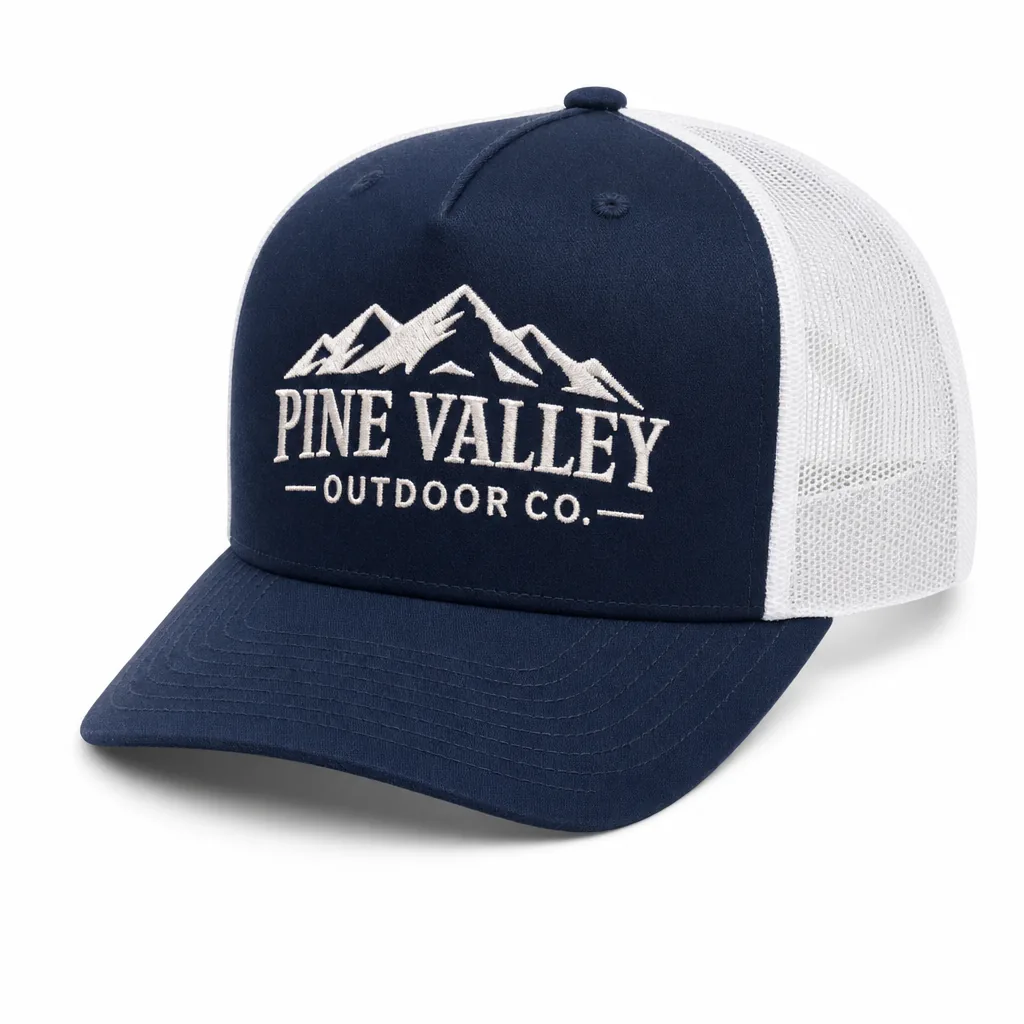
Custom Made Trucker Hat: The 2026 Sourcing & Manufacturing Playbook - Supplier Checklist is one of the most-asked questions we receive from international buyers, and for good reason. With dozens of factories competing for your order and an alphabet soup of technical terms in every supplier quote, even experienced importers can feel lost. This guide consolidates what we have learned producing custom hats for clients in 40+ countries.
Custom Embroidered Hats
Digitizing decides whether a custom made trucker hat looks retail-grade or cheap. A cap logo must be punched for a curved frame, crown angle, and actual front substrate; a flat tee file will fail on headwear. EVA foam, 10x10 cotton twill, brushed chino, wale corduroy, and 600D polyester all need different underlay, pull compensation, and density. On Tajima, Barudan, or ZSK cap drivers, 650 to 850 rpm is the safe production window; faster than that on 3D puff, narrow satin columns, or text below 2.0 mm cap height usually causes thread breaks, edge flutter, and needle deflection. Good factories will also challenge bad artwork. If the logo relies on gradients, distressed edges, or reversed micro text, standard fill embroidery is the wrong process; run-stitch texture, tackle twill appliqué, or silicone heat transfer will hold detail far better.
Buyer specs need to be more precise than “front logo embroidery.” Lock thread brand or at least trilobal polyester quality level, Pantone TCX target, and a color tolerance such as Delta-E under 2.0 for licensed programs. Define stitch-count range, backing type, logo width, and placement from center front and visor seam; 3 mm of placement drift is visible on a trucker crown. Front panel construction matters too: soft foam can collapse under dense fills, while buckram-backed twill holds sharper borders. For puff embroidery, 2 to 3 mm foam is the practical range; above that, the logo starts looking crude and crushes in packing. CrownsForge standard practice is a digital sew-out plus one physical PPS with measured logo width, crown height, and visor curve before bulk sign-off.
Cost is driven more by embroidery complexity than by the cap shell. A stock-body mesh trucker usually works from 48 to 100 pieces per colorway, but a true cut-and-sew custom made trucker hat is more efficient at 144 to 300 pieces per style/color once fabric yield, custom labels, closure hardware, and QC are included. Digitizing typically runs $20 to $60 per file and is often waived above 500 pieces. Realistic FOB China pricing for a 5-panel polyester-foam trucker with 6,000 to 8,000 stitches is about $2.20 to $3.40 at 300 pieces; cotton twill or corduroy fronts, woven labels, branded seam tape, and 8,000 to 12,000 stitches push that to roughly $3.50 to $5.80. Side embroidery usually adds $0.18 to $0.45, rear arch text $0.12 to $0.30, and 3D puff $0.25 to $0.60. Inspection should target the known failure points: puckering, top thread sink, crushed puff, perforation near the lower front panel, and off-center logos. Under 5000K lighting, check coverage, registration, and text legibility; inside the cap, backing should be trimmed cleanly with no bobbin nests or heat-film residue. AQL 2.5 is normal, but logo centering and color consistency often need stricter visual control for retail orders.
Custom Hat Embroidery
Embroidery is where a custom made trucker hat either reads as licensed retail product or drops straight into promo territory, and the limiting factor is usually the front panel construction, not whether the machine is a Tajima, Barudan, or ZSK. Most trucker fronts are built in either 5 mm EVA-laminated foam with polyester facing or buckram-backed cotton/poly twill, and those two substrates require different digitizing from the start. A 58 mm-tall front logo with 3D puff can sew cleanly on a high-profile foam crown at roughly 0.40-0.45 mm stitch spacing with proper center-walk underlay, edge run, and pull compensation; run that same file on a softer unstructured 5-panel front and you will see sink-in, puckering, or border distortion unless the file is rebuilt. The buyers who get clean first samples send vector art, target logo size in millimeters, Pantone TCX references, thread callouts, and the exact crown build before sampling. On the factory floor, more rejects come from bad punch files than from operator handling, especially on satin borders, mixed flat-plus-puff layouts, and text below 4 mm cap height.
The specs worth locking are more granular than most importers ask for: embroidery field by panel, placement tolerance of ±2 mm, thread spec such as 100% polyester 120D/2, backing weight, needle size, 3D puff foam thickness at 2 mm or 3 mm, and an approved thread-match standard of Delta-E under 2.0 against the signed shade. MOQ for a custom made trucker hat with one front hit is usually 144-300 pieces per colorway; 48-100 pieces is possible, but expect a setup surcharge and less room to optimize thread breaks and machine time. Pricing should be tied to stitch count, not a vague logo fee: digitizing is commonly $15-$40 per file, then about $0.20-$0.35 for 5,000-8,000 stitches and $0.45-$0.90 for 10,000-18,000 stitches, with clear adders for side embroidery, back arch, metallic thread, appliqué, or 3D puff.
Inspection has to happen on finished caps, not flat panels, because crown closing, blocking, and packing create the failures the buyer actually receives. The defects worth rejecting are restart marks from thread breaks, registration drift between color blocks, tunneling on wide satins, exposed foam on puff edges, over-penetration that collapses the front, off-center placement after blocking, and rough backing that scratches at the forehead seam. A practical QC standard is to measure seam-line centering, top-button-to-logo distance, bobbin tension consistency, and inside cleanliness for birdnesting or loose trims, then inspect to AQL 2.5 with tighter in-line checks at first-off and mid-run. At CrownsForge, standard practice is to approve embroidery only after it is evaluated on the finished cap body, because stitch density, panel stiffness, sewing sequence, and carton packing all affect whether the hat ships as first quality or quietly builds avoidable rejects.
Custom Trucker Hat
A good custom made trucker hat is won or lost in the shell, not the logo. The standard recipe is still a 5-panel or 6-panel crown, foam-backed polyester front, 70D to 100D polyester or nylon mesh, pre-curved PE visor, and PVC snapback, but those specs are too broad to protect quality. Buyers should lock the front foam at 2 to 4 mm EVA or sponge lamination, define crown height in millimeters, and specify whether the fit is high-profile, mid-profile, or shallow. On production lines, the front panel is laminated, die-cut, and sewn into the crown before sweatband, visor, seam tape, and top button assembly; if the crown stands even 8 to 10 mm taller than the approved sample, the cap will wear like a souvenir-shop piece regardless of clean embroidery. For a more premium hand feel, replace the default foam-front polyester with 10 oz cotton twill, chino, canvas, or RPET blends, and call out sweatband content because low-grade brushed tricot is where forehead irritation usually starts. Decoration has to match the substrate. A foam-front trucker cannot share the same embroidery file as a dad cap or knit beanie; 3D puff needs proper digitizing with wider satin columns, controlled underlay, and stitch paths tuned to run cleanly on Tajima, Barudan, or ZSK heads without slicing the foam. If patches are involved, the tech pack should define merrowed versus laser-cut edge, substrate, finished thickness, backing, and attachment method. A 1.2 mm sewn PVC patch pulls and flexes differently from a heat-applied woven patch, and that difference shows up fast in visor balance and front-panel collapse. The most common failures in a custom made trucker hat are distorted visor curve, scratchy mesh at the forehead, weak foam recovery, and a crown profile that misses the intended fit, so artwork alone is never an adequate spec package.
The supplier checklist should be strict enough that the factory cannot quietly substitute cheaper inputs. Ask for fabric weight in gsm, mesh denier and hole count, Pantone TCX references for dyed components, and an acceptable bulk shade tolerance such as Delta-E below 1.5 on the main body. Construction specs should also cover seam tape material, visor board type, snapback peg strength, head circumference range, label position, and carton pack-out. Decoration needs numbers too: stitch count, thread brand, 3D puff height, patch substrate, and confirmation that bulk production will follow an approved PPS made from the final strike-off or digitized file. For MOQ, a basic custom made trucker hat usually starts around 144 to 300 pieces per colorway, while custom-dyed mesh, mixed trims, or multi-process decoration often push the workable floor to 500 because of fabric minimums and setup waste. China pricing varies more than most buyers expect because small upgrades stack quickly. A promo-grade build with stock polyester foam front, standard mesh, and flat embroidery typically lands around $2.10 to $3.40 FOB Ningbo or Shanghai at 300 to 500 pieces. A retail-spec version with cotton twill front, branded seam tape, woven inside labels, tuned visor curve, and two decoration locations is more often $3.80 to $6.50 FOB, with specialty mesh, custom closures, or applique programs pushing higher. Inspection should focus on panel symmetry, crown shape consistency, skipped stitches, embroidery registration, visor sandwich alignment, sweatband join bulk, snap cracking, foam odor, and color drift between front fabric and mesh. Our standard practice is AQL 2.5 with wear-fit checks across multiple head sizes and random carton compression checks, because most claims trace back to weak foam, abrasive mesh, or rushed sewing rather than obvious cosmetic defects.
Custom Trucker Hats
The make-or-break issue in a custom made trucker hat is structure, not decoration. If the spec only says “foam trucker,” you will get whatever crown height, buckram stiffness, and mesh hand the factory has on the shelf that week. Most buyers default to a 5-panel body because the uninterrupted front panel gives cleaner embroidery registration and fewer seam-interruption issues on logos wider than 90 mm. A 6-panel trucker usually fits more like a low-profile baseball cap and often wears better for head sizes above 60 cm, but the center seam limits artwork options. The standard commercial build is a 3 to 5 mm polyester foam front laminated to tricot, 100 to 140 gsm polyester or nylon mesh, a PE visor board, and 6 to 8 rows of brim stitching. If you want a firmer retail silhouette, specify crown height in centimeters, buckram weight, brim length, visor curve, and sweatband composition instead of sending a mood-board image and hoping the sample room guesses correctly. Decoration is where weak specs show up fast. Flat embroidery is still the safest method on foam fronts, typically run on Tajima, Barudan, or ZSK heads at roughly 5,000 to 8,000 stitches for a standard chest-width logo; once you push past 10,000 stitches on foam, thread density starts cutting into the surface and reject rates rise. 3D puff only works when the digitizing is built for it: wider satin columns, disciplined underlay, and enough foam rebound to survive carton compression without edge collapse. If the artwork has narrow knockouts under 1.2 mm, fine serifs, or tonal transitions, stop forcing direct embroidery and move to a woven patch or high-density badge. For patches and labels, call out Pantone TCX references and acceptable Delta-E tolerances; for direct embroidery, I would hold visible shade variance to Delta-E 1.5 or tighter against the approved cone thread and bulk lot.
The supplier checklist should read like an engineering document, because trucker hats fail in small, expensive ways. Lock panel count, crown depth, front-panel GSM or foam thickness, mesh denier and hole size, visor board material, snapback resin grade, seam tape print method, button wrap, eyelet construction, and exact pack-out per inner and master carton. MOQ on a stock-material custom made trucker hat is commonly 144 to 300 pieces per colorway, but custom-dyed mesh, matched undervisor fabric, molded logo snaps, or proprietary camo prints usually push the workable floor to 500 to 1,000 pieces. In the Yiwu cap cluster, a basic 5-panel foam/poly-mesh trucker with standard flat embroidery typically runs about $2.10 to $3.20 FOB China at 300 to 500 units. Add suede brim fabric, sandwich visor, woven patch, or specialty mesh and you are usually in the $3.80 to $5.50 range. Inspection needs to focus on repeatability, not obvious defects alone. The problems that hurt sell-through are subtle: visor warpage, crown asymmetry, crushed foam from overpacked cartons, loose mesh tension, off-center embroidery, cracked snap tabs, and top-button drift from the centerline. I would hold logo placement to plus or minus 2 mm, check 3D puff for strike-through and edge collapse, and verify clean backing trim with no thread sink or tunneling across the front curve. For patches, inspect merrow density, edge cleanout, and whether the patch bridges poorly over the crown contour. AQL 2.5 works for most bulk programs, but for licensed retail or chain-store orders, visual logo defects and closure failures should be treated as near-zero tolerance points. Our standard practice is to verify current sedex-audit-cap-supplier-guide.html">BSCI 2.0 or Sedex SMETA 4-Pillar status before scaling volume, because audit compliance is a sourcing control, not a sales slide.
Hat Trucker Custom
Most custom made trucker hat problems start with a lazy build spec. “Standard trucker” is not a specification; it is an invitation for substitution. Lock the construction with measurable points: 5-panel or 6-panel pattern, foam-backed front panel at 3-5 mm, front panel composite weight around 160-220 gsm, mesh at 75D-100D polyester, crown height 16.5-18.0 cm, visor length 7.0-7.5 cm, and PE bill insert thickness of 1.6-2.0 mm. Call out the sweatband blend, such as 35% cotton / 65% polyester, plus snap material and grade. If the factory cannot state whether the closure is PP, virgin PVC, or recycled plastic, expect brittle pegs, weak color matching, and early field complaints. A proper tech pack should also fix Pantone C or Pantone TCX references, underbill color, seam tape artwork, button material, stitch density on key seams, and carton pack-out by dozen with master carton dimensions.
Decoration is where weak factories get exposed. A foam-front custom made trucker hat will not forgive bad digitizing: 3D embroidery needs foam-run sequencing, lighter underlay, controlled pull compensation, and embroidery-before-assembly planning or the front panel will pucker once the sweatband goes in. On Tajima, Barudan, or ZSK cap frames, a clean 6,000-9,000 stitch center-front file usually performs better than an overbuilt logo trying to fake depth with excessive density. Ask for a needle-trace or sewn sample on the actual foam-front substrate, not on cotton twill, and hold logo registration to within +/-2 mm from center front. If the supplier can explain panel lamination, blocking temperature, and how trim shades are controlled to Delta-E 1.5-2.0 lot to lot, they are probably running real cap production rather than brokering it.
Price only means something when you separate build tiers and inspection standards. In the Yiwu and Dongguan supply chain, a basic custom made trucker hat with stock white mesh, stock snap, and flat embroidery usually lands around $2.10-$3.40 FOB China at 500 pieces per colorway. Add 3D embroidery, custom-dyed mesh, printed seam tape, woven flag label, branded inside tape, or a printed underbill, and the workable FOB range moves to roughly $3.80-$5.80. Below 300 pieces, factories can still produce with stock materials, but 500 pieces per style is usually where embroidery consistency, color control, and line efficiency improve. For retail programs, require both a pre-production sample and a line-pulled production sample, then hold final inspection at AQL 2.5 with checks for bill symmetry, front panel height, mesh tearing at the back seam, twisted sweatbands, and snap breakage. A current BSCI 2.0 or Sedex SMETA 4-Pillar audit matters less than daily process discipline, but serious suppliers should be able to show both.
Trucker Custom Hat
A dependable custom made trucker hat is won or lost in the spec sheet, not in decoration. Start with crown architecture: a 5-panel trucker gives you a clean front face for larger embroidery or heat-applied patches, while a 6-panel shape wears more universally but puts a center seam straight through any oversized logo. For a structured program, I’d call out a 220-260 gsm cotton twill or 65/35 poly-cotton front, 2.0-2.5 mm EVA foam or laminated buckram support, 60-80 gsm polyester mesh in the back, a 1.8-2.0 mm PE visor board, and a 7-hole PP snapback closure. If the look is softer and more vintage, switch to washed canvas or brushed twill, reduce front reinforcement, and accept that embroidery above roughly 8,000-10,000 stitches has a much higher chance of panel distortion, tunneling, or puckering. Buyers who skip crown height, visor curve, mesh aperture, sweatband composition, and closure grade are not approving a hat; they are approving variability.
Most trucker defects are predictable because they come from the same weak control points. Front panels should be cut, backed or fused if required, embroidered flat on Tajima, Barudan, or ZSK heads, then assembled with mesh panels before visor setting, sweatband closing, seam taping, and top button attachment. The weak spots are always the same: off-center logos, foam strike-through under dense satin fills, visor mismatch, mesh tearing at the side seam, brittle snaps, and color drift between dyed front panels and stock mesh. A usable RFQ needs shell composition, front-panel gsm, mesh denier, sweatband material, visor board thickness, stitch-count limit, Pantone TCX for fabric, and Pantone Solid Coated or Madeira references for thread, plus tolerance targets like Delta-E below 1.5 on dyed fabric and logo placement within +/-2 mm. In practical China sourcing terms, stock-material orders usually start at 144-300 pieces per color, but custom-dyed fabric, branded seam tape, TPU patches, or woven labels push the real MOQ closer to 500 pieces per style. For 2026, a normal FOB China range is about $2.10-$3.40 at 300-500 pieces, with 3D puff, suede visors, or specialty trims adding another $0.35-$1.20 per cap depending on reject risk and setup load.
Inspection is where the supplier either proves process discipline or gets exposed. For bulk production, use AQL 2.5 with focused checks on embroidery centering, visor symmetry, mesh seam integrity, sweatband join cleanliness, and shade approval under D65 light. I also want snapbacks cycled at least 20 times from sampled units because low-grade PP closures often crack after packing compression, winter transit, or cold storage. Require a physical pre-production sample; renders do not show crown collapse, visor rebound, or how foam telegraphs through dense stitching. Social compliance matters, so current BSCI 2.0 or Sedex SMETA 4-Pillar reports should be on file, but those audits do not guarantee technical consistency. The better factory is usually the one that can explain seam tape width, visor sandwich construction, in-line QC checkpoints, and rework thresholds in factory language instead of hiding behind a cheap FOB quote.
Working with CrownsForge for custom made trucker hat programs
Freeze the bill of materials before artwork digitizing; that is where a custom made trucker hat program usually burns time and money. Most delays are not caused by the Tajima or Barudan embroidery run itself. They start when buyers change crown height, PE buckram stiffness, mesh spec, seam-tape artwork, or snapback grade after the first sample is already cut. The practical route is a three-step sample flow: digital mockup in 24-48 hours, fabric and Pantone confirmation in 2-3 working days, then a physical sample in 5-7 working days for a standard 5-panel or 6-panel trucker cap. If the style needs a new silicone patch mold, 8-wale corduroy, brushed twill above 260 gsm, or 600D rPET, add 3-5 working days because sourcing and setup are real factory constraints. For first orders, MOQ flexibility matters more than chasing the lowest unit price. A workable opening quantity is usually 144 pieces per colorway for a basic custom made trucker hat, but once you introduce mixed panel colors, multiple patch types, or youth/adult size splits, production efficiency usually starts closer to 288-300 pieces.
Decoration is where weak suppliers start outsourcing and quality becomes inconsistent. For trucker programs, the useful in-house capabilities are flat embroidery, 3D puff, woven patch, printed twill patch, silicone heat transfer, foam-front screen print, and inside/outside label application. Ask for recent strike-offs from Tajima, ZSK, or Barudan multi-head machines; you can judge stitch density, pull compensation, edge coverage, and 4-5 mm letter clarity before paying a deposit. On foam fronts, underlay, needle size, and hoop pressure decide whether the panel stays clean or tunnels and wrinkles after sewing. Color control needs the same realism. Pantone TCX is only a reference because polyester mesh, cotton twill, embroidery thread, and silicone patches reflect light differently. Dyed fabric can often hold lot-to-lot Delta-E below 2.0, but embroidery thread is usually approved by visual standard or lab dip under D65 lighting, not by unrealistic exact-match promises.
Process control matters more than a polished sales deck. If the custom made trucker hat is going into retail, licensing, or promotional distribution, ask for current BSCI 2.0 or Sedex SMETA 4-Pillar reports and confirm whether the factory can support REACH, CPSIA, or California Proposition 65 testing for inks, patches, prints, sweatbands, and metal trims. Inspection should be written into the workflow: incoming fabric check, in-line sewing and embroidery audits, and final random inspection to AQL 2.5, plus carton drop, barcode scan, and retailer mark verification where routing guides apply. Our standard practice is to lock tech pack review, BOM signoff, pre-production sample approval, line booking, in-line photos, packing list verification, and shipping document review before goods move under FOB, CIF, or DDP terms. That discipline is what keeps reorders stable when a program scales from 300 pieces to 3,000 and prevents the failures buyers actually remember: wrong mesh shade, undersized front logo, brittle snap tabs, or export cartons rejected for bad outer-carton markings.
Frequently Asked Questions
How long does production take?
Sampling takes 7 to 12 days. Bulk production runs 20 to 30 days depending on quantity, fabric availability and decoration complexity. Inspection and packing adds another 3 to 5 days before shipment.
What logo decoration techniques do you offer?
3D puff embroidery, flat embroidery, woven patch, leather patch, PVC patch, screen printing, sublimation, applique and laser etching, all in-house with no subcontracting.
Which shipping methods do you support?
We support FOB, CIF and DDP shipping. Air express for samples and small orders, sea LCL for 100 to 500 pieces, sea FCL for 5,000+ pieces. Door-to-door DDP available for US, EU, UK, Canada and Australia.
What is the minimum order quantity (MOQ) for custom hats?
Our standard MOQ is 100 pieces per design and color, with sampling available from 1 piece. For complex multi-color logos or premium fabric upgrades, the MOQ can be lowered with a small per-piece surcharge.
What file format should I send for my logo?
Vector files (AI, EPS, PDF) are ideal. High-resolution PNG or JPG at 300 dpi on transparent background works as a fallback. Provide Pantone color references for accurate reproduction.
How does ordering custom hat trucker work?
When evaluating custom hat trucker, the key considerations are construction quality, decoration capability, MOQ flexibility and lead time. Cover everything buyers ask about custom embroidered hats: how it's manufactured, what specs to request from a factory, typical MOQ and pricing, common quality issues to inspect for, and how this ties back to the broader custom made trucker hat sourcing decision. Cover everything buyers ask about custom hat embroidery: how it's manufactured, what specs to request from a…
How does ordering custom embroidered trucker hats work?
When evaluating custom embroidered trucker hats, the key considerations are construction quality, decoration capability, MOQ flexibility and lead time. Cover everything buyers ask about custom embroidered hats: how it's manufactured, what specs to request from a factory, typical MOQ and pricing, common quality issues to inspect for, and how this ties back to the broader custom made trucker hat sourcing decision. Cover everything buyers ask about custom trucker hats: how it's manufactured, what specs to request from a…
How does ordering custom made hats for men work?
When evaluating custom made hats for men, the key considerations are construction quality, decoration capability, MOQ flexibility and lead time. Cover everything buyers ask about custom embroidered hats: how it's manufactured, what specs to request from a factory, typical MOQ and pricing, common quality issues to inspect for, and how this ties back to the broader custom made trucker hat sourcing decision. Cover everything buyers ask about custom trucker hats: how it's manufactured, what specs to request from a…
How does ordering high quality custom trucker hats work?
When evaluating high quality custom trucker hats, the key considerations are construction quality, decoration capability, MOQ flexibility and lead time. Cover everything buyers ask about custom embroidered hats: how it's manufactured, what specs to request from a factory, typical MOQ and pricing, common quality issues to inspect for, and how this ties back to the broader custom made trucker hat sourcing decision. Cover everything buyers ask about custom trucker hats: how it's manufactured, what specs to request from a…
Ready to start your custom hat project?
Send us your tech-pack, sketch or even just an inspiration photo. We will respond with a detailed quotation and digital mock-up within 24 hours.
Request a free quoteRelated guides
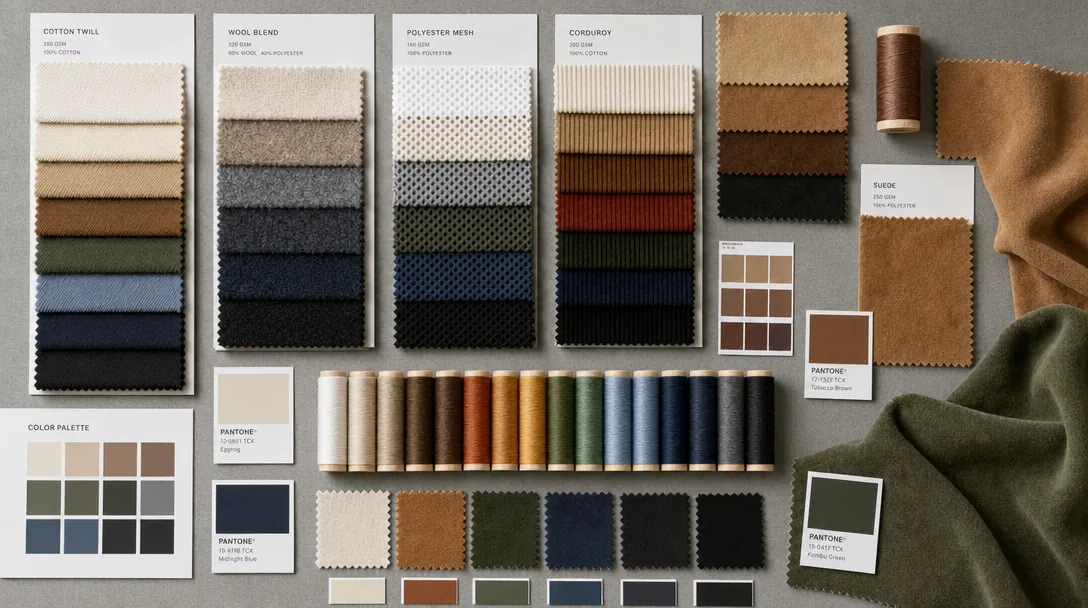
Cotton Beanie: Properties, Costs and How to Spec It Right - 2026 Buyer's Guide
Read article →Corduroy Hat Vintage MOQ And Pricing Plan for Custom Hat Buyers
Read article →
Baseball Hats For Men Fabric And Trim Spec Guide for Custom Hat Buyers
Read article →If you are ready to take the next step on custom made trucker hat: the 2026 sourcing & manufacturing playbook - supplier checklist, our team can put a tailored quotation and digital mock-up in your inbox within 24 hours. Send the inquiry form on our contact page or message us directly on WhatsApp.