
Custom Made Trucker Hat: The 2026 Sourcing & Manufacturing Playbook - Supplier Checklist - Supplier Checklist (2026 Update)
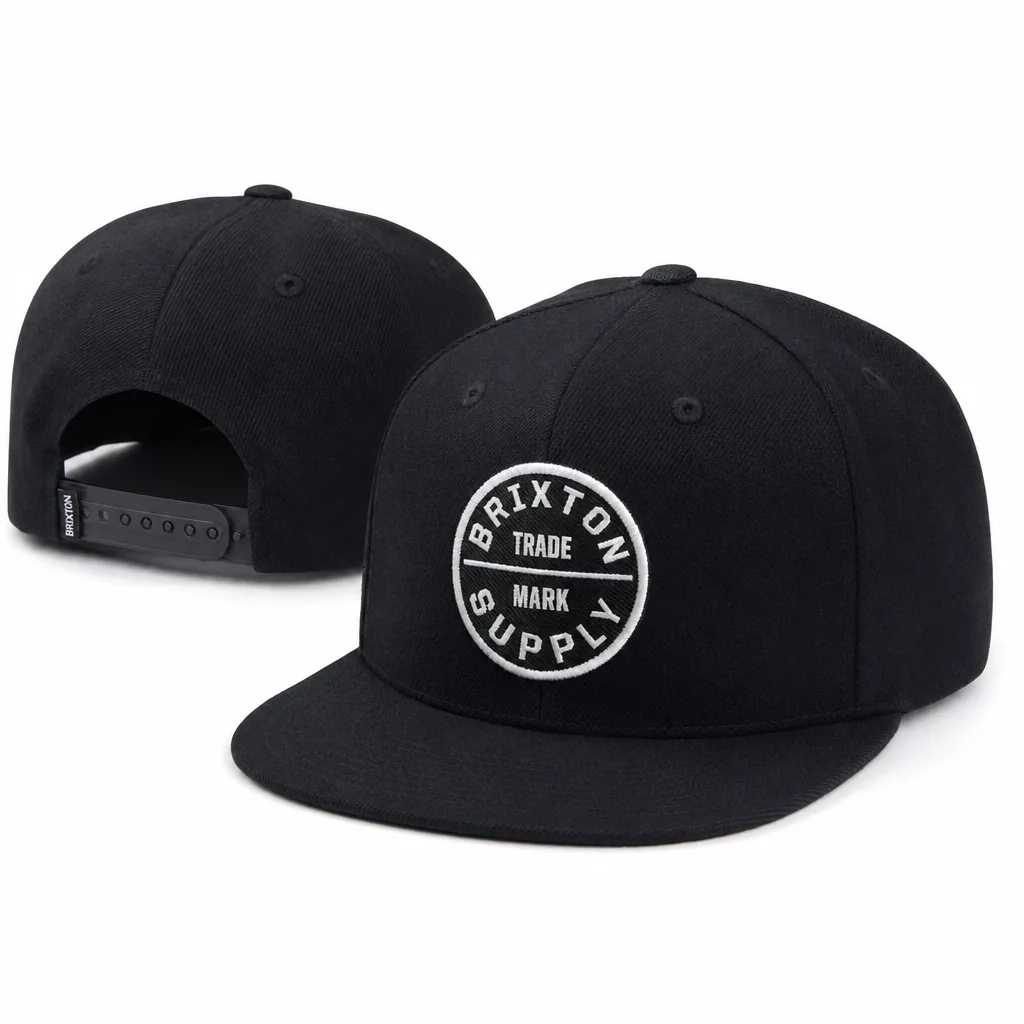
Every week, our sales team answers detailed questions about custom made trucker hat: the 2026 sourcing & manufacturing playbook - supplier checklist - supplier checklist (2026 update). We wrote this guide so that wholesalers, streetwear brands, corporate buyers and promotional resellers can compare options with full information, and avoid the traps that show up only after production has started.
Custom Embroidered Hats
Embroidery quality on a custom made trucker hat is largely fixed before the first needle drop. The factory needs to freeze the shell spec first: 5-panel or 6-panel layout, front crown material, buckram versus EVA foam backing, mesh denier, visor board thickness, seam position, and finished crown height in millimeters. A logo digitized for a 16.5 cm foam-front trucker will not run cleanly on a lower-profile buckram front without compensation for curvature and center seam lift. Production files are usually delivered as DST, but the important point is where they are tested: on cap frames, not flat frames, on Tajima, Barudan, or ZSK heads at about 700 to 850 spm. That is where you see the real problems—push-pull distortion, center-seam deflection, thread fraying on dense satin columns, and registration loss on multi-layer fills.
Buyers should write embroidery specs like a technical package, not a mood board. Define the artwork size in mm, maximum stitch count, 40 wt trilobal polyester thread brand or equivalent, and whether the logo uses flat fill, tatami, satin column, run stitch, or 3D puff with 2 mm to 3 mm EVA. For color, set Pantone TCX targets for fabric and Pantone Solid references for thread where needed, then agree an acceptable shade tolerance; Delta-E under 2.0 is realistic on mill-dyed cotton twill, while piece-dyed lots and white mesh over dark crowns often land closer to 2.5 to 3.0. On the material side, most structured truckers use 180 to 260 gsm cotton or poly twill on the front, 50D to 100D polyester mesh, and 1.8 to 2.4 mm PE visor board. Those details directly affect run speed, needle heat, reject rate, and how clean the embroidery looks after packing and transit.
The biggest cost swings come from stitch density, shell complexity, and color customization, not from the word "embroidery" on a quote. In China, MOQ is commonly 300 to 500 pcs per colorway for stock twill, stock mesh, and a straightforward 5,000 to 8,000 stitch flat logo. If you need custom-dyed fabric, a non-stock mesh shade, appliqué, or a 10,000+ stitch 3D puff front, expect MOQ to move toward 800 to 1,000 pcs and ex-factory pricing to shift from roughly USD 2.20 to 4.50 into the USD 4.80 to 7.50 range. Sampling normally runs USD 30 to 80 per style after digitizing, and repeat revisions are where cheap suppliers quietly burn your timeline. At CrownsForge, we price by stitch count, machine time, and finishing steps because a dense front logo that runs at 650 spm with a 6% reject rate is a different factory problem than a clean 6,000-stitch flat mark.
Claims on embroidered caps are usually boring and preventable: puckering from bad underlay, thread breaks at the center seam, uneven satin width, warped visor topstitch, weak mesh attachment, and crown panels cut off tolerance so the cap twists on head. Do not approve bulk from a rendering. Approve a sealed pre-production sample, then inspect finished goods to AQL 2.5 with written defect criteria for critical, major, and minor faults. Good checks include embroidery alignment to center seam, stitch trimming, snapback engagement force, sweatband odor, crocking resistance, and carton compression performance. If the brim board is too soft or the master cartons are overpacked, a perfectly good custom made trucker hat arrives crushed and becomes a freight claim instead of inventory. A supplier that can show stable cap-frame output, shade consistency, and recent sedex-audit-cap-supplier-guide.html">BSCI 2.0 or Sedex SMETA 4-Pillar records is usually cheaper in the total landed-cost sense than the lowest unit quote.
Custom Hat Embroidery
Embroidery is where a custom made trucker hat either justifies its FOB or gets exposed fast, and the failure point is usually digitizing, not machine speed. The correct flow is clean vector art in Wilcom or Pulse, panel-specific digitizing, a sew-out on the actual front substrate, then bulk on Tajima, Barudan, or ZSK multi-heads. Foam-front truckers are unforgiving: if you run standard flat-cap density on 3 to 5 mm EVA foam, the front panel will tunnel, needle-cut, or ripple at the center seam. For 3D puff, I normally want lower density, lighter edge-walk underlay, and controlled pull compensation, especially on five-panel fronts where the logo sits over a single broad field. On cotton twill, chino, or 65/35 poly-cotton canvas, you can usually hold cleaner satin columns and more reliable small text, but anything below 4 mm cap height still needs honest testing, not assumptions from a screen proof. Buyers should lock the embroidery spec before sampling, because vague purchase orders create expensive arguments later. The spec should call out 40 wt trilobal polyester thread, Pantone reference by TCX or coated standard, acceptable Delta-E tolerance of 1.5 to 2.0 under D65 if color match matters, logo placement from bill seam in millimeters, maximum embroidery field, estimated stitch count, and decoration method: flat embroidery, 3D puff, twill appliqué, or merrow-edge patch. If the artwork crosses the center seam, sits close to eyelets, or includes fine outlines, tonal fills, or registered marks, require both a pre-production sew-out photo and one physical counter sample. A capable factory will also confirm buckram spec, front panel thickness, foam density, backing type and gsm, and whether it needs a finer needle than the usual 75/11 to reduce strike marks on soft foam.
Cost and MOQ move with construction more than most buyers expect. Direct embroidery on a stocked trucker body is often workable at 144 to 300 pieces per colorway, while a standard body with one simple front logo may drop to 48 to 100 pieces if the factory is filling machine capacity. Stitch count is only part of the cost equation; placement count, cap structure, and changeover time matter just as much. As a realistic FOB add-on, 5,000 to 8,000 stitches on a basic five-panel foam trucker usually adds about $0.35 to $0.70 per cap, while a 3D puff front logo plus side hit plus rear hit is more often $1.10 to $2.20 before freight, duty, and compliance costs. If a quote for dense puff embroidery comes in far below that range, expect compromises in thread quality, backing, machine time, or inspection discipline. Inspection has to focus on defects that cannot be repaired after shipment: thread breaks, jump stitches, color registration drift, crushed puff foam, puckering around dense fills, hoop burn, seam-strike distortion, and logo placement that looks visibly off when worn. AQL 2.5 is a normal baseline for bulk headwear, but embroidery needs tighter control than general sewing. For center-front logos, +/-2 mm from the approved sample is a practical production tolerance, and side-logo height should be measured from the crown seam, not judged by eye. Our standard practice at CrownsForge is to tie embroidery approval to material approval early, because even perfect digitizing will fail on weak buckram or low-grade foam. Saving $0.40 on the blank and forcing a high-density logo onto a cheap front panel is how buyers end up with claims, rework, and dead inventory.
Custom Trucker Hat
A custom made trucker hat is simple only at retail distance; in production it is a four-way fit problem between the front panel, mesh back, visor, and closure. The normal sequence is panel cutting, front reinforcement with buckram or EVA foam, embroidery or patch application, visor board insertion, crown sewing, mesh joining, then blocking and packing. A usable spec should lock panel count, crown height, visor curve, mesh weight, closure type, and logo placement before sampling. For the front, I would specify 100% cotton twill or brushed polyester at roughly 280-350 gsm, paired with 100% polyester mesh around 80-120 gsm. For the closure, a 7-hole plastic snapback or metal buckle is still the standard. Use Pantone TCX for fabric and Pantone C for print or thread references, then ask for the digitized sew file, stitch density, and underlay type, because flat embroidery, 3D puff, and woven patches do not read the same at 2 meters.
MOQ and unit economics are where most buyers misread the market. A realistic minimum for a custom made trucker hat is usually 300-500 pcs per colorway if you want normal pricing and factory attention; 100-200 pcs is possible, but setup charges get loaded into each unit fast. In 2026, a standard FOB China price is often $2.20-$4.80 per piece, depending on fabric weight, embroidery area, patch construction, wash treatment, and private labeling. Add about $0.30-$0.90 for woven labels, hangtags, polybags, and barcode stickers. On DDP orders, freight, duty, and last-mile handling can add another $1.20-$3.50 per unit on small shipments. The real sourcing decision is not cheap versus expensive; it is whether the factory can repeat the same fit, color, and crown shape six months later without drifting off spec.
The defects worth policing are predictable: off-center fronts, mesh tension mismatch, visor puckering, loose thread tails, weak snap tabs, and color drift between sample and bulk. Check panel symmetry, crown height tolerance, visor seam stitch count, label placement, embroidery density, and patch backing stability. I also look for sweatband twisting, glue bleed on EVA or cardboard visor inserts, and mesh distortion after heat pressing. For bulk inspection, use AQL 2.5 for major defects and 4.0 for minor defects, then freeze one sealed golden sample before production starts. Our standard practice is to approve thread color against the signed Pantone reference and run a first-article check on the line before the lot is sewn. That is the difference between a stable custom made trucker hat program and a reorder that comes back looking like a different SKU.
Custom Trucker Hats
A custom made trucker hat should never be approved as a generic “standard trucker.” Treat it as three controlled systems: front crown, mesh back, and closure. The front panel drives decoration performance, so call out the build precisely. For value programs, 3 mm PU foam laminated to 150–180 gsm polyester tricot is common, but it collapses more easily in transit and gives softer embroidery edges. If the logo matters, a structured front in 240–280 gsm cotton twill or 65/35 poly-cotton with medium buckram holds shape better and gives cleaner satin columns. On the back, “poly mesh” is too vague; specify 100% polyester power mesh in 75D–100D yarn, 120–150 gsm, or nylon mesh if you want a softer hand. Nylon looks better on premium streetwear builds, but shade variation between dye lots is usually less forgiving than polyester. Decoration failures on truckers usually come from bad digitizing, not bad sewing. Foam fronts and center seams punish small text, so anything under 3.5 mm cap height needs revised underlay, pull compensation, and sometimes a switch from satin to fill to avoid sinking. On Tajima, Barudan, or ZSK heads, that difference shows up immediately in edge sharpness and seam tracking. If you are adding 3D puff, specify 2 mm or 3 mm EVA foam, stitch count target, logo size in millimeters, and backing type. For printed logos, clarify whether it is direct screen print on tricot/foam or a heat-applied transfer patch; crack resistance, hand feel, and reject rates are not comparable. Lock crown height, front rise, visor curve, underbill color, sandwich brim yes/no, sweatband composition, and snapback resin grade before sampling, because those are the details factories quietly substitute when the tech pack is thin.
The quote on a custom made trucker hat is usually driven by decoration, trim complexity, and color control more than the shell itself. A basic 5-panel foam-front trucker with polyester mesh and a one-color screen print generally lands around $1.60–$2.40 EXW at 300–500 pieces. Upgrade to structured twill fronts, flat embroidery, woven flag label, printed seam tape, branded inner label, and custom back tab, and $2.80–$4.80 EXW at 500 pieces is more realistic. True body customization changes the math: a proprietary crown pattern, custom-dyed mesh, Pantone-matched underbill, molded rubber patch, or branded metal closure usually pushes MOQ to 1,000 pieces per colorway because you are paying for trim molds, lab dips, and extra sample rounds. A serious tech pack should include Pantone TCX for fabric, Pantone C or U for print, visor board spec, stitch density, logo placement tolerances, and carton pack ratio. Inspection should focus on the trucker-specific failures that generate claims after shipment. The big ones are weak foam lamination causing front-panel collapse, embroidery tunneling across the foam, mesh tearing at the rear seam, PE snap tabs turning brittle below about 5°C, and brim warpage after master-carton compression. Use a cap former to check front-center seam balance and left-right crown symmetry, then verify logo position by millimeter tolerance, not by eye. For decorated goods, check backing trim, thread tension, print registration, and needle cuts in the mesh from operators running too fast. AQL 2.5 is workable for promotional programs, but licensed retail should tighten majors on logo placement, closure function, and color variation. Our standard practice is Delta-E under 1.5 for branded repeats and under 2.0 for promo orders; anything looser starts to show across mixed cartons. If sewing, digitizing, and finishing are split across uncontrolled subcontractors, lot consistency usually fails long before the PPS sample does.
Hat Trucker Custom
A useful custom made trucker hat quote starts with construction, not decoration. Lock the build first: 5-panel or 6-panel, crown height around 11.5-12.5 cm, front panel as 3 mm foam laminated with tricot or 10 oz cotton twill, mesh specified by denier and aperture size, visor insert at 1.8-2.2 mm PE, and closure type. The default export spec is still a structured foam front, 100% polyester mesh back, pre-curved PE brim, and plastic snapback, but pricing moves quickly if you switch to soft-structure, recycled rPET mesh, or a molded rubber closure. Treat embroidery as a separate line item from the shell: a 6,000-stitch flat logo and a 9,500-stitch 3D puff logo do not occupy the same machine time on Tajima, Barudan, or ZSK heads, and that difference shows up in both labor and needle wear.
A tech pack for a custom made trucker hat needs hard tolerances, not vague language. Call out logo placement to the millimeter, sweatband width and composition, seam tape color, button and eyelet material, and Pantone TCX references for every visible component. For color control, I would specify Delta-E 2.0 for front fabric and patch substrate, then allow up to Delta-E 2.5 on mesh because open polyester rarely matches closed-weave panels perfectly after dyeing. If the style uses woven patches, TPU badges, or heat transfers, approve the decorated pre-production sample, not just a blank cap; foam fronts can deform under heat and shift registration by 2-3 mm. Our standard practice is to freeze the decoration method before bulk cutting, because changing from flat embroidery to patchwork after sample approval is one of the fastest ways to miss ship dates.
MOQ and unit cost only make sense when the build is standardized. For a custom made trucker hat using stock 300-320 gsm cotton twill, standard 100% polyester mesh, snapback closure, and front embroidery, most East China factories will quote 300-500 pcs per colorway, with FOB pricing around USD 2.20-3.90 at 500 pcs depending on stitch count, packing, and carton config. Add-ons move faster than buyers expect: a woven flag label usually adds USD 0.06-0.12, a molded silicone patch USD 0.18-0.35, custom inner taping USD 0.08-0.15, and individual polybag plus barcode sticker another USD 0.05-0.10. Recycled mesh, branded closure molds, and retail-ready packaging typically push MOQs up at the trim supplier before they hit the hat factory itself, so those decisions need to be settled early.
Trucker Custom Hat
The make-or-break spec on a custom made trucker hat is the shell, not the logo. Start by locking the crown architecture: 5-panel high-profile or 6-panel mid-profile, front panel substrate, mesh denier, visor board thickness, and closure type. The volume baseline in Yiwu is still a 3-5 mm PU foam front laminated to polyester tricot, 100% polyester mesh back around 90-120 denier, a pre-curved PE visor board at 1.6-1.8 mm, and a standard PP snapback. That build is cheap and stable, but it also shows carton pressure fast. If you need better shape retention and a less promotional hand feel, specify 10x10 cotton twill at 260-280 gsm, brushed chino at 240-260 gsm, or 600D recycled polyester for the front panels. In the tech pack, don’t leave “standard shape” open to interpretation; call out crown height in mm, visor length and curve, mesh aperture, sweatband composition, seam tape color, top-button wrap, and whether the brim uses a sandwich insert or contrast edge.
Decoration tolerances deserve the same discipline as fabric specs. On Tajima, Barudan, or ZSK cap frames, clean flat embroidery on a trucker front usually holds text down to 4.5-5.0 mm cap height; below that, counters close up, especially on foam fronts or when satin columns drop under 0.8 mm. For 3D puff, specify foam height, underlay, and stitch density up front, because a 7,000-9,000 stitch center-front logo behaves very differently from a 3,000-stitch side hit. Color approvals should be separated by process: Pantone TCX for dyed fabric and Pantone Solid Coated for thread, with visible logo tolerance kept under Delta-E 2.0 against the approved standard. Commercially, a standard custom made trucker hat with stock mesh, stock PP snap, and one front embroidery position is typically workable at 144-300 pcs per colorway and about US$2.10-3.40 FOB China. Once you add custom-dyed mesh, printed seam tape, woven flag labels, molded-logo snaps, TPU patches, or branded inner taping, expect MOQ to move to 500-1,000 pcs and FOB to land closer to US$3.80-5.80.
The expensive failures are predictable: off-center embroidery, asymmetrical crown shape, bubbling on the front panel, visor edge waviness, rear mesh tearing, weak top-button anchoring, and snaps that do not seat cleanly. Those are not cosmetic trivia; they are the defects consumers notice in the first ten seconds. I would inspect finished caps at AQL 2.5, but tighten the checkpoints on logo placement, crown symmetry, visor match, and closure function rather than relying on a generic pass/fail table. For branded retail programs, also verify thread trims, backing show-through, patch edge adhesion, and color variance against the approved standard. Compression during ocean shipment is another common source of claims, especially on foam-front truckers, so packaging needs to be quoted early: 25 pcs per inner with crown support costs more in CBM than 50 packed tight, but it sharply reduces deformation risk. Our standard practice is to ask whether the supplier runs dedicated cap lines, uses proper cap frames on Barudan or ZSK machines, maintains a needle policy, can provide metal detection if required, and holds current BSCI 2.0 or Sedex SMETA 4-Pillar status. Those factory-floor controls predict repeatable quality better than a polished pre-production sample.
Working with CrownsForge for custom made trucker hat programs
Sampling speed is the first real filter on a custom made trucker hat program. A true new body is not a 48-hour exercise; 5 to 7 working days for the first proto is realistic only if the tech pack already locks panel shape, crown height, visor radius, front foam thickness, mesh spec, closure type, artwork in vector, and Pantone references. If a buyer sends a logo plus mood-board images, the factory has to reverse-engineer silhouette, stitch construction, and trim package, which usually adds 2 to 4 working days and increases the chance of avoidable revisions. The smarter sequence is fit sample first, then PPS with all trims, because burning custom woven labels, molded PVC tabs, branded seam tape, and printed inner tape before the cap shape is approved is just wasted money. Our standard practice at CrownsForge is to split those stages so fit issues are solved before decoration and trim costs stack up. MOQ only makes sense when tied to construction. A stock 5-panel foam-front trucker in off-the-shelf twill and standard polyester mesh can usually open around 144 to 300 pcs per colorway, depending on decoration and carton mix. Once the build shifts to custom-dyed 10x10 cotton twill at 220-240 gsm, branded sweatband, satin woven flag label, custom visor board, and matched snap closure, the practical MOQ moves to 500-1,000 pcs because dye-lot minimums, trim loss, and machine setup are real costs. On price, a simple stock-body hat with flat embroidery may land around $2.20-$3.40 ex-factory at 300 pcs, while a fully customized body with multiple trims and patch application can move into the $4.20-$6.80 range before freight, depending on stitch count, patch process, and packaging.
Decoration capability matters more than a showroom full of nice-looking samples because a trucker cap mixes unstable materials: EVA foam fronts, polyester mesh, buckram, PE visor inserts, and PP snapbacks all react differently under needle penetration and heat. If embroidery, heat transfer, patch sewing, and labeling are handled in-house, the factory can control panel handling and logo registration instead of arguing with subcontractors after a patch lands 3 mm off center. On a custom made trucker hat, dense artwork often runs cleaner as a twill patch on Tajima, Barudan, or ZSK multi-heads, while fine text under roughly 2.0 mm cap height usually belongs on a woven patch. Silicone heat transfers are often safer on foam fronts that cannot carry heavy stitch density without tunneling. Once embroidery climbs past about 8,000 stitches on the front panel, underlay, top thread tension, and backing choice become make-or-break. Compliance and order control are where inexperienced importers usually lose margin. A supplier should be able to show current BSCI 2.0 or Sedex SMETA 4-Pillar audit reports, needle policy records, broken-needle reconciliation logs, and a QC system closing at AQL 2.5 final inspection. Not every order needs formal lab testing, but children’s product, licensed sports, and chain-retail programs should confirm restricted-substance requirements before sampling: azo dyes, lead, phthalates, formaldehyde, and small-parts risk are much harder to fix after bulk cutting. The workflow should be rigid: approved quotation, signed artwork sheet, PPS approval, line-start sample, inline QC, final inspection, carton assortment check, and shipment release with photo records. That discipline prevents the expensive errors that actually happen on trucker programs: snap resin in the wrong Pantone, crown height drifting 5 mm, patch placement moving 4 mm between lines, or mixed carton ratios that no longer match the PO. Color control needs the same rigor; specify Pantone TCX or coated references and agree a Delta-E tolerance, otherwise white foam against an off-white mesh from different mills will fail instantly under 4000K retail lighting.
Frequently Asked Questions
How long does production take?
Sampling takes 7 to 12 days. Bulk production runs 20 to 30 days depending on quantity, fabric availability and decoration complexity. Inspection and packing adds another 3 to 5 days before shipment.
Do you support sustainability certifications?
Yes. We work with GOTS organic cotton, GRS-certified recycled polyester, OEKO-TEX Standard 100 fabrics, and are BSCI and Sedex audited. Certification documentation can be provided per order.
What is the minimum order quantity (MOQ) for custom hats?
Our standard MOQ is 100 pieces per design and color, with sampling available from 1 piece. For complex multi-color logos or premium fabric upgrades, the MOQ can be lowered with a small per-piece surcharge.
What logo decoration techniques do you offer?
3D puff embroidery, flat embroidery, woven patch, leather patch, PVC patch, screen printing, sublimation, applique and laser etching, all in-house with no subcontracting.
Can I order a sample before bulk production?
Yes. We strongly recommend approving a pre-production sample before mass production. Samples are charged at 35 to 60 USD each plus express shipping, fully refundable against confirmed bulk orders over 500 pieces.
How does ordering custom hat trucker work?
When evaluating custom hat trucker, the key considerations are construction quality, decoration capability, MOQ flexibility and lead time. Cover everything buyers ask about custom embroidered hats: how it's manufactured, what specs to request from a factory, typical MOQ and pricing, common quality issues to inspect for, and how this ties back to the broader custom made trucker hat sourcing decision. Cover everything buyers ask about custom hat embroidery: how it's manufactured, what specs to request from a…
How does ordering custom embroidered trucker hats work?
When evaluating custom embroidered trucker hats, the key considerations are construction quality, decoration capability, MOQ flexibility and lead time. Cover everything buyers ask about custom embroidered hats: how it's manufactured, what specs to request from a factory, typical MOQ and pricing, common quality issues to inspect for, and how this ties back to the broader custom made trucker hat sourcing decision. Cover everything buyers ask about custom trucker hats: how it's manufactured, what specs to request from a…
How does ordering custom made hats for men work?
When evaluating custom made hats for men, the key considerations are construction quality, decoration capability, MOQ flexibility and lead time. Cover everything buyers ask about custom embroidered hats: how it's manufactured, what specs to request from a factory, typical MOQ and pricing, common quality issues to inspect for, and how this ties back to the broader custom made trucker hat sourcing decision. Cover everything buyers ask about custom trucker hats: how it's manufactured, what specs to request from a…
How does ordering high quality custom trucker hats work?
When evaluating high quality custom trucker hats, the key considerations are construction quality, decoration capability, MOQ flexibility and lead time. Cover everything buyers ask about custom embroidered hats: how it's manufactured, what specs to request from a factory, typical MOQ and pricing, common quality issues to inspect for, and how this ties back to the broader custom made trucker hat sourcing decision. Cover everything buyers ask about custom trucker hats: how it's manufactured, what specs to request from a…
Ready to start your custom hat project?
Send us your tech-pack, sketch or even just an inspiration photo. We will respond with a detailed quotation and digital mock-up within 24 hours.
Request a free quoteRelated guides
Custom Leather Patch Hat Low Minimum: A 2026 B2B Sourcing Guide
Read article →
Mens Beanies: Properties, Costs and How to Spec It Right
Read article →
Custom Rope Hats: Manufacturing, Materials and Bulk Pricing (2026 Update)
Read article →Sourcing custom hats does not have to be complicated. With the right manufacturing partner, clear specifications and a small upfront investment in sampling, you can launch a retail-quality product in 30 to 45 days.