
Custom Made Trucker Hat: The 2026 Sourcing & Manufacturing Playbook (2026 Update) (2026 Update) - Cost & MOQ Breakdown
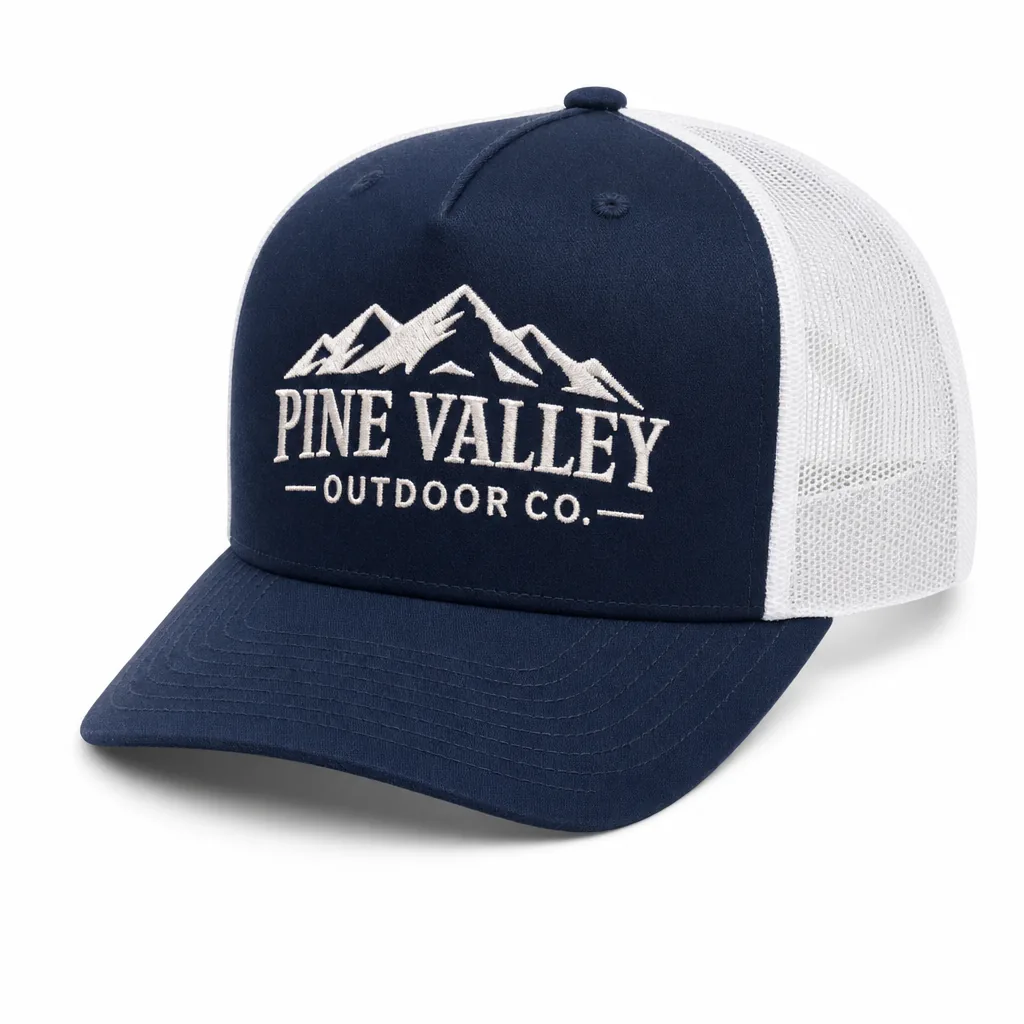
Every week, our sales team answers detailed questions about custom made trucker hat: the 2026 sourcing & manufacturing playbook (2026 update) (2026 update) - cost & moq breakdown. We wrote this guide so that wholesalers, streetwear brands, corporate buyers and promotional resellers can compare options with full information, and avoid the traps that show up only after production has started.
Custom Embroidered Hats
A custom embroidered hat lives or dies on digitizing and base construction. The logo file is only the starting point; stitch density, underlay, pull compensation, and stitch order have to be tuned to the actual crown or the front panel will pucker. For a custom made trucker hat, I want the embroidery format, estimated stitch count, thread brand, and exact panel build before I quote. A 5-panel foam-front trucker behaves differently from a 6-panel cotton twill cap or a mesh-back style with a buckram-backed front, and the machine setup changes with it. Tajima, Barudan, and ZSK multi-head cap machines all sew the job, but the operator’s needle tension and the digitizer’s fill strategy decide whether the logo sits flat or comes out swollen and coarse.
Buyers need to specify the cap the way production actually reads it: Pantone TCX for the crown, thread color by Pantone or Madeira reference, mesh weight in the 120 to 180 gsm range, crown height, closure type, sweatband construction, visor curve, and whether the front panel uses foam, buckram, or fused interfacing. For a custom made trucker hat, MOQ is usually 300 to 500 pieces per colorway when embroidery is included, though 100 to 200 pieces is realistic if the factory has blank stock on hand. In China, a basic 1-color embroidered cap at 300 to 500 pieces usually lands around $2.20 to $4.80 FOB, while 3D puff, woven labels, custom taping, and mixed-panel fabrications push it higher. Embroidery typically adds about $0.35 to $1.20 per piece, depending on stitch count and placement count.
The defects that matter are mechanical, not subjective. Check for needle strikes through foam, thread breaks at the side seam, uneven visor topstitching, front-panel distortion, loose mesh binding, and logos drifting more than 2 to 3 mm off center. A proper inspection should cover seam strength, panel symmetry, daylight color consistency, and carton pack-out under AQL 2.5 for major defects; minor issues like loose thread tails still matter on retail orders. Embroidery is the better choice when the buyer wants perceived value and repeatability, but only if the factory can hold stable fabric, clean digitizing, and disciplined final QC across the full custom made trucker hat run. Our standard practice is to approve a stitched pre-production sample before bulk cutting, because once the crown is assembled, bad digitizing gets expensive to fix.
Custom Hat Embroidery
Embroidery is where a custom made trucker hat either reads as a proper retail item or falls apart visually at arm’s length. The process is straightforward: vector art gets digitized into a stitch file, thread colors are mapped, the cap is loaded on a curved frame, and the machine runs the sequence. Quality is decided in digitizing, not by the machine badge. On Tajima, Barudan, or ZSK heads, I look at stitch density, underlay, pull compensation, and whether the shop is using 60/3 or 75/2 polyester thread for face embroidery. For foam-front caps, 3D puff needs a thicker satin border and a clean foam-cut path; for cotton twill fronts, flat embroidery is usually the safer call. Once a logo falls below roughly 45 mm wide, poor stitch direction closes counters and crushes small lettering before thread quality even becomes the issue.
Before you compare custom trucker hat quotes, lock the embroidery spec in writing. State the decoration area in millimeters, target stitch count, thread type or brand, backing material, and whether the factory must send a sew-out for approval before bulk production. For a standard custom made trucker hat with one front logo, MOQ is usually 100 to 300 pieces per colorway; 50-piece runs are possible, but setup charges often erase the advantage. In 2026, a plain structured six-panel trucker cap with one front embroidery typically lands around $2.40 to $4.80 FOB at 300 to 500 pieces, depending on mesh weight, crown fabric, sweatband spec, and add-ons such as woven labels, inside taping, or a sandwich brim. If a quote is materially below that range, something is being trimmed: digitizing time, fabric weight, or finishing control.
The failure modes are consistent: broken stitches at tight corners, back-side looping from poor tension, logo shift from sloppy cap mounting, and color misregistration when a design is split across multiple passes. On a custom made trucker hat order, I inspect hoop marks, puckering around foam fronts, loose jump threads, and whether the crown still holds shape after steaming. Any sewn or printed accent near the embroidery should stay within the agreed Pantone TCX target, and the sample should pass a basic rub check and a light wash test without fraying or thread bleed. For small text and simple marks, embroidery is usually the most durable option. For detailed graphics, a woven patch or patch-plus-stitch build usually gives a cleaner result than forcing every line into thread on a custom hat embroidery spec.
Custom Trucker Hat
A custom made trucker hat is usually a six-panel construction with a foam or cotton twill front, 100 percent polyester mesh on the side and back panels, and a 7-snap plastic closure. The production route is simple on paper but unforgiving in practice: cut the panels, fuse buckram or 2.5 mm EVA foam into the front if structure is needed, sew the crown, attach the visor, install the sweatband, then finish with embroidery, a woven patch, PVC badge, or heat transfer before blocking and trimming. A proper PO should lock the crown profile, brim curve, mesh weight in gsm, sweatband material, closure type, and decoration method. For repeat orders, specify Pantone TCX for fabric targets, Madeira or Gunold thread codes, embroidery stitch count, and the exact backing type. If the front panel needs to stand upright, say whether it needs 100 gsm buckram, 2.5 mm foam, or no reinforcement; that choice changes hand feel, machine settings, and lead time.
MOQ moves with how much of the hat is actually custom. If you are only changing artwork on a stock blank, 200 to 300 pieces per colorway is normal; once you request custom mesh, custom labeling, printed seam tape, or a new mold for a PVC patch or metal buckle, 500 to 1,000 pieces is the more realistic floor. In 2026, FOB pricing for a basic custom made trucker hat usually lands around $2.20 to $3.80 at 500 units when decoration is a single small embroidery or print. Raised patch work, multi-location embroidery, contrast stitching, or premium fabrics such as 310 gsm cotton twill push that to roughly $4.20 to $7.50 FOB. Air freight, carton labeling, and DDP delivery can add another $0.60 to $2.20 per piece depending on lane, carton density, and season, so the low factory quote is not the landed cost. When the price is far under market, the compromise usually shows up in lighter mesh, thin sweatbands, weak stitch density, or sloppy packing.
The first defects show up on the front panel, visor, and sweatband, not in the final carton. Watch for warped crowns, uneven topstitch spacing, loose embroidery backing, off-center logos, and mesh that splits when the snapback is pulled to the last setting. On printed or patched hats, check color against the approved sample under D65 lighting and ask for AQL 2.5 with photo records covering panel symmetry, visor curve, stitch consistency, and closure function. Our standard practice is to sign off a pre-production sample before bulk cutting and then freeze the production route, because once the lay is cut, small changes turn into expensive rework. For buyers, the real tradeoff is between a stock-base program that moves fast and a true custom build that gives tighter control over structure, hand feel, and branding. The brands that write the spec tightly usually get fewer defects, fewer approval loops, and better gross margin than the ones trying to win on unit price alone.
Custom Trucker Hats
A custom made trucker hat is really a bundle of four decisions: front-panel substrate, mesh spec, crown architecture, and decoration method. In production, the common build is 100 percent cotton twill or brushed cotton on the front, 100 percent polyester mesh on the back, a structured 6-panel crown, and a pre-curved visor with PE board or recycled cardboard insert. The variables that move fit and landed cost are crown height, panel count, mesh grams per square meter, sweatband material, and closure type. A 5-panel foam-front trucker is not the same product as a structured 6-panel retail cap, and the tech pack should say that plainly. For artwork, a flat mockup is useless without stitch density, underlay, backing, and color targets against Pantone TCX or a physical lab dip when the face fabric is dyed. If a supplier cannot discuss needle tension, pull compensation, and trim settings on Tajima, Barudan, or ZSK heads, they are not controlling the process.
MOQ and pricing depend on how many operations are shared across the run. A straightforward custom made trucker hat with one embroidery location usually starts around 200 to 300 pieces per colorway, with FOB factory pricing near USD 2.20 to 4.50 for basic builds and USD 4.80 to 8.50 for heavier construction, woven patches, multi-location embroidery, or private-label trims. Each extra step matters: printed patches, woven labels, custom taping, rubber badges, and sweatband printing add setup time, hand labor, and reject risk. The real commercial question is whether you are ordering a stock-cap modification or a fully private program. The first is usually 20 to 35 percent cheaper because the panel shapes, visor tooling, and closures already exist. We quote by component and decoration method because that is the only way to expose plate fees, packing charges, and carton labeling before the order is locked.
Quality control should focus on the failures that show up in retail returns. On a custom made trucker hat, that means checking mesh hole consistency, seam puckering at the front panels, visor curve symmetry, and whether the sweatband is stitched flat without twist. For embroidery, verify density so the front panel does not tunnel, and check for thread bleed on dark navy, black, and red fabrics. A proper AQL 2.5 inspection should include random pull tests on snaps or plastic closures, crown depth within 3 mm, and shade matching against approved bulk swatches under D65 light. Buyers should also request carton-drop tests, odor checks, and packing counts by size or color. The issue is not whether the sample looks good on a desk; it is whether the factory can hold the same spec across 500 pieces or 50,000 without turning a cheap custom trucker hat into a returns problem.
Hat Trucker Custom
A custom made trucker hat quote starts with the spec sheet, not the logo file. The factory needs panel count, crown height, front structure, mesh type, closure, bill shape, and decoration method before the number means anything. Most programs are 5-panel or 6-panel caps with a foam front or structured cotton twill front, polyester mesh back, and either a precurved PE insert or a flat bill. On the line, the sequence is cutting, lamination if the front needs stiffness, panel stitching, mesh insertion, sweatband and label attachment, then embroidery, woven patch application, screen print, or heat transfer. For a real custom made trucker hat order, specify front fabric weight in gsm, mesh denier, sweatband material, seam tape width, and whether the crown uses buckram, foam, or fusible interfacing. Those choices control recovery, packing behavior, and whether the hat still holds shape after carton compression.
MOQ and pricing depend on whether you are buying a stock base or a fully custom build. A basic custom made trucker hat with standard polyester mesh, one embroidery location, and a snapback closure usually lands around 300 to 500 pieces MOQ from a competent factory, with FOB China pricing often in the $1.40 to $3.20 range. Add woven labels, side embroidery, sandwich brims, custom taping, or specialty washes and the cost moves quickly, usually by $0.20 to $0.80 per added operation. Lower-volume streetwear or promo runs can sometimes be done at 100 to 200 pieces, but the unit price typically rises 20% to 40% because setup time is spread across fewer hats. CrownsForge’s standard practice is to quote blank construction, decoration, and packaging separately so buyers can see where the real cost sits.
The defects that hurt a custom made trucker hat order are predictable: crooked center seams, uneven crown height, mesh wrinkling, puckered embroidery, off-center front panels, poor snapback alignment, and color drift outside Pantone TCX tolerance. In inspection, I check logo placement, crown symmetry, bill curve, and closure function first, then stitch density, thread breaks, sweatband stitching, and carton packing. Ask for a pre-production sample, top-of-line photo approval, and an AQL 2.5 final inspection plan with major and minor defect limits spelled out. If the fabric is dyed, set Delta-E targets before bulk cutting; if the mesh and front panels come from different mills, require lot traceability so shade variation can be isolated fast. The sourcing decision is simple: do you want the cheapest cap that looks close, or a repeatable custom made trucker hat program that survives retail checks and reorder pressure?
Trucker Custom Hat
A custom made trucker hat is usually a six-panel cap with a foam- or buckram-backed front, polyester mesh rear panels, a curved or semi-curved visor, and a plastic snapback closure. The construction is simple on paper, but the process order controls the result: panel cutting, front-panel lamination, crown stitching, visor board insertion, logo application, steam shaping, and final packing. The specs that actually decide whether it wears correctly are crown height, front-panel stiffness, mesh openness, visor radius, sweatband width, and snap pitch. I see samples fail most often when the front is too soft for the decoration method, or when the visor is pressed without a repeatable curve, so the hat looks fine flat on a table and collapses once it is worn. For a custom made trucker hat, the real test is whether it keeps shape after heat, moisture, and repeated snap adjustment.
Do not ask for a quote from a logo file alone. A proper custom made trucker hat brief needs a tech pack with Pantone TCX targets, mesh denier, foam thickness in millimeters, visor board weight in gsm, stitch density, sweatband material, closure type, and packaging instructions. Standard MOQ is usually 300 to 500 pieces per colorway, while 1,000 pieces is where factory pricing starts to improve in a visible way. In China, ex-factory pricing commonly runs about $1.20 to $3.80 per piece depending on whether the cap uses plain twill, printed foam, 3D embroidery, woven labels, or a molded rubber patch. CrownsForge’s standard practice is to quote landed cost, because cartonization, inner polybags, inland trucking, air freight, and customs fees can erase a cheap unit price fast. If the buyer has not frozen color standards and decoration method early, sample revisions stretch out and the per-unit cost creeps up.
Quality control on a custom made trucker hat should be checked against AQL 2.5, not by eye. The common defects are crooked front panels, off-center embroidery, weak backtacks at stress points, burrs on the snap closure, mesh that loosens after steaming, and color drift beyond Delta-E 2.0 to 3.0 from the approved lab dip. I would also inspect crown symmetry, visor curvature consistency, sweatband attachment, and whether the front panel rebounds after shipping compression. A small spec change, like moving from semi-structured foam to fully structured foam, can change the way the cap sits on the head more than most buyers expect. The safest sourcing path is one approved preproduction sample, a frozen fit block, and a written tolerance sheet before bulk production starts. That discipline usually saves more money than chasing the lowest quote and fixing defects after the goods leave the factory.
Working with CrownsForge for custom made trucker hat programs
For a custom made trucker hat program, the real failure point is not the base cap, it is locking the tech pack before fit is approved and then adding vendors too early. The practical sampling path is simple: 5 to 7 working days for a blank-development sample, 7 to 10 working days once embroidery, woven patch work, or a new crown profile is involved, and another 2 to 4 days if the brim curve or mesh spec needs a second pass. That timing matters because most custom made trucker hat problems show up in proportions, not logo quality. A 1.5 mm change in stitch density, a 10 mm shift in crown height, or the wrong mesh GSM can make the cap wear wrong even when the decoration is clean. For first-time buyers, 100 to 300 pcs per colorway is a realistic starting MOQ for a straightforward build, provided Pantone TCX targets, seam allowances, and closure type are fixed before sampling starts.
Process control only holds if the order is disciplined across colorway, front panel fabric, mesh, closure, and trim. A six-panel foam-front trucker with polyester mesh and snapback closure is the most stable cost structure; a structured cotton twill crown with woven patch, flat embroidery, and custom underbrim print usually lands 12 to 25 percent higher because it adds labor and more setup points. Keeping decoration in-house matters because Tajima, Barudan, and ZSK embroidery heads, heat-transfer application, woven labels, and PU patches can all be adjusted against the same QC standard instead of being split across outside vendors. That is where a custom made trucker hat program usually gets rescued or ruined: thread tension, backing weight, border cleanup, and placement tolerance need to be corrected while the sample is still on the table, not after bulk cartons are already scheduled.
Compliance and order management are what keep a custom made trucker hat order from turning into a sample-only story. The working baseline should be sedex-audit-cap-supplier-guide.html">BSCI 2.0 and Sedex SMETA 4-Pillar, with the file set built around material declarations, carton marks, color approvals, in-line QC photos, and final AQL 2.5 reports for major defects. The buyer flow should stay blunt and sequential: artwork confirmation, bill of materials lock, lab dip or Pantone approval, size spec signoff, then pre-production sample before bulk release. If the seam allowance, mesh spec, or crown height is vague, first-run reject rates can jump into the 5 to 8 percent range and the entire schedule slips. Once fit, decoration placement, and packaging are stable, repeat orders stop behaving like a one-off project and start acting like a normal production line, with cost, lead time, and carton yield staying predictable from PO to PO.
Frequently Asked Questions
How long does production take?
Sampling takes 7 to 12 days. Bulk production runs 20 to 30 days depending on quantity, fabric availability and decoration complexity. Inspection and packing adds another 3 to 5 days before shipment.
Do you support sustainability certifications?
Yes. We work with GOTS organic cotton, GRS-certified recycled polyester, OEKO-TEX Standard 100 fabrics, and are BSCI and Sedex audited. Certification documentation can be provided per order.
What is the minimum order quantity (MOQ) for custom hats?
Our standard MOQ is 100 pieces per design and color, with sampling available from 1 piece. For complex multi-color logos or premium fabric upgrades, the MOQ can be lowered with a small per-piece surcharge.
What logo decoration techniques do you offer?
3D puff embroidery, flat embroidery, woven patch, leather patch, PVC patch, screen printing, sublimation, applique and laser etching, all in-house with no subcontracting.
Can I order a sample before bulk production?
Yes. We strongly recommend approving a pre-production sample before mass production. Samples are charged at 35 to 60 USD each plus express shipping, fully refundable against confirmed bulk orders over 500 pieces.
How does ordering custom hat trucker work?
When evaluating custom hat trucker, the key considerations are construction quality, decoration capability, MOQ flexibility and lead time. Cover everything buyers ask about custom embroidered hats: how it's manufactured, what specs to request from a factory, typical MOQ and pricing, common quality issues to inspect for, and how this ties back to the broader custom made trucker hat sourcing decision. Cover everything buyers ask about custom hat embroidery: how it's manufactured, what specs to request from a…
How does ordering custom embroidered trucker hats work?
When evaluating custom embroidered trucker hats, the key considerations are construction quality, decoration capability, MOQ flexibility and lead time. Cover everything buyers ask about custom embroidered hats: how it's manufactured, what specs to request from a factory, typical MOQ and pricing, common quality issues to inspect for, and how this ties back to the broader custom made trucker hat sourcing decision. Cover everything buyers ask about custom trucker hats: how it's manufactured, what specs to request from a…
How does ordering custom made hats for men work?
When evaluating custom made hats for men, the key considerations are construction quality, decoration capability, MOQ flexibility and lead time. Cover everything buyers ask about custom embroidered hats: how it's manufactured, what specs to request from a factory, typical MOQ and pricing, common quality issues to inspect for, and how this ties back to the broader custom made trucker hat sourcing decision. Cover everything buyers ask about custom trucker hats: how it's manufactured, what specs to request from a…
How does ordering high quality custom trucker hats work?
When evaluating high quality custom trucker hats, the key considerations are construction quality, decoration capability, MOQ flexibility and lead time. Cover everything buyers ask about custom embroidered hats: how it's manufactured, what specs to request from a factory, typical MOQ and pricing, common quality issues to inspect for, and how this ties back to the broader custom made trucker hat sourcing decision. Cover everything buyers ask about custom trucker hats: how it's manufactured, what specs to request from a…
Ready to start your custom hat project?
Send us your tech-pack, sketch or even just an inspiration photo. We will respond with a detailed quotation and digital mock-up within 24 hours.
Request a free quoteRelated guides
Custom Leather Patch Hat Low Minimum: A 2026 B2B Sourcing Guide
Read article →
Mens Beanies: Properties, Costs and How to Spec It Right
Read article →
Custom Rope Hats: Manufacturing, Materials and Bulk Pricing (2026 Update)
Read article →Sourcing custom hats does not have to be complicated. With the right manufacturing partner, clear specifications and a small upfront investment in sampling, you can launch a retail-quality product in 30 to 45 days.