
Custom Made Trucker Hat: The 2026 Sourcing & Manufacturing Playbook (2026 Update) (2026 Update) (2026 Update)
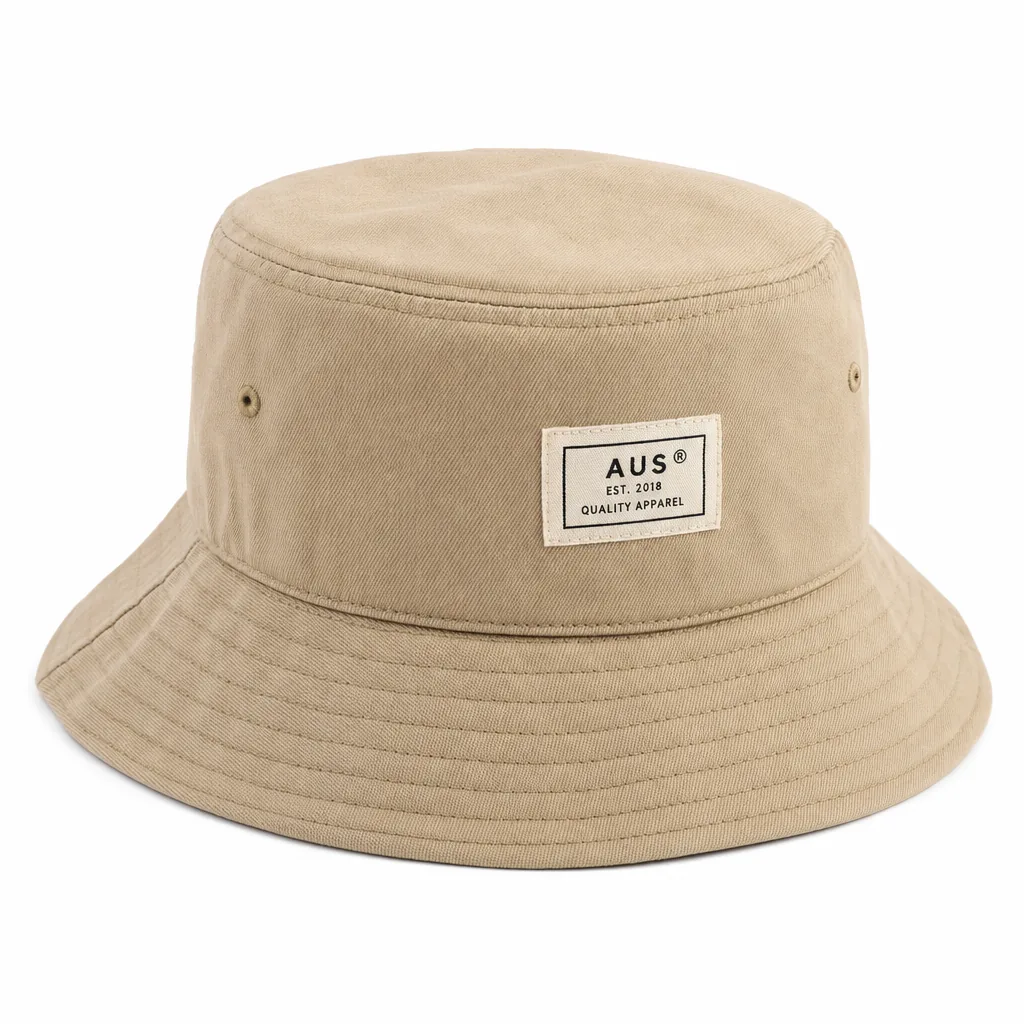
For brand owners, wholesalers and procurement teams entering the custom headwear category, custom made trucker hat: the 2026 sourcing & manufacturing playbook (2026 update) (2026 update) (2026 update) is one of the highest-leverage decisions you will make. Get it right and your unit economics, retail story and reorder cycle all improve. Get it wrong and you carry the cost for years.
Custom Embroidered Hats
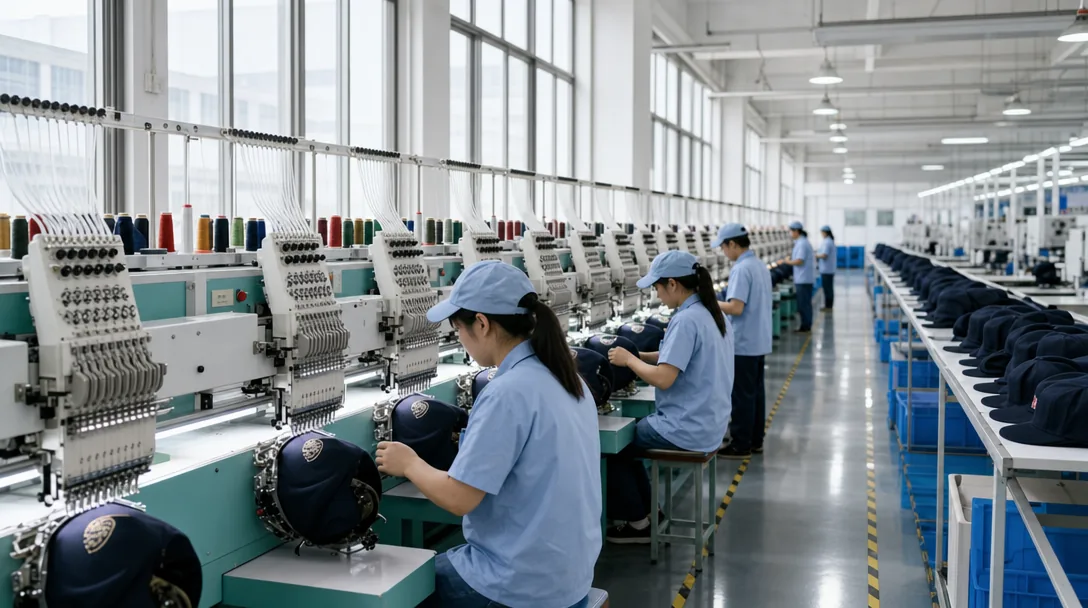
Embroidery is still the lowest-risk decoration for a custom made trucker hat, but most failures start in digitizing, not on the machine. Foam-front truckers react nothing like brushed cotton twill or 600D poly canvas: the panel compresses under the presser foot, then rebounds, so bad underlay will leave tunneling, cratering, or a visible box around the logo. On Tajima, Barudan, or ZSK cap frames, 40 wt polyester thread with a 75/11 needle is standard, usually at 750-850 spm, then reduced to 650-700 spm for dense fills, metallics, or copy under 4 mm cap height. If satin columns drop below about 1.2 mm, edge breakup becomes likely unless the digitizer changes stitch angle, shortens travel, and opens density to roughly 0.35-0.40 mm spacing. Buyers should freeze the embroidery spec before sampling: finished logo size in millimeters, stitch-count limit, thread brand and sheen, Pantone TCX target, backing weight, and whether the artwork is flat stitch, 3D puff, appliqué, or a mixed method. If that file logic is left vague, the factory will improvise, and first-sample disputes usually follow.
Pricing only makes sense when the cap body and embroidery are engineered as one package. In Yiwu or Dongguan, a standard 5-panel or 6-panel mesh-back custom made trucker hat with front flat embroidery usually sits around US$2.30-US$4.60 FOB at 144-300 pieces per colorway, assuming a PE snap, 230-260 gsm cotton twill or foam front, and 5,000-8,000 stitches. Move to 3D puff, 8,000-12,000 stitches, woven main label, custom seam tape, Pantone-matched closure, and better mesh, and FOB commonly rises to US$4.90-US$6.70 at 300 pieces. Quotes much lower than that often hide substitutions: lighter front panels, lower-denier mesh, stock thread instead of shade-matched cones, or brittle snaps with noticeable color drift. The technical sheet should specify front-panel gsm, mesh denier, sweatband composition, brim insert material, closure resin grade, crown-height tolerance, visor-curve tolerance, and logo-placement tolerance. Our standard practice is to inspect embroidery at the sewing line, not just at packing, because the recurring defects are predictable: exposed foam on puff logos, buried thread breaks, jump-stitch trimming, satin fray on corners, and center placement drifting more than 3 mm. For bulk, use PPS approval, inline checks after the first 20-30 pieces, and final inspection at AQL 2.5 with Delta-E control when thread color has to sit close to branded fabric shades.
Custom Hat Embroidery
Embroidery is where a custom made trucker hat either reads as retail-grade product or collapses into low-end promo stock, and the failure point is usually digitizing rather than the embroidery head. Most factories in Zhejiang will convert vector art into DST or DSB files and run caps on Tajima, Barudan, or ZSK multi-head machines, but the front panel construction changes everything. A 5 mm EVA foam-backed polyester front gives you the classic high-crown trucker shape, yet it is far less tolerant than structured 10x10 cotton twill or chino twill. Excessive penetration will cut the foam, dense fills can create tunneling, and bad underlay will telegraph ridges through the crown. On foam fronts, I normally hold fill density around 0.35-0.40 mm, use edge-run plus zigzag underlay, and reduce top thread tension versus twill to control crown distortion. If the logo includes small copy, keep finished letter height above 2.0-2.5 mm, stroke width above 0.4 mm, and overall front logo width around 90-110 mm; below that, clean counters and satin edges become unreliable on a curved cap frame.
A workable tech pack needs more than artwork and a Pantone callout. It should lock logo position from visor seam, maximum embroidery field in millimeters, stitch count range, thread brand and ticket size, backing spec, needle size, and the exact cap body used for approval. For standard Madeira or Gunold polyester thread, ask for the nearest Pantone TCX match and define acceptable variance; for custom-dyed thread, Delta-E under 1.5 is a realistic target for visible brand colors. Approval samples must be sewn on the same 5-panel or 6-panel trucker shell, same foam thickness, same backing, and same cap frame setup as bulk. Sampling on flat twill swatches and then producing on foam-front mesh caps is how buyers approve one thing and receive another. In current Yiwu pricing, a custom made trucker hat with one front logo in the 5,000-8,000 stitch range usually lands around US$2.20-US$4.80 FOB at 144-300 pieces per colorway; add 3D puff, side hits, metallic thread, or back arch embroidery and FOB can move beyond US$5.50 because machine speed drops from roughly 750-800 SPM to 500-650 SPM and rejection rates rise.
Inspection has to be tied to measurable embroidery defects, not vague comments like “logo looks soft.” For bulk runs, I would inspect at AQL 2.5 with specific checks for color-to-color registration drift, skipped stitches from needle breaks, loose trims longer than 3 mm, backing exposure near the sweatband, crown warping from over-tension, and puff height inconsistency on 3D embroidery. Thread lot control matters more than many buyers expect: even with the same thread code, dye-lot variation can produce visible shade banding once caps are packed side by side in the same master carton. Our standard practice is to review first-off samples, in-line pulls, and end-of-run pieces from each bundle because cap frame pressure, operator adjustments, and foam compression drift during a shift. That is why embroidery complexity has to be priced as a production risk, not just an ornament. A suspiciously cheap custom made trucker hat often gives the savings back through 6-8 percent rework, unreadable small text, puckering severe enough to fail retail QC, or inconsistent logo height across the size set.
Custom Trucker Hat
The first failure point on a custom made trucker hat is usually structure, not artwork. A standard high-profile 5-panel build uses a 100% polyester foam front laminated to 2 to 4 mm PU foam, then joined to polyester or nylon mesh in the 100 to 140 gsm range. That recipe is fine for promo-grade caps, but retail programs need the front panel spec written tighter: with 160 to 220 gsm buckram if you want a rigid crown that holds shape after carton compression, or no buckram if the brief is a softer vintage silhouette with more drape. Visor board matters more than many buyers realize. Recycled paper inserts are cheaper by a few cents, but after 30 to 45 days of ocean humidity they can ripple at the edge or lose curve memory. PE or EVA visor board at 2.5 to 3.0 mm is far more stable for export, especially on containers bound for the U.S. East Coast or EU summer deliveries. Decoration has to match the substrate, otherwise the cap looks fine in the approval photo and falls apart in bulk. Foam fronts are the most unforgiving base for embroidery: excessive underlay, the wrong needle size, or stitch density above what the foam can support causes tunneling, foam cutting, and edge collapse around small lettering. On Tajima, Barudan, or ZSK heads, I would treat puff embroidery on foam as a separate process from embroidery on cotton twill, not a simple file conversion. Woven patches, TPU badges, and silicone heat transfers introduce different risks—telegraphing over uneven foam, poor adhesive wet-out, and edge lift after heat exposure in transit. The factories that control quality run strike-offs with the actual front panel build, then lock down backing, thread type, and logo placement tolerance before bulk starts; on a decent line, front-center logo deviation should stay within plus or minus 2 mm.
Most trucker-cap problems come from RFQs that are too vague. If you want consistency, specify panel count, finished crown height, visor length and curvature, mesh composition and denier, sweatband width, closure resin type, seam tape color, button material, and finished weight tolerance. Color also needs objective limits. Use Pantone TCX for dyed textiles and Pantone C for plastic or rubber trims, then set a realistic Delta-E target—below 1.5 on front fabric and below 2.0 on mesh and snap components, where shade variation is harder to suppress lot to lot. If the program includes embroidery, write the stitch area in millimeters, puff foam height, thread brand or equivalent denier, and acceptable registration tolerance. These details sound tedious until the approved sample and production lot start drifting apart. 2026 pricing is still driven by components and process count, not by the word custom. A basic 5-panel foam-front trucker with standard polyester mesh, plastic snapback, and one front embroidery generally lands around $2.10 to $3.20 FOB China at 144 to 300 pieces per colorway. Better retail-grade builds—cleaner crown symmetry, stronger mesh recovery, branded internal tape, upgraded moisture-wicking sweatband, sharper embroidery execution—usually run $3.40 to $5.80. Add specialty fabrics, molded patches, multi-position decoration, metal hardware, or custom closures and the number climbs past $6.50, often with MOQs of 500 to 1,000 pieces. Before shipment, the inspection focus should be practical: bill curve consistency, mesh tearing at seam joins, skipped sweatband stitches, snapback pull strength, front-panel dents from carton pressure, and overall crown symmetry. Our standard practice is final inspection at AQL 2.5, because repeatability across production lots matters more than one perfect pre-production sample.
Custom Trucker Hats
A good custom made trucker hat is won or lost at patterning, not decoration. The commercial baseline is still a 5-panel foam front or 6-panel seamed crown, but the spec has to go deeper than “poly mesh and snapback.” Front panels usually perform best with 3 to 5 mm PU foam laminated to 120 to 150 gsm tricot; anything softer tends to collapse after embroidery, and anything too stiff creates a cardboard face. Rear panels should use 130 to 180 gsm polyester mesh, ideally 75D to 100D yarn; once suppliers substitute lighter denier mesh, recovery drops and side seams start splitting after repeated snap closure tension. Lock down crown height in centimeters, visor length, PE insert thickness at 1.8 to 2.2 mm, pre-curve angle, sweatband weight at 180 to 220 gsm, and even snap tab resin grade if you want reorder consistency. Color control is where many import programs quietly fail. If the shell, thread, and sweatband are matched by eye instead of by Pantone TCX or TPG references, the cap will read “off” under 4000K to 5000K retail lighting even when the warehouse says it looks fine. For a retail-grade custom made trucker hat, I would cap Delta-E at 1.0 to 1.5 on visible components and require lab dips before bulk dyeing. Also specify whether non-mesh back panels need stitched eyelets or metal eyelets, because that choice changes both ventilation and line speed. Button wrap material, seam tape width, and topstitch SPI should be written into the tech pack too; these are small details, but they are exactly where factories start trimming cost when the target FOB gets aggressive.
Decoration is where factory capability shows up fast. Flat embroidery on foam fronts runs cleanly on Tajima, Barudan, or ZSK cap frames, but 3D puff is less forgiving than most buyers think: wide satin columns, dense underlay, and high needle penetration will fracture foam, tunnel the panel, or push the logo 2 to 3 mm off center if the digitizing is lazy. For foam truckers, I prefer controlled underlay, lighter top density, and a physical sew-out on the actual front material before bulk approval. A basic custom made trucker hat with stock mesh colors, flat embroidery under roughly 8,000 stitches, standard PVC snapback, and individual polybagging usually lands around 144 to 288 pieces per colorway, with realistic FOB China pricing in the $2.20 to $3.90 range. Once you add 3D puff, woven or rubber patches, sublimated under-visors, custom seam tape, woven labels, or branded inner taping, MOQ usually shifts to 300 to 500 and FOB moves closer to $4.30 to $6.80. Inspection should target measurable structure, not just obvious top-carton defects. The repeat failures I see are visor curves that are not left-right symmetrical, crown heights varying more than 3 mm within the same lot, embroidery drifting off center, weak snapback teeth, sweatband roping, and mesh tearing at seam joins after stretch. AQL 2.5 is a sensible pre-shipment standard, but only if checkpoints are specific: head opening tolerance within ±5 mm, bill symmetry checked against a centerline template, stitch count verified against the approved sew-out, and pull testing on the snap closure. If the order is headed for licensed retail or larger corporate programs, ask for current sedex-audit-cap-supplier-guide.html">BSCI 2.0 or Sedex SMETA 4-Pillar audit records, not a PDF with an expired logo. The lowest quote usually hides lower foam density, lighter mesh, reduced stitch density, or weak in-line QC, and those shortcuts become returns long before they show up as a savings on the pro forma invoice.
Hat Trucker Custom
A custom made trucker hat is usually won or lost before sampling, not during approvals. Lock five specs first: front-panel build, mesh denier, visor board, closure, and decoration method. The commodity body is still a 5-panel high-crown trucker with a 3 to 5 mm laminated polyester foam front, 70D to 100D polyester mesh, PE visor insert, and 7-hole PP snap. It is inexpensive and dimensionally consistent, but poor lamination is the failure point; after 30 to 45 days in ocean transit, low-density foam often shows permanent compression lines and face puckering around the buckram edge. For a mid-market retail program, I would move to 10 oz brushed cotton twill, 8x8 canvas, or a 65/35 poly-cotton shell, then call out crown height at 16 to 17 cm, visor length at 7.0 cm, and pre-curve in degrees rather than vague notes like “slight curve.” Decoration has to follow the structure of the crown. On Tajima or Barudan cap frames, a front logo in the 9,000 to 12,000 stitch range runs cleanly on buckram-supported panels, but 3D puff on soft foam is where you see needle cutting, flagging, and underlay read-through. If the buyer wants puff, keep satin width controlled, reduce fill density, and have the digitizer sequence from center outward to prevent crown torque after sewing. A proper tech pack should specify Pantone TCX references for shell fabric and mesh, sweatband makeup such as 100% cotton twill or microfiber with 3 mm foam, seam tape repeat artwork, embroidery placement tolerance of +/-1.5 mm, and visor symmetry tolerance. Our standard practice is to lock underbill color and seam-tape language in the PO because those two details are constantly “assumed” and then wrong in bulk.
MOQ and cost are driven more by process count than by the trucker shell itself. A stock-color custom made trucker hat with foam front, black or white mesh, standard snap, and flat embroidery is usually workable at 144, 288, or 300 pieces per colorway. Add dyed-to-match mesh, printed seam tape, woven flag label, braided rope, sandwich visor, recycled fabric with GRS transaction certificate, or branded closure tabs, and the real MOQ shifts to 500 to 1,000 pieces because wastage, color matching, and setup time start to dominate the cost. In Yiwu or Dongguan, a basic FOB target at 300 pieces is commonly $2.20 to $3.50; once you layer on 3D puff, TPU patch, sublimated underbill, or molded metal branding, the realistic range is $3.90 to $6.50 FOB. Digitizing is typically $25 to $60 per file, and patch tooling or knife-die setup adds another $80 to $150. Inspection should happen after embroidery, shaping, and final assembly, not on loose cut panels. The recurring defects are easy to predict: front-panel warping after stitching, mesh cracking at the back seam, visor twist more than 5 mm off centerline, brittle snap tabs after cold-box testing, and shade drift between crown fabric, seam tape, and sweatband binding. For retail programs, I would hold Delta-E under 1.5 on dark colors and under 1.0 when the hat must match apparel. Use AQL 2.5 and define major defects in the PO: logo skew over 3 mm, exposed foam, skipped stitches, loose threads over 2 cm, broken snap prongs, oil marks on the undervisor, or patch-edge lift after a 24-hour adhesion test. BSCI 2.0 and Sedex SMETA 4-Pillar audits do not guarantee a good cap, but factories that can control digitizing, shaping, inline QC, packing, and metal detection under one system usually produce fewer chargebacks.
Trucker Custom Hat
Most failures in a custom made trucker hat trace back to an incomplete tech pack, not bad sewing. For a 5-panel trucker, lock the front construction first: 2.5 to 4.0 mm EVA- or sponge-foam laminated to polyester, or 8 to 10 oz cotton twill if you want a softer crown. Then define crown height at 11.5 to 12.5 cm, visor length at 7.0 to 7.5 cm, visor curvature, 6-row versus 8-row brim stitching, underbill color, seam tape width, sweatband spec, and closure type. Rear mesh is not interchangeable; 100D to 150D polyester hex mesh, flat mesh, and tricot-backed mesh all wear differently and recover differently after carton compression. If you leave fit or rebound vague, the factory will default to its house block, which is usually optimized for output and nesting efficiency, not for your target silhouette.
Decoration has to be engineered around the panel structure. On foam fronts, a 6,000 to 8,000 stitch flat embroidery run on Tajima or Barudan heads usually holds cleanly; push past 10,000 stitches without adjusting underlay, pull compensation, and density, and you will see puckering or panel collapse. For thick foam, a 75/11 needle and lower stitch density often outperform heavy coverage. If you use woven, PVC, TPU, or merrowed patches, specify border width and placement tolerance at plus/minus 2 mm, because off-center patch application is one of the most common trucker defects. A usable RFQ should also call out Pantone TCX or Pantone Coated by component, dyed-fabric tolerance at Delta-E 1.0 to 1.5 under D65, visor skew under 3 mm, and embroidery registration within 1.5 mm. Typical MOQ is 144 to 300 pcs per colorway with stock mesh and snapbacks; custom-dyed mesh, branded seam tape, or proprietary molds usually move the floor to 500 to 1,000 pcs.
Costing stays predictable if the spec is honest. In Zhejiang, a basic custom made trucker hat with stock foam front, stock mesh, and one-location flat embroidery typically lands around FOB $2.10 to $3.40 at 300 pcs. Add rope trim, woven patch, printed internal tape, woven labels, branded hangtags, or individual barcode polybags, and the range moves to roughly $3.80 to $6.20 depending on labor content and trim sourcing. The bigger risk is not the obvious cosmetic defect on sample day; it is structural failure after packing, ocean transit, and retail handling. Our standard practice is to define whether the front panel must retain shape after 24 hours under master-carton compression, because that immediately changes foam grade, fusing, and packing method. Final inspection should be AQL 2.5, backed by in-line checks for mesh tearing at rear seam joins, snap pin cracking, seam tape lifting, odor, needle damage, color migration from dark underbills to white sweatbands, and crown deformation after stacking.
Working with CrownsForge for custom made trucker hat programs
Sampling cadence, not sewing capacity, is what usually makes or breaks a custom made trucker hat program. In Yiwu, a clean first proto should take 5 to 7 working days if the tech pack already locks the panel count, crown height, brim length, closure type, artwork in vector format, Pantone TCX references, and carton pack-out. Once you introduce custom-dyed mesh, a non-stock 2.5 mm EVA or foam front, a new mold for a TPU patch, or fresh 3D embroidery digitizing, 8 to 12 working days is the honest lead time. Buyers lose time when they approve decoration on an unproven shell: a 5-panel high-crown trucker will sit differently from a 6-panel mid-profile body before you even touch front panel buckram, crown angle, or whether the brim curve is set at 7.0 cm versus 7.5 cm.
MOQ flexibility is only real when the factory can pull from existing material libraries. For stock-body programs using standard polyester mesh, 1.8 mm PE brim inserts, and common 7-hole snap closures, workable minimums are typically 144 to 300 pieces per colorway. A fully custom made trucker hat with matched inner tape, printed underbrim, custom camo, 600D woven labels, or molded TPU patches usually needs 500 to 1,000 pieces per style-color to absorb trim MOQs, cutting loss, and setup waste. Flat embroidery on Tajima, Barudan, or ZSK heads stays efficient at lower volume; chenille, multilayer appliqué, and silicone heat transfer do not. In 2026, realistic FOB levels are still about $2.20 to $3.40 for a basic foam-front mesh cap, $3.80 to $5.80 for a cleaner trucker with 3D puff embroidery and woven labels, and materially higher once retail ticketing, licensed packaging, or mixed decoration enters the BOM.
Compliance is the difference between a smooth shipment and a retailer chargeback. For chain-store, licensed, or promotional business, buyers should verify current BSCI 2.0 or Sedex SMETA 4-Pillar reports, needle-control logs, broken-needle procedure, and an inspection plan built around inline checks plus final inspection at AQL 2.5. Color-critical programs should tie body fabric, sweatband, mesh, and trims to approved Pantone standards with a stated Delta-E tolerance—ideally under 1.5 for major visible components—and then lock bulk against sealed sample sets. At CrownsForge, we keep embroidery, patch placement, and heat-transfer approval close to production because trucker caps fail fast when outside subcontractors interpret stitch density, merrow width, or transfer temperature differently. The clean workflow is tech-pack review, costed BOM, strike-off, prototype, pre-production sample, line booking, inline QC, final AQL, carton photo sign-off, and FOB or DDP handoff.
Frequently Asked Questions
Can I order a sample before bulk production?
Yes. We strongly recommend approving a pre-production sample before mass production. Samples are charged at 35 to 60 USD each plus express shipping, fully refundable against confirmed bulk orders over 500 pieces.
What is the minimum order quantity (MOQ) for custom hats?
Our standard MOQ is 100 pieces per design and color, with sampling available from 1 piece. For complex multi-color logos or premium fabric upgrades, the MOQ can be lowered with a small per-piece surcharge.
How long does production take?
Sampling takes 7 to 12 days. Bulk production runs 20 to 30 days depending on quantity, fabric availability and decoration complexity. Inspection and packing adds another 3 to 5 days before shipment.
Do you support sustainability certifications?
Yes. We work with GOTS organic cotton, GRS-certified recycled polyester, OEKO-TEX Standard 100 fabrics, and are BSCI and Sedex audited. Certification documentation can be provided per order.
What file format should I send for my logo?
Vector files (AI, EPS, PDF) are ideal. High-resolution PNG or JPG at 300 dpi on transparent background works as a fallback. Provide Pantone color references for accurate reproduction.
How does ordering custom hat trucker work?
When evaluating custom hat trucker, the key considerations are construction quality, decoration capability, MOQ flexibility and lead time. Cover everything buyers ask about custom embroidered hats: how it's manufactured, what specs to request from a factory, typical MOQ and pricing, common quality issues to inspect for, and how this ties back to the broader custom made trucker hat sourcing decision. Cover everything buyers ask about custom hat embroidery: how it's manufactured, what specs to request from a…
How does ordering custom embroidered trucker hats work?
When evaluating custom embroidered trucker hats, the key considerations are construction quality, decoration capability, MOQ flexibility and lead time. Cover everything buyers ask about custom embroidered hats: how it's manufactured, what specs to request from a factory, typical MOQ and pricing, common quality issues to inspect for, and how this ties back to the broader custom made trucker hat sourcing decision. Cover everything buyers ask about custom trucker hats: how it's manufactured, what specs to request from a…
How does ordering custom made hats for men work?
When evaluating custom made hats for men, the key considerations are construction quality, decoration capability, MOQ flexibility and lead time. Cover everything buyers ask about custom embroidered hats: how it's manufactured, what specs to request from a factory, typical MOQ and pricing, common quality issues to inspect for, and how this ties back to the broader custom made trucker hat sourcing decision. Cover everything buyers ask about custom trucker hats: how it's manufactured, what specs to request from a…
How does ordering high quality custom trucker hats work?
When evaluating high quality custom trucker hats, the key considerations are construction quality, decoration capability, MOQ flexibility and lead time. Cover everything buyers ask about custom embroidered hats: how it's manufactured, what specs to request from a factory, typical MOQ and pricing, common quality issues to inspect for, and how this ties back to the broader custom made trucker hat sourcing decision. Cover everything buyers ask about custom trucker hats: how it's manufactured, what specs to request from a…
Looking for a reliable hat manufacturer in China?
CrownsForge has produced custom hats for 800+ brands across 40 countries. From 100-piece launches to 100,000-piece retail programs, we deliver on time and on spec.
Get in touchRelated guides
Bulk Trucker Hats Export Shipping Checklist for Custom Hat Buyers
Read article →
BSCI vs Sedex SMETA: Which Audit Does Your Cap Supplier Actually Need?
Read article →
Cap Defect Catalog: 32 Production Issues to Inspect For - 2026 Buyer's Guide
Read article →We hope this guide demystifies custom made trucker hat: the 2026 sourcing & manufacturing playbook (2026 update) (2026 update) (2026 update) and helps you move forward with confidence. If you have questions specific to your project, our English-speaking sales engineers are one message away.