
Custom Made Trucker Hat: The 2026 Sourcing & Manufacturing Playbook (2026 Update) (2026 Update) - 2026 Buyer's Guide - Supplier Checklist - Supplier Checklist
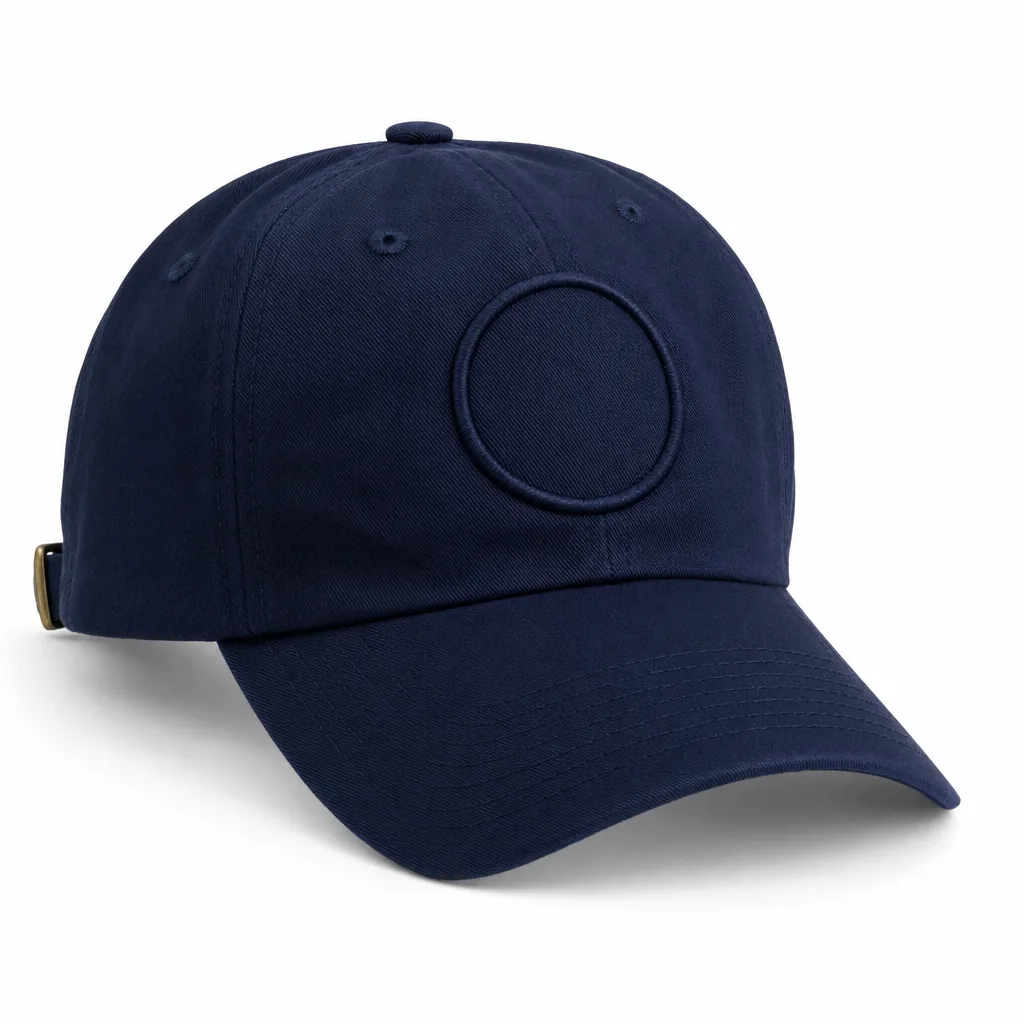
Every week, our sales team answers detailed questions about custom made trucker hat: the 2026 sourcing & manufacturing playbook (2026 update) (2026 update) - 2026 buyer's guide - supplier checklist - supplier checklist. We wrote this guide so that wholesalers, streetwear brands, corporate buyers and promotional resellers can compare options with full information, and avoid the traps that show up only after production has started.
Custom Embroidered Hats
Embroidery remains the safest branding method on a custom made trucker hat, but the sew-out is dictated as much by the cap body as by the digitized file. A 5 mm PU foam front laminated with 2-3 mm tricot behaves nothing like 10 oz cotton twill, brushed canvas, or 600D polyester, so the digitizer needs to program pull compensation, seam clearance, and crown-curve distortion before the first sample runs. Skip that step and you get the usual failures: satin columns splitting at the center seam, fill areas puckering, and small text closing up below about 4.5-5.0 mm cap height. On the floor, structured caps are normally run on Tajima, Barudan, or ZSK cap frames at 650-850 rpm using 120D/2 rayon or trilobal polyester thread, with 75/11 or 80/12 needles chosen based on face fabric, backing, and whether puff foam is in the stack.
Most cost overruns start with vague tech packs. “Front logo embroidery” is not a usable instruction; buyers should specify panel count, crown height, front fabric weight in gsm, mesh type, closure, visor stitch rows, sweatband composition, and each logo location in millimeters. A workable callout looks like this: front center 95 x 52 mm, top line in 3D puff only, left-panel hit 35 mm wide, back arch 110 mm. For 3D puff, state EVA foam thickness, underlay type, density, and a minimum letter height of 6 mm; below that, edges soften and the puff collapses. In 2026, a mid-grade embroidered custom made trucker hat from Zhejiang typically prices around $2.20-$4.10 FOB at 300-1,000 pieces, while metallic thread, appliqué, extra side hits, or dense 3D puff usually add $0.18-$0.90 per cap depending on stitch count and machine time.
Rejectable defects should be measured, not argued about after shipment. Set placement tolerance at no more than 2 mm off-center, watch for poor registration between puff and flat stitching, birdnesting, bobbin tails, foam needle cuts, visor tunneling, and mesh distortion from over-hooping. Approve a sewn strike-off under D65 lighting, then ask for inline photos after the first 20-30 pieces and inspect finished goods to AQL 2.5, with tighter internal limits on logo placement, thread breaks, and color matching. If thread must align with Pantone references, a practical target is Delta-E under 2.0-2.5 on the main brand color, especially when the embroidery sits next to woven labels or heat transfers. Inside finishing matters too: backing should be trimmed cleanly, seam tape must lie flat, and there should be no scratchy thread nests under the crown. MOQ is usually 144-300 pieces per colorway on stock bodies, but custom shell fabrics, dyed mesh, or proprietary trims often push the minimum to 500-1,000 pieces per style.
Custom Hat Embroidery
Embroidery is where a custom made trucker hat most often goes wrong, because vector-perfect artwork tells you nothing about how polyester thread behaves on a 5-panel foam front under cap-machine tension. The make-or-break variable is usually the sew file, not the logo itself. On better programs, the front panel is embroidered flat before crown assembly on Tajima TMEZ, Barudan BEKS, or ZSK heads; that consistently holds cleaner registration than sewing after assembly on a cap frame, especially on high-profile 5-panel bodies with a center seam. A typical foam front uses 2.5-3.0 mm EVA laminated to tricot or brushed polyester, which supports bold satin borders and 3D puff around 3-5 mm finished height. Where failures start is fine serif text below roughly 4.5 mm letter height, counters under 0.8 mm, and long satin columns over 7-8 mm wide; that is where tunneling, edge bite, and stitch collapse show up fast. If the artwork crosses the center seam, the file should be split and sequenced left-to-right or inside-out with pull compensation built in, otherwise reject rates climb quickly on bulk runs.
A usable spec sheet has to lock embroidery down like a process document. Call out finished logo size in millimeters, target stitch count, underlay type, density, thread spec, backing construction, and needle size rather than writing "front embroidery" and hoping for the best. For example, a retail-grade front hit might use Madeira Classic No. 40 polyester, 75/11 sharp needles on woven twill or SES on softer knits, edge-walk plus zigzag underlay, 0.38-0.42 mm fill density, and one layer of 100-120 gsm cutaway backing. For puff, specify 2 mm or 3 mm foam and confirm whether the digitizer is trapping the foam with satin coverage wide enough to avoid exposed edges after trimming. Placement tolerance should be held to +/-2 mm center front at minimum; for licensed or fashion retail, +/-1.5 mm is more realistic. Color approval should never rely on screen proofs. Ask for a sewn strike-off viewed under D65 light, matched to Pantone TCX with a practical Delta-E under 2.0, because sheen and stitch angle can shift perceived color far more than buyers expect.
Inspection should focus on the defects that approval photos hide. Thread breaks, loose trims, exposed puff foam, and fill-to-outline misregistration are obvious; the expensive problems are crown distortion and profile damage caused by over-dense files. A front logo can be technically centered and still ruin the hat if the stitch load dishes the foam panel, pulls the center seam, or telegraphs through the mesh silhouette so the crown sits crooked on head. Our standard practice is to hold embroidery appearance to a stricter internal limit than general sewing defects: a 3 mm visual tilt is easy to spot at retail distance, and a warped front panel drives returns even when the cap passes AQL 2.5 overall. Cost follows the same logic. In China, front embroidery is usually quoted by stitch count: roughly $0.18-$0.35 for 5,000-8,000 stitches, $0.40-$0.90 for 8,000-15,000 stitches or 3D puff, plus a $20-$60 digitizing fee. Those numbers only hold if sampling, production, and QC run on the same machine group; once a vendor outsources embroidery, tension consistency, first-off approval speed, and broken-needle control usually deteriorate faster than the FOB savings justify.
Custom Trucker Hat
Fit and hand feel on a custom made trucker hat are decided on the BOM, not fixed later in sewing. The non-negotiables are crown architecture and material spec: 5-panel foam front for bold graphics, or 6-panel twill front if you need cleaner shaping and less front-panel collapse; low-profile crowns usually finish around 8.5-9.0 cm, while mid-profile truckers sit closer to 10-11 cm. Front support should be called out precisely—3 mm PU foam for softer promotional builds, 4-5 mm foam or buckram-backed 10x10 cotton twill for better recovery. Mesh matters more than buyers think: 75D polyester soft mesh gives better comfort, while 100D hard mesh holds shape but can create temple pressure in long wear. I would also lock PE visor insert thickness at 1.6-1.8 mm, sweatband content such as 65/35 poly-cotton at 22-25 mm width, snapback resin grade, visor stitch rows, seam tape width, and top-button diameter in the tech pack.
Decoration has to be engineered around the front panel, otherwise the sample lies to you. On foam-front truckers, 3D puff embroidery looks strong only when the digitizing respects foam compression: satin columns generally need enough width to hold shape, density cannot be pushed blindly, and text under roughly 2.0 mm cap height is where bulk production starts failing even if one pre-production sample looks acceptable. Tajima, Barudan, and ZSK cap frames can all produce clean results, but cap embroidery is still constrained by seam intersections, crown curvature, and driver tension. If artwork runs too close to the center seam or the mesh-side transition, I would revise the layout before approval rather than chase defects at inline. Our standard practice is to reject art files that place fine outlines near panel joins, because once the line is running 400-600 pieces per day, you start seeing tunneling, foam show-through, and inconsistent edge definition.
MOQ and cost move with how much of the hat is genuinely custom. A stock-body custom made trucker hat with one front embroidery usually works at 144-300 pieces per colorway. Once you add custom-dyed twill, proprietary mesh shade, printed seam tape, woven main label, custom closure tab, or molded metal trim, the practical MOQ is 500-1,000 pieces because dye minimums, trim tooling, and line waste have to be amortized. In the current China market, a basic foam-front mesh-back trucker with one-location flat embroidery is typically $2.10-$3.40 ex-factory at 500 pieces. A better retail build using 100% cotton twill, upgraded snap, woven patch, inside branding, and cleaner finishing is more realistically $3.80-$6.20. For QC, I would hold logo placement to +/-2 mm from crown centerline, check visor symmetry against the sealed sample, inspect color under D65 lighting, and run final inspection at AQL 2.5 with defect points for snap cracking, mesh torque, skipped sweatband stitches, top-button drift, and shade variation. Current sedex-audit-cap-supplier-guide.html">BSCI 2.0 or Sedex SMETA 4-Pillar records should be available if the order is going into a compliance-sensitive channel.
Custom Trucker Hats
A custom made trucker hat fails at the front panel long before the mesh becomes the problem. The two commercial builds that matter are a 5-panel high-crown cap for bold decoration and a 6-panel mid-profile cap for easier fit across head shapes. For the front, most factories use either 3-5 mm laminated foam under polyester or a 240-280 gsm cotton twill fused to 2-3 mm EVA; those two constructions sew and decorate very differently. Foam gives the classic raised trucker face but punishes bad digitizing: small text under 4 mm, satin columns below 0.8 mm, and fill densities above roughly 0.45 mm stitch spacing will start cutting the substrate or telegraph puckering. On Tajima, Barudan, and ZSK cap frames, I would always run a strike-off on the actual front panel build, not just on backing, because a logo that looks clean on flat fabric can buckle once the panel is curved and joined to the sweatband. Mesh is usually 100% polyester at 90-140 gsm, with 18x14 or 20x16 hole geometry depending on the hand feel and airflow target. Nylon mesh is stronger in abrasion, but shade variation between lots is still worse, and that matters when the front is matched to Pantone TCX. If the buyer does not specify crown height, visor board thickness, pre-curve angle, side-seam flare tolerance, and snap resin grade, the sample can look right in photos and still wear badly after a few weeks. A standard visor on this category is about 7.0-7.5 cm long with a PE board around 1.6-1.8 mm; go thinner and the brim warps, go thicker and the cap starts feeling cheap and rigid. At CrownsForge, we treat trucker fit as an engineered spec, not a styling note, because shallow crowns and collapsing fronts create more claim issues than obvious sewing defects.
The spec sheet for a custom made trucker hat should read more like a controlled production document than a mood board. Lock in panel count, finished crown height, visor length and width, underbill color, seam tape width, sweatband composition, top button finish, closure type, stitch count range, and Pantone reference for every visible component. For dyed twill fronts, Delta-E under 1.5 is realistic on stable lots; for open polyester mesh, a Delta-E target around 2.0 is more honest because light scatter makes exact visual matching unreliable. MOQ is usually 144-300 pieces per colorway if you stay with stock mesh, stock snaps, and one embroidery position. The minute you ask for custom-dyed mesh, printed underbill, woven wrap labels, branded snap molds, or proprietary camouflage, most factories will move the threshold to 500-1,000 pieces because trim setup and dye-lot risk become the real cost drivers. Pricing is straightforward if the construction is disciplined. A basic 5-panel trucker with stock mesh, standard snapback, and 5,000-8,000 stitches usually lands around $2.10-$3.40 FOB Ningbo at 300 pieces; a premium version with corduroy or heavy twill front, 3D puff plus flat embroidery, custom seam tape, and branded trims is more often $4.20-$7.50 FOB. The bigger mistake buyers make is approving bulk on one sample stage. Split approval into fit sample, lab dip or color standard, and pre-production sample, then inspect bulk at AQL 2.5 major and 4.0 minor at minimum. The defects worth rejecting are cumulative: visor symmetry over 3 mm off, centerline drift, mesh tension imbalance, snap whitening in cold transit, and needle cutting on foam fronts. If a supplier claims BSCI 2.0 or Sedex SMETA 4-Pillar compliance, the factory should also be able to hold those standards consistently when scaling from 300 units to 30,000, not only during audit week.
Hat Trucker Custom
A custom made trucker hat goes wrong long before bulk production if the tech pack is soft. Lock the build spec, not just the silhouette: front panel construction, foam density, mesh denier, visor profile, closure, and decoration method. “5-panel trucker” is not a production spec. For a standard foam front, call out 3 to 5 mm EVA-backed polyester foam, crown height at 16.5 to 18.0 cm, visor length at 7.0 to 7.5 cm, and whether the brim is pre-curved or flat with target curvature. Mesh should be identified as 70D to 100D polyester or nylon, with hole size and hand feel approved against a retained swatch; cheap mesh is where you see whitening, brittle recovery, and side-panel waviness after packing. Sweatband composition matters too: 32s cotton jersey with 2.5 to 3 mm sponge is common, but performance programs often switch to moisture-wicking polyester interlock around 140 to 160 gsm.
Color and trim tolerances need to be written down, especially when the cap mixes twill, foam, mesh, and plastic. Use Pantone TCX references for fabric and define acceptable Delta-E by component; under 1.5 is realistic on dyed cotton twill, while foam-plus-mesh builds usually need a looser tolerance around 2.0 because open mesh reflects light differently across lots. Decoration is the biggest failure point on a custom made trucker hat, particularly on foam fronts. On Tajima, Barudan, or ZSK heads, 3D puff embroidery needs clean digitizing, wider satin columns, and enough underlay to prevent tunnel edges and foam collapse. I would not approve less than 2 mm EVA puff for simple block logos, and I would avoid 3D embroidery entirely for fine serif artwork under 1.2 mm stroke width. If using patches, specify merrow width, heat-press temperature, dwell time, and minimum peel strength; badly applied patches are a common retailer complaint.
Cost is driven more by material complexity and decoration count than by the trucker shape itself. In 2026 China sourcing, stock-color foam/mesh caps with one flat embroidery position usually start around 144 to 300 pieces per colorway, while a true cut-and-sew custom made trucker hat with custom-dyed fabric, proprietary mesh color, printed seam tape, woven flag label, rope detail, and two logo locations normally needs 500 to 1,000 pieces per style. Real FOB China pricing at 300 pieces is roughly $2.10 to $3.40 for a basic 5-panel foam trucker with stock mesh and one flat embroidery. Move to custom twill fronts, 3D puff, underbrim print, woven internal branding, and upgraded hardware, and the range is more like $4.20 to $6.80 at 500 pieces. Development samples typically run $35 to $90 per style plus courier, and revision rounds are where buyers quietly burn budget.
Inspection should target the defects that make a trucker cap look cheap on shelf. Center-front seam to visor centerline should stay within 2 to 3 mm, left-right crown height variance within 3 mm, and top button placement should not drift enough to torque the front panel. Bulk inspection at AQL 2.5 major / 4.0 minor is a sensible baseline unless the customer has stricter retailer standards. Check embroidery for push-pull distortion, bobbin show-through, needle cutting on white foam, loose trims, and collapsed borders on puff logos. Also test snapback engagement cycle, visor board resilience after flexing, sweatband stitch bite, and odor from low-grade EVA or solvent adhesive. Our standard practice is to compare mesh recovery after 24 hours in a master carton, because low-grade mesh often holds compression dents permanently. A supplier who saves $0.08 by mixing mesh lots or dropping visor board weight will usually cost far more later in returns, chargebacks, and dead inventory.
Trucker Custom Hat
Shape retention is what separates a giveaway cap from a retail-grade custom made trucker hat. The weak points are predictable: soft buckram that collapses after packing, low-density PE visor board that warps in summer containers, 120D mesh that bags out at the side panels, and uneven seam tension that twists the crown. Lock the silhouette before discussing decoration. A usable tech pack should specify 5-panel or 6-panel construction, front panel height in mm, crown depth, visor length and pre-curve angle, mesh denier, sweatband composition, and snap closure grade. If those specs stay vague, the sample can look fine while bulk drifts because the factory swaps in stock mesh, lighter buckram, or a cheaper 7-hole snap to protect margin. For dyed parts, call out Pantone TCX references and set realistic tolerance: Delta-E under 1.5 for licensed or brand-sensitive programs, under 2.5 for promotional runs. Decoration has to match the cap build. A foam-front trucker reacts very differently under 3D puff embroidery than brushed cotton twill or 600D polyester canvas. Foam density, underlay path, pull compensation, and stitch direction decide whether the logo stands sharp or sinks and puckers. Ask what machines the factory actually runs; Tajima, Barudan, and ZSK heads do not handle high-column satin and puff exactly the same, especially on tall front panels. Also confirm whether embroidery is done flat before crown assembly or on finished caps, because that changes edge definition and distortion risk. For fully custom programs, I would spec front fabric weight in gsm, buckram stiffness, visor sandwich construction, seam taping width, and an expected stitch-count range. In China, stock-blank trucker programs usually start around 144 to 300 pieces per colorway; a true custom made trucker hat with dyed fabric, custom inside tape, woven labels, molded trims, and retail packaging is usually more realistic at 500 to 1,000 pieces per style.
Pricing falls apart when the buyer approves sampling from an incomplete spec and then tries to negotiate after the factory has guessed half the build. If you want stable costing, define front fabric type and weight, mesh construction, visor board material, closure spec, label placements, packaging method, and decoration down to stitch count or patch size. In the current China market, a basic custom trucker hat using stock materials typically lands around $2.10 to $3.40 EXW at moderate volume. A retail-spec foam trucker with 3D embroidery, branded seam tape, woven labels, custom hangtags, and individual polybags is more often $3.80 to $6.50 EXW, with appliqué, suede, or recycled mesh pushing beyond that. Freight matters too: over-compressing truckers might save $0.08 per unit on carton cube and cost far more in crown crush, claims, and rework. Inspection should start with structure, not artwork, because the expensive failures are usually physical. During inline and final checks, inspect visor symmetry, crown collapse at the side seams, mesh waviness, snap alignment, sweatband join bulk, top-button centering, and consistency of visor curve across cartons. Then review embroidery registration, puckering around the logo, needle cutting on lightweight foam fronts, and loose thread where mesh joins woven panels. If the curve varies hat to hat, the caps were likely packed warm off the line or pressed inconsistently. Use AQL 2.5 as the minimum final-inspection benchmark, and for licensed or compliance-sensitive orders verify current BSCI 2.0 or Sedex SMETA 4-Pillar reports before bulk approval. Our standard practice is to treat trucker sourcing as four risks: material stability, decoration suitability, fit consistency, and logistics survivability. That filter is more useful than chasing the cheapest FOB quote.
Working with CrownsForge for custom made trucker hat programs
The fastest way to derail a custom made trucker hat program is sloppy pre-production, not a high FOB quote. Most delays come from buyers approving artwork that cannot survive the cap’s construction: 3D puff text under 6 mm height collapses after packing, satin columns below 0.8 mm lose edge definition, and logos crossing the center seam need underlay changes before they ever reach a Tajima or Barudan head. Our standard practice is to close the technical review in 2 to 3 working days, issue digitizing or patch comments immediately, and push either a strike-off or digital construction approval in 5 to 7 working days. A physical prototype usually takes 7 to 12 working days, but molded TPU tooling, Pantone-matched dyed twill, or non-stock mesh can add another week without anyone doing anything wrong.
For first orders, the safest route is an existing 5-panel or 6-panel trucker block with a proven crown height, visor curve, and snapback spec. That avoids fresh pattern corrections, foam collapse issues, and the fit drift that shows up when a factory tries to “improve” a cap block during sampling. On MOQ, the real question is what is custom and what is shared. A basic custom made trucker hat in 260 to 280 gsm cotton twill with stock polyester mesh, stock snap, and direct embroidery can be workable at 144 pcs per colorway if trims are common across the run. Once you add custom-dyed shell fabric, branded seam tape, printed underbrims, woven labels, or molded logo badges, the practical range usually moves to 300 to 500 pcs per style because dyeing minimums, mold amortization, and embroidery setup time stop making commercial sense below that level.
Weak suppliers oversell decoration options because they do not control the line tightly enough. On a structured trucker front, decoration should be chosen only after checking foam thickness, buckram stiffness, seam position, and crown profile; otherwise the logo that looked sharp on a flat mockup starts tunneling, puckering, or drifting on the finished cap. Flat embroidery is still the most stable repeat-order method on brushed twill and 600D polyester; woven patches hold the cleanest small type; TPU and silicone badges outperform leatherette when the hat is exposed to sweat, abrasion, or outdoor retail conditions. If a buyer wants side embroidery, a back woven tab, and underbrim print on the same custom made trucker hat, each operation needs its own QC checkpoint because curved-panel registration error compounds fast.
Color and compliance need to be locked before bulk cutting, not argued over after packing. For brand-sensitive programs, approve shell fabric and key trims to Pantone TCX or coated references with a Delta-E target under 1.5 on critical shades; anything looser will show visible mismatch between front panel, visor sandwich, top button, and closure tab under store lighting. If the hats are going into chain retail or licensed channels, restricted-substance testing should line up with CPSIA, REACH, or Proposition 65, and the factory’s social compliance documents should be current to BSCI 2.0 or Sedex SMETA 4-Pillar. Bulk production should follow a fixed gate sequence: approved artwork, construction sheet, material booking, PPS if required, cutting, in-line inspection at 10 to 20 percent output, finishing, and final AQL 2.5. The defects I watch most closely are visor curve inconsistency, mesh shading, snap pin cracking, embroidery puckering, patch edge lift, and top-button mis-centering.
Frequently Asked Questions
Do you support sustainability certifications?
Yes. We work with GOTS organic cotton, GRS-certified recycled polyester, OEKO-TEX Standard 100 fabrics, and are BSCI and Sedex audited. Certification documentation can be provided per order.
Can I order a sample before bulk production?
Yes. We strongly recommend approving a pre-production sample before mass production. Samples are charged at 35 to 60 USD each plus express shipping, fully refundable against confirmed bulk orders over 500 pieces.
What is the minimum order quantity (MOQ) for custom hats?
Our standard MOQ is 100 pieces per design and color, with sampling available from 1 piece. For complex multi-color logos or premium fabric upgrades, the MOQ can be lowered with a small per-piece surcharge.
How long does production take?
Sampling takes 7 to 12 days. Bulk production runs 20 to 30 days depending on quantity, fabric availability and decoration complexity. Inspection and packing adds another 3 to 5 days before shipment.
What logo decoration techniques do you offer?
3D puff embroidery, flat embroidery, woven patch, leather patch, PVC patch, screen printing, sublimation, applique and laser etching, all in-house with no subcontracting.
How does ordering custom hat trucker work?
When evaluating custom hat trucker, the key considerations are construction quality, decoration capability, MOQ flexibility and lead time. Cover everything buyers ask about custom embroidered hats: how it's manufactured, what specs to request from a factory, typical MOQ and pricing, common quality issues to inspect for, and how this ties back to the broader custom made trucker hat sourcing decision. Cover everything buyers ask about custom hat embroidery: how it's manufactured, what specs to request from a…
How does ordering custom embroidered trucker hats work?
When evaluating custom embroidered trucker hats, the key considerations are construction quality, decoration capability, MOQ flexibility and lead time. Cover everything buyers ask about custom embroidered hats: how it's manufactured, what specs to request from a factory, typical MOQ and pricing, common quality issues to inspect for, and how this ties back to the broader custom made trucker hat sourcing decision. Cover everything buyers ask about custom trucker hats: how it's manufactured, what specs to request from a…
How does ordering custom made hats for men work?
When evaluating custom made hats for men, the key considerations are construction quality, decoration capability, MOQ flexibility and lead time. Cover everything buyers ask about custom embroidered hats: how it's manufactured, what specs to request from a factory, typical MOQ and pricing, common quality issues to inspect for, and how this ties back to the broader custom made trucker hat sourcing decision. Cover everything buyers ask about custom trucker hats: how it's manufactured, what specs to request from a…
How does ordering high quality custom trucker hats work?
When evaluating high quality custom trucker hats, the key considerations are construction quality, decoration capability, MOQ flexibility and lead time. Cover everything buyers ask about custom embroidered hats: how it's manufactured, what specs to request from a factory, typical MOQ and pricing, common quality issues to inspect for, and how this ties back to the broader custom made trucker hat sourcing decision. Cover everything buyers ask about custom trucker hats: how it's manufactured, what specs to request from a…
Ready to start your custom hat project?
Send us your tech-pack, sketch or even just an inspiration photo. We will respond with a detailed quotation and digital mock-up within 24 hours.
Request a free quoteRelated guides
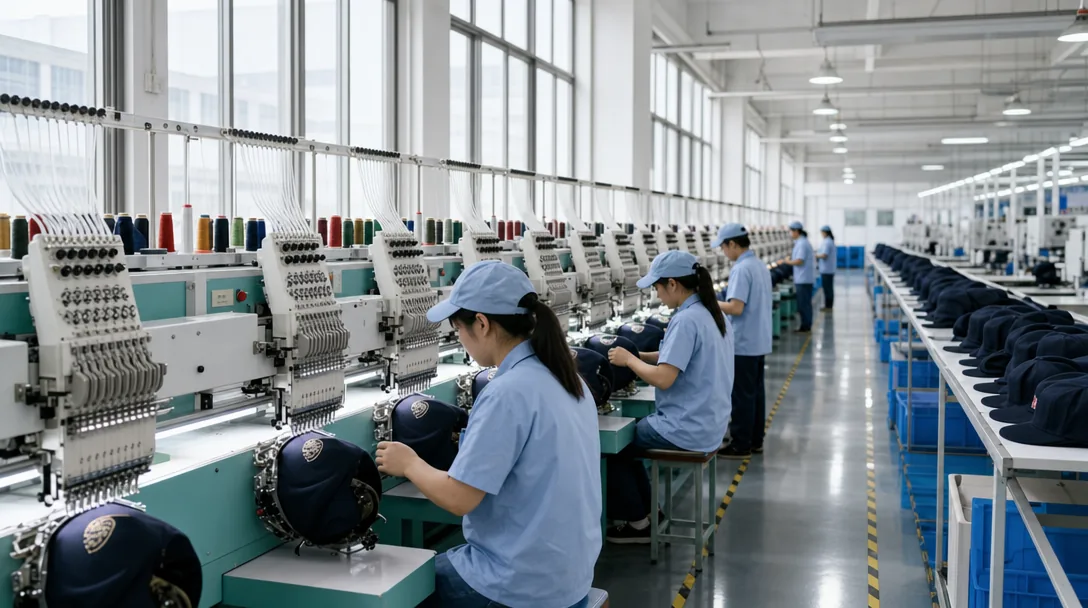
Ball Caps for Women: A 2026 Sourcing Playbook for International Buyers
Read article →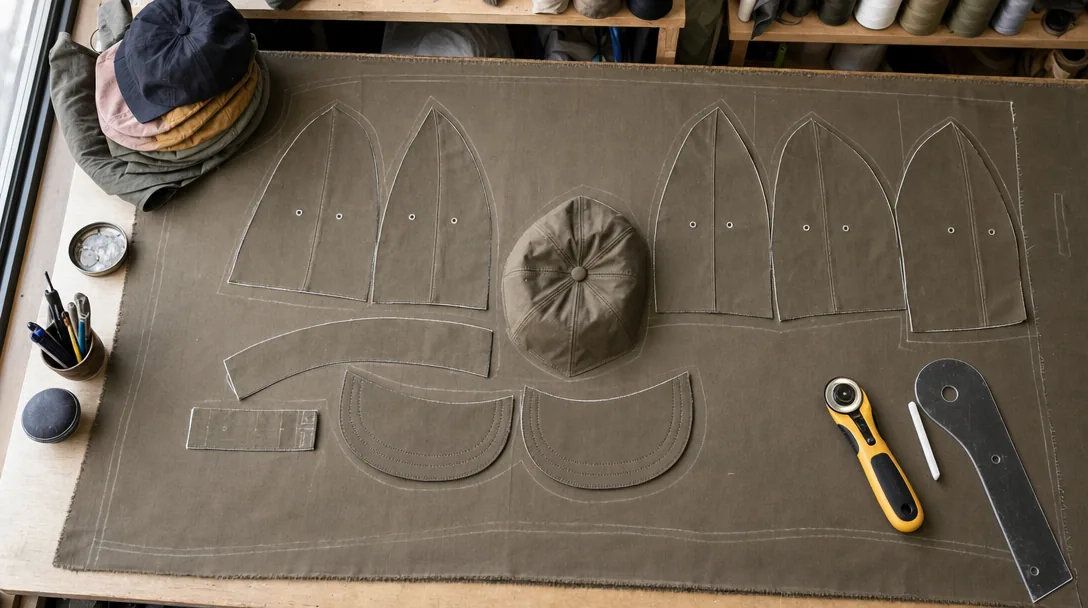
5-Panel vs 6-Panel Caps: Construction, Use Cases and Cost Compared
Read article →Custom Made Trucker Hat: The 2026 Sourcing & Manufacturing Playbook (2026 Update) (2026 Update) - 2026 Buyer's Guide - 2026 Buyer's Guide
Read article →Sourcing custom hats does not have to be complicated. With the right manufacturing partner, clear specifications and a small upfront investment in sampling, you can launch a retail-quality product in 30 to 45 days.