
Custom Made Trucker Hat: The 2026 Sourcing & Manufacturing Playbook (2026 Update) (2026 Update) - 2026 Buyer's Guide - Supplier Checklist - Cost & MOQ Breakdown
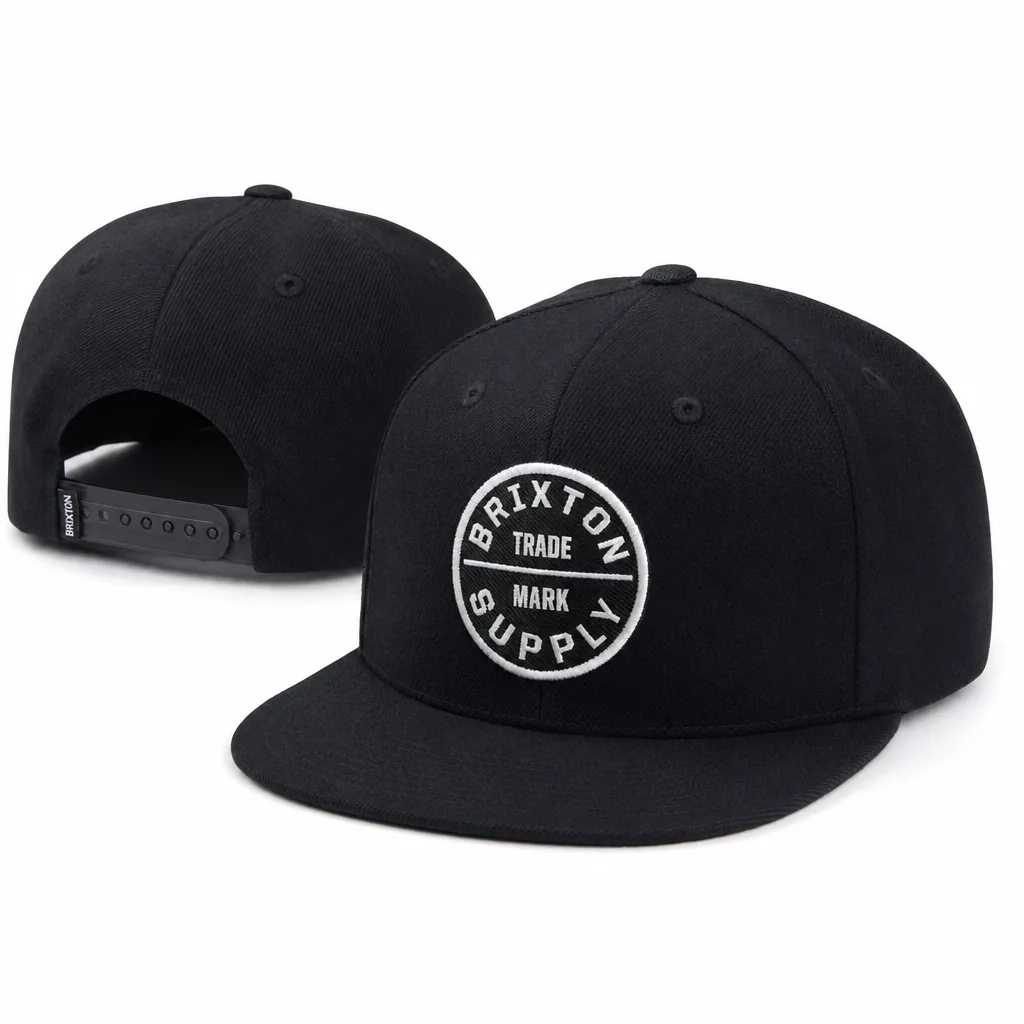
Custom Made Trucker Hat: The 2026 Sourcing & Manufacturing Playbook (2026 Update) (2026 Update) - 2026 Buyer's Guide - Supplier Checklist - Cost & MOQ Breakdown is one of the most-asked questions we receive from international buyers, and for good reason. With dozens of factories competing for your order and an alphabet soup of technical terms in every supplier quote, even experienced importers can feel lost. This guide consolidates what we have learned producing custom hats for clients in 40+ countries.
Custom Embroidered Hats
Embroidery is where a custom made trucker hat either looks premium or looks cheap, and the problem usually starts at digitizing. A file that runs clean on a 270 gsm cotton twill front will often break down on a laminated polyester foam trucker panel because the needle penetration, recovery, and seam deflection are different. On Tajima, Barudan, and ZSK cap frames, the center seam is the first constraint I check; if copy crosses the seam or sits within 6-8 mm of it, distortion and poor registration are predictable unless the artwork is split, simplified, or resized. Buyers should approve the embroidery window in millimeters, maximum logo height, stitch type, underlay, density, pull compensation, and whether the execution is flat stitch, 3D puff, appliqué, or patch attachment. Small text below 4 mm cap height is where bad digitizing shows immediately, especially on structured 5-panel trucker fronts.
Thread color is never a perfect Pantone match, so approvals need to be based on production reality. For direct embroidery, the right standard is nearest stocked rayon or polyester thread cone approved under D65 lighting, not a paper Pantone TCX chip treated as exact. If the logo includes a dyed twill or canvas patch ground, then setting a Delta-E tolerance of 1.5-2.0 is realistic; for direct stitch logos, a sewn strike-off is more useful than a digital mockup. In Yiwu, workable MOQ for front embroidery is typically 144-300 pieces per colorway, and FOB pricing for a standard 5-panel or 6-panel custom made trucker hat with 5,000-8,000 front stitches usually lands around $2.10-$3.80 depending on fabric, closure, and mesh grade. Expect roughly $0.12-$0.35 extra for 3D puff, $0.25-$0.60 for side embroidery, and $0.40-$1.20 for a woven, printed, or merrowed patch; digitizing is commonly $25-$80 per logo unless absorbed into the order.
Inspection has to focus on embroidery defects, not just overall cap appearance. The repeat failures I see are registration drift between fill and outline, puckering from excessive stitch density, missed thread breaks hidden under top stitches, loose jump threads inside the crown, uneven foam rise on puff logos, and logo placement drifting off the front seam. For bulk goods, AQL 2.5 is a sensible baseline, with logo placement controlled to plus/minus 2 mm and thread color checked against approved cones under D65 light. I also check backing cleanliness, needle cuts around dense fills, visor clearance during cap-frame sewing, and whether the inside finish is still wearable after backing and trims are applied. Our standard practice is to lock stitch count range, backing type, thread composition, sweatband spec, brim board, crown height, and carton ratio on the PI, because vague approvals create most embroidery disputes. If the design depends on fine outlines or copy under 4 mm, direct embroidery is usually the wrong call; a woven patch or high-definition heat-transfer patch will read cleaner and reduce resampling.
Custom Hat Embroidery
Embroidery is where a custom made trucker hat either earns margin or turns into seconds, and the result is mostly locked in before the first needle drops. Good digitizing means setting the right stitch type, underlay, pull compensation, and sequence for the actual cap structure, not the vector file. On trucker styles, the front panel is usually polyester foam, buckram-backed cotton twill, or laminated suede; each reacts differently once you push 6,000 to 10,000 penetrations through it. Unsupported fronts and soft mesh-adjacent constructions are where you see tunneling, panel waviness, and crooked baselines. If the logo spans the center seam, flat embroidery on cut panels usually gives a cleaner result than finished-cap embroidery because the seam can be controlled before crown assembly. On Tajima, Barudan, or ZSK cap frames, a realistic front logo width is typically 100 to 120 mm; beyond that, seam distortion and visor curve start fighting the art.
The artwork itself needs to be challenged early. Fine lines under 1.0 to 1.2 mm, tonal contrast with low thread reflectance difference, and compact fills above roughly 0.40 to 0.45 mm density are where bulk quality drops first. Small text often has to be converted from fill to satin, and counters inside letters like R, A, and P need to be opened up in digitizing or they close after wash and wear. For pricing, buyers should ask for stitch count, digitizing, and technique upcharges separately. A standard 5-panel trucker with a 6,000 to 8,000 stitch front logo usually adds about $0.30 to $0.55 per piece at 300 to 500 units; 3D puff using 2 mm or 3 mm EVA foam, side hits, back arches, or appliqué can push embroidery cost to $0.65 to $1.20. One-time digitizing is commonly $25 to $60, but layered puff or patch-placement files can exceed $80. Our standard practice is first-off approval, then inline and final inspection to AQL 2.5 with a placement tolerance of +/-2 mm, checking for thread breaks, loose trims, puckering, foam exposure, and compression damage from overpacked master cartons.
Custom Trucker Hat
Most problems with a custom made trucker hat are locked in before sampling, when the RFQ is still vague. A usable quote needs the actual build: 5-panel or 6-panel, finished crown height in mm, visor length and pre-curve angle, front panel structure, mesh composition, sweatband content, closure spec, and decoration method. A standard adult 5-panel trucker usually finishes at 58 cm circumference with a 9-11 cm crown, 6.5-7 cm visor, 3-5 mm PU foam laminated to polyester tricot on the front, 120-160 gsm polyester mesh at the back, a PE visor board, and a 7-hole PP snap. That is not the same product as a premium trucker using 240-280 gsm cotton twill or chino, 75D-150D recycled polyester mesh, a fabric-wrapped under-visor, woven main label, and taped internal seams. Buyers who write “high quality trucker cap” on a PO are just inviting substitutions on foam density, mesh handfeel, and snap grade. Decoration has to be specified in production language, not just aesthetics. Flat embroidery on twill, 3D puff on foam, merrowed patch, TPU heat-transfer patch, and screen print all behave differently once the cap is blocked and sewn. On Tajima, Barudan, or ZSK heads, puff embroidery needs lower run speed, heavier underlay, and wider column widths; if text is under 4 mm cap height or outlines are below 0.8 mm, embroidery usually starts filling in after wash and wear. A proper tech pack should call out Pantone TCX references for fabric and thread, logo placement from center front and visor seam, crown tolerance of plus/minus 3 mm, brim tolerance of plus/minus 2 mm, and closure pull strength. If the factory cannot tell you the stitch count range, backing type, thread brand, and expected sew-out limitations before sampling, they are still guessing.
MOQ and cost on a custom made trucker hat move far more on materials and trim setup than on sewing minutes. If the factory already stocks the foam, mesh, visor board, and PP snaps, 144-300 pieces per colorway is realistic for a basic body with one front embroidery. The moment you require custom-dyed fabric to Pantone, recycled mesh with GRS paperwork, branded seam tape, custom inside labels, retail hangtags, or printed master cartons, the real MOQ usually becomes 500-1,000 pieces per color because dye lots, trim tooling, and packaging suppliers all impose minimums. In East China, a practical FOB Ningbo range at 300 pieces is about $2.10-$3.40 for a stock-color foam trucker with flat embroidery; 3D puff commonly adds $0.18-$0.45, woven or TPU patch adds $0.35-$0.90, and custom retail packaging can add another $0.25-$0.80 depending on insert cards and bag thickness. Approval and inspection should be tighter than most buyers think. A flat mockup does not show stitch spread, foam compression, or mesh distortion after blocking, so a pre-production sample signed against the tech pack is the only approval that matters. Shade control should be written into the spec; on stable dyed substrates, Delta-E under 1.5 is achievable, while mixed-fiber or heather materials may need a wider tolerance. For bulk inspection, AQL 2.5 is the practical baseline with checkpoints on brim warp, crown symmetry, front logo centering, mesh seam slippage, snap brittleness, visor topstitch count, and 24-hour shape recovery after compression packing. Ask for azo-free compliance, needle detection policy, digitizing fee, sample fee, carton dimensions, and current sedex-audit-cap-supplier-guide.html">BSCI 2.0 or Sedex SMETA 4-Pillar status before placing bulk, because those details affect landed risk more than a headline FOB price.
Custom Trucker Hats
The part that decides whether a custom made trucker hat looks retail or bargain-bin is the front build, not the artwork. Most field failures come from bad crown engineering: foam under 2.5 mm compresses in carton loading, buckram with low resin content cannot support 3D embroidery, and uneven mesh tension twists the side profile after back closing. A dependable spec for a 5-panel trucker is usually a 160-180 gsm laminated foam front with tricot facing, a 55-70 gsm polyester mesh back, 8-row visor stitching, and a PE snapback with positive peg engagement and no flash on the posts. Once factories start cutting cost with 120-140 gsm foam or recycled mesh below about 42 denier equivalent, you see crease memory, wavy side seams, and crown collapse after one ocean shipment. The sequence also matters on the floor: front panel lamination, embroidery or patch application, crown assembly, visor joining, sweatband setting, back closing, steaming, and profile blocking. Get that order wrong and the front panel loses shape before it ever reaches final packing.
If embroidery is on the front, digitizing has to be built around foam compression, not copied from a flat cap file. On Tajima, Barudan, or ZSK heads, a clean 3D puff trucker logo usually needs 2-3 mm EVA, reduced stitch density around 0.35-0.40 mm, and extra pull compensation on corners so satin borders do not split when the foam is knocked down. Your tech pack should remove all factory guesswork: specify crown height in centimeters, visor length and width in millimeters, foam thickness, mesh weight, sweatband composition, top button material, snap resin grade, seam tape artwork, and logo placement from the visor seam centerline. For color control, use Pantone TCX for textiles and Pantone C for inks, with Delta-E under 1.5 on dyed twill and under 2.0 on mesh, where lot variation is harder to suppress. In 2026, a stock-color custom made trucker hat with one embroidery location typically runs 144-300 pcs per colorway and about $2.10-$3.40 FOB China at 300-500 pcs; custom-dyed materials, branded inside tape, woven labels, or private trims push MOQ to 500-1,000 pcs and cost to roughly $3.80-$5.80. Inspect at AQL 2.5 at minimum; for licensed or fashion programs, I would tighten visual majors toward AQL 1.5 and check logo centering, visor symmetry, mesh shade, and snap pull-off before shipment.
Hat Trucker Custom
The make-or-break variables in a custom made trucker hat are structural, not cosmetic. The front panel has to be engineered for the decoration method: a high-crown 5-panel build only carries 3D puff cleanly when the foam, buckram, and shell fabric are stable as a system. In practice that means 3-5 mm EVA or polyester foam laminated to cotton twill or poly twill, backed with buckram around 0.35-0.50 mm. If foam density varies too much lot to lot, or the fusing press runs even 5-8°C outside the validated window, the panel will tunnel after embroidery, lose crown shape, or show visible rippling around satin borders. The back matters just as much. Standard trucker mesh is usually polyester or nylon at roughly 100-140 gsm; low-cost open mesh breathes, but it also stretches during sewing and throws off back-arch symmetry, especially on fast runs over 1,000 pieces. Lock the visor profile at sample approval—flat, slight curve, or mid-curve with 6-8 rows of visor stitching—because changing the brim mold after sign-off is one of the fastest ways to create fit drift and dead inventory.
Most tech packs leave too much room for factory interpretation. "Black mesh, cream front" is not a specification; call out Pantone TCX or coated references and set a color tolerance, typically Delta-E under 1.5 for dyed twill and under 2.0 for mesh, where transparency affects reading. A usable trucker-hat spec should also include crown height in cm, brim length and width, panel count, foam thickness, mesh composition, snapback resin grade, sweatband content, top-button construction, and logo size in mm. If your artwork includes serif text under 4 mm high, or satin columns below about 1.2 mm, ask whether the embroidery is running on Tajima, Barudan, or ZSK heads and insist on a real strike-off rather than a digital mockup. On cost, a stock-color custom made trucker hat with standard poly mesh, plastic snap, and flat embroidery usually lands around $2.20-$3.80 ex-factory at 300-500 pieces per colorway; add 3D puff, custom-dyed mesh, woven labels, printed seam tape, suede underbrim, or PVC patching and the range moves closer to $4.20-$6.80, with setup charges of $30-$120 per trim and bulk lead times stretching from 18-28 days to 35+ days after sample approval.
Inspection should stay focused on the defects that actually generate chargebacks: embroidery puckering, off-center front panels, visor curve inconsistency, exposed mesh trimming, twisted sweatbands, weak snap pegs, and shade mismatch between front panel, brim, button, and closure. AQL 2.5 is still the normal final standard for broad retail programs, but that only works if the in-line checkpoints are real—panel matching before sewing, crown symmetry after topstitching, embroidery registration after decoration, and closure pull tests before packing. Snapback failure is easy to miss until cartons are opened downstream, so we normally check peg engagement and repeated open-close cycles on random samples from each lot, not just on the PPS. CrownsForge standard practice is to freeze a pre-production sample for crown stiffness, visor symmetry, patch placement, and sweatband recovery before bulk cutting. If a supplier cannot control shade, structure, and embroidery on a trucker build, they will struggle on any mixed-material cap program, and under BSCI 2.0 or Sedex SMETA 4-Pillar that quickly turns from a workmanship issue into a delivery-risk issue because rework burns the ship window.
Trucker Custom Hat
The make-or-break component on a custom made trucker hat is the front crown package, not the mesh. If that front panel is wrong, the hat looks cheap before anyone checks stitch quality. For promo programs, the standard 5-panel build still works because the uninterrupted front face gives embroidery room and a taller U.S.-market profile. The most stable version is 3 to 5 mm polyester foam laminated to tricot in the 220 to 320 gsm range; it runs predictably on Tajima and Barudan heads for center logos in the 6,000 to 12,000 stitch range. Cheap foam fronts are where trouble starts: after 45 to 60 days in a hot container, weak lamination can telegraph wrinkles, soften the crown line, or delaminate at the seam joins. For streetwear or licensed retail, cotton twill or poly-cotton canvas at 180 to 260 gsm with soft or medium buckram usually gives a better hand feel and less of the shiny synthetic look buyers try to avoid.
A usable spec sheet has to control fit, structure, and trim, not just artwork. Call out crown height in millimeters, visor board thickness, visor curve, finished circumference tolerance of plus/minus 5 mm, seam tape color, sweatband composition, underbill fabric, and snapback material; a basic PE snap and an acetal/POM snap do not wear the same. Mesh also needs to be specified by material and pattern. Nylon mesh generally rebounds better and holds shape after repeated wear, while low-grade polyester hex mesh is more likely to torque, bag out, or skew panel alignment. Decoration should be engineered for the substrate: dense fills on foam need proper pull compensation, underlay, and density control on ZSK, Tajima, or Barudan machines or they will tunnel and pucker. For color-critical programs, embroidery thread should be approved visually to Pantone TCX or coated references, while heat transfers or woven patches should target Delta-E under 2.0 against the sealed standard.
Cost on a custom made trucker hat is driven more by decoration stack and trim package than by the trucker silhouette itself. With stock foam, standard polyester mesh, a basic snap, and flat embroidery, realistic MOQ is 144 to 300 pieces per colorway if the factory can use in-stock materials; custom-dyed fabric or branded internal trims usually pushes MOQ higher. At 500 pieces, ex-factory pricing typically lands around US$2.10 to US$3.40. At 3,000 pieces, a clean build can drop to roughly US$1.65 to US$2.60. Additions like molded PVC or TPU patches, visor rope, woven loop labels, printed seam tape, rPET mesh, or underbill print can move the cap into the US$3.80 to US$6.20 range fast, especially when audited trim chains are required under BSCI 2.0 or Sedex SMETA 4-Pillar programs. The failure points worth policing are structural: mesh skew, crown asymmetry, visor center drifting more than 3 mm, foam delamination, embroidery registration shift, cracked snap pins, and oil marks that appear after a week in carton storage. AQL 2.5 is a sensible final standard only if the checkpoints are written in measurable terms, including logo position tolerance, stitch density consistency, seam slippage, closure cycling, odor, carton compression, and nesting deformation after packing. Our standard practice is to compare crown profile, brim recovery, and closure feel against the sealed golden sample before shipment. The cheapest quote usually saves money in exactly the wrong places: lighter brim board, unstable mesh, weaker foam lamination, or brittle trims that pass packing-day visuals and come back later as returns.
Working with CrownsForge for custom made trucker hat programs
The safest way to run a custom made trucker hat program is to lock the sample path before arguing over pennies on FOB. In practice, artwork review and digitizing take 3 to 5 working days, the first physical sample 7 to 10 days, and a revised PP sample another 12 to 18 days if you change crown height, brim curve, mesh shade, or embroidery construction. First orders should stay on proven blocks—5-panel foam-front truckers or 6-panel 10x10 cotton twill with 100% polyester mesh—rather than a fresh pattern with no wear data. Most bulk claims come from avoidable construction mistakes: front-panel collapse after packing, visor warpage from low-grade PE board, crooked snapback alignment, or twisted sweatbands after steaming. If the artwork includes fine serif text, metallic thread, or 3D puff over 4 mm EVA foam, flag it before sampling; those details often look clean in Illustrator but fail on Tajima or Barudan heads once stitch count, crown curvature, and foam rebound enter the equation.
MOQ gets expensive the moment trims stop being standard. A basic custom made trucker hat with stock black or white mesh, standard PE snap, and flat embroidery is usually workable at 144 to 300 pieces per style-color. Add Pantone TCX dyed shell fabric, custom printed seam tape, woven labels, molded TPU or PVC patches, suede brims, or inside taping, and the practical MOQ moves to 500 to 1,000 pieces because setup fragmentation starts driving cost. Sampling usually lands at $35 to $80 per cap depending on decoration and trim count; bulk FOB for a clean mid-profile build is commonly $3.20 to $6.80, while rope trims, combo decoration, or specialty fabrics can push past $7.50. Our standard practice is to standardize the specification sheet first—fabric gsm, mesh denier, brim board, snap color, thread code, and carton packout—because chasing a $0.08 savings before the bill of materials is stable is how buyers end up paying for remakes.
Process discipline shows up in decoration control, color matching, and inspection records. Foam fronts do not sew like brushed twill, corduroy, or recycled poly canvas; on ZSK or Tajima heads, foam panels need lighter underlay and lower stitch density to prevent tunneling, while 3D puff requires balanced satin width and foam height or the edge frays after carton compression. Ask exactly how patches are applied—stitch-down, merrowed, heat-pressed, or glue-assisted then sewn—because curved crowns punish weak methods; on most retail builds, stitch-down PVC is safer than heat press alone. For visible colors, lab dips and thread approvals should be tied to measurable Delta-E tolerances rather than vague “close match” language. Bulk inspection on hats is normally run at AQL 2.5 major and 4.0 minor, with checkpoints for seam symmetry, visor curvature, patch adhesion, closure alignment, label accuracy, and carton assortment. Buyers handling licensed or retail programs should also verify BSCI 2.0 or Sedex SMETA 4-Pillar status, needle control, and restricted-substance awareness before PO release.
Frequently Asked Questions
Can I order a sample before bulk production?
Yes. We strongly recommend approving a pre-production sample before mass production. Samples are charged at 35 to 60 USD each plus express shipping, fully refundable against confirmed bulk orders over 500 pieces.
Do you support sustainability certifications?
Yes. We work with GOTS organic cotton, GRS-certified recycled polyester, OEKO-TEX Standard 100 fabrics, and are BSCI and Sedex audited. Certification documentation can be provided per order.
What logo decoration techniques do you offer?
3D puff embroidery, flat embroidery, woven patch, leather patch, PVC patch, screen printing, sublimation, applique and laser etching, all in-house with no subcontracting.
What file format should I send for my logo?
Vector files (AI, EPS, PDF) are ideal. High-resolution PNG or JPG at 300 dpi on transparent background works as a fallback. Provide Pantone color references for accurate reproduction.
What is the minimum order quantity (MOQ) for custom hats?
Our standard MOQ is 100 pieces per design and color, with sampling available from 1 piece. For complex multi-color logos or premium fabric upgrades, the MOQ can be lowered with a small per-piece surcharge.
How does ordering custom hat trucker work?
When evaluating custom hat trucker, the key considerations are construction quality, decoration capability, MOQ flexibility and lead time. Cover everything buyers ask about custom embroidered hats: how it's manufactured, what specs to request from a factory, typical MOQ and pricing, common quality issues to inspect for, and how this ties back to the broader custom made trucker hat sourcing decision. Cover everything buyers ask about custom hat embroidery: how it's manufactured, what specs to request from a…
How does ordering custom embroidered trucker hats work?
When evaluating custom embroidered trucker hats, the key considerations are construction quality, decoration capability, MOQ flexibility and lead time. Cover everything buyers ask about custom embroidered hats: how it's manufactured, what specs to request from a factory, typical MOQ and pricing, common quality issues to inspect for, and how this ties back to the broader custom made trucker hat sourcing decision. Cover everything buyers ask about custom trucker hats: how it's manufactured, what specs to request from a…
How does ordering custom made hats for men work?
When evaluating custom made hats for men, the key considerations are construction quality, decoration capability, MOQ flexibility and lead time. Cover everything buyers ask about custom embroidered hats: how it's manufactured, what specs to request from a factory, typical MOQ and pricing, common quality issues to inspect for, and how this ties back to the broader custom made trucker hat sourcing decision. Cover everything buyers ask about custom trucker hats: how it's manufactured, what specs to request from a…
How does ordering high quality custom trucker hats work?
When evaluating high quality custom trucker hats, the key considerations are construction quality, decoration capability, MOQ flexibility and lead time. Cover everything buyers ask about custom embroidered hats: how it's manufactured, what specs to request from a factory, typical MOQ and pricing, common quality issues to inspect for, and how this ties back to the broader custom made trucker hat sourcing decision. Cover everything buyers ask about custom trucker hats: how it's manufactured, what specs to request from a…
Ready to start your custom hat project?
Send us your tech-pack, sketch or even just an inspiration photo. We will respond with a detailed quotation and digital mock-up within 24 hours.
Request a free quoteRelated guides
Festival Bucket Hat: A Vertical-Specific Sourcing Guide
Read article →Baseball Caps Canada: A Vertical-Specific Sourcing Guide
Read article →
Refreshing a Hat Collection: A Repeat-Order Playbook for Established Brands (2026 Update)
Read article →We hope this guide demystifies custom made trucker hat: the 2026 sourcing & manufacturing playbook (2026 update) (2026 update) - 2026 buyer's guide - supplier checklist - cost & moq breakdown and helps you move forward with confidence. If you have questions specific to your project, our English-speaking sales engineers are one message away.