
Custom Made Trucker Hat: The 2026 Sourcing & Manufacturing Playbook (2026 Update) (2026 Update) - 2026 Buyer's Guide - Cost & MOQ Breakdown - Supplier Checklist
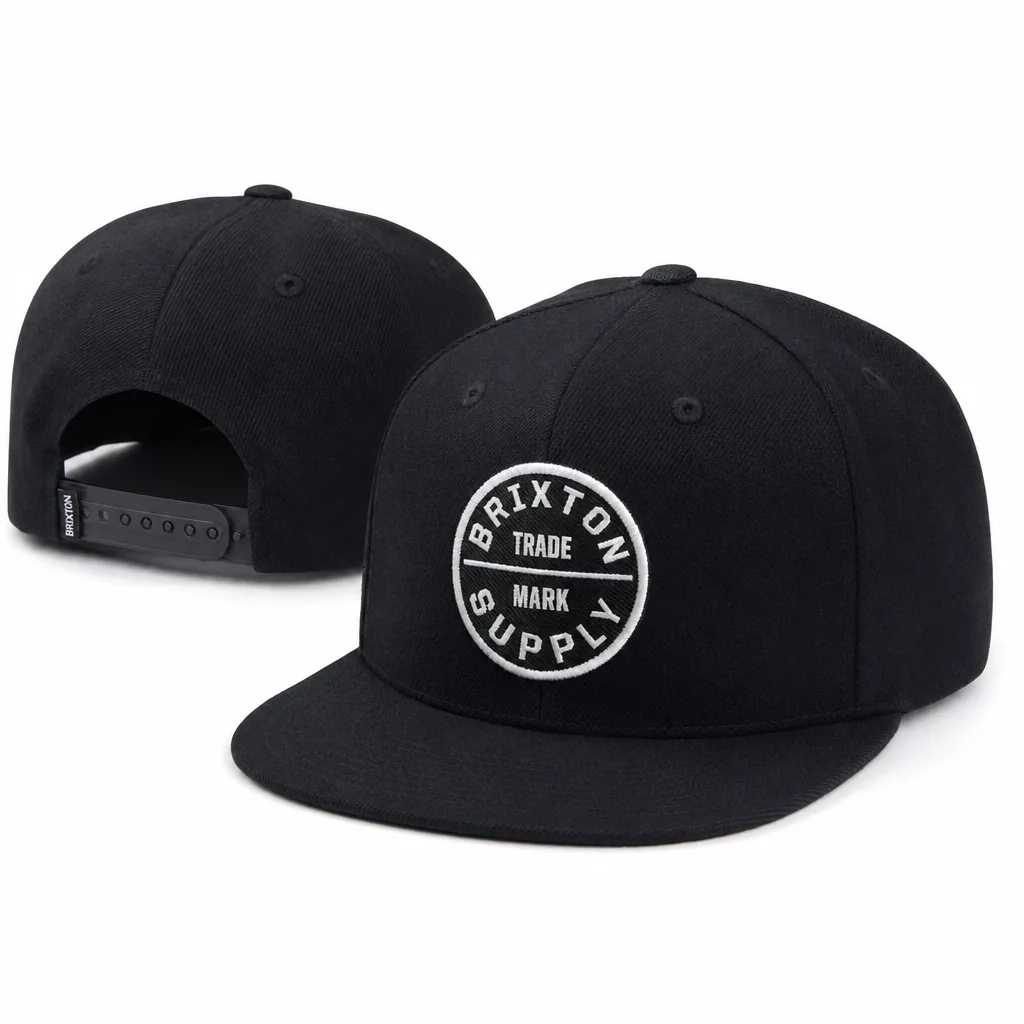
Every week, our sales team answers detailed questions about custom made trucker hat: the 2026 sourcing & manufacturing playbook (2026 update) (2026 update) - 2026 buyer's guide - cost & moq breakdown - supplier checklist. We wrote this guide so that wholesalers, streetwear brands, corporate buyers and promotional resellers can compare options with full information, and avoid the traps that show up only after production has started.
Custom Embroidered Hats
Embroidery is the highest-risk decoration step on a custom made trucker hat because it locks in both the logo geometry and the front-panel shape before sewing defects can be hidden. A file that runs clean on a brushed cotton 6-panel will routinely fail on a 5-panel foam trucker unless the digitizer rebuilds for crown height, center-seam push, and foam rebound. Buyers should ask for the native file format (.DST, .EMB, or .OFM), total stitch count, underlay type, pull compensation, and whether the logo is sewn pre-sew or on a finished cap frame. For front graphics wider than about 90 to 110 mm or with satin columns crossing the center seam, pre-sew embroidery usually earns its extra $0.12 to $0.28 per cap because it keeps columns straighter across a 4.0 to 4.5 inch crown and reduces seam crawl. Post-sew is cheaper and faster, but once you stack dense fills over laminated foam, puckering, artwork drift, and crown collapse become recurring defects.
Machine settings and material specs belong on the same PO line as the decoration, not buried in separate notes. On Tajima, Barudan, or ZSK cap frames, 650 to 850 rpm is the realistic production window; push past that and you start seeing flagging, edge wobble, thread fray, and missed trims, especially with 40 wt polyester thread and soft 3 to 5 mm foam fronts. A usable spec calls out 100% polyester foam front, nylon or poly mesh at roughly 140 to 180 denier, PE visor, 6-row brim stitching, snapback type, sweatband composition, and thread brand such as Madeira, Gunold, or Isacord. If color accuracy matters, specify Pantone TCX references for dyed components and a Delta-E tolerance under 1.5; on mixed-source foam and mesh, under 2.0 is more realistic than lab-perfect claims. In Yiwu, a standard embroidered trucker typically runs about $2.10 to $3.40 FOB at 300 to 1,000 pieces, while heavy front fill, side logo, back hit, woven loop label, custom inside tape, and sandwich brim can move it to $4.20 to $6.80.
Most chargebacks on a custom made trucker hat start at embroidery inspection, not sewing. The repeat failures are predictable: logo placement drifting more than 2 mm, density variation between heads, birdnesting on the inside, loose trims, foam needle cuts, and front-crown distortion caused by reusing a flat-cap file on trucker construction. Inspection should be tied to a sealed golden sample and run to AQL 2.5, with seam-to-art symmetry, clean backing trim, stable edge coverage, and no exposed bobbin pull on appliqué edges. Wear testing matters too. If the backing scratches the forehead, if the crown dents after master-carton compression, or if the seam telegraphs through the fill after 24 hours packed, the digitizing or packing method is wrong even when the cap looks acceptable on the table. Our standard practice is to weigh in-house digitizing and cap-frame setup more heavily than a nominal $0.10 unit saving from outsourced embroidery, because redraws, transit between workshops, and head-to-head inconsistency cost more than buyers expect.
Custom Hat Embroidery
Embroidery is where a custom made trucker hat gets accepted or rejected in about three seconds, and the failure usually starts in digitizing, not at the embroidery machine. A cap logo has to be rebuilt for curved-front production on Tajima, Barudan, or ZSK heads with cap-frame sequencing, proper underlay, pull compensation, stitch angle, trim path, and density matched to the actual front panel. On foam-front truckers, I usually keep fill density around 0.35-0.40 mm and avoid overly aggressive underlay; if you pack stitches too tight, the needle cuts the EVA or PU foam, the surface sinks after topstitching, and the logo looks cratered. By contrast, a buckram-backed cotton twill or poly/cotton front can hold denser fills, sharper satin borders, and cleaner edge definition without collapsing.
Panel construction changes what is realistically embroidery-safe. A 5-panel trucker gives you an uninterrupted front field, which is why streetwear brands prefer it for oversized center logos; a 6-panel crown seam will distort small text, fine outlines, and circular badges unless the file is digitized to bridge the seam and the operator slows the run. Buyers who accept “one logo included” without asking for stitch count are missing the real cost driver. A straightforward 6,000-stitch flat logo may add only $0.35-$0.70 per cap in bulk, while a 12,000-14,000 stitch puff-and-flat combination can run $0.90-$1.80 because machine time, thread trims, reject risk, and operator intervention all increase. At CrownsForge, we also treat stitch count as a QC variable: once you push detail below what the substrate can support, defect rates climb faster than the unit cost suggests.
The spec sheet should lock the embroidery before sampling, not after the first counter sample disappoints. For a custom made trucker hat, I would state logo size in millimeters, placement tolerance of ±2 mm from centerline, embroidery method by zone—2D flat, 3D puff, appliqué, merrowed patch, or combination—and thread spec such as Madeira or Gunold 120D/2 polyester. If color matters, give Pantone TPX or TCX references for visual intent, but do not pretend thread can be managed like piece-dyed fabric with a strict Delta-E target; thread matching is done from stocked cone shades, so approved strike-offs or photo approval under D65 lighting are more reliable. For 3D puff, keep stroke widths above 3 mm, avoid thin serif fonts, and expect exposed foam risk anywhere the column narrows too sharply.
Inspection should prioritize embroidery because the defect pattern is predictable: flagging that fuzzes edges, thread breaks that thin satin coverage, misregistration between color blocks, foam exposure, hoop burn, and crown torque caused by a heavy front logo fighting an uneven sweatband seam. Backside finishing matters as much as face appearance; if the backing is not trimmed and heat-sealed cleanly, the wearer feels scratch points above the forehead and return rates climb fast in e-commerce. A serious factory should run first-off approval at line start, inline checks every 1-2 hours, and final inspection to AQL 2.5 with logo centering, thread tails, stitch cleanliness, and post-pack carton compression all on the checklist. One-time digitizing is typically $20-$60 per logo, and MOQ for a fully custom build usually starts around 144 pcs per colorway; if someone offers 48 pcs with deep customization, they are almost always decorating an existing stock body rather than producing a true custom program.
Custom Trucker Hat
The biggest mistake buyers make with a custom made trucker hat is treating it like a generic cap with mesh added. Trucker specs are less forgiving because the front panel, mesh, and bill all telegraph shortcuts. Lock five variables before you ask for pricing: profile height, panel construction, front substrate, mesh specification, and closure. A basic commercial build is usually a 5-panel foam front using 3 mm EVA-laminated polyester, 120-140 gsm mesh, a pre-curved PE bill insert, and a 7-hole PP snapback; at the other end, better retail programs shift to 6 panels with 180-260 gsm cotton twill or CVC front panels, 75D-100D polyester mesh, and a denser 20x16 twill sweatband for better recovery after carton compression. If your brief only says “match this sample,” expect drift in crown height, visor curve, seam tape color, and topstitch tension between sample room and bulk. Decoration is where trucker hats go wrong fastest. Foam fronts collapse under bad digitizing, and mesh makes registration errors obvious. Text below roughly 4 mm cap height will usually close up on flat embroidery, even on Tajima or Barudan heads, once the stitch count passes 7,000-8,000 on a soft foam panel. For sharper edges and fewer puckers, woven patches, screen-printed heat transfers, or 2D molded silicone badges are usually safer than forcing intricate embroidery. A usable tech pack should call out Pantone TCX or TPX references, crown height in centimeters, visor stitch rows, seam tape text, eyelet and button requirements, thread brand or match tolerance, and packing method. Without that, the FOB quote is a guess and the sample approval turns subjective.
Bulk quality on a custom made trucker hat depends on whether the factory holds the approved material stack exactly. The production flow is straightforward: cutting, foam lamination or fusing, embroidery or patch application, crown assembly, mesh joining, sweatband setting, bill insertion, snap attachment, then steaming on a cap block to stabilize profile. The failure point is usually silent substitution. Swapping 100D mesh for a shinier lower-grade mesh, thinning the bill insert, or downgrading the sweatband can save a supplier $0.08-$0.20 per cap, which is enough to change handfeel, fit, and shelf presentation. In Yiwu and Dongguan, MOQ is often 144-300 pieces per colorway if you stay with stock mesh and stock closures, but custom-dyed fabric, branded inside tape, molded rubber patches, and private packaging typically push the workable MOQ to 500-1,000 pieces. For 2026, realistic FOB China pricing is about $2.10-$3.40 for a basic foam-front trucker at 500-1,000 pieces with 5,000-8,000 stitches, and $3.80-$6.20 for a better twill-and-mesh build with custom labels, inside taping, and a woven or rubber patch. Inspection should be written around AQL 2.5, not vague “good quality” language. Put trucker-specific tolerances in the PO: crown height plus or minus 0.5 cm, visor length plus or minus 0.3 cm, logo placement within 2 mm, and shade control within Delta-E 1.5-2.0 to the approved standard where measurable. Check crown symmetry, bill curve consistency, snap alignment, seam puckering at the front-to-mesh join, mesh recovery after compression, and exposed monofilament ends. At CrownsForge, we treat golden-sample approval with exact bulk trims and a first-off check before line release as non-negotiable, because that is the step that prevents clean prototypes from turning into chargebacks.
Custom Trucker Hats
A custom made trucker hat is a mixed-material product, and that is exactly why buyers make bad assumptions when they source it like a standard cotton twill cap. The front crown is usually 3 to 5 mm PU or polyester foam laminated to tricot, while the rear panels are polyester or nylon mesh in roughly the 120 to 180 gsm range, with tear strength and hole geometry varying a lot between suppliers. The commercial default is still a 5-panel high-profile block because it gives a clean decoration field, but 6-panel truckers are increasingly specified by retail brands that want a lower visual profile and a less rigid front presentation. Visor insert choice is not a minor trim detail either: 1.8 to 2.2 mm PE board is common, recycled HDPE runs stiffer, and both affect curve retention after 10 to 15 days under carton compression in export transit. Sweatband spec changes both comfort and claim rates; brushed polyester is cheapest, but 180 to 220 gsm cotton twill or poly-cotton terry gives better absorption and a noticeably better hand feel at retail.
Decoration on a trucker has to be engineered around the foam front panel, not forced onto it after the art file is approved. On Tajima, Barudan, and ZSK embroidery heads, the cleanest result usually comes from lower-density digitizing, controlled underlay, and backing selected for the logo rather than a generic stitch-count target. Overpacked files cause tunneling, panel distortion, and white foam show-through under dark fills; 3D puff needs capped satin width and reduced fill density or the foam starts splitting after handling and packing. If the artwork is patch-heavy, define patch border width, merrow versus laser edge, thread denier, and maximum stitch count in the tech pack. If it is print-driven, confirm whether screen print or heat transfer is applied before crown assembly, because once the mesh is joined to the front panel, platen marks and registration drift become expensive rework rather than minor defects.
The best custom made trucker hat programs are won on the spec sheet and lost at inspection. Lock down crown height, panel count, visor curve, mesh hole profile, closure type, top button material, seam tape artwork, and fabric color by Pantone TCX or TPX with a written Delta-E tolerance. In practice, Delta-E under 1.5 on the front panel is realistic, while mesh often needs a wider window around 2.0 because open construction exposes lot variation differently. MOQ and price depend on whether you are buying a stock body or funding true development: 144 to 300 pieces per colorway can work for stock silhouettes with direct embroidery, but custom-dyed mesh, molded rubber badges, private visor molds, or printed seam tape usually push MOQ to 500 to 1,000 pieces. A realistic 2026 FOB China range is about $2.10 to $3.40 for basic embroidery, $3.20 to $5.20 with woven patch or PVC badge, and $5.50+ with premium mesh, inner branding, hangtags, and individual polybags. Use AQL 2.5 and measure what actually fails: visor skew over 3 mm, puckering at the foam-to-mesh seam, weak snap posts, rear seam tearing, and crown collapse after 24 hours in master cartons.
Hat Trucker Custom
The make-or-break decisions in a custom made trucker hat happen in the spec sheet, not the render. Lock five items first: front panel build, mesh weight and knit, closure grade, brim insert, and decoration method. A typical export foam trucker uses 3 to 5 mm polyester foam laminated to tricot on a 5-panel high-crown shell because the seamless front embroiders cleaner than a center-seam 6-panel. Do not accept vague language like “mid profile” or “flat brim”; ask for crown height, visor length, and brim curve radius in centimeters. Mesh is where cheap quotes usually bury risk. Entry-level hex mesh at 120 to 140 gsm crushes easily under compression packing and often shows torque at the back opening after transit. A better spec is warp-knit polyester or RPET mesh in the 140 to 180 gsm range with more consistent recovery. Also confirm the visor insert in writing. PE and EVA are standard for export; cardboard still shows up in sub-$2.00 FOB builds and warps fast in humid containers or summer last-mile delivery.
Most quality failures on a custom made trucker hat come from decoration, especially on foam fronts. For 3D puff embroidery, the factory should confirm digitizing density, underlay, satin width, stitch count, needle size, and machine platform; a logo running on Tajima, Barudan, or ZSK heads will behave differently on foam than on brushed cotton twill. Once a front logo pushes past roughly 8,000 to 10,000 stitches, tunneling, foam crush, and edge pull become common unless backing and compensation are adjusted. Ask for a pre-production sample with front and side-view photos plus the stitch count report; a clean frontal image hides distortion. If color accuracy matters, specify thread brand, Pantone reference, and acceptable Delta-E under D65 lighting, because blues, reds, and fluorescents drift noticeably across low-grade thread lots.
Pricing is driven more by trim combinations than by the shell itself. In 2026, a standard custom made trucker hat in stock colors with a plastic snapback and one-location flat embroidery is typically efficient at 500 pieces per colorway, though many factories will open at 144 or 300 pieces with weaker pricing. Realistic FOB China cost is about $2.10 to $3.40 each for standard foam, basic mesh, and 5,000 to 8,000 stitches. Add roughly $0.18 to $0.35 for 3D puff, $0.25 to $0.60 for a woven patch, and $0.40 to $0.90 for custom-dyed fabric or Pantone-matched mesh with controlled dye lots. For any resale program, I would require AQL 2.5 final inspection, logo placement tolerance within plus/minus 2 mm, snap closure testing over 20 to 30 cycles, crown symmetry checks on a head form, and current sedex-audit-cap-supplier-guide.html">BSCI 2.0 or Sedex SMETA 4-Pillar documentation. At CrownsForge, we freeze the approved tech pack before bulk with mesh denier, seam tape color, sweatband composition, carton pack-out, and needle detector requirement clearly listed.
Trucker Custom Hat
The shell spec decides whether a custom made trucker hat looks premium or disposable. Most programs fall into two lanes: a 5-panel structured foam trucker or a 6-panel twill trucker, and they do not decorate the same way. The commercial baseline is a 100% polyester foam front laminated to tricot, 100D-150D polyester mesh, pre-curved visor with PE insert, and a 7-hole PVC snap. That build holds 3D puff cleanly because the crown has enough rigidity to resist stitch sink. If you switch to brushed cotton twill at 220-260 gsm or chino twill around 240 gsm for a softer hand, expect more crown collapse, less edge definition on puff embroidery, and more visible panel distortion if the digitizing is too dense. Flat embroidery on Tajima, Barudan, or ZSK heads is still the safest default; on softer fronts, woven patches, sublimated patches, or screen print usually outperform heavy stitch fills. A usable tech pack for a custom made trucker hat has to control geometry, not just artwork. Call out crown height, visor length and curvature, buckram type, seam tape color, sweatband composition, top button material, closure spec, and mesh shade against Pantone TCX or TPX references, then approve under D65 light. Reasonable factory tolerances are crown height within +/-0.5 cm, logo placement within +/-2 mm, and visor symmetry within 3 mm left-to-right. For dyed twill, Delta-E below 1.5 is realistic; for low-denier mesh, 2.0 is often a more honest limit because reflectance shifts under different light angles. If the supplier cannot provide a pre-production sample, embroidery strike-off, and closure pull test before bulk cutting, you do not have a controlled program—you have a sewing line making judgment calls on the fly.
Pricing is driven by construction, decoration count, and material yield far more than by the word trucker. For a basic custom made trucker hat with foam front, standard mesh, PVC snap, and one-location flat embroidery, workable China MOQs are usually 144-300 pieces per colorway, although many factories quote 500 to keep line utilization clean. At 300 pieces, FOB China is commonly $2.10-$3.40 per cap depending on stitch count, fabric source, and packing method. Move into chino twill, branded seam tape, woven flag labels, underbill print, or 3D puff plus side embroidery, and the same cap climbs to roughly $3.80-$5.80 FOB. Digitizing and sampling usually add $60-$120 per design unless credited back on the bulk order. Below 144 pieces, unit economics get ugly fast because blank body sourcing, patch setup, and machine changeovers do not scale down. The failure points are consistent across factories: crooked front logos, mesh torque, weak snap posts, puckered sweatbands, top-button color drift, and visor warping from overpacked cartons. AQL 2.5 final inspection is the minimum, but it will not catch process instability unless the factory also runs in-line checks for stitch density, center-seam tension, snap burrs, mesh recovery, and buckram delamination after heat exposure. Carton density matters more than most buyers think; 24-piece inner cartons and 144-piece master cartons are common, but high-profile crowns will deform if the packout is too aggressive. At CrownsForge, we only lock pricing after an approved construction sheet because a trucker quote without shell detail, decoration method, and QC standard is just a placeholder number.
Working with CrownsForge for custom made trucker hat programs
Lock the sample path before arguing over the last $0.20, because most expensive failures on a custom made trucker hat program come from construction drift, not from decoration cost. Our standard practice at CrownsForge is 2-4 working days for artwork breakdown and digital mockup, 7-10 days for a physical PP sample, and another 3-5 days if you change shell fabric, mesh denier, visor board, or closure. A 5-panel foam-front trucker built with laminated polyester foam, 2.5 mm PE brim board, and a 9.0 cm crown does not fit like a 6-panel cap in 260 gsm cotton twill with 100% polyester 18x16 mesh and a lower front profile. Before bulk cutting, buyers should sign off four measurable points in writing: crown height in centimeters, brim curve radius, sweatband width and material, and logo placement by millimeter template. That single discipline prevents most avoidable claims.
Embroidery has to be sampled on the real panel, on the real machine, with the real backing. A Tajima DST or Barudan DSB file that runs clean on 260 gsm chino twill can tunnel, sink, or foam-cut on a lighter trucker front, especially with 3D puff. In production, small changes matter: a 3.0 mm satin border, 0.35 mm pull compensation, underlay type, or stitch density may need to shift after the first sew-out. Buyers who approve only a screen rendering usually discover the problem after bulk starts, when the choice is rework, replacement panels, or a compromised finish. MOQ should follow material and process risk, not a salesperson's round number. For stock mesh, standard PP snapback, one front logo, and mill-stock twill or foam colors, 144-300 pieces per colorway is realistic. Add Pantone-matched dyeing, custom woven labels, printed seam tape, TPU patches, or private barcode stickers, and the economic MOQ usually moves to 500-1,000 pieces because fabric mills, trim suppliers, and mixed-carton packing all impose minimums and setup cost.
Execution after MOQ is where suppliers separate themselves. Ask for current BSCI 2.0 or Sedex SMETA 4-Pillar reports, needle-control records, and restricted-substances declarations for inks, coatings, heat-transfer films, and synthetic trims. For color-managed programs, approvals should reference Pantone TCX for textiles or Pantone Coated for hard trims, with a realistic Delta-E target of 1.5-2.0 depending on substrate and finish. Write inspection rules directly into the PO: inline checks at cutting and sewing, logo placement verified with acrylic templates, closure pull test, carton assortment confirmation, and final random inspection at AQL 2.5 before balance payment. Also require a BOM-backed PI, packing spec, carton marks, barcode layout, and confirmed CBM before FOB Ningbo or DDP booking. One unapproved trim substitution, mislabeled size run, or barcode mismatch can wipe out the margin on the entire order faster than any embroidery upgrade ever will.
Frequently Asked Questions
Do you support sustainability certifications?
Yes. We work with GOTS organic cotton, GRS-certified recycled polyester, OEKO-TEX Standard 100 fabrics, and are BSCI and Sedex audited. Certification documentation can be provided per order.
Can I order a sample before bulk production?
Yes. We strongly recommend approving a pre-production sample before mass production. Samples are charged at 35 to 60 USD each plus express shipping, fully refundable against confirmed bulk orders over 500 pieces.
What is the minimum order quantity (MOQ) for custom hats?
Our standard MOQ is 100 pieces per design and color, with sampling available from 1 piece. For complex multi-color logos or premium fabric upgrades, the MOQ can be lowered with a small per-piece surcharge.
How long does production take?
Sampling takes 7 to 12 days. Bulk production runs 20 to 30 days depending on quantity, fabric availability and decoration complexity. Inspection and packing adds another 3 to 5 days before shipment.
What logo decoration techniques do you offer?
3D puff embroidery, flat embroidery, woven patch, leather patch, PVC patch, screen printing, sublimation, applique and laser etching, all in-house with no subcontracting.
How does ordering custom hat trucker work?
When evaluating custom hat trucker, the key considerations are construction quality, decoration capability, MOQ flexibility and lead time. Cover everything buyers ask about custom embroidered hats: how it's manufactured, what specs to request from a factory, typical MOQ and pricing, common quality issues to inspect for, and how this ties back to the broader custom made trucker hat sourcing decision. Cover everything buyers ask about custom hat embroidery: how it's manufactured, what specs to request from a…
How does ordering custom embroidered trucker hats work?
When evaluating custom embroidered trucker hats, the key considerations are construction quality, decoration capability, MOQ flexibility and lead time. Cover everything buyers ask about custom embroidered hats: how it's manufactured, what specs to request from a factory, typical MOQ and pricing, common quality issues to inspect for, and how this ties back to the broader custom made trucker hat sourcing decision. Cover everything buyers ask about custom trucker hats: how it's manufactured, what specs to request from a…
How does ordering custom made hats for men work?
When evaluating custom made hats for men, the key considerations are construction quality, decoration capability, MOQ flexibility and lead time. Cover everything buyers ask about custom embroidered hats: how it's manufactured, what specs to request from a factory, typical MOQ and pricing, common quality issues to inspect for, and how this ties back to the broader custom made trucker hat sourcing decision. Cover everything buyers ask about custom trucker hats: how it's manufactured, what specs to request from a…
How does ordering high quality custom trucker hats work?
When evaluating high quality custom trucker hats, the key considerations are construction quality, decoration capability, MOQ flexibility and lead time. Cover everything buyers ask about custom embroidered hats: how it's manufactured, what specs to request from a factory, typical MOQ and pricing, common quality issues to inspect for, and how this ties back to the broader custom made trucker hat sourcing decision. Cover everything buyers ask about custom trucker hats: how it's manufactured, what specs to request from a…
How much should a trucker hat cost?
Trucker Hats Known for their mesh back panels, perfect for ventilation. Average cost: $5 - $60+ depending on the brand.
Who makes the highest quality trucker hats?
Richardson Trucker Hats. Richardson makes some of the best men's trucker hats with high quality and comfort. ... New Era Trucker Hats. New Era makes some of the best-looking trucker hats with stylish designs and a perfect fit. ... Adidas Trucker Hats. ... Pacific Headwear Trucker Hats. ... Dri Duck Trucker Hats.
How much do people charge for custom hats?
Rubber and Embroidered Patch Hats: Prices begin at $20 for 50 pieces (minimum) and reduce to $16.75 per hat for 100+. Embroidered Hats: Prices start at $22 each for 25 pieces (minimum) and go down to $16.75 per hat for 100+.
What does a 47 trucker hat mean?
The '47 or 47 on hats and caps refers to the '47 Brand company. '47 refers to 1947, which is the year that the '47 Brand company was started by Italian immigrant brothers, Henry D'Angelo and Arthur D'Angelo.
Ready to start your custom hat project?
Send us your tech-pack, sketch or even just an inspiration photo. We will respond with a detailed quotation and digital mock-up within 24 hours.
Request a free quoteRelated guides
Ball Caps for Women: A 2026 Sourcing Playbook for International Buyers
Read article →
5-Panel vs 6-Panel Caps: Construction, Use Cases and Cost Compared
Read article →
Custom Made Trucker Hat: The 2026 Sourcing & Manufacturing Playbook (2026 Update) (2026 Update) - 2026 Buyer's Guide - 2026 Buyer's Guide
Read article →Sourcing custom hats does not have to be complicated. With the right manufacturing partner, clear specifications and a small upfront investment in sampling, you can launch a retail-quality product in 30 to 45 days.