
Custom Made Trucker Hat: The 2026 Sourcing & Manufacturing Playbook (2026 Update) (2026 Update) - 2026 Buyer's Guide - Cost & MOQ Breakdown (2026 Update)
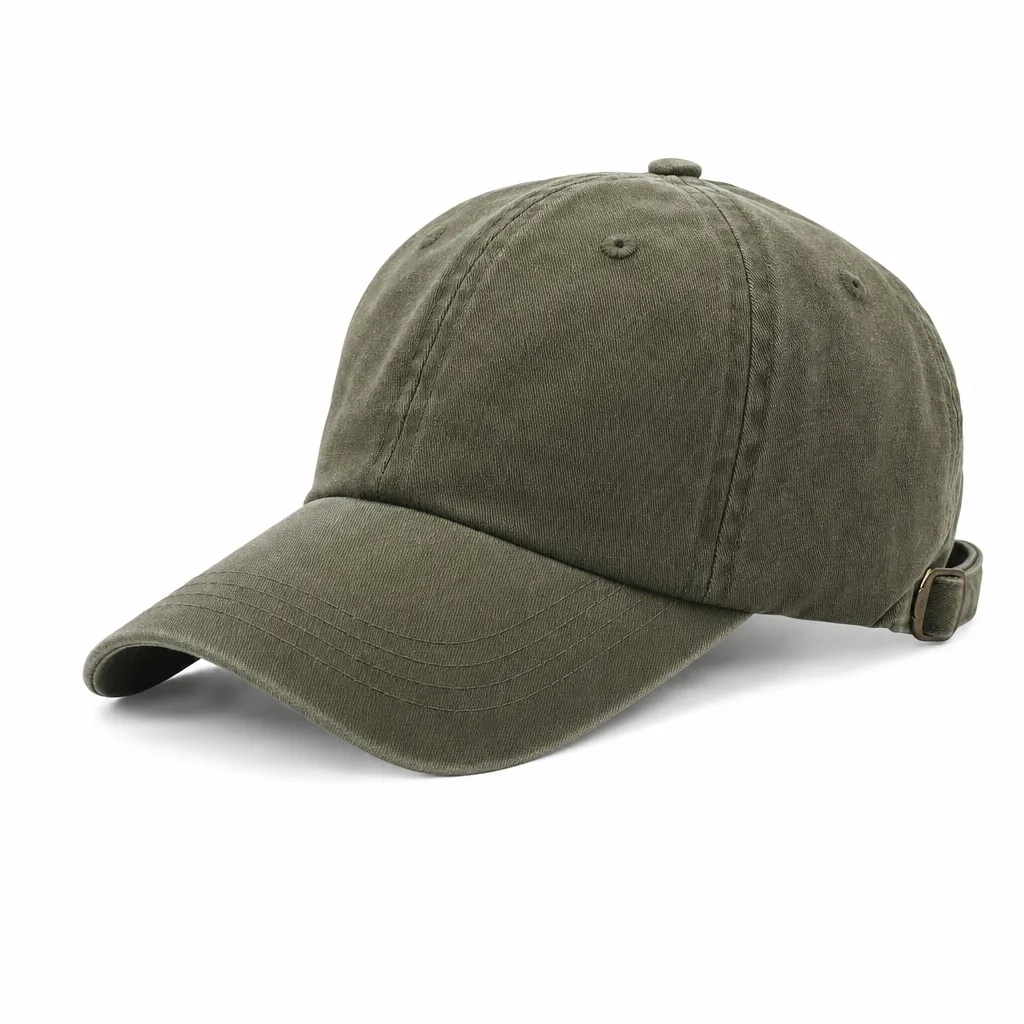
Every week, our sales team answers detailed questions about custom made trucker hat: the 2026 sourcing & manufacturing playbook (2026 update) (2026 update) - 2026 buyer's guide - cost & moq breakdown (2026 update). We wrote this guide so that wholesalers, streetwear brands, corporate buyers and promotional resellers can compare options with full information, and avoid the traps that show up only after production has started.
Custom Embroidered Hats
Embroidery is still the lowest-risk decoration method when a custom made trucker hat needs retail durability, abrasion resistance, and a premium hand, but the crown build decides whether the logo reads crisp or amateur. A structured 5-panel trucker with 2.5-3.0 mm EVA foam, laminated tricot, and buckram behaves nothing like a 6-panel 10 oz cotton twill cap; the needle is penetrating foam, seam tape, and crown curvature, so weak digitizing shows up immediately as tunneling, flagging, poor edge coverage, or distortion at the center seam. “Front embroidery included” is not a usable spec. The tech pack should state flat stitch, 3D puff, appliqué, or mixed embroidery; machine brand such as Tajima, Barudan, or ZSK; native file format, usually DST or EMB; finished logo size in W x H mm; stitch count; Madeira or Gunold 40 wt polyester thread; backing weight, typically 50-80 gsm tear-away or cut-away; and placement tolerance from crown centerline, normally within ±2 mm. Without that detail, two factories can quote the same cap and deliver visibly different results.
Color control is where many embroidery programs slip. Thread does not reproduce artwork the way ink does, so buyers should provide Pantone Solid Coated or Pantone TCX references and require approval under D65 lighting, not from a phone photo or warehouse fluorescent check. On standard polyester thread, a Delta-E below 2.0 is realistic on core shades if the factory is matching from physical thread cards rather than a JPEG. For 3D puff, confirm satin column width, foam height, and minimum open areas in letters; counters below about 1.2 mm often close after steaming and packing, especially on dense block fonts. A sew-out on loose fabric is not enough. The pre-production sample should be embroidered on the actual finished crown because a front logo that passes flat can fail once it crosses the trucker’s center seam and foam front.
Pricing follows stitch count, machine time, and handling, not just the shell cost. In Zhejiang, a basic custom made trucker hat with a polyester foam front, standard mesh back, and one front flat embroidery location usually lands around $2.20-$3.30 FOB at 300-500 pieces. Add 3D puff, one side hit, a woven flag label, branded inner taping, and a better snap closure, and the same cap typically moves to $3.80-$5.10 FOB. The real MOQ pressure comes from efficiency: thread-change frequency, foam-front color availability, and whether the factory can keep 12-head or 15-head Barudan or Tajima runs balanced without downtime. Inspection should be set at AQL 2.5 minimum, with checks for registration drift, exposed puff foam, mesh needle damage, crown warping from over-dense fills, thread trims, backing cleanliness, and logo centering under controlled light. If the sew-out is approved on the finished cap body before bulk, embroidery is usually the most dependable decoration route for a trucker program meant to survive retail handling.
Custom Hat Embroidery
Embroidery is where a custom made trucker hat looks expensive or looks wrong, and the failure usually starts in digitizing rather than on the machine floor. A cap file has to be built around the actual front-panel construction: tatami fill density, edge run, center-walk underlay, pull compensation, stitch angle, and sewing sequence should be different for cotton twill, poly-cotton canvas, and 3 mm EVA puff foam fronts. On structured trucker crowns, Tajima, Barudan, and ZSK cap frames usually run cleanest around 700-850 rpm; once a factory drives thick satin columns or 3D puff too fast, you see thread breaks, ragged edges, and letterforms collapsing at the corners. The spec sheet should be locked before sampling: logo size in mm, max stitch count, thread type such as 120D/2 rayon or polyester, Pantone TCX target, allowed shade tolerance, and whether puff foam is permitted only under satin stitches. If those points stay vague, one prototype may pass while bulk fails when the operator changes, cap-frame tension shifts, or the front-panel lot comes from a different lamination run. Design limits on trucker fronts are tighter than many buyers expect. Text under 4 mm, thin serif terminals, tonal-on-tonal fills, and satin bridges longer than roughly 7-8 mm are common failure points, especially over buckram-backed or foam-laminated panels. Before approving production, ask for the sew-out image, stitch count by logo, backing type, and actual coverage area. In Yiwu, MOQ for direct embroidery is usually 144-300 pieces per colorway; some factories quote 48-100 pieces, but the unit price rises fast because cap-frame setup, machine time, and spoilage do not scale efficiently. As a practical range, standard flat embroidery on a 5-panel or 6-panel mesh-back cap adds about $0.35-$0.90 per piece, while 3D puff, metallic thread, or extra side and back locations often pushes decoration cost to $1.10-$2.20 before freight, duty, and excess-stitch surcharges.
Bulk inspection is not subjective if the embroidery standard is written correctly. The main defects are measurable: color registration drift, exposed underlay, bird-nesting inside the crown, needle cuts on lighter twill, foam exposure on 3D puff, and puckering that distorts the front profile. Thread color needs the same discipline as stitch quality; compare approved thread cards under D65 lighting because embroidery thread rarely matches a printed Pantone reference exactly, and small shade errors can make a brand color read off. Our standard practice is first-piece signoff, inline checks every 20-30 caps per head, and final inspection at AQL 2.5. If color matters, define a Delta-E tolerance before bulk starts instead of debating rejects after sewing is finished. Embroidery also changes the cost and timeline more than many sourcing teams allow for. Dense fills and fine copy increase machine minutes, raise reject risk, and can make a low-gsm front panel curl, so decoration should be decided alongside shell fabric and crown structure, not after sampling. If the artwork has micro text or high-density detail, a woven patch, sublimated patch, or molded TPU badge often gives better repeatability at a similar trim cost than direct stitch. Typical lead times are 1-3 days for digitizing, 3-5 days for a sample sew-out, and about 12-20 days for 1,000 pieces in bulk depending on stitch count and how many embroidery heads are allocated. When you compare FOB quotes, check whether digitizing, tape edits, sample charges, and side or back logo fees are included; low embroidery quotes often stop looking cheap once every extra placement is itemized.
Custom Trucker Hat
Construction is where a custom made trucker hat either holds margin or bleeds defects, and most quote gaps start with an incomplete tech pack. The standard build is straightforward: 5-panel or 6-panel crown, 3 to 5 mm laminated polyester foam front, 75D to 150D polyester mesh or nylon mesh on the side and back, PE snap closure, and a pre-curved or flat visor on 1.8 to 2.2 mm PP board. But two factories can quote the same sketch against different assumptions—stock white foam versus dyed foam, soft 75D mesh versus firmer 120D mesh, cotton sweatband versus poly-cotton—so the numbers are not comparable. A usable RFQ should lock panel count, crown height, visor shape, mesh denier, seam tape color, top button, sweatband composition, closure color, logo method, and Pantone TCX references for shell fabric and thread. I also recommend setting a color tolerance target such as Delta-E below 1.5 on dyed front panels if brand matching matters, because foam-front shades can drift fast between lots.
Decoration is where buyers under-budget and where weak factories get exposed. For a foam-front custom made trucker hat, flat embroidery is still the most forgiving option; 3D puff, woven patch, TPU badge, applique, and screen-print patch all add setup complexity, higher rejection risk, and more packing sensitivity. On Tajima or Barudan cap frames, the result depends less on the machine brand than on digitizing: underlay has to be reduced on tall satin columns, stitch density needs to match foam hardness, and the file should be rebuilt for crown curvature instead of reusing a generic DST. If outlines fall below 1.2 mm, or if dense fills sit on a soft front panel, expect puckering, broken edges, or logos that drift off-center after blocking and carton compression. In 2026, realistic FOB pricing from Yiwu-area factories is about $2.10 to $3.40 for a basic stock-material trucker with one-location flat embroidery, $3.20 to $5.20 with 3D puff or a woven patch, and $4.80 to $7.50 with custom inside taping, sandwich brim details, applique, or multiple logo locations. Typical MOQs are 144 to 300 pieces per colorway on stock materials, but custom-dyed mesh, molded rubber patches, or private-label trims usually push the workable floor to 500 to 1,000 pieces.
QC failures on truckers are rarely exotic; they are the same preventable misses over and over: twisted visors, crown asymmetry, weak snap pins, raw mesh edges, skipped stitches, foam puckering, and sweatband joins opening after light wear. AQL 2.5 is a sensible inspection level for this category, but only if the checkpoints are specific. I would hold logo placement to +/-3 mm, verify visor stitch count and spacing, compare panel shading under consistent light, and test whether the front panel collapses because the foam or buckram was downgraded to save cents. For 3D puff, the satin columns need enough coverage to hide the foam cleanly without becoming so dense that the embroidery sinks after master-carton pressure. Sampling usually runs $35 to $90 per style, and on a 144-piece order, DDP airfreight can add roughly $1.20 to $2.50 per cap—often a bigger cost swing than upgrading the decoration. Factories that can show sedex-audit-cap-supplier-guide.html">BSCI 2.0 or Sedex SMETA 4-Pillar audits, run embroidery in-house on Tajima or Barudan heads, and approve a signed pre-production sample before bulk cutting are usually safer than the cheapest quote on the spreadsheet.
Custom Trucker Hats
The quality of a custom made trucker hat is usually won or lost in three places buyers underspecify: front panel construction, mesh grade, and back closure. The market default is still a 5-panel foam trucker with a 3 mm laminated polyester foam front, 75-100D polyester mesh, PE snapback, and PE visor board because it runs quickly on standard cap lines and typically lands at $2.10-$3.40 FOB China at 300-1,000 pieces with one front decoration. If you want consistent bulk output, write the spec like a real cap tech pack: panel count, crown height with +/-3 mm tolerance, visor curve, brim board thickness, sweatband fiber content, seam tape color, top button match, and Pantone TCX references for every dyed component. “Premium” is useless language on a factory floor; 230 gsm brushed cotton twill, 160 gsm foam lamination, 100% recycled polyester mesh, or a nylon snap with better cold-crack resistance are usable instructions.
Decoration drives both unit cost and reject rate more than most importers expect. Flat embroidery is the most stable option on foam fronts; 3D puff looks strong but needs disciplined digitizing, controlled underlay, and stable foam density or you get collapsed corners, uneven loft, and distorted satin borders on Tajima or Barudan heads. Screen print can work on low-profile foam but often ghosts on soft lamination, while woven patches, PVC patches, and sublimated front panels each introduce their own failure points around edge lifting, heat distortion, or color shift. A usable RFQ for a custom made trucker hat should call out artwork size in millimeters, stitch count or patch dimensions, visor sandwich or rope detail, closure type, and packing method. MOQ is commonly 144-300 pieces per colorway on stock fabric and stock mesh, but moves to 500-1,000 once you add custom-dyed mesh, branded inside taping, molded proprietary snaps, or mixed-material front panels.
The cost spread on trucker programs gets wide once trims and sampling are specified correctly. A basic foam-and-mesh custom made trucker hat with one front embroidery position can still stay below $3.00 FOB at 500 pieces, but add heather twill fronts, braided rope, woven loop label, custom hangtag, printed inner taping, and individual polybag packing and the same cap usually moves into the $4.20-$6.80 FOB range. Proto samples generally run $35-$80; a pre-production sample is more often $80-$150 when new embroidery digitizing, PVC mold charges, or custom fabric sourcing are involved. Our standard practice is to freeze one approved PP sample against a written spec sheet before bulk cutting, because photo approval alone does not control crown depth, visor shape, or patch placement consistently.
Final inspection on trucker hats should target failures that show up after delivery, not just loose threads at the packing table. The defects that generate claims are warped brims, uneven crown height, off-center embroidery, mesh tearing at the back seam, snap tabs cracking during transit, and sweatband puckering after container heat exposure. For embroidery, check registration, backing trim, thread tension, and whether 3D puff holds full height through corners; for patches, verify stitch bite or heat-bond adhesion so edges do not peel after a few wears. Color control is another common miss: if the front fabric is custom dyed but the mesh is pulled from stock, Delta-E drift above 1.5-2.0 between components is common unless both are approved under D65 lighting. AQL 2.5 is a sensible final standard, but I would tighten measurement points and require basic carton drop testing for DDP shipments moving through multiple hubs.
Hat Trucker Custom
Lock the spec before you ask for pricing; otherwise three factories will quote three different hats and the comparison is useless. A serious custom made trucker hat tech pack should define the shell construction in production terms: 5-panel high crown or 6-panel mid-profile, front panel as 3-5 mm EVA or sponge foam laminated to 120-160 gsm tricot, or a non-foam 10 oz cotton twill face if you want a cleaner streetwear build, back panels in 60-90 gsm polyester hex mesh or denser nylon mesh, visor with 1.5-2.0 mm PE board, 7-hole or 8-hole PP snap, sweatband in cotton twill or moisture-wicking polyester, and logo size called out in millimeters from the center seam and visor edge. Color control should be written, not implied: Pantone TCX for dyed fabric, Pantone C for print or TPU patch ink, and an acceptable Delta-E of 1.5-2.0 on visible parts. Those numbers are what separate a cap that holds its crown after 20-30 wears from a cheap promo build that collapses at the front and twists at the brim.
Decoration and process control drive the real cost far more than the trucker silhouette itself. A stock-body foam-front trucker with flat embroidery usually makes sense at 144-300 pcs per colorway, with FOB China pricing around $2.10-$3.40 at 300-500 units; once you add custom-dyed twill, matching underbill, woven flag label, printed seam tape, suede or molded TPU patch, and branded inner tape, the same custom made trucker hat typically lands at $4.20-$7.50 FOB before freight. Setup charges are normal: roughly $35-$80 for embroidery digitizing, $60-$150 for patch tooling or placement setup, and $90-$180 for a pre-production sample sent by courier. Most failures appear in bulk inspection, not sampling, so set AQL 2.5 and check the points that actually affect saleability: front seam straightness, crown height within plus or minus 0.3 cm, visor arc consistency, mesh seam strength, snap engagement, embroidery puckering, and needle oil or glue shadowing on white foam and light mesh. On foam fronts, embroidery behavior changes noticeably between Tajima, Barudan, and ZSK cap frames, so approving stitch count, backing spec, and sew speed in advance is smarter than approving from photos alone.
Trucker Custom Hat
A custom made trucker hat lives or dies on build sequencing, not the logo file. The standard recipe is a foam-backed 100% polyester tricot front or 10x10 cotton twill front, paired with 75D to 150D polyester mesh on the side and back panels, plus a 180 to 220 gsm poly-cotton sweatband. On a 5-panel trucker, front decoration should be done before crown assembly; once the mesh and visor are joined, embroidery registration gets less consistent and heat-transfer alignment starts drifting. On Tajima, Barudan, or ZSK heads, flat embroidery on foam fronts is routine, but 3D puff is a different setup entirely: lower fill density, wider satin columns, and usually 2 to 3 mm EVA foam so the edge stitching does not knife through the surface. If you change panel count, crown height, visor curve, mesh stiffness, or closure style after the first prototype, you are no longer tweaking details—you are changing fit, silhouette, and often carton efficiency too. A workable tech pack for a custom made trucker hat needs numbers a factory can execute against. Specify panel-by-panel fabric content, foam thickness in millimeters, visor length and curve, PE or recycled bill core, snapback resin grade, decoration size, and logo position from crown centerline. Tie colors to Pantone TCX or TPX references and set an approval tolerance such as Delta-E below 1.5 against lab dips, thread cards, or strike-offs. For embroidery, ask for stitch count, thread brand and series, and whether the file is digitized for foam or non-foam fronts; that single omission causes a lot of rework. In China, MOQ is typically 144 to 300 pieces per colorway if you use stock mesh, standard PP snaps, and common trims; once you add custom-dyed mesh, woven labels, underbrim prints, or branded metal hardware, the practical MOQ usually moves to 500 to 1,000 pieces. A realistic FOB range is $2.10 to $3.40 for a basic 5-panel foam trucker with flat embroidery, and roughly $3.80 to $5.80 once you add 3D puff, applique, sublimated patches, or premium retail packaging. The failure points in trucker production are repetitive and easy to spot if the factory actually inspects caps like caps, not generic sewn goods. The common rejects are crooked logo placement, uneven crown height, twisted visors, mesh splitting at the side seam, and snap closures that go brittle after cold-weather transit. Embroidery is still the highest-risk process: excessive density puckers the foam front, narrow puff columns collapse after master-carton compression, and poor thread tension leaves edge gaps around satin borders. A proper final inspection should check visor symmetry left to right, front-panel centerline, top button alignment, sweatband seam tension, mesh recovery, and color consistency between front panel, brim, seam binding, and closure tabs under standard light. For retail and licensed programs, add AQL 2.5 inspection, carton drop testing, needle-control logs, and current BSCI 2.0 or Sedex SMETA 4-Pillar audit records. The supplier worth keeping is the one that can repeat the same fit, mesh hand feel, embroidery registration, and pack-out quality on the second PO—not just produce one good-looking pre-production sample.
Working with CrownsForge for custom made trucker hat programs
The main risk in a custom made trucker hat program is sloppy specification control, not saving $0.20 per cap. If the tech pack is vague, you can easily lose 3 to 5 weeks in avoidable sample revisions. The construction sheet needs to be locked before sampling starts: 5-panel or 6-panel pattern, crown height in millimeters, foam front thickness, buckram or unstructured front, mesh weight and yarn spec such as 120-140 gsm polyester or 20 x 16 nylon mesh, visor curve, snap closure type, seam tape color, sweatband composition, top button material, Pantone TCX references, and logo size and placement. A first proto normally takes 5 to 7 working days if artwork is production-ready and stock components are on the shelf. Add 2 to 4 days for embroidery digitizing, woven label loom setup, custom-dyed taping, rubber patch mold development, or a new visor fabric lamination. Once the pattern, stitch count, and trim BOM are approved, repeat revisions usually move in 3 to 5 working days because the factory is no longer guessing.
MOQ only looks negotiable until decoration and trim risk show up. A basic custom made trucker hat in a 5-panel polyester foam-front construction, using stock nylon mesh, pre-curved PE visor board, and a standard PP snapback, can often start at 144 to 300 pieces per colorway. That only works when the logo is standard flat embroidery on Tajima or Barudan heads, the button and visor use stock colors, and no trim supplier has to open a new dye lot. Once you move into 3D puff plus woven patch, microfiber suede visor, recycled mesh, custom printed seam tape, interior branding labels, or molded TPU patches, the practical MOQ usually climbs to 500 to 1,000 pieces. In real production, trim vendors set the floor before the sewing line does, and that is where many buyers misread quoted minimums.
Compliance and QC are where weak suppliers get exposed fast. A factory running a custom made trucker hat order should be able to show current BSCI 2.0 or Sedex SMETA 4-Pillar audit reports and support them with measurable incoming checks: fabric gsm tolerance, mesh denier consistency, visor board thickness, snapback brittleness, sweatband absorbency, and shade approval against Pantone or lab dip within an agreed Delta-E, typically under 1.5 for main body fabric and under 2.0 for mixed trims. Final inspection should run at AQL 2.5 with defect standards defined in plain language: broken embroidery threads, uneven puff height, cracked snaps, skewed patch placement, stained sweatbands, collapsed crown profile, wrong assortment ratio, or mixed private-label packaging. Our standard practice is to keep the workflow deliberately boring: approved quote, confirmed tech pack, digital mockup, pre-production sample, deposit, pilot run, inline QC, final inspection, and shipping document check before balance payment. That discipline matters just as much on a 300-piece trial as it does on a multi-SKU rollout.
Frequently Asked Questions
How long does production take?
Sampling takes 7 to 12 days. Bulk production runs 20 to 30 days depending on quantity, fabric availability and decoration complexity. Inspection and packing adds another 3 to 5 days before shipment.
Do you support sustainability certifications?
Yes. We work with GOTS organic cotton, GRS-certified recycled polyester, OEKO-TEX Standard 100 fabrics, and are BSCI and Sedex audited. Certification documentation can be provided per order.
What is the minimum order quantity (MOQ) for custom hats?
Our standard MOQ is 100 pieces per design and color, with sampling available from 1 piece. For complex multi-color logos or premium fabric upgrades, the MOQ can be lowered with a small per-piece surcharge.
What logo decoration techniques do you offer?
3D puff embroidery, flat embroidery, woven patch, leather patch, PVC patch, screen printing, sublimation, applique and laser etching, all in-house with no subcontracting.
Can I order a sample before bulk production?
Yes. We strongly recommend approving a pre-production sample before mass production. Samples are charged at 35 to 60 USD each plus express shipping, fully refundable against confirmed bulk orders over 500 pieces.
How does ordering custom hat trucker work?
When evaluating custom hat trucker, the key considerations are construction quality, decoration capability, MOQ flexibility and lead time. Cover everything buyers ask about custom embroidered hats: how it's manufactured, what specs to request from a factory, typical MOQ and pricing, common quality issues to inspect for, and how this ties back to the broader custom made trucker hat sourcing decision. Cover everything buyers ask about custom hat embroidery: how it's manufactured, what specs to request from a…
How does ordering custom embroidered trucker hats work?
When evaluating custom embroidered trucker hats, the key considerations are construction quality, decoration capability, MOQ flexibility and lead time. Cover everything buyers ask about custom embroidered hats: how it's manufactured, what specs to request from a factory, typical MOQ and pricing, common quality issues to inspect for, and how this ties back to the broader custom made trucker hat sourcing decision. Cover everything buyers ask about custom trucker hats: how it's manufactured, what specs to request from a…
How does ordering custom made hats for men work?
When evaluating custom made hats for men, the key considerations are construction quality, decoration capability, MOQ flexibility and lead time. Cover everything buyers ask about custom embroidered hats: how it's manufactured, what specs to request from a factory, typical MOQ and pricing, common quality issues to inspect for, and how this ties back to the broader custom made trucker hat sourcing decision. Cover everything buyers ask about custom trucker hats: how it's manufactured, what specs to request from a…
How does ordering high quality custom trucker hats work?
When evaluating high quality custom trucker hats, the key considerations are construction quality, decoration capability, MOQ flexibility and lead time. Cover everything buyers ask about custom embroidered hats: how it's manufactured, what specs to request from a factory, typical MOQ and pricing, common quality issues to inspect for, and how this ties back to the broader custom made trucker hat sourcing decision. Cover everything buyers ask about custom trucker hats: how it's manufactured, what specs to request from a…
How much should a trucker hat cost?
Trucker Hats Known for their mesh back panels, perfect for ventilation. Average cost: $5 - $60+ depending on the brand.
Who makes the highest quality trucker hats?
Richardson Trucker Hats. Richardson makes some of the best men's trucker hats with high quality and comfort. ... New Era Trucker Hats. New Era makes some of the best-looking trucker hats with stylish designs and a perfect fit. ... Adidas Trucker Hats. ... Pacific Headwear Trucker Hats. ... Dri Duck Trucker Hats.
How much do people charge for custom hats?
Rubber and Embroidered Patch Hats: Prices begin at $20 for 50 pieces (minimum) and reduce to $16.75 per hat for 100+. Embroidered Hats: Prices start at $22 each for 25 pieces (minimum) and go down to $16.75 per hat for 100+.
What does a 47 trucker hat mean?
The '47 or 47 on hats and caps refers to the '47 Brand company. '47 refers to 1947, which is the year that the '47 Brand company was started by Italian immigrant brothers, Henry D'Angelo and Arthur D'Angelo.
Ready to start your custom hat project?
Send us your tech-pack, sketch or even just an inspiration photo. We will respond with a detailed quotation and digital mock-up within 24 hours.
Request a free quoteRelated guides
Custom Leather Patch Hat Low Minimum: A 2026 B2B Sourcing Guide
Read article →
Mens Beanies: Properties, Costs and How to Spec It Right
Read article →
Custom Rope Hats: Manufacturing, Materials and Bulk Pricing (2026 Update)
Read article →Sourcing custom hats does not have to be complicated. With the right manufacturing partner, clear specifications and a small upfront investment in sampling, you can launch a retail-quality product in 30 to 45 days.