
Custom Made Trucker Hat: The 2026 Sourcing & Manufacturing Playbook (2026 Update) - 2026 Buyer's Guide
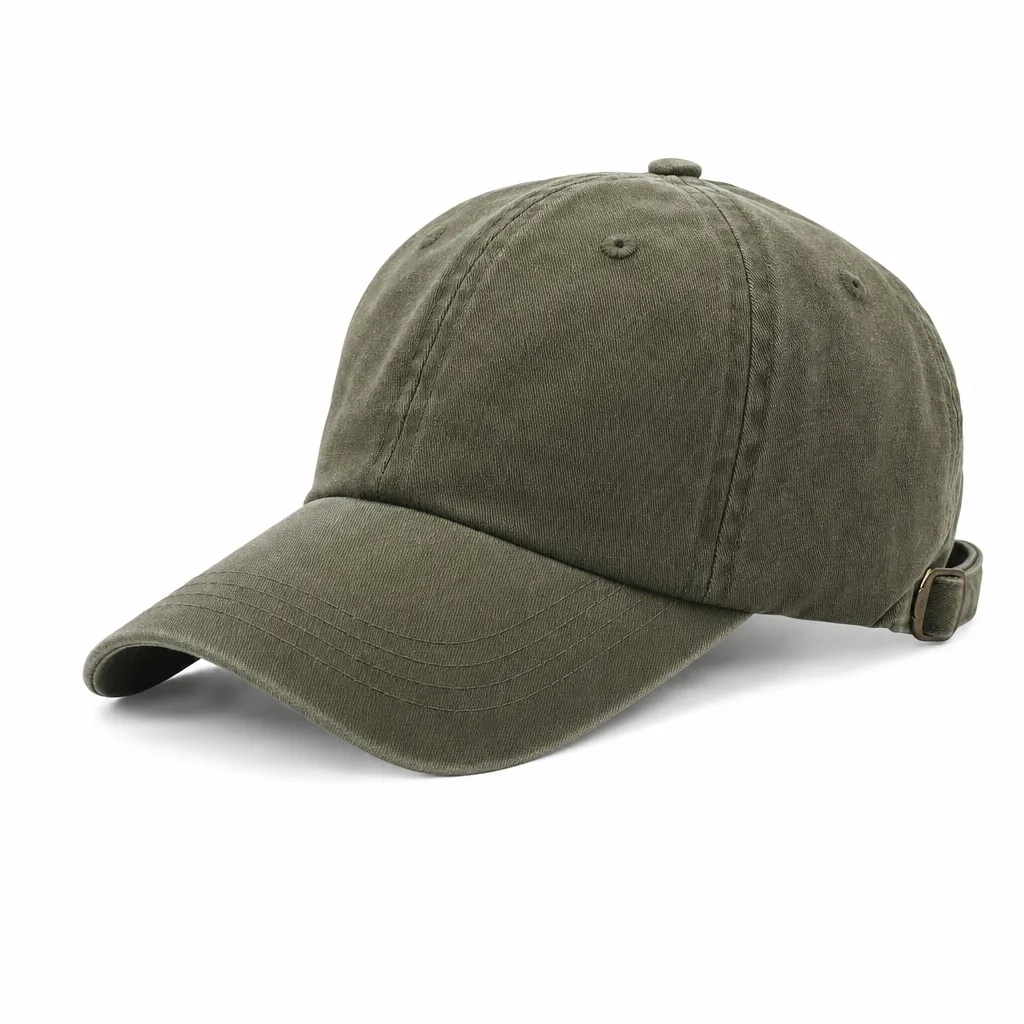
For brand owners, wholesalers and procurement teams entering the custom headwear category, custom made trucker hat: the 2026 sourcing & manufacturing playbook (2026 update) - 2026 buyer's guide is one of the highest-leverage decisions you will make. Get it right and your unit economics, retail story and reorder cycle all improve. Get it wrong and you carry the cost for years.
Custom Embroidered Hats
Embroidery remains the safest decoration method for a custom made trucker hat when the brief is durability, retail shelf impact, and a premium hand feel without the tooling cost of PVC, TPU, or molded rubber patches. The process sounds simple—cut front panels, fuse buckram, hoop, embroider, then assemble—but the risk sits in digitizing and panel stabilization. On six-panel truckers running on Tajima, Barudan, or ZSK multi-head cap frames, we usually cap clean logo width at about 100 to 120 mm on the front, with minimum readable stroke width around 0.8 to 1.0 mm and minimum positive text height around 4.5 to 5.0 mm. Foam-front styles are less forgiving: if the digitizer does not compensate for compression and rebound, satin columns sink, fills ripple, and counters close after stitching. Buyers should provide vector artwork, finished logo size in millimeters, Pantone TPX or TCX references, target embroidery type—flat, 3D puff, or mixed—and a stitch-count ceiling if they are managing FOB cost tightly. For thread, 120D/2 polyester is the commercial default for colorfastness and abrasion, while rayon gives better luster but is less forgiving in sweat-heavy or outdoor use.
A weak spec sheet is where most embroidery programs start losing money. For a custom made trucker hat, the buyer should lock front panel fabric by composition and weight—say 100% cotton twill at 260 to 280 gsm or polyester-cotton canvas at 220 to 240 gsm—plus mesh type, snap grade, sweatband composition, underbill color, visor board, seam tape color, and carton pack-out. Embroidery-specific points need equal precision: backing type, puff foam thickness at 2 mm or 3 mm, stitch density, thread sheen, maximum trims, and any metallic or neon thread requirement. Thread cards do not match coated Pantones perfectly, so the practical standard is visual approval under D65 light and a Delta-E tolerance on dyed fabric components, while thread is approved against the sealed sample rather than instrument-only readings. In 2026, FOB China for a standard six-panel mesh-back cap with direct embroidery usually lands around $2.40 to $3.90 at 300 to 500 pieces, rising to roughly $4.30 to $6.80 when you add heavy brush cotton, specialty mesh, 3D puff, metallic thread, or logos above 10,000 to 12,000 stitches.
Inspection has to target the defects that actually trigger claims: off-center embroidery, birdnesting on the reverse, loose thread tails, foam needle cuts, panel puckering, crown distortion after sewing, and logo drift toward the center seam. A flat strike-off is not enough; buyers need at least one pre-production sample stitched on the actual cap panel and sewn into a finished hat, because embroidery tension changes once the front is curved, seamed, and top-buttoned. For mass retail, AQL 2.5 is a sensible final threshold, but embroidery quality is really protected by in-line controls: first-piece approval at the machine, thread-break logs, hourly registration checks, and placement measurements from top button and visor seam with a stated tolerance, usually within plus or minus 2 mm on the approved sample. CrownsForge’s standard practice is to reject digitizing that looks acceptable on a swatch but pulls on assembled crowns, because rework on embroidered truckers is expensive and slow. If the factory is weak on digitizing, buckram selection, or cap sewing consistency, a cheap quote on a custom made trucker hat usually turns into chargebacks, missed ship windows, or both.
Custom Hat Embroidery
Embroidery quality on a custom made trucker hat is decided before the first cap goes under a needle. On foam-front truckers, the cleanest results usually come from pre-assembly embroidery on the flat front panel, not after crown sewing, because you get better registration, less crown torque, and fewer crushed stitches around the seam line. Most capable factories run Tajima, Barudan, or ZSK multi-head cap machines with 40 wt polyester thread for colorfastness and abrasion resistance; rayon still shows a softer sheen, but it is less forgiving in sweat-heavy or outdoor programs. Buyers should submit vector art in AI or EPS, then lock the embroidery size in millimeters, thread color by Pantone reference, and whether the logo is flat, 3D puff, appliqué plus embroidery, or a mixed technique. For retail-sensitive programs, require thread card approval and set a color tolerance, because thread lots can visibly drift even when the nominal Pantone match looks acceptable on paper. Digitizing for a 5-panel foam trucker is not the same as digitizing for brushed cotton twill or acrylic blend fronts. Foam rebounds after needle penetration, so the digitizer has to adjust pull compensation, stitch angle, underlay, and satin column width to keep outlines from sinking or fills from bulging. Small text below 4 mm, thin serif details, and dense fill areas are the first things to fail on low-density foam fronts, especially once the hat is packed, compressed, and opened again. A usable spec sheet should call out panel material, foam thickness, front-panel gsm, backing type, estimated stitch count, puff height in millimeters, and whether embroidery runs flat before blocking. In Zhejiang and South China, standard front flat embroidery usually adds about $0.18 to $0.45 per piece at 500 to 3,000 units, while 3D puff, metallic thread, side hits, or high-stitch-count appliqué work can push decoration cost to $0.60 to $1.50+, with digitizing fees typically $25 to $80 per logo unless offset against bulk orders.
Inspection is where embroidery stops being a design discussion and becomes a commercial risk decision. The repeat failures on trucker production are predictable: off-center logos, uneven puff height, buried thread breaks, loose trims under the sweatband, poor outline-to-fill registration, needle cuts through the foam skin, and front-panel collapse caused by excessive stitch density. For a custom made trucker hat, I recommend writing logo placement tolerance at +/-2 mm from center, requiring symmetry checks on the first production lot, and reviewing embroidery under both D65-style daylight and warm indoor light, because polyester thread sheen can hide edge distortion until the cap hits retail lighting. If the logo spans more than 110 to 120 mm wide on a standard adult front, confirm that the crown profile still holds after embroidery and packing. For bulk orders, AQL 2.5 is the practical baseline for final inspection, with skipped stitches, unraveling tails, backing exposure, logo tilt, and visible color mismatch classified as major defects. Licensed sports, collegiate, and chain-store programs often tighten that further with sealed pre-production samples and top-of-line approvals before full sewing starts. Our standard practice is to review the embroidery sew-out against the actual cap panel, not just against flat artwork, because density that looks acceptable on a strike-off can still distort the finished crown once the foam, mesh tension, and seam balance come into play. If the artwork demands exact Pantone control, micro text, or very high stitch density, the right fix is often upstream: revise the logo, reduce fill, switch to woven patch or transfer, or change the front panel substrate before you issue the PO.
Custom Trucker Hat
A dependable custom made trucker hat is usually won or lost in the tech pack, not the logo file. If a supplier only asks for artwork, color, and quantity, expect preventable errors on crown shape, trim matching, and pack-out. Lock the construction before sampling: 5-panel foam-front or 6-panel structured crown, finished crown height in millimeters, visor length and curve profile, snapback spec, mesh type, sweatband composition, seam-tape color, eyelet treatment, top-button finish, visor board, and carton ratio. For U.S. retail, every visible component should carry a Pantone TPX or TCX reference, with dyed-part tolerance capped at Delta-E 1.5 where possible; trucker builds often combine foam-backed polyester, cotton twill, and mesh, and those substrates shift visibly under D65 store lighting. Also call out foam thickness—normally 3 to 5 mm laminated polyester foam—mesh weight around 120 to 160 gsm, visor insert material, and decoration method, whether flat embroidery, 3D puff, woven patch, TPU badge, or screen print on foam, because each choice changes stitch behavior, panel stability, and shipping cube.
Process control matters more on trucker styles than many buyers realize because the foam front, mesh tension, and brim curve magnify small deviations. A disciplined flow is material approval, foam lamination, panel cutting, digitizing, patch prep, front-logo application, crown sewing, visor joining, sweatband setting, closure installation, steaming, shaping, trimming, final inspection, and packing. On Tajima, Barudan, or ZSK multi-heads, embroidery density has to be tuned to the foam base; for 3D puff, 2 to 3 mm EVA is standard, but poor underlay or excessive density causes the logo to sink after carton compression. In China, a basic custom made trucker hat using stock mesh, standard PP snapback, and common trims is usually practical at 144 to 300 pieces per colorway. Once you add custom-dyed mesh, molded TPU, woven inside labels, printed seam tape, or multi-location decoration, the workable MOQ often moves to 500 to 1,000 pieces, with current factory-direct pricing around $2.10 to $4.80 FOB for standard builds and $6.00+ FOB for patch-heavy programs.
Inspection is where weak suppliers get exposed, because most failures are repetitive rather than dramatic. The claim drivers are crown asymmetry, front-panel collapse, uneven visor curvature, weak mesh recovery, snapback misalignment, skipped embroidery, exposed bobbin thread, patch-edge lifting, twisted sweatbands, oil marks, and crushed outer cartons. Measure crown height, visor length, visor width, head opening, and closure alignment against the sealed sample, then inspect to AQL 2.5, with tighter visual focus on the front 120 degrees of the cap since that is the retail-facing zone. For color-critical programs, compare shell fabric, mesh, seam tape, and closure parts against approved lab dips and strike-offs under D65 lighting; when polyester mesh is paired with cotton or poly-cotton front panels, metamerism is common and near-matches can drift badly under store LEDs. At CrownsForge, we treat every custom made trucker hat as a repeatability problem: if a factory cannot hold shape, logo placement, and accessory consistency across repeat POs, the cheapest FOB quote becomes the most expensive decision by the end of the season.
Custom Trucker Hats
A custom made trucker hat is still one of the simplest cap programs to source efficiently, but buyers get better results when they specify the build like a factory tech pack, not like a mood board. The standard construction is a 5-panel or 6-panel cap with a foam or cotton-twill front, polyester mesh back, pre-curved PE sandwich visor, plastic snap closure, and a sweatband in 100% cotton or poly-cotton. If you leave those details open, the supplier will usually default to the cheapest combination: 3 to 5 mm foam front, 75D or 100D mesh, lightweight snap, and low-density sweatband. For cleaner sampling, request crown height in centimeters, visor curve angle, front panel material gsm, mesh denier, closure type, stitch count per inch, and decoration method. If the artwork matters, specify Pantone TCX references for fabric and Pantone Solid Coated for print, with an acceptable shade tolerance such as Delta-E below 1.5 on dyed components. On our standard practice, we also confirm seam tape color, button material, and whether the front backing should support flat embroidery, 3D puff, woven patch, or screen print because each one changes the hand feel and panel stability.
Manufacturing a custom trucker hat usually starts with material cutting, front panel lamination if foam is used, embroidery or patch application before assembly, then crown sewing, visor binding, sweatband setting, closure attachment, shaping, thread trimming, and final inspection. The decoration sequence matters more than many buyers realize. A 5-panel trucker custom hat gives a clean uninterrupted front for large logos, but if the front foam is too soft, high-stitch-count embroidery on a Tajima or Barudan head will tunnel or distort the panel. For woven patches and heat transfers, you need to confirm platen temperature and dwell time so the mesh does not warp. Typical MOQ for stock materials is 144 to 300 pieces per colorway, while fully custom fabric colors, molded labels, or special mesh structures often push MOQ to 500 or 1,000 pieces. In 2026, a basic custom trucker hat with stock mesh and standard embroidery often lands around $2.20 to $4.20 FOB China at 300 to 500 pieces, while premium builds with recycled mesh, specialty closures, multi-location embroidery, and custom inside taping can run $4.80 to $7.50 FOB before freight and duty.
The failures to inspect are predictable, and they tell you whether the factory actually understands cap production or just assembles to pass photos. Check front panel symmetry, crown height consistency within plus or minus 3 mm, visor matching across cartons, embroidery registration, snap closure strength, mesh recovery after compression, and puckering where the sweatband joins the crown. For custom trucker hats with multiple color components, I would also inspect color continuity between front panel, brim wrap, top button, and underbill because mixed mills can drift visibly even when they quote the same Pantone. AQL 2.5 is a reasonable shipment standard, but caps need a defect list that separates major faults like broken mesh, skewed logos, exposed sharp trim, or off-center patches from minor faults like loose threads under 2 cm. This is where the broader custom made trucker hat sourcing decision gets real: if the supplier cannot lock spec sheets, pre-production samples, inline QC, and carton-level assortment accuracy, the apparent unit-price savings disappear quickly in rework, chargebacks, and late delivery.
Hat Trucker Custom
A custom made trucker hat is usually misquoted because buyers specify the look, not the build. A 5-panel foam-front trucker with 3 mm EVA-backed polyester foam, 75D warp-knit mesh, and a stock PE visor insert does not belong in the same price band as a 6-panel cap with 210 gsm brushed cotton twill facings, 100% polyester mesh, buckram reinforcement, and a pre-curved bill with a controlled arc. A usable RFQ needs the full BOM: crown height in millimeters, visor length and curve tolerance, front panel material and gsm, mesh denier and knit type, sweatband composition such as 65/35 poly-cotton, snapback resin grade, seam tape artwork, button wrap, sandwich color, and pack-out per carton. If those points stay vague, one factory will cost a light foam front with low-density mesh and another will assume heavier twill, cleaner shaping, and better trim, so the comparison is useless. In practice, the difference between a bare-bones trucker and a properly specified one is often $0.60 to $1.40 per cap before decoration even starts.
Color control is harder on truckers because cotton, foam, polyester mesh, woven labels, and plastic closures all reflect shade differently. I normally tie fabric to Pantone TCX, hard trims and print references to Pantone C, and set a Delta-E tolerance when the brand color is sensitive; without that, a navy front panel can look acceptable in the dye house and still miss badly once paired with black mesh and a molded snap. Logo placement should be locked at ±2 mm, top button centering and bill symmetry checked inline, and any white mesh should be tested for oil transfer and sweatband bleed after steaming. Decoration is where many custom made trucker hat runs fail: flat fills on Tajima, Barudan, or ZSK heads can cut into foam if the underlay and density are wrong, while TPU or woven patches often pass initial appearance but start lifting after compression in export cartons. For 2026 China pricing, a basic foam-front/poly-mesh trucker with one embroidery location typically lands around $2.10 to $3.40 ex-factory at 500 pieces; move to cotton twill fronts, rope detail, sandwich visor, woven labels, printed seam tape, or multi-location embroidery, and the same cap usually reaches $3.80 to $6.20, with AQL 2.5 final inspection and tighter inline controls doing more to protect margin than any last-minute rework.
Trucker Custom Hat
A custom made trucker hat fails fast when the factory treats it like a standard six-panel cap. You are sewing a rigid front shell to a flexible back, and that mismatch shows up in distortion, seam grin, and crooked crowns if the process control is loose. For most commercial builds, the front panels run 180 to 240 gsm cotton twill or 210 to 260 gsm polyester twill fused with 0.40 to 0.55 mm buckram, while the back uses 120 to 160 gsm polyester or nylon mesh in common 18 x 14 or 20 x 16 constructions. The better factories embroider front panels flat on Tajima, Barudan, or ZSK multi-head machines before crown assembly, because cap-frame embroidery on a structured trucker front increases needle deflection and placement drift. If the logo includes 3D puff, 2 mm EVA foam is the safer default for copy and narrow satin columns; 3 mm only holds cleanly when the stroke width is generous enough to avoid crushed edges after carton compression.
The premium look is set by geometry long before final packing. On a structured five-panel trucker, a center-front crown height of roughly 55 to 65 mm and a stable visor curve matter more than most buyers realize, because small alignment errors are amplified by the broad front panel. I treat embroidery placement tolerance of plus or minus 2 mm from approved centerline as the maximum acceptable limit, and even that can look off under retail lighting if the brim seam is not dead straight. A serious tech pack should lock panel count, crown profile, visor insert material, sweatband composition, snapback specification, seam tape artwork, label positions, and Pantone references for both textiles and hard trims. Use Pantone TCX for fabric, Pantone Solid Coated for plastic closures and printed trims, and keep Delta-E under 1.5 on twill and under 2.0 on mesh, since open mesh tends to show batch-to-batch shade shift more aggressively.
Price is usually driven less by the trucker silhouette than by decoration density and trim count. In China, a fully custom program with dyed-to-match fabric, custom seam tape, woven labels, branded sweatband, and flat embroidery still commonly needs 300 to 500 pieces per colorway; stock-body programs with minor trim changes can sometimes work at 144 to 200 pieces. A basic custom made trucker hat with standard flat embroidery typically lands around $2.10 to $3.40 EXW in 2026, while 3D puff embroidery, RPET mesh, suede or microfiber visor overlays, TPU or silicone patches, and custom interior branding can push it to about $3.20 to $5.80 EXW before freight. At final inspection, the repeat defects are predictable: visor asymmetry, mesh puckering at the rear seam, broken snap tabs, exposed seam allowance inside the crown, and front-to-brim color drift. AQL 2.5 is the practical baseline, but retail programs should also require closure cycle testing beyond 500 opens, carton drop testing, and at least a small wear trial before bulk release.
Working with CrownsForge for custom made trucker hat programs
The fastest way to de-risk a custom made trucker hat program is to lock the development path before arguing over the last $0.20 FOB. For a new silhouette, a factory that is actually organized will usually turn digital artwork in 2 to 3 working days, ship a first physical sample in 5 to 7 days, and need another 3 to 4 days if you change crown height, front foam from 3 mm to 5 mm, visor curvature, mesh handfeel, or sweatband construction. Repeat orders should move much faster only if the tech pack is complete and the approved standard is real: pattern, BOM, embroidery DST, stitch count, visor board spec, carton size, and packing method all need to be frozen. MOQ discipline matters more than buyers like to admit. A quoted MOQ of 300 to 500 pieces per colorway is usually tied to fabric utilization, backing setup, embroidery machine time, and trim loss, not factory stubbornness. For a first market test, 300 pieces split across 2 or 3 colorways is workable if the cotton twill shell, 140 to 160 gsm polyester mesh, PE snapback, and visor board stay common across the run; otherwise the hidden cost shows up in dead trim inventory and slower line balancing.
Decoration is where many custom made trucker hat programs fall apart, because a retail-spec cap with 3D puff embroidery, flat fill, woven patch, seam-tape print, and private-label interior branding cannot be run like a low-cost promo hat. Puff embroidery needs disciplined digitizing, correct underlay, pull compensation, and controlled foam height, or the front panel tunnels, the columns spread, and the logo edge frays after capping. On the factory floor, this is why Tajima, Barudan, or ZSK multi-head machines matter less than the operator who knows when to reduce density, change needle size, or swap backing on a foam front with light buckram. CrownsForge keeps embroidery corrections in-house for exactly that reason. Patch programs need to be tested on the actual cap body, not a flat strike-off: a 2.0 mm TPU badge or satin-edge twill patch can look perfect on the bench and still telegraph adhesive, distort the crown, or create bill-to-crown tension during heat application. For retail consistency, color approval should reference Pantone TCX or TPX and be checked under D65 lighting, with a bulk tolerance closer to Delta-E 1.5 on dyed cotton twill and poly mesh, not vague promises of a “close match.”
Execution and compliance are what separate a clean launch from chargebacks, rework, or a held shipment. Buyers should ask for current sedex-audit-cap-supplier-guide.html">BSCI 2.0 or Sedex SMETA 4-Pillar audit reports, needle-policy logs, and a written restricted-substances process covering inks, coatings, faux leather, PVC-free TPU, and metal trims. If the custom made trucker hat program touches youth sizes, California Proposition 65 risk, or EU textile labeling, those checkpoints belong in the PO and tech pack before bulk starts, not during final inspection. Material specs also need to be written down at fabric level: 108 x 56 cotton twill construction, mesh gsm tolerance, sweatband fiber content, PE snapback resin grade, and buckram stiffness are exactly where substitutions happen when raw material prices move. On a 1,200 to 5,000 piece order, a realistic production window is 18 to 30 days after pre-production sample approval, with another 5 to 7 days if you are using recycled mesh, enzyme-washed canvas, or custom-dyed fabric outside mill stock. Final inspection should run to AQL 2.5 for major defects and AQL 4.0 for minor defects, with written defect criteria for patch misalignment, bill asymmetry, skipped stitches, mesh tears, oil marks, barcode mistakes, and missing country-of-origin labels.
Frequently Asked Questions
What logo decoration techniques do you offer?
3D puff embroidery, flat embroidery, woven patch, leather patch, PVC patch, screen printing, sublimation, applique and laser etching, all in-house with no subcontracting.
Do you support sustainability certifications?
Yes. We work with GOTS organic cotton, GRS-certified recycled polyester, OEKO-TEX Standard 100 fabrics, and are BSCI and Sedex audited. Certification documentation can be provided per order.
What is the minimum order quantity (MOQ) for custom hats?
Our standard MOQ is 100 pieces per design and color, with sampling available from 1 piece. For complex multi-color logos or premium fabric upgrades, the MOQ can be lowered with a small per-piece surcharge.
How long does production take?
Sampling takes 7 to 12 days. Bulk production runs 20 to 30 days depending on quantity, fabric availability and decoration complexity. Inspection and packing adds another 3 to 5 days before shipment.
Can I order a sample before bulk production?
Yes. We strongly recommend approving a pre-production sample before mass production. Samples are charged at 35 to 60 USD each plus express shipping, fully refundable against confirmed bulk orders over 500 pieces.
How does ordering custom hat trucker work?
When evaluating custom hat trucker, the key considerations are construction quality, decoration capability, MOQ flexibility and lead time. Cover everything buyers ask about custom embroidered hats: how it's manufactured, what specs to request from a factory, typical MOQ and pricing, common quality issues to inspect for, and how this ties back to the broader custom made trucker hat sourcing decision. Cover everything buyers ask about custom hat embroidery: how it's manufactured, what specs to request from a…
How does ordering custom embroidered trucker hats work?
When evaluating custom embroidered trucker hats, the key considerations are construction quality, decoration capability, MOQ flexibility and lead time. Cover everything buyers ask about custom embroidered hats: how it's manufactured, what specs to request from a factory, typical MOQ and pricing, common quality issues to inspect for, and how this ties back to the broader custom made trucker hat sourcing decision. Cover everything buyers ask about custom trucker hats: how it's manufactured, what specs to request from a…
How does ordering custom made hats for men work?
When evaluating custom made hats for men, the key considerations are construction quality, decoration capability, MOQ flexibility and lead time. Cover everything buyers ask about custom embroidered hats: how it's manufactured, what specs to request from a factory, typical MOQ and pricing, common quality issues to inspect for, and how this ties back to the broader custom made trucker hat sourcing decision. Cover everything buyers ask about custom trucker hats: how it's manufactured, what specs to request from a…
How does ordering high quality custom trucker hats work?
When evaluating high quality custom trucker hats, the key considerations are construction quality, decoration capability, MOQ flexibility and lead time. Cover everything buyers ask about custom embroidered hats: how it's manufactured, what specs to request from a factory, typical MOQ and pricing, common quality issues to inspect for, and how this ties back to the broader custom made trucker hat sourcing decision. Cover everything buyers ask about custom trucker hats: how it's manufactured, what specs to request from a…
Ready to start your custom hat project?
Send us your tech-pack, sketch or even just an inspiration photo. We will respond with a detailed quotation and digital mock-up within 24 hours.
Request a free quoteRelated guides
Acrylic Beanie: Properties, Costs and How to Spec It Right
Read article →
Custom Hat Design: The 2026 Sourcing & Manufacturing Playbook
Read article →
Bucket Hat Corduroy Retail Packaging Guide for Custom Hat Buyers
Read article →We hope this guide demystifies custom made trucker hat: the 2026 sourcing & manufacturing playbook (2026 update) - 2026 buyer's guide and helps you move forward with confidence. If you have questions specific to your project, our English-speaking sales engineers are one message away.