
Custom Made Trucker Hat: The 2026 Sourcing & Manufacturing Playbook - 2026 Buyer's Guide - Cost & MOQ Breakdown
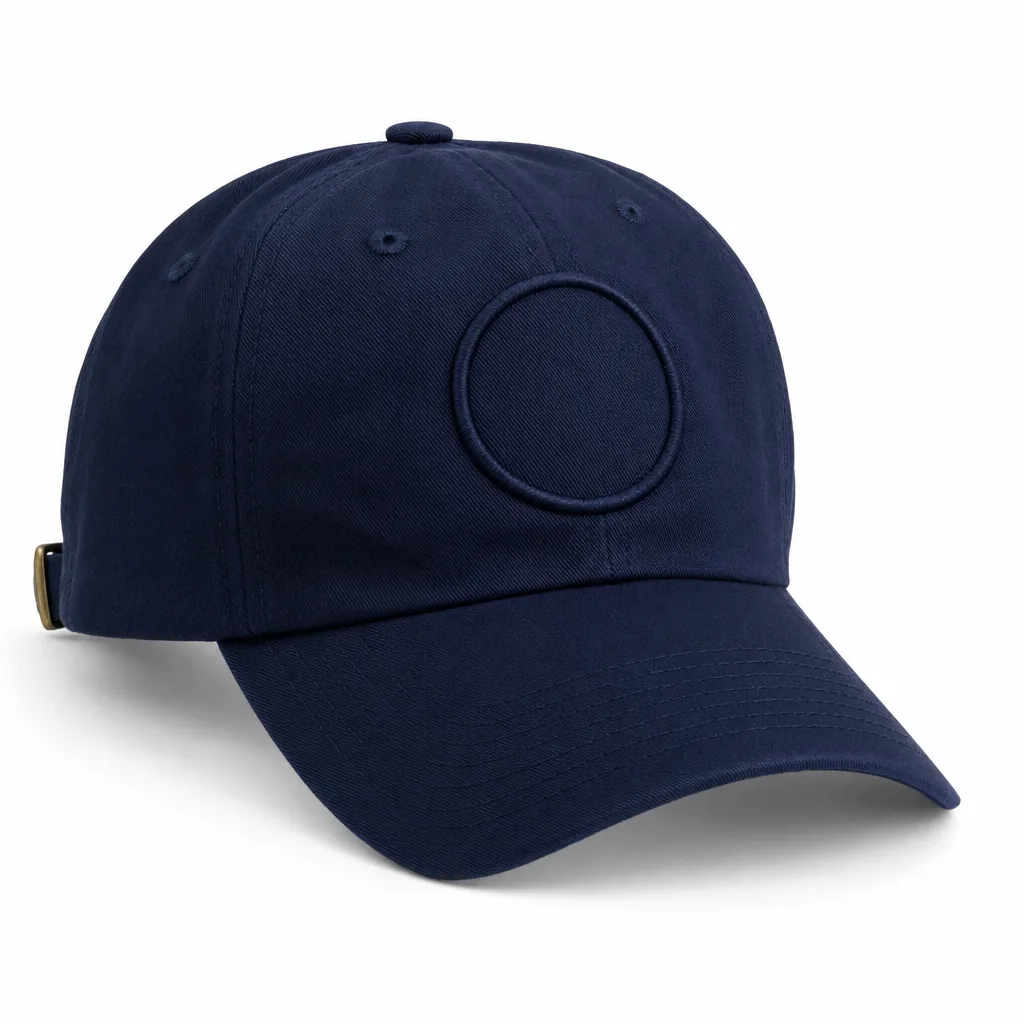
For brand owners, wholesalers and procurement teams entering the custom headwear category, custom made trucker hat: the 2026 sourcing & manufacturing playbook - 2026 buyer's guide - cost & moq breakdown is one of the highest-leverage decisions you will make. Get it right and your unit economics, retail story and reorder cycle all improve. Get it wrong and you carry the cost for years.
Custom Embroidered Hats
Embroidery still delivers the best perceived value on a custom made trucker hat, but cap structure decides whether the logo looks premium or cheap. A 5-panel foam-front trucker with 3 to 5 mm EVA behind the front panel gives satin columns, tatami fills, and 3D puff enough resistance to stand cleanly; the same file on soft brushed cotton twill or a 180 to 220 gsm poly-cotton front often tunnels, puckers, or sinks because the panel cannot hold stitch tension. On the floor, the real work starts after the vector file: digitizing to DST or EMB, setting edge-run and center-walk underlay, balancing density around 0.35 to 0.45 mm spacing, and running sew-outs on Tajima, Barudan, or ZSK multi-heads before the panel goes into crown assembly. If copy is under 4 mm high or line weight falls below roughly 0.35 mm, I do not treat the art as production-safe until a physical sew-out proves it can hold.
A usable embroidery spec sheet should remove guesswork entirely: logo dimensions in millimeters, placement tolerance of ±2 mm from crown center, thread type such as 120D/2 polyester, backing weight, target stitch count, and a clear callout for flat embroidery, 3D puff, appliqué, or mixed decoration. Thread will never hit every Pantone TCX or coated reference perfectly, especially on neon or heather programs, but a disciplined factory should still control visible shade variation to about Delta-E 1.5 to 2.0 under a D65 light box on approved lots. Cost rises fast once complexity stacks up. A stock foam-front trucker with one front flat logo usually lands around USD 2.20 to 3.80 FOB China at 300 to 500 pieces; a better-built 6-panel cap with heavier twill, 3D puff front, side embroidery, woven label, custom seam tape, and individual polybag or retail packing is more realistically USD 4.80 to 7.50 FOB, with MOQ typically 144 to 300 pieces per colorway unless shell materials and trims are already in stock.
Inspection is where embroidered programs either protect margin or quietly bleed it. Most claims come from repetitive factory misses, not dramatic failures: front logos drifting 2 to 4 mm off center, loose bobbin loops, foam exposure on puff edges, needle cuts on lighter-color fronts, visor topstitch waviness, or mesh panels sewn under uneven tension so the cap torques on head. Those issues are easy to miss in-line if the sewing line focuses only on decoration quality and ignores how the embroidered panel behaves once it is blocked, joined, and top-stitched into the crown. At CrownsForge, standard inspection covers embroidery registration, thread trimming, stitch pull, seam symmetry, sweatband joins, snapback engagement, carton assortment, and packing count, then samples to AQL 2.5 for major defects and 4.0 for minor unless the buyer sets a tighter limit. That discipline matters more on a custom made trucker hat using metallic thread, dense fills, multiple logo hits, or proprietary-dyed front fabric, because those builds need stricter approval gates than a simple flat logo on a stock body.
Custom Hat Embroidery
Embroidery is where a custom made trucker hat either looks shelf-ready or instantly cheap, and the deciding factor is usually digitizing, not the logo file or machine badge. On foam-front truckers, the front panel is unstable by nature: a 3 to 5 mm EVA-laminated foam backed with brushed tricot or nonwoven will distort if the digitizer overbuilds density, uses the wrong underlay, or ignores pull compensation across the crown curve. I tell buyers to freeze five specs before sampling: finished logo size in millimeters, stitch count range, embroidery style, thread standard, and placement tolerance from center front. If copy drops below roughly 4 mm cap height, or outlines narrow under 0.8 mm, the artwork needs simplification; otherwise satin columns choke, counters fill in, and the panel starts to pinch around the seam. A Tajima or Barudan can run the file cleanly and still produce a bad result if the digitizing logic is wrong for foam. Approval should be done on the actual hat body, never on a flat strike swatch. A serious pre-production pack includes the DST or EMB file, one thread chart with Pantone TCX reference plus nearest Madeira Classic or Gunold Poly match, one strike-off, and one sewn cap sample with placement held to plus or minus 2 mm. For standard flat front logos on a trucker, 4,000 to 8,000 stitches is the safe commercial range; in China that usually adds about $0.25 to $0.60 per cap in bulk. Clean 3D puff, or mixed flat-plus-puff with edge walk stitching and foam trimming, normally lands around $0.65 to $1.20 because run speed drops, trims take longer, and thread breaks increase. Once a front logo pushes past about 10,000 to 12,000 stitches on foam, defect risk rises faster than most buyers expect.
The spec sheet has to control the variables that change sew quality, because embroidery behavior shifts with every construction change. Buyers should call out front panel fabric, foam thickness, crown profile, backing weight, thread type, needle size, and whether the body is a stock 5-panel trucker or a scratch-built program. For 3D puff, foam density and edge coverage matter more than artwork alone: too much top tension or excessive stitch density will cut the foam and expose raw white edges, while low density causes the puff to collapse after carton compression. On most custom programs, MOQ is realistically 144 to 300 pieces per colorway; stock-body truckers with only front embroidery can sometimes open at 48 to 100 pieces if mesh, visor, and closure are already in inventory. Inspection standards should be locked before bulk production, not argued after defects surface. On a finished custom made trucker hat, I check logo centering, skew from center seam, crown puckering, hoop burn, foam show-through, loose bobbin tails, missed stitches, needle cuts, and brim-to-logo alignment consistency across the lot. Thread shade should be approved under D65 light, and when brand colors sit close together, a Delta-E target below 2.0 is realistic if the thread mill controls dye lots properly. Bulk inspection should follow an agreed AQL, typically 2.5 for major defects and 4.0 for minor, with photo standards attached to the PO. Our standard practice is to reject embroidery approvals done only from JPEG mockups, because placement and stitch behavior on an actual curved cap body are where most preventable failures start.
Custom Trucker Hat
A custom made trucker hat is decided in the spec sheet, not the mockup. The first call is architecture: a 5-panel high-profile build with a foam-backed front gives you the biggest embroidery field, while a 6-panel mesh-back shape sits closer to a baseball cap and usually fits broader retail programs. For most commercial runs, the mesh is polyester at 120-160 gsm, paired with a front in cotton twill, poly-cotton twill, brushed canvas, or foam-laminated polyester depending on price target and decoration method. The details buyers skip are the ones that create returns: crown depth in centimeters, visor length and pre-curve angle, buckram or foam stiffness, sweatband composition, seam tape color, and the grade of the PE snapback. A proper tech pack should also lock visor sandwich thickness in millimeters, brim board type, mesh hole shape, and Pantone TCX references for every dyed component; two nominally black meshes from different mills can still drift by Delta-E 1.5-2.0 under a D65 light box and look mismatched in bulk.
Decoration is where risk moves from design to manufacturing. Flat embroidery on Tajima, Barudan, or ZSK heads is straightforward, but 3D puff on a foam front needs correct underlay, pull compensation, and needle sequencing or the center panel tunnels after wear. Rubber patches, woven patches, screen print on foam, rope inserts, and printed seam tape each add their own handling limits for heat, pressure, and distortion, especially on structured fronts where a sample can photograph well and still fail on head. The safest approval process is a measured PPS with logo placement held to +/-2 mm, visor symmetry checked side to side, cap weight tolerance defined, and color signed against a physical standard. Our standard practice is to review stitch count, backing weight, and needle penetration before bulk because a clean sample sewn slowly in the sample room does not guarantee line stability at 1,000 pieces per day.
Price and MOQ are driven less by sewing time than by material consolidation and decoration setup. A basic custom made trucker hat using stock polyester mesh, a standard PE snap, and one-location flat embroidery usually works at a factory MOQ of 144-300 pieces per colorway, with ex-factory China pricing around $2.10-$3.60 each. Add specialty fabric, molded rubber patch, contrast underbill, braided rope, printed seam tape, or split-color assortments, and the practical MOQ often jumps to 500-1,000 pieces with ex-factory cost in the $4.20-$7.50 range. The expensive mistakes show up in QC, not in sampling: crooked center-front embroidery, uneven visor curve, weak snap posts, mesh shade variation between lots, exposed seam allowance at the sweatband join, and puckering where the structured front meets the side mesh. For commercial orders, write the QC standard before production starts, including point-by-point measurement tolerances, closure pull expectations, approved color standards, and an AQL 2.5 final inspection plan; if the hats are for licensed or team business, require lab dips or strike-offs against Pantone and define an acceptable Delta-E, because sedex-audit-cap-supplier-guide.html">BSCI 2.0 and Sedex SMETA 4-Pillar audits do not control color consistency.
Custom Trucker Hats
A usable custom made trucker hat spec starts with three decisions that drive both cost and failure rate: front-panel construction, mesh denier, and closure hardware. The generic factory formula—5-panel crown, 3 mm laminated EVA foam front, curved PE visor board, 100% polyester mesh, and injection-molded PP snap—is acceptable for low-cost promotional runs, but it is too loose for a retail program. Write the dimensions and tolerances into the tech pack: finished head circumference 58 cm ±0.5 cm, crown height 11.5-12.0 cm for a true high profile, visor length 7.0 cm, visor curve radius, front fabric weight, mesh denier, sweatband composition, and snap pin gauge. For most streetwear and licensed programs, a 7 oz cotton twill or brushed canvas front gives cleaner embroidery registration than low-density foam, especially when satin columns drop below 3 mm or tatami fills exceed 0.40 mm density. Pair that with 75D-100D polyester mesh; going lighter may save $0.03-$0.05 per cap, but it increases side-seam tearing during blocking, packing, and winter transit compression. The spec sheet should also lock details most buyers leave vague and later regret: panel count, profile, fabric content, Pantone reference in TCX or coated, underbill color, visor stitch rows, seam tape artwork, sweatband fold, label placement, polybag rule, and carton pack ratio. Decoration quality depends less on whether the floor runs Tajima, Barudan, or ZSK heads and more on whether the digitizing matches the substrate. On a custom made trucker hat with 3D puff, bad foam density or overbuilt underlay causes letter walls to collapse after carton pressure and rebound unevenly at unboxing. If you are using TPU or woven patches, specify merrow width, TPU Shore A hardness, heat-press window, and 24-hour peel strength so the factory cannot substitute softer material that curls at the edge.
MOQ and price on a custom made trucker hat move more with the material stack and decoration sequence than with the shell itself. A standard 5-panel trucker using stock polyester mesh, stock visor components, and flat embroidery usually sits at 300-500 pieces per colorway from a China factory. Some suppliers will accept 144 pieces, but only when they are pulling from in-stock mesh shades, stock snaps, and existing visor molds. At 500 pieces, FOB pricing is commonly $2.10-$3.40 per cap for a clean baseline build. Add 3D puff embroidery, custom seam tape, woven flag label, inside logo taping, camouflage mesh, or a branded metal buckle closure, and the real FOB range moves to roughly $3.80-$5.80. The surcharge under MOQ is rarely shown honestly; it is usually buried in digitizing, patch tooling, material waste, and line changeover. Inspection needs to focus on trucker-specific defects, not generic cap language. Hold dyed components to Delta-E below 1.5 if color consistency matters across front fabric, seam tape, and closure tabs, and inspect finished goods to AQL 2.5 with tighter attention on crown symmetry, visor curvature variance, mesh seam rupture, skipped stitches, snap brittleness below 5°C, sweatband torque, and compression marks after master-carton stacking. CrownsForge standard practice is to pressure-test packed cartons before shipment because foam-front truckers often pass inline inspection and still arrive with needle-hole telegraphing or flattened puff embroidery after a 28-35 day ocean transit. If the factory cannot show packing-drop results, embroidery pull tests, and closure cycle checks, the quote is not complete no matter how competitive the unit price looks.
Hat Trucker Custom
A custom made trucker hat is usually decided at BOM stage, not at artwork stage. The standard low-cost build is still a 5-panel or 6-panel shell with a 2.5-3.0 mm foam-backed polyester front, 70D-100D polyester mesh, PE visor insert, poly-cotton sweatband, and PP snapback. That recipe is stable and cheap, but it reads promo-grade fast. If your target retail is above about $15, move away from generic foam fronts and write an actual material spec: 240-280 gsm cotton twill, 260-300 gsm brushed chino, or microfiber polyester suede around 180-220 gsm. Call out mesh denier, visor board thickness, buckram hardness, sweatband fiber blend, crown height, and finished inside circumference, because “same as sample” is where most cap programs go sideways.
Color and fit failures usually start before sewing. A custom made trucker hat can carry the right logo and still fit badly if the front panel angle, crown depth, visor sweep, and back opening are not frozen on the sealed sample with a measurement chart. Practical tolerances are usually ±3 mm on crown height, visor width, side panel height, and opening width; anything looser invites mixed bulk. I also recommend locking dyed textiles to Pantone TCX and plastic or printed parts to Pantone C, then checking under D65 light with an agreed Delta-E threshold, ideally under 1.5 for black-on-black programs. Our standard practice is to approve bulk only when sample measurements, fabric swatches, mesh color, closure standard, and artwork placement all match one spec pack, because disputes on trucker caps are far more often caused by vague specifications than by sewing defects alone.
Decoration is where risk escalates fastest, especially on foam or heavily structured fronts. Direct embroidery on trucker foam fails when the digitizing is too aggressive: high stitch density causes tunneling, puckering, and a crooked crown line even on good Tajima, Barudan, or ZSK cap frames. For 3D puff, I would not approve art with satin columns under 3 mm, and I want the foam thickness, pull compensation, underlay type, and close-up sew-out photos documented before bulk. If the design uses woven patches, TPU badges, sublimated emblems, or heat-applied labels, ask for post-press photos plus adhesion and aging checks, because cheap glue film often shows edge lift, platen shine, or ghosting after carton pressure. On price, 144-300 pieces per colorway is realistic for stock materials and one embroidery position, while custom-dyed mesh, molded trims, custom seam tape, or exclusive closures push the honest MOQ closer to 500. Current FOB China pricing is commonly $2.10-$3.40 at 300 pieces for a basic build, and $3.80-$5.80 once you add heavier fabrics, multiple embroidery locations, woven labels, and inside taping.
Trucker Custom Hat
A custom made trucker hat should be quoted like a technical package, not a mood-board item, because most price gaps come from hidden BOM differences. The “standard trucker” many buyers imagine is usually a 5-panel high-profile build with a 3 to 5 mm PU foam front, 75D to 100D polyester mesh back, pre-curved PE visor insert, polyester sweatband, and PP snap closure with 7-hole adjustment. That is not equivalent to a 6-panel mid-profile version in 10 oz cotton twill, soft buckram, recycled rPET mesh, and a sandwich bill with contrast piping. If you want apples-to-apples pricing on a custom made trucker hat, lock the RFQ to measurable specs: crown height in centimeters, fabric weight in gsm, mesh denier and aperture, visor board thickness, sweatband fiber content, seam tape color, snap resin type, and decoration method by panel location. Color control also needs to be written in, not assumed: Pantone TCX for textile components, Pantone Solid Coated for plastic trims, finished measurement tolerance of +/-0.5 cm, and acceptable shade variance around Delta-E 1.5 to 2.0 under D65 lighting.
Decoration is where a trucker cap either holds retail value or looks cheap the moment the carton is opened. Foam fronts distort easily under needle tension, so flat embroidery needs the right underlay, density, and pull compensation or the logo can drift 2 to 3 mm off shape; competent factories confirm this with sew-outs on Tajima, Barudan, or ZSK heads before bulk approval. Patch choice matters just as much: merrowed twill is forgiving and low cost, laser-cut TPU gives sharper edges but can lift if heat-press settings are unstable, molded PVC adds weight, and woven applique reads cleaner on smaller artwork. For white foam fronts, screen print specs should include adhesion and crocking thresholds because dye rub and ink cracking show immediately. Assembly defects are predictable if you know the line: poor brim-jig calibration causes bill asymmetry, weak seam control tears mesh at panel joins, and inconsistent blocking changes crown height lot to lot. In China, practical MOQs are usually 144 to 300 pieces per colorway for stock materials, rising to 500 to 1,000 when you add custom-dyed twill, molded patches, or Pantone-matched snaps; FOB pricing at 300 pieces is commonly $2.20 to $3.40 basic, $3.80 to $5.50 for better trim packages, and $6.50+ for premium builds. Final approval should use inline checks plus AQL 2.5, with carton burst strength watched closely because foam-front caps deform fast in under-spec master cartons.
Working with CrownsForge for custom made trucker hat programs
Sampling is where a custom made trucker hat program either holds calendar or slips two weeks for avoidable reasons. A factory can usually turn an embroidery strike-off in 3 to 5 working days and a wearable prototype in 7 to 10, but only when the tech pack is buildable: Pantone TCX or coated references, crown height in millimeters, 5-panel or 6-panel construction, visor pre-curve, mesh spec, snapback type, logo size, and fit target. If artwork arrives as a social-media screenshot or low-resolution PNG, plan an extra 24 to 48 hours for vector redraw and digitizing on Tajima or Barudan heads. The real failure point is usually shape, not artwork speed. A 5-panel foam trucker with 3 mm EVA, buckram reinforcement, and a 32 to 35 mm sweatband stands completely differently from a 6-panel 10x10 cotton twill front with softer support, even before embroidery or patch application. On first wearables, the checks that matter are seam balance, crown depth, front-panel rebound, visor symmetry, and how the cap sits after two hours on-head instead of five seconds on a packing table.
MOQ should be negotiated from material and setup reality, not a salesperson’s headline. A stock-color custom made trucker hat using existing 100% polyester mesh, standard PE snap, and one-location flat embroidery can often run efficiently at 144 to 300 pieces per colorway. Once you add custom-dyed 12x12 cotton twill, printed seam tape, woven main labels, molded PVC or silicone patches, underbill print, or two to three decoration locations, the practical break-even usually moves to 500 or 1,000 pieces because waste shifts into trims, setup time, and packaging, not sizing. Caps are mostly one-size; the cost creep comes from split components, overbought labels, separate cartons, and extra machine changeovers. Buyers planning four colorways with different mesh denier, different closures, and separate inside branding should expect a higher FOB even if the total PO looks large. Our standard practice is to lock one shell pattern, one closure, and one sweatband spec, then scale variation through thread colors, patch artwork, or undervisor details without reopening every material line.
Decoration is where an experienced factory prevents expensive repeats. On a foam-front custom made trucker hat, flat embroidery is usually safest below roughly 8,000 to 10,000 stitches, with underlay and density adjusted so the front panel does not tunnel or collapse. For 3D puff, satin columns need enough width and spacing to keep loft after polybag compression and 30 to 45 days of ocean transit; narrow lettering that looks crisp on-screen often crushes in bulk packing. Patch programs need the same discipline. Woven patches, merrowed emblems, TPU or PVC badges, faux leather labels, and sublimated patches all behave differently on curved foam fronts, and heat-press settings that pass one sample can still cause edge lift, gloss, or ghosting in production. The approval flow I trust is digital spec sign-off, material swatch approval, pre-production sample, line-start sample, in-line QC, and final inspection to AQL 2.5, supported by BSCI 2.0 or Sedex SMETA 4-Pillar records, needle control logs, azo-free inputs, and a stated color tolerance such as Delta-E 1.5 to 2.0 instead of subjective visual matching.
Frequently Asked Questions
What logo decoration techniques do you offer?
3D puff embroidery, flat embroidery, woven patch, leather patch, PVC patch, screen printing, sublimation, applique and laser etching, all in-house with no subcontracting.
Do you support sustainability certifications?
Yes. We work with GOTS organic cotton, GRS-certified recycled polyester, OEKO-TEX Standard 100 fabrics, and are BSCI and Sedex audited. Certification documentation can be provided per order.
What is the minimum order quantity (MOQ) for custom hats?
Our standard MOQ is 100 pieces per design and color, with sampling available from 1 piece. For complex multi-color logos or premium fabric upgrades, the MOQ can be lowered with a small per-piece surcharge.
How long does production take?
Sampling takes 7 to 12 days. Bulk production runs 20 to 30 days depending on quantity, fabric availability and decoration complexity. Inspection and packing adds another 3 to 5 days before shipment.
Can I order a sample before bulk production?
Yes. We strongly recommend approving a pre-production sample before mass production. Samples are charged at 35 to 60 USD each plus express shipping, fully refundable against confirmed bulk orders over 500 pieces.
How does ordering custom hat trucker work?
When evaluating custom hat trucker, the key considerations are construction quality, decoration capability, MOQ flexibility and lead time. Cover everything buyers ask about custom embroidered hats: how it's manufactured, what specs to request from a factory, typical MOQ and pricing, common quality issues to inspect for, and how this ties back to the broader custom made trucker hat sourcing decision. Cover everything buyers ask about custom hat embroidery: how it's manufactured, what specs to request from a…
How does ordering custom embroidered trucker hats work?
When evaluating custom embroidered trucker hats, the key considerations are construction quality, decoration capability, MOQ flexibility and lead time. Cover everything buyers ask about custom embroidered hats: how it's manufactured, what specs to request from a factory, typical MOQ and pricing, common quality issues to inspect for, and how this ties back to the broader custom made trucker hat sourcing decision. Cover everything buyers ask about custom trucker hats: how it's manufactured, what specs to request from a…
How does ordering custom made hats for men work?
When evaluating custom made hats for men, the key considerations are construction quality, decoration capability, MOQ flexibility and lead time. Cover everything buyers ask about custom embroidered hats: how it's manufactured, what specs to request from a factory, typical MOQ and pricing, common quality issues to inspect for, and how this ties back to the broader custom made trucker hat sourcing decision. Cover everything buyers ask about custom trucker hats: how it's manufactured, what specs to request from a…
How does ordering high quality custom trucker hats work?
When evaluating high quality custom trucker hats, the key considerations are construction quality, decoration capability, MOQ flexibility and lead time. Cover everything buyers ask about custom embroidered hats: how it's manufactured, what specs to request from a factory, typical MOQ and pricing, common quality issues to inspect for, and how this ties back to the broader custom made trucker hat sourcing decision. Cover everything buyers ask about custom trucker hats: how it's manufactured, what specs to request from a…
How much should a trucker hat cost?
Trucker Hats Known for their mesh back panels, perfect for ventilation. Average cost: $5 - $60+ depending on the brand.
Who makes the highest quality trucker hats?
Richardson Trucker Hats. Richardson makes some of the best men's trucker hats with high quality and comfort. ... New Era Trucker Hats. New Era makes some of the best-looking trucker hats with stylish designs and a perfect fit. ... Adidas Trucker Hats. ... Pacific Headwear Trucker Hats. ... Dri Duck Trucker Hats.
How much do people charge for custom hats?
Rubber and Embroidered Patch Hats: Prices begin at $20 for 50 pieces (minimum) and reduce to $16.75 per hat for 100+. Embroidered Hats: Prices start at $22 each for 25 pieces (minimum) and go down to $16.75 per hat for 100+.
What does a 47 trucker hat mean?
The '47 or 47 on hats and caps refers to the '47 Brand company. '47 refers to 1947, which is the year that the '47 Brand company was started by Italian immigrant brothers, Henry D'Angelo and Arthur D'Angelo.
Ready to start your custom hat project?
Send us your tech-pack, sketch or even just an inspiration photo. We will respond with a detailed quotation and digital mock-up within 24 hours.
Request a free quoteRelated guides
Acrylic Beanie: Properties, Costs and How to Spec It Right
Read article →Custom Hat Design: The 2026 Sourcing & Manufacturing Playbook
Read article →
Bucket Hat Corduroy Retail Packaging Guide for Custom Hat Buyers
Read article →We hope this guide demystifies custom made trucker hat: the 2026 sourcing & manufacturing playbook - 2026 buyer's guide - cost & moq breakdown and helps you move forward with confidence. If you have questions specific to your project, our English-speaking sales engineers are one message away.