
Custom Made Trucker Hat: The 2026 Sourcing & Manufacturing Playbook - 2026 Buyer's Guide (2026 Update)
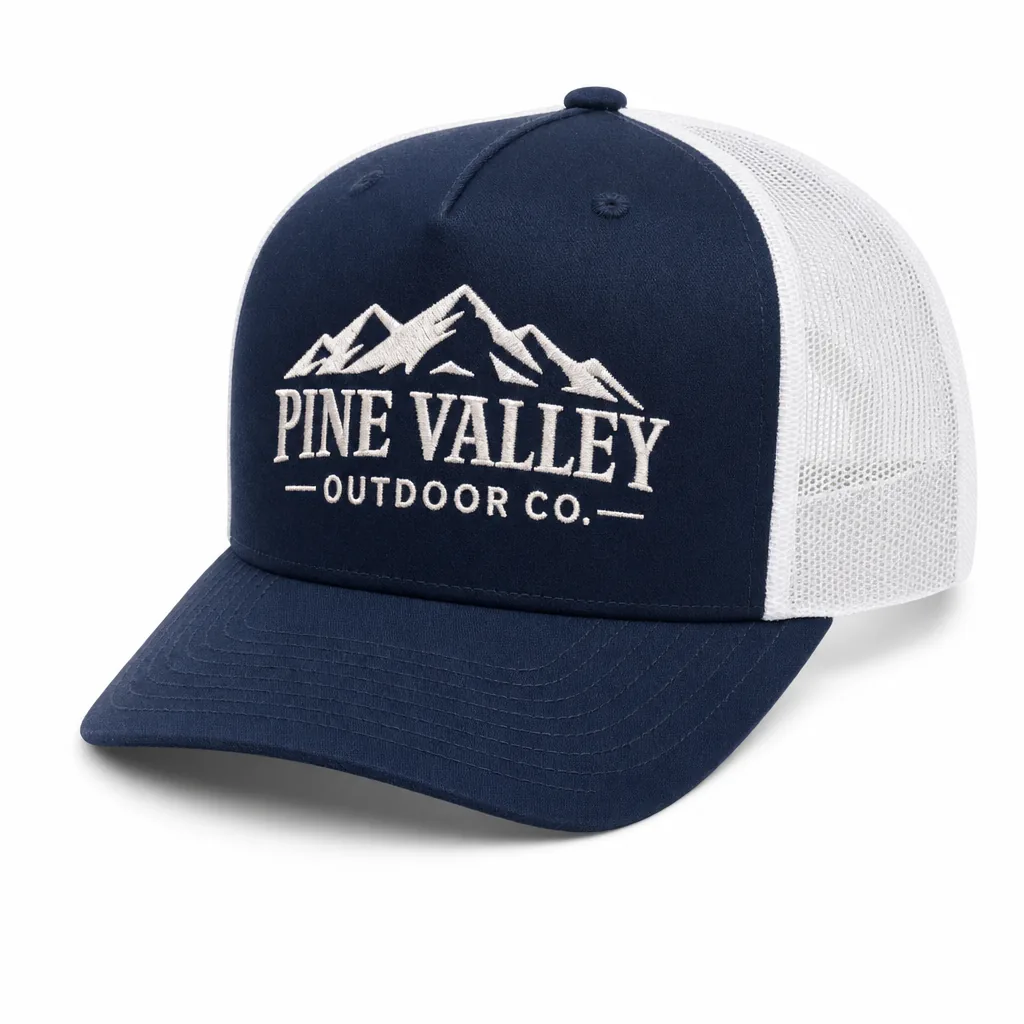
Custom Made Trucker Hat: The 2026 Sourcing & Manufacturing Playbook - 2026 Buyer's Guide (2026 Update) is one of the most-asked questions we receive from international buyers, and for good reason. With dozens of factories competing for your order and an alphabet soup of technical terms in every supplier quote, even experienced importers can feel lost. This guide consolidates what we have learned producing custom hats for clients in 40+ countries.
Custom Embroidered Hats
Embroidery is the biggest cost-and-quality lever on a custom made trucker hat, so freeze the decoration method before you start haggling over $0.08 on FOB. On a capable line, the front panel is embroidered before sewing whenever possible; once buckram is fused and the crown is assembled, distortion risk goes up and clean registration gets harder, especially on foam-front truckers. Most serious factories run Tajima, Barudan, or ZSK multi-head machines in 9- or 12-needle layouts, and the quote is driven more by machine minutes than by shell fabric. A center-front logo in the 5,000 to 8,000 stitch range may add only $0.18 to $0.45, while a 14,000-stitch front-plus-side program with two thread changes and tight registration can add $0.60 to $1.20. Buyers who submit gradients, hairline outlines, or distressed art as direct embroidery are usually forcing a bad process onto the wrong medium. The technical limits are not negotiable. Clean 3D puff needs satin columns wide enough to cover 2.0 to 3.0 mm EVA foam, with pull compensation adjusted so the foam does not flash at the edges after trimming. Text below about 4 mm cap height is unreliable unless the digitizer redraws characters, opens counters, and reduces density to control thread packing. For detailed logos, a woven patch, merrowed emblem, or twill applique often outperforms direct stitches because push-pull distortion, thread breaks, and registration drift are built into embroidery physics. In practice, the best RFQs specify panel count, front fabric weight, mesh gsm, visor profile, snapback resin type, thread brand, logo locations, and target stitch band. A standard MOQ in China is usually 144 to 300 pieces per colorway for direct embroidery, but 3D puff, suede, corduroy, or multiple placements often push efficient production closer to 500 pieces.
A good embroidered-hat RFQ reads like a production sheet, not a mood board. For color control, send Pantone Solid Coated for logo colors and Pantone TCX for dyed textiles, then define realistic tolerances by component. If your front panel is cotton twill from one mill and your undervisor or tape is polyester from another, a Delta-E target of 1.0 across every substrate is fantasy; on bulk orders, most buyers accept tighter matching on visible logo thread and slightly wider tolerance on body materials. Cost also needs to be framed honestly. A basic foam-front mesh-back trucker with standard center-front embroidery commonly lands around $2.20 to $3.80 FOB China at commercial volumes, while brushed twill or canvas with 3D puff, woven label, printed seam tape, custom closure, and side hit is more often $4.50 to $7.00 before duty, freight, and destination charges. Inspection is where weak vendors get exposed fast. The defects that actually matter are missed stitches, looped thread tails, thread-shade mismatch under D65 lighting, foam showing through puff edges, off-center placement, needle cuts on mesh, hoop burn, visor-to-crown asymmetry, and front panels warped by over-digitized files with excessive underlay. Placement should be measured from the cap centerline and seam reference points, not judged by eye; for bulk production, +/-2 mm on a center-front embroidery position is realistic, and +/-3 mm is a practical tolerance for patch alignment. Finished goods should be checked at AQL 2.5 against an approved pre-production sample, with carton assortment verification and a tape test on any heat-applied emblem. Our standard practice is to treat embroidery approval as cap engineering, because when a custom made trucker hat looks crooked or wears stiff, the root cause is usually in the digitizing, underlay, or sewing sequence—not in final inspection.
Custom Hat Embroidery
Embroidery still carries the highest perceived value on a custom made trucker hat, but most failures start before the first stitch. A factory cannot run production from an AI, PSD, or 72 dpi PNG; the artwork has to be digitized into a machine file such as DST, DSB, or EMB, with stitch type, density, underlay, pull compensation, and thread path built around the actual cap construction. That last part is where buyers get burned. A logo that sews cleanly on flat 10 oz cotton twill can distort badly on a 5-panel trucker front with buckram, or sink into a softer foam-backed panel laminated to polyester mesh. For small copy, I treat 4.5 to 5.0 mm uppercase height as the practical minimum on a curved front panel, and anything below 0.8 mm satin width should be tested before approval. If you want predictable bulk results, specify placement in millimeters, target stitch count, thread brand or approved equivalent, and color references in coated PMS or Pantone TCX rather than approving from a screen mockup. Technique selection matters as much as the file. Flat embroidery is the safest choice for fine outlines and filled logos, while 3D puff needs wider columns, cleaner travel paths, and foam that matches the front profile; 2 mm to 3 mm EVA is standard, but the wrong density will expose edges or crack the top stitches. On Tajima, Barudan, and ZSK cap frames, dense front logos usually run best around 650 to 850 rpm, not at the machine's maximum speed, because overheating, needle deflection, and panel distortion show up fast on structured trucker fronts. For stock-body programs, one front location on a standard custom made trucker hat typically adds about $0.35 to $0.90 per piece at 5,000 units, depending on stitch count and thread changes. Heavy 3D puff, side hits, back arch text, or mixed decoration can push embroidery cost to $1.20 to $1.80 per cap, and fully custom bodies usually move MOQ from 144-300 pieces per colorway to 500-1,000 pieces because the factory is committing fabric, mesh, labels, tape, and setup time across the whole line.
The safest production flow is to embroider before crown assembly, especially for large front artwork on trucker styles. Flat panel embroidery gives better registration, cleaner backing control, and less risk of frame marks than trying to force a finished cap through a cap frame. Once the panel is sewn into the crown, correcting skew, coverage gaps, or foam exposure gets expensive fast because the defect is now built into the body. A capable factory should be able to explain the sequence clearly: panel cutting, front backing selection, embroidery, trimming, crown assembly, visor joining, sweatband insertion, closure attachment, shaping, and final inspection. If they cannot tell you what backing they use on different front panels, or when they slow the head speed for dense logos, they are probably outsourcing the decoration and managing by quotation rather than process control. The reject points are predictable, so buyers should write them into the approval standard. I would fail bulk for birdnesting at start-stop points, loose underside trims, broken needle gaps, poor thread coverage, off-center placement, crown puckering from excessive density, and visible foam on 3D puff edges. Placement tolerance should usually stay within plus or minus 2 to 3 mm from the approved centerline, and color should be checked under D65 lighting against a signed sew-out, not only against digital artwork, because thread shifts visually on black polyester and white foam-backed fronts. Use AQL 2.5 for final inspection, open cartons beyond the top layer, and recheck the first 20 to 30 production pieces after bulk starts; embroidery faults compound quickly once an operator begins trimming aggressively to keep output moving. At CrownsForge, that mid-run recheck catches more real defects than a perfect-looking pre-production sample ever will.
Custom Trucker Hat
A reliable custom made trucker hat is decided in the tech pack, not in a last-minute logo discussion. Lock the variables that actually drive fit, appearance, and reject rate before RFQ: crown profile, front-panel construction, mesh specification, closure, and decoration method. On a standard 5-panel trucker, the front is usually 3 to 5 mm PU foam laminated to polyester tricot, while the back uses polyester or nylon mesh in the 120 to 160 gsm range; for warm-weather retail, also specify denier and hole size, because coarse 210D mesh, soft 75D mesh, and hex-mesh constructions all behave differently in airflow, print holdout, and seam strength. Write fit in measurable tolerances, not vague language like “mid-profile”: crown height 16 to 17 cm, visor length 7.0 to 7.5 cm, 7-hole PP snapback, and head opening tolerance within +/-0.5 cm against the approved sealed sample. For color-critical programs, issue Pantone Solid Coated or Pantone TCX references, require lab dips on shell fabrics, and approve embroidery thread under D65 lighting with a Delta-E target no worse than 1.5 to 2.0; white foam fronts make even minor shade drift obvious across production lots.
Process discipline matters more on truckers than many buyers realize because the foam front exaggerates every flaw. A capable cap factory die-cuts panels, decorates the front before assembly, and then runs mesh attachment, sweatband setting, visor joining, top button, and back closure on cap-specific multi-needle lines. If embroidery is on the front, the make-or-break step is digitizing for crown curvature and foam compression, not chasing a high stitch count. On Tajima, Barudan, or ZSK heads, 3D puff sections usually need to run around 270 to 320 rpm so the satin columns do not cut through the foam, and outlines under roughly 1.2 mm are better shifted to flat embroidery, a woven patch, or screen print if you want clean definition after carton pressure and ocean transit. Our standard practice is to reject artwork that combines high-density front embroidery with low-grade foam because it causes tunneling, seam deflection, and visibly off-center crowns once cartons are stacked.
MOQ and pricing expose very quickly whether a supplier actually builds caps or is quoting from memory. For a stock-material custom made trucker hat, realistic MOQs are usually 144 to 300 pieces per colorway; once you add dyed-to-order mesh, custom camo print, molded TPU or rubber patches, RPET components, or branded inner trims, the real floor often moves to 500 to 1,000 pieces because the fabric mill, patch vendor, and closure supplier each carry their own minimums. In Zhejiang and Guangdong, a basic foam-front snapback with one front embroidery position is commonly around US$2.10 to US$3.40 FOB at 300 to 500 units, while a more built-out version with recycled mesh, microsuede visor, printed seam tape, woven wrap label, and private-label inside branding typically lands closer to US$4.20 to US$6.80 FOB. Final QC should target actual trucker failure points: visor asymmetry, stitch skips on brim binding, mesh tearing at side seams, snap post pull-out, embroidery registration drift, sweatband torque, and crown crush after master-carton stacking. Write the inspection standard around AQL 2.5, define drop and compression requirements, and ask for inline QC photos from embroidery, sewing, and packing instead of only a final random inspection report.
Custom Trucker Hats
A dependable custom made trucker hat is built around the pattern block and crown geometry, not the artwork. For a standard high-profile 5-panel silhouette, the front panel is usually 3 to 5 mm polyester foam laminated to tricot with buckram support, while the rear uses warp-knit polyester mesh in the 110 to 140 gsm range. That construction gives the crown its spring and billboard face; swap to 210 to 260 gsm cotton twill or canvas on the front, or move from polyester mesh to nylon mesh, and the cap will sit lower, recover differently after sewing, and take embroidery with less forgiveness. On Tajima or Barudan heads, that difference shows up fast: fine serif strokes under roughly 1.2 mm and counters below 0.8 mm tend to fill in on tall foam fronts unless the digitizing compensates with lighter underlay, pull compensation, and lower density. Buyers who only approve a logo sew-out without locking the cap body are approving the wrong thing.
Most sourcing mistakes come from under-specifying shape. A usable tech pack for a custom made trucker hat should call out crown height in centimeters, front panel width, front seam position, visor length and curve radius, mesh color by Pantone TCX, snap type, sweatband composition, visor stitch rows, and finished weight tolerance. Embroidery specs should include stitch count, thread brand such as Madeira Classic or Gunold Poly, backing weight, run location, and whether the logo is sewn pre-assembly or on a closed crown. At CrownsForge, we do not approve bulk cutting until a physical PPS is checked on a headform for crown pitch, visor symmetry, and embroidery registration, because a photo cannot tell you if the front wall is too vertical or if the mesh is pulling the side profile off balance. Once 3,000 back panels are cut, changing crown height or front angle is rework, not a correction.
FOB pricing is driven more by components and decoration density than by the trucker category itself. In Zhejiang or South China, a basic foam-front, poly-mesh snapback with one embroidery position at about 5,000 to 7,000 stitches typically sits around $1.60 to $2.40 FOB at 500 to 1,000 pieces per colorway; at 144 to 300 pieces, the same build often jumps to $2.80 to $4.20 because digitizing, machine setup, trimming, and carton overhead do not scale neatly. Move into cotton canvas fronts, sandwich visors, woven loop labels, printed seam tape, rubber patches, or two embroidery locations and the realistic range is closer to $3.80 to $6.50 FOB. MOQ also has to be broken down by component: stock black or white mesh may support 300 pieces, but Pantone-matched twill, custom-dyed mesh, or molded PVC trims often push real minimums to 500 to 1,000 units per color. For QC, use AQL 2.5 and watch the repeat defects that ruin reorders: visor twist, crown height drift, mesh tension, snap alignment, embroidery centering within ±2 mm, and Delta-E variation between front fabric, button, and visor binding.
Hat Trucker Custom
A scalable custom made trucker hat program is really a component-control exercise, because each part fails differently in bulk. Front panels are usually 100% cotton twill at 220-260 gsm, brushed chino around 230-250 gsm, or performance polyester at 150-180 gsm; for a high-profile crown, most factories laminate 0.4-0.8 mm buckram so the shape survives 35-45 days of ocean transit without collapsing in the carton. Mesh is typically 100% polyester at 40-60 gsm in either standard hex mesh or tighter sports mesh, while visor inserts are normally PE for a crisp retail hand or EVA for softer curve memory. If a tech pack only says “trucker style,” the factory is still making assumptions. You need crown height in millimeters, visor length and arc, front foam thickness if applicable, seam tape color, sweatband spec, snapback peg count, button wrap material, and even whether the mesh seam should sit proud or flat before digitizing starts.
Repeatability comes from process discipline, not from one clean sample. A capable factory cuts by shade lot, relaxes cotton before cutting, pre-shrinks sweatband material where needed, embroiders front panels before crown assembly, and runs logo files on Tajima, Barudan, or ZSK multi-head machines with cap-specific pull compensation already tested. Foam-front builds need lower stitch density, broader underlay, and conservative satin widths; otherwise the needle perforates the foam, the face caves in, and the logo tunnels after packing pressure. On cost, the silhouette is rarely the main driver: setup count, trim complexity, and embroidery minutes matter more. Practical MOQs are usually 144-300 pieces per colorway, but real pricing improves at 500-plus units. In 2026, a standard cotton twill plus polyester mesh custom made trucker hat with one flat embroidery position and a plastic snap closure usually lands around $2.10-$3.60 ex-factory at 500-1,000 pieces; premium versions with recycled mesh, braided rope, printed inside taping, and 3D puff embroidery are more realistically $3.80-$6.20.
Most trucker-cap failures show up at the junctions, not on the spec sheet: off-center front embroidery, visor asymmetry beyond 3 mm, mesh tearing at seam joins, exposed buckram, scratched snap closures, and crown-height drift caused by unstable sewing tension. Those are process-control problems, not minor cosmetics. For bulk approval, I would inspect to AQL 2.5, measure logo centering against the button and visor midpoint, check stitch density consistency across panels, test seam slippage at mesh joins, and compare twill, mesh, and thread under D65 lighting because cotton and polyester can split visibly in daylight even when they look acceptable under warm office bulbs. Our standard practice is to lock logo thread to a Pantone reference and hold visible embroidery color to a practical Delta-E below 1.5 where thread sheen permits. Buyers should also require one material-confirmation sample, one pre-production sample, and one top-of-production sample from bulk, plus current sedex-audit-cap-supplier-guide.html">BSCI 2.0 or Sedex SMETA 4-Pillar reports and a written subcontracting disclosure, because a custom made trucker hat supplier is judged by carton-to-carton consistency, not by a single polished prototype.
Trucker Custom Hat
A custom made trucker hat usually fails in structure before it fails in decoration. If the front panel loses its crown line after carton pressure or a week of wear, no embroidery quality will save it. For a stable foam trucker, I would spec 2.5 to 3.0 mm EVA or PU foam laminated to a 120 to 160 gsm polyester face, with rear mesh at roughly 70 to 100 gsm using 20D to 40D yarn depending on the target openness and hand feel. Most retail programs still choose a 5-panel build because it gives a clean embroidery field with no center seam, but a 6-panel cap often fits broader head shapes better and reduces the tall, boxy look some 5-panel profiles get. On the visor, 1.8 to 2.2 mm PE board is the reliable range; softer boards start to ripple at the edge, while overly rigid ones can stress-crack after long-haul container loading. If foam density, mesh denier, visor thickness, or snap gauge are left vague, those are the first components many factories downgrade because the substitution is hard to spot on a sales sample.
The RFQ for a custom made trucker hat should read like a cap tech pack, not a mood board. Call out crown height in centimeters, visor length, bill curve radius, panel split, mesh composition, closure resin grade, sweatband fiber content, seam tape color, button wrap, and Pantone TCX or coated references for every visible component. Decoration needs the same precision: specify stitch count, thread type and sheen, backing weight, and whether the artwork is digitized for cap-frame sewing on Tajima, Barudan, or ZSK heads. Foam fronts pucker fast if the underlay, density, and pull compensation are treated like flat fabric. In China, stock-color programs commonly start at 144 to 300 pieces per colorway, but dyed-to-match mesh, custom inside tape, molded rubber patches, or branded retail packaging push realistic MOQs to 500 to 1,000 pieces. Current FOB pricing is typically about $2.20 to $3.60 for a basic cap with flat embroidery, and $4.50 to $6.90 once you add sublimated underbrim print, HD silicone patching, woven labels, and retail-ready packing.
Inspection is where you find out whether the supplier actually knows cap manufacturing or just assembles parts. I would check crown symmetry, front-panel rebound after compression, visor centering, seam tape cleanliness, mesh shade consistency, embroidery density, snap engagement, and the sweatband join at the back opening. Foam-front embroidery should sit high and clean without tunneling, flagging, bird-nesting, or underlay show-through. If the order carries licensed colors or tight brand standards, approve against physical color standards and hold production to a practical Delta-E tolerance, because polyester mesh and thread drift more than buyers expect under D65 versus store lighting. The right control plan is inline plus final, not final alone: inspect embroidery registration, panel matching, and bill alignment during sewing, then finish with an AQL 2.5 audit and carton drop review for bulk-packed shipments. That is where repeat issues show up—warped visors, off-center buttons, mesh tearing near the rear seam, loose trimming inside the crown, or snaps whitening after a few open-close cycles. A clean prototype is easy; holding that standard across 5,000 pieces is the real manufacturing test.
Working with CrownsForge for custom made trucker hat programs
Freeze the sample path before you haggle over cents, because most overruns in a custom made trucker hat program come from late structural changes, not sewing time. A realistic development calendar for a stock 5-panel or 6-panel build is 24-48 hours for artwork mockup, 2-3 working days for pattern and panel spec confirmation, 2 days for an embroidery strike-off, and 5-7 days for a first physical prototype using standard 5 mm EVA foam, a pre-curved PE visor insert, cotton twill or poly-foam front, and an off-the-shelf PP snap closure. If you switch to 8 mm foam, a custom brim mold, molded suede visor, dyed-to-match mesh against a Pantone TCX target, or a specialty closure, add 3-5 working days for lab dips, mold checks, and trim approval. The real failures show up after sewing and blocking: front-panel collapse under a heavy 3D puff logo, needle cutting on low-denier mesh, or a visible Delta-E mismatch between polyester mesh and cotton twill front panels. CrownsForge separates silhouette approval, decoration scale, and internal construction so a sweatband issue or stitch-density problem does not trigger a full resample.
MOQ only makes sense when the BOM matches what the line and suppliers can repeat without hidden waste. A straightforward custom made trucker hat in stock polyester mesh with cotton twill or foam front panels and flat or 3D embroidery on Tajima or Barudan heads is usually workable at 144-300 pieces per colorway. Once the spec moves into RPET mesh, woven patches, printed seam tape, underbrim sublimation, molded labels, or mixed decoration techniques, the practical MOQ usually rises to 500-1,000 pieces because mesh mills sell by shade lot, trim vendors price by roll usage, and patch suppliers quote by stitch run. On current Zhejiang cost structures, a clean embroidered unit at 500 pieces typically lands around $2.20-$3.80 EXW depending on fabric, closure, and stitch count; a more technical build with chain stitch, screen print, custom inner taping, and specialty trims is more often $4.80-$7.50 EXW before freight and duty.
Scale exposes weak process control faster than weak design, so audit discipline matters more than a polished sales pitch. Any factory running a custom made trucker hat program at volume should be able to show current BSCI 2.0 or Sedex SMETA 4-Pillar audit records, restricted-substance compliance for inks, foam, and metal trims, and a written QC standard such as AQL 2.5 for major defects and AQL 4.0 for minor defects unless your program is tighter. The approval sequence should be fixed: tech pack review, BOM lock, material booking, pre-production sample, decoration approval, pilot run, in-line inspection, final random inspection, and packing approval with carton ratios and photos. That process prevents common scaling failures such as a 58 cm cap body drifting to 57 cm on another line, mixed snapback closure lots, 2 mm logo placement drift, or inconsistent buckram stiffness across replenishment orders. The factories that scale cleanly keep Tajima, Barudan, or ZSK punch files, visor references, seam allowance settings, supplier codes, and defect history by SKU so repeat orders ship like controlled production, not a fresh experiment.
Frequently Asked Questions
How long does production take?
Sampling takes 7 to 12 days. Bulk production runs 20 to 30 days depending on quantity, fabric availability and decoration complexity. Inspection and packing adds another 3 to 5 days before shipment.
Do you support sustainability certifications?
Yes. We work with GOTS organic cotton, GRS-certified recycled polyester, OEKO-TEX Standard 100 fabrics, and are BSCI and Sedex audited. Certification documentation can be provided per order.
What logo decoration techniques do you offer?
3D puff embroidery, flat embroidery, woven patch, leather patch, PVC patch, screen printing, sublimation, applique and laser etching, all in-house with no subcontracting.
Can I order a sample before bulk production?
Yes. We strongly recommend approving a pre-production sample before mass production. Samples are charged at 35 to 60 USD each plus express shipping, fully refundable against confirmed bulk orders over 500 pieces.
Which shipping methods do you support?
We support FOB, CIF and DDP shipping. Air express for samples and small orders, sea LCL for 100 to 500 pieces, sea FCL for 5,000+ pieces. Door-to-door DDP available for US, EU, UK, Canada and Australia.
How does ordering custom hat trucker work?
When evaluating custom hat trucker, the key considerations are construction quality, decoration capability, MOQ flexibility and lead time. Cover everything buyers ask about custom embroidered hats: how it's manufactured, what specs to request from a factory, typical MOQ and pricing, common quality issues to inspect for, and how this ties back to the broader custom made trucker hat sourcing decision. Cover everything buyers ask about custom hat embroidery: how it's manufactured, what specs to request from a…
How does ordering custom embroidered trucker hats work?
When evaluating custom embroidered trucker hats, the key considerations are construction quality, decoration capability, MOQ flexibility and lead time. Cover everything buyers ask about custom embroidered hats: how it's manufactured, what specs to request from a factory, typical MOQ and pricing, common quality issues to inspect for, and how this ties back to the broader custom made trucker hat sourcing decision. Cover everything buyers ask about custom trucker hats: how it's manufactured, what specs to request from a…
How does ordering custom made hats for men work?
When evaluating custom made hats for men, the key considerations are construction quality, decoration capability, MOQ flexibility and lead time. Cover everything buyers ask about custom embroidered hats: how it's manufactured, what specs to request from a factory, typical MOQ and pricing, common quality issues to inspect for, and how this ties back to the broader custom made trucker hat sourcing decision. Cover everything buyers ask about custom trucker hats: how it's manufactured, what specs to request from a…
How does ordering high quality custom trucker hats work?
When evaluating high quality custom trucker hats, the key considerations are construction quality, decoration capability, MOQ flexibility and lead time. Cover everything buyers ask about custom embroidered hats: how it's manufactured, what specs to request from a factory, typical MOQ and pricing, common quality issues to inspect for, and how this ties back to the broader custom made trucker hat sourcing decision. Cover everything buyers ask about custom trucker hats: how it's manufactured, what specs to request from a…
Looking for a reliable hat manufacturer in China?
CrownsForge has produced custom hats for 800+ brands across 40 countries. From 100-piece launches to 100,000-piece retail programs, we deliver on time and on spec.
Get in touchRelated guides
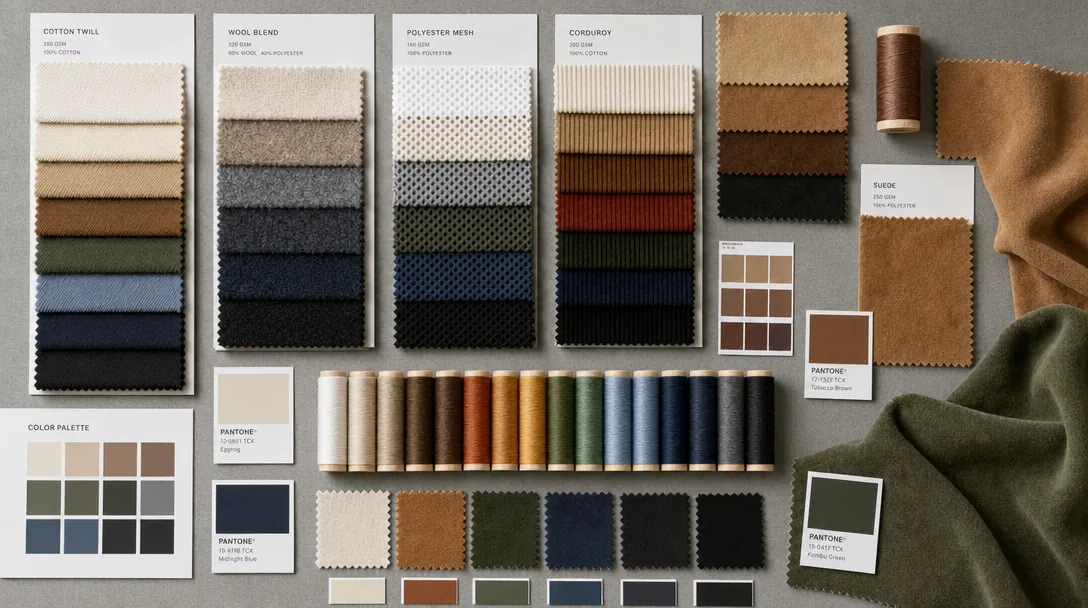
Corduroy Hat: Properties, Costs and How to Spec It Right (2026 Update)
Read article →
Custom Hat Trucker: The 2026 Sourcing & Manufacturing Playbook - Cost & MOQ Breakdown
Read article →
Cap Sweatband Material Selection for Custom Headwear Buyers
Read article →We hope this guide demystifies custom made trucker hat: the 2026 sourcing & manufacturing playbook - 2026 buyer's guide (2026 update) and helps you move forward with confidence. If you have questions specific to your project, our English-speaking sales engineers are one message away.