
Custom Logo Hats: When to Use It, Costs, and What to Ask Your Factory - Supplier Checklist (2026 Update) - Supplier Checklist
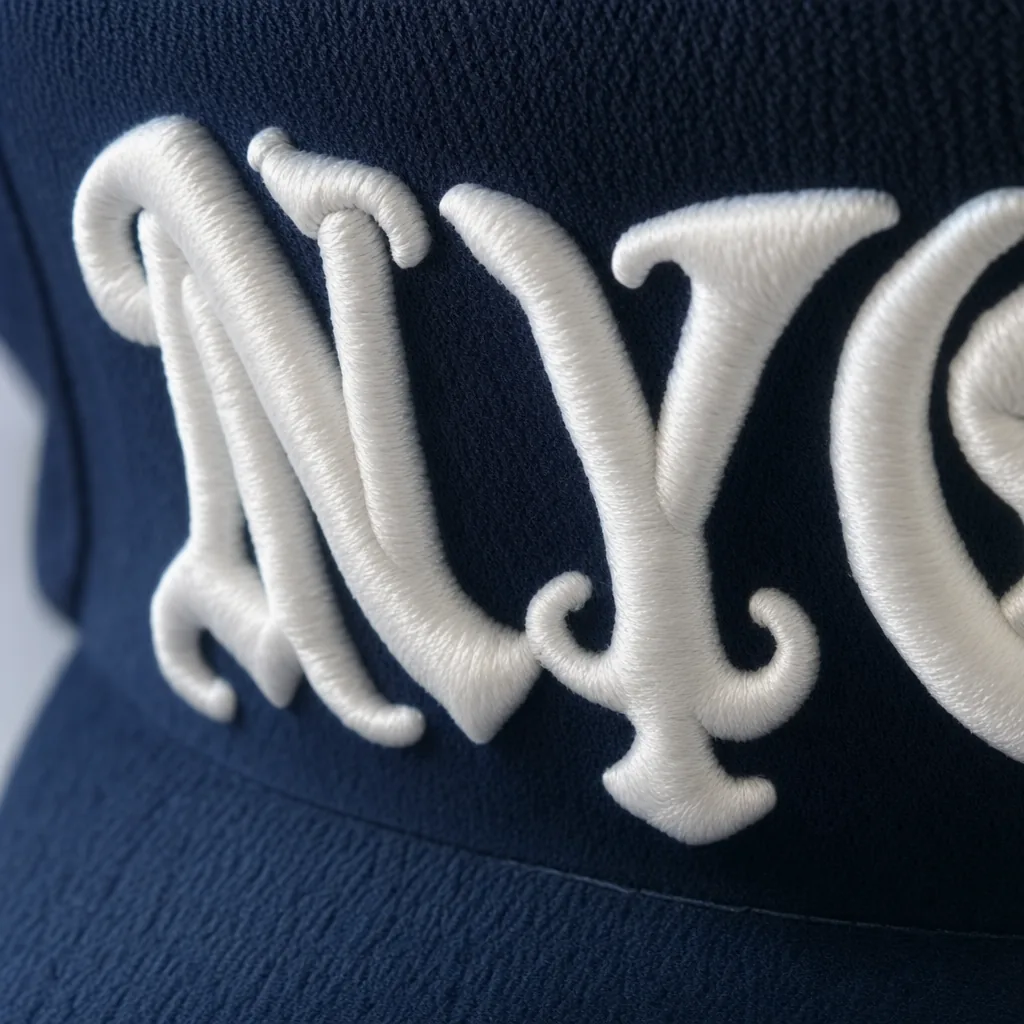
Every week, our sales team answers detailed questions about custom logo hats: when to use it, costs, and what to ask your factory - supplier checklist (2026 update) - supplier checklist. We wrote this guide so that wholesalers, streetwear brands, corporate buyers and promotional resellers can compare options with full information, and avoid the traps that show up only after production has started.
Custom Embroidered Patches
Use patches on custom logo hats when the artwork is too fine for clean direct embroidery, not because patches happen to be in fashion. My cutoff is practical: copy below 4 mm cap height, outlines under 0.6 mm, tight counters, or layered negative space will usually close up once stitch pull, push, and compensation are applied on a curved cap front. The patch ground decides whether the logo survives production. A 210-300 gsm cotton twill base is stable for satin borders and tatami fill; 1.5-2.0 mm wool-blend felt gives a cleaner vintage edge; woven damask resolves small type and thin linework better than thread embroidery; molded TPU, PVC-free rubber, or debossed PU leather is better when the brand needs crisp geometry without thread texture. If the logo includes gradients or micro text, stop trying to force embroidery and move to woven or molded construction early. Most failures come from bad specification, not bad art. Lock the finished patch size in millimeters, border style, substrate, backing, stitch coverage, and exact placement from crown centerline and visor seam; on front panels I would not allow placement tolerance looser than +/-1.5 mm. Color control also needs to match the process: embroidery thread is still a visual Pantone match using nearest Madeira or Gunold shades, while printed, molded, or coated patches should be signed off against a retained standard with Delta-E under 2.0 under D65 lighting. Buyers should also state whether they want merrow edge, laser-cut edge, or satin stitch border, because each one changes both appearance and reject risk. A merrow edge is durable but too bulky for many low-profile caps; laser-cut edges look sharper, but edge sealing has to be checked after flexing and carton packing.
Attachment and digitizing cause more trouble than the patch itself. A patch file still has to be built correctly for Tajima, Barudan, or ZSK heads, with underlay, density, and pull compensation tuned to the patch base, or you will see edge curl, exposed twill, tunneling, and puckering after sewing. Ask whether the patch is attached before crown assembly or after the cap is formed. Pre-sewing on flat panels gives cleaner topstitching and better placement repeatability on structured 6-panel hats; post-sewn application is faster for mixed styles, but it often leaves a visible ring inside the buckram and can distort the sweatband on heavier fronts. For QC, write border width tolerance, skew limit, loose-thread standard, and adhesion requirement into the PO before sampling. AQL 2.5 is common at final inspection, but most serious importers hold tighter internal limits on front-logo placement: typically +/-2 mm and no more than 3 degrees skew. Patch economics are straightforward if you separate the component from the cap. At 1,000 pieces in 2026, a 2.25 inch embroidered twill patch is usually $0.18-$0.45, woven damask $0.20-$0.50, molded TPU or rubber $0.35-$0.80, and debossed faux leather $0.30-$0.70 before freight, duty, or hat-body cost. Sewing the patch onto the cap adds about $0.10-$0.20; hook-and-loop adds more because you are sewing both loop tape and patch, and it creates noticeable inside bulk on unlined crowns. Patches make commercial sense when one hat body serves multiple logos, such as team programs, events, brewery SKUs, or dealer networks, because blank inventory can be branded late. Once the same logo runs consistently above roughly 3,000-5,000 pieces on one style, direct embroidery is usually cheaper and cleaner. Our standard practice is to approve patch construction from a physical strike-off rather than a photo, because stitch coverage, edge sealing, and hand feel are impossible to judge accurately on screen.
Custom Hat with Patch
Patch construction is usually the deciding factor, not the cap body. For custom logo hats, patches solve two real production problems: artwork that breaks down in direct embroidery and logos that need to stay visually identical across multiple silhouettes. If your design has serif text below roughly 4 mm cap height, line weights under 0.8 mm, or tight counters in letters like R, A, and e, a woven damask patch will read cleaner than embroidery even on a well-calibrated Tajima, Barudan, or ZSK line. Embroidered twill patches still work well for bold marks with satin borders, while molded PVC or TPU is better when you want a raised, washable badge with strong edge definition. In practical terms, patch width usually lands at 55-70 mm on dad caps and unstructured 6-panels, and 75-90 mm on truckers, snapbacks, and foam 5-panels; beyond that, the front panel curve starts distorting the badge. Attachment method is where many patch programs go wrong. I strongly prefer post-assembly stitch-down on structured crowns with buckram because it controls placement and avoids the edge lift, tunneling, and adhesive shadowing you see with heat-pressed patches on curved fronts. Buyers should spec the patch as a separate component: Pantone Solid Coated or Pantone TCX references, acceptable Delta-E tolerance—typically under 1.5 for logo-critical colors—base fabric, twill weight in gsm, merrow width or laser-cut edge, stitch density, backing, and whether the patch is sewn before or after cap assembly. Placement tolerance should be written as +/-2 mm from center front, not “visually centered.” At CrownsForge, we also ask for a physical placement approval because a PDF cannot show patch thickness, crown curvature, or whether a merrow border will sit flat on a buckram-supported panel.
Costs are fairly predictable if the spec is locked early. In Zhejiang, 2026 FOB Ningbo pricing for a standard cotton twill 6-panel cap at 300-500 pieces is typically $2.10-$3.60 with an embroidered patch, $1.95-$3.20 with a woven patch, and $2.80-$4.80 with PVC or TPU, with the spread driven by fabric quality, closure type, sweatband construction, and decoration complexity. A custom PVC mold usually adds a one-time $80-$180 tooling charge. MOQ is commonly 144-300 pieces per style/color for finished caps, while patch-only replenishment can start at 50-100 pieces per design if the same badge is being applied across several SKUs. That patch-sharing logic is exactly why many buyers choose patches for custom logo hats: one approved badge can run on truckers, dad hats, snapbacks, and even beanies without redigitizing each program. The biggest failures are inspection failures, not art failures. The defects I see repeatedly are off-center placement, puckering under the badge, skipped edge stitches, needle cuts around the sew line, and color mismatch because thread or patch ground was approved by eye instead of under D65 lighting. AQL 2.5 is acceptable for general shipment inspection, but for front-logo appearance I would tighten patch placement and visual presentation to AQL 1.5 because one crooked badge can downgrade the whole lot. Inline checks should measure from the crown centerline, verify visor curve consistency, and include random edge pull tests for sewn and heat-applied badges. If adhesive is involved, require a 24-hour carton-set check after cooling and compression; some patches look fine off the press and only start curling once they sit in the master carton. Also make sure the factory can support social compliance and quality documentation if your channel requires it—sedex-audit-cap-supplier-guide.html">BSCI 2.0 or Sedex SMETA 4-Pillar is now standard due diligence for many retail programs.
Custom Patch for Hat
A patch is the safest decoration route for custom logo hats when the front panel cannot carry dense embroidery without distortion. On washed 10-12 oz cotton twill, brushed canvas, 8-wale corduroy, and unstructured 5-panel campers, a 9,000-14,000 stitch front logo will often pucker the crown, print through the buckram, or tunnel over the center seam. Separating the artwork from the cap body fixes that. The practical choices are merrowed embroidered patch, laser-cut patch with satin border, woven patch, chenille applique, and molded PVC. Each behaves differently in production: embroidered patches give strong texture but lose definition under about 0.8 mm line width; woven patches, made on a jacquard loom rather than a Tajima or Barudan head, can hold 1.2-1.5 mm letters and cleaner negative space; PVC handles sweat, UV, and abrasion well, but the mold charge is usually $80-180 per design and adds about 5-7 days. Most patch failures are not sewing-line problems; they start with weak specifications. A usable tech pack should lock size in millimeters, base material, edge construction, backing, Pantone reference, placement, and tolerance. A serious callout reads like this: 55 x 30 mm woven patch, 100% polyester, laser-cut edge with satin border, Pantone 19-4052 TCX navy plus 186 C red, heat-seal backing plus edge sew, centered front, placement tolerance +/-2 mm, angle tolerance 1.5 degrees max. Heat press alone is risky on caps because crown curvature, center seam bulk, and fabric finishes reduce bond strength, especially on 500D nylon and enzyme-washed twill. Sewn attachment is slower, but it cuts claims. Our standard practice at CrownsForge is to approve the patch already mounted on the actual cap shell, because a loose sample can look perfect flat and still wrinkle or lift once it is pulled across the crown curve.
Patch programs cost more than buyers expect because they add a second factory process: patch manufacturing first, cap attachment second. For integrated cap orders, realistic MOQ is 144-300 pcs per colorway; standalone woven or embroidered patches usually start at 500 pcs because loom setup, digitizing, trimming, and final QC have to be amortized. For 2026 China pricing, a basic six-panel cotton twill cap with a sewn front woven or embroidered patch typically runs $2.10-3.80 FOB Ningbo at 300 pcs. Chenille plus embroidery, multilayer applique, or large molded PVC usually pushes the unit to $4.20-6.50. Lead time is normally 18-28 days after sample approval, with extra days if you need custom merrow thread shades, non-stock PVC colors, or revised artwork after the first sample. Inspection should focus on the defects that actually create rework and debit notes. At AQL 2.5, check placement offset, patch angle, border fray, skipped satin stitches, merrow unraveling, glue bleed, edge lifting after a 24-hour rest, and color deviation beyond Delta-E 2.0 from the approved standard. Also check cap shape on-head, not just on the table: stiff PVC badges can collapse a low-profile crown or create a visible ridge when applied across the front seam. Ask the factory how many attachment stitches are used per side, whether they run wash, rub, or sweat tests, and whether the patch vendor is covered by BSCI 2.0 or Sedex SMETA 4-Pillar if compliance matters. On custom logo hats, a patch is not just a visual decision; it changes labor minutes, reject rate, and even carton efficiency, so compare it against flat embroidery, 3D puff, and screen print before you release the PO.
Custom Patch Hat
A patch is usually the right call when custom logo hats carry detail that a direct front embroidery cannot hold on a curved crown. Once text drops under about 3 mm cap height, satin columns start to fill in, and on buckram-backed 6-panels or 5 mm foam truckers the extra needle penetrations can distort the panel fast. I have seen buyers force 10,000 to 15,000 stitches into a small front logo on a Tajima or Barudan run, then wonder why the crown tunnels or the seam pulls off center. A separate patch solves that by moving the detail work onto a flat substrate. Woven damask handles fine copy and thin outlines better than embroidery; printed microfiber works for gradients; molded PVC takes sweat and abrasion better than leather; chenille and felt make sense only when the graphic is intentionally bulky. The other advantage is repeatability: once the patch is approved, you can apply the same component across snapbacks, unstructured dad caps, bucket hats, and beanies without re-digitizing for every crown profile, which usually saves 3 to 7 days in sampling.
Do not sign off on “custom patch hats” without a full construction spec, because patch material, thickness, and attachment method determine whether the cap survives transit. A 65/35 twill patch with a merrow edge, 0.8 mm EVA fill, and lockstitch perimeter behaves very differently from a laser-cut woven label with TPU heat-seal backing. Ask for face material, backing, edge finish, finished thickness in mm, stitch count, Pantone reference, and placement tolerance. On lightweight taslon or nylon under 120 gsm, a thick patch can print through the shell or create puckering after heat pressing. Our standard practice is to hold placement at +/-2 mm and color to Delta-E under 1.5 when the artwork is licensed or retail-controlled; anything looser starts to show on shelf. Cost also needs to be read correctly: at 300 to 500 pieces, a structured cotton twill cap with a sewn patch is typically $2.10 to $3.60 FOB China, with woven or printed patches adding $0.20 to $0.45 and PVC or genuine leather adding $0.45 to $0.90 plus a $40 to $120 mold or die. Inspect at AQL 2.5, but check logo centering inline at 100%—a 3 mm drift is obvious, and edge lifting after carton compression is still the most common patch failure.
Custom Patch Hats
Patch hats are a different manufacturing route, not “embroidery plus one step,” and that changes both cost and risk on custom logo hats. The patch type should be chosen by artwork tolerance and cap construction first. Once stroke width drops below about 1.0 mm or you need legible text under 4.5-5.0 mm cap height, woven damask usually outperforms standard embroidery because satin columns start to close up, even on a well-digitized Tajima or Barudan file. Merrowed embroidered patches are durable for teamwear and promo orders, but the 2.5-3.5 mm merrow border adds visual weight and can look clumsy on cleaner retail silhouettes. In production, the common patch options are woven damask, flat embroidered with heat-cut edge, merrowed patch, molded PVC, debossed PU, genuine leather, and printed twill with merrow or laser-cut edge. Attachment matters just as much: sewn patches are more stable on brushed cotton twill dad caps and unstructured 6-panels, while heat-applied TPU or PVC is often safer on 150D-300D polyester performance caps where needle holes can show, leak, or distort the shell.
A patch-hat spec sheet needs hard numbers, not just logo art and cap color. Lock patch size in millimeters, placement tolerance, edge finish, backing, attachment method, Pantone TPX/TCX reference, and acceptable color variance; for branded programs, I would write Delta-E below 1.5 on hero colors and below 2.0 on secondaries. If the patch is embroidered, specify twill ground, stitch density, thread type, and whether rayon-look polyester from Madeira or Gunold is acceptable. If it is woven, confirm denier, weave count, and whether negative space will hold cleanly without filling. On the cap body, call out fabric weight and build—260-320 gsm cotton twill, 180-220 gsm washed canvas, or 150D polyester—plus crown height, visor curve, closure, and front-panel buckram, because patch alignment can shift after steaming, forming, and buttoning. Typical MOQ is 144-300 pcs per colorway for sewn woven or embroidered patches; PVC, leather, and metal badges usually start around 300-500 pcs because of mold charges and setup. In 2026, a mid-profile snapback with sewn patch is typically $2.30-$4.90 FOB China, while genuine leather, molded rubber, or mixed-SKU runs can push ex-factory cost past $5.50 before freight and duty.
The defect pattern on patch hats is predictable, so buyers should write tolerances instead of leaving it to factory judgment. The failures I see most often are crooked placement, inconsistent distance from center seam, tunneling under the patch, puckering on soft panels, glue bleed on heat-applied styles, weak corner tacks, and patch-to-cap color mismatch when the badge is subcontracted outside the main QC flow. Patch position should be held to ±2 mm, and for centered front applications I would also define seam-line symmetry and top-edge angle. For embroidered patches, inspect under 5000K white light for loose jump stitches, weak satin coverage, trim fray, and merrow join gaps. For thick PVC, multilayer felt, or leather, check crown distortion after pressing; unstructured dad caps without buckram are the first to warp. Final inspection should run to AQL 2.5 with corner pull testing, carton drop checks, and wear trials if the badge is heavy or rigid. Our standard practice at CrownsForge is to steer buyers back to direct embroidery on simple 500+ pc programs unless the artwork truly needs finer detail, material contrast, or badge interchangeability.
Hat Patch Custom
Patch choice is not cosmetic; it determines what artwork is actually manufacturable on custom logo hats, how the cap will fail in wear, and where your unit cost ends up. Woven damask is the safe default when copy drops below 3 mm or rule lines are under 0.4 mm, because embroidery fill will close up and a merrowed edge will round off sharp corners. Printed twill is the only sensible option for gradients, halftones, and photo-style marks, but it needs test standards written into the PO: dry crocking, wet crocking, and lightfastness. For golf, resort, and outdoor programs, I would not sign off below Grade 4 in rubbing colorfastness. Embroidered patches still deliver the best tactile lift, but only if stitch density is controlled; overpacked fills cup the badge, while low-density fills let the twill ground grin through. Most factories run the patch itself on Tajima, Barudan, or ZSK heads, then finish it by laser cut, die cut, or merrow before attachment. The RFQ should lock the patch spec before anyone quotes: finished size in millimeters, border type, backing, attachment method, and placement tolerance. Front-center placement on a structured 6-panel is usually held to ±2 mm; once you drift past 3 mm, the tilt is obvious, especially on 5-panel camp caps and foam truckers with a clean front wall. Base material changes sewability and hand feel more than many buyers realize: 210-240 gsm poly-cotton twill behaves very differently from 100% polyester woven damask, 1.2-1.5 mm felt, 0.8-1.2 mm molded PVC, or PU leatherette. If the patch has to match apparel trim or licensed branding, specify Pantone TCX or solid coated references and a Delta-E target under D65 lighting; serious programs usually hold key colors to Delta-E 2.0-3.0. Stitch-down remains the most reliable attachment for baseball caps and truckers because it tolerates crown flex, perspiration, and repeated wear better than glue-only heat seal.
MOQ and price move more on patch process than on the hat body, which is why patch-heavy custom logo hats get misquoted so often. For woven or embroidered badges, 144-300 pcs per colorway is realistic in China if the artwork is clean and the same cap body is reused; below that, setup and sampling eat the margin. A basic stitch-down woven or embroidered patch usually adds about $0.35-$0.90 per cap FOB China. Molded PVC, genuine leather, layered appliqué, or mixed-material badges typically add $0.90-$2.20, and that can climb again if there is a custom mold charge, hand placement, or multi-pass sewing. On a standard 6-panel brushed cotton twill cap costing roughly $2.20-$3.80 FOB, the patch can represent 15-40% of total unit cost, so the strike-off is not optional. One approved sample should lock border width, stitch density, backing stiffness, edge finish, and color before bulk starts. Final inspection failure points are predictable and should be written into the QC checklist: tilt over 3 mm off centerline, bubbling from weak heat bonding, merrow fray, skipped stitches, uneven satin border width, visible needle damage on PVC or PU, and crocking from dark patch dyes onto light front panels. If the patch is sewn after the crown is formed, needle path and machine speed matter; on thicker PVC or silicone, bad settings will leave puckering or stress cracks around the stitch line. CrownsForge normally checks patch attachment under AQL 2.5, with special attention to dark-on-light combinations and pull/rub testing on suspect lots, because those are the defects that trigger retail returns fastest. If a factory cannot define its placement tolerance, color tolerance, and attachment test method in writing, it is not really controlling patch quality.
Working with CrownsForge for custom logo hats programs
The fastest way to de-risk custom logo hats is to lock the decoration method before sampling. That one decision changes lead time, MOQ, defect risk, and even which cap body is worth quoting. On stocked 260-280 gsm cotton twill, chino twill, or 100% polyester brushed twill, front embroidery on Tajima or Barudan machines is still the cleanest first run: typically 3-5 working days for digitizing and a stitch-out, then 7-10 working days for a wearable prototype once vector artwork, Pantone references, and construction details are approved. Move to a sewn patch, molded PVC badge, TPU emblem, or heat-transfer label and you usually add 2-4 working days for patch development, attachment trials, and placement jig setup. That sounds minor on paper, but it matters when a launch is built around one approval cycle.
MOQ also needs to be tied to process, not just body style. For standard 6-panel or 5-panel stock bodies, 144-300 pieces per colorway is workable if the logo is straightforward and trims stay standard. Once you add proprietary fabric, enzyme or garment wash, contrast underbill, rope trim, printed seam tape, or split one PO across multiple silhouettes, the efficient line-start quantity is more like 500-1,000 pieces. Below that, cutting loss, embroidery setup, hooping time, patch attachment changeovers, and carton assortment push the EXW cost out of proportion. A basic flat-embroidered cap at 1,000 pieces usually lands around $2.20-$3.40 EXW; patch programs are more often $2.80-$4.50, before woven labels, retail polybags, hangtags, FOB handling, or DDP freight.
Decoration choice should follow how the artwork behaves on a curved crown, not whichever quote looks cheapest. A structured 6-panel cap carrying an 8,000-10,000 stitch front logo is routine if the design uses solid fills, satin columns, and controlled color changes. If the art includes negative space under 1.2 mm, hairline borders, fine serif text, merrow-style edges, or licensed shapes that cannot distort, a patch construction is usually safer. A 0.8 mm twill patch with merrow border behaves very differently from a laser-cut woven patch with heat-seal backing on brushed cotton versus 210D nylon, and that difference shows up in edge fray, needle show, wash distortion, and attachment strength. At CrownsForge, the control plan should be non-negotiable: tech pack review, vector check, digitizing or mold approval, pre-production sample, inline inspection, and final AQL 2.5 audit. Buyers should also ask for BSCI 2.0 or Sedex SMETA 4-Pillar reports, REACH-related declarations for inks and adhesives, and written color tolerances using Pantone TCX or coated references with a Delta-E target.
Frequently Asked Questions
How long does production take?
Sampling takes 7 to 12 days. Bulk production runs 20 to 30 days depending on quantity, fabric availability and decoration complexity. Inspection and packing adds another 3 to 5 days before shipment.
Do you support sustainability certifications?
Yes. We work with GOTS organic cotton, GRS-certified recycled polyester, OEKO-TEX Standard 100 fabrics, and are BSCI and Sedex audited. Certification documentation can be provided per order.
What file format should I send for my logo?
Vector files (AI, EPS, PDF) are ideal. High-resolution PNG or JPG at 300 dpi on transparent background works as a fallback. Provide Pantone color references for accurate reproduction.
What is the minimum order quantity (MOQ) for custom hats?
Our standard MOQ is 100 pieces per design and color, with sampling available from 1 piece. For complex multi-color logos or premium fabric upgrades, the MOQ can be lowered with a small per-piece surcharge.
Can I order a sample before bulk production?
Yes. We strongly recommend approving a pre-production sample before mass production. Samples are charged at 35 to 60 USD each plus express shipping, fully refundable against confirmed bulk orders over 500 pieces.
How does ordering custom embroidered logo hat work?
When evaluating custom embroidered logo hat, the key considerations are construction quality, decoration capability, MOQ flexibility and lead time. Cover everything buyers ask about custom embroidered patches: how it's manufactured, what specs to request from a factory, typical MOQ and pricing, common quality issues to inspect for, and how this ties back to the broader custom logo hats sourcing decision. Cover everything buyers ask about custom hat with patch: how it's manufactured, what specs to request from a…
How does ordering custom hat leather patch work?
When evaluating custom hat leather patch, the key considerations are construction quality, decoration capability, MOQ flexibility and lead time. Cover everything buyers ask about custom hat with patch: how it's manufactured, what specs to request from a factory, typical MOQ and pricing, common quality issues to inspect for, and how this ties back to the broader custom logo hats sourcing decision. Cover everything buyers ask about custom patch for hat: how it's manufactured, what specs to request from a factory,…
How does ordering custom embroidered baseball hats work?
When evaluating custom embroidered baseball hats, the key considerations are construction quality, decoration capability, MOQ flexibility and lead time. Cover everything buyers ask about custom embroidered patches: how it's manufactured, what specs to request from a factory, typical MOQ and pricing, common quality issues to inspect for, and how this ties back to the broader custom logo hats sourcing decision. Cover everything buyers ask about custom hat with patch: how it's manufactured, what specs to request from a…
What's the MOQ for custom embroidered patches no minimum?
When evaluating custom embroidered patches no minimum, the key considerations are construction quality, decoration capability, MOQ flexibility and lead time. Cover everything buyers ask about custom embroidered patches: how it's manufactured, what specs to request from a factory, typical MOQ and pricing, common quality issues to inspect for, and how this ties back to the broader custom logo hats sourcing decision. Cover everything buyers ask about custom hat with patch: how it's manufactured, what specs to request from a…
Looking for a reliable hat manufacturer in China?
CrownsForge has produced custom hats for 800+ brands across 40 countries. From 100-piece launches to 100,000-piece retail programs, we deliver on time and on spec.
Get in touchRelated guides
Custom Leather Patch Hat Low Minimum: A 2026 B2B Sourcing Guide
Read article →
Mens Beanies: Properties, Costs and How to Spec It Right
Read article →
Bulk Trucker Hats Export Shipping Checklist for Custom Hat Buyers - Cost & MOQ Breakdown - Supplier Checklist
Read article →We hope this guide demystifies custom logo hats: when to use it, costs, and what to ask your factory - supplier checklist (2026 update) - supplier checklist and helps you move forward with confidence. If you have questions specific to your project, our English-speaking sales engineers are one message away.