
Custom Logo Hats: When to Use It, Costs, and What to Ask Your Factory - Supplier Checklist - 2026 Buyer's Guide
For brand owners, wholesalers and procurement teams entering the custom headwear category, custom logo hats: when to use it, costs, and what to ask your factory - supplier checklist - 2026 buyer's guide is one of the highest-leverage decisions you will make. Get it right and your unit economics, retail story and reorder cycle all improve. Get it wrong and you carry the cost for years.
Custom Embroidered Patches
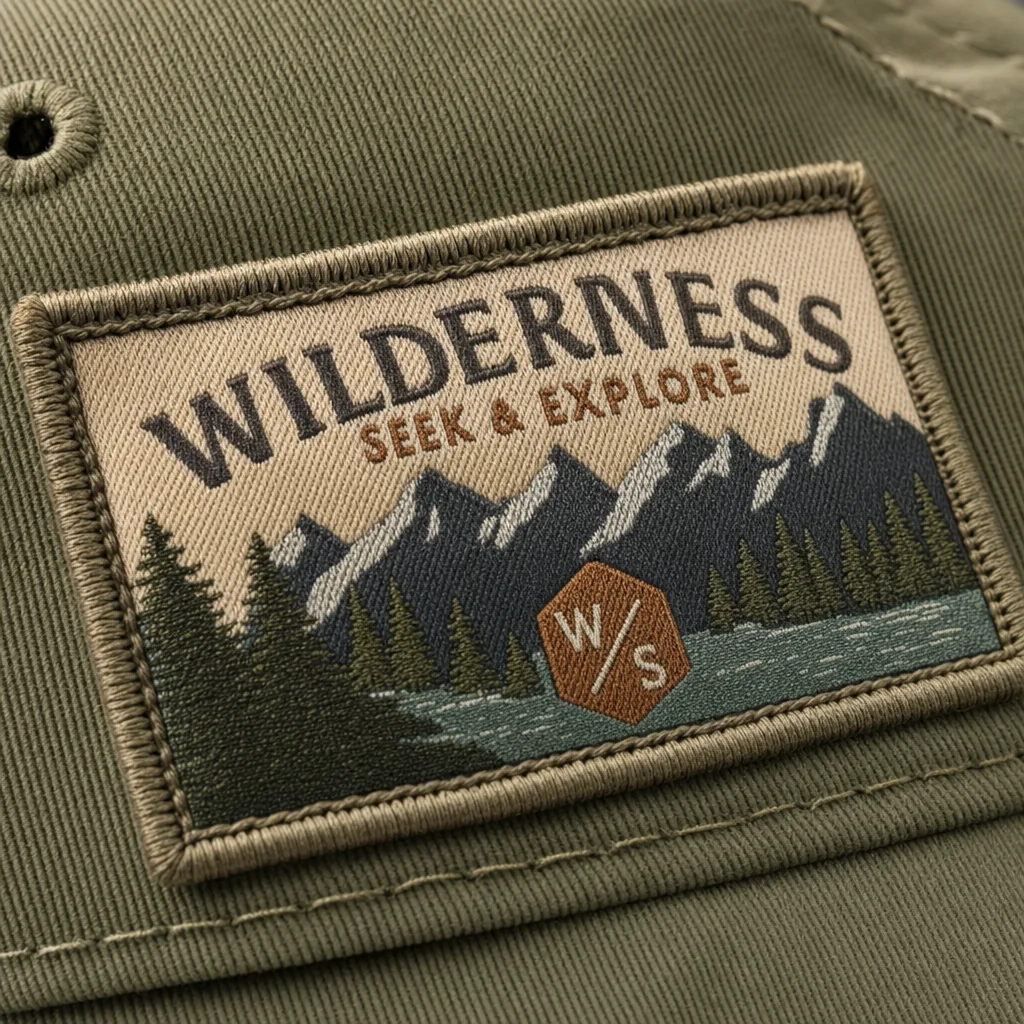
Custom embroidered patches earn their keep when the logo has a bold outline, distressed vintage styling, or needs to stay identical across multiple custom logo hats without re-digitizing for every crown height and panel shape. That consistency is the real operational advantage: one approved branding asset, then different cap bodies around it. But buyers should spec the patch like a component, not a vague decoration. On the PO, lock size in millimeters, base fabric, edge finish, backing, target stitch coverage, and attachment method. The common bases are 220-280 gsm cotton twill, wool-blend felt, satin, and 300D polyester canvas. Edge options are merrow for traditional badge aesthetics, hot knife for clean synthetic edges, and laser cut when the shape has tight corners or internal cutouts. If color consistency matters across repeat orders, call out Pantone C or Pantone TCX references plus an acceptable Delta-E tolerance; otherwise thread substitutions start drifting lot to lot. The technical limit is not the patch itself but what happens after shaping and sewing onto a curved crown. Text below 4 mm cap height and lines under about 1.2 mm usually fill in unless the digitizer changes pull compensation, underlay, and density for the actual patch base. On Tajima, Barudan, or ZSK heads, 70-90% stitch coverage gives a rich handfeel, but it also makes the patch stiffer and raises cost, especially once the size goes past roughly 70 x 50 mm. On structured 6-panel caps, patches that bridge the center seam often tent, torque, or lift after steaming and forming. Low-profile baseball caps give even less usable front area than the flat artwork suggests, so an approval on a loose patch means very little if it has not been tested on the actual crown profile.
Attachment method is where patch programs either hold up or come back as claims. Sewing is still the safest choice for hats exposed to sweat, abrasion, and repeated wear; heat press alone is faster, but bond strength drops sharply on brushed cotton twill, corduroy, and foam trucker fronts, especially near seam bulk. A factory quote should separate patch cost from application labor and expected wastage. In China, at 1,000 pieces, a basic twill patch with merrow edge usually runs about $0.18-$0.45 each, while a laser-cut patch with tight Pantone matching, higher stitch count, and cleaner detail is more often $0.45-$0.90. Sewing onto the cap typically adds $0.12-$0.35 per unit, with angled placement, seam crossing, or tight front-panel access pushing labor up. Below 300 finished hats, setup and handling make patches noticeably less efficient than direct embroidery. Inspection has to evaluate the mounted patch, not just the loose component. The repeat defects are crooked placement off the center seam, puckering around the stitch line, inconsistent merrow width, adhesive bleed, jump threads trapped in small lettering, and edge lift after crown shaping. Write tolerances into the spec: placement within plus or minus 2 mm, no visible laser char on exposed edges, border width variance within 1 mm, and final audit at AQL 2.5. For retail or licensed programs, ask for a pre-production sample on the actual cap body under D65 lighting, plus documented controls such as sedex-audit-cap-supplier-guide.html">BSCI 2.0 or Sedex SMETA 4-Pillar, lot traceability, and a needle policy. Our standard practice is to reject patch approvals that look clean on the table but distort once applied, because a patch can pass as a component and still fail the finished custom logo hats program.
Custom Hat with Patch
Patch hats only work when the logo suits the construction. On custom logo hats, decide from artwork geometry first, not trend photos. A merrowed embroidered patch is still the safest mass-production choice because the 0.8 to 1.0 mm overlock border hides trimming variance and gives you a forgiving sew line on trucker fronts, brushed cotton 6-panels, and acrylic cuff beanies. If your copy drops below roughly 3 mm cap height or your strokes are under 0.5 mm, direct embroidery on a Tajima or Barudan head will start compensating, closing counters and fattening lines; a damask woven patch will usually hold that detail better than embroidery or satin weave. PVC, TPU, and molded faux-leather patches make more sense for workwear, fishing, and motorsport programs where sweat salt, abrasion, and UV exposure kill rayon thread over time, but they are less forgiving on a curved crown and need tighter heat-press windows to avoid edge memory and lift.
Most failures happen at sampling because buyers approve the loose patch and never approve the applied patch on the actual cap body. That is a mistake, especially when patch making and cap sewing sit in separate workshops. The spec sheet should call out finished patch size in millimeters, corner radius, edge finish, backing type, Pantone or Pantone TCX reference, placement from center line and visor seam, and whether application is pre-assembly or post-assembly. If you leave placement vague, many factories will accept drift of plus or minus 5 mm; a disciplined line should hold plus or minus 2 to 3 mm on center-front placement. Pre-assembly usually gives the cleanest sew-out on buckram-backed fronts, but on cotton twill below about 220 gsm, high thread tension can telegraph through the face and leave strike-through. Our standard practice is to check patch programs at AQL 2.5 with a 24-hour rest after sewing or heat press, because bubbling, corner lift, skew, and adhesive failure often show up after the crown relaxes.
Patch application adds a separate process, another setup, and another QC risk, so it is rarely the cheapest route. On a standard FOB China basis, 300 pieces of brushed cotton custom logo hats with a sewn embroidered patch usually land around $2.80 to $4.20 each. Woven patch versions are typically $3.10 to $4.80 because loom setup, cleaner trimming, and tighter placement control add labor. PVC, TPU, or molded faux-leather patch programs usually run $4.50 to $6.50 FOB, especially when you add a mold charge of $40 to $120 and require both heat-film bonding and perimeter stitching. Below 144 pieces, expect a small-run surcharge of about $0.30 to $0.80 per hat plus setup for digitizing, loom programming, or mold development. Inspection should target the predictable defects: merrow fray, laser-burned edges, needle damage around patch corners, color shift beyond Delta-E 1.5 from the approved standard, and text that becomes unreadable once wrapped onto a curved crown. Compared with direct embroidery, patch hats usually add $0.30 to $1.20 per piece, but they solve fine-detail limits and generally give premium retail programs a stronger shelf presence.
Custom Patch for Hat
Use a patch when the logo will break down on the crown, not because it sounds more premium. On structured front panels with buckram, direct embroidery starts losing fidelity fast once outlines fall under about 1.2 mm, serif text drops below 4.5-5 pt equivalent, or the art relies on distressing, gradients, and negative space. The practical patch constructions to quote are embroidered with merrow border, laser-cut satin stitch edge, woven patch, printed twill, and molded PVC or rubber. Embroidered patches still give the best raised handfeel, but satin columns below roughly 0.35-0.40 mm are where thread starts snapping, filling gets muddy, and registration goes soft. Woven patches hold finer information—typically 0.3-0.5 mm line detail—because the image is built with denier yarn rather than stacked thread columns. For custom logo hats, the patch size sweet spot is usually 50 x 70 mm to 60 x 90 mm on 5-panel, foam trucker, and structured 6-panel caps; larger than that, crown curvature and the center seam begin to distort the artwork.
A usable RFQ has to define more than width and height. Lock in construction, border type, backing, attachment method, stitch coverage, Pantone reference, and placement tolerance before sampling starts. If the patch is embroidered, ask whether digitizing is optimized for Tajima, Barudan, or ZSK heads and whether the supplier can hold a true 0.35-0.40 mm minimum satin width without thread breaks; bad digitizing is still the fastest way to make custom logo hats look cheap. For woven, printed, or PVC patches, specify color tolerance as Delta-E under 2.0 if brand color matters, and state whether you are matching Pantone Coated or Pantone TCX, because polyester thread, twill, and PVC will not read the same under D65 light. China MOQ is commonly 100-144 caps per colorway, but patch-only production often starts at 300-500 pieces because it is a separate setup. At 500 pieces, an embroidered patch usually adds about $0.28-$0.65 per cap, while molded PVC is more often $0.55-$1.20 plus a one-time mold charge around $80-$180.
Most patch failures happen after application, not during sampling. The defects that keep showing up in final inspection are merrow fray, laser-cut scorching, uneven satin density, color drift from the approved strike-off, adhesive bleed, and crooked placement relative to the center front seam. On structured caps, placement should be held to +/-2 mm left-right and +/-3 mm vertically; miss that and the hat looks wrong immediately at retail. Sewing the patch onto the panel before cap assembly usually gives better shape retention and less edge lift than heat-applying onto a finished hat. If heat application is required, ask for the adhesive film spec and press window—typically 145-155°C for 12-18 seconds depending on shell fabric, backing, and foam content—and require a 24-48 hour aging check before packing. Our standard practice is to treat the patch as a separate approval point and inspect to AQL 2.5, with extra rub, wash, and edge-lift testing because many failures only appear after cooling; patches usually add 3-7 production days, so that checkpoint matters.
Custom Patch Hat
Patch hats fail at the interface between two processes: cap making and badge making. That is why they carry more execution risk than standard custom logo hats when the supplier is strong in sewing but weak in patch production, or the reverse. The practical patch types are merrowed embroidered patches, laser-cut satin-stitch patches, woven labels using roughly 50D-75D yarn, molded PVC, vegetable-tanned leather, PU, suede, and printed twill badges. For most commercial programs, woven and embroidered patches are still the safest because the quality envelope is predictable. A woven patch can usually hold small copy at about 2.0-2.5 mm letter height if contrast is clean; embroidered patches are better for bold marks that need loft, border definition, and tactile value. Both often outperform direct embroidery on washed chino, brushed cotton twill, corduroy, or pigment-dyed canvas, where surface nap, panel torque, and post-wash shading can blur details and make thread colors read off-spec.
The build sequence should be written into the tech pack, not left to the line supervisor. First approve the weave layout or embroidery digitizing, then lock Pantone references—typically Pantone TCX for shell fabric and a coated/uncoated bridge match for thread or woven yarn—before the patch sample is made. After that, crown panels are cut, a placement jig is set, and the patch is attached before sweatband closing whenever possible. On a curved 6-panel front, patch sewing belongs on a post-bed or cylinder-bed machine; when operators force a finished cap onto a flat-bed, you see skew, seam puckering, and front-panel distortion. Tajima, Barudan, and ZSK heads can all produce stable patch embroidery, but machine brand is not the deciding variable. The real control point is placement repeatability within ±2 mm from center seam and visor stitch line, with crown fabric and patch color approved together so the finished hat does not drift beyond about Delta-E 1.5 in visual match.
Most buyer specs are too loose, and patch caps punish vague instructions fast. Lock the patch size in millimeters, border width, edge finish, backing type, stitch density, attachment method, and exact placement tolerance at ±2 mm maximum. A usable spec would read: 65 x 40 mm woven patch on a 280 gsm cotton twill 6-panel cap, heat-cut edge, perimeter lockstitch on four sides, centered on front seam, no visible adhesive bleed, SPI matched to shell weight and buckram stiffness. If the patch is leather, brushed canvas, or suede, also ask whether the factory uses a placement mold on structured fronts and whether edge lift has been checked after carton compression. The predictable defects are off-center logos, merrow exposure, loose jump threads, edge lifting, and crown deformation from sewing through heavy buckram without support. AQL 2.5 is acceptable for final release, but patch placement should be held to a tighter internal checkpoint because a 3 mm crooked badge gets rejected even in an otherwise passing lot. Typical MOQ is 144-300 pieces per colorway, and current FOB China pricing is about $2.20-$4.80 for a basic embroidered patch cap and $3.80-$7.50 for leather, PVC, or more complex patch constructions.
Custom Patch Hats
Patch selection is where custom logo hats either stay commercially viable or become a QC headache. On curved fronts, the safest options are embroidered patches on 210-250 gsm polyester twill and high-density woven patches in 50D-75D yarn, because they conform to crown curvature and sew down cleanly on both 5-panel foam truckers and standard 6-panel buckram caps. Printed twill is the right call only when the artwork has gradients, halftones, or text under about 2 mm stroke width; a Tajima or Barudan embroidery head will not hold that detail without heavy simplification. PVC, genuine leather, PU leather, and felt all have legitimate use cases, but they increase risk on structured fronts: edge lift over the buckram break line, inconsistent feeding during attachment, and visible distortion if the patch spans the center seam. Attachment method is not a minor detail. I would reject heat-only bonding for anything except low-cost promotional runs, because glue film can release after sweat, UV, and repeated flexing at the front panel. Sewn attachment with a lockstitch edge, merrow border, or satin edge is materially more durable, especially on trucker fronts or any style where the patch crosses a seam. A usable tech pack should define patch size in millimeters, base cloth, border construction, backing, stitch or weave direction, and placement from visor seam and side seams. If color accuracy matters, provide Pantone TCX or coated references and set realistic tolerances: woven or printed patches can usually target Delta-E below 2.0, while embroidery thread is still best approved by physical lab dip because sheen shifts under D65 and store lighting.
Most bad quotes come from vague patch specifications, not from the hat body. If you ask for a “front patch hat,” the factory has to guess patch dimensions, edge finish, backing thickness, and whether the patch is made in-house or outsourced, which means the FOB price is padded. For embroidered patches, specify twill composition, backing weight, and stitch coverage; for woven patches, confirm denier, edge treatment, and whether the cut is laser, die, merrow, or overlock. Then lock the cap construction: crown height, buckram stiffness, visor curve, closure type, shell fabric weight, and whether the patch sits on a seam break. A 90 x 50 mm patch across the center seam needs different underlay, stitch path, and edge control than the same patch on an unstructured washed chino cap. In China, 2026 pricing is predictable once those variables are fixed. At 300-1,000 pieces, a brushed cotton twill cap with a sewn embroidered patch usually lands around FOB $2.20-$4.80 per unit; woven patches often sit in the same band, while PVC or leather patch hats commonly run $3.80-$6.50 because of mold charges, laser cutting, skiving, and slower sewing. Development is usually quoted separately: embroidery digitizing $20-$60, woven setup $40-$100, PVC mold $80-$200. MOQ is typically 144-300 hats per colorway, but outsourced patch vendors may require 500 pieces per design before pricing gets efficient. Our standard practice is to inspect patch programs at AQL 2.5, while tightening front-logo cosmetics to placement tolerance of +/-2 mm, no bubbling, no adhesive bleed, and no satin edge bite into small text or trademark details.
Hat Patch Custom
Decide the patch method before the hat body is locked, because the patch changes both the construction and the unit cost of custom logo hats. The usable options are not interchangeable. Merrowed embroidered patches need a visible border, usually 2.5 to 3.5 mm, and they do not hold tiny copy well once the file is digitized for Tajima, Barudan, or ZSK heads; as a rule, text under 4 mm cap height starts to close up. Woven patches keep small type and fine linework cleaner because the detail comes from yarn interlacing rather than satin columns. Molded PVC is strongest on bold marks with minimum line weight around 0.6 to 0.8 mm and no fragile interior islands. If the artwork has gradients, halftones, distressed texture, or more than 8 to 10 thread colors, converting to a woven, sublimated, or printed patch is usually cleaner than forcing direct embroidery to fail on the machine. Attachment method matters as much as patch material. On brushed cotton twill, chino twill, corduroy, and acrylic-wool blends, stitch-down attachment outlasts adhesive-only bonding, especially after carton compression and repeated crown flex. On nylon taslon, microfleece, and lightweight performance polyester, heat can distort the shell or telegraph the patch edge; we start seeing wrinkling around 145 to 155°C depending on the hot-melt film, dwell time, and backing thickness. The factory brief should specify patch size in mm, border type, backing, stitch method, placement tolerance, Pantone TCX reference, and acceptable Delta-E if color match matters across multiple materials. Ask for the strike-off mounted on the actual crown panel, not as a loose patch, because buckram show-through, edge puckering, and front-panel curvature only reveal themselves after attachment.
Most patch failures are obvious at inspection, not at quoting. The repeat offenders on patch-based custom logo hats are crooked placement, tunneling around the stitch line, exposed jump stitches, merrow fray, laser-browned edges on woven patches, adhesive bleed, and corners lifting after 40 to 60 pieces are compressed in a master carton. Leather and PU patches need extra scrutiny: inconsistent deboss depth makes the logo look weak, while over-pressing crushes the grain and leaves a cheap, flattened surface. For center-front placement, a workable standard is AQL 2.5 with a hard placement template and ±2 mm tolerance; anything looser is where buyers start arguing over visual alignment. Cost only becomes predictable when the spec is tight. A 70 x 50 mm embroidered patch usually lands around $0.28 to $0.65 depending on stitch coverage, border style, and order quantity; sewing it onto the cap adds roughly $0.10 to $0.22. Woven patches of the same size often run $0.20 to $0.48, molded PVC about $0.45 to $0.90, and genuine leather commonly $0.55 to $1.20 depending on thickness, origin, and deboss tooling. Patch programs make economic sense when one identity is shared across multiple silhouettes, fabrics, or seasonal colorways, because you can standardize the emblem while changing the hat body. If the logo is bold, low-detail, and the volume is 1,000 pieces or more per style, direct embroidery is usually cheaper and more abuse-resistant than adding a separate patch process.
Working with CrownsForge for custom logo hats programs
The real bottleneck in custom logo hats is first-sample accuracy, not whether the FOB is $0.20 lower. If the factory cannot translate vector art into a clean sew-out and then into a balanced cap body, you lose 3 to 5 weeks to preventable revisions. A competent timeline is straightforward: 24 hours for a usable digital mockup, 5 to 7 working days for a direct-embroidery proto, and 7 to 10 days for patch, suede appliqué, TPU badge, or silicone heat-transfer builds, assuming the buyer provides AI or editable PDF files, Pantone Solid Coated or Pantone TCX references, crown height, visor shape, closure, and target fabric at the start. Anything slower usually means the supplier is outsourcing digitizing or making decisions after sampling starts. The technical workflow matters more than most buyers realize. Good factories digitize in Wilcom or Tajima DG16, run physical sew-outs on Tajima, Barudan, or ZSK heads before cap assembly, and review stitch density, underlay, pull compensation, and center-out registration before cutting bulk panels. For patch programs, you also need to test the patch on the actual crown construction, not on a flat swatch. A woven patch that looks fine on buckram can tunnel or ripple on a washed, unstructured 6-panel cap, especially if the adhesive film is too stiff or the merrow edge is oversized. Our standard practice is to approve edge finish, patch thickness, heat tolerance, and placement on the real shell fabric before PP sample sign-off, because that is where custom logo hats usually fail in production, not in the Illustrator file.
MOQ and pricing only make sense when tied to decoration method and cap construction. A basic 6-panel baseball cap in 260 gsm brushed cotton twill with flat embroidery is commercially workable from 144 pieces per colorway, and typical FOB sits around $2.10 to $3.40 depending on closure and stitch count. Move into woven patches, molded PVC, chenille, 3D embroidery plus side hit, custom inner tape, or metal trims, and the practical floor shifts to 300 to 500 pieces because trim MOQs, mold charges, and extra handling time erase efficiency below that level. Sample charges are usually $35 to $80 for a standard embroidered cap and $80 to $150 for engineered patch styles; mold fees for TPU or PVC can add another $60 to $120 unless amortized into bulk. Buyers should lock three variables before bulk cutting: shell fabric, closure build, and logo application. Changing from 260 gsm cotton twill to a 340 gsm wool blend changes crown memory and needle penetration; switching from direct embroidery to a woven patch affects edge definition, thread coverage, and logo readability below 5 mm letter height. The right control points are an approved BOM, approved sew-out, PP sample, packing spec, and color standard with Delta-E under 2.0 against the submitted Pantone reference. CrownsForge typically inspects bulk to AQL 2.5, checks carton drop resistance and needle control records, and confirms current BSCI 2.0 or Sedex SMETA 4-Pillar status plus REACH SVHC compliance when the program includes EU-bound custom logo hats.
Frequently Asked Questions
Do you support sustainability certifications?
Yes. We work with GOTS organic cotton, GRS-certified recycled polyester, OEKO-TEX Standard 100 fabrics, and are BSCI and Sedex audited. Certification documentation can be provided per order.
Can I order a sample before bulk production?
Yes. We strongly recommend approving a pre-production sample before mass production. Samples are charged at 35 to 60 USD each plus express shipping, fully refundable against confirmed bulk orders over 500 pieces.
What logo decoration techniques do you offer?
3D puff embroidery, flat embroidery, woven patch, leather patch, PVC patch, screen printing, sublimation, applique and laser etching, all in-house with no subcontracting.
What file format should I send for my logo?
Vector files (AI, EPS, PDF) are ideal. High-resolution PNG or JPG at 300 dpi on transparent background works as a fallback. Provide Pantone color references for accurate reproduction.
What is the minimum order quantity (MOQ) for custom hats?
Our standard MOQ is 100 pieces per design and color, with sampling available from 1 piece. For complex multi-color logos or premium fabric upgrades, the MOQ can be lowered with a small per-piece surcharge.
How does ordering custom embroidered logo hat work?
When evaluating custom embroidered logo hat, the key considerations are construction quality, decoration capability, MOQ flexibility and lead time. Cover everything buyers ask about custom embroidered patches: how it's manufactured, what specs to request from a factory, typical MOQ and pricing, common quality issues to inspect for, and how this ties back to the broader custom logo hats sourcing decision. Cover everything buyers ask about custom hat with patch: how it's manufactured, what specs to request from a…
How does ordering custom hat leather patch work?
When evaluating custom hat leather patch, the key considerations are construction quality, decoration capability, MOQ flexibility and lead time. Cover everything buyers ask about custom hat with patch: how it's manufactured, what specs to request from a factory, typical MOQ and pricing, common quality issues to inspect for, and how this ties back to the broader custom logo hats sourcing decision. Cover everything buyers ask about custom patch for hat: how it's manufactured, what specs to request from a factory,…
How does ordering custom embroidered baseball hats work?
When evaluating custom embroidered baseball hats, the key considerations are construction quality, decoration capability, MOQ flexibility and lead time. Cover everything buyers ask about custom embroidered patches: how it's manufactured, what specs to request from a factory, typical MOQ and pricing, common quality issues to inspect for, and how this ties back to the broader custom logo hats sourcing decision. Cover everything buyers ask about custom hat with patch: how it's manufactured, what specs to request from a…
What's the MOQ for custom embroidered patches no minimum?
When evaluating custom embroidered patches no minimum, the key considerations are construction quality, decoration capability, MOQ flexibility and lead time. Cover everything buyers ask about custom embroidered patches: how it's manufactured, what specs to request from a factory, typical MOQ and pricing, common quality issues to inspect for, and how this ties back to the broader custom logo hats sourcing decision. Cover everything buyers ask about custom hat with patch: how it's manufactured, what specs to request from a…
Looking for a reliable hat manufacturer in China?
CrownsForge has produced custom hats for 800+ brands across 40 countries. From 100-piece launches to 100,000-piece retail programs, we deliver on time and on spec.
Get in touchRelated guides
Baseball Caps Canada: A Vertical-Specific Sourcing Guide
Read article →
Refreshing a Hat Collection: A Repeat-Order Playbook for Established Brands (2026 Update)
Read article →Funny Bucket Hats: A Vertical-Specific Sourcing Guide
Read article →We hope this guide demystifies custom logo hats: when to use it, costs, and what to ask your factory - supplier checklist - 2026 buyer's guide and helps you move forward with confidence. If you have questions specific to your project, our English-speaking sales engineers are one message away.