
Custom Logo Hats: When to Use It, Costs, and What to Ask Your Factory - 2026 Update
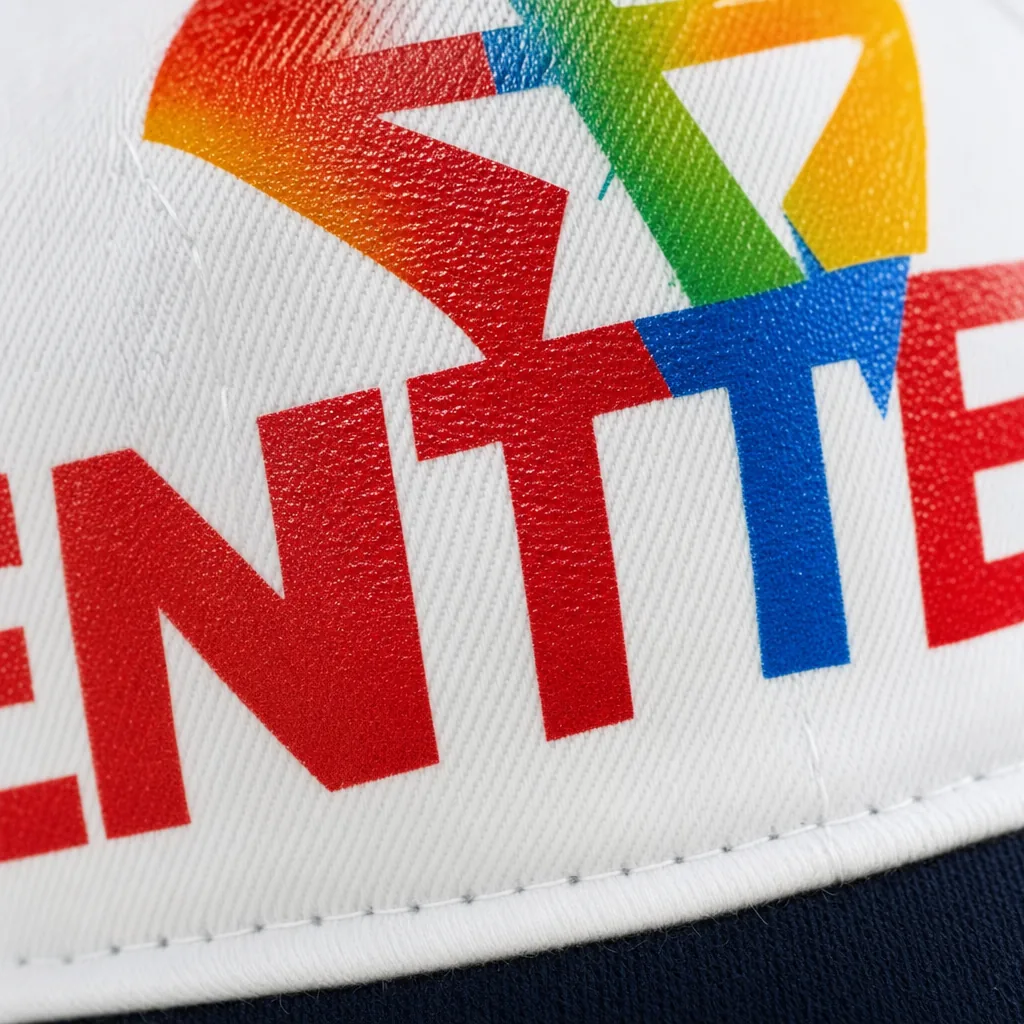
Every week, our sales team answers detailed questions about custom logo hats: when to use it, costs, and what to ask your factory - 2026 update. We wrote this guide so that wholesalers, streetwear brands, corporate buyers and promotional resellers can compare options with full information, and avoid the traps that show up only after production has started.
Custom Embroidered Patches
Custom embroidered patches are the go-to method for adding logos to custom logo hats when the design demands high stitch density, metallic thread, or a 3D puff effect that direct embroidery cannot handle cleanly. The patch is produced separately on a Tajima or Barudan 12-head machine using a 280 gsm polyester twill base, then laser-cut or steel-die-stamped before being attached via heat-seal backing or double-lock stitching. For a standard 4-inch by 2-inch patch, plan on 7,500 to 12,000 stitches; anything under 5,000 will leave the design sparse, especially with 6-point text. Always request a stitch-out on your actual fabric—polyester twill at 280 gsm is the baseline—and verify Pantone TCX thread match within a Delta-E of 2.0. Skipping this step leads to patches that fade or distort after the first wash, a common AQL 2.5 reject in our inspections.
MOQ for custom embroidered patches typically starts at 500 pieces per design, though 300 is possible with an $80–$120 setup fee for digitizing and die-cutting. Per-unit cost runs $0.35 to $0.85 depending on stitch count, up to 12 thread colors, and backing type—plastic heat-seal is cheapest, but a merrowed edge adds $0.15–$0.20. When ordering custom logo hats with a patch, expect a combined price: the patch plus the hat blank, usually $1.80–$3.20 for a 6-panel unstructured cap in 100% cotton twill. The critical quality check is alignment: more than 2mm off-center is a visual defect, and we reject those at final inspection. Loose threads on the back indicate a cheap lock-stitch; that patch can peel after 10–15 wears. We use a double-lock stitch with a 3mm margin on all patch hat orders to avoid this.
Integrating custom embroidered patches into your custom logo hats strategy balances cost and flexibility. Patches let you change logos without scrapping inventory—stock plain blanks and apply patches on demand, ideal for short-lead promotional campaigns. However, the patch adds a production step, pushing turnaround to 25–35 days versus 18–22 days for direct embroidery. For metallic or glow-in-the-dark thread, expect a 15–20% cost premium and a 1,000-piece minimum. The most common mistake is ordering a patch too large for the crown: a 5-inch-wide patch on a 6-panel cap will buckle at the seams. Stick to a maximum width of 4.5 inches for structured hats and 4 inches for unstructured ones. If sourcing from a sedex-audit-cap-supplier-guide.html">BSCI-certified factory, request the digitizing file in .DST format and a PDF color separation—this ensures exact reproduction on reorders without re-digitizing.
Custom Hat with Patch
A custom hat with patch is usually the quickest way to get custom logo hats into sampling without committing to a full embroidery run. The patch can be woven, embroidered, leather, PVC, or TPU, then heat-applied, sewn, or combo-mounted onto the crown. That means the factory is controlling two separate processes: patch fabrication and cap assembly. The spec needs to be tighter than most buyers think. Call out the cap style, panel count, crown height, visor curve, fabric weight, patch dimensions, border finish, backing type, stitch density, and exact placement in millimeters. For retail programs, we standardize the shell to Pantone TCX and the patch artwork to Pantone coated or uncoated references, then set a Delta-E target of 2.0 or lower on repeat bulk. If those details are missing, custom logo hats drift between sample approval and production because the patch vendor and cap line are not working from the same tolerance set.
Pricing is driven more by patch construction than by the hat shell. On a 100 to 300 piece run, a stock 5-panel cotton twill cap with a simple woven patch usually lands around $3.20 to $5.50 FOB China, while embroidered patches or merrowed edges often move that to $4.50 to $7.80 depending on stitch count, backing, and whether the patch is cut clean or die-trimmed. Molded PVC and leather patches usually add a tooling or die-prep charge of about $40 to $120, but the per-piece cost stays competitive once you scale past a few hundred units. Most factories quote 300 to 500 pieces MOQ for a custom hat with patch, though 100-piece trials are realistic if you use a stock blank and keep the patch under about 60 x 60 mm. The cleaner workflow is to approve the patch and the blank cap separately, then lock the heat-press temperature or sew-down position before bulk starts.
The failures are mechanical and show up fast if you inspect the right points. Look for edge fray, glue bleed, crooked placement, bubble lift after heat pressing, thread pull on embroidered borders, and puckering where the patch crosses a seam. On lightweight shells, especially 180 gsm brushed cotton or low-denier polyester, sewn patches can distort the crown if the operator pulls too hard on the needle path; on heat-applied patches, ask for a 24-hour peel test plus 5 wash cycles at a minimum. For larger programs, specify AQL 2.5 for general inspection and a tighter decoration tolerance of 2 to 3 mm for placement. Our standard practice is to reject any batch where patch skew is visible from normal viewing distance, because that is what customers notice first. Use this construction when you need faster sampling, more logo flexibility, or a lower-risk first run; move to direct embroidery when volume, handfeel, and unit cost matter more than decoration versatility.
Custom Patch for Hat
A patch is the right move when direct embroidery would crush fine detail or overload the panel. The patch is built off the hat first, then sewn, heat-pressed, or both, so you can choose the construction that fits the artwork instead of forcing the logo into a format it cannot survive. For custom logo hats, embroidered twill is usually the most forgiving streetwear option because it hides small stitch variation, but it still needs a merrowed edge, laser-cut border, or tight bound edge to keep yarns from fraying after wear and washing. A competent factory should state the backing, edge finish, attachment method, stitch count, and minimum line weight before quoting. If the logo carries small type, ask for the digitized file path for Tajima, Barudan, or ZSK heads and set color against Pantone TCX or Pantone C with a bulk target of Delta-E under 2.0, not a vague “close enough” match.
MOQs and price are driven more by patch construction than by the cap body. A 2.5 to 3 inch embroidered patch usually starts around 100 to 300 pieces per design, with sampling at $25 to $60 and bulk patch cost around $0.35 to $1.20 at 1,000 units before sewing. Woven patches can be cheaper for flat artwork, but they flatten gradients and lose texture; PVC and TPU need tooling, which pushes setup cost higher and often puts finished patch cost above $1.50 once mold amortization is included. That is why custom logo hats with patches make sense when one brand mark has to move across five-panel, six-panel, dad cap, and trucker bodies without reworking the artwork each time. You are paying for reuse, consistency, and a cleaner production file, not chasing the lowest unit price on a single SKU.
The first failures to catch are edge lift, glue bleed, sew misalignment, and color drift between strike-off and bulk. Heat-seal backing should survive at least 5 wash cycles at 40 C without curling at the corners or peeling from the sweatband side; weak adhesive usually gives up at the edge where the patch flexes over the crown. For embroidered patches, inspect stitch density, thread tension, and whether small letters close up on satin columns; below 4 mm cap text, counters often collapse unless the digitizing is disciplined. Woven patches need checks for pinholes and fuzzy outlines, while PVC and TPU should show even mold fill, no sink marks, and no warping at the border. On finished custom logo hats, I would still verify patch placement with a centerline jig and hold the lot to AQL 2.5, because a 3 mm shift is obvious on a five-panel cap and reads as a production miss at retail.
Custom Patch Hat
A custom patch hat is the right call when the artwork has small type, thin strokes, gradients, or irregular outlines that embroidery will chew up. The cap is built first, then the logo is made as a separate woven, embroidered, PVC, faux leather, or felt patch and attached with merrow stitching, edge stitching, heat-press adhesive, or a stitched-plus-adhesive build. For custom logo hats, that split is useful because it keeps detail without forcing a 10,000 to 14,000 stitch front panel that can pucker on foam or low-density twill. Lock the patch spec before sampling: border style, backing, thread count or mold depth, stitch density, and placement tolerance. Merrowed borders are fine for simple badges; laser-cut PU and molded PVC usually need registration within 2 to 3 mm, or the patch reads visibly off-center on the finished crown.
Treat the cap and patch as separate cost buckets, because they price differently and move on different MOQs. A 500-piece run is normal for cotton twill or polyester twill with a standard sewn patch, 300 pieces can work on stock blanks with an existing patch library, and 1,000 pieces or more is more realistic once you ask for custom-dyed fabric, brushed canvas, washed finishes, or molded PVC. In practice, basic six-panel custom logo hats with a sewn patch usually land around $2.20 to $4.80 FOB; 3D PVC, faux leather embossing, or heavy enzyme wash can push that higher quickly. Ask for Pantone TCX on both cap and patch, patch thickness in millimeters, adhesive type, closure style, and whether the rear strap is plastic snap, self-fabric, Velcro, or metal buckle, because those choices change labor and landed cost more than most buyers expect.
The usual failures are predictable: patch drift of 2 to 4 mm, glue bleed at the edge, crown puckering, loose thread tails, and color mismatch against the approved sample. On custom logo hats, the patch usually carries the highest visible risk, so I would not approve bulk without a pre-production sample and a measurement sheet showing center-line placement, left-right symmetry, brim curve, and patch offset from the front seam. Under AQL 2.5, inspect for frayed merrow edges, lifted corners, uneven topstitching, and reverse-side needle penetration on sewn patches, since those are the signs the patch will survive wear or start peeling after a few uses. The cleanest factory control point is to sign off the patch as its own stage before it ever reaches final packing.
Custom Patch Hats
Custom patch hats are the cleanest way to make custom logo hats when you want a sharp front panel without running dense direct embroidery across multiple seams. The patch is the real specification: woven, embroidered, PVC, leather, or chenille, then attached by heat seal, edge stitch, or both. Lock the finished size, border style, backing, thread count or PU thickness, and Pantone TCX references before sampling. For embroidered patches, a physical strike-off is mandatory; flat artwork will not show whether satin columns are too tight, small type closes up, or a border bead gets lumpy at production size. In practice, 1.25 to 1.75 inches wide is the usable range for most front logos. Below that, detail starts falling apart fast on low-profile dad hats and curved crowns, especially once the patch has to sit over a buckram front.
For buyers comparing custom logo hats across suppliers, MOQ and tooling usually matter more than the patch itself. A blank cap with an applied patch often starts at 300 to 500 pieces per colorway, while fully custom patch hats with new PVC molds, metal dies, or leather deboss tooling can push to 1,000 pieces if the factory needs to amortize setup. A realistic 2026 FOB range is about $1.40 to $2.20 for a 100 percent cotton twill dad cap with a simple woven patch, $2.20 to $3.80 for structured five-panel or trucker builds, and more for brushed twill, polyester mesh, or leatherette. Patch decoration usually adds $0.18 to $0.45 for woven work and $0.50 to $1.20 for thicker embroidered or PVC patches. Our standard practice is to quote the cap and decoration separately so the buyer can see where the money is going instead of getting one opaque line item.
The failures are predictable: patch edges lifting after wash, heat-seal adhesive scorching the face fabric, puckering on curved crowns, and color drift when the factory is not holding a locked Pantone match. Ask for peel-strength targets, wash-test results, seam coverage, and whether the patch lands on a buckram-backed front panel or a softer unstructured crown. If the order uses embroidered patches, inspect under a 10x loupe for broken threads, uneven satin-column width, and loose border stitches; if it uses PVC, check for flashing, sink marks, and brittle corners. For bulk release, approve a pre-production sample and then inspect at AQL 2.5 for placement, adhesion, symmetry, and side-seam alignment. In practice, custom patch hats make sense when the artwork is detailed, the run is short, or you want lower stitch risk. Direct embroidery still wins when the logo is simple and you want one less process step on a line already running Tajima, Barudan, or ZSK heads.
Hat Patch Custom
Hat patch custom work is the right answer when the mark is too small, too layered, or too technical for clean direct embroidery. Fine text under 3 mm, tight registration, gradients, and mixed finishes usually hold up better on a separate patch for custom logo hats: 100 percent cotton twill for a flat retail look, wool felt for a softer vintage hand, full-grain or PU leather for a higher perceived value, and PVC or silicone for sports and outdoor use. The build matters more than most buyers expect. A patch can be laser-cut, merrowed, embroidered, debossed, or molded, then sewn, heat-pressed, or backed with adhesive. For quoting, send finished size in millimeters, edge style, backing type, target Pantone TCX or Pantone C values, and a vector file. A 2.5 to 3 inch embroidered patch typically runs 10,000 to 25,000 stitches, and the digitizing should be checked on Tajima, Barudan, or ZSK heads before bulk approval. Raised satin borders and 3D foam faces sit in a different cost class than flat woven patches, so they need separate pricing from the start.
MOQ is lower than people assume if the factory already runs patch production in-house. For custom logo hats, 100 to 300 pieces per design is common for woven or embroidered patches in China, while PVC, molded silicone, and leather deboss often move to 300 to 500 pieces because the die or mold has to be amortized. In 2026, a standard 2.5 to 3 inch patch usually lands around $0.35 to $1.20 per piece, with heat application adding roughly $0.08 to $0.20 per hat and sewing adding more labor if the patch is thick or curved. The real cost risk is rework. If the border frays, the glue fails in wash testing, or the patch warps on a structured front panel, the unit price stops mattering. Our standard practice is to lock a preproduction sample against approved artwork before bulk attachment, because once a patch is on the cap, correction costs rise fast.
The first defects I check are edge cut, stitch fill, color drift, and attachment failure. On sew-on patches, the border should sit flat without tunneling or puckering the crown, especially on brushed cotton twill and 320 to 380 gsm canvas. On iron-on or heat-transfer builds, you need peel testing after a hot wash cycle, because cheap adhesive usually lifts at the corners first. Ask for AQL 2.5 inspection, adhesive backing photos, and first-off photos from the line before sign-off. Patch hats work well when the design needs texture, contrast, or flexible inventory across multiple cap colors. They are the wrong choice when the logo is tiny, heavily detailed, or expected to survive repeated laundering with zero edge lift. For custom logo hats, the patch is not an upgrade by itself; it only works when the material, edge finish, and attachment method match the use case.
Working with CrownsForge for custom logo hats programs
Sampling is where most custom logo hats programs get approved or quietly die. Our standard practice is a first proto sample in 7 to 10 business days after art signoff, with digitizing billed at $25 per logo and stitch density locked before bulk fabric is cut. We test embroidery on Tajima and Barudan heads, then check thread color against Pantone TCX references and record the Delta-E against the buyer’s physical swatch, not a screen file. For first-time buyers, 50 pieces per design is a workable MOQ for a simple 6-panel cotton twill cap, but the economics get cleaner at 200 to 300 units once you account for label setup, carton allocation, and QC labor. Anything below that should be treated as a market test, because the per-unit cost on custom logo hats rises fast when setup is spread too thin.
Decoration choice should follow fabric behavior, not mood boards. Flat embroidery works best on structured crowns and midweight fabrics in the 260 to 320 gsm range; 3D puff needs enough foam clearance for the satin columns to stand up; woven patches and PVC badges make more sense when the hat body is too fine for direct stitch detail. For patch hats, we usually specify a 1.5 mm hot-cut border and then choose between sew-through placement and hook-and-loop backing based on whether the brand needs removable branding. Every batch is checked to AQL 2.5, with carton counts, needle checks, and shade control compared against the approved master sample. That is where a small digitizing miss stops being a design issue and turns into a real rejection risk.
For international buyers, the important question is not whether a factory can say yes, but whether it can document the same result six months later. CrownsForge keeps BSCI 2.0 and Sedex SMETA 4-Pillar files current, and we can usually issue the packing list, commercial invoice, certificate of origin, and shipment photos within 48 hours once the goods are booked. The workflow should also include artwork upload, sample approval, and milestone tracking in one place, because custom logo hats programs fall apart when approvals live in email threads and nobody can prove which thread shade or panel shape was signed off. Reorders should match stitch count, crown structure, and color tolerance without quietly changing the embroidery subcontractor or the unit cost. That repeatability is what separates a usable factory relationship from a one-off sample quote.
Frequently Asked Questions
How long does production take?
Sampling takes 7 to 12 days. Bulk production runs 20 to 30 days depending on quantity, fabric availability and decoration complexity. Inspection and packing adds another 3 to 5 days before shipment.
Do you support sustainability certifications?
Yes. We work with GOTS organic cotton, GRS-certified recycled polyester, OEKO-TEX Standard 100 fabrics, and are BSCI and Sedex audited. Certification documentation can be provided per order.
What file format should I send for my logo?
Vector files (AI, EPS, PDF) are ideal. High-resolution PNG or JPG at 300 dpi on transparent background works as a fallback. Provide Pantone color references for accurate reproduction.
What is the minimum order quantity (MOQ) for custom hats?
Our standard MOQ is 100 pieces per design and color, with sampling available from 1 piece. For complex multi-color logos or premium fabric upgrades, the MOQ can be lowered with a small per-piece surcharge.
Can I order a sample before bulk production?
Yes. We strongly recommend approving a pre-production sample before mass production. Samples are charged at 35 to 60 USD each plus express shipping, fully refundable against confirmed bulk orders over 500 pieces.
How does ordering custom embroidered logo hat work?
When evaluating custom embroidered logo hat, the key considerations are construction quality, decoration capability, MOQ flexibility and lead time. Cover everything buyers ask about custom embroidered patches: how it's manufactured, what specs to request from a factory, typical MOQ and pricing, common quality issues to inspect for, and how this ties back to the broader custom logo hats sourcing decision. Cover everything buyers ask about custom hat with patch: how it's manufactured, what specs to request from a…
How does ordering custom hat leather patch work?
When evaluating custom hat leather patch, the key considerations are construction quality, decoration capability, MOQ flexibility and lead time. Cover everything buyers ask about custom hat with patch: how it's manufactured, what specs to request from a factory, typical MOQ and pricing, common quality issues to inspect for, and how this ties back to the broader custom logo hats sourcing decision. Cover everything buyers ask about custom patch for hat: how it's manufactured, what specs to request from a factory,…
How does ordering custom embroidered baseball hats work?
When evaluating custom embroidered baseball hats, the key considerations are construction quality, decoration capability, MOQ flexibility and lead time. Cover everything buyers ask about custom embroidered patches: how it's manufactured, what specs to request from a factory, typical MOQ and pricing, common quality issues to inspect for, and how this ties back to the broader custom logo hats sourcing decision. Cover everything buyers ask about custom hat with patch: how it's manufactured, what specs to request from a…
What's the MOQ for custom embroidered patches no minimum?
When evaluating custom embroidered patches no minimum, the key considerations are construction quality, decoration capability, MOQ flexibility and lead time. Cover everything buyers ask about custom embroidered patches: how it's manufactured, what specs to request from a factory, typical MOQ and pricing, common quality issues to inspect for, and how this ties back to the broader custom logo hats sourcing decision. Cover everything buyers ask about custom hat with patch: how it's manufactured, what specs to request from a…
Looking for a reliable hat manufacturer in China?
CrownsForge has produced custom hats for 800+ brands across 40 countries. From 100-piece launches to 100,000-piece retail programs, we deliver on time and on spec.
Get in touchRelated guides
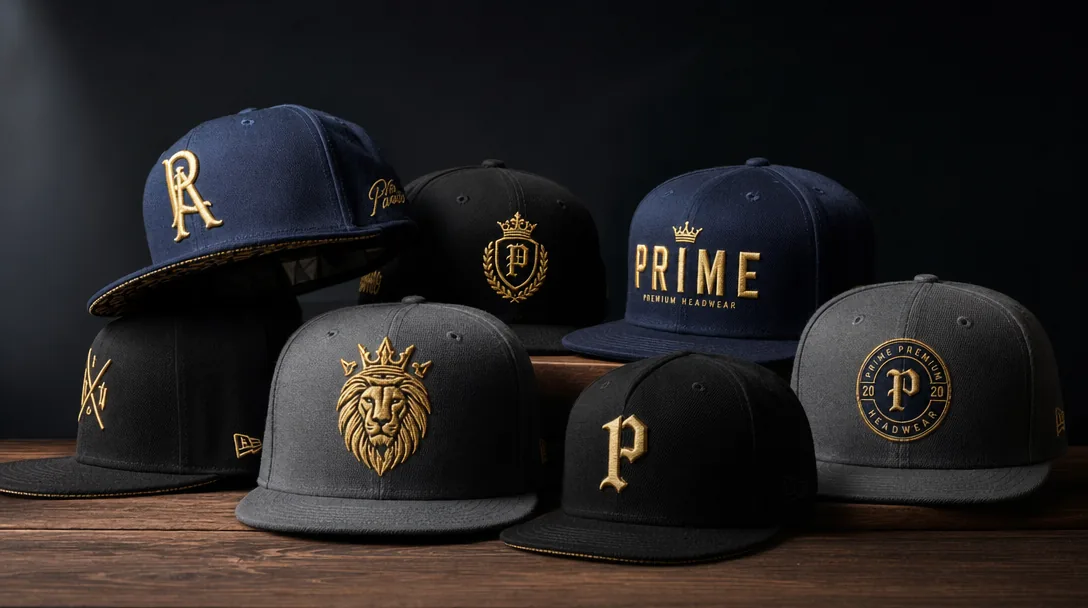
Custom Leather Patch Hat Low Minimum: A 2026 B2B Sourcing Guide
Read article →
Mens Beanies: Properties, Costs and How to Spec It Right
Read article →
Bulk Trucker Hats Export Shipping Checklist for Custom Hat Buyers - Cost & MOQ Breakdown - Supplier Checklist
Read article →We hope this guide demystifies custom logo hats: when to use it, costs, and what to ask your factory - 2026 update and helps you move forward with confidence. If you have questions specific to your project, our English-speaking sales engineers are one message away.