
Custom Logo Hats: When to Use It, Costs, and What to Ask Your Factory - 2026 Buyer's Guide - Supplier Checklist
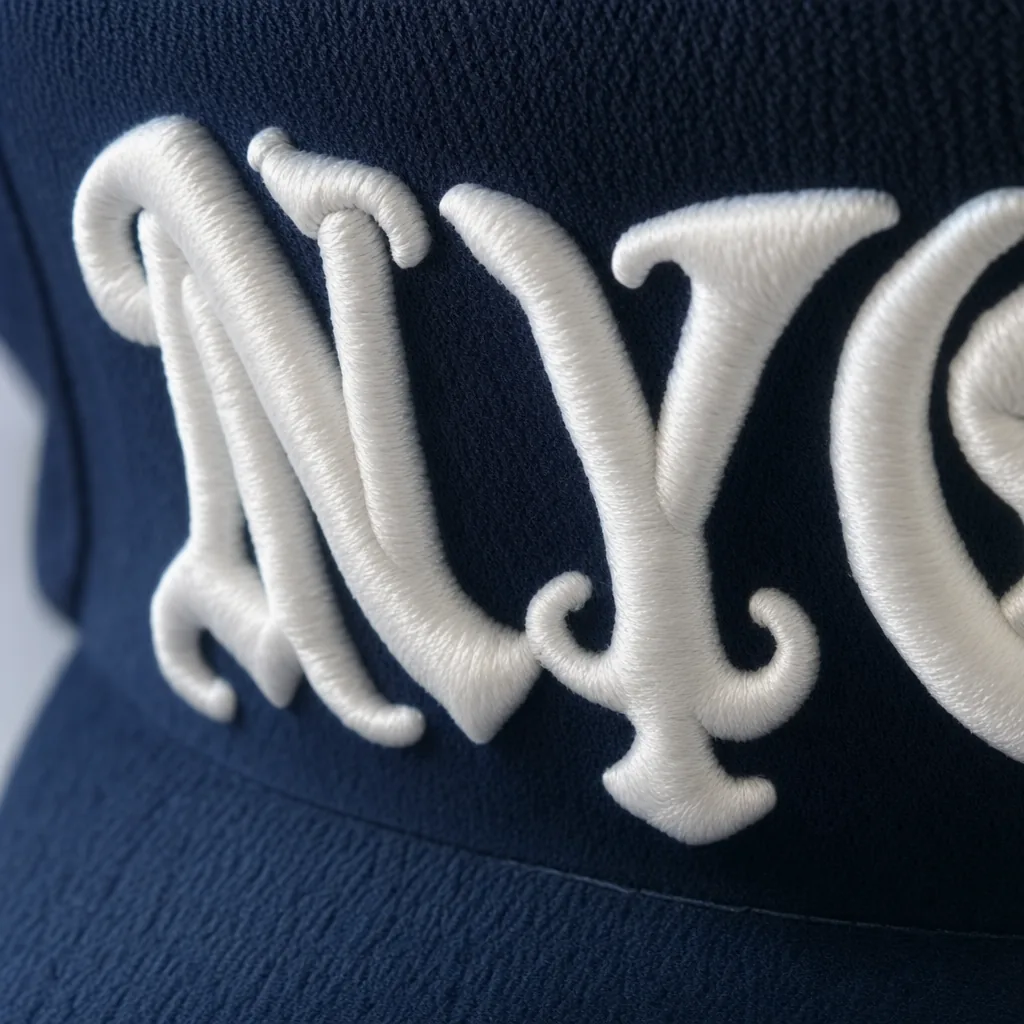
Custom Logo Hats: When to Use It, Costs, and What to Ask Your Factory - 2026 Buyer's Guide - Supplier Checklist is one of the most-asked questions we receive from international buyers, and for good reason. With dozens of factories competing for your order and an alphabet soup of technical terms in every supplier quote, even experienced importers can feel lost. This guide consolidates what we have learned producing custom hats for clients in 40+ countries.
Custom Embroidered Patches
For buyers choosing between direct embroidery and a patch program, the deciding factor is usually detail retention and production flexibility, not fashion. A custom embroidered patch is built in two stages: first the emblem is run on twill, felt, merrow base, or laser-cut polyester using Tajima, Barudan, or ZSK heads; then it is finished with a merrow border, satin stitch edge, heat-cut edge, or laser edge before being applied to the cap. If your logo has small type under 4 mm high, fine outlines under 0.8 mm, or more than 8 thread colors, a custom patch for hat often holds shape better than sewing directly onto brushed cotton twill or corduroy panels that stretch during cap assembly. On structured 6-panel baseball caps and truckers, patches also hide seam distortion better on the front crown. For custom logo hats with lifestyle or heritage branding, patch construction gives more control over texture: 2 mm felt for vintage looks, 420D twill for clean edges, or embroidered badge over woven label backing when you need sharper micro text than embroidery alone can deliver.
The specs you request from the factory should be explicit, because “embroidered patch” is too vague to quote accurately. Ask for patch size in millimeters, base material, backing type, edge finish, stitch coverage, attachment method, and color tolerance. A serious tech pack will state something like: 65 mm x 48 mm, black Pantone TCX-matched twill base, 75% embroidery coverage, merrow edge in matching rayon thread, heat-seal backing plus perimeter sew-down, and acceptable Delta-E under 1.5 against approved thread card or lab dip. Also specify whether the patch is applied before or after cap construction; pre-sewn patches are faster but can distort on curved fronts, while post-application on finished caps gives cleaner placement at higher labor cost. For a custom hat with patch, placement tolerance should be no looser than plus or minus 2 mm from centerline, especially on 5-panel foam truckers where any drift is obvious. Our standard practice is to approve both a loose patch sample and an applied cap sample, because patch quality and attachment quality fail in different ways.
MOQ and cost depend more on patch complexity than many buyers expect. In China, a common starting MOQ for custom patch hats is 144 to 300 caps per colorway, while standalone custom embroidered patches may start at 500 pieces if made separately. For a 3 inch embroidered patch with 60% to 80% coverage, expect roughly $0.22 to $0.55 per patch FOB in volume; sewn application onto a cap usually adds $0.08 to $0.20, while Velcro, leatherette backing, or specialty felt can push it higher. The quality issues worth inspecting are thread trims left inside merrow edges, puckering from over-digitizing, inconsistent border width, needle cuts on the base cloth, off-center application, weak adhesion on heat-seal-only builds, and color drift between patch thread and crown fabric. At final inspection, use AQL 2.5 for major defects and do a peel test on random units if the patch is iron-on assisted. In broader custom logo hats sourcing, patches make sense when you need multi-SKU consistency across caps, beanies, and buckets, but they add one more production stage, so buyers should ask who makes the patch, who applies it, and whether responsibility stays with one factory or gets subcontracted.
Custom Hat with Patch
Patch construction is the right call when direct embroidery will lose the artwork: serifs under 1.0 mm, negative spaces below 0.8 mm, distressed textures, layered crests, or finishes like PU leather, TPU, felt, and molded PVC that thread cannot reproduce cleanly. On custom logo hats, the real advantage is process control. A patch should be attached to the front panel while it is still flat, before crown closing, sweatband setting, and top-buttoning. On structured 6-panel caps and truckers, that usually holds placement within +/- 2 mm and avoids tunneling, seam grin, and buckram drag. Once the crown is assembled, especially on low-profile dad hats or shallow 5-panels, needle access gets tight and rejection rates rise fast. The spec has to be complete or the factory will make assumptions that cost you time. Call out patch size in millimeters, substrate, border type, backing, stitch count or patch thickness, and attachment method. A usable line item looks like this: 65 x 45 mm embroidered patch, 210 gsm black polyester twill base, 75D trilobal polyester thread, 0.7 mm merrow edge, heat-cut backing, lockstitched attachment with Pantone-matched thread. If the patch crosses a center seam, state that explicitly in the tech pack, because seam-bridging changes the embroidery underlay, edge finish, and sewing sequence. Our standard practice is one loose patch strike-off plus one mounted cap sample, because a patch that looks flat on the table can wrinkle, cup, or lift once it is formed over the front crown curve.
Patch hats should be quoted as two linked operations: cap body cost plus patch making and attachment. If a supplier rolls everything into one vague FOB number, you cannot see where the risk sits. In 2026, a basic 6-panel brushed cotton twill cap with a sewn embroidered patch typically lands around $2.30 to $4.60 FOB China at 300 to 1,000 pieces, assuming standard Velcro or snapback closure and no specialty wash. Woven patches are often slightly cheaper than embroidered ones at higher volume; molded PVC, debossed PU, chenille, or mixed-media patches usually push the FOB range to $4.80 to $7.20. MOQ is commonly 144 to 300 pieces per colorway, and orders under 100 pieces normally add a setup surcharge because patch trimming, positioning, and sewing labor do not scale efficiently. Mold charges for PVC or metal-badge dies are usually $80 to $200. Defects on patch caps are predictable, so inspection should target them instead of treating them like standard embroidery goods. I would run inline checks during patch attachment and final inspection at AQL 2.5, with special attention to crooked placement, inconsistent edge distance, corner lift on heat-bonded styles, exposed bobbin thread, skipped stitches, and lot-to-lot size drift. On unstructured caps, thick patches can collapse the front after master-carton compression; on structured crowns, an over-dense embroidered patch can print a hard rectangle through the buckram. For color approval, ask for Pantone TCX or TPX references on textiles and set a realistic Delta-E tolerance: under 2.0 is achievable on polyester twill, while faux leather and PVC often run higher. If the custom logo hats quote looks unusually cheap, check whether the supplier excluded patch wastage, hand trimming, carton spec, or sample approval costs; that is where underquoted programs usually break down.
Custom Patch for Hat
Use a patch when direct embroidery is the wrong tool, not as a default upgrade. On custom logo hats, that usually means copy below 2.5 mm cap height, line weight under 0.6-0.7 mm, gradients that would collapse into thread blocks, or front-panel stitch counts that push past 15,000 stitches and start distorting the buckram. I’ve seen buyers force dense embroidery onto 100% nylon taslon, brushed cotton twill, and enzyme-washed chino only to get tunneling, crown waviness, and a logo that feels like cardboard. For clean streetwear artwork, damask woven patches hold the sharpest edge definition; 50D-75D yarn construction will reproduce small text far better than satin stitches on a 6-panel cap. Twill embroidered patches still make sense for varsity, team, and heritage looks where a raised thread profile is part of the aesthetic, not a defect.
Patch type changes the entire cost and risk profile. A standard 3-inch woven or twill patch for custom logo hats usually lands around $0.28-$0.75 per piece, with another $0.20-$0.40 for sewing application; molded TPU/PVC or debossed leather often needs a mold or die charge in the $100-$250 range before bulk production starts. Typical MOQs are 144-300 pieces for woven and embroidered patches, and 300-500 for PVC, silicone, or leather because setup waste is higher. The real factory problems almost never come from the artwork proof. They happen in attachment: patch placement drifting 3-4 mm off the center seam, puckering from incorrect top-thread tension, merrow borders sewn unevenly over curved crowns, or laser-cut edges showing brown heat marks on light colors. Our standard practice is to inspect patch caps at AQL 2.5, measure placement from both crown seam and visor seam, and reject any color set that misses the approved Pantone TCX target by more than Delta-E 1.5-2.0 on visible logo areas.
Custom Patch Hat
Patch hats are the right call when the logo will break down in direct embroidery on a structured front panel. As a working threshold, outlines below 1.0-1.2 mm, serif text under 4 mm cap height, negative space inside letters like R or A, and distressed fills with more than 20-25% broken texture usually sew cleaner as a separate badge. That is why a lot of better custom logo hats use a patch even on premium 6-panel caps with buckram: you get a crisp edge, consistent shape, and one approved logo across truckers, dad hats, camp caps, and beanies without re-digitizing each crown profile. The material choice should match the artwork, not trend boards. Embroidered twill or wool-blend felt works for bold retail logos, woven labels hold finer linework down to roughly 0.6 mm, and molded PVC or TPU is better for outdoor, fishing, and workwear programs where wipe-clean durability matters. For most retail runs, I would spec a 57-76 mm patch on 210-250 gsm cotton twill, 1.0-1.2 mm felt, or 0.8-1.0 mm faux suede, with 75D rayon thread for sheen or 120D polyester for better UV and crocking performance.
Attachment is where patch hats either look factory-clean or become a returns issue. Sewn application is still the standard: merrow edge for round badges, laser-cut with satin border for sharper shapes, or hidden lockstitch when the edge must stay flat. Heat press alone is acceptable on short promo runs, but I would not approve it for teamwear, uniform, or orders above 3,000-5,000 pieces unless the patch has a tested heat-seal film and a topstitch to prevent corner lift after wash and vehicle-heat exposure. Placement tolerance should be written into the PO: on adult caps, ±2 mm from centerline is workable, while 3 mm off-center is visible on shelf and obvious in e-commerce photography. Ask for a patch spec sheet covering finished size in mm, base fabric, edge finish, backing type, stitch coverage, Pantone TCX or coated reference, minimum text height, and approved placement template. If the badge is woven, sublimated, or printed faux leather, set Delta-E under 2.5 on strike-off and under 3.0 on bulk. In 2026, a brushed chino twill cap with a sewn embroidered patch is typically $2.20-3.90 FOB China at 300-500 units; woven patch versions run about $2.50-4.30, while PVC patch hats usually add an $80-180 mold charge plus higher unit cost. At CrownsForge, patch components and finished caps are normally inspected separately to AQL 2.5 because the repeat defects are not embroidery-head related but alignment drift, loose perimeter stitching, laser-cut edge halo, and cracked deboss on synthetic leather patches.
Custom Patch Hats
Most patch-cap failures start in the decoration spec, not the shell. For mid-market custom logo hats, the safest build is a sewn embroidered patch or high-density woven patch on a structured 6-panel cap with buckram-backed front panels, usually 260 to 280 gsm cotton twill or 210 to 240 gsm polyester twill. Heat-press-only attachment is fine for short-run promo work, but it is the first thing to fail after carton compression or 50 to 60°C container heat; corner lift and adhesive edge telegraphing are common. If your logo includes text under 4 mm cap height or thin counters inside letters like A, R, and e, don’t force it into fill embroidery. Even on a clean Tajima or Barudan run, stitches spread, outlines fatten, and readability drops fast. Woven, printed twill, or dye-sublimated patches hold that detail better. Material choice changes the risk profile more than buyers expect. Real leather patches can look strong at retail, but grain variation, tanning shade drift, and inconsistent thickness from 1.2 to 1.8 mm create fit and color issues lot to lot. PU patches are more uniform, but cheap edge paint cracks and the surface can look plastic under store lighting. PVC gives sharp shape and weather resistance, though you need mold approval, shore hardness consistency, and a realistic lead time because mold sampling adds 7 to 10 days. For most custom logo hats sold in volume, a 50 to 70 mm wide patch with stitched attachment is the best balance of cost, durability, and repeatability.
A purchase order that says only “custom patch hat” is an invitation for preventable defects. Spell out patch size in millimeters, border construction—merrowed, satin stitched, laser-cut, or heat-cut—backing, stitch coverage, and attachment method. Front patch size tolerance should be ±1.0 to 1.5 mm, placement tolerance ±2.0 mm from crown centerline, and color matching within Delta-E 1.5 to 2.0 to approved Pantone TCX under D65 lighting. For embroidered patches, approve the digitized file before bulk production, especially if you have small type, negative space, or fine outer keylines. For leather, specify thickness in mm or ounces, deboss depth, edge finish, and crocking requirements against dark fabric crowns. If the patch is heat-assisted before stitching, call out adhesive type and softening temperature so the factory cannot substitute a lower-grade film. Pricing is straightforward once the patch spec is locked. In 2026 terms, MOQ is typically 144 to 300 pieces per colorway, with FOB China around $2.10 to $3.60 at 300 to 1,000 pieces for a standard sewn embroidered patch cap on cotton or poly twill. PVC or genuine leather versions usually sit at $3.20 to $5.80 because you add mold cost, laser cutting, hand positioning, and slower attachment. At final inspection, use AQL 2.5 and treat unreadable text, corner lift, off-center placement, and crown puckering as major defects; those are shelf-level failures, not minor cosmetics. Our standard practice is a wear test plus carton-pressure check before bulk packing, because patch thickness and stitch density can distort lower-profile crowns. That is the real line between patches and direct embroidery on custom logo hats: patches buy texture and material storytelling, but only if the factory controls one extra process stage with discipline.
Hat Patch Custom
Lock the patch specification before you freeze the cap pattern. Patch thickness, edge construction, and attachment method all change how the front panel behaves, especially on structured 6-panel crowns with 1.5 to 2.0 mm buckram. The usable options are woven labels with merrow or laser-cut edges, satin-stitch embroidered patches, twill appliqué, molded PVC or TPU badges, vegetable-tanned leather, PU leather, and sublimated emblems. For custom logo hats with serif text under 3 mm, negative space under 1.2 mm, halftones, or distressed art, patches usually outperform direct embroidery in the 6,000 to 10,000 stitch range. On brushed cotton twill, washed chino, and pigment-dyed canvas, the fabric nap and panel curve blur small details fast; a woven patch or clean laser-cut twill appliqué holds edge definition much better once sewn over the crown. Attachment is where weak factories get exposed. Heat press only is a gamble on front-center patches if cartons sit in containers at 45°C to 60°C; adhesive softens, corners lift, and thick badges telegraph pressure marks into stacked caps. For retail-grade custom logo hats, the stable build is a stitched perimeter with low-temp adhesive used only as positioning support, while side or back patches can often run stitch-only. The tech pack should specify finished patch size in mm, corner radius, edge type, backing, Pantone Solid Coated or TCX references, minimum line weight, and placement tolerance. I would hold front-center placement to ±2 mm and angle deviation under 2 degrees. Always approve two samples: a flat patch strike-off and a sewn cap sample on the actual crown, because patches that look clean on the table can pucker once formed and stitched.
Patch caps are costed by process minutes, setup, and reject risk more than by the hat shell itself. In Zhejiang, a stock 5-panel or 6-panel cotton twill cap with a sewn woven patch typically runs about $2.10 to $3.60 EXW at 300 to 1,000 pieces; molded PVC or TPU badge versions usually sit around $2.80 to $4.80 because of tooling, slower attachment, and more sorting. Real MOQ is often 144 to 300 pieces per colorway if the fabric and closure are stock, but 500 pieces is the honest floor once you add custom fabric, branded seam tape, internal labels, or exclusive badge tooling. Typical setup charges are $35 to $80 for embroidery digitizing, $50 to $120 for woven patch loom setup, and $120 to $250 for simple PVC mold tooling. Size matters: a 90 x 50 mm patch costs materially more than a 50 x 25 mm one because material yield, stitch time, and edge defects all move in the wrong direction. Inspection has to target patch-specific failures, not just normal crown and visor checks. The defects that actually sink shipments are off-center placement, skew over the center seam, loose lockstitch on the perimeter, glue bleed, edge lift after a 24-hour rest, buckram crush from over-pressing, and color mismatch beyond Delta-E 1.5 to 2.0 against the approved standard. Our standard practice is AQL 2.5 for finished custom logo hats, with peel checks on at least 5 pieces per lot if any adhesive is involved. Ask whether patch production is in-house or subcontracted, what machines are used for embroidered patches—Tajima, Barudan, or ZSK heads are the baseline—and whether the assembly site is covered by sedex-audit-cap-supplier-guide.html">BSCI 2.0 or Sedex SMETA 4-Pillar. If the factory cannot show repeatable placement, clean inside finishing, and transit-safe attachment, direct embroidery is usually the lower-risk option.
Working with CrownsForge for custom logo hats programs
Most custom logo hats go wrong before a needle ever hits fabric. The predictable failures are unusable AI files, logo sizes approved from JPEG mockups, and color decisions made on backlit phone screens instead of Pantone standards or strike-offs. A workable program starts with a 24-hour tech-pack review that locks crown profile, visor shape, closure type, artwork position, Pantone TCX or C references, carton pack-out, and the shipping term—FOB Ningbo is not the same quote as DDP Chicago. At CrownsForge, we price from the BOM, not a blended “all-in” cap rate, because a six-panel brushed cotton twill dad cap with flat embroidery behaves very differently from a high-profile snapback with a woven patch, metal buckle, and custom hangtag set. Pre-production samples typically take 7-10 days for stock fabrics and direct embroidery; once you add enzyme-washed cotton, suede patches, debossed leather, or molded TPU trims, 12-18 days is more realistic because wash houses and trim vendors each add their own lead time. MOQ is dictated more by upstream suppliers than by sewing lines. Stock-shape dad caps, truckers, and standard snapbacks can often start at 144-300 pieces per colorway, but custom-milled 10x10 cotton twill at 280 gsm, yarn-dyed plaid, branded buckles, or private-mold trims usually push the practical floor to 500-1,000 pieces. Decoration should be chosen by logo geometry, not by what looks best in a rendering. Flat embroidery on Tajima, Barudan, or ZSK heads is dependable when the art has enough open space and stitch density is controlled; as a rule, fine lines under about 0.8 mm and tiny serif text start to close up fast on twill. 3D puff needs wider satin columns and simplified shapes, while gradients, distressed fills, and badge-style retail logos are safer as woven, printed, or sublimated patches. Typical adders are about $0.35-$1.20 for a patch and roughly $0.20 for a small side hit up to $1.50+ for a dense 12,000-stitch front embroidery.
Bulk quality on custom logo hats usually fails through repetition, not drama: a logo drifting 2 mm off center for 800 pieces, brim curvature changing between sewing lines, thread tails left under the sweatband, or cartons packed too tight without crown support. The control plan should be written before the PO is cut: artwork sign-off, lab dips or fabric swatches, trim approval, first sample, pre-production sample, inline inspection, final inspection, and booking release. AQL 2.5 for major defects and 4.0 for minor defects is a practical baseline, but it only works if the tolerances are measurable—logo placement within plus or minus 1.5 mm, visor stitch count fixed, seam alignment defined, closure pull-tested, and sweatband attachment checked for skipped stitches. On a six-panel cap, even a 1 mm patch drift becomes obvious if it crosses the center seam, so front patches should be positioned and approved before crown assembly, not argued over at final inspection. Compliance and logistics deserve the same scrutiny as embroidery files. Any factory supplying retail chains, licensed programs, or uniforms should be able to show current BSCI 2.0 or Sedex SMETA 4-Pillar audits, plus basic restricted-substance controls for azo dyes, formaldehyde, nickel release on metal trims, and phthalates where PVC labels or heat transfers are used. Freight should always be quoted both FOB and DDP so buyers can compare landed cost honestly; hiding duty, brokerage, and final-mile delivery inside a factory unit price usually creates bad purchasing decisions. Trial orders often move by air at roughly $4-$8 per kg depending on season and lane, while larger runs go by sea, where carton dimensions, nesting ratio, and brim inserts can swing total landed cost by more than the cap weight itself. Paying an extra $0.08-$0.20 per cap for crush-resistant packing is cheaper than writing off a retail launch because 2,000 crowns arrived flattened.
Frequently Asked Questions
What logo decoration techniques do you offer?
3D puff embroidery, flat embroidery, woven patch, leather patch, PVC patch, screen printing, sublimation, applique and laser etching, all in-house with no subcontracting.
Can I order a sample before bulk production?
Yes. We strongly recommend approving a pre-production sample before mass production. Samples are charged at 35 to 60 USD each plus express shipping, fully refundable against confirmed bulk orders over 500 pieces.
Do you support sustainability certifications?
Yes. We work with GOTS organic cotton, GRS-certified recycled polyester, OEKO-TEX Standard 100 fabrics, and are BSCI and Sedex audited. Certification documentation can be provided per order.
What file format should I send for my logo?
Vector files (AI, EPS, PDF) are ideal. High-resolution PNG or JPG at 300 dpi on transparent background works as a fallback. Provide Pantone color references for accurate reproduction.
Which shipping methods do you support?
We support FOB, CIF and DDP shipping. Air express for samples and small orders, sea LCL for 100 to 500 pieces, sea FCL for 5,000+ pieces. Door-to-door DDP available for US, EU, UK, Canada and Australia.
How does ordering custom embroidered logo hat work?
When evaluating custom embroidered logo hat, the key considerations are construction quality, decoration capability, MOQ flexibility and lead time. Cover everything buyers ask about custom embroidered patches: how it's manufactured, what specs to request from a factory, typical MOQ and pricing, common quality issues to inspect for, and how this ties back to the broader custom logo hats sourcing decision. Cover everything buyers ask about custom hat with patch: how it's manufactured, what specs to request from a…
How does ordering custom hat leather patch work?
When evaluating custom hat leather patch, the key considerations are construction quality, decoration capability, MOQ flexibility and lead time. Cover everything buyers ask about custom hat with patch: how it's manufactured, what specs to request from a factory, typical MOQ and pricing, common quality issues to inspect for, and how this ties back to the broader custom logo hats sourcing decision. Cover everything buyers ask about custom patch for hat: how it's manufactured, what specs to request from a factory,…
How does ordering custom embroidered baseball hats work?
When evaluating custom embroidered baseball hats, the key considerations are construction quality, decoration capability, MOQ flexibility and lead time. Cover everything buyers ask about custom embroidered patches: how it's manufactured, what specs to request from a factory, typical MOQ and pricing, common quality issues to inspect for, and how this ties back to the broader custom logo hats sourcing decision. Cover everything buyers ask about custom hat with patch: how it's manufactured, what specs to request from a…
What's the MOQ for custom embroidered patches no minimum?
When evaluating custom embroidered patches no minimum, the key considerations are construction quality, decoration capability, MOQ flexibility and lead time. Cover everything buyers ask about custom embroidered patches: how it's manufactured, what specs to request from a factory, typical MOQ and pricing, common quality issues to inspect for, and how this ties back to the broader custom logo hats sourcing decision. Cover everything buyers ask about custom hat with patch: how it's manufactured, what specs to request from a…
Ready to start your custom hat project?
Send us your tech-pack, sketch or even just an inspiration photo. We will respond with a detailed quotation and digital mock-up within 24 hours.
Request a free quoteRelated guides
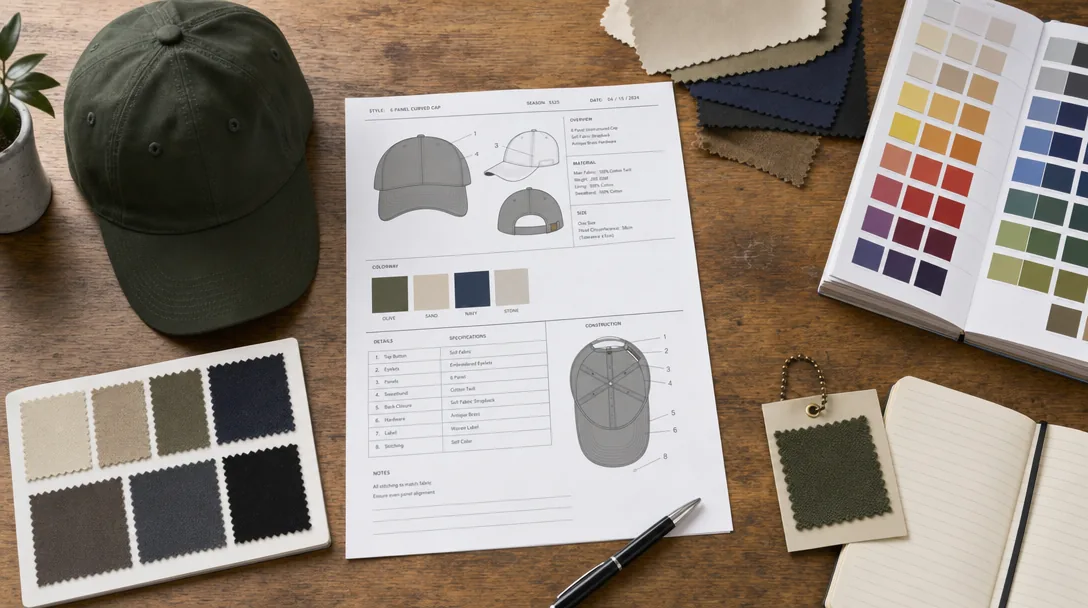
Performance & Athletic Caps: Moisture-Wicking, UPF and Buyer Specs - 2026 Buyer's Guide - 2026 Buyer's Guide
Read article →
Country Trucker Caps: The 2026 Sourcing & Manufacturing Playbook
Read article →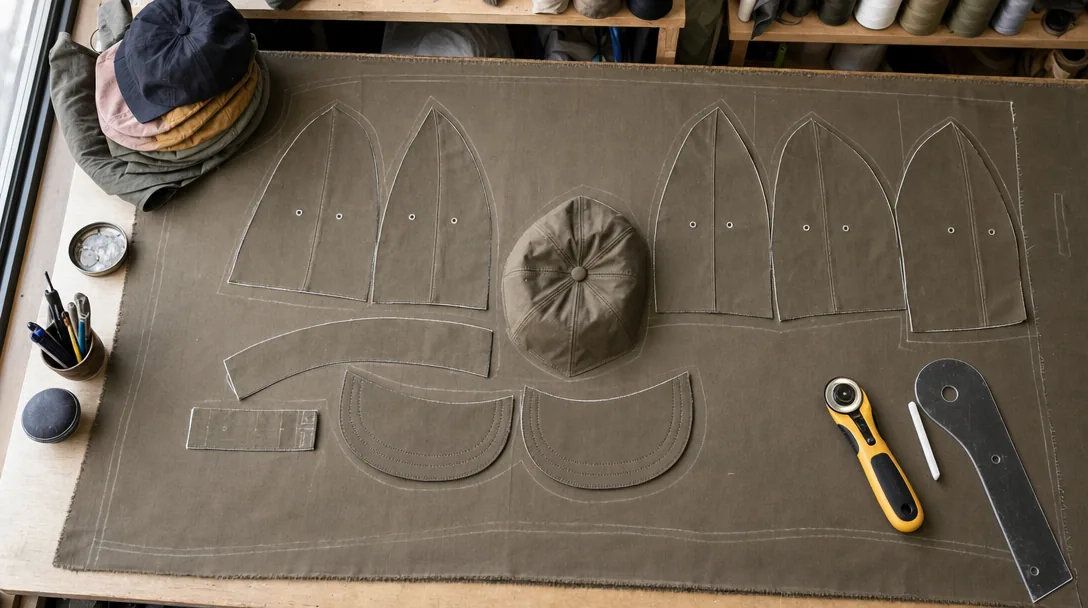
5-Panel vs 6-Panel Caps: Construction, Use Cases and Cost Compared (2026 Update)
Read article →If you are ready to take the next step on custom logo hats: when to use it, costs, and what to ask your factory - 2026 buyer's guide - supplier checklist, our team can put a tailored quotation and digital mock-up in your inbox within 24 hours. Send the inquiry form on our contact page or message us directly on WhatsApp.