
Custom Logo Hats: When to Use It, Costs, and What to Ask Your Factory - 2026 Buyer's Guide (2026 Update)
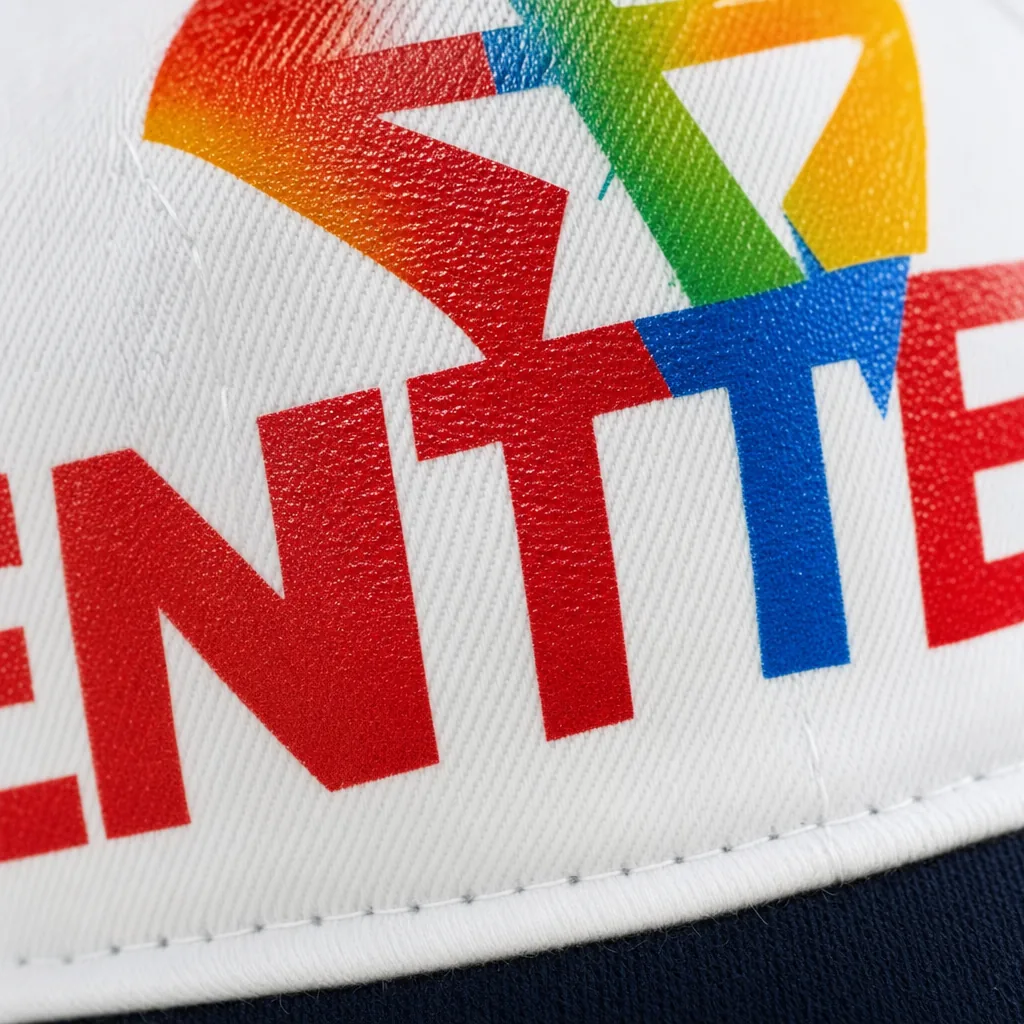
Custom Logo Hats: When to Use It, Costs, and What to Ask Your Factory - 2026 Buyer's Guide (2026 Update) is one of the most-asked questions we receive from international buyers, and for good reason. With dozens of factories competing for your order and an alphabet soup of technical terms in every supplier quote, even experienced importers can feel lost. This guide consolidates what we have learned producing custom hats for clients in 40+ countries.
Custom Embroidered Patches
Use embroidered patches on custom logo hats when the artwork fights the cap itself. The tipping point is usually small copy under 4 mm cap height, hairlines below 0.8 mm, distressed badge shapes, or logos with enough color breaks that direct embroidery would turn into a 9,000- to 14,000-stitch headache on a curved front panel. A patch is made flat, so registration stays cleaner and the edge stays intentional instead of disappearing into buckram or brushed cotton twill. On the production floor, that matters more than aesthetics: a flat-run patch on Tajima, Barudan, or ZSK heads gives better legibility than forcing dense fills onto a structured 6-panel crown with seam distortion down the center front.
Patch specs need to be written like a tolerance sheet, not a mood board: finished size in mm, edge construction, base material, backing, stitch coverage, placement tolerance, and Pantone references for both ground and thread. Merrow edge needs a border wide enough to survive, typically 2.5 to 3.5 mm; if the logo has sharp corners, internal cutouts, or a cleaner streetwear look, laser-cut with a satin border is the safer call. In 2026 China pricing, a 2.25-inch twill merrow patch usually runs $0.28 to $0.60 FOB; laser-cut satin-edge patches with 75 to 85 percent thread fill are commonly 20 to 35 percent higher, and sewing onto the hat adds another $0.08 to $0.18 depending on crown structure and placement. Thread matching is always approximate, so specify Pantone TCX for fabric and approve a physical strike-off; under D65 light, embroidery color can drift Delta-E 2.0 to 4.0 from the lab dip. CrownsForge inspects patch shape, edge integrity, and sew-on alignment at AQL 2.5 because the recurring failures are predictable: warped borders on structured fronts, frayed satin edges on dense black fills, and navy-on-navy mismatch that looked acceptable only under warm showroom lighting.
Custom Hat with Patch
Patch hats fail or succeed on stack-up thickness, not on the artwork alone. A patch cap is three components with three tolerance chains: cap body, patch substrate, and attachment method. The same logo that reads clean on a structured 5-panel in 260 to 320 gsm brushed chino twill can look lumpy on an unstructured dad cap with no buckram, because the front panel collapses under patch weight. For custom logo hats, woven patches usually give the best detail-to-bulk ratio: 50D to 75D yarn can hold small lettering and cleaner outlines than direct embroidery, especially when stroke width drops below 1.2 mm. Embroidered patches add texture but need a border wide enough to prevent edge distortion; below roughly 2.5 to 3.0 mm, merrow or satin borders start to look wavy on curved crowns. TPU, silicone, and molded rubber badges are better suited to polyester performance caps and truckers than lightweight cotton, where the badge can feel top-heavy and create panel memory after carton compression. Genuine leather, nubuck, suede, and PU all need caution because needle perforation too close to the edge can crack the face or leave permanent witness marks after 35 to 45 days in container transit.
Attachment method is where most patch claims start. Glue-only is the weak build; it is the first thing to fail under sweat, heat, and summer container conditions. The safer construction on curved fronts is heat press or film adhesive as a positioning step, then perimeter stitch on a Tajima, Barudan, or ZSK cap frame. Buyers should lock the patch spec in millimeters, not vague visuals: finished size, thickness, backing, edge finish, and placement from center front and visor seam. Plus/minus 2 mm is a realistic production tolerance; asking for dead-center perfection on a soft crown is how arguments start at final inspection. CrownsForge standard practice is to test peel strength after pressing and inspect early-run pieces for lower-edge spring-back, skipped stitches, puckering, and corner lift, because those defects show up first on thick patch stacks over low-profile crowns.
Patch hats are only quotable once the spec sheet is complete. If the buyer has not fixed profile, panel count, crown height, fabric composition, gsm, buckram type, visor board, closure, sweatband, patch backing, and approval standard, the price is still fiction. Color control matters more than many importers expect: cap fabric may be matched to Pantone TCX, but woven labels, embroidery thread, and TPU often track closer to Pantone C, and mills can drift beyond Delta-E 2.0 if they substitute nearest-stock shades. In 2026 China pricing, a stock-color cotton twill dad cap with a 45 to 60 mm sewn woven patch is typically $2.10 to $3.20 FOB Ningbo or Shanghai at 144 to 300 pieces per colorway. A mesh-back trucker with an embroidered patch usually lands at $2.60 to $4.20 FOB, while a premium 5-panel with custom-molded TPU badge is more often $3.80 to $6.50 before mold amortization and retail packing. For inspection, write patch placement, bubbling, edge fray, puckering, color under D65 light, and needle marking on suede or PU into the standard, with AQL 2.5 for major defects. If the logo has gradients, micro text under 2 mm, or frequent seasonal artwork changes, patches often outperform direct embroidery on custom logo hats; if the priority is lowest unit cost and maximum abrasion resistance, direct embroidery still wins.
Custom Patch for Hat
Patch construction is where a lot of custom logo hats either look premium or start failing in wear. Use a patch when direct embroidery would choke the artwork: serif text below roughly 4 mm cap height, negative spaces under 0.6 mm, distressed outlines, or front logos that would otherwise climb past 12,000-18,000 stitches and make the crown pucker. The practical menu is usually four builds: merrowed embroidered patch, laser-cut satin-stitch patch, woven patch, and molded PVC or TPU badge. Woven patches carry the finest detail because the resolution comes from weave density rather than thread pile; for small lettering and thin outlines, they routinely beat embroidery. Embroidered patches give more relief and a more traditional sports look, while PVC or TPU works for wipe-clean durability, outdoor use, and matte or gloss molded effects, but the tradeoff is stiffness and a higher risk of edge lift on curved crowns. Crown shape matters more than most buyers expect. On structured 5-panel and 6-panel caps with buckram, patches above about 1.8-2.2 mm total thickness tend to bridge at the perimeter unless the sewing line, adhesive film, and crown curve are matched correctly. Pre-assembly sewing onto the front panel is still the cleanest method because the operator can run the patch flat before the crown is closed; post-assembly attachment is faster for mixed small runs but easier to skew off-center by 2-3 mm. Heat-applied badges save labor, but I would not rely on them for enzyme-washed cotton twill, heavy brushed twill, or uneven slub fabrics without peel testing and wash testing first. Embroidered patches are commonly run on Tajima, Barudan, or ZSK multi-heads after digitizing, while woven versions come off label looms. PVC needs a steel mold, usually $80-$200, so it rarely makes financial sense below 500-1,000 pcs unless the molded look is the point.
A patch spec for custom logo hats should be tighter than a standard embroidery spec, because most quality failures come from vague approvals. Call out patch size in millimeters, border type, base cloth or substrate, backing construction, stitch coverage or weave denier, Pantone C or Pantone TCX references, and exact placement from center front and visor seam. If brand color matters, require a Delta-E tolerance instead of approving from phone photos under mixed lighting; navy on black is where factories hide behind "close enough." Also lock in the attachment method: sewn, heat-pressed, adhesive-assisted sewn, or hook-and-loop. Those are not interchangeable from a durability or labor-cost standpoint. For metallic thread, chenille, 3D foam, faux leather, or mixed-material badges, approve a sewn cap sample rather than a loose patch, because crown curvature changes how edge tension, shine, and perceived size read on the finished hat. Costs are straightforward if the quote is split into blank cap, patch production, application labor, development, and tooling. For 2026 China pricing, a sewn embroidered patch under 60 mm on a brushed cotton twill cap typically adds about $0.28-$0.65 per piece; woven patches are usually $0.22-$0.55; TPU, leatherette, and similar molded badge styles run roughly $0.45-$1.10 depending on size and finish. PVC can fall below $0.70 patch cost above 1,000 pcs, but low-volume orders get dragged up by mold amortization and slower handling. Common MOQ is 144-300 pcs per colorway when one supplier controls both patch and cap; below 100 pcs usually means a surcharge. Inspect at AQL 2.5 and pay attention to placement tolerance of +/-2 mm, satin border density, backing trim, edge fray, and post-wash adhesion. Our standard practice is to treat patch hats as a combined-risk item, because once patch making and cap sewing are split across vendors, rejection rates usually jump fast.
Custom Patch Hat
A custom patch hat is the right call when direct embroidery will fail the artwork or damage the hand feel of the cap. Thin keylines, distressed fills, gradients, and text below roughly 3 mm cap height usually collapse once a digitizer converts them into satin and fill stitches on a curved front panel. For custom logo hats, the three patch types that matter in production are merrowed embroidered patches, laser-cut woven patches, and molded PVC or TPU badges. Woven patches hold the sharpest detail because the graphic is built on a loom with fine denier yarn, not stacked stitch columns, so 1.5-2.0 mm characters stay cleaner if the supplier is using the right loom capability. Embroidered patches are more forgiving for streetwear and promo runs because they can be run first on Tajima, Barudan, or ZSK heads, trimmed, and audited before they ever touch the cap. PVC and TPU are the practical option for fishing, industrial uniform, and outdoor programs because they resist edge fray, wipe clean, and tolerate repeated flexing and sweat better than a high-stitch-count patch on buckram.
Patch hats go wrong in attachment, not in concept. On a standard 6-panel structured snapback, the cleanest sequence is cutting, front-panel fusing, crown sewing, sweatband insertion, visor attachment, cap blocking, patch application, then top button if machine access allows. Sew-on patches are still the safest for wash durability and long-term retail use; heat-bonding is faster, but it is also where chargebacks start on 240-260 gsm cotton twill, brushed canvas, and textured slub fabrics if the press window is off. Our standard practice is to validate heat-applied patches at 145-155°C for 12-18 seconds at about 3-4 kg/cm², then let samples rest 24 hours before peel testing, because edge lift usually appears after cooling on curved fronts and low-profile crowns. Buyers should spec the hat like a production sheet, not a mood board: fabric composition and gsm, crown profile, closure, visor shape, patch material, border finish, attachment method, patch size, and placement tolerance such as front-center 55 x 30 mm at ±2 mm. For 2026 China FOB, a basic cotton twill snapback with a simple embroidered patch typically lands around $2.20-$3.40 at 300-500 pcs, while woven patches, suede accents, metal eyelets, or molded PVC push it to $3.80-$6.50. Inspect the patch before the crown under D65 lighting, hold color to the approved Pantone TCX reference with Delta-E under 2.0 where feasible, and use at least AQL 2.5 for bulk.
Custom Patch Hats
Patch hats are the cleanest solution when artwork is too fine for direct embroidery on custom logo hats, but the patch spec has to follow the crown shape. On a structured 6-panel with buckram, the safe patch width is usually 60 to 75 mm; wider than that, the center seam starts printing through, especially on truckers with 3 to 5 mm EVA foam fronts. If your logo has text under about 2.0 mm cap height, thin serifs, or tight negative space, direct embroidery is the wrong decoration method. Even on a well-digitized Tajima, Barudan, or ZSK run, small counters close up once density gets too high or the front panel flexes. Woven patches, printed twill, and sublimated emblems hold linework better, reduce embroidery rework, and usually lower reject rates on bulk orders. Merrow borders are fine for circles and rectangles, but laser-cut edges with satin stitch are more reliable for scripts, shields, and irregular silhouettes.
Attachment method decides whether the patch survives retail wear or comes back as a claim. Adhesive-only heat seal is acceptable for low-cost promo orders, but it is not stable enough for sweat, UV exposure, repeated flexing, or the 140 to 160°F interior temperature of a parked car. Retail-grade patch caps should use perimeter sewing—lockstitch or zigzag—and for leather, TPU, or thick felt appliqué, a heat-press plus stitch combination gives the best edge security. A real tech pack should lock patch size in mm, base material, woven denier or stitch count, backing film, edge finish, Pantone TCX reference, and whether the badge crosses the center seam. Set placement tolerance at +/-1.5 mm on structured fronts and +/-2.0 mm on unstructured crowns; if color matters, hold Delta-E under 2.0 against the approved strike-off. For 2026 FOB China pricing, a 260 to 280 gsm chino twill cap with a one-color woven patch sewn on usually lands at $2.40 to $3.20 at 300 pcs, while molded TPU, debossed leather, or multilayer felt patch styles are more commonly $3.60 to $5.80. Inspect at AQL 2.5 for skew, puckering, loose perimeter stitching, glue bleed, and edge lift, and only approve the pre-production sample if it is made on the actual bulk fabric, not a substitute swatch.
Hat Patch Custom
Patch selection is not a cosmetic choice; it drives defect risk, lead time, and whether custom logo hats still look retail-grade after washing, packing, and retail handling. The patch constructions that hold up best in bulk production are woven with merrow border, laser-cut embroidered, molded soft PVC, debossed PU or microfiber leather, and dye-sublimated twill. They do not behave the same on a curved crown. A 60-65 mm woven patch with a 2.5-3.0 mm merrow edge sits clean on a structured 5-panel foam trucker, but the same patch will tunnel or bridge on an unstructured 6-panel brushed cotton cap unless the backing is softened and the attachment stitch path is shortened around the front arc. For front-crown use, I usually keep total patch thickness under 1.8 mm and avoid oversized merrow borders on low-profile caps. If color accuracy matters, call out Pantone TCX or solid coated references and require Delta-E 2.0 or better on woven or printed artwork; otherwise the patch can look visibly off even when the cap fabric is acceptable.
Patch pricing gets distorted when buyers ask for a quote without stating the crown fabric, panel structure, seam position, or attachment method. A usable RFQ should specify patch size, substrate, border construction, backing, stitch density or yarn denier, cap fabric, and whether the patch lands on or off the center seam. In Yiwu and Dongguan, adding a basic woven or embroidered patch to a cotton twill cap typically adds $0.28-$0.65 per hat at 500 pieces; molded soft PVC is usually $0.55-$1.20 because of tooling amortization, contour cutting, and slower sewing. PVC mold charges are commonly $80-$150 per design, while woven and embroidered patches more often carry a $20-$50 setup or digitizing fee. Heat seal alone is unreliable on enzyme-washed twill, brushed cotton, or heavily finished fabrics, so perimeter stitching or hidden tack points are the safer spec. Our standard practice is to approve both a loose patch and a sewn pre-production sample on the actual cap body, because buckram stiffness, sweatband tension, and crown shaping can distort a patch that looked perfect on the table.
Inspection should focus on the patch-to-cap relationship, not just whether the patch itself looks sharp. The failures that show up repeatedly are crooked placement over the center seam, edge lift after heat assist, skipped stitches at thick merrow sections, needle cuts on PU or faux leather, and crown puckering caused by excessive top-thread tension during attachment. Buyers should define placement tolerance up front: ±2 mm from center is realistic for most custom logo hats, while ±1 mm is only achievable on stable structured fronts with good jigs, disciplined operators, and consistent panel cutting. Ask whether patch attachment is checked inline, endline, and again at final packing under AQL 2.5, and what equipment is actually used. Tajima, Barudan, and ZSK heads can all sew cleanly, but results depend more on hooping method, needle size, speed reduction at thick borders, and whether the operator rebalances bobbin tension after switching substrates. If you are selling into CPSIA or REACH markets, soft PVC may need phthalate testing, and leather-look patches should come with upstream material declarations. sedex-audit-cap-supplier-guide.html">BSCI 2.0 or Sedex SMETA 4-Pillar audits are useful, but patch quality still comes down to process control on the floor.
Working with CrownsForge for custom logo hats programs
Most custom logo hats programs go off track before production starts. If the artwork, cap block, and decoration method are not locked in during the first 7 to 10 days, the rest of the timeline becomes fiction: the digitized file gets revised twice, patch strike-offs miss booking, and the first sample no longer represents bulk. The practical workflow is three approval gates with hard dates: artwork and construction review in 24 to 48 hours, fabric and trim confirmation in 2 to 3 days, then a first physical sample in 5 to 7 working days for a standard 6-panel baseball cap. Patch-led styles need another 2 to 4 days because woven, PVC, TPU, or merrowed-edge patch strike-offs should be approved before cap assembly; testing patch size and placement on finished goods is a costly shortcut. Sample pricing should be transparent. Direct embroidery developments usually run $35 to $80 per style, while patch programs are more often $60 to $120 once mold fees, backing choice, and Pantone TCX fabric matching are included. Our standard practice at CrownsForge is to freeze one sealed sample before bulk booking so later claims can be judged against an actual reference, not email screenshots.
MOQ only works when it matches the decoration process. On Tajima, Barudan, or ZSK heads, 144 pieces per colorway is a realistic floor for direct embroidery because thread changes, cap-frame setup, and machine inefficiency hit hard below that level. Patch programs are more flexible since the patch can be produced separately, color-approved once, and held in stock across multiple cap bodies; that is why newer brands often launch custom logo hats at 100 to 150 pieces per style with woven or PVC patches, then scale to 500-plus after sell-through is proven. A realistic Yiwu FOB range for a brushed cotton twill cap with flat embroidery is about $2.20 to $4.10 at 300 pieces. A stronger patch style in 300 to 320 gsm recycled polyester, with buckram front, woven label, and stitch-down or heat-applied patch, usually lands around $3.80 to $6.50 depending on closure, panel count, and packing spec.
The factory’s decoration list matters less than its process control. For embroidery, the points that actually decide quality are digitizing standard, stitch density, thread tension, and minimum readable detail on a curved crown. Small lettering should generally be digitized at roughly 0.35 to 0.40 mm minimum column width; tighter than that, the text starts to fill in after wash testing or under aggressive top tension. For patches, attachment method drives reject rates: heat seal is efficient but unreliable on corduroy, brushed acrylic, or textured wool blends, while stitch-down gives better peel resistance on trucker mesh and structured fronts. Woven patches will hold finer typography than soft PVC, but PVC below about 0.8 mm line detail loses edge definition. Buyers should insist on one pre-production sample, one sealed golden sample with measured crown height and visor length, inline inspection, and final AQL 2.5 before balance payment. Compliance should be checked just as practically: BSCI 2.0 or Sedex SMETA 4-Pillar, needle control logs, restricted-substance readiness, and a PO tracker that runs from artwork approval to ETD, whether shipment is FOB Ningbo or DDP.
Frequently Asked Questions
Which shipping methods do you support?
We support FOB, CIF and DDP shipping. Air express for samples and small orders, sea LCL for 100 to 500 pieces, sea FCL for 5,000+ pieces. Door-to-door DDP available for US, EU, UK, Canada and Australia.
Can I order a sample before bulk production?
Yes. We strongly recommend approving a pre-production sample before mass production. Samples are charged at 35 to 60 USD each plus express shipping, fully refundable against confirmed bulk orders over 500 pieces.
What file format should I send for my logo?
Vector files (AI, EPS, PDF) are ideal. High-resolution PNG or JPG at 300 dpi on transparent background works as a fallback. Provide Pantone color references for accurate reproduction.
How long does production take?
Sampling takes 7 to 12 days. Bulk production runs 20 to 30 days depending on quantity, fabric availability and decoration complexity. Inspection and packing adds another 3 to 5 days before shipment.
What is the minimum order quantity (MOQ) for custom hats?
Our standard MOQ is 100 pieces per design and color, with sampling available from 1 piece. For complex multi-color logos or premium fabric upgrades, the MOQ can be lowered with a small per-piece surcharge.
How does ordering custom embroidered logo hat work?
When evaluating custom embroidered logo hat, the key considerations are construction quality, decoration capability, MOQ flexibility and lead time. Cover everything buyers ask about custom embroidered patches: how it's manufactured, what specs to request from a factory, typical MOQ and pricing, common quality issues to inspect for, and how this ties back to the broader custom logo hats sourcing decision. Cover everything buyers ask about custom hat with patch: how it's manufactured, what specs to request from a…
How does ordering custom hat leather patch work?
When evaluating custom hat leather patch, the key considerations are construction quality, decoration capability, MOQ flexibility and lead time. Cover everything buyers ask about custom hat with patch: how it's manufactured, what specs to request from a factory, typical MOQ and pricing, common quality issues to inspect for, and how this ties back to the broader custom logo hats sourcing decision. Cover everything buyers ask about custom patch for hat: how it's manufactured, what specs to request from a factory,…
How does ordering custom embroidered baseball hats work?
When evaluating custom embroidered baseball hats, the key considerations are construction quality, decoration capability, MOQ flexibility and lead time. Cover everything buyers ask about custom embroidered patches: how it's manufactured, what specs to request from a factory, typical MOQ and pricing, common quality issues to inspect for, and how this ties back to the broader custom logo hats sourcing decision. Cover everything buyers ask about custom hat with patch: how it's manufactured, what specs to request from a…
What's the MOQ for custom embroidered patches no minimum?
When evaluating custom embroidered patches no minimum, the key considerations are construction quality, decoration capability, MOQ flexibility and lead time. Cover everything buyers ask about custom embroidered patches: how it's manufactured, what specs to request from a factory, typical MOQ and pricing, common quality issues to inspect for, and how this ties back to the broader custom logo hats sourcing decision. Cover everything buyers ask about custom hat with patch: how it's manufactured, what specs to request from a…
Need a low-MOQ test order?
We help emerging brands launch with as few as 100 pieces. Premium fabric, in-house embroidery, retail-ready packaging.
Start a small orderRelated guides
Cap Fabric Guide: Cotton Twill, Wool Blend, Polyester & Performance Materials
Read article →
Custom Made Trucker Hat: The 2026 Sourcing & Manufacturing Playbook (2026 Update) (2026 Update) - 2026 Buyer's Guide - Cost & MOQ Breakdown - Cost & MOQ Breakdown
Read article →
Hat With Patch Supplier Audit Checklist for Custom Hat Buyers
Read article →Sourcing custom hats does not have to be complicated. With the right manufacturing partner, clear specifications and a small upfront investment in sampling, you can launch a retail-quality product in 30 to 45 days.