
Custom Made Trucker Hat: The 2026 Sourcing & Manufacturing Playbook (2026 Update) (2026 Update) - 2026 Buyer's Guide - Cost & MOQ Breakdown - Cost & MOQ Breakdown
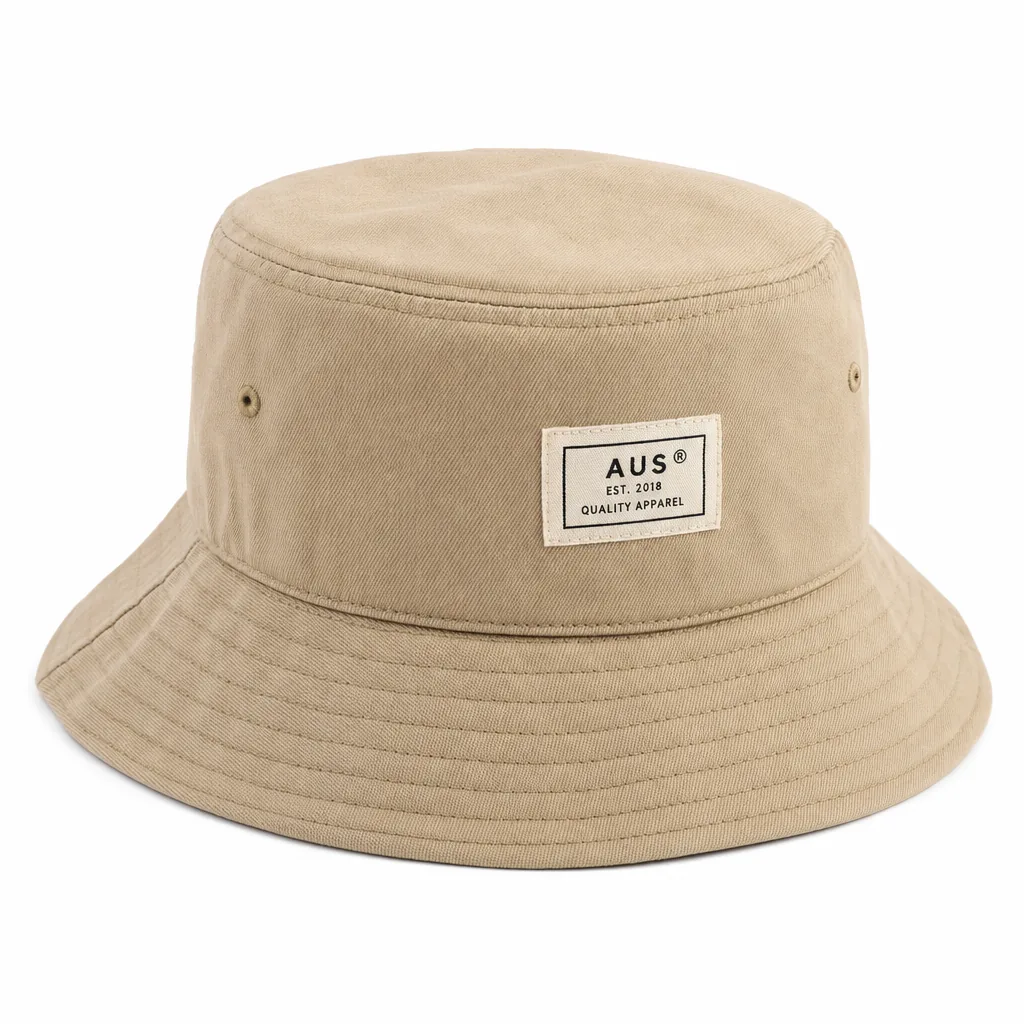
Custom Made Trucker Hat: The 2026 Sourcing & Manufacturing Playbook (2026 Update) (2026 Update) - 2026 Buyer's Guide - Cost & MOQ Breakdown - Cost & MOQ Breakdown is one of the most-asked questions we receive from international buyers, and for good reason. With dozens of factories competing for your order and an alphabet soup of technical terms in every supplier quote, even experienced importers can feel lost. This guide consolidates what we have learned producing custom hats for clients in 40+ countries.
Custom Embroidered Hats
Embroidery is still the most reliable premium decoration on a custom made trucker hat, but only if the cap is built around the logo instead of treating embroidery as an afterthought. On real production lines, front panels should be embroidered before crown assembly on Tajima, Barudan, or ZSK multi-head machines; once the mesh back and sweatband are closed, cap-frame access shrinks and registration errors show up fast. The highest-risk layout is any logo crossing the center seam, especially on 5-panel foam truckers with soft front support. That setup usually adds 2% to 5% more defect risk from asymmetry, seam deflection, and top-thread instability. Buyers should lock the decoration method early: flat embroidery on cotton twill, direct embroidery on foam-backed polyester, or 3D puff on a laminated front all require different underlay, pull compensation, and needle settings. On foam fronts, dense fills below roughly 0.40 mm stitch spacing are where puckering, foam cut-through, and edge distortion start if the buckram is too light or the digitizing is too aggressive.
A workable tech pack needs measurable embroidery specs, not vague notes like “premium logo.” Give logo size in mm, Pantone TCX references, approved thread type, expected stitch count, underlay structure, satin-column minimum width, and whether 3D puff uses 2 mm or 3 mm EVA. For durability and wash stability, 120D/2 polyester thread is usually safer than rayon on trucker programs, especially when the hat will see sweat, UV, and repeated brim handling. Also lock the construction variables that buyers often ignore: crown height, front panel stiffness, visor curve, seam placement, mesh denier, and sweatband material. Changing from a 110-120 gsm polyester mesh to a cheaper open mesh can make the exact same embroidery file sew differently and soften edge definition.
Most failures are subtle enough to slip past a casual approval, which is why embroidery should be reviewed against tolerances and not just “overall appearance.” Ask for a pre-production sample with the digitized file number, final stitch count, thread card approval, and close-up photos at macro range plus normal viewing distance around 45 cm. Check fill coverage, border sharpness, pull compensation, foam exposure on puff edges, inside-thread looping, logo tilt, and crown puckering. Under D65 lighting, thread color should be compared to the approved standard; for brand-sensitive work, Delta-E below 2.0 is a practical target on standard polyester shades, while fluorescents often run higher. Typical MOQ for cut-and-sew trucker hats is 144-300 pieces per colorway; stock blank programs may start at 48-100 pieces, but you lose control over foam density, mesh handfeel, closure quality, and sweatband absorbency. In 2026, a 5-panel trucker with 5,000-8,000 stitches usually lands around $2.20-$3.60 FOB China at 300-500 pieces, while 3D puff plus side and back embroidery pushes realistic FOB to $3.40-$5.20 before DDP freight, duty, and local delivery.
Custom Hat Embroidery
Embroidery is the point where a custom made trucker hat either reads like licensed retail or cheap promo stock. The front panel is the problem area: a 5-panel foam trucker usually uses 2.5-4.0 mm EVA laminated to tricot, while a structured cotton-twill front may be 210-270 gsm with 0.35-0.50 mm buckram. Those substrates do not digitize the same way. On our line, front logos are run pre-assembly on Tajima or Barudan flat frames because cap frames introduce more distortion on tall center-front artwork; side and back hits can go on cap frames later. Buyers who only send a JPEG usually create expensive back-and-forth. A usable tech pack should call out logo size in millimeters, max stitch count, thread brand and code such as Madeira Polyneon or Isacord, backing weight, panel material, foam thickness, and color reference by Pantone TCX with approved nearest-thread match. For 3D puff, keep stroke width above 2.5 mm, avoid enclosed counters under roughly 1.2 mm, and do not expect serif text below 4 mm letter height to stay open after density and foam coverage are balanced.
Digitizing decides whether bulk production stays stable at 12 heads or turns into rework. On trucker fronts, I would rather simplify artwork than push density tighter than about 0.40-0.45 mm stitch spacing on soft foam or light twill; beyond that, puckering, tunneling, and registration drift show up fast, especially once humidity changes on the floor. Satin columns, tatami fills, appliqué, merrowed patches, and direct-embroidered borders all pull differently, so the approved sew-out should be run on the exact crown construction, not on a random flat twill swatch. A proper review checks thread coverage, underlay control, edge sharpness, reverse-side birdnesting, and placement tolerance within +/-2 mm. Cost follows setup time and stitch count, not the buyer's assumption that embroidery is a low-cost add-on: a 7,000-9,000 stitch front logo on a custom made trucker hat with cotton twill front, polyester mesh back, and PP snapback usually lands around $2.20-$3.40 ex-factory at 300-500 pieces in Zhejiang. Add $25-$80 for digitizing, $0.18-$0.45 for 3D puff, and use AQL 2.5 to police defects that actually matter in bulk—thread breaks, exposed puff foam, needle cuts, loose tails over 3 mm, and crown warping after packing.
Custom Trucker Hat
A repeatable custom made trucker hat starts with the shell spec, not the logo. Decide the body before you approve any artwork: a 5-panel foam front gives the classic high-crown promo silhouette, while a 6-panel brushed twill front holds shape better for cleaner retail embroidery. A standard trucker build in China is usually a 2.5-4.0 mm EVA-laminated front panel with 110-140 gsm polyester tricot backing, 75-110 gsm polyester mesh or 20D-40D nylon mesh, a PE visor board, and a 7-hole PP snapback. For the U.S. market, the safest baseline is still a high-crown 5-panel body, slight pre-curve visor, 8 rows of brim stitching, and a 58 cm adult circumference. If crown height, visor arc, foam hardness, or mesh handfeel are left vague, the PPS sample and bulk run will not match. Color and trim control need to be written into the tech pack like a factory standard. Use Pantone TCX for dyed fabric and mesh, Pantone C for print ink and embroidery thread, and set Delta-E at 1.5 max on visible dyed components if you want shade consistency across crown, visor, and closure tab. Black mesh also needs gloss defined; cheap bright polyester can look obviously mismatched against matte cotton twill even when the color reads “black.” A solid spec should include seam tape color, sweatband composition, top button material, snap resin type, brim sandwich color, label placement, and carton pack-out. Our standard practice is to freeze a sealed counter sample before bulk cutting, because trucker caps are notorious for quiet substitutions on mesh, foam, or closures that only become obvious after 3,000 pieces are packed.
Most avoidable failures on a custom made trucker hat happen in decoration and finishing, not basic sewing. Foam fronts cannot take the same embroidery density as cotton twill; once fill density gets tighter than roughly 0.38-0.42 mm on low-grade foam, you start seeing tunneling, puckering, and panel collapse. On Tajima, Barudan, and ZSK heads, trucker fronts need lighter underlay, reduced stitch count, and tighter push-pull compensation, especially for 3D puff, satin borders, or block lettering wider than 55 mm. If the art is patch-friendly, specify the substrate and attachment method instead of leaving it open: merrowed woven patch, laser-cut twill patch, faux leather patch, or molded PVC, then define whether it is sewn, heat-applied, or stitch-down with a placement tolerance of ±2 mm. Pricing moves quickly once you leave stock components. For stock twill, stock mesh, standard snapback, and flat embroidery, realistic Yiwu FOB pricing is about $2.20-$3.50 at 144-300 pcs per colorway. Add custom-dyed mesh, rPET fabric, rope detail, woven labels, printed seam tape, interior taping, or molded patches, and MOQ usually jumps to 500-1,000 pcs with FOB closer to $3.90-$6.50 depending on decoration count and packing. Bulk inspection should check visor symmetry, stitch-row count, closure breakage, embroidery registration, and lot-to-lot shade consistency; AQL 2.5 major and 4.0 minor is a sensible baseline. I would also ask for current sedex-audit-cap-supplier-guide.html">BSCI 2.0 or Sedex SMETA 4-Pillar reports and confirm whether sewing and embroidery are controlled in-house rather than split across subcontractors, because split production is where color drift and inconsistent finishing usually start.
Custom Trucker Hats
A custom made trucker hat fails or succeeds on the bill of materials, not the rendering. The risky combination is always the same: a stiff laminated front panel that has to survive embroidery tension, paired with open mesh that distorts if the operator runs too hot, too fast, or with uneven feed. The standard commercial build is still a 5-panel high-crown or 6-panel mid-profile shell using a 2.5-3.0 mm polyester foam front, 210D-300D polyester mesh back, PE or EVA visor board, a 180-220 gsm cotton or poly-cotton sweatband, and a 7-hole PP snap closure. If the cap is for retail rather than giveaway use, lock down crown height in millimeters, visor length and curve, mesh denier, sweatband weight, top button material, and whether the front panel is approved for 3D puff embroidery over 2.0 mm foam. On the factory floor, grain direction and foam lamination consistency matter more than most buyers realize; if the front panels are cut off grain or laminated unevenly, the crown will torque after embroidery, steaming, or carton compression. Embroidery settings need to be written into the sample approval, because trucker fronts are less forgiving than brushed cotton twill. On Tajima, Barudan, or ZSK heads, a large front logo usually runs safest at 650-750 rpm, not 850+, with wider underlay, lower fill density, and pull compensation tuned to the crown curve so the stitches seat without slicing foam or collapsing the lower panel. Ask for the actual stitch count, backing spec, and a sew-out photo on the real cap blank; a panel swatch or PDF proof will not show panel collapse, needle deflection, or distortion near the sweatband line. For patch programs, define construction early: merrowed embroidery patch, laser-cut twill patch, woven patch, PVC patch, or sublimated patch. Woven patches hold line detail below 1.0 mm better than standard embroidery, merrowed edges add bulk on foam fronts, and PVC usually requires a mold charge that can push sample cost to $80-$150 before bulk production starts.
MOQ and cost move with trim complexity, not just logo count. In Yiwu, 144-300 pieces per colorway is realistic if you stay on stock mesh, stock snaps, and standard sweatband colors. Once you specify custom-dyed mesh, recycled polyester, printed seam tape, molded rubber labels, or nonstandard closure colors, the practical MOQ usually jumps to 500-1,000 pieces because trim vendors will not run micro lots without a surcharge. In 2026, a basic custom made trucker hat at 300 pieces with one front embroidery location typically lands around $2.10-$3.40 FOB China. A better retail build with recycled mesh, two or three decoration positions, woven labels, custom inside tape, and upgraded snaps is more often $4.80-$7.50 FOB. If you add branded cartons, individual polybags with warning labels, and DDP delivery to the U.S., landed cost can easily rise another $0.80-$1.60 per piece depending on season and carton density. The defects that ruin reorders are predictable and measurable. The big five are off-center front embroidery, wavy sweatbands, mixed visor curvature within the same carton, mesh sewn under uneven tension, and brittle PP snaps that crack in low-temperature transit testing below about 5°C. A clean inspection plan should use AQL 2.5, verify logo placement from both center front and visor stitch line, check brim symmetry on a flat table, and confirm color against Pantone TCX with a practical Delta-E tolerance agreed before bulk. Our standard practice is to pull samples across multiple cartons rather than only from the top layer, because compression can mask crown twist and mesh distortion until the hats are unpacked for retail.
Hat Trucker Custom
A custom made trucker hat goes wrong at the spec-pack stage, not on the sewing line. The biggest failures I see are vague callouts like “foam front” or “standard mesh,” which give the factory room to swap in whatever is on the shelf. Lock the structure in millimeters: 5-panel or 6-panel, finished front height at 165 to 175 mm, visor length around 70 mm, crown depth, and target curve. For materials, call out 3 to 5 mm EVA or PU foam laminated to 150D tricot, rear mesh by denier or gsm, and the exact visor insert—PE board, recycled PE, or paper board if you accept lower wet strength. Also specify sweatband composition, seam tape color, top button material, closure type, and whether the front panel uses buckram, fused backing, or a soft unsupported build. If you leave those open, substitution is guaranteed, and that is how a retail program ends up looking like a giveaway cap. Decoration has to be engineered for foam, not copied from a cotton twill file. On trucker fronts, dense fills and narrow satin columns will sink, tunnel, or split over the center seam unless the digitizing is rebuilt for the substrate. I prefer vector artwork with minimum letter height called out, Pantone Solid Coated references for trims, and embroidery thread matched with a Delta-E tolerance of 1.5 to 2.0 using Madeira Classic or Gunold Poly equivalents. For 3D puff, underlay needs to be reduced and stitch angle adjusted; settings that run fine on a 260 gsm chino cap will crush foam or distort the logo. Pre-approve a sew-out on Tajima, Barudan, or ZSK heads before bulk. Screen art is not enough—once the crown curve and center seam come into play, logos that looked clean in PDF form can shift by 2 to 4 mm and read visibly off-center.
Production order is what separates a clean custom made trucker hat from one that racks up claims. Front panels should be decorated flat before cap assembly whenever possible, especially for 3D puff embroidery, screen print, woven patches, chenille, TPU badges, or merrowed emblems. Registration is better on flat goods, and you avoid fighting the crown curve after sewing. Foam fronts are heat-sensitive, so dense embroidery should usually run around 650 to 800 rpm with lighter underlay, controlled thread tension, and backing matched to the logo size; push too fast and you get scorching, collapse, or edge waviness. Pre-production approval should confirm seam allowance, center-seam treatment, visor stitch rows, snap placement, and packing method. If those points are not frozen early, the defects show up later as logo puckering, cracked mesh at the rear arch, or visors twisting off-center after carton compression. Cost is driven by components and decoration count more than by the word “trucker.” A stock-color foam-front cap with one embroidery location usually lands around FOB China $2.20 to $3.80 at 144 to 300 pieces per colorway. Add custom-dyed mesh, proprietary foam colors, molded rubber patches, printed seam tape, interior labels, or retail polybags with barcode stickers, and MOQ typically moves to 500 to 1,000 pieces with FOB more in the $3.90 to $6.50 range; premium fabrics and multi-location trims can push past $7.00. Final inspection should be AQL 2.5 minimum, with visor symmetry held within 3 mm, closure alignment checked against center back, stitch count and thread trims verified, and foam rebound, odor, and black-mesh contamination reviewed under direct light. At CrownsForge, carton drop testing is standard because crushed crowns from weak master-carton loading are still one of the most common avoidable complaints.
Trucker Custom Hat
The front panel spec is what separates a retail-grade custom made trucker hat from the floppy promo cap that loses shape after a weekend in the sun. For a standard 5-panel build, I’d lock the crown construction early: 100% polyester foam or cotton/poly foam front, 2.5-3.0 mm laminated backing, mesh at 130-160 gsm, PE visor board at 1.8-2.0 mm, and a 7-hole PP snap. If you switch the front to chino twill or brushed cotton at 210-260 gsm, the embroidery file cannot stay the same. Twill needs lower stitch density, lighter underlay, and edge compensation tuned for fabric stretch; if the digitizer runs foam settings on a soft front, you get puckering, tunneling, and raised outlines that read as low-end immediately. Buyers should also call out crown height in centimeters, visor curve, stitch-per-inch on major seams, sweatband composition, and whether the mesh is standard hex or tighter sports mesh in 75D-100D yarn, because those details drive fit, airflow, and perceived value.
Pricing stays meaningless until the tech pack is complete. A usable RFQ for a custom made trucker hat should include panel count, crown profile, fabric composition, Pantone TCX for dyed components, Pantone C or Madeira thread references for embroidery, closure type, logo size and method, target head circumference, inner branding, and carton pack-out. Decoration cost moves fast: a front logo under 8,000 stitches is straightforward, but 3D puff on foam, side hits, back arch embroidery, or TPU and woven patches add machine time and increase reject risk from thread breaks, distorted outlines, and inconsistent puff height. In China, stock-material programs usually start at 144-300 pieces per colorway; once you add custom-dyed fabric, printed seam tape, matching underbill, or molded trims, realistic MOQ becomes 500-1,000 pieces. At 300-500 pieces, a basic FOB price is usually $2.20-$3.40 with stock mesh, stock snap, and flat embroidery. Premium builds with proprietary colors, multi-location decoration, woven labels, or silicone and TPU patches typically land around $4.20-$7.50 FOB.
Inspection is where margin gets protected. The failures that kill a custom made trucker hat are rarely dramatic; they are the small defects a customer spots in two seconds: crooked front logo placement, visor-to-crown twist, crown asymmetry, mesh shade variation, brittle snap tabs, top-button wrap gaps, thread tension issues, and sweatband staining from poor handling. On a 5-panel silhouette, front logo centering matters more than most buyers realize because the decoration sits on one uninterrupted panel; even a 3-5 mm shift is visible at arm’s length. I’d require AQL 2.5 final inspection, visor flex testing, needle detection on finished goods, and Delta-E control on custom-dyed fabric and mesh, especially when white foam fronts are paired with colored side and back panels. If the style uses heat-applied badges or rubber patches, test peel strength and heat aging after 24-48 hours at 50-60°C, because plenty of failures show up after container exposure, not on the sewing line. Our standard practice is to verify machine capability on Tajima, Barudan, or ZSK heads and confirm audit coverage under BSCI 2.0 or Sedex SMETA 4-Pillar before trusting a supplier’s quote.
Working with CrownsForge for custom made trucker hat programs
The biggest risk in a custom made trucker hat program is development discipline, not whether the factory has enough sewing lines. With an approved tech pack, vector artwork, and clear BOM, a first prototype is usually 5-7 working days only if you stay with stock 100% polyester mesh, stock 3 mm foam fronts, pre-curved PE visor inserts, and standard PP snap closures. Once you add Pantone TCX lab dips, custom-dyed 12x12 cotton twill, molded silicone badge tooling, or a woven damask label, first sample timing moves to 10-14 working days fast. Two sample rounds is the realistic planning assumption. The first round usually exposes the problems that do not show on a flat spec sheet: crown height landing 3-5 mm low, front panel torque at the center seam, visor curve too tight for retail presentation, or mesh handfeel coming back too hard because the denier and finish were approved from a swatch card instead of a physical cap. MOQ should follow component economics, not a generic factory minimum. For a custom made trucker hat in stock materials, 144-300 pieces per colorway is workable; around 500 pieces is where custom inside taping, matched snap colors, woven labels, and clean size runs start to price rationally; 1,000 pieces and up is where exclusive mesh, branded metal hardware, barcode sticker application inline, and retail-ready packing stop being disproportionately expensive. The line-item math is what buyers need to see early: a closure upgrade typically adds $0.18-$0.28, molded patch $0.30-$0.45, printed seam tape $0.12-$0.20, and individual polybag plus size sticker another $0.08-$0.15. At CrownsForge, we quote around those breakpoints first, because splitting one PO across three colorways can quietly push an apparently cheap hat into the wrong cost structure.
Decoration and quality control are where weak suppliers get exposed. A foam-front trucker is not digitized like a standard 6-panel baseball cap; if the file is built badly, dense embroidery will tunnel the foam, crush the buckram, or pull the logo off-square at the center seam. The safe setup is in-house control on Tajima, Barudan, or ZSK heads for flat embroidery and 3D puff, plus patch options that suit the build: woven or merrowed patches, TPU or silicone heat-transfer badges, and screen print for simple foam-front graphics. On a 5-panel custom made trucker hat, stitch density, underlay, and pathing need pre-bulk review, especially when the art crosses the center seam or sits high on the crown. Reasonable production tolerances are embroidery or patch placement within +/-2 mm and approved patch or fabric color held to an agreed Delta-E standard against the master. Once volume scales, process control matters more than a low opening quote. Buyers selling into retail, licensed, or promotional channels should ask for current BSCI 2.0 or Sedex SMETA 4-Pillar audit reports, then match compliance to destination market with CPSIA, REACH, or California Prop 65 testing where needed. A workable control flow is simple and should be documented: tech pack review, BOM lock, vector art check, digitizing or mold approval, pre-production sample signoff, inline inspection at 20-30% completion, and final inspection to AQL 2.5 before shipment. That sequence catches the expensive errors on trucker hats: wrong mesh shade, visor sandwich mismatch, mixed snap colors, off-center patch placement, or carton assortment mistakes. As a realistic FOB benchmark, a basic 5-panel foam/mesh build is typically $2.20-$3.40 at 300-500 pieces, while a multi-decoration version with 3D puff, printed undervisor, custom seam tape, and polybag packing lands closer to $4.20-$6.80 depending on fabric gsm, trim count, and packing method.
Frequently Asked Questions
What file format should I send for my logo?
Vector files (AI, EPS, PDF) are ideal. High-resolution PNG or JPG at 300 dpi on transparent background works as a fallback. Provide Pantone color references for accurate reproduction.
Can I order a sample before bulk production?
Yes. We strongly recommend approving a pre-production sample before mass production. Samples are charged at 35 to 60 USD each plus express shipping, fully refundable against confirmed bulk orders over 500 pieces.
What is the minimum order quantity (MOQ) for custom hats?
Our standard MOQ is 100 pieces per design and color, with sampling available from 1 piece. For complex multi-color logos or premium fabric upgrades, the MOQ can be lowered with a small per-piece surcharge.
How long does production take?
Sampling takes 7 to 12 days. Bulk production runs 20 to 30 days depending on quantity, fabric availability and decoration complexity. Inspection and packing adds another 3 to 5 days before shipment.
What logo decoration techniques do you offer?
3D puff embroidery, flat embroidery, woven patch, leather patch, PVC patch, screen printing, sublimation, applique and laser etching, all in-house with no subcontracting.
How does ordering custom hat trucker work?
When evaluating custom hat trucker, the key considerations are construction quality, decoration capability, MOQ flexibility and lead time. Cover everything buyers ask about custom embroidered hats: how it's manufactured, what specs to request from a factory, typical MOQ and pricing, common quality issues to inspect for, and how this ties back to the broader custom made trucker hat sourcing decision. Cover everything buyers ask about custom hat embroidery: how it's manufactured, what specs to request from a…
How does ordering custom embroidered trucker hats work?
When evaluating custom embroidered trucker hats, the key considerations are construction quality, decoration capability, MOQ flexibility and lead time. Cover everything buyers ask about custom embroidered hats: how it's manufactured, what specs to request from a factory, typical MOQ and pricing, common quality issues to inspect for, and how this ties back to the broader custom made trucker hat sourcing decision. Cover everything buyers ask about custom trucker hats: how it's manufactured, what specs to request from a…
How does ordering custom made hats for men work?
When evaluating custom made hats for men, the key considerations are construction quality, decoration capability, MOQ flexibility and lead time. Cover everything buyers ask about custom embroidered hats: how it's manufactured, what specs to request from a factory, typical MOQ and pricing, common quality issues to inspect for, and how this ties back to the broader custom made trucker hat sourcing decision. Cover everything buyers ask about custom trucker hats: how it's manufactured, what specs to request from a…
How does ordering high quality custom trucker hats work?
When evaluating high quality custom trucker hats, the key considerations are construction quality, decoration capability, MOQ flexibility and lead time. Cover everything buyers ask about custom embroidered hats: how it's manufactured, what specs to request from a factory, typical MOQ and pricing, common quality issues to inspect for, and how this ties back to the broader custom made trucker hat sourcing decision. Cover everything buyers ask about custom trucker hats: how it's manufactured, what specs to request from a…
How much should a trucker hat cost?
Trucker Hats Known for their mesh back panels, perfect for ventilation. Average cost: $5 - $60+ depending on the brand.
Who makes the highest quality trucker hats?
Richardson Trucker Hats. Richardson makes some of the best men's trucker hats with high quality and comfort. ... New Era Trucker Hats. New Era makes some of the best-looking trucker hats with stylish designs and a perfect fit. ... Adidas Trucker Hats. ... Pacific Headwear Trucker Hats. ... Dri Duck Trucker Hats.
How much do people charge for custom hats?
Rubber and Embroidered Patch Hats: Prices begin at $20 for 50 pieces (minimum) and reduce to $16.75 per hat for 100+. Embroidered Hats: Prices start at $22 each for 25 pieces (minimum) and go down to $16.75 per hat for 100+.
What does a 47 trucker hat mean?
The '47 or 47 on hats and caps refers to the '47 Brand company. '47 refers to 1947, which is the year that the '47 Brand company was started by Italian immigrant brothers, Henry D'Angelo and Arthur D'Angelo.
Ready to start your custom hat project?
Send us your tech-pack, sketch or even just an inspiration photo. We will respond with a detailed quotation and digital mock-up within 24 hours.
Request a free quoteRelated guides
Bucket Hat Corduroy Decoration QC Checklist for Custom Hat Buyers - Cost & MOQ Breakdown (2026 Update)
Read article →
BSCI vs Sedex vs WRAP vs WCA: Compliance Audit Standards Compared - Supplier Checklist - Supplier Checklist - Cost & MOQ Breakdown
Read article →
Winter Beanie & Knit Cap Manufacturing: The Complete Wholesale Guide - Cost & MOQ Breakdown
Read article →Sourcing custom hats does not have to be complicated. With the right manufacturing partner, clear specifications and a small upfront investment in sampling, you can launch a retail-quality product in 30 to 45 days.