
Bucket Hat Corduroy Decoration QC Checklist for Custom Hat Buyers - Cost & MOQ Breakdown (2026 Update)
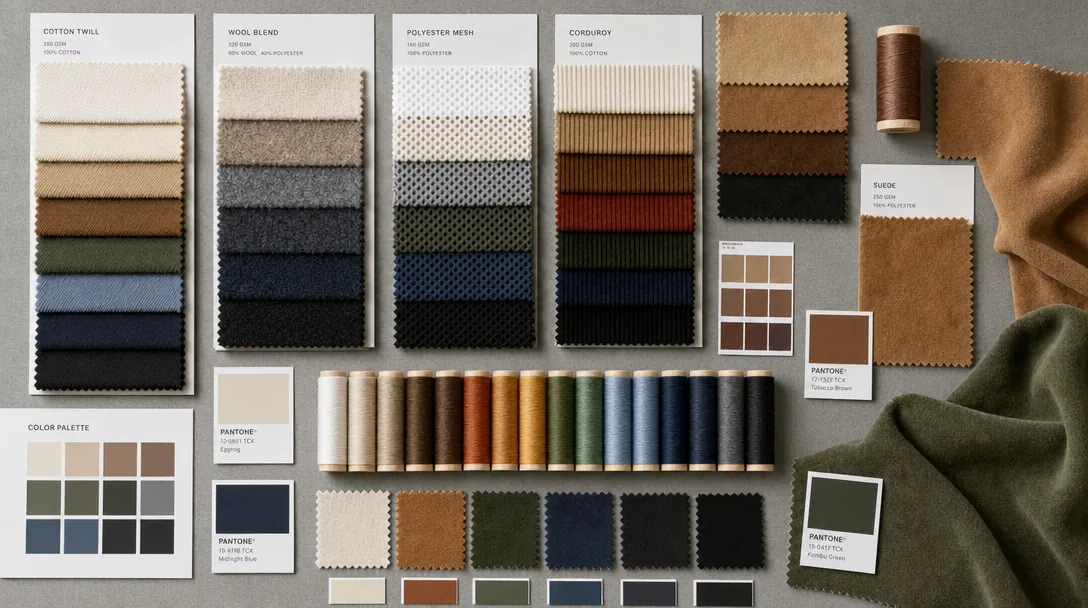
For brand owners, wholesalers and procurement teams entering the custom headwear category, bucket hat corduroy decoration qc checklist for custom hat buyers - cost & moq breakdown (2026 update) is one of the highest-leverage decisions you will make. Get it right and your unit economics, retail story and reorder cycle all improve. Get it wrong and you carry the cost for years.
Why bucket hat corduroy decoration qc checklist needs a separate sourcing plan
A usable bucket hat corduroy decoration qc checklist has to start at fabric booking, because most failures happen where pile fabric meets decoration, not at final packing. The recurring defects are predictable: wale crush after embroidery or heat pressing, panel-to-panel shade mismatch caused by nap direction, and seam bulk that destroys the bucket silhouette. On 8-wale to 11-wale cotton corduroy at 220-280 gsm, the same dye lot can read visibly different if crown and brim panels are cut against mixed pile direction; that problem is far less forgiving than on chino or brushed twill. A separate sourcing plan should freeze wale count, gsm tolerance, usable width, shrinkage, and nap direction before the first prototype. If a mill quotes 57/58 inch width and under 3 percent wash shrinkage, ask for test data, not a sales swatch. For organic or recycled claims, control the paperwork early: GOTS or OCS transaction certificates, recycled content declarations, and carton-marking language should be aligned before hangtags are printed, not after bulk is sewn.
Decoration is where generic sourcing plans usually break. Flat embroidery above roughly 4,500-5,500 stitches on soft corduroy tends to sink into the wale channels or pucker the panel unless the digitizing, underlay, backing, and machine speed are adjusted for pile fabric. On Tajima, Barudan, or ZSK heads, that typically means reducing speed to about 650-750 rpm, testing cutaway versus tearaway backing, and checking whether a knockdown stitch is enough to stabilize the logo without flattening the nap around it. Woven patches, chenille, satin appliqué, and heat transfers each change drape differently, which matters much more on a sloped bucket brim than on a structured cap front. Dark shades are especially risky: a brim join that drifts beyond Delta-E 1.5 under D65 lighting will be obvious on navy, brown, olive, and black. A proper bucket hat corduroy decoration qc checklist should therefore lock Pantone TCX reference, stitch count, brim SPI, puckering tolerance, and approved nap direction in the PPS, so bulk inspection stays measurable under AQL 2.5 instead of turning into a subjective argument.
The cost and lead-time impact is big enough to justify a separate sourcing path. A plain cotton bucket hat may sample in 7-10 days, but corduroy with embroidery, eyelets, inside taping, and wash testing usually takes 12-18 days because the factory has to validate needle cutting, brim collapse, and post-decoration shrinkage. MOQ also moves quickly once fabric is not stock-supported: available mill shades can work at 144-300 pieces per color, but custom-dyed 8-wale or 11-wale corduroy often pushes the practical minimum to 500-1,000 pieces after mill minimums, marker loss, and replacement allowance are included. In 2026, realistic FOB China pricing for a 220-280 gsm corduroy bucket hat is usually $2.20-$4.80 depending on fabric source, trim count, decoration method, and compliance overhead such as sedex-audit-cap-supplier-guide.html">BSCI 2.0 or Sedex SMETA 4-Pillar. Even when the same vendor is already making other soft hats, corduroy needs its own QC track because pile crush, seam impression, brim symmetry, and side-seam shade variation require separate inline checkpoints and stricter final sorting.
Factory capability checks before quoting
Capability on corduroy lives or dies at fabric control, not at the logo stage. Before accepting any price, make the factory prove it can keep wale direction and nap running consistently across crown, sidewall, and brim panels; on 11- to 14-wale cotton corduroy, a misalignment of 10 degrees is already visible as a shade jump under D65 lighting, especially on dark olive, navy, and black. A practical bucket hat corduroy decoration qc checklist should require written fabric data, not sales language: fiber content, wale count, finished weight in gsm, shrinkage after wash, dry and wet crocking grade, and lot shade tolerance measured in Delta-E. For export work, I would treat Delta-E 1.5 as a reasonable ceiling and ask whether the base cloth is reactive dyed, pigment dyed, or garment washed, because each route changes pile handfeel, panel stability, and post-sew color variation. If the supplier cannot tell you whether the brim has fusing, what gsm fusible they use, or how much panel shrinkage they allow before cutting, the quote is guesswork. Decoration capability should get technical fast once corduroy enters the conversation. Ask what embroidery machines they actually run—Tajima, Barudan, or ZSK—what needle size they use on corduroy, and whether they digitize with reduced underlay and adjusted pull compensation to avoid tunneling across the wale ridges. On unstructured bucket panels, embroidery above roughly 7,000 to 8,000 stitches in one area often distorts the shell unless backing, density, and hooping method are changed; that is a factory-floor issue, not a design issue. Heat transfers are another red flag on corduroy because ridged pile reduces edge contact; unless press temperature, dwell time, and pressure are tuned to the fabric height, corners lift after a few wears. 3D foam is usually a poor choice unless the artwork is simple and the panel is fused. If a supplier can only show baseball cap references and no real bucket samples, they do not understand the construction risk well enough to quote accurately.
The fastest way to separate a real bucket-hat factory from a trader is to check its sample discipline and documentation. A capable room should be able to issue proto, fit, PP, and TOP samples with revision history, measurement chart, and comment closure, usually within 3 to 5 working days per round for a straightforward style. Ask who reviews the tech pack, who signs off digitizing before production, and whether inline photos come from cutting, embroidery, sewing, and finishing. Cost also moves on details buyers often underestimate: stitched eyelets versus metal eyelets, self-fabric chin strap versus 3 mm nylon cord with toggle, overlock seams versus bound seams, and 6 versus 8 brim stitch rows can change FOB by about $0.15 to $0.60 per piece at 300 to 1,000 units. If those variables are not separated on the quote sheet, you cannot benchmark suppliers cleanly. Audit and QC controls should be verified before sampling, not after deposit. Require a current BSCI 2.0 or Sedex SMETA 4-Pillar report, needle policy, broken-needle log, and metal-detection procedure where trims or detachable hardware are involved. For inspection, AQL 2.5 is the normal export baseline for headwear, but ask to see the actual checklist used for brim symmetry, circumference tolerance, embroidery position, patch adhesion, and nap consistency by panel. Also confirm whether bucket hats are made in-house or subcontracted. That matters because subcontract bucket lines are where you usually see mixed dye lots, weak patch attachment, uneven brim stiffness, and sidewall panels flipped off grain. At CrownsForge, the quote sheet is split into material, decoration, and construction assumptions so any change in corduroy weight, patch method, or wash treatment is priced before bulk production, not argued about after PO approval.
MOQ, pricing and sample approval
MOQ is where a bucket hat corduroy decoration qc checklist stops being theoretical and starts affecting unit economics. For 8-wale cotton corduroy at 280-320 gsm, a realistic factory MOQ is usually 144 pieces per colorway only when you stay with stock greige or stock-dyed fabric, one embroidery position, and standard trims. Once you specify Pantone TCX lab-dipped fabric, custom woven labels, branded sweatband tape, printed size tape, or retail packing with barcode stickers, the workable break point usually shifts to 300-500 pieces per color because the loss is no longer in sewing minutes; it is in fabric minimums, trim setup, and extra handling. Typical non-recurring charges are straightforward: embroidery digitizing for Tajima, Barudan, or ZSK files runs about $25-60 per logo, woven label setup $35-80, metal badge mold $120-250, and hangtag or UPC layout $20-40. On FOB China terms, a basic corduroy bucket hat with flat embroidery and a woven label generally lands around $2.80-4.20 at volume, while heavier decoration like PU patches, appliqué, contrast eyelets, or custom inner tape pushes pricing closer to $4.80-6.50 at 300 pieces. If someone quotes 100 pieces with fully custom trims and no setup cost, they are usually clawing margin back through lower actual gsm, reduced stitch count, or looser workmanship tolerance than the PO implies.
PPS approval is the control point that prevents most bulk disputes, especially on corduroy where pile direction changes how decoration reads from panel to panel. The pre-production sample should be built in the actual wale, actual dye lot, actual backing, and actual decoration method; approving artwork on twill or brushed cotton is not a valid substitute because corduroy ribs distort edge definition and absorb stitch differently. For embroidery, I would not sign off a fill without checking density and underlay against the wale: on corduroy, fills often perform best around 0.38-0.45 mm with enough edge-run and tatami support to bridge the ribs without tunneling. Too dense, and the crown puckers; too open, and the wale ghosts through the logo. Color limits also need to be written into the PPS file. Embroidery thread can usually be held within Delta-E 1.5-2.0 to the approved standard, but piece-dyed corduroy shell fabric is more realistically controlled at Delta-E 2.0-3.0 because nap direction shifts visual shade under D65 lighting. The signed PPS record should lock shell fabric, Pantone reference, thread card, label placement, brim stitch count, packing ratio, and care-label copy in one file, then hold the bulk lot to AQL 2.5 at final inspection.
Quality inspection and shipping risk
Lock the acceptance standard before bulk cutting; if you wait until final inspection to debate defects, the argument is already expensive. A usable bucket hat corduroy decoration qc checklist should call out ANSI/ASQ Z1.4, General Inspection Level II, with AQL 2.5 for major defects and 4.0 for minor defects, tied to actual lot size. On a 3,000-piece order, that usually means a 200-piece sample for visual, measurement, decoration, labeling, and packing checks. Critical defects stay at zero tolerance: broken needle contamination, exposed sharp trim ends, mildew, wrong fiber content or country-of-origin labels, missing CPSIA tracking details for U.S. programs, and any carton-pack mismatch against the PO. Measurement tolerances need to be itemized, not guessed: brim width ±0.3 cm, crown height ±0.5 cm, head circumference ±1.0 cm after final pressing. Corduroy needs one more control point that buyers often miss: wale direction and pile lay must be standardized panel by panel, because reversed pile can create an obvious shade shift under D65 light boxes or retail LED lighting even when the dye lot is identical.
Most margin loss comes from color, decoration, and shipping failures that were visible long before the container left port. For shell fabric, approve bulk against Pantone TCX under D65 with a defined Delta-E tolerance; on cotton corduroy, keeping the main fabric within Delta-E 1.5 is realistic, while sweatbands, binding, or twill tapes can usually hold within 2.0. Require lab data, not verbal approval: dry crocking grade 4 minimum, wet crocking 3-4, perspiration 3-4, and dimensional stability within 3 percent after finishing. Embroidery on corduroy needs a separate strike-off because the wale distorts stitch geometry; common failures are satin stitches sinking into the pile, bobbin grin, puckering around dense fills, registration drift over 1.5 mm, and backing show-through on light shades. On Tajima or Barudan machines, 650-750 rpm is a sensible starting range for medium-wale fabric, but approval should come from the first 20-piece strike-off, not one hand-picked sample. Shipping risk is usually packaging and paperwork, not transit itself: use at least a 5-ply export carton in the 200-250 lb burst range for cartons above 12 kg, lock carton marks in the PO, and keep one sealed reference set with approved sample, measurement sheet, embroidery file version, carton artwork, inspection report, and fabric lot record so repeat orders match the last shipment instead of drifting into a new standard.
Buyer checklist for the next RFQ
A quote is only usable when the RFQ removes guesswork from the cutting table and sewing line. For a reliable bucket hat corduroy decoration qc checklist, send one tech pack with a flat sketch plus every measurable point in millimeters: crown height, brim width, top diameter, sidewall length, head opening, seam allowance, and stitch count per inch or per 3 cm. “Adult OSFM” is a shortcut that usually creates fit disputes later. Call out the corduroy precisely as well: 8-wale, 11-wale, or micro-cord; 220-280 gsm versus 300+ gsm; and fiber content such as 100% cotton or 97/3 cotton-spandex. Those specs directly affect brim memory, panel feeding, needle selection, and whether embroidery sinks into the ribs. Color needs controlled standards, not words like “off-black” or “vintage khaki.” Use Pantone TCX or approved lab dips and define acceptance under D65 light, ideally Delta-E 1.5 or tighter if the hat has to match garments. Without that, suppliers often quote from stock greige or the nearest dye lot, and the pre-production sample will not match bulk.
Decoration is where bucket hat pricing and QC usually go off the rails. Submit artwork in AI, EPS, or layered PDF and list every placement with finished size in millimeters, thread brand or Pantone reference, stitch type, and backing requirement. For embroidery on corduroy, specify whether the factory should digitize with heavier underlay, pull compensation, and reduced density to stop fills from disappearing into 8-wale ribs on Tajima or Barudan machines; otherwise the approval sample may look sharp while bulk runs soft and buried. If you use patches, define twill, felt, TPU, or leatherette base, edge finish, attachment method, and wash or crocking standard. Put QC tolerances in writing: brim waviness within 3 mm, top button off-center no more than 2 mm, logo placement variance within 2 mm, no raw edge exposure, and final inspection at AQL 2.5. Add the commercial terms in the same file—quantity by color, carton pack, polybag requirement, Incoterm such as FOB Ningbo or DDP Los Angeles, and target ex-factory date—because a 300-piece order can cost 15% to 25% more per hat than 1,200 pieces once cutting loss, digitizing, and setup are spread across too few units.
Working with CrownsForge
Most failures on a corduroy bucket hat are locked in before bulk cutting, not at final inspection. The approval pack should freeze the variables that actually move in production: wale count, finished fabric weight, pile direction, Pantone TCX target, logo size and coordinates, seam alignment standard, and placement tolerances that operators can hold on the line. On 8-wale cotton corduroy at 280-320 gsm, a realistic standard is ±2 mm for patch placement and ±3 mm for embroidery center, with crown height and brim width measured again after fusing because corduroy shrinks and rolls differently than twill. At CrownsForge, a fitted PPS is the useful checkpoint, not just a lab dip or flat panel strike-off, because brim collapse, topstitch drag, and seam bulk only show up on the sewn hat. If your bucket hat corduroy decoration qc checklist does not specify one-way nap and rib matching across visible seams, the goods can technically pass measurement while still looking off-grade at first glance.
Color approval also needs more discipline on corduroy because nap changes how the same dye lot reads under light and angle. Black and navy are forgiving; olive, tan, rust, and chocolate are not. If the buyer is approving against a master swatch, a Delta-E below 1.5 is achievable on stock-supported cotton corduroy, but only when the face side is checked in a D65 light box and the panel is rotated 180 degrees to expose shading from pile direction. Decoration needs separate controls from fabric because embroidery that runs clean on chino will sink or trench on corduroy. On Tajima, Barudan, or ZSK heads, 650-750 rpm is usually the safe range for flat embroidery, with lighter upper tension, tighter backing selection, and edited underlay to prevent channels between wales from swallowing the stitch. As a rule, text under 3 mm cap height and satin columns below about 1.2 mm are reject-risk on 8-wale fabric. For patches or printed emblems, check adhesive bleed, edge lift, and rib bridging after pressing and a dry rub test, then close bulk with inline inspection plus final AQL 2.5, or AQL 1.5 if the program is retail-sensitive.
Frequently Asked Questions
What logo decoration techniques do you offer?
3D puff embroidery, flat embroidery, woven patch, leather patch, PVC patch, screen printing, sublimation, applique and laser etching, all in-house with no subcontracting.
Do you support sustainability certifications?
Yes. We work with GOTS organic cotton, GRS-certified recycled polyester, OEKO-TEX Standard 100 fabrics, and are BSCI and Sedex audited. Certification documentation can be provided per order.
What is the minimum order quantity (MOQ) for custom hats?
Our standard MOQ is 100 pieces per design and color, with sampling available from 1 piece. For complex multi-color logos or premium fabric upgrades, the MOQ can be lowered with a small per-piece surcharge.
How long does production take?
Sampling takes 7 to 12 days. Bulk production runs 20 to 30 days depending on quantity, fabric availability and decoration complexity. Inspection and packing adds another 3 to 5 days before shipment.
Can I order a sample before bulk production?
Yes. We strongly recommend approving a pre-production sample before mass production. Samples are charged at 35 to 60 USD each plus express shipping, fully refundable against confirmed bulk orders over 500 pieces.
What should buyers know about organic cotton bucket hat?
When evaluating organic cotton bucket hat, the key considerations are construction quality, decoration capability, MOQ flexibility and lead time. Explain the buyer intent behind bucket hat corduroy decoration qc checklist, when it differs from generic hat sourcing, and what decisions affect cost, lead time and compliance. Describe how CrownsForge manages bucket hat corduroy decoration qc checklist programs with sampling, decoration, QC and export coordination.
What should buyers know about brown corduroy bucket hat?
When evaluating brown corduroy bucket hat, the key considerations are construction quality, decoration capability, MOQ flexibility and lead time. Explain the buyer intent behind bucket hat corduroy decoration qc checklist, when it differs from generic hat sourcing, and what decisions affect cost, lead time and compliance. Describe how CrownsForge manages bucket hat corduroy decoration qc checklist programs with sampling, decoration, QC and export coordination.
What should buyers know about bucket hat men nike?
When evaluating bucket hat men nike, the key considerations are construction quality, decoration capability, MOQ flexibility and lead time. Explain the buyer intent behind bucket hat corduroy decoration qc checklist, when it differs from generic hat sourcing, and what decisions affect cost, lead time and compliance. Describe how CrownsForge manages bucket hat corduroy decoration qc checklist programs with sampling, decoration, QC and export coordination.
What should buyers know about acrylic beanie hat?
When evaluating acrylic beanie hat, the key considerations are construction quality, decoration capability, MOQ flexibility and lead time. Explain the buyer intent behind bucket hat corduroy decoration qc checklist, when it differs from generic hat sourcing, and what decisions affect cost, lead time and compliance. Describe how CrownsForge manages bucket hat corduroy decoration qc checklist programs with sampling, decoration, QC and export coordination.
Ready to start your custom hat project?
Send us your tech-pack, sketch or even just an inspiration photo. We will respond with a detailed quotation and digital mock-up within 24 hours.
Request a free quoteRelated guides
Acrylic Beanie: Properties, Costs and How to Spec It Right
Read article →
Custom Hat Design: The 2026 Sourcing & Manufacturing Playbook
Read article →Bucket Hat Corduroy Retail Packaging Guide for Custom Hat Buyers
Read article →We hope this guide demystifies bucket hat corduroy decoration qc checklist for custom hat buyers - cost & moq breakdown (2026 update) and helps you move forward with confidence. If you have questions specific to your project, our English-speaking sales engineers are one message away.