
Custom Hats for Women: A 2026 B2B Sourcing Guide
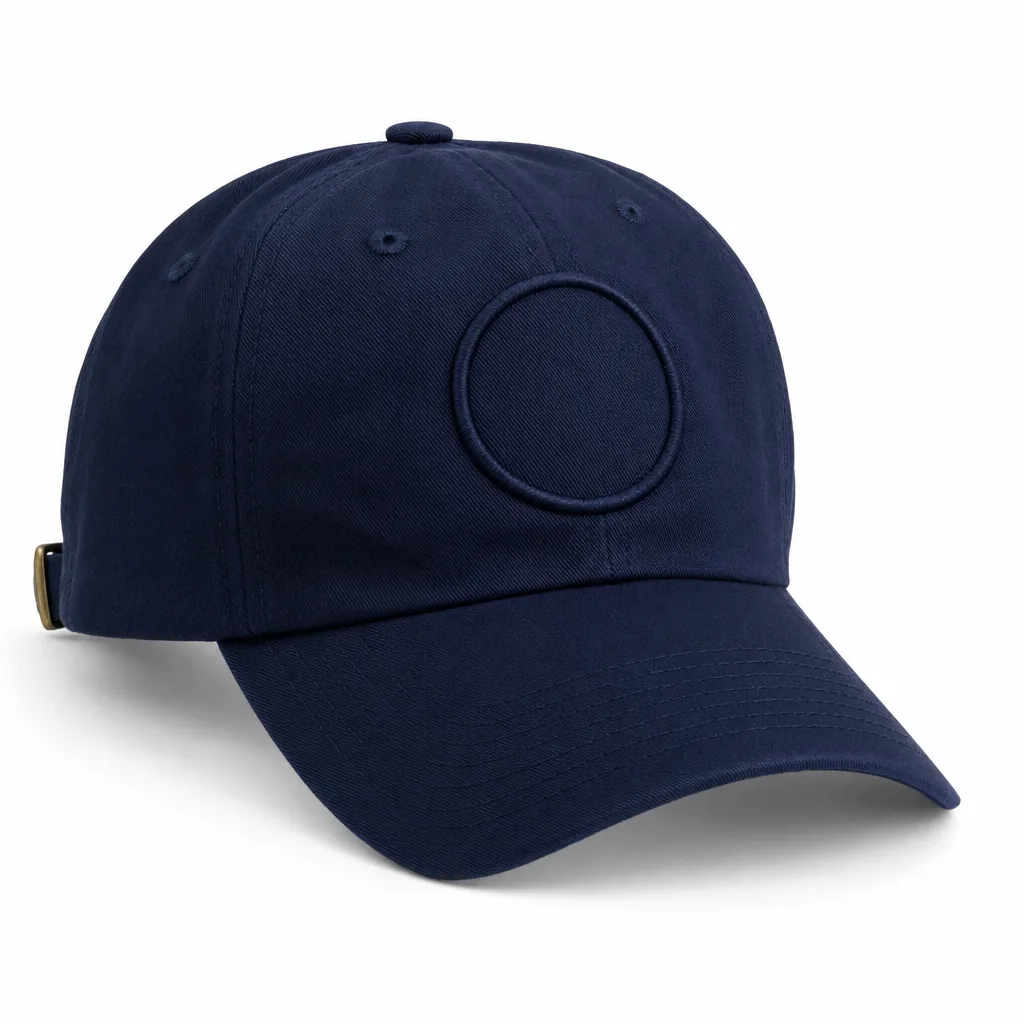
For brand owners, wholesalers and procurement teams entering the custom headwear category, custom hats for women: a 2026 b2b sourcing guide is one of the highest-leverage decisions you will make. Get it right and your unit economics, retail story and reorder cycle all improve. Get it wrong and you carry the cost for years.
Custom Golf Hats for Men
Custom golf hats for men are usually built on the same production lines as custom hats for women, but the spec stack is different enough that you cannot just swap logos and call it done. Golf buyers usually want a cleaner front panel, lower crown than a standard trucker, and tighter curvature on the visor so the hat reads polished in photos and on course. For production, I would ask for a 6-panel structured cap in 100% cotton twill or recycled polyester, 260–300 gsm, with matching underbill, moisture-wicking sweatband, and either a self-fabric strap or premium snapback depending on your retail point. If you want embroidery, specify thread count, stitch density, and backing weight; for flat embroidery on the front panel, 6,000–10,000 stitches is common, while 3D puff should be limited to logos that can tolerate the extra bulk. Ask the factory to confirm cap block size, crown height in centimeters, visor length, and whether the panel seams are taped, because those details affect both fit and perceived quality.
In sourcing terms, the factory conversation should start with mold, fabric, and trim rather than logo art. A serious supplier should quote by material, construction, and decoration method: woven label, silicone patch, embroidery, or heat-transfer. For most import programs, MOQ lands around 300–500 pieces per colorway if you use stock fabric and standard closures, but custom dyeing, private molds, or special washes can push that to 1,000 pieces and add 7–14 days to lead time. In China, ex-works pricing for a decent golf cap usually sits around $2.10–$4.80 depending on fabric and decoration; a cap with multi-location embroidery, metal buckle closure, and custom inner taping can climb past $6.00. If you are also buying custom fitted hats for men or custom baseball hats for men from the same factory, compare their cutting accuracy, sweatband consistency, and seam alignment side by side, because those are the easiest places to spot whether the line is truly capable or just quoting low.
Quality control on golf hats is mostly about shape retention and decoration placement. The common failures I see are crooked front panels, puckered embroidery, inconsistent crown depth between sizes, visor curl that is too aggressive, and sweatbands that twist after one wash cycle. I would inspect against AQL 2.5 for general defects, then add a special check for logo centering within 3 mm and panel symmetry within 2 mm, because a cap can pass basic inspection and still look cheap on head. For branded programs, request color approval against Pantone TCX for textiles and ask the factory to report Delta-E under 2.0 for critical colors. This matters whether you are buying custom fedora hats for men, custom made hats for men, or golf styles for a mixed assortment, because the sourcing discipline is the same: lock the spec sheet, approve a pre-production sample, and make the factory prove repeatability before you scale order volume.
Custom Fedora Hats for Men
Custom fedora hats for men are usually built very differently from custom baseball hats for men or custom fitted hats for men. A real fedora starts with a blocked crown, not a soft sewn-panel construction, so the factory needs proper wood or aluminum hat blocks, steam shaping, and a brim that holds its sweep after packing and shipping. For mainstream felt versions, ask for wool felt in the 180–260 gsm range, rabbit-blend felt if you need a cleaner edge, or woven straw at 180–240 g for warm-weather programs. Specify crown height, brim width, pinch depth, sweatband type, and lining material up front. If you are sourcing custom hats for women as well, keep the block family consistent where possible; that reduces tool changes and helps you control fit and silhouette across the line instead of treating each style as a one-off.
The factory specs that matter most are dimensional tolerance and handwork consistency. For a fedora, I would request brim width tolerance within ±3 mm, crown height within ±4 mm, and color control under Delta-E 2.0 against the approved Pantone TCX or PMS standard. Ask for a leather or faux-leather sweatband, preferably 1.2–1.4 mm thickness, stitched with a uniform 3–4 mm stitch length; cheap sweatbands crack at the seam after a few months of wear. Trim details like grosgrain ribbon, edge binding, feather pins, and metal branding should be approved as separate components, because many problems come from mismatched accessory lots rather than the hat body itself. On decoration, embroidery is less common than on custom made hats for men in streetwear, so if you want a logo, test patch placement carefully; heavy patches can distort the crown if the backing is too rigid.
Typical MOQ for custom fedora hats for men is 300–500 pieces per colorway if you are using existing blocks and standard materials, and 800–1,500 pieces if you need a new block, custom mold, or unusual trim. Ex-works pricing for a decent wool felt fedora usually lands around $6.80–$12.50 depending on felt grade, sweatband, lining, and trim; straw versions often come in lower, around $4.20–$8.00, while small-batch hand-finished styles can go well above that. The quality checks I insist on are flattening recovery after compression, brim symmetry, sweatband stitch consistency, and lint shedding on dark colors. For buyers comparing custom fedora hats for men with custom golf hats for men or custom baseball hats for men, the decision is usually less about decoration and more about construction labor, packing risk, and resale positioning. If your broader program includes custom hats for women, it is worth aligning color standards, lining specs, and carton packouts so the factory can run one QC logic across the whole assortment instead of inventing separate rules for each silhouette.
Custom Fitted Hats for Men
Custom fitted hats for men are usually built on a 6-panel structured crown with a closed back and a size run cut by 1/8" increments, so the factory has to get the block, sweatband tension, and seam symmetry right before decoration even starts. If you are sourcing custom fitted hats for men alongside custom hats for women, ask for the exact crown height, brim curve, profile type, and headsize range in centimeters, not just S/M/L. A good spec sheet should also call out fabric weight, usually 260-300 gsm chino cotton twill or 100% acrylic wool-blend for colder-market programs, plus visor board thickness, sweatband material, and whether the crown is buckram-structured or semi-structured. For embroidery, Tajima, Barudan, and ZSK heads all do the job, but the digitizing matters more than the machine; request stitch count, backing type, and a Pantone TCX target for the thread match if color control is important across a mixed program of custom baseball hats for men and women’s headwear.
Factories generally price custom fitted hats for men by complexity, not just blank material. At 300-500 pcs, a common FOB China range is about USD 4.20-7.80 per piece for basic twill with flat embroidery, while wool-blend or high-detail 3D work can move into USD 6.50-10.50 depending on stitch density, woven labels, and packing. MOQ is often 100-300 pcs per size run, but some mills and cap factories will only keep sane economics at 500 pcs per colorway because the cutting loss on fitted sizing is real. The main quality issues I inspect are uneven brim curve, off-center front panels, inconsistent crown depth between sizes, puckering around dense embroidery, and sweatband stitch bite that turns into customer returns after a few wears. If you also buy custom golf hats for men or custom fedora hats for men, the same factory should be able to quote fabric handfeel, color tolerance, and trim limits separately rather than forcing one spec onto every silhouette.
The broader sourcing decision is whether your vendor can keep men’s fitted programs and women’s assortment programs on the same quality system without mixing size logic or decoration standards. For custom made hats for men, custom baseball hats for men, and custom hats for women, I ask for a pre-production sample, a top-of-production sample, and an AQL 2.5 inspection plan with a clear defect chart for crown distortion, loose threads, misaligned labels, and shade variation. If you need retail-ready consistency, request sedex-audit-cap-supplier-guide.html">BSCI 2.0 or Sedex SMETA 4-Pillar audit status, plus carton drop-test specs and DDP lane options if you are shipping into the U.S. or EU. In practice, the better factories separate pattern engineering, embroidery digitizing, and final QC, which matters more than whether the product is marketed as men’s or women’s; the technical discipline is what keeps a fitted cap from fitting like a cheap souvenir cap.
Custom Made Hats for Men
Custom made hats for men usually start with a block pattern, not a logo file. For structured caps, the factory should confirm crown height, panel shape, visor curve, buckram stiffness, sweatband width, closure type, and size grading before discussing decoration. A typical 6-panel baseball cap uses 280–360 gsm cotton twill, 160–180 gsm polyester, or wool-blend serge; fitted caps need tighter control because a 1/8 inch size error becomes a return issue. For custom fitted hats for men, I ask buyers to provide a full size ratio by market, such as 7 to 7 5/8 for the U.S., instead of ordering one generic assortment. For custom fedora hats for men, specs shift to felt weight, brim width, crown block, grosgrain band, sweatband material, and whether the body is wool felt, paper braid, raffia, or polyester felt. These details matter just as much when sourcing custom hats for women because the same factory discipline determines whether fashion silhouettes hold shape after packing and transit.
MOQ and pricing depend more on construction and decoration than on the word “custom.” For custom baseball hats for men, a realistic MOQ is 144–300 pieces per color when using available fabric, and 500–1,000 pieces when dyeing to Pantone TCX with a Delta-E target under 1.5. FOB Yiwu pricing often lands around US$2.40–4.80 for basic embroidery caps, US$5.00–8.50 for fitted wool-blend caps with raised 3D embroidery, and US$7.00–15.00 for specialty items using suede visor, woven patches, silicone badges, or private-label trims. Custom golf hats for men usually require lighter fabric, laser-perforated side panels, moisture-wicking sweatbands, and UV claims that should be backed by supplier test reports, not catalog text. At CrownsForge, our standard practice is to lock a pre-production sample with stitch count, thread brand, seam tape color, carton packing, and metal detector requirements before bulk cutting, because changes after panel cutting create scrap fast.
The most common defects I see in custom made hats for men are off-center front embroidery, puckering around dense satin stitches, uneven visor symmetry, loose top buttons, sweatband twisting, and poor size consistency in fitted runs. Tajima, Barudan, and ZSK heads can all produce clean embroidery, but only if the digitizing uses the right underlay, pull compensation, and stitch density for the fabric; a 12,000-stitch logo on thin performance polyester behaves very differently from the same file on 12 oz cotton canvas. Buyers should inspect to AQL 2.5 for major defects and AQL 4.0 for minor defects, with specific checkpoints for logo placement tolerance, color matching, seam strength, needle damage, and carton moisture. The sourcing lesson carries directly into custom hats for women: do not qualify a supplier only on a pretty sample. Ask for production-line photos, BSCI 2.0 or Sedex SMETA 4-Pillar status, fabric test reports, and a size/spec sheet that can be repeated across men’s and women’s ranges without silent substitutions.
Custom Baseball Hats for Men
Custom baseball hats for men are usually built on the same 6-panel or 5-panel chassis as many custom hats for women, but the spec decisions are not the same. If you want a clean retail look, ask the factory to quote by crown profile, panel count, brim curve, and closure type first, then lock in fabric and decoration. The common production stack is cotton twill at 260-280 gsm, brushed cotton for a softer hand, or polyester twill for sports accounts; for structured caps, I prefer full buckram front panels, 6-row visor stitching, and a mid-profile crown around 11.5-12 cm. For embroidery, request a stitch count estimate, backing type, and digitized file format before sampling, because a 10,000-stitch front logo on a Tajima or Barudan behaves very differently from a flat patch or 3D puff. If you are sourcing custom baseball hats for men alongside custom fitted hats for men or custom golf hats for men, it is worth standardizing one or two bill shapes and one closure family to keep grading and trimming costs under control.
Factory MOQ is usually 300-500 pieces per colorway for standard custom made hats for men, but a real first order often lands at 1,000-3,000 pieces total if you want decent unit pricing and stable carton packing. On FOB China, a basic embroidered cotton twill cap can run about $2.20-$3.50 depending on crown construction, number of colors, and label package; a more complex style with woven patch, contrast sandwich brim, or washed finish can move to $3.80-$5.20. For custom fedora hats for men or custom fitted hats for men, tooling and shape retention usually push the price higher than baseball caps, so do not compare them on raw piece price alone. The quality issues I check first are crown symmetry, visor curvature consistency, thread tension, sweatband stitching, seam puckering near the back closure, and color match against Pantone TCX; if you are running repeat orders, I want a Delta-E under 2.0 on main panels and under 3.0 on trims. AQL 2.5 is fine for general inspection, but for logo-heavy programs I still open random cartons and check embroidery registration, barcode labels, and carton drops because those are the failures that show up in retail.
The broader sourcing point is that buyers who can spec custom baseball hats for men clearly usually get better results across the whole line, including custom hats for women, because the factory brief becomes measurable instead of vague. Ask for the same control points on both genders: sample approval against a sealed master, fabric GSM, shrinkage after wash, sweatband composition, closure hardware, and packing method per carton. If the women’s program needs a lower crown, smaller opening, or lighter hand feel, that should be intentional, not an accidental shrink of the men’s pattern. In practice, the best vendors separate style families but keep shared material sourcing, which lowers dye-lot risk and lets you mix programs without requalifying every component. For larger programs, I also recommend asking for BSCI 2.0 or Sedex SMETA 4-Pillar audit status and a production lead time broken into sample, bulk fabric, embroidery, sewing, and final inspection, because schedule slips usually happen at fabric reservation and trimming, not at stitching.
Custom Cowboy Hats for Men
Custom cowboy hats for men are usually built on felt blocks or straw molds, then trimmed, brushed, and creased after body formation. If you are sourcing them alongside custom hats for women, do not assume the same factory can do both well without different tooling: women’s fashion programs often need lighter felts, finer trims, and tighter color matching, while western hats need brim memory, crown symmetry, and sweatband consistency. For a real spec sheet, ask for body material first — wool felt at 180 to 220 gsm for entry-level fashion, rabbit-felt blends for better hand feel, or 100% palm leaf / toyo straw for summer programs — plus crown height, brim width, crease style, sweatband material, and trim width in millimeters. If the factory embroiders or patches the hat band, request Pantone TCX references and a Delta-E target under 2.0 for repeat orders. MOQ is usually higher than for standard caps because blocking and shaping are labor-heavy. For simple wool felt cowboy hats, 300 to 500 pieces per color is normal; custom-shaped premium felt often starts at 200 to 300 pieces, while straw programs can go lower if the body is stock-supported. Expect ex-factory pricing around USD 6 to 10 for basic wool felt, USD 12 to 22 for better felt with custom banding, and USD 18 to 35 for shaped premium styles with boxed packing; fully custom western hats with molded crowns, branded hatbands, and special finishes can go higher. On the production side, ask whether the factory uses steam-blocking tables, laser cutting for trim consistency, and liner insertion jigs, because hand-only lines are where you lose repeatability. If the same supplier also handles custom golf hats for men, custom fedora hats for men, custom fitted hats for men, custom made hats for men, and custom baseball hats for men, make sure they separate blocks, sewing standards, and QC checkpoints by product category rather than trying to run everything through one generic line. The biggest quality failures are obvious once you know where to look: warped brims, off-center creases, uneven crown height, loose hatbands, sweatbands that peel after a few humidity cycles, and color drift between production lots. I would inspect brim roundness within 3 mm, crown symmetry front-to-back, sweatband stitching at 6 to 8 stitches per inch, and carton compression resistance if the hats ship pre-shaped. For higher-value orders, require AQL 2.5 inspection on critical defects and a simple fit test on sample sizes, because a cowboy hat that looks good on a mannequin can still sit crooked on real heads. This is also why buyers of custom hats for women should ask the same factory for side-by-side sample development: if the supplier can manage shape consistency, trim alignment, and finishing on both western and fashion programs, they usually understand process control rather than just decoration.
Working with CrownsForge for custom hats for women programs
For custom hats for women programs, the biggest sourcing mistake is treating the sample stage like a formality. Our standard practice is to lock the base crown, visor shape, and trim package first, then test decoration on the actual fabric weight you plan to buy. A decent first proto is usually 7–10 working days if the artwork is clean and the spec is complete; if you need embroidery digitizing, add another 2–3 days for stitch-path approval. We normally start MOQs at 100–300 pieces per colorway for simple cap styles, but can flex lower on mixed SKUs if the buyer accepts a surcharge for setup waste. That flexibility matters for first-time buyers comparing custom hats for women against larger men’s programs like custom baseball hats for men or custom fitted hats for men, where sizing and panel structure tend to be less forgiving.
Decoration choice is where a lot of programs get derailed, because not every logo belongs under the same machine. Flat embroidery on a Tajima or Barudan head is fine for dense logos, but if you want fine serif text, patch placement, or tonal branding, I usually push buyers toward woven patches, PU badges, or low-profile 3D foam only on stable 100% cotton twill or brushed polyester. For fashion-led custom hats for women, the cleanest result is often 6-panel unstructured caps with 260–300 gsm fabric, compared with heavier custom golf hats for men that may need darker sweatbands and more rigid buckram. Our workflow tracks Pantone TCX targets, thread shades, and a target Delta-E under 2.0 on repeat orders, because color drift is what makes a buyer lose confidence after the first drop.
On compliance, the paperwork should match the market you are actually selling into, not a generic factory certificate list. We keep BSCI 2.0 and Sedex SMETA 4-Pillar documentation current, and for buyers who need retail-grade traceability, we map carton labels, style codes, and PO references through every production lot so claims can be traced back to a specific sewing line and inspection date. Final inspection is normally run to AQL 2.5 for major defects and 4.0 for minor ones, with spot checks on stitch density, seam slippage, crown symmetry, and sweatband attachment. That level of control matters whether the order is for custom made hats for men, custom fedora hats for men, or a women’s line with mixed brim profiles, because the failure modes are different but the commercial risk is the same.
Order management is where buyers either gain speed or get buried in emails, so the process has to be disciplined. Each style gets one approved tech pack, one locked BOM, and one revision log; any change after PP approval is treated as a formal delta and re-quoted if it touches fabric, trimming, or embroidery area. For scale-up brands, that prevents the usual chaos of mixing sales samples, pre-production samples, and bulk approval units across different fit blocks. CrownsForge uses a single production calendar tied to cut-and-sew, decoration, packing, and cartonization, which is the only way to keep repeat orders stable when you are running women’s silhouettes alongside custom hats for women and broader men’s programs such as custom golf hats for men. Buyers care less about promises than about whether the third reorder matches the first, and that is where a controlled workflow saves real money.
Frequently Asked Questions
What logo decoration techniques do you offer?
3D puff embroidery, flat embroidery, woven patch, leather patch, PVC patch, screen printing, sublimation, applique and laser etching, all in-house with no subcontracting.
Do you support sustainability certifications?
Yes. We work with GOTS organic cotton, GRS-certified recycled polyester, OEKO-TEX Standard 100 fabrics, and are BSCI and Sedex audited. Certification documentation can be provided per order.
What is the minimum order quantity (MOQ) for custom hats?
Our standard MOQ is 100 pieces per design and color, with sampling available from 1 piece. For complex multi-color logos or premium fabric upgrades, the MOQ can be lowered with a small per-piece surcharge.
How long does production take?
Sampling takes 7 to 12 days. Bulk production runs 20 to 30 days depending on quantity, fabric availability and decoration complexity. Inspection and packing adds another 3 to 5 days before shipment.
Can I order a sample before bulk production?
Yes. We strongly recommend approving a pre-production sample before mass production. Samples are charged at 35 to 60 USD each plus express shipping, fully refundable against confirmed bulk orders over 500 pieces.
What should buyers know about baseball hats men's?
When evaluating baseball hats men's, the key considerations are construction quality, decoration capability, MOQ flexibility and lead time. Cover everything buyers ask about custom baseball hats for men: how it's manufactured, what specs to request from a factory, typical MOQ and pricing, common quality issues to inspect for, and how this ties back to the broader custom hats for women sourcing decision. Cover everything buyers ask about custom golf hats for men: how it's manufactured, what specs to request from…
How does ordering custom fitted hats work?
When evaluating custom fitted hats, the key considerations are construction quality, decoration capability, MOQ flexibility and lead time. Cover everything buyers ask about custom fitted hats for men: how it's manufactured, what specs to request from a factory, typical MOQ and pricing, common quality issues to inspect for, and how this ties back to the broader custom hats for women sourcing decision. Cover everything buyers ask about custom golf hats for men: how it's manufactured, what specs to request from a…
How does ordering custom embroidered baseball hats work?
When evaluating custom embroidered baseball hats, the key considerations are construction quality, decoration capability, MOQ flexibility and lead time. Cover everything buyers ask about custom baseball hats for men: how it's manufactured, what specs to request from a factory, typical MOQ and pricing, common quality issues to inspect for, and how this ties back to the broader custom hats for women sourcing decision. Cover everything buyers ask about custom golf hats for men: how it's manufactured, what specs to request from…
How does ordering baseball cap custom made work?
When evaluating baseball cap custom made, the key considerations are construction quality, decoration capability, MOQ flexibility and lead time. Cover everything buyers ask about custom made hats for men: how it's manufactured, what specs to request from a factory, typical MOQ and pricing, common quality issues to inspect for, and how this ties back to the broader custom hats for women sourcing decision. Cover everything buyers ask about custom baseball hats for men: how it's manufactured, what specs to request from…
Ready to start your custom hat project?
Send us your tech-pack, sketch or even just an inspiration photo. We will respond with a detailed quotation and digital mock-up within 24 hours.
Request a free quoteRelated guides
Wholesale Trucker Hats with Custom Logo: A Complete Bulk Sourcing Playbook
Read article →
Private Label vs White Label Caps: Which Model Fits Your Brand?
Read article →
Custom Hat Patch: When to Use It, Costs, and What to Ask Your Factory
Read article →We hope this guide demystifies custom hats for women: a 2026 b2b sourcing guide and helps you move forward with confidence. If you have questions specific to your project, our English-speaking sales engineers are one message away.