
Private Label vs White Label Caps: Which Model Fits Your Brand?
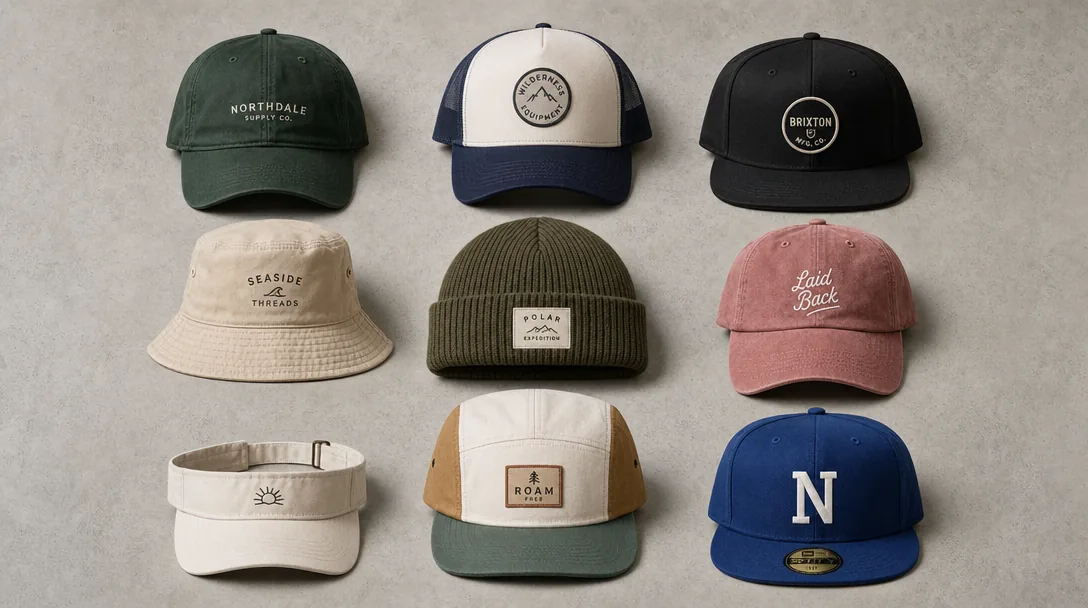
For brand owners, wholesalers and procurement teams entering the custom headwear category, private label vs white label caps: which model fits your brand? is one of the highest-leverage decisions you will make. Get it right and your unit economics, retail story and reorder cycle all improve. Get it wrong and you carry the cost for years.
Definitions: private label, white label, OEM, ODM
The cleanest way to separate these models is by who owns the product definition. Private label caps are made to your brand spec, but the underlying silhouette usually comes from an existing factory block: a 6-panel high-profile snapback, an unstructured dad cap, a 5-panel camper, a trucker with 105 gsm poly mesh, and so on. You choose the visible brand elements—Pantone TCX fabric color, front embroidery, woven loop label, inside taping, metal buckle engraving, hangtag, barcode, carton marks—while the factory controls the technical pattern, sewing method, and production routing. White label hats sit one step more standardized: the cap is already developed, costed, and production-tested, and you add only minimal branding, often a heat-transfer logo, stock embroidery placement, or private woven label. For supply chain planning, that means private label gives better brand separation, while white label reduces sampling rounds, MOQ risk, and launch time.
OEM hat manufacturing and ODM are often misused, but on the factory floor they affect responsibility very differently. OEM means you bring the tech pack or at least the product intent: crown height, brim curvature, seam tape artwork, closure type, stitch-per-inch target, sweatband material, even embroidery file specifications for Tajima or Barudan machines. The factory executes manufacturing, sourcing, and QC against your requirements, so accountability for design accuracy stays more on the buyer side. ODM cap supplier work starts from the factory's own developed product library. You pick from existing blocks, fabric programs, and trim combinations, then adjust details within what the line can reliably run. That is faster and usually cheaper because patterns, needle programs, shrinkage behavior, and packing methods are already validated, but your cap is less exclusive unless you invest in custom trims and color control.
The commercial implications are bigger than the labels suggest. A private label hat manufacturer may quote $2.20 to $4.80 FOB China for a basic brushed cotton twill cap at 3,000 pieces, but once you add 3D embroidery, custom inner tape, molded rubber patch, and Pantone-matched closure webbing, you are effectively operating in OEM territory even if the silhouette is standard. White label programs can start much lower in development cost because there is little or no pattern fee, and lab dips may be skipped if you accept stock colors, but the tradeoff is weaker defensibility when multiple sellers use the same shell. Our standard practice at CrownsForge is to define the model by decision rights: if the buyer controls specification, it is OEM/private label; if the factory controls product architecture and the buyer only brands it, that is ODM/white label. That distinction determines MOQ, lead time, sample approval burden, and even how tightly you can enforce AQL 2.5 on cosmetic details.
Private label: full brand control, custom design
Private label caps are the right model when you already know exactly what you want and you do not want a factory making product decisions for you. You send the tech pack, artwork, Pantone TCX callouts, bill of materials, measurements, stitch count, trim specs, and packaging requirements, and the factory’s job is to execute. That means you own the silhouette, panel layout, embroidery placement, label content, hangtag copy, and final IP. In practice, this is closest to true OEM hat manufacturing: the brand controls the product, and the supplier is a production partner, not a designer. If you are serious about building a defensible cap line, this is the model that gives you the cleanest ownership position.
The downside is that private label caps demand discipline. A sloppy tech pack turns into sampling delays, color drift, and margin loss fast. If the crown height is off by 5 mm, the bill curve is wrong, or the embroidery density is too high for the fabric weight, you will see it in fit and rejection rates. Good factories will ask for details like fabric GSM, buckram type, sweatband composition, closure hardware, and target AQL 2.5 inspection criteria because those specs are what keep the line stable. A branded cap manufacturer can build almost anything, but you still need to understand tolerances, shrinkage, and decoration limits if you want repeatable production at scale.
This model fits brands that care more about differentiation than speed, especially streetwear labels, licensed teams, and retailers with established merch programs. Compared with white label hats, where you select from a stock design and slap on a logo, private label hat manufacturer relationships are slower to start but much harder for competitors to copy. It also gives you room to manage compliance and audit requirements like sedex-audit-cap-supplier-guide.html">BSCI 2.0 or Sedex SMETA 4-Pillar if you are selling into larger accounts. Our standard practice is to treat the tech pack as the legal and technical source of truth, because once the factory starts improvising, you no longer have a private label program—you have a generic cap with your logo on it.
White label: existing factory designs with your logo
White label hats are the fastest way to get to market because you are buying from an existing factory program instead of building a spec from scratch. The blank style, crown shape, visor curve, sweatband, and closure are already locked in, so your only real variables are color, logo placement, labeling, and carton details. In practice, that cuts sampling to 3 to 7 days and can keep first-order MOQs around 100 to 300 pieces per color, depending on whether the factory is holding stock fabric and trims. If you need a clean launch for a promo campaign, team drop, or marketplace test, white label usually beats private label caps on speed and cash flow.
The tradeoff is obvious: you get less brand differentiation, and the product will look close to what other buyers can order from the same ODM cap supplier. Most white label programs use standard materials like 100% cotton twill at 260 to 320 gsm, polyester mesh at 120 to 150 gsm, or washed chino at 240 to 280 gsm, with embroidery done on Tajima, Barudan, or ZSK heads. That is fine for a logo-first purchase, but it does not give you control over pattern geometry, stitch density, seam tape color, visor board thickness, or the exact profile that makes a cap feel owned by your brand.
For buyers comparing OEM hat manufacturing versus white label, the real question is whether design control is worth the extra 2 to 4 weeks and the higher sampling cost. A private label hat manufacturer can build your own block, spec out a custom taping system, and match Pantone TCX colors with Delta-E targets under 2.0, but that adds tooling, revisions, and more QC steps. White label is still the better entry point when you want to validate demand before committing to a branded cap manufacturer relationship. Our standard practice is to treat it as a test lane: launch fast, check sell-through, then move proven shapes into a deeper private label caps program once volumes justify the added setup cost.
When to upgrade from white label to private label
White label hats make sense when you need to test demand fast, keep cash tied up to a minimum, and avoid paying for tooling, sampling revisions, or custom trim. The problem is that the ceiling comes quickly: if you are moving a few hundred units per colorway and your customer only cares about price and speed, white label is fine; once you need a consistent fit, unique panel shape, or repeatable branding across 3 to 5 seasonal drops, you are already drifting into private label caps territory. In my experience, the switch usually starts when annual cap volume reaches roughly 5,000 to 10,000 units, because at that point the savings from standardizing specs, trims, and carton packing begin to outweigh the extra sample and development cost.
The second trigger is brand maturity. If your buyers can tell the difference between a generic low-profile dad cap and your actual silhouette, you need OEM hat manufacturing, not just stock blanks with a logo slapped on. A real private label hat manufacturer will lock in crown height, brim curve, sweatband spec, closure type, and embroidery placement so every re-order matches within tolerance. For embroidered styles, I look for Pantone TCX control on fabric color and Delta-E under 2.0 on repeat production, because once you start selling into retail or team licensing, a 3-point shade drift looks sloppy on the rack. That is the point where an ODM cap supplier stops being a shortcut and starts being a liability.
Capital availability is the final gate. Private label caps usually need more working capital upfront: development samples, strike-offs, custom woven labels, inside taping, and a larger first PO to get better FOB pricing. On a basic 5-panel cotton twill cap, a white label program might land at $2.10 to $2.80 FOB per piece, while a customized private label run can sit closer to $2.60 to $3.80 FOB depending on embroidery stitch count, wash treatment, and closure hardware. If you can fund 30 to 45 days of production plus freight and still hold inventory for 60 to 90 days, the model starts to work. If not, stay with white label until your sell-through is predictable; otherwise you are just financing dead stock in a different package.
Hybrid approaches
The cleanest hybrid play is to keep the core silhouette on a stock body and customize only the variables that move the brand needle: fabric, color, trim, and decoration. That means using a proven 6-panel dad cap or structured 5-panel frame from an OEM hat manufacturing line, then specifying your own twill, chino, corduroy, or washed cotton in a Pantone TCX-matched shade. In practice, this cuts sampling risk because the crown depth, visor curve, and sweatband construction are already stable. For buyers comparing private label caps with white label hats, this approach is usually the sweet spot: you get brand control without paying for a fully new pattern and grading package. If the base body is already running at scale, MOQ can stay around 300 to 500 pieces per color instead of the 1,000-plus that a true cut-and-sew program often needs.
The biggest cost saver is in development time, not just unit price. A stock-body hybrid can usually move from confirm sample to bulk in 15 to 25 days if the fabric is in hand, while a fully custom private label hat manufacturer program can easily add two to four weeks for pattern revisions, fit corrections, and accessory sourcing. From the factory floor, I’d rather see a buyer spend on Delta-E controlled color matching, better thread selection, and a clean woven label than on overengineering the crown shape. Standard practice at CrownsForge is to lock the base body first, then approve lab dips and decoration placement before bulk cutting, which keeps rejection rates closer to AQL 2.5 and avoids expensive rework when embroidery registration shifts on softer fabrics like brushed twill or garment-washed cotton.
This hybrid model works best when the brand needs speed but still wants a defensible product story. An ODM cap supplier can offer stock bodies with custom fabric weights, say 280 gsm cotton twill instead of a lighter 220 gsm version, plus branded under-visors, sandwich piping, contrast eyelets, or a private woven taping. That gives you a product that does not look off-the-shelf, even though the skeleton is shared. It is also easier to scale across seasons: you can keep the same fit block, then swap colors from navy and black to seasonal olive, bone, or washed charcoal without resetting the entire line. For most first orders under $8 FOB target price, this is the least risky way to test demand before committing to fully bespoke private label caps or a deeper OEM hat manufacturing program.
Working with CrownsForge across all three models
The main advantage of a flexible factory partner is that you do not have to force every program into the same bucket. For private label caps, the work usually starts with your own spec: crown depth, visor curve, panel seam placement, embroidery file, woven label position, and packaging. That path is slower and more expensive than white label hats, but it gives you control over fit and branding details that distributors notice immediately. On the production side, that usually means more sampling rounds, tighter Pantone TCX matching, and a higher need for process control during cutting, embroidery, and washing, especially if you want repeatability across multiple colorways.
White label hats are the fastest route when you need inventory movement more than product differentiation. We see this most often in promo buyers and smaller streetwear labels that want a decent blank style, then add a heat transfer, patch, or simple embroidery in-house. OEM hat manufacturing sits between those two: you keep the base construction efficient, but you may still specify fabric weight, sweatband material, closure type, and trim package. A good ODM cap supplier should be able to show you which styles are already developed for bulk production, which ones need new patterns, and which ones are risky because they will drive up defect rates or fail AQL 2.5 on consistency.
CrownsForge handles all three models with different service tiers rather than pretending they are interchangeable. For private label hat manufacturer work, the factory should support full customization, from 100 percent cotton twill or 320 gsm brushed chino to structured foam fronts, then run sample approvals through embroidery heads like Tajima, Barudan, or ZSK before bulk booking. For white label and OEM programs, the value is speed: known patterns, fewer line changes, lower MOQs, and faster ex-factory lead times. A serious branded cap manufacturer will also tell you when a request is not economical, such as over-specifying a low-volume run or mixing too many fabrics in one container, because that is where margin disappears and quality slips.
Frequently Asked Questions
Do you support sustainability certifications?
Yes. We work with GOTS organic cotton, GRS-certified recycled polyester, OEKO-TEX Standard 100 fabrics, and are BSCI and Sedex audited. Certification documentation can be provided per order.
What is the minimum order quantity (MOQ) for custom hats?
Our standard MOQ is 100 pieces per design and color, with sampling available from 1 piece. For complex multi-color logos or premium fabric upgrades, the MOQ can be lowered with a small per-piece surcharge.
How long does production take?
Sampling takes 7 to 12 days. Bulk production runs 20 to 30 days depending on quantity, fabric availability and decoration complexity. Inspection and packing adds another 3 to 5 days before shipment.
What logo decoration techniques do you offer?
3D puff embroidery, flat embroidery, woven patch, leather patch, PVC patch, screen printing, sublimation, applique and laser etching, all in-house with no subcontracting.
Can I order a sample before bulk production?
Yes. We strongly recommend approving a pre-production sample before mass production. Samples are charged at 35 to 60 USD each plus express shipping, fully refundable against confirmed bulk orders over 500 pieces.
How do I find a reliable wholesale hat manufacturers usa?
When evaluating wholesale hat manufacturers usa, the key considerations are construction quality, decoration capability, MOQ flexibility and lead time. Clear distinctions and what each implies for your supply chain. You provide tech-packs and own all IP; factory only produces.
What should buyers know about best baseball caps for men?
When evaluating best baseball caps for men, the key considerations are construction quality, decoration capability, MOQ flexibility and lead time. Clear distinctions and what each implies for your supply chain. You provide tech-packs and own all IP; factory only produces.
What should buyers know about acrylic beanie hat?
When evaluating acrylic beanie hat, the key considerations are construction quality, decoration capability, MOQ flexibility and lead time. Clear distinctions and what each implies for your supply chain. You provide tech-packs and own all IP; factory only produces.
What should buyers know about branded bills performance hat?
When evaluating branded bills performance hat, the key considerations are construction quality, decoration capability, MOQ flexibility and lead time. Clear distinctions and what each implies for your supply chain. You provide tech-packs and own all IP; factory only produces.
Ready to start your custom hat project?
Send us your tech-pack, sketch or even just an inspiration photo. We will respond with a detailed quotation and digital mock-up within 24 hours.
Request a free quoteRelated guides
Customizing Blank Fitted Caps: New Era 59FIFTY, Otto, Imperial Buyer's Guide
Read article →
Custom Camo Hats: Hunting, Outdoor and Tactical Cap Manufacturing
Read article →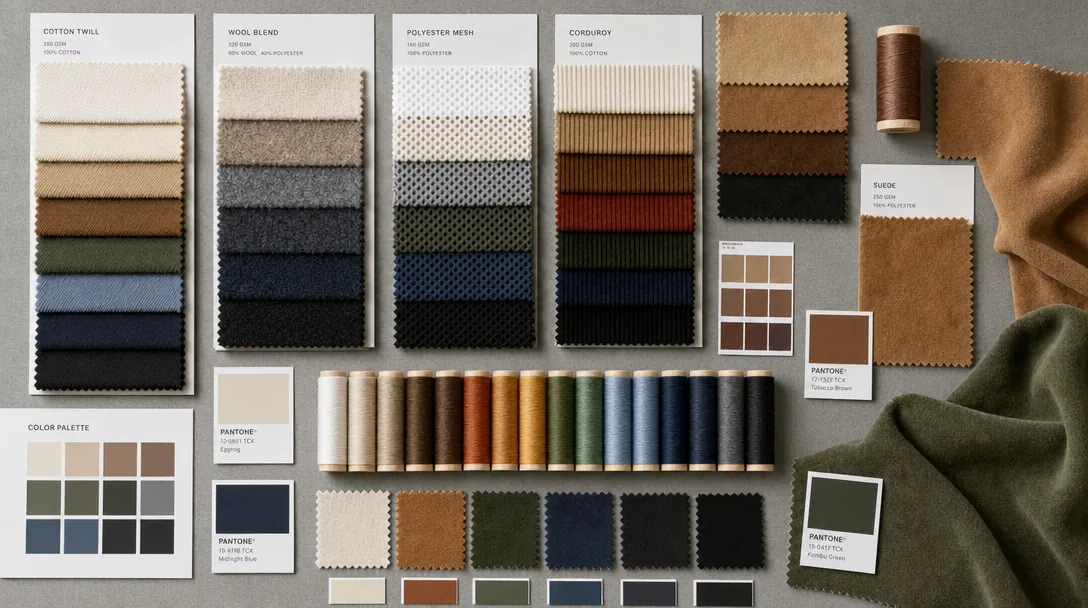
Sustainable Custom Hats: Eco-Friendly Materials, Recycled Fabrics & Certifications
Read article →Sourcing custom hats does not have to be complicated. With the right manufacturing partner, clear specifications and a small upfront investment in sampling, you can launch a retail-quality product in 30 to 45 days.