
Custom Hats for Men: A 2026 B2B Sourcing Guide - 2026 Buyer's Guide
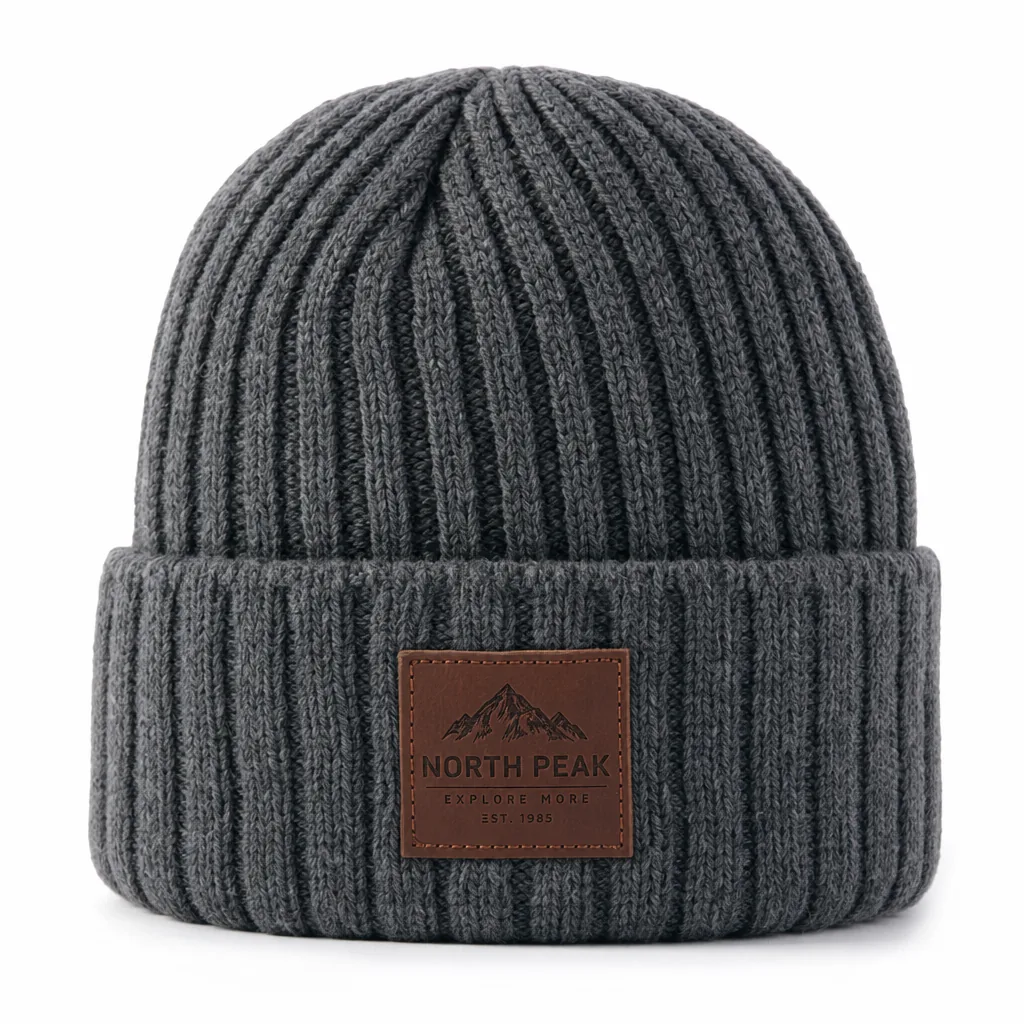
For brand owners, wholesalers and procurement teams entering the custom headwear category, custom hats for men: a 2026 b2b sourcing guide - 2026 buyer's guide is one of the highest-leverage decisions you will make. Get it right and your unit economics, retail story and reorder cycle all improve. Get it wrong and you carry the cost for years.
Custom Hats for Women
Women’s headwear goes wrong the moment a factory tries to downscale a men’s block. A proper women’s fit usually grades around 54–57 cm head circumference, while custom hats for men typically sit in the 58–60 cm range, and that difference affects the whole pattern. On the floor, the changes that matter are usually a crown depth reduced by 8–15 mm, front panel width narrowed by 4–8 mm, visor length shortened by 5–10 mm, and softer buckram—often 0.6–0.8 mm instead of the stiffer insert used in structured men’s 6-panels. If you leave those details vague, the cap rides high, flares above the ears, and looks oversized even when the tape measure says the circumference is correct. For baseball caps, the tech pack should state crown depth, front panel width, visor arc, visor length, back opening width, sweatband width, and strap drop in millimeters. “Ladies fit” is not a spec; it is a sampling mistake written in plain English.
Front decoration also has to be engineered for a smaller silhouette. A front logo that runs clean on a standard men’s cap can tunnel or distort on a lower-profile women’s block, especially if the design height exceeds 60–65 mm. I want the embroidery spec to name the machine platform—Tajima, Barudan, or ZSK—the stitch count, thread type, backing weight, pull compensation, and maximum logo height by panel. For shell materials, mood-board language is useless; specify composition and weight, such as brushed cotton twill at 260–280 gsm, recycled polyester twill at 180–220 gsm, or nylon Taslan at 110–140 gsm, then lock color to Pantone TCX or coated Pantone with an agreed Delta-E tolerance. In Yiwu, a cut-and-sew women’s 6-panel usually starts around 144–300 pcs per color per style, with FOB pricing roughly $2.10–$3.40 for basic flat embroidery, $3.80–$6.50 for fashion caps with metal trims or satin lining, and $8.00–$18.00 for blocked felt programs.
Inspection exposes weak women’s programs faster than sampling does because small fit errors are obvious on a smaller profile. The defects I reject first are asymmetric crown collapse, visor torque, puckering around the back opening, loose top-button wrap, exposed bobbin thread on fine script, and shell-to-underbrim shade mismatch—especially on cream, blush, sage, and other pale retail colors where Delta-E drift shows immediately. Metal trims need plating adhesion, burr, and 24-hour salt-spray checks if the hats are for outdoor or resort channels. Felt styles should be checked for brim waviness, blocked-shape repeatability, and shape recovery after 24 hours at ambient conditions. AQL 2.5 is standard for mass-market orders, but women’s fit programs should tighten measurement control on opening circumference, brim width, visor symmetry, and embroidery centering, with critical points measured rather than judged by eye. Even if your core volume is custom hats for men, a supplier that can pattern, grade, and inspect women’s hats correctly is usually the one with better discipline across unisex retail, golf, and segmented fit programs.
Custom Golf Hats for Men
Golf caps usually fail at shape recovery, sweat handling, and size consistency before decoration becomes the problem. The strongest commercial spec is still a 6-panel mid-profile or a 5-panel rope profile, but performance builds for custom hats for men need tighter control than casual headwear. For volume programs, I’d spec 140-160 gsm recycled polyester twill or 150-170 gsm poly-spandex woven with 5-8% elastane, backed by a 180-220 gsm moisture-wicking polyester sweatband. If you want laser ventilation, lock the engineering in the tech pack: 1.2-1.5 mm perforation diameter, consistent pitch, and an acceptance standard for edge melt. Poor laser settings on polyester leave brown halo marks and stiff hand feel around the holes, and buyers usually do not catch that until bulk arrives. Also define crown height, visor length, visor curve radius, closure material, UPF target, and colorfastness to perspiration and xenon light. Golf customers notice small fit and wear defects fast, especially when the cap is sold with polos or outerwear as part of a coordinated program.
Color control is where average factories get exposed. If the cap has to match polos, quarter-zips, or team-issued layers, use a Pantone TCX reference and hold shell fabric within Delta-E 1.5; on white, stone, and cool gray shades, lot drift is obvious under store LEDs and daylight. Decoration also has to match the substrate. 3D embroidery on Tajima or Barudan machines works well on stable polyester twill, but 75D-100D microfiber and stretch shells are safer with flat embroidery, molded silicone badges, or TPU weld patches because they pucker under dense satin columns. Brim board choice matters more than many buyers think: PE is cheap, but EVA or composite boards recover shape better after carton compression and humid ocean transit. Treat the tech pack like performance apparel, not a generic cap with a front logo. I typically set men’s adjustable golf styles at 58 cm finished circumference with a tolerance of plus or minus 0.5 cm, then specify closure pull strength, sweatband stitch density, seam tape width, and open-close fatigue testing to 100 cycles for snapback or micro-hook-and-loop systems. MOQ in China is usually 144-300 pieces per colorway on stock shells, but custom perforation layouts, branded metal hardware, molded trims, or printed internal taping often push factories to 500 pieces. Current pricing for custom hats for men in this category is roughly $2.80-$4.60 FOB Ningbo or Shanghai at 300-500 units for standard polyester builds with flat or 3D embroidery; premium golf caps with C0 water-repellent finish, seam-sealed front panels, and custom hardware are more often $5.20-$8.50. Final inspection should be run at AQL 2.5 with focus on visor symmetry, skipped stitches at the sweatband join, embroidery edge fray, badge blistering, crocking on dark colors, and brim warpage after compression and humidity exposure.
Custom Fedora Hats for Men
A fedora program fails on shape control long before it fails on branding. These hats are steamed, blocked on aluminum or hardwood forms, flanged, and dried under tension; if that cycle is rushed, you see twisted brim edges, uneven center dents, and crown profiles that drift across the size run. For entry-level custom hats for men, most import programs start with 100% wool felt in the 180-260 gsm range or paper/poly braid for spring-summer assortments. Rabbit- or hare-blend felt gives a sharper pinch and better brim memory, but it can double the hat-body cost before you add grosgrain, sweatband, labels, and rigid packing. On a selling floor, a 3 mm brim variance is easy to spot, and felt shade drift above roughly Delta-E 1.5-2.0 shows clearly on black, camel, and heather gray under retail LED lighting. That is why a fedora supplier should be judged on blocking repeatability and lot consistency, not on whether they also make decent baseball caps.
The tech pack needs real controls, not “black fedora with logo band.” Lock crown height, brim width, edge finish, ribbon width, sweatband material, body composition, stiffness, size grading, and carton packing from the start. Color should be tied to Pantone TCX with an approved lab dip or strike-off, especially on felt, where dye lots move more than most buyers expect. Branding method matters too: metal badge, woven loop label, satin print, debossed PU patch, and direct embroidery all behave differently on grosgrain or petersham; push embroidery density too high and the ribbon puckers, which makes the brim line read crooked. In China, MOQ is usually 100-150 pieces per color/style, often split across three sizes, while cleaner factory pricing starts closer to 300 pieces. As a realistic FOB China range, basic wool felt fedoras run about $8.50-$14.00, paper braid about $6.00-$10.00, and rabbit-blend felt about $18.00-$35.00 depending on trim package and box spec.
Inspection should start with silhouette and geometry before anyone comments on logos. I check left-right brim balance, crown centerline, pinch symmetry, ribbon joint position, sweatband insertion, and glue seepage under trims; inner circumference should usually hold within +/-0.5 cm against the approved sample, and brim width should be measured at several points because a hat can photograph well from the front and still fail side balance. AQL 2.5 works for final random inspection, but fedora production benefits from a pre-final check right after blocking and before packing, when shape defects can still be corrected. Nested packing without proper carton depth, brim supports, or desiccant is a common failure point, and goods arrive with flat spots even when the outer cartons look clean. That is why fedoras should be sourced as a separate capability inside a broader custom hats for men program: the process relies on blocking molds, steam setting, brim flanging, and transit-safe packing, not just panel sewing and Tajima or Barudan embroidery capacity.
Custom Fitted Hats for Men
Fitted programs fail on pattern grading long before they fail on decoration. A true fitted cap is not just a snapback with the closure deleted; the crown block, sweatband recovery, visor set, and post-press shrinkage all have to stay consistent across sizes like 7 1/4, 7 3/8, 7 1/2, and 7 5/8. For custom hats for men, lock the construction first: front buckram weight, visor board thickness, crown height in millimeters, sweatband width, seam allowance, and shell fabric. A structured 6-panel in 100% cotton twill usually runs 240-280 gsm; melton wool blends are more often 380-450 gsm; poly-wool shells for sharper retail pricing typically sit around 180-220 gsm. If the front logo is dense, confirm whether production runs on Tajima, Barudan, or ZSK heads and ask for stitch count, fill density, thread brand, and a strike-off on the actual shell color. Heavy 3D embroidery can pull the front panel enough to change perceived fit, especially on lower crown profiles.
Color and fit control need to be written into the tech pack, not left to the sample room. Specify Pantone TCX references for shell, underbill, top button, eyelets, sweatband tape, and seam taping, then set a Delta-E tolerance; under 2.0 is realistic for retail programs, while promotional work often accepts 2.5-3.0. The useful check is inside circumference after embroidery and steam finishing, because that is where fitted caps drift. A clean salesman sample proves almost nothing unless the factory can show graded patterns and size checks from pre-production through bulk. The most practical inspection standard is AQL 2.5 major and 4.0 minor, with special attention to crown symmetry, visor waviness, sweatband twisting, front-panel puckering, and headsize variance above 3 mm.
Unit economics on fitted hats depend less on total quantity than on how many sizes are in the run. Most factories want 300-500 pieces per colorway for custom hats for men, but a 500-piece order split across five sizes is a very different production problem from a two-size run. A basic cotton twill fitted cap at 500 pieces usually lands around $2.80-$4.30 FOB China; move to brushed twill, melton wool blend, leather undervisor, custom woven size tape, or high-density embroidery and the range typically climbs to $4.90-$7.80 FOB. Insist on pre-production samples in each head size for premium retail, not one middle-size approval cap. If a supplier will not break price by shell fabric, decoration, and size ratio, they are usually masking risk that reappears later as surcharges, looser tolerances, or bulk inconsistency. The right sourcing sequence is fit block first, sales channel second, and decoration last.
Custom Made Hats for Men
Most failed programs start with the wrong assumption: custom hats for men are not stock blanks with a logo swap. If the factory is still asking only for artwork, they are skipping the variables that actually control fit, yield, and repeatability in bulk. A workable spec sheet has to freeze crown height, front panel angle, visor length and curvature, buckram hardness, seam tape width, sweatband construction, eyelet finish, back closure, and decoration method before sampling starts. For cut-and-sew caps, I would lock fabric by exact composition and weight—260 gsm cotton chino twill, 280 gsm brushed canvas, 140 gsm recycled polyester micro-ripstop, or 120 gsm nylon taslon—then call out Pantone TCX references, lab dip approval, and a Delta-E tolerance no looser than 1.5 under D65 light. Buyers should also specify visor insert thickness, stitch count per inch, embroidery size in millimeters, and acceptable crown-height variance, because a 3 mm shift is enough to make a run look mixed when cartons are opened side by side.
The cost picture only becomes reliable once that technical package is disciplined. In China, standard 6-panel cap programs usually start around 144 to 300 pieces per colorway, while fitted caps, blocked wool hats, or styles requiring custom metal trims and molded patches are more realistically 200 to 500 pieces because size runs, trim loss, and machine setup eat margin fast. A structured baseball cap in 260 gsm chino twill with flat embroidery on Tajima or Barudan heads typically lands at $2.80 to $4.60 FOB China at 300 pieces; snapbacks with appliqué, woven labels, satin taping, molded silicone patches, and custom interior branding are more often $4.80 to $7.50. Performance golf caps in 75D polyester with laser-perforated panels and moisture-wicking sweatbands usually sit at $4.20 to $6.80, while wool-blend fedora or trilby programs run $8.00 to $18.00 depending on felt grade, brim finish, and size split. The real filter is inspection: repeat defects are skewed visor alignment, embroidery registration drift, seam puckering, visor wave, sweatband torque, closure shade mismatch, and crown-height variation over 3 mm. Buyers should require in-line QC plus final inspection at AQL 2.5, with checks for head opening tolerance, needle damage, crocking, logo placement, and carton drop performance, because a clean salesman sample proves almost nothing if the reorder cannot hold shade and fit.
Custom Baseball Hats for Men
Most quality failures in custom hats for men happen at the spec stage, not in bulk sewing. Buyers approve artwork and then leave the factory to guess the build: 5-panel or 6-panel, finished crown height around 11.5-13.0 cm, structured or unstructured front, visor curve, closure type, sweatband material, and visor insert. That is where baseball-cap programs go off track. For men’s styles, the usual shell fabrics are 100% cotton twill in 21s x 21s, 108x58 construction at 260-280 gsm, brushed chino near 240 gsm, and polyester twill at 180-220 gsm for teamwear and athletic accounts. If the front logo is 3D puff embroidery, call out 0.8-1.2 mm PE buckram behind the front panel; without it, the satin columns sink, edge definition softens, and the cap looks underbuilt. If the brief is a softer dad-cap hand feel, remove the buckram intentionally and accept more crown collapse in carton packing and on shelf. Construction decisions change labor minutes, defect risk, and FOB more than most buyers expect. A structured 6-panel baseball cap with seam tape, woven loop label, and plastic snapback usually runs 8-12% more labor than a basic unstructured strapback because front-panel fusing, visor insertion, and crown blocking need tighter control. On a normal line, panels are cut, fronts are fused, logos are embroidered on Tajima or Barudan heads, crown panels are joined, eyelets set, sweatband attached, visor inserted, back seam closed, cap shaped on heated blocks, and then thread-trimmed and packed. Every added detail—sandwich visor, contrast eyelets, printed underbill, metal buckle with laser logo, custom inside tape—creates another place for alignment drift, needle damage, or shade mismatch. That is why repeat baseball caps are often the best benchmark inside a broader custom hats for men program: if a supplier cannot hold shape, logo placement, and panel shading on this silhouette, they usually struggle on more complicated builds.
The RFQ for baseball-focused custom hats for men should read like a production sheet, not a mood board. Ask for fabric composition, gsm tolerance of plus or minus 5%, Pantone TCX or coated reference, repeat-order shade target such as Delta-E below 1.5, stitch density, seam-taping width, visor sandwich construction, thread brand, closure plating finish, and visor insert material. Specify PE board if the goods are headed to humid markets; low-cost paperboard inserts still show up in cheap programs, and they warp fast in Southeast Asia, the Gulf, and coastal U.S. distribution. Realistic MOQs are usually 144-300 pieces per colorway for promo-grade cotton twill, while retail-grade caps with custom inner tape, woven labels, two or three logo positions, and specialty trims are more practical at 300-500 pieces per style. In East China, a basic embroidered cotton twill cap at 300 pieces typically lands around $2.10-$3.40 FOB, while performance polyester with laser-perforated panels, welded eyelets, or silicone heat transfer is more often $3.80-$6.20 FOB. Inspection should focus on failure points that create chargebacks: off-center front embroidery, visor asymmetry, side-seam puckering, sweatband join failure, crown depth out of tolerance, and panel shading caused by mixed dye lots. AQL 2.5 is the normal standard, but caps with high-density embroidery, appliqué, or heat-transfer logos need visual checks on head forms because distortion hides when the cap is laid flat. CrownsForge’s standard practice is to measure logo position from center front and visor seam, confirm crown depth and circumference on blocks, verify backing weight against shell fabric, and run basic carton drop tests before shipment. Buyers should also ask whether the factory is audited to sedex-audit-cap-supplier-guide.html">BSCI 2.0 or Sedex SMETA 4-Pillar, because baseball caps often bundle multiple trims and subcontract processes, and weak traceability tends to show up first in repeat men’s headwear orders.
Working with CrownsForge for custom hats for men programs
Bulk failures in custom hats for men programs usually start after sample approval, when the factory cuts against a loose tech pack and nobody notices the drift until cartons are packed. The only reliable fix is a hard spec lock before fabric booking: crown height by size, visor arc and length, buckram gsm, sweatband width, stitch count by panel, closure gauge, and approved Pantone TCX or coated references for every exposed component. A decent proto on a standard 6-panel cotton twill cap can be turned in 5 to 7 working days once artwork, trims, and closure are frozen, but fit-sensitive builds need more time. Fitted caps, low-profile 5-panels, and blocked shapes should be sampled in 7 to 10 working days because brim rebound, seam allowance roll, front panel collapse, and sweatband tension have to be checked on physical headforms, not judged from CAD. MOQ should follow construction risk, not a sales template. In real production, 144 pcs per colorway is workable for basic brushed-cotton dad caps or foam truckers using mill-held fabrics. Once you add contrast underbill, custom seam tape, woven labels, or size runs on fitted custom hats for men, 288 pcs per colorway is a more honest threshold because trim consumption, spoilage, and line changeover costs jump fast. The smartest spend in a first run is a PPS with final trims, usually $80 to $150 extra depending on decoration and hardware. That is where cheap problems show up: embroidery pull on 210 to 280 gsm twill, eyelet puckering, leather patch edge lift after heat press, or shell-to-top-button color drift across dye lots. Our standard practice is not to release cutting on screenshot approvals alone for 3D puff, special wash, or multi-lot fabric; those jobs need a signed physical standard.
Decoration is not a styling afterthought; it drives reject rate, sewing speed, and real landed cost. Front embroidery on Tajima and Barudan multi-heads is still the volume workhorse, but dense fills, tight serif text, and 3D puff under 2 mm EVA foam usually run cleaner on ZSK cap frames because thread tension control is more stable at higher rpm. As a budgeting rule, a 6,000 to 8,000 stitch front logo adds roughly $0.28 to $0.65 per cap at scale, while puff, metallic thread, or multi-location embroidery can push that past $0.90 before appliqué or specialty backing is added. The same art file behaves differently by substrate: a raised logo that looks crisp on 265 gsm chino twill can tunnel badly on 110 gsm performance polyester unless the digitizing is rebuilt with lighter density, adjusted underlay, and a different backing stack. Buyers should judge a factory by process controls, not by how many hat silhouettes appear in the catalog. BSCI 2.0 or Sedex SMETA 4-Pillar matters, but the everyday discipline matters more: incoming fabric inspection, shade-band segregation by dye lot, needle logs, first-off approval, and final audits at AQL 2.5 major / 4.0 minor. Color for custom hats for men should be checked against approved Pantone references under D65 or TL84 lighting; on stable cotton twill, Delta-E under 1.5 is a realistic target, while washed or pigment-dyed fabrics need wider tolerance agreed in writing before bulk. The clean workflow is straightforward: BOM-based quote, tech pack review, digitizing or strike-off approval, PPS sign-off, bulk booking, mid-line QC, final inspection, then shipping under FOB Ningbo or Shanghai. DDP only makes sense after carton dimensions, HTS assumptions, and destination duty treatment are confirmed, especially on programs running 300-piece test drops alongside 20,000-unit seasonal orders.
Frequently Asked Questions
What logo decoration techniques do you offer?
3D puff embroidery, flat embroidery, woven patch, leather patch, PVC patch, screen printing, sublimation, applique and laser etching, all in-house with no subcontracting.
Do you support sustainability certifications?
Yes. We work with GOTS organic cotton, GRS-certified recycled polyester, OEKO-TEX Standard 100 fabrics, and are BSCI and Sedex audited. Certification documentation can be provided per order.
What is the minimum order quantity (MOQ) for custom hats?
Our standard MOQ is 100 pieces per design and color, with sampling available from 1 piece. For complex multi-color logos or premium fabric upgrades, the MOQ can be lowered with a small per-piece surcharge.
How long does production take?
Sampling takes 7 to 12 days. Bulk production runs 20 to 30 days depending on quantity, fabric availability and decoration complexity. Inspection and packing adds another 3 to 5 days before shipment.
Can I order a sample before bulk production?
Yes. We strongly recommend approving a pre-production sample before mass production. Samples are charged at 35 to 60 USD each plus express shipping, fully refundable against confirmed bulk orders over 500 pieces.
How does ordering custom fitted hats work?
When evaluating custom fitted hats, the key considerations are construction quality, decoration capability, MOQ flexibility and lead time. Cover everything buyers ask about custom fitted hats for men: how it's manufactured, what specs to request from a factory, typical MOQ and pricing, common quality issues to inspect for, and how this ties back to the broader custom hats for men sourcing decision. Cover everything buyers ask about custom hats for women: how it's manufactured, what specs to request from a…
How does ordering custom new era 59fifty fitted hats work?
When evaluating custom new era 59fifty fitted hats, the key considerations are construction quality, decoration capability, MOQ flexibility and lead time. Cover everything buyers ask about custom fitted hats for men: how it's manufactured, what specs to request from a factory, typical MOQ and pricing, common quality issues to inspect for, and how this ties back to the broader custom hats for men sourcing decision. Cover everything buyers ask about custom hats for women: how it's manufactured, what specs to request from a…
How does ordering custom baseball hats for men work?
When evaluating custom baseball hats for men, the key considerations are construction quality, decoration capability, MOQ flexibility and lead time. Cover everything buyers ask about custom baseball hats for men: how it's manufactured, what specs to request from a factory, typical MOQ and pricing, common quality issues to inspect for, and how this ties back to the broader custom hats for men sourcing decision. Cover everything buyers ask about custom hats for women: how it's manufactured, what specs to request from a…
What's the MOQ for custom golf hats no minimum?
When evaluating custom golf hats no minimum, the key considerations are construction quality, decoration capability, MOQ flexibility and lead time. Cover everything buyers ask about custom golf hats for men: how it's manufactured, what specs to request from a factory, typical MOQ and pricing, common quality issues to inspect for, and how this ties back to the broader custom hats for men sourcing decision. Cover everything buyers ask about custom hats for women: how it's manufactured, what specs to request from a…
Ready to start your custom hat project?
Send us your tech-pack, sketch or even just an inspiration photo. We will respond with a detailed quotation and digital mock-up within 24 hours.
Request a free quoteRelated guides
Sports Team Caps & Uniform Headwear: Bulk Manufacturing for Clubs and Schools
Read article →
Buckram vs Foam vs Unstructured: Cap Crown Construction Compared
Read article →Custom Trucker Hats: The 2026 Sourcing & Manufacturing Playbook
Read article →We hope this guide demystifies custom hats for men: a 2026 b2b sourcing guide - 2026 buyer's guide and helps you move forward with confidence. If you have questions specific to your project, our English-speaking sales engineers are one message away.