
Custom Hat Trucker: The 2026 Sourcing & Manufacturing Playbook (2026 Update)
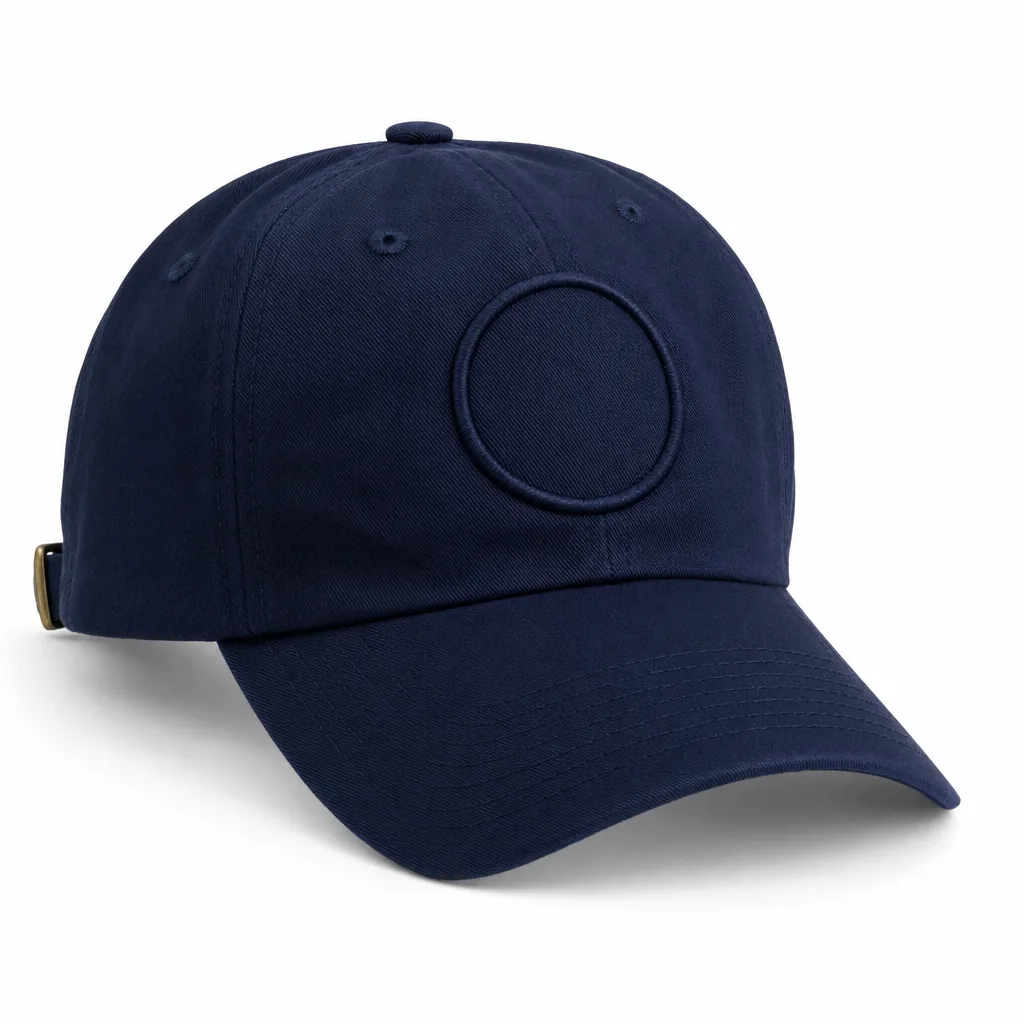
Every week, our sales team answers detailed questions about custom hat trucker: the 2026 sourcing & manufacturing playbook (2026 update). We wrote this guide so that wholesalers, streetwear brands, corporate buyers and promotional resellers can compare options with full information, and avoid the traps that show up only after production has started.
Custom Embroidered Hat
Front-panel construction decides whether a custom hat trucker embroiders cleanly or turns into rework. A 5-panel foam-front trucker gives a broad, seam-free sew field, but needle penetration, push-pull, and edge lift behave very differently than on buckram-backed 10 oz cotton twill or a soft unstructured front. Good factories digitize for the actual cap body, not just the logo file, with stitch angle, edge-run underlay, zigzag underlay, pull compensation, trim path, and cap-frame sequence tuned for Tajima, Barudan, or ZSK heads. On trucker fronts, standard fill density usually runs about 0.38 to 0.45 mm, while satin columns below roughly 1.2 mm width or text under 4 mm cap height become risky, especially across crown curvature. Metallic thread, tonal gradients, and 3D puff over 2 to 3 mm EVA also need to be declared before sampling because those are the usual failure points.
A workable tech pack for custom embroidered hats needs more than artwork. Lock the logo size in millimeters, Pantone TPX or TCX callouts, embroidery type, crown profile, front-panel material, mesh spec, visor curve, closure, and target stitch count before quoting. A structured 5-panel high-crown trucker is far safer for dense 6,000 to 10,000-stitch designs than a 6-panel mid-profile body with a center seam, where small lettering often loses definition. In China, stock-body custom hat trucker programs usually start at 144 to 300 pieces per colorway; once you add custom taping, woven labels, branded inside print, dyed-to-order mesh, or molded rubber trims, MOQ typically moves to 500 to 1,000 pieces. Real FOB pricing for a basic 5,000 to 8,000-stitch trucker is commonly $2.20 to $4.80 at 300 to 1,000 pieces, with 3D puff adding about $0.25 to $0.60, side embroidery $0.15 to $0.40, and digitizing $80 to $150 one time.
Most embroidery defects are predictable if the supplier actually understands cap production. The repeat problems are center-front misalignment, poor hooping that distorts circles and borders, exposed foam on puff logos, jump-stitch tails, thread-break fuzz, and registration drift between fill and outline. On cheaper laminated foam fronts, aggressive needle settings can even cut the face fabric and weaken the panel. Our standard practice is to hold embroidery placement to ±3 mm, check visor-to-crown symmetry, inspect thread coverage and backing cleanliness, and review workmanship to AQL 2.5 during inline and final QC. For darker shades like black, navy, and red, add perspiration and crocking spot checks around the sweatband because humid transit can expose dye migration or loose finishing long before the customer does. Thread color is still approved by visual sew-out under D65 lighting against Pantone references, not by fabric-style Delta-E promises, so any factory claiming lab-perfect embroidery color is overselling.
Custom Embroidered Hats
Most embroidery failures on a custom hat trucker are engineered in pre-production, not on the sewing line. A logo that runs clean on 108 x 58 polyester twill will often distort on a 3 mm EVA-laminated foam front unless the digitizer rewrites underlay, pull compensation, and density for that substrate. On a standard 5-panel trucker, the safe embroidery window is usually 110 mm wide by 55-60 mm high; once a front logo climbs past about 16,000-18,000 stitches on foam, you start seeing panel collapse, tunneling, and needle cutting unless density is opened to roughly 0.38-0.42 mm and backing is upgraded. Good factories lock the front panel material, crown structure, seam map, logo size, and estimated stitch count before quoting. If those variables are still floating after sample approval, the quote is fiction. The technical questions buyers should push are simple but non-negotiable: digitized in Wilcom or Tajima DG/ML, sewn on flat panels or finished caps, what thread spec, what needle, what backing, what machine head. Madeira Polyneon or Gunold 40 wt polyester is the practical standard for outdoor and team programs; rayon still gives a softer sheen, but it loses on UV and abrasion. On foam truckers, I would choose 50-70 gsm cutaway over tear-away nearly every time because it controls distortion after repeated wear and heat exposure. A real tech pack should also tie thread colors to Pantone TCX or coated references, define placement from fixed points like brim seam and center front, and specify tolerances such as ±3 mm for logo position and ±5 mm for visor length. Without that, two “approved” samples can still produce a chargeback fight in bulk.
Cost on an embroidered custom hat trucker moves more on construction and stitch risk than on the blank itself. In Yiwu and nearby cap clusters, a 5-panel or 6-panel trucker with 100% polyester front, 100-120 gsm mesh back, standard PE snap, curved visor, and a front embroidery in the 6,000-10,000 stitch range typically lands around $2.30-$4.60 FOB at 300-1,000 pieces. Push into 3D puff, matte poly thread, dual-location embroidery, woven loop labels, custom seam tape, or higher-grade ABS snap closures and you can add $0.12-$0.75 per cap fast. MOQ for a stable line setup is usually 144-300 pieces per colorway; when a supplier accepts 50-100 pieces, you are paying for digitizing, cap frame changeover, and strike-off waste in a much smaller denominator. QC has to inspect embroidery as part of the assembled cap, not as an isolated logo sample. AQL 2.5 is the right baseline for export programs, with defect checkpoints on off-center placement, loose tails, birdnesting on the reverse, thread breaks, foam strike-through, color misregistration, mesh skew, and visor wave caused by over-stabilized fronts. Measure logo placement from fixed datum points, not “by eye,” and verify thread shades under D65 lighting. For branded programs, Delta-E under 1.5 is realistic on critical colors if thread lots are controlled; in normal bulk runs, 2.0-2.5 is more common. Ask whether the factory is running Tajima, Barudan, or ZSK heads, and whether operators log thread tension changes during production. At CrownsForge, we review embroidery against the full BOM because switching from foam-front poly to cotton twill often cuts defect risk and shortens setup time when the logo is dense.
Custom Hat Embroidery
Most embroidery problems on a custom hat trucker start before the machine ever runs: the front panel structure and the stitch file are mismatched. A foam-front 5-panel trucker using 2.5 to 3.0 mm EVA with laminated tricot has very different resistance and rebound than a 6-panel 10 oz cotton twill crown backed with buckram. If the digitizer treats them the same, the result is usually tunneling, seam grin, or a front panel that cups after sewing. On Tajima, Barudan, and ZSK heads, a workable file usually means edge-run underlay under satin borders, center-walk or zigzag underlay under fills, pull compensation around 0.20 to 0.40 mm, and stitch angles deliberately rotated away from the center seam to keep columns from splitting. For a standard front logo, 8,000 to 12,000 stitches is a safe commercial window; dense fills above roughly 14,000 stitches on low-density foam are where needle cuts, puckering, and logo distortion start showing up in bulk, not just on the first sew-out.
The cleanest approvals come from tighter inputs, not prettier mockups. Buyers should provide vector art, finished logo size in millimeters, placement measured from visor seam and center seam, Pantone TCX reference for adjacent fabric, and the exact decoration method: flat embroidery, 3D puff, appliqué, or mixed technique. For thread, 120D/2 polyester is the standard because it holds color and abrasion better than rayon; rayon is still used when sheen matters, but it is less forgiving in wash and wear. Useful tolerances are specific: front-logo placement within plus or minus 2 mm, puff height at 2 to 3 mm EVA, and inside backing defined by weight and type rather than vague "standard backing." Thread should be visually approved under D65 lighting, but Delta-E control belongs on dyed fabric panels, not on embroidery thread where luster shifts with viewing angle. In China, one front embroidery on a custom hat trucker typically adds about $0.35 to $0.90 FOB at 300 to 1,000 pieces; 3D puff with a side hit or back arch is more often $1.20 to $2.50, driven by stitch count, machine minutes, and setup.
Bulk consistency is decided on the embroidery line, not in the sample room. The defects worth catching are often inside the cap: birdnesting behind the sweatband, bobbin show-through, loose trims, exposed foam on puff edges, and registration drift as the logo crosses the center seam. On the face side, I watch for uneven satin width, broken top thread, cap hoop burnishing, and crown distortion when the hat is actually worn, because a logo can look acceptable on a flat table and fail once the front panel flexes. A single approved sew-out does not protect the production run when needle wear, thread lot changes, machine tension resets, and operator handoff between shifts all introduce variation. Our standard practice is to inspect embroidery to AQL 2.5 with separate checkpoints for centering, seam alignment, thread tension, inside cleanliness, and early/middle/late lot comparison. That is the only practical way to catch drift before 500 pieces are boxed with the same avoidable defect.
Custom Made Trucker Hat
A good custom hat trucker lives or dies on structure, not artwork. The front crown and the back mesh behave like two different products: the face fabric may be 180-260 gsm cotton twill, 200 gsm poly-cotton canvas, foam-backed polyester, or suede microfiber, while the rear panels are usually 60-100D polyester mesh with 4 x 4 mm or 6 x 6 mm apertures. If the tech pack does not lock panel count, crown height, visor length, brim curve, buckram weight, brim board thickness, and closure type, two factories can quote the same 5-panel trucker and ship completely different hats. On a real line, the sequence is front panel cutting, foam lamination or fusing, flat-panel embroidery or patch application, crown sewing, sweatband insertion, visor joining, top button setting, closure installation, and final shaping on heated cap presses. That is why a vague reference sample is not enough; small changes in buckram stiffness or PE board thickness can change profile retention after carton compression. The spec sheet should read like a measurement sheet, not a mood board. Call out crown height in centimeters, visor size, seam tape color, sweatband composition, snapback resin grade, stitch count per inch, patch method, and whether the brim uses PE board or recycled board. For color-critical programs, provide Pantone TCX or Pantone Coated references and set acceptance limits such as Delta-E below 1.5 on dyed front fabric and below 2.0 on mesh after heat setting. In Yiwu and Dongguan, MOQ is typically 144-300 pieces per colorway on stock materials, but 500-1,000 pieces is the real threshold once you add custom-dyed mesh, woven labels, molded trims, or proprietary packaging. As a working range, a basic foam-front custom hat trucker with stock mesh and one-location flat embroidery usually falls around US$2.20-3.60 FOB at 300-1,000 units; a premium version with suede front, woven patch, printed seam tape, metal buckle, and retail box is more often US$5.20-8.80 FOB, with embroidery minutes and trim count driving most of the spread.
Most trucker-cap failures are easy to predict before bulk sewing starts. The repeat offenders are off-center decoration, mesh puckering at the side seams, uneven brim curvature, weak snapback posts, twisted sweatbands, exposed bobbin thread, and crown collapse after compression packing. Embroidery-heavy styles are especially unforgiving: dense satin columns can tunnel, foam can distort, and the front panel can ripple if the digitizing is wrong, even on Tajima, Barudan, or ZSK heads. A supplier can own expensive machines and still ship a weak custom hat trucker if the file has poor underlay, bad pull compensation, or excessive stitch density on a foam-backed front. Bulk inspection should be tied to a retained golden sample and run at AQL 2.5 for major defects and 4.0 for minor defects, with functional checks for snap closure pull strength, crocking, perspiration resistance, carton drop performance, and post-pack shape recovery. For structured styles, I always want a 24-hour carton retention check because weak buckram and soft brim board show up there before the customer ever wears the cap. Our standard practice is to verify whether embroidery, patch application, washing, or heat transfer is subcontracted, because inconsistency usually enters through outside processes, not final sewing. If a factory can show stable QC data, clear incoming-material records, and current sedex-audit-cap-supplier-guide.html">BSCI 2.0 or Sedex SMETA 4-Pillar audit reports, that is a better predictor of repeatable output than shaving US$0.20 off the FOB.
Custom Trucker Hat
A retail-grade custom hat trucker is usually won or lost on three specs buyers leave too loose: front panel structure, mesh quality, and snapback performance. Many factories default to a 5-panel cap with 3-5 mm polyester foam, 210D-420D poly mesh, a standard PE visor insert, and a 7-hole plastic closure. That build is fine for giveaways at $2.20-$3.80 FOB China, but it does not hold up well on a retail shelf. For a sellable program, I would lock crown height at 11-12 cm, specify whether the face uses laminated foam, buckram, or tricot backing, and define visor curve by sample or template instead of writing “pre-curved.” Sweatband composition matters too: 180-220 gsm cotton twill absorbs better than thin polyester, and 20-22 mm seam tape gives a cleaner inside finish than the narrow tape commonly used on promo runs. Color control is where a custom hat trucker starts to look expensive or starts to look sloppy. Put every visible component on the BOM: front fabric, mesh, top button, visor sandwich, snap closure, seam tape, sweatband, inside label, and thread. I prefer Pantone TCX references for textiles and a color tolerance target of Delta-E 1.5-2.0 against approved lab dips, because mismatch between mesh, closure, and embroidery thread is one of the fastest ways to downgrade perceived value. Decoration should follow the substrate, not the mockup. 3D puff embroidery runs cleanest on stable foam using Tajima, Barudan, or ZSK heads, while text under 3 mm cap height is safer as a woven patch or HD woven label. On poorly laminated foam, screen print often cracks after curing because the panel rebounds unevenly.
Process control is less forgiving on truckers than on brushed cotton dad hats because foam, mesh, and curved visors exaggerate every mistake. The sequence should be fixed: cut panels, decorate flat panels, sew crown, attach visor, insert sweatband, set top button and snapback, then steam, shape, trim, and inspect. If embroidery or patching is done after crown assembly, off-center logos and hoop distortion become much harder to correct. Good factories write tolerances directly into the PO: logo centering within +/-2 mm, visor symmetry within 3 mm, stitch density matched to foam compression, and zero skipped stitches at the sweatband join. For export orders, AQL 2.5 is the practical baseline, and for children’s retail I would also request needle-control logs and finished-goods metal detection records. Pricing usually tells you how much hidden risk is in the build. Stock-material programs may start around 144-300 pieces per colorway, but dyed-to-match mesh, printed seam tape, custom inside labels, or proprietary snap molds usually push MOQ to 500-1,000 pieces. A more credible retail spec—300 gsm foam, cleaner embroidery registration, branded inner details, and tighter color control—normally lands around $4.80-$8.50 FOB China. The defects I watch first are wavy front panels from low-density foam, embroidery drift over 2-3 mm, mesh tearing at the side seam, sharp flash on the snap closure, and crushed crowns caused by weak export cartons. If a supplier cannot show BOM traceability, repeat-order shade control, and a current BSCI 2.0 or Sedex SMETA 4-Pillar audit, I assume the pre-production sample is better than the shipment.
Custom Trucker Hats
A retail-grade custom hat trucker is decided by crown geometry long before decoration goes on. Freeze the build sheet before sampling: 5-panel or 6-panel construction, center-front crown height at 16.5-18.0 cm, front panel in 180-250 gsm foam laminate or 8-10 oz cotton twill, mesh at 40D or 70D polyester, PE visor insert thickness at 1.5-2.0 mm, sweatband composition, and snapback resin grade. If those details stay loose, the factory will pull stock substitutes and you end up chasing shape issues after bulk cutting. On foam-front truckers, front support is critical: dense flat embroidery, 3D puff run on Tajima or Barudan heads, and chenille patches need a firmer laminated face, while oversized woven or sublimated patches usually sit cleaner on a slightly lower-profile crown so the edges do not lift across the curve. Buyers also need to lock bill row count, visor curve radius, seam tape color, and top button material, because those are the exact points that separate a $1.60 promo cap from a shelf-ready retail unit.
Color control and QC are where most custom hat trucker programs drift off spec. Because foam, mesh, seam tape, closure, and patch border are different substrates, Pantone matching needs a written tolerance; for fashion accounts, I would call out maximum Delta-E 1.5-2.0 on visible components and approve under D65 lightbox conditions, not phone images. Patch size and placement should be frozen at sample stage with tolerance held to +/-3 mm, especially on 5-panel fronts where any drift reads immediately. Realistic FOB pricing in Yiwu or Dongguan is still about $1.40-$2.20 at 500 pcs for a promo build with polyester foam front, stock mesh, and 1-color print; a retail-spec cap with cotton twill front, 3D embroidery, custom inside taping, woven label, hangtag, and cleaner export packing is more often $2.80-$4.80 FOB at 300-500 pcs. Inspect at AQL 2.5, but use cap-specific checkpoints: off-center front panels, puckering under dense embroidery, visor curvature consistency, mesh tearing at the back seam, loose snap posts, sweatband twist after heat exposure, and carton compression if the shipment moves LCL.
Working with CrownsForge for custom hat trucker programs
Most custom hat trucker programs fail at spec control, not at FOB price. The first factory question should be whether the crown profile, panel count, buckram stiffness, and front-panel tension are frozen before bulk cutting. A 5-panel mid-profile trucker with 2.0 mm EVA foam behind the front panel will not embroider like a 6-panel low-profile build, even if the artwork and stitch count are identical; registration shifts, center seam distortion increases, and the visor-to-crown balance changes. A practical development calendar is 5 to 7 working days for a blank fit sample, 7 to 10 days for a decorated counter sample, and another 3 to 5 days if you need Pantone TCX lab dips, woven patch strike-offs, or snap color approval against a physical standard. For a first program, keep it to one silhouette and no more than 3 to 5 colorways. Once buyers start changing crown height by 5 to 8 mm, swapping from 5-panel to 6-panel, or changing mesh from polyester to nylon halfway through sampling, the pre-production sample stops being a control sample and becomes dead paperwork.
MOQ on a custom hat trucker needs to be built from fabric and trim realities, not whatever a trading company put in a quote sheet. A straightforward build in 260 to 280 gsm cotton twill with 100% polyester mesh, stock snapback, and direct embroidery can start around 144 pieces per colorway if the factory is using in-stock materials. Move into 8-wale corduroy, brushed canvas above 300 gsm, 600D recycled polyester, enzyme-washed twill, or custom-dyed mesh, and the real MOQ usually rises to 300 to 500 pieces because fabric mills impose dye-lot minimums and trim wastage climbs fast. Our standard practice at CrownsForge is to cost against actual operator minutes and reject risk, because a rope insert, visor sandwich contrast, custom seam tape, or satin-stitched woven patch can add more labor and rework than buyers expect from looking at a tech pack.
Decoration and QC are where weak suppliers get exposed. If embroidery, heat transfer, patch application, and inside branding are split across subcontractors, you lose control of timing, shade consistency, and accountability on defects. A disciplined custom hat trucker line should keep flat embroidery, 3D puff, twill appliqué, woven patches, PVC badges, and finishing under one QC system, ideally running on Tajima, Barudan, or ZSK multi-heads with one digitizing standard. On foam-backed fronts, I would cap 3D puff at about 3 mm foam height; above that, edge collapse, needle strikes, and foam cracking show up quickly, especially on dense satin columns. Mesh finishing also needs testing on bulk fabric, not sample offcuts: lower-grade polyester mesh can distort when interior heat transfers run above roughly 145 to 155°C. Once production starts, serious buyers should require current BSCI 2.0 or Sedex SMETA 4-Pillar reports, in-line plus final inspection to AQL 2.5, and color checks against Pantone references with a practical Delta-E under 2.0 where the substrate allows. Lock the variables early—bill curve, crown height, mesh denier, sweatband fiber content, stitch count, and snap finish—or you will pay for remakes later.
Frequently Asked Questions
What is the minimum order quantity (MOQ) for custom hats?
Our standard MOQ is 100 pieces per design and color, with sampling available from 1 piece. For complex multi-color logos or premium fabric upgrades, the MOQ can be lowered with a small per-piece surcharge.
Do you support sustainability certifications?
Yes. We work with GOTS organic cotton, GRS-certified recycled polyester, OEKO-TEX Standard 100 fabrics, and are BSCI and Sedex audited. Certification documentation can be provided per order.
How long does production take?
Sampling takes 7 to 12 days. Bulk production runs 20 to 30 days depending on quantity, fabric availability and decoration complexity. Inspection and packing adds another 3 to 5 days before shipment.
What logo decoration techniques do you offer?
3D puff embroidery, flat embroidery, woven patch, leather patch, PVC patch, screen printing, sublimation, applique and laser etching, all in-house with no subcontracting.
Can I order a sample before bulk production?
Yes. We strongly recommend approving a pre-production sample before mass production. Samples are charged at 35 to 60 USD each plus express shipping, fully refundable against confirmed bulk orders over 500 pieces.
How does ordering custom embroidered patch hat work?
When evaluating custom embroidered patch hat, the key considerations are construction quality, decoration capability, MOQ flexibility and lead time. Cover everything buyers ask about custom embroidered hat: how it's manufactured, what specs to request from a factory, typical MOQ and pricing, common quality issues to inspect for, and how this ties back to the broader custom hat trucker sourcing decision. Cover everything buyers ask about custom embroidered hats: how it's manufactured, what specs to request from a…
How does ordering custom embroidery patches for hats work?
When evaluating custom embroidery patches for hats, the key considerations are construction quality, decoration capability, MOQ flexibility and lead time. Cover everything buyers ask about custom embroidered hats: how it's manufactured, what specs to request from a factory, typical MOQ and pricing, common quality issues to inspect for, and how this ties back to the broader custom hat trucker sourcing decision. Cover everything buyers ask about custom hat embroidery: how it's manufactured, what specs to request from a factory,…
What's the MOQ for custom embroidered trucker hats no minimum?
When evaluating custom embroidered trucker hats no minimum, the key considerations are construction quality, decoration capability, MOQ flexibility and lead time. Cover everything buyers ask about custom embroidered hats: how it's manufactured, what specs to request from a factory, typical MOQ and pricing, common quality issues to inspect for, and how this ties back to the broader custom hat trucker sourcing decision. Cover everything buyers ask about custom embroidered hat: how it's manufactured, what specs to request from a…
How does ordering custom leather patch trucker hat work?
When evaluating custom leather patch trucker hat, the key considerations are construction quality, decoration capability, MOQ flexibility and lead time. Cover everything buyers ask about custom embroidered hat: how it's manufactured, what specs to request from a factory, typical MOQ and pricing, common quality issues to inspect for, and how this ties back to the broader custom hat trucker sourcing decision. Cover everything buyers ask about custom embroidered hats: how it's manufactured, what specs to request from a…
Ready to start your custom hat project?
Send us your tech-pack, sketch or even just an inspiration photo. We will respond with a detailed quotation and digital mock-up within 24 hours.
Request a free quoteRelated guides
Refreshing a Hat Collection: A Repeat-Order Playbook for Established Brands
Read article →
Ball Caps for Women: A 2026 Sourcing Playbook for International Buyers - 2026 Buyer's Guide
Read article →
Festival Bucket Hats Reorder Planning Guide for Custom Hat Buyers
Read article →We hope this guide demystifies custom hat trucker: the 2026 sourcing & manufacturing playbook (2026 update) and helps you move forward with confidence. If you have questions specific to your project, our English-speaking sales engineers are one message away.