
Custom Hat Embroidery: The 2026 Sourcing & Manufacturing Playbook - Cost & MOQ Breakdown
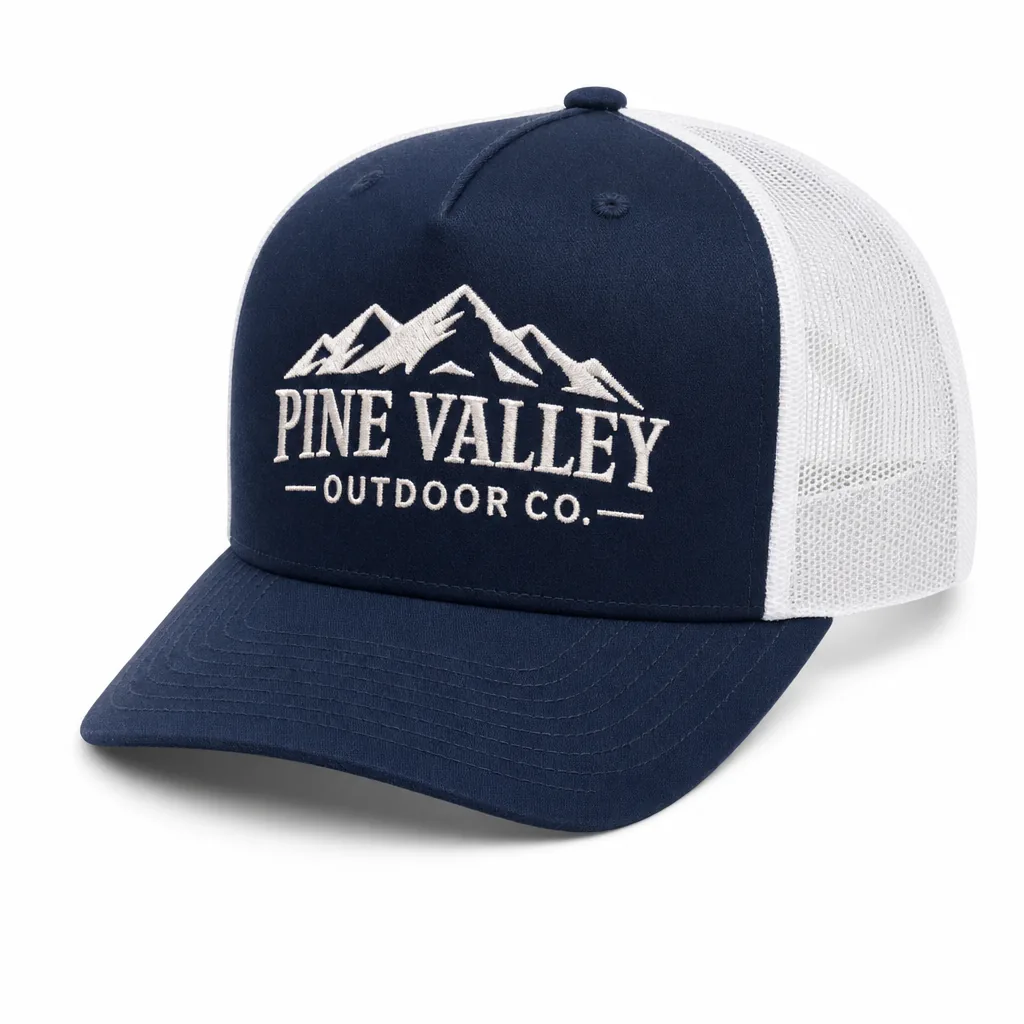
Custom Hat Embroidery: The 2026 Sourcing & Manufacturing Playbook - Cost & MOQ Breakdown is one of the most-asked questions we receive from international buyers, and for good reason. With dozens of factories competing for your order and an alphabet soup of technical terms in every supplier quote, even experienced importers can feel lost. This guide consolidates what we have learned producing custom hats for clients in 40+ countries.
Custom Embroidered Hats
Most custom hat embroidery is won or lost before the first cap goes on the frame. A usable tech pack should lock the cap body first—because a 6-panel 380 gsm brushed cotton twill snapback digitizes very differently from a 5-panel 210 gsm foam-front trucker—and then specify logo size in millimeters, seam position, crown height, visor curve, stitch-count target, thread spec, backing, and decoration method. If the logo mixes flat embroidery, 3D puff, applique, or printed patches, call that out in the PO with Pantone TCX references and an acceptable Delta-E tolerance, ideally within 1.5 to 2.0 for matched trims. Leave any of that vague and the factory will burn days on revised sew-outs, usually because the artwork looked fine on screen but collapses over buckram, foam, or a raised center seam once production starts. Machine brand is not the bottleneck; setup discipline is. Tajima, Barudan, and ZSK cap machines can all run cleanly at about 700 to 850 rpm, but only when the digitizer builds the right underlay, pull compensation, column width, and stitch density for that exact cap construction. A trucker with 3 mm EVA foam needs wider satin columns and aggressive seam avoidance, or letters pinch and split where the front join lifts. On low-profile dad caps, the opposite problem shows up: over-dense fills on soft cotton twill cause puckering and edge ripple, especially above 0.40 mm density equivalents. The only approval that matters is a sew-out on the actual hat, not flat fabric, because custom hat embroidery that looks sharp on a swatch can distort badly once stitched onto a curved cap body.
Buyers usually ask the wrong first question. MOQ matters, but stitch count and cap spec drive cost harder than most sourcing sheets admit. For stock blanks with standard flat front embroidery, realistic MOQ is typically 144 to 300 pieces per colorway. For fully custom builds—custom crown pattern, dyed fabric, inside seam tape, woven loop label, custom bill taping, and branded closure—MOQ usually starts at 300 to 500 pieces per style/color. A basic embroidered cap often lands around $2.20 to $4.20 ex-factory, while a custom trucker with mesh back, snap closure, woven label, hangtag, and 3D front logo is more realistically $4.80 to $8.50 FOB China. Once a logo moves past roughly 8,000 to 12,000 stitches, the cost curve jumps because machine minutes, thread trims, and rejection risk start overtaking fabric cost. Inspection is where weak process control shows up fast. The repeat failures are loose trims, color registration drift, tunneling on satin columns, skipped stitches from damaged needles, puckering around dense fills, and uneven puff height from inconsistent foam compression. For truckers, logo placement relative to the center seam should stay within plus or minus 2 mm, and the front panel should still hold shape after carton compression; plenty of caps look acceptable loose and then distort after packing. I would inspect finished goods at AQL 2.5 against a sealed production sample and confirm whether embroidery is done in-house or subcontracted, because subcontracting usually adds another layer of lead-time risk and weaker rework control. If the supplier claims sedex-audit-cap-supplier-guide.html">BSCI 2.0 or Sedex SMETA 4-Pillar compliance, verify the current audit scope rather than assuming the embroidery line is covered.
Custom Made Trucker Hat
The front panel decides whether a trucker program looks premium or cheap. A standard build is either a 5-panel high crown or 6-panel structured cap using a 2.5-3.0 mm EVA foam front or 220-260 gsm cotton/poly twill, 100% polyester mesh at 80-120D, PE visor board, PVC snapback, and a 20-25 mm sweatband. For clean custom hat embroidery, the panel construction has to match the logo file. Foam fronts are unforgiving: once a design pushes past roughly 7,000-8,500 stitches with heavy fill density, you start seeing tunneling, sinking, and edge distortion unless the factory adds 40-60 gsm non-woven backing and digitizes for foam behavior instead of flat twill. I usually keep small satin text above 2.5 mm height, avoid outlines below 1.0 mm, and reduce underlay on soft foam so the cap does not telegraph every needle strike. Specs need to go far beyond “trucker hat with logo.” Buyers should lock crown height in millimeters, panel count, front fabric gsm, mesh denier, visor stitch rows, seam tape color, underbill color, snap color, sweatband composition, and final artwork size by width and height. If shade control matters, use Pantone TCX for dyed fabrics and set Delta-E at 1.5-2.0 for twill and trim; foam laminate and mesh almost never match perfectly under D65 lighting, so expecting dead-on shade parity is unrealistic. Machine setup also matters more than most sourcing teams realize. On Tajima, Barudan, or ZSK cap frames, uneven hoop tension or poor seam positioning will show immediately when the logo runs across the center seam or sits high on the buckram-heavy crown.
MOQ and price move fast once you leave the standard trucker recipe. If you stay with stock mesh, stock snap, common visor shape, and a conventional 5-panel block, most factories in Yiwu or Dongguan will quote 144-300 pieces per colorway. Add a custom mesh pattern, molded snap color, altered visor curve, printed seam tape, woven labels, or a full internal branding pack, and the real MOQ usually becomes 500 pieces because material purchasing and line setup stop being interchangeable. A basic foam-front trucker with 5,000-8,000 stitches typically lands around $2.10-$3.40 FOB China at 300 units; brushed twill fronts, sandwich visor, woven flag label, and specialty mesh usually push that to $3.80-$5.80. Flat-plus-3D puff, appliqué, metallic thread, or chain stitch should be broken out separately, with 3D puff alone often adding $0.25-$0.60 per cap due to foam trimming, slower run speed, and higher rejection risk. Inspection is where margin is protected on trucker hats, because the failure points are repetitive and easy to miss in a rushed final check. The defects I see most often are embroidery drifting more than 2 mm off center, weak buckram causing crown collapse, mesh tearing at the back seam, visor warping from over-compressed master cartons, snap shade mismatch, needle perforation showing on white foam, and sweatband twisting after wear testing. AQL 2.5 for major defects and 4.0 for minor is the sensible baseline. I would measure logo placement, visor symmetry, stitch density consistency, and color variation across front panel, underbill, and closure, then require approval samples sewn on the same cap frames and same front material used for bulk. Custom hat embroidery looks more exposed on foam and mesh than on a full-fabric structured cap, so process discipline matters more here, not less.
Custom Trucker Hat
Trucker caps expose every weak decision in custom hat embroidery because the substrate is unstable by design: a foam-backed front panel, mesh rear, and a high-curve crown that wants to move under the needle. On a 6-panel trucker, the center-front embroidery area usually runs cleaner because the logo sits flatter between the crown break and visor seam; on a 5-panel trucker, you gain vertical real estate for badge-style artwork, but distortion risk goes up once you push dense fills or long satin columns across the single front panel. For foam-front styles, I would not accept vague material callouts. Specify 3 to 5 mm EVA or PU foam, outer fabric weight, mesh denier, crown height, visor curve, PP snap color, sweatband blend, seam tape artwork, and Pantone TCX references for every visible part. If you leave any of that open, many factories will drop in stock trims and call it custom. Digitizing matters as much as the shell. On Tajima, Barudan, or ZSK heads running around 750 to 900 spm for foam fronts, cheap laminated foam around 150 gsm tends to collapse under heavy stitch density, especially with 3D puff, causing tunneling, needle strikes, and front seam waviness. Keep front logos in the practical 5,000 to 8,000 stitch range unless the artwork is deliberately bold; once you stack heavy tatami fill, thick satin borders, and puff underlay into the same file, the cap starts fighting back. If the art depends on fine serif detail, tonal blends, or narrow negative space below 1.0 mm, a trucker is usually the wrong platform regardless of how attractive the FOB quote looks.
Pricing splits clearly between decorating a stock shell and building a true cut-and-sew trucker. In Yiwu, a stock-body trucker with front custom hat embroidery typically starts at 48 to 100 pieces and lands around $2.20 to $3.80 FOB China at 300 pieces, assuming a standard PE visor, PP snap, polyester mesh back, and a front logo around 5,000 to 8,000 stitches. A fully custom trucker with Pantone-matched fabric, custom mesh color, woven label, printed seam tape, branded sweatband, and recycled or higher-denier mesh is more realistically $3.90 to $6.80 FOB at 300 to 500 pieces. Add side embroidery, flat felt applique, woven patch attachment, or 3D puff and you usually add $0.20 to $0.90 per cap per process, plus a one-time digitizing or mold charge if the trim is non-standard. Do not approve bulk production off a clean sample photo. Tie acceptance to measurable controls: AQL 2.5, logo placement tolerance of +/-2 mm, visor symmetry, consistent mesh tension left to right, and dyed panel color within Delta-E 1.5 against approved lab dips. Most trucker defects show up after embroidery and packing, not at sample review: puckering at the front seam from bad digitizing or weak backing, torque from uneven mesh stretch, brittle PP snaps cracking in cold transit, scratchy backing behind the sweatband line, and poor underside thread trimming. For scalable supply, I want recent BSCI 2.0 or Sedex SMETA 4-Pillar records and a factory that separates sample cosmetics from production tolerances.
Custom Trucker Hats
The front panel is where trucker programs succeed or fail. A mesh back rarely causes embroidery rejects; the real risk is an unstable face that cannot hold stitch density without distortion. For clean custom hat embroidery, a 5-panel trucker is usually the safest platform because the uninterrupted front avoids a center seam splitting satin columns, small text, or 3D puff outlines. The most reliable builds are 2.5-3.0 mm PU foam laminated to brushed tricot at roughly 140-180 gsm, or cotton/poly twill reinforced with 0.35-0.45 mm buckram. Pair that with polyester mesh in the 50-75 denier range and a standard HDPE or PE snapback closure. Once fill-heavy artwork pushes past about 0.40-0.45 mm effective density on a weak front, you start seeing tunneling, puckering, foam shadowing, and edge collapse around satin borders. Crown geometry matters more on truckers than buyers expect. A front height of 10.5-11.5 cm is common, but moving even 8-10 mm taller changes how the logo reads when worn, especially on foam fronts with a steep visor angle. A sew-out that looks centered on flat artwork can ride visibly high once the cap is blocked and snapped on head form. A usable tech pack should specify panel count, front support type, visor curve, stitch rows on the brim, mesh composition, sweatband content, closure resin, undervisor color, and maximum embroidery field in millimeters. For thread, call out Madeira Classic or Gunold Poly 40 equivalent, nearest Pantone TCX target, and an achievable visual tolerance; Delta-E 1.5-2.0 is realistic for key logo areas, but thread will not match coated print standards perfectly under every light source.
MOQ and price on truckers are driven by decoration complexity and trim count more than by the silhouette itself. For 2026 sourcing out of Zhejiang, realistic factory MOQs are 144-300 pieces per colorway, with 200 pieces per style/color being the point where material allocation, cap blocking, and embroidery scheduling become efficient. A standard 5-panel foam-front polyester-mesh trucker with flat front embroidery usually lands around $2.20-$3.50 FOB Ningbo, depending on stitch count, fabric weight, closure quality, and carton pack-out. Add 3D puff, woven flag labels, printed seam tape, contrast undervisor, or a soft-touch snap, and the same cap moves quickly to $3.70-$5.40 FOB. Drop to 48-100 pieces and the unit cost often jumps 35-60% because digitizing, thread setup, machine balancing, trimming, and final inspection are almost fixed labor whether the run is 72 or 300 pieces. Inspection has to be stricter than for a basic six-panel twill cap because defects on a white foam front are visible from three meters away. I would write the PO around AQL 2.5 major and 4.0 minor, then add point-specific checks: mesh tearing at seam joins, visor curve variance, crown collapse after compression packing, snap pull strength, skipped stitches, inconsistent puff height, and exposed foam along satin edges. Logo placement should be measured from visor seam to design baseline and from side seam to centerline; a 3 mm drift is obvious on tall-front truckers. Ask what heads the factory is actually running—Tajima, Barudan, and ZSK all perform well if the digitizing is correct—but do not approve bulk production from artwork alone. Our standard practice is to sign off a physical sew-out first, because bad underlay, poor pull compensation, and weak cap framing cause more trucker failures than sewing defects on the cap body.
Hat Trucker Custom
Cost on a trucker build moves fastest on front-panel structure, mesh quality, and stitch count—not on vague terms like “premium embroidery.” A standard custom hat embroidery program is usually a 5-panel foam-front cap with 100% polyester laminated front panels, 75D to 150D polyester mesh, and a PP snapback; at factory level, that is the lowest-risk setup for clean runability and stable logo registration. A 6-panel trucker adds labor and puts the center seam directly under the artwork, which is where you start seeing split satin columns, letter distortion, and registration drift. If you swap the foam face for 240 to 280 gsm cotton twill, brushed canvas, or a sueded poly-cotton shell, the cap feels better in hand but becomes less tolerant in embroidery: softer fronts need firmer hooping, cutaway backing with the right stiffness, and lower top-thread tension to prevent tunneling and puckering. For logos taller than about 55 mm, or any design with dense satin borders near the centerline, pre-assembly panel embroidery is usually the safer call. On a Tajima or Barudan line, that decision alone can be the difference between a sharp front hit and a crown that twists once sewing and visor setting are finished.
Most trucker tech packs fail because they leave too much open to factory interpretation. A usable spec should lock profile, crown height, panel count, front fabric composition, mesh denier, visor curve, sweatband material, closure type, seam tape artwork, embroidery placement, and logo size in millimeters. If brand color matters, specify Pantone TCX for textile components and set realistic tolerances: Delta-E under 2.0 is achievable on dyed shell fabrics, while embroidery thread is usually better controlled under 3.0 because rayon and polyester threads reflect light differently than matte fabric. It also matters which embroidery platform is running the job; ZSK, Tajima, and Barudan heads behave differently on density, underlay, push-pull compensation, and EVA support for 3D puff, so digitizing should be tuned to the actual machine family rather than treated as universal. Our standard practice is to quote truckers by confirmed stitch count because a clean 6,000-stitch front logo, a 9,000-stitch 3D puff design, and a 14,000-stitch front-plus-side custom hat embroidery program do not belong in the same price band.
MOQ on trucker caps is usually set by component matching and trim sourcing, not by sewing complexity. For a basic foam-front trucker with flat front embroidery, workable China MOQs are typically 144 to 300 pieces per colorway; below that, the friction comes from matching mesh lots, closure colors, labels, and visor fabric, not from running the sewing line. Real FOB China pricing at 300 pieces is commonly $2.20 to $3.40 for flat front embroidery, $3.00 to $4.60 with 3D puff plus a side hit, and $4.80 to $7.50 once you add custom seam tape, woven labels, contrast undervisor fabric, specialty shells, or custom-mold metal trims. At 1,000 pieces, pricing often drops 12% to 20%, but only when fabric yield, thread consumption, and machine setup time stay consistent across the order. The defect pattern is predictable: center-seam registration drift, puckering on low-density foam, mesh panels sewn out of square, visors more than 5 mm off-center, and shade mismatch between brim fabric and mesh. That is why final inspection should be written around logo position tolerance, stitch consistency, brim symmetry, crown measurement, and AQL 2.5 carton sampling—not a casual visual check at packing.
Trucker Custom Hat
Most trucker caps are quoted like commodity promo goods, but the embroidery risk sits in the build spec. A standard 5-panel trucker usually uses a high crown, a 2.5 to 4.0 mm laminated EVA or sponge-foam front, a 210 to 260 gsm cotton or polyester twill visor, 75D to 150D polyester mesh, and a 7-hole PVC snapback. That foam front is the only reliable field for custom hat embroidery on most programs. Once you move into mesh side panels or a soft unsupported front, stitch density becomes the problem: satin columns start to sink, fills pucker, and anything tighter than roughly 0.35 mm pitch can distort the panel and telegraph through the mesh openings. Buyers should ask for crown height, foam thickness, visor curve, mesh denier, buckram or no-buckram construction, and the exact embroidery platform—Tajima, Barudan, or ZSK—before approving price. A tall foam-front promo trucker, a lower-profile surf fit, and a premium streetwear trucker do not embroider or fit the same, so a photo reference without those numbers is not a production spec.
The tech pack has to control embroidery, not just color and logo placement. Specify visor fabric composition, gsm, foam thickness in mm, PE versus cardboard visor board, snap color, sweatband material, Pantone TCX for every dyed part, logo size in mm, placement tolerance of +/- 2 mm, expected stitch count, and backing type such as tear-away, cut-away, or heat-seal film. For custom hat embroidery, I would also lock thread to a commercial standard like Madeira Classic 40 or Gunold Poly 40 and require shade approval within Delta-E 1.5 to the approved lab dip or thread card. In Yiwu, a stock-body trucker with front embroidery typically prices around $2.20 to $4.10 FOB at 144 to 300 pieces per colorway; full cut-and-sew usually starts at 500 pieces and is more efficient at 1,000-plus if you need custom mesh, branded seam tape, woven labels, or molded trims. Inspection should run to AQL 2.5, with specific checkpoints for front-panel rippling after embroidery, visor-to-crown skew, mesh tension, snap fatigue at roughly 50 to 80 open-close cycles, and loose trims around dense fills. If the artwork relies on fine serif text, heavy fill coverage, or wrap embroidery, a trucker is often the wrong silhouette regardless of how cheap the quote looks.
Working with CrownsForge for custom hat embroidery programs
The expensive mistakes in a custom hat embroidery program happen before bulk, not during final inspection. A factory that asks you to approve from a flat PDF without proving the logo on the actual cap body is gambling with your order. Our standard practice at CrownsForge is 5 to 7 working days for a strike-off after vector art, finished size, and Madeira or Gunold thread callouts are confirmed, then another 7 to 10 days for a wearable sample if the shell fabric is in stock. We do not release production on artwork alone when the design includes 3D puff, metallic thread, tatami gradients, appliqué, or strokes under 1.2 mm. The file needs to run on Tajima or Barudan heads first so the team can adjust pull compensation, edge run, underlay, satin density, and trim path based on what the machine actually does. That step matters because cap embroidery behaves differently on a 100% cotton twill 6-panel than on a foam-front trucker or brushed poly performance cap. On high-profile truckers, the center seam, crown angle, and foam rebound can shift small text by 1.5 to 3.0 mm if the logo is simply centered from artwork instead of digitized for the panel shape. We check thread-break frequency, puckering, needle penetration, and whether a 2 mm satin column still reads clean after hooping and sewing. A digital mockup cannot show foam collapse, metallic fraying, or how a 5 mm rope trim visually crowds the embroidery field. If the logo sits near the seam, uses stacked detail, or relies on puff height for legibility, a physical pre-production sample is not optional for custom hat embroidery.
MOQ and pricing only make sense when the supplier separates true customization from stock-component assembly. A realistic starting point for custom hat embroidery is usually 144 pieces per colorway on a standard trucker using in-line mesh colors, stock sweatbands, and a regular snapback closure. Once you specify custom-dyed 12x12 cotton twill, branded seam tape, a woven wrap label, Pantone TCX fabric matching, or a proprietary closure, the economics change fast; 300 to 500 pieces is where dye-lot MOQs, trim minimums, and freight spread stop punishing the unit cost. For Zhejiang production, FOB pricing on a structured trucker typically lands around $2.60 to $4.90, while high stitch counts above 10,000 stitches, side and back hits, metallic thread, woven retail inserts, or a leather strap can push the cap above $5.50. Digitizing and setup usually run $35 to $80 per logo depending on puff layers, appliqué registration, and revision rounds. The bigger issue for established buyers is whether bulk ships consistently and compliantly, not whether the prototype looked good. That is controlled with a pre-production file that locks the BOM, panel material, logo coordinates, stitch-count tolerance, carton assortment, barcode format, and needle policy before sewing starts. We normally inspect inline and final to AQL 2.5, though appearance-sensitive programs often tighten critical embroidery defects below the default threshold. Social compliance is typically BSCI 2.0 or Sedex SMETA 4-Pillar, and if the PO calls for GRS inputs or OEKO-TEX chemical documentation, those claims need to be tied to batch records at order stage, not requested after packing. On the floor, the best result is not always more stitches; some logos sew cleaner as mixed construction, such as 3D puff on the front, a woven side patch, or a TPU badge where satin columns would sink into foam or disappear on coarse mesh.
Frequently Asked Questions
What file format should I send for my logo?
Vector files (AI, EPS, PDF) are ideal. High-resolution PNG or JPG at 300 dpi on transparent background works as a fallback. Provide Pantone color references for accurate reproduction.
How long does production take?
Sampling takes 7 to 12 days. Bulk production runs 20 to 30 days depending on quantity, fabric availability and decoration complexity. Inspection and packing adds another 3 to 5 days before shipment.
Can I order a sample before bulk production?
Yes. We strongly recommend approving a pre-production sample before mass production. Samples are charged at 35 to 60 USD each plus express shipping, fully refundable against confirmed bulk orders over 500 pieces.
What is the minimum order quantity (MOQ) for custom hats?
Our standard MOQ is 100 pieces per design and color, with sampling available from 1 piece. For complex multi-color logos or premium fabric upgrades, the MOQ can be lowered with a small per-piece surcharge.
Which shipping methods do you support?
We support FOB, CIF and DDP shipping. Air express for samples and small orders, sea LCL for 100 to 500 pieces, sea FCL for 5,000+ pieces. Door-to-door DDP available for US, EU, UK, Canada and Australia.
How does ordering custom embroidery trucker hat work?
When evaluating custom embroidery trucker hat, the key considerations are construction quality, decoration capability, MOQ flexibility and lead time. Cover everything buyers ask about custom made trucker hat: how it's manufactured, what specs to request from a factory, typical MOQ and pricing, common quality issues to inspect for, and how this ties back to the broader custom hat embroidery sourcing decision. Cover everything buyers ask about custom trucker hat: how it's manufactured, what specs to request from a factory,…
How does ordering custom embroidered trucker hats work?
When evaluating custom embroidered trucker hats, the key considerations are construction quality, decoration capability, MOQ flexibility and lead time. Cover everything buyers ask about custom embroidered hats: how it's manufactured, what specs to request from a factory, typical MOQ and pricing, common quality issues to inspect for, and how this ties back to the broader custom hat embroidery sourcing decision. Cover everything buyers ask about custom trucker hats: how it's manufactured, what specs to request from a…
How does ordering custom embroidery patches for hats work?
When evaluating custom embroidery patches for hats, the key considerations are construction quality, decoration capability, MOQ flexibility and lead time. Cover everything buyers ask about custom embroidered hats: how it's manufactured, what specs to request from a factory, typical MOQ and pricing, common quality issues to inspect for, and how this ties back to the broader custom hat embroidery sourcing decision. Cover everything buyers ask about custom trucker hats: how it's manufactured, what specs to request from a…
How does ordering custom made hats for men work?
When evaluating custom made hats for men, the key considerations are construction quality, decoration capability, MOQ flexibility and lead time. Cover everything buyers ask about custom embroidered hats: how it's manufactured, what specs to request from a factory, typical MOQ and pricing, common quality issues to inspect for, and how this ties back to the broader custom hat embroidery sourcing decision. Cover everything buyers ask about custom made trucker hat: how it's manufactured, what specs to request from a…
Ready to start your custom hat project?
Send us your tech-pack, sketch or even just an inspiration photo. We will respond with a detailed quotation and digital mock-up within 24 hours.
Request a free quoteRelated guides
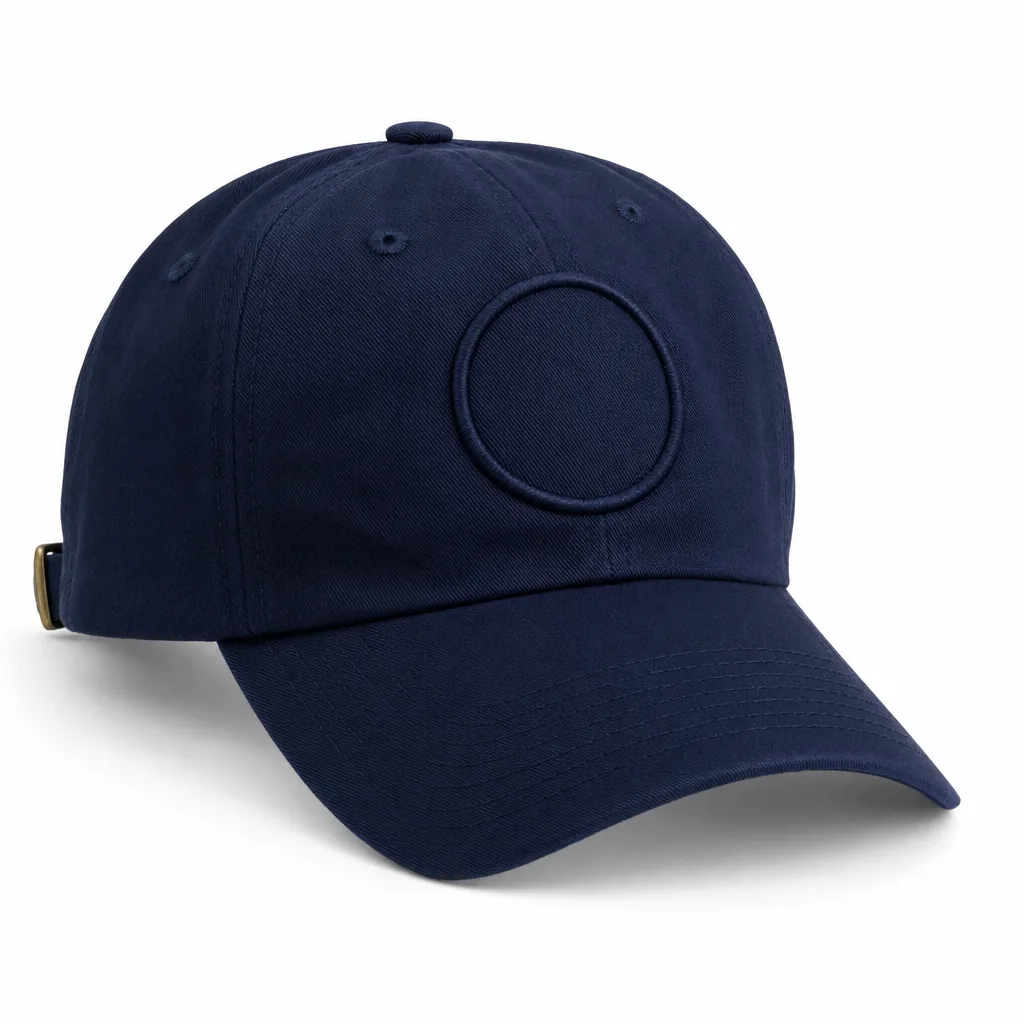
Custom Hats for Men: A 2026 B2B Sourcing Guide - 2026 Buyer's Guide
Read article →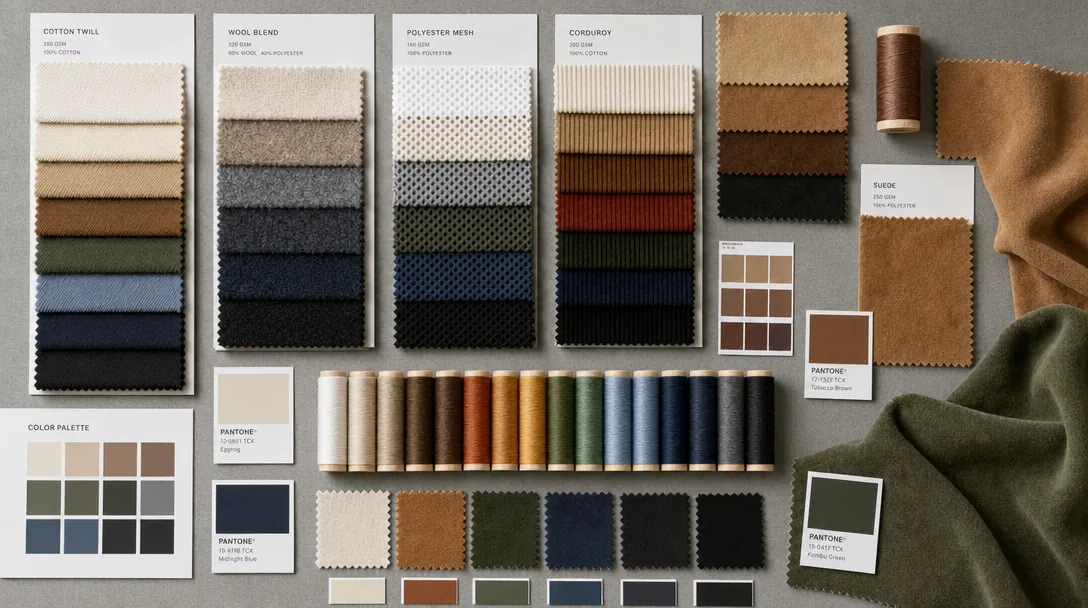
Slouchy Beanie: Properties, Costs and How to Spec It Right
Read article →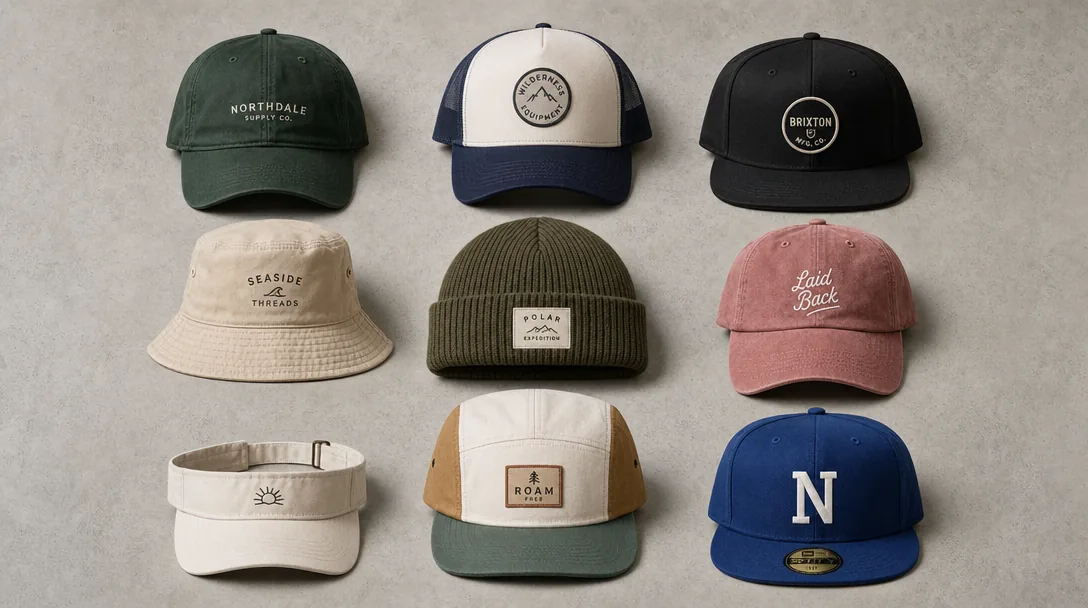
Launching a Hat Brand: Marketing Playbook for the First 12 Months
Read article →If you are ready to take the next step on custom hat embroidery: the 2026 sourcing & manufacturing playbook - cost & moq breakdown, our team can put a tailored quotation and digital mock-up in your inbox within 24 hours. Send the inquiry form on our contact page or message us directly on WhatsApp.