
Custom Golf Hats: A Manufacturer's Guide to Performance Headwear - Cost & MOQ Breakdown - Cost & MOQ Breakdown - Cost & MOQ Breakdown - Cost & MOQ Breakdown
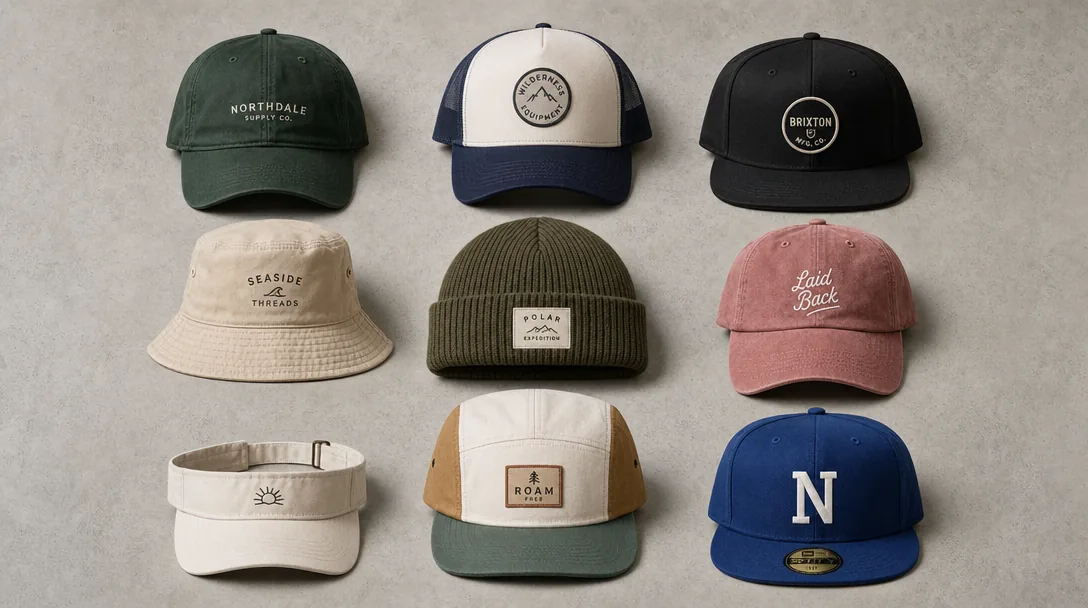
Custom Golf Hats: A Manufacturer's Guide to Performance Headwear - Cost & MOQ Breakdown - Cost & MOQ Breakdown - Cost & MOQ Breakdown - Cost & MOQ Breakdown is one of the most-asked questions we receive from international buyers, and for good reason. With dozens of factories competing for your order and an alphabet soup of technical terms in every supplier quote, even experienced importers can feel lost. This guide consolidates what we have learned producing custom hats for clients in 40+ countries.
The golf-specific silhouettes that dominate retail and tournament programs
The volume winner in custom golf hats is still the mid-profile 6-panel performance cap with a pre-curved visor because it balances fit, logo real estate, and sell-through better than any fashion-forward shape. The spec that keeps working is a structured crown in 95/5 polyester-spandex or 100% recycled polyester at 140-180 gsm, with laser-perforated side or rear panels and a moisture-wicking sweatband in 180-220 gsm polyester terry or cool-dry mesh. For front embroidery, structure is not optional: 0.8-1.0 mm buckram under the two front panels holds dense logos stable once you get past roughly 7,000 stitches. On Tajima, Barudan, or ZSK heads, softer fronts start showing tunneling, top-edge distortion, and crown ripple above the eye line, especially on satin borders and 3D puff underlays. Retail buyers also prefer this silhouette because the closure options are forgiving across tournament size curves: hook-and-loop for giveaway programs, micro Velcro or tuck strap for better pro-shop presentation, and molded silicone snap tabs for younger resort assortments. A practical visor spec is 7.0-7.5 cm with a medium pre-curve; flatter peaks photograph well but underperform on course because glare control matters. FOB Zhejiang pricing usually lands at $3.20-$5.40 at 300-1,000 units, but the range is real, not arbitrary. Recycled yarn with GRS paperwork, seam-sealed perforations, side embroidery above 4,000 stitches, or welded TPU logos can add $0.25-$0.90 per cap before freight. Buyers who ignore stitch count and trim complexity during quoting usually end up comparing the wrong factory offers.
The silhouette taking share in resort retail and younger tournament programs is the 5-panel low-profile rope cap, usually with a lightly curved bill instead of a true flat brim. Its advantage is simple: the uninterrupted front panel gives cleaner presentation for oversized wordmarks, high-density woven patches, molded rubber badges, and heat-transferred sponsor marks because there is no center seam breaking the artwork. That matters at shelf distance. A 3-5 mm braided polyester rope above the visor pushes the cap into club merchandise and invitational gifting, but golf programs still sell better with a visor length around 7.0-8.0 cm and a mild curve. Once the bill goes flat and the crown gets too shallow, it stops reading as golf headwear and starts reading as general streetwear. Below that top two, buckets and visors remain niche but useful styles in the custom golf hats mix when the event format justifies them. UPF 50+ bucket hats in 120-160 gsm microfiber or recycled woven poly are common for summer outings, caddie teams, and marshal uniforms; visors in 220-260 gsm pique, sandwich microfiber, or brushed performance twill work for hot-weather tournaments and women’s assortments. MOQ jumps when you add decorative trim: Pantone-matched rope, custom seam tape, molded patch tooling, or printed inner taping usually pushes the efficient floor to 144-200 pieces per colorway. Our standard AQL 2.5 issues on these styles are rarely fabric-related; they cluster around brim symmetry within ±3 mm, rope alignment, sweatband join bulk, and back-closure centering, which are exactly the details retail buyers notice first.
Why golf demands performance fabric (not cotton twill)
Cotton twill is the wrong base cloth for custom golf hats meant to survive 18 holes in heat. Standard promo twill usually runs 220-280 gsm; it drinks sweat, holds it at the forehead seam and buckram line, and gets noticeably heavier by the back nine. Once cotton is saturated, evaporative cooling slows down because the moisture stays in the fabric mass instead of spreading across the surface. You also see practical failures fast: salt bloom on black and navy, sweat staining on white, and front-panel distortion after repeated wet-dry cycles. In production, wet cotton relaxes around the crown and visor seam, then dries unevenly, which is why shape loss and wrinkling show up earlier on heavily worn caps.
A better golf spec starts with 100-150 gsm polyester microfiber or lightweight 75D-150D woven polyester, ideally with mechanical stretch, laser-perforated side panels, and a moisture-wicking sweatband. Those constructions move perspiration through capillary action, so the shell dries faster and the hat feels lighter after 4-5 hours outdoors. UV and color stability are also stronger on performance polyester, especially solution-dyed lots, where shade variation is easier to control against a Pantone TCX target and bulk fabric can realistically be held within Delta-E 1.0-1.5. Cotton twill is more forgiving for dense embroidery, but it is a poor tradeoff for golf. On lightweight shells, logos need to be engineered differently: lower stitch density, correct underlay, and proper backing setup on Tajima, Barudan, or ZSK cap frames. When the artwork is fine-line or small text, TPU patches, silicone heat transfers, or welded badges usually outperform heavy embroidery both visually and structurally.
The cost gap is smaller than most buyers expect, and it is cheap compared with the claim risk from an uncomfortable cap. Moving from basic cotton twill to a proper golf-grade polyester shell typically adds $0.35-$0.90 per cap at bulk quantities, depending on fabric weight, perforation, sweatband spec, and closure trim. Add-ons like spacer-mesh sweatbands, seam taping, or laser-cut ventilation can push the increase past $1.20, but those are functional upgrades, not cosmetic upsells. If the program is for pro shops, corporate tournaments, or licensed team golf, that premium is minor next to returns, chargebacks, or dead stock caused by poor wear performance.
The bigger issue is build validation. Lightweight performance caps show defects sooner than heavy twill, especially embroidery puckering, panel read-through, and visor mismatch under bright sun. Our standard practice at CrownsForge is to test the full construction before bulk production—shell, backing, sweatband, closure, and decoration method together—then inspect finished goods to AQL 2.5. On custom golf hats, comfort is not a secondary feature you bolt on after approving the logo. If the fabric traps sweat, fades unevenly, or loses shape after a few rounds, the hat has already failed no matter how good the branding looks in the sample room.
UPF sun protection for golf programs
UPF on custom golf hats is set by fabric geometry first, not by whatever the hangtag says. In production terms, the key variables are cover factor, yarn denier, fabric weight, color depth, and how much of the crown you perforate. A tight 100% polyester microfiber or performance twill in the 120-160 gsm range will often test at UPF 30+ without any chemical finish, especially in darker shades like navy, black, and forest where light transmission is lower. That is usually enough for municipal-course pro shops, scramble giveaways, and resort merchandise where buyers care more about moisture management, low-profile crown drape, and laser-perforated side panels than a formal lab certificate. The requirement gets stricter for Australia, junior golf, and high-UV states such as Florida, Arizona, and Hawaii, where programs increasingly ask for documented UPF 50+ rather than a mill declaration. White and pastel styles are where programs get into trouble. A navy 130 gsm poly cap body that passes comfortably can fail in white because the fabric transmits more UV, forcing the mill to increase density, move to a finer-denier tighter construction, or apply a UV-absorbing finish. Each fix has a tradeoff on the factory floor: denser fabric reduces airflow, finishes can alter hand feel, and heavier constructions can stiffen the crown. If the style also includes honeycomb mesh, 3%-8% elastane, or oversized laser holes, the tolerance narrows further because ventilation features remove coverage from a fabric that may already be borderline. That is why experienced factories lock the UPF target at fabric sourcing, not after the sample room has already approved aesthetics.
The expensive mistake is treating UPF certification as a one-time fee across an entire style family. It rarely works that way. Testing to AS/NZS 4399 or an equivalent protocol through SGS, Intertek, or Bureau Veritas typically runs about $300-$500 per submission, and most compliance teams define a submission by fabric, color, and construction combination. A white perforated polyester version and a navy brushed-twill version of the same silhouette are usually separate reports. Change a side panel from solid fabric to mesh, add a spandex blend, or alter the vent pattern, and many labs will require another submission because the UV barrier has materially changed. The same logic applies if you switch mills or revise the underbrim fabric after approval. The math only makes sense when the program is planned early. A mill-applied UV finish or upgraded base cloth usually adds just $0.12-$0.35 per hat, which is manageable even on mid-tier custom golf hats; the fixed testing cost is what hurts small runs. On a 144-piece event order, certification plus courier fees can add roughly $2.50-$3.80 per unit, while a 2,000-piece annual buy can dilute that below $0.25. Our standard practice at CrownsForge is to freeze the approved mill spec, Pantone TCX color, panel mapping, and vent layout before bulk sampling. Change the fabric weight, mesh placement, or crown construction after sign-off, and you can easily lose 3-4 weeks to retesting and sample remake, with no guarantee the revised cap will hit the same UPF result.
Moisture-wicking sweatband: the detail buyers don't notice until summer
The sweatband is where custom golf hats either stay comfortable through 18 holes or start failing by the back nine. Plain cotton twill and brushed cotton bands are still common because they are cheap and easy to sew, but in real summer use they are the first component to collapse. At 30-35°C and 70%+ RH, cotton saturates quickly, holds salt, and creates the dark forehead ring buyers get back as a complaint on white, stone, and pastel caps. A proper performance band is usually a warp-knit polyester/elastane or nylon/polyester blend in the 140-180 gsm range, typically with 8-15% spandex for recovery. The better constructions have a brushed inner face for skin comfort and a more open outer face to spread moisture laterally instead of letting it pool at the hairline. On lightweight shells like 95/5 poly-spandex, micro-perforated polyester, or laser-cut vent panels, the wrong sweatband becomes the choke point immediately, because the crown can breathe but the forehead contact layer cannot.
The upcharge is too small to justify cutting corners. On a structured 6-panel golf cap, upgrading from a basic cotton band to a moisture-management knit usually adds $0.15-$0.25 per piece at 1,200 units, and around $0.28 if the buyer wants heather effects or a Pantone-matched shade that requires tighter dye-lot control. Black and white are simple; custom light shades are where suppliers get sloppy, and that matters because perspiration staining and dye migration show first on pale shells. Before bulk cutting, I would ask for perspiration colorfastness, dry/wet crocking, and wash data on the full assembled cap, not just the band roll. A black sweatband bleeding onto a white crown after one wash can turn a profitable lot into a claim. During AQL 2.5 final inspection, the sweatband deserves its own checkpoints: stitch security, overlap bulk at the back seam, puckering, contamination from dark lint or sunscreen handling, and any hard ridge where the buckram edge meets the band. That pressure point is a common wear complaint on mid-tier hats, and it never shows up in a showroom photo.
Rope hats: why this silhouette became the golf hero category
Rope hats became the hero SKU in golf because the trim changes perceived value without adding much cost. A 3 to 4 mm braided polyester rope usually adds only $0.05 to $0.12 per cap in volume, but it creates a hard horizontal break above the visor that makes the crown look cleaner at retail distance and in e-commerce photography. That matters in custom golf hats, where pro shops and resort programs want product that feels current but still safe for a broad age range. Compared with a standard sandwich-brim cap, a rope silhouette gives the front logo a more deliberate frame and reads more premium even when the decoration is only a 6,000 to 9,000 stitch 3D puff or flat-fill embroidery. The best platform is usually a structured 5-panel pinch front or a medium-profile 6-panel with a flatter crown face, because logos distort less than they do on soft washed twill dad caps or heavily curved center-seam builds.
The silhouette also accepts performance materials better than most buyers realize. A rope cap can be built in 92/8 polyester-spandex twill at 140 to 160 gsm, perforated microfiber, or recycled poly with C0 or C6 DWR and still keep the vintage golf look that sells. On the factory floor, it is a forgiving spec: 58 cm sample size, 2.2 to 2.5 mm PE visor board, laser-perforated side panels with optional tricot backing, and finished weight around 85 to 105 grams. That is light enough for summer rounds but stable enough for Tajima or Barudan multi-head embroidery, molded TPU patches, or woven labels without panel collapse. Just as important, MOQ stays reasonable because the style does not require new tooling; most factories can produce fully custom golf hats from 100 pieces per colorway using stock visor molds and standard snapback, hook-and-loop, or TPU strap closures. In practice, a performance poly rope cap usually lands around $4.20 to $7.80 FOB China, while premium builds with hydrophobic fabric, antimicrobial sweatband, memory-foam brow pad, or welded applique move into the $9.50 to $13.00 range at 300 to 500 units.
QC is where rope hats either look sharp or cheap. The rope, crown fabric, and underbill should be approved as separate components because braided yarns drift against a Pantone TCX target more easily than piece-dyed twill; it is not unusual to see a contrast rope miss by Delta-E 1.5 or more if the lot is not checked under D65 lighting. Our standard practice is to treat rope color, rope alignment, and front-panel decoration as independent checkpoints, then inspect finished caps to AQL 2.5 for crown symmetry, embroidery centering, visor curve consistency, and rope waviness. On this silhouette, defects that might pass unnoticed on a plain cap become obvious fast: a 2 mm rope wave, a logo shifted 1.5 mm off center, or an uneven pinch front will be visible immediately, especially on white, stone, or light heather colorways. That sensitivity is exactly why rope styles reward disciplined manufacturing and why they continue to outperform generic golf caps at retail.
Tournament + club merchandise compliance and timing
Deadlines for custom golf hats are usually lost in approvals, not sewing. For tournament programs, lock artwork, fabric, and trims 90 to 120 days before tee-off if you need Pantone-matched embroidery, molded TPU or silicone patches, custom buckle hardware, and one full pre-production sample cycle. At 45 to 60 days, buyers typically end up cutting complexity: stock closures instead of custom metal, standard poly twill instead of a dyed performance shell, or partial airfreight to hit registration day. The biggest technical risk is color on synthetic and heathered fabrics. A crest that looks clean in Illustrator can shift badly on melange polyester, perforated microfiber, or poly-spandex blends because the base shade shows through the thread and patch edge. If brand control is tight, approve against physical standards: lab dips, embroidery sew-outs, and patch strike-offs, not PDFs. For navy-on-navy, white-on-white, or metallic thread, I would not sign off without checking under D65 light and outdoor daylight; those combinations routinely move beyond Delta-E 1.5 in real use.
Club merchandise follows a retail calendar, so January purchasing is the safe window for May-to-September floor stock, especially when custom golf hats need UPC stickers, branded hangtags, size labels, and multiple colorways. Most spring/summer programs fall into three fabric lanes: moisture-wicking polyester at 110 to 160 gsm, brushed cotton twill around 180 gsm, or hybrid performance shells using 75D to 150D yarns with laser-perforated side panels. Those same mills also feed running and tennis programs, so capacity gets booked early. For workable FOB pricing, MOQ is usually 144 to 288 pieces per style and color; below that, setup on embroidery heads, trim minimums, and carton inefficiency start pushing unit cost out of proportion. Compliance also needs to be built in before cutting: country-of-origin labels, fiber content, carton marks, and CPSIA tracking for U.S. youth orders are basic, not optional. On structured six-panel caps, center-front embroidery above roughly 10,000 to 11,000 stitches can distort over buckram unless digitizing compensates for seam push and crown curve on Tajima or Barudan heads. Final inspection should be fixed at AQL 2.5 with shade-band checks, closure function testing, and logo placement tolerance held to plus or minus 2 mm on sponsor-sensitive orders.
Working with CrownsForge on golf programs
Most golf programs fail at the spec stage, when buyers treat custom golf hats like commodity promo caps. On-course performance starts with fabric behavior under heat, sweat, and repeated wear: 120–160 gsm micro-poly twill gives clean logo support and faster dry-down than brushed cotton, while 135–150 gsm mechanical-stretch woven polyester is more forgiving on low-profile fits that need recovery after 18 holes. For vented styles, perforated shells in the 75–110 denier range hold shape better than many open-hole knits, which often drift in crown height after pressing. Rope caps are even less forgiving. A 5 mm braided rope can read premium or cheap depending on visor curve, seam placement, and front buckram stiffness, so those dimensions need to be frozen before sampling. If crown height shifts even 3–4 mm between sizes, the same logo will sit differently across the run.
Decoration has to match the cap geometry, especially on shallow crowns and semi-structured fronts. Heavy 3D puff embroidery with aggressive underlay will torque the panel, pull the center seam, and leave tunneling that looks fine on a packing table but fails once worn. Better options for custom golf hats are flat embroidery, micro-raised embroidery, thin TPU patches, or HD silicone heat transfers, depending on logo area and stitch density. Our standard practice is to digitize for the actual profile on Tajima or Barudan heads, not a generic six-panel file, and to control stitch count so front panels do not collapse under logo weight. Performance claims need the same discipline. If a buyer wants UPF 30+ or UPF 50+, the approved fabric lot should be tied to third-party test data and locked in the tech pack; a later mill substitution can change the rating without changing the handfeel. A 30–35 mm polyester wicking sweatband with foam insert usually adds only $0.08–$0.18 per cap but wears noticeably better than cotton twill in summer sell-through.
Lead times are predictable only when the brief is complete. For a clean program, expect 7–12 days for samples and 25–32 days for bulk after approval, assuming artwork, Pantone references, closure hardware, visor sandwich, rope color, and label scope are all signed off before booking. The delays I see most often are preventable: logos that need redraw before digitizing, missing Pantone TCX or coated references, and late changes to closure type or trim colors after material purchasing has started. On pricing, buyers should quote custom golf hats on a clearly defined FOB Yiwu basis with carton pack assumptions, fabric composition, and AQL 2.5 inspection called out; otherwise the comparison across factories is meaningless. A realistic benchmark for 500–1,000 pieces is $4.20–$6.80 FOB for mid-grade polyester styles with standard embroidery, rope detail, and a wicking band. Move to branded closures, lighter denier imported shells, or multi-location decoration, and cost rises quickly because machine minutes and trim complexity drive more variance than shell fabric alone.
Frequently Asked Questions
What logo decoration techniques do you offer?
3D puff embroidery, flat embroidery, woven patch, leather patch, PVC patch, screen printing, sublimation, applique and laser etching, all in-house with no subcontracting.
Can I order a sample before bulk production?
Yes. We strongly recommend approving a pre-production sample before mass production. Samples are charged at 35 to 60 USD each plus express shipping, fully refundable against confirmed bulk orders over 500 pieces.
Do you support sustainability certifications?
Yes. We work with GOTS organic cotton, GRS-certified recycled polyester, OEKO-TEX Standard 100 fabrics, and are BSCI and Sedex audited. Certification documentation can be provided per order.
What file format should I send for my logo?
Vector files (AI, EPS, PDF) are ideal. High-resolution PNG or JPG at 300 dpi on transparent background works as a fallback. Provide Pantone color references for accurate reproduction.
Which shipping methods do you support?
We support FOB, CIF and DDP shipping. Air express for samples and small orders, sea LCL for 100 to 500 pieces, sea FCL for 5,000+ pieces. Door-to-door DDP available for US, EU, UK, Canada and Australia.
What's the MOQ for custom embroidered baseball caps no minimum?
When evaluating custom embroidered baseball caps no minimum, the key considerations are construction quality, decoration capability, MOQ flexibility and lead time. Performance baseball cap with curved brim, 5-panel low-profile golf cap, rope hat with rope detail above the brim, performance bucket hat, and visor. Each has a specific use case — driving range, tournament play, club merchandise programs and pro-shop retail. Standard cotton twill absorbs perspiration and stays heavy. Golf demands moisture-wicking polyester (typically…
How does ordering baseball cap custom logo work?
When evaluating baseball cap custom logo, the key considerations are construction quality, decoration capability, MOQ flexibility and lead time. Performance baseball cap with curved brim, 5-panel low-profile golf cap, rope hat with rope detail above the brim, performance bucket hat, and visor. Each has a specific use case — driving range, tournament play, club merchandise programs and pro-shop retail. Standard cotton sweatband saturates within 9 holes of summer play; polyester-elastane wicking sweatband moves…
How does ordering custom baseball team hats work?
When evaluating custom baseball team hats, the key considerations are construction quality, decoration capability, MOQ flexibility and lead time. Performance baseball cap with curved brim, 5-panel low-profile golf cap, rope hat with rope detail above the brim, performance bucket hat, and visor. Each has a specific use case — driving range, tournament play, club merchandise programs and pro-shop retail. Rope hats (a 5-panel or 6-panel cap with decorative rope above the brim, often in contrast color) became the golf…
What's the MOQ for custom logo hats no minimum?
When evaluating custom logo hats no minimum, the key considerations are construction quality, decoration capability, MOQ flexibility and lead time. Rope hats (a 5-panel or 6-panel cap with decorative rope above the brim, often in contrast color) became the golf cap of the 2020s. Originally a fishing/outdoor silhouette adopted by Imperial, Melin and Branded Bills. We produce equivalents at MOQ 100 pieces. Performance baseball cap with curved brim, 5-panel low-profile golf cap, rope hat with rope detail above the brim,…
Ready to start your custom hat project?
Send us your tech-pack, sketch or even just an inspiration photo. We will respond with a detailed quotation and digital mock-up within 24 hours.
Request a free quoteRelated guides
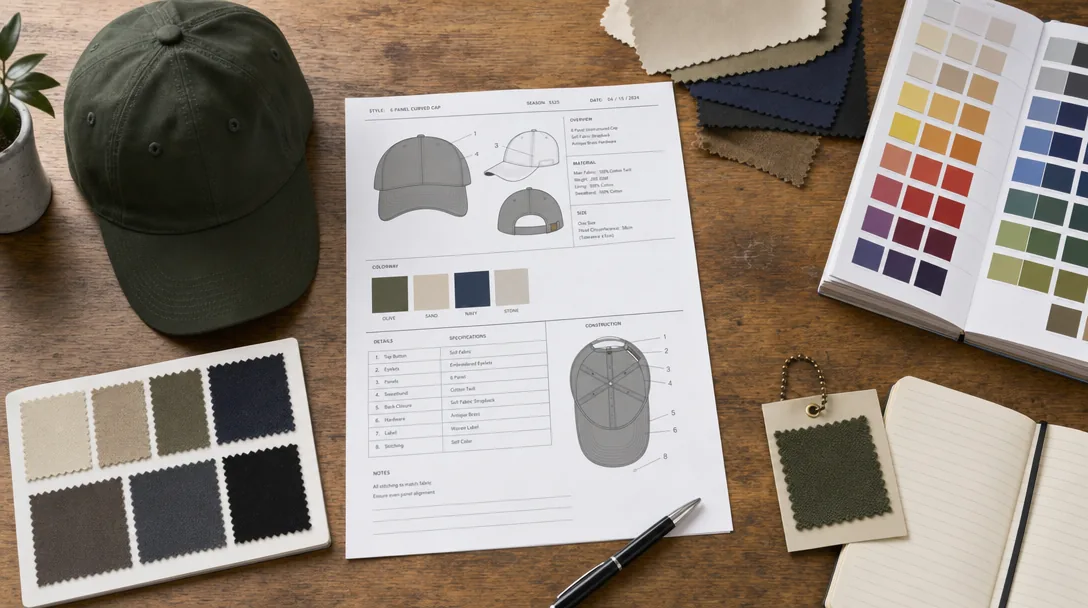
Performance & Athletic Caps: Moisture-Wicking, UPF and Buyer Specs - 2026 Buyer's Guide - 2026 Buyer's Guide
Read article →
Country Trucker Caps: The 2026 Sourcing & Manufacturing Playbook
Read article →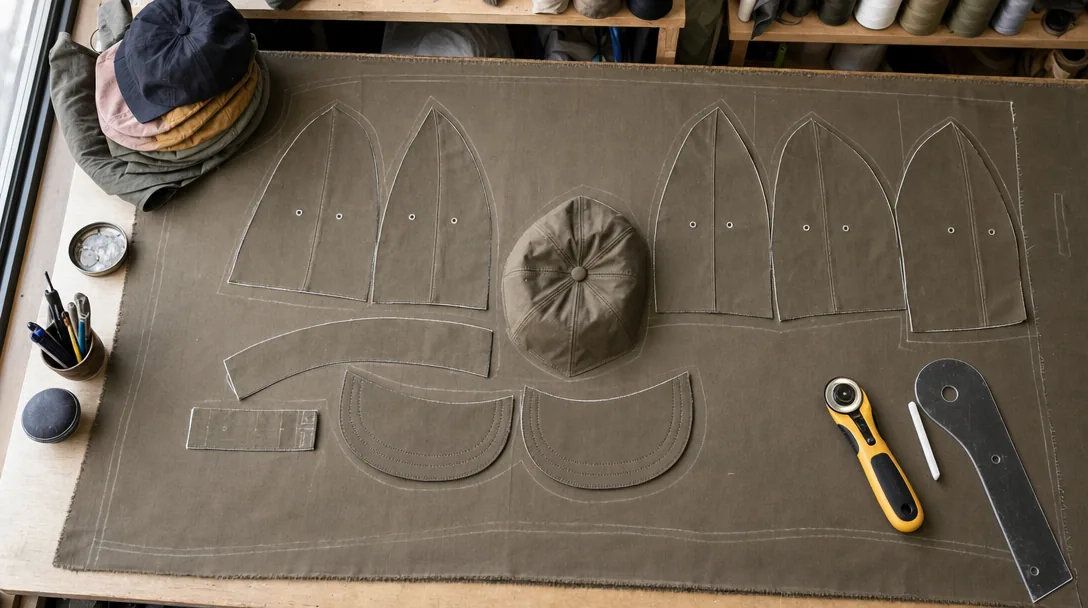
5-Panel vs 6-Panel Caps: Construction, Use Cases and Cost Compared (2026 Update)
Read article →If you are ready to take the next step on custom golf hats: a manufacturer's guide to performance headwear - cost & moq breakdown - cost & moq breakdown - cost & moq breakdown - cost & moq breakdown, our team can put a tailored quotation and digital mock-up in your inbox within 24 hours. Send the inquiry form on our contact page or message us directly on WhatsApp.