
Custom Golf Hats: A Manufacturer's Guide to Performance Headwear - Cost & MOQ Breakdown - Cost & MOQ Breakdown - 2026 Buyer's Guide (2026 Update)
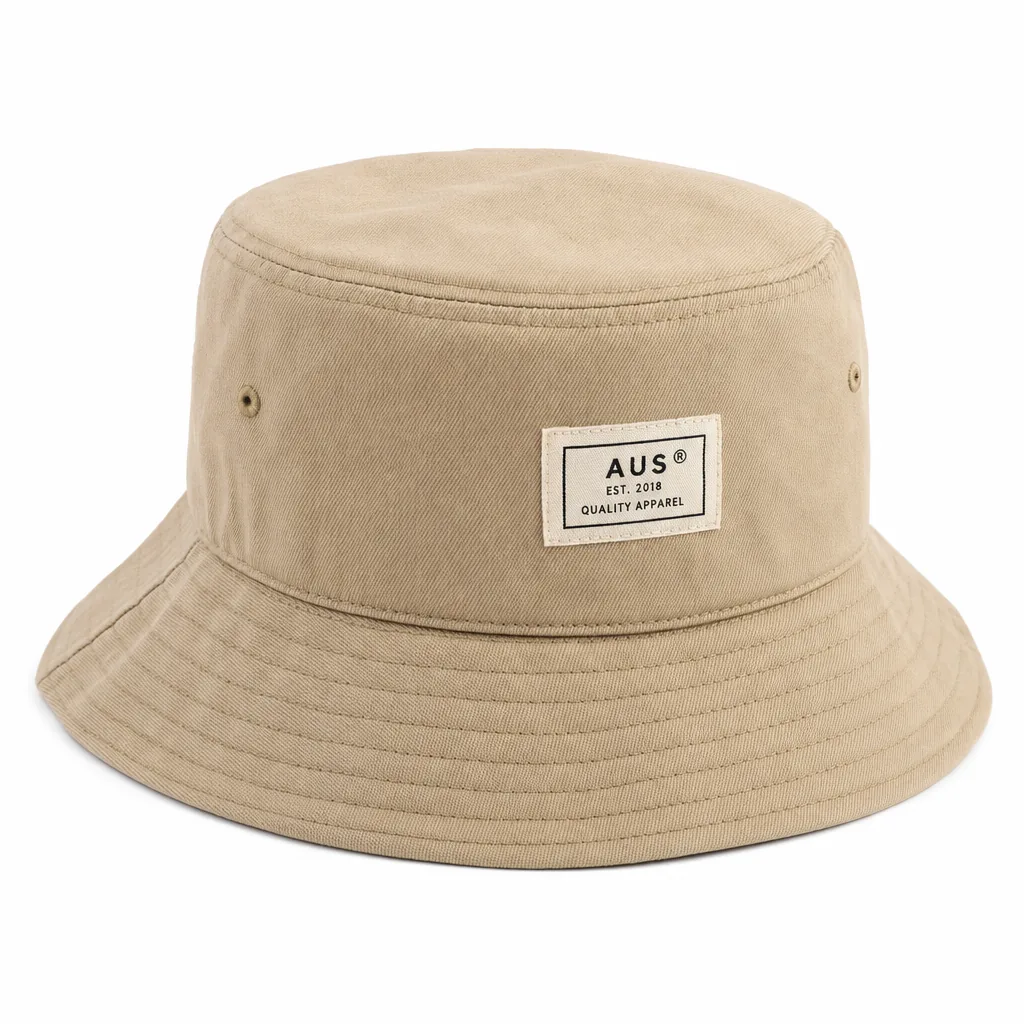
Every week, our sales team answers detailed questions about custom golf hats: a manufacturer's guide to performance headwear - cost & moq breakdown - cost & moq breakdown - 2026 buyer's guide (2026 update). We wrote this guide so that wholesalers, streetwear brands, corporate buyers and promotional resellers can compare options with full information, and avoid the traps that show up only after production has started.
The golf-specific silhouettes that dominate retail and tournament programs
The pre-curved 6-panel performance cap still owns both green-grass retail and tournament giveaway volume because it solves three real constraints at once: visor glare reduction, clean sponsor placement, and four-hour comfort in heat. Buyers who know the category usually stay with a low- or mid-crown block in 92/8 polyester-spandex twill or recycled performance woven at 140-180 gsm, then open the cap up with laser-perforated rear panels or 100% polyester warp-knit mesh. A golf cap that leaves the line at 85-105 grams generally wears well; once finished weight gets above about 110 grams, complaints about heat buildup and forehead pressure rise fast, especially in humid summer events. Light colors are where factories get exposed, because white, stone, and heather bodies show lot variation immediately under daylight and 4000K-5000K clubhouse LEDs, so panel lots should be checked against approved Pantone TCX references and held within Delta-E 1.0-1.5 before cutting. For custom golf hats in this silhouette, the front logo is usually kept to a 5,000-8,000 stitch 3D puff or high-density embroidery file run on Tajima or Barudan heads, with side embroidery under 3,000 stitches so the cap still reads retail, not promotional. The sweatband matters more than many buyers expect: a branded performance knit with 35-45 mm width, anti-wick finish, and clean seam joining will outsell commodity microfiber in pro shops because players notice it the first time they try it on. At 300-500 pieces, realistic FOB China is about $4.20-$6.80 per unit for this build; move to recycled yarn, contrast undervisor, molded TPU logo, or premium metal closure hardware and you can add another $0.40-$1.10 without changing the silhouette.
The low-profile 5-panel rope cap is the fastest-growing shape in pro shops because the uninterrupted front panel presents logos far better than a center-seam athletic cap. That wider face gives decorators more control for silicone heat transfers, satin applique, or high-density embroidery that would otherwise bridge a seam and distort after capping. Most club programs spec 75D or 150D polyester taslan with light memory buckram to keep the panel standing without making it feel like a trucker cap, then pair it with a molded snapback or micro-hook-and-loop closure for a cleaner shelf presentation. Rope execution is where weak factories usually show their hand: standard trim is a 3 mm braided polyester cord set 8-12 mm above the brim stitch line, and if placement drifts more than 2 mm across size sets or production lots, it is visible immediately and should be written into the inspection points under AQL 2.5. Real MOQ for this silhouette is usually 144-200 pieces per colorway if you want custom inside taping, woven flag labels, branded swing tags, and retail-ready packing. Below that, many factories will still quote the order, but they will quietly swap to stock bodies or standard closures to protect efficiency, which changes the hand feel and fit. Landed cost usually comes in around $5.50-$8.20 per piece depending on decoration count, closure hardware, and packaging extras such as barcode stickers, size strips, hangtags, and individual polybags. For custom golf hats aimed at resort shops or member-guest events, this shape is strong because it crosses over into everyday lifestyle wear; that means sell-through depends as much on crown shape consistency and rope alignment as on the logo itself.
Why golf demands performance fabric (not cotton twill)
Cotton twill is the wrong base cloth for custom golf hats that will actually see the course. A standard brushed cotton twill at 210 to 260 gsm absorbs sweat into the yarn, gains weight fast around the sweatband and lower front panel, and then dries slowly because the densest parts of the cap already have the least airflow: seam tape, buckram, embroidery backing, and visor stitching. On wear tests, that shows up by the back nine: the crown loses recovery, the brim edge softens, and the inside temperature climbs because moisture is trapped where the cap sits tightest on the head. A proper golf spec is usually 100 to 150 gsm microfiber polyester or a light poly-spandex woven shell using 50D to 75D filament yarns. Those fabrics move moisture across the surface instead of parking it in the structure, which matters a lot more than a soft cotton hand when the hat is being worn in 90 degrees F heat and high humidity.
The bigger mistake buyers make is treating fiber content as the performance spec. It is not. For custom golf hats, fabric construction, denier, stretch method, and finish chemistry decide whether the cap still performs after 18 holes and 20 wash cycles. The reliable builds are mechanical-stretch polyester or woven shells with 8 to 12 percent spandex, plus a moisture-management finish that keeps capillary spread even and minimizes salt marking on white, stone, and pastel shades. In production, shade consistency also matters more than buyers expect; on tournament or resort programs, we normally hold body fabric and trims within Delta-E 1.0 to 1.5 against the approved Pantone TCX standard so perforated panels, binding, and closures do not drift under sunlight. Performance fabrics also enable details cotton handles badly: laser-cut vents without fray, bonded seam tape to reduce bulk, perforated side panels, and 30 to 40 mm Coolmax-type sweatbands. A 115 gsm microfiber poly shell will usually dry multiple times faster than cotton after a sweat-heavy fit test, with less odor retention, less staining, and better shape recovery on consecutive wear days.
UPF sun protection for golf programs
For custom golf hats, the practical cutoff is simple: standard performance polyester often tests around UPF 30 to 40 when the fabric is tight enough, usually 110 to 140 gsm plain weave, dobby, or micro-pique built with 75D to 150D filament yarns. That is serviceable for club shops, scramble giveaways, and cooler-region programs, but it is not the same as a documented UPF 50+ claim. If a buyer wants labeled sun protection, the fabric spec has to be locked upfront: denser construction, lower UV-transmission dope-dyed polyester, or a mill-applied UV absorber finish with actual lab data behind it. Light shades are where weak constructions fail first, especially white, stone, and pastel colorways, so the mill should quote tested colors, not a generic base cloth. Buyers in Australia, Arizona, Florida, and Hawaii usually push hardest on this because resort operators, school athletic departments, and golf academies increasingly ask for paperwork, not verbal assurance.
The expensive mistake is assuming one passing report covers an entire custom golf hats program. It does not. UPF is tied to the exact fabric, color, panel layout, and vent construction submitted for test. Change from solid side panels to laser perforation, add mesh inserts, or shift to another mill shade matched to Pantone TCX, and the rating can move enough to require a new submission. AS/NZS 4399 or AATCC 183 testing through SGS, Intertek, or Bureau Veritas typically costs $300 to $500 per SKU and takes 7 to 12 working days after sample intake. Embroidery rarely changes the result in a meaningful way, but perforated panels, rear mesh, and contrast ventilation zones absolutely can. The clean production control is to freeze the mill fabric code, approved color, panel map, and vent details before lab submission, then hold bulk against that standard so the tested sample and delivered goods do not drift.
For resort groups, school districts, and multi-course operators, budget UPF programs in three buckets: fabric premium, test cost, and MOQ. A genuine UPF 50+ performance shell usually adds $0.18 to $0.45 per cap against standard moisture-wicking polyester, depending on yarn denier, finish chemistry, and whether the mill carries compliant stock near the required shade tolerance. Lab cost is fixed, so small runs get distorted quickly: a $400 report adds $2.78 per hat at 144 pieces, but only $0.33 at 1,200. That is why experienced buyers standardize one approved shell fabric across multiple custom golf hats and create variation through 3D embroidery, woven labels, sandwich piping, metal closure hardware, or underbill color instead of changing body fabric every reorder. If you want repeatable compliance, keep shade variance tight as well; in production, a Delta-E target under 1.5 for branded panels is a reasonable control point when matching approved lab-tested material.
Moisture-wicking sweatband: the detail buyers don't notice until summer
The sweatband is the first place summer performance fails. A basic 100% cotton terry band can feel plush in a sample room, but on-course it is the weak link once temperature gets above 82 F / 28 C and relative humidity is around 70% or higher. Cotton absorbs and holds sweat instead of spreading it, so by the front nine the band is saturated, the forehead feels hotter, and moisture starts migrating into seam tape, buckram, and the lower edge of the front panel. That is when buyers of custom golf hats get the predictable claims: the cap feels heavier after a few holes, salt marks build inside the crown, and pale shells show dark sweat shadowing behind embroidery or heat-transfer logos. The better spec is a moisture-management knit band in 180-220 gsm polyester-spandex, typically with 8%-12% elastane, brushed on the skin side and engineered for capillary wicking. In factory wear tests, that construction dries materially faster than cotton terry, keeps better stretch recovery after repeated wear, and is less likely to curl at the edge after sewing.
The cost delta is too small to justify downgrading. At 3,000-10,000 pieces, moving from standard cotton terry to a stocked wicking sweatband usually adds only $0.12-$0.24 per cap; jacquard branding, printed repeats, antimicrobial finish, or custom dyeing can push that to roughly $0.28-$0.35. MOQ is rarely the real constraint because black, white, and heather gray bands are usually stocked; the harder part is shade control when a buyer wants a specific Pantone TCX and expects lot-to-lot variance within Delta-E 1.5-2.0. QC on this trim should be stricter than most buyers assume: check stitch attachment for tunneling, confirm recovery after sewing so the band does not bag out, and run wash and perspiration tests to catch edge rolling, puckering, color bleed, or delamination at seam joins. On custom golf hats, I would remove a decorative trim before I would cheapen the sweatband, because players forgive fewer details faster than they forgive a cap that feels soaked by the 14th hole.
Rope hats: why this silhouette became the golf hero category
Rope hats took over golf because they solve two retail problems at once: they read from distance, and they make logos look more expensive. The braided rope creates a hard horizontal line above the visor, so a structured 5-panel pinch front or 6-panel mid-profile crown presents a cleaner billboard than a washed dad cap ever will. On a pro-shop wall, that matters more than trend talk. A 3D satin stitch logo, flat embroidery, or molded TPU patch usually reads faster on a rope silhouette from 2.5 to 3 meters away because the eye catches the rope line first, then the front decoration. The strongest builds for custom golf hats are still the boring, proven ones: 7 to 8 cm visor length, 3 to 5 mm polypropylene or polyester braid, buckram-backed front panel, and crown height around 11 to 12 cm. The shape came from fishing and outdoor headwear, but it fits modern golf better than the old sandwich-peak cap, which now leans corporate unless the program is strictly event-driven.
Most rope-hat failures come from weak front-panel engineering, not from the rope itself. If you want performance custom golf hats, start with 92% polyester / 8% spandex micro-stretch twill at 140 to 160 gsm or recycled polyester plain weave at 110 to 130 gsm with laser-perforated side panels; both handle sweat, salt marking, and drying time better than cotton after a full summer round. Cotton-touch fabrics still have a place, but by the third or fourth wear they usually show more crease memory and sweat pickup around the lower crown. Decoration tolerance is tighter than many buyers expect: a Tajima or Barudan head can hold clean 2.5 mm satin columns, but only if the buckram stiffness, seam placement, and rope height leave a usable logo window of roughly 45 to 58 mm above the braid. From a sourcing standpoint, rope styles are low risk because most factories already hold stable blocks and visor molds, so development is usually 7 to 12 days with MOQ around 100 pieces per colorway. Ex-factory pricing typically lands at US$4.20 to US$7.80, dropping about 8% to 15% at 300 to 500 pieces. Ask for AQL 2.5, visor-curve tolerance, sweatband crocking results, and Pantone TCX trim control with Delta-E under 1.5 if the hats need to match apparel and packaging across one collection.
Tournament + club merchandise compliance and timing
Approvals, not sewing, usually decide whether tournament custom golf hats land on time. For PGA section events, member-guests, and sponsor-funded outings, the practical PO window is 90 to 120 days before first tee time because licensed-logo clearance, embroidery digitizing, color submission, and pre-production approval eat calendar fast. If the artwork includes a sponsor wordmark, collegiate logo, or host-club crest with protected colors, assume two strike-off rounds as normal; plan three when the design combines fill stitch, twill appliqué, 3D embroidery, or metallic thread. Color standards need to be written by component, not left as a general “match approved sample” note. Pantone Solid Coated is the right reference for TPU patches, printed labels, and silicone transfers; Pantone TCX is more useful for woven taping, shell fabric, and sweatband accents. On factory floor terms, a workable target is Delta-E below 2.0 for dyed trims and below 3.0 for embroidery thread, because navy, forest green, and cool gray are the shades that drift most between lab dips, thread cards, and bulk lots.
Club programs run on a different clock because component availability is less stable than most buyers expect. For pro shops targeting May through September sell-through, development should start in January and bulk materials should be locked no later than late February. Lightweight performance constructions for custom golf hats, especially 110 to 140 gsm poly-spandex, recycled micro-ripstop, laser-perforated side panels, and low-profile buckram crowns, often depend on nominated trims such as moisture-wicking sweatbands, hook-and-loop closures, HD woven labels, or matte-finish metal buckles. One missing trim color can add 15 to 25 days to lead time. The disciplined approach is to freeze the BOM early: crown fabric, visor sandwich, undervisor color, closure finish, seam tape, eyelet method, stitch count, and logo size. Changing something small after sample sign-off, like swapping matte black hardware to brushed nickel, can trigger new trim sourcing, fresh approval photos, and a missed ETD before vessel cutoff.
Compliance is broader than logo accuracy now, especially for tournament gifting, junior sizes, and licensed retail. Before bulk starts, buyers should confirm sedex-audit-cap-supplier-guide.html">BSCI 2.0 or Sedex SMETA 4-Pillar audit status, AZO-free dyed components, REACH declarations where requested, CPSIA-relevant labeling for youth caps, and exact carton marking requirements. Pre-production controls should be measurable: approved swatches, embroidery placement tolerance of plus or minus 2 mm, thread coverage verified on Tajima or Barudan heads, and final inspection at AQL 2.5 before ex-factory release. Freight needs the same discipline. In real schedules, air freight is typically 7 to 10 days door-to-airport, while ocean is usually 30 to 40 days port-to-port in peak season, then customs clearance and final-mile delivery still sit on top if you ship DDP. Buyers who manage custom golf hats as a compliance-driven merchandise program, not a last-minute promo order, are the ones that actually hit tournament and spring retail dates.
Working with CrownsForge on golf programs
For golf programs, fabric spec drives cost, wear performance, and approval risk far more than the style sketch. "Performance polyester" is not a usable buying spec; there is a real difference between 110-130 gsm mechanical-stretch microfiber, 140-160 gsm interlock or mini-pique, and 75D x 150D woven performance twill. Microfiber works best for lightweight 5-panel and runner-style custom golf hats where airflow and a soft hand matter. Interlock and mini-pique hold a cleaner front on structured or semi-structured crowns. Woven twill is the better call when the logo has fine text, satin borders, or small registration points because the embroidery edge stays sharper. Sweatband choice also affects field performance more than buyers expect. Cotton terry can save about $0.08-$0.15 per cap, but it holds moisture longer, shows salt marks faster, and feels heavier after a few hours in summer heat; moisture-wicking polyester or poly-spandex bands are usually the right standard for resort, tournament, and pro-shop programs. Color needs to be locked in the PO as well. On dyed performance shells, match to Pantone TCX and agree a Delta-E tolerance before sampling, especially for navy, stone, sage, and muted greens where shade drift between dye lots is common.
UV and decoration claims need hard verification, not catalog language. If a program is selling sun protection, the mill card is not enough; UPF 30+ or 50+ should be tested on the finished shell fabric because dye depth, finishing chemistry, and gsm all change the result. For embroidery, most custom golf hats use a lower front crown than fashion truckers, so heavy 3D puff is usually a mistake. It distorts the panel, overloads the buckram, and can leave needle cuts on softer builds. A better method is crown-specific digitizing for Tajima or Barudan heads, with lower stitch density, controlled underlay, and logo width kept around 90-110 mm instead of dropping in artwork built for a taller cap. Commercially, MOQ follows trim complexity more than silhouette. Straight embroidered programs in stocked fabric usually start around 144-200 pieces per colorway; rope trims, welded patches, custom seam tape, metal logos, and private-label packs typically push the efficient run size to 300-500 pieces. In practice, a realistic FOB Yiwu range is $3.20-$5.80 for standard embroidered styles and $5.90-$8.50 for more technical builds, with sample lead time around 7-12 days, bulk ex-factory 25-32 days, and AQL 2.5 final inspection under BSCI 2.0 or Sedex SMETA 4-Pillar audited production.
Frequently Asked Questions
What is the minimum order quantity (MOQ) for custom hats?
Our standard MOQ is 100 pieces per design and color, with sampling available from 1 piece. For complex multi-color logos or premium fabric upgrades, the MOQ can be lowered with a small per-piece surcharge.
Which shipping methods do you support?
We support FOB, CIF and DDP shipping. Air express for samples and small orders, sea LCL for 100 to 500 pieces, sea FCL for 5,000+ pieces. Door-to-door DDP available for US, EU, UK, Canada and Australia.
Do you support sustainability certifications?
Yes. We work with GOTS organic cotton, GRS-certified recycled polyester, OEKO-TEX Standard 100 fabrics, and are BSCI and Sedex audited. Certification documentation can be provided per order.
Can I order a sample before bulk production?
Yes. We strongly recommend approving a pre-production sample before mass production. Samples are charged at 35 to 60 USD each plus express shipping, fully refundable against confirmed bulk orders over 500 pieces.
What file format should I send for my logo?
Vector files (AI, EPS, PDF) are ideal. High-resolution PNG or JPG at 300 dpi on transparent background works as a fallback. Provide Pantone color references for accurate reproduction.
What's the MOQ for custom embroidered baseball caps no minimum?
When evaluating custom embroidered baseball caps no minimum, the key considerations are construction quality, decoration capability, MOQ flexibility and lead time. Performance baseball cap with curved brim, 5-panel low-profile golf cap, rope hat with rope detail above the brim, performance bucket hat, and visor. Each has a specific use case — driving range, tournament play, club merchandise programs and pro-shop retail. Standard cotton twill absorbs perspiration and stays heavy. Golf demands moisture-wicking polyester (typically…
How does ordering baseball cap custom logo work?
When evaluating baseball cap custom logo, the key considerations are construction quality, decoration capability, MOQ flexibility and lead time. Performance baseball cap with curved brim, 5-panel low-profile golf cap, rope hat with rope detail above the brim, performance bucket hat, and visor. Each has a specific use case — driving range, tournament play, club merchandise programs and pro-shop retail. Standard cotton sweatband saturates within 9 holes of summer play; polyester-elastane wicking sweatband moves…
How does ordering custom baseball team hats work?
When evaluating custom baseball team hats, the key considerations are construction quality, decoration capability, MOQ flexibility and lead time. Performance baseball cap with curved brim, 5-panel low-profile golf cap, rope hat with rope detail above the brim, performance bucket hat, and visor. Each has a specific use case — driving range, tournament play, club merchandise programs and pro-shop retail. Rope hats (a 5-panel or 6-panel cap with decorative rope above the brim, often in contrast color) became the golf…
What's the MOQ for custom logo hats no minimum?
When evaluating custom logo hats no minimum, the key considerations are construction quality, decoration capability, MOQ flexibility and lead time. Rope hats (a 5-panel or 6-panel cap with decorative rope above the brim, often in contrast color) became the golf cap of the 2020s. Originally a fishing/outdoor silhouette adopted by Imperial, Melin and Branded Bills. We produce equivalents at MOQ 100 pieces. Performance baseball cap with curved brim, 5-panel low-profile golf cap, rope hat with rope detail above the brim,…
Need a low-MOQ test order?
We help emerging brands launch with as few as 100 pieces. Premium fabric, in-house embroidery, retail-ready packaging.
Start a small orderRelated guides
Camouflage Bucket Hat: Properties, Costs and How to Spec It Right (2026 Update)
Read article →
Refreshing a Hat Collection: A Repeat-Order Playbook for Established Brands
Read article →
Embroidery Hats Machine: When to Use It, Costs, and What to Ask Your Factory - Cost & MOQ Breakdown
Read article →We hope this guide demystifies custom golf hats: a manufacturer's guide to performance headwear - cost & moq breakdown - cost & moq breakdown - 2026 buyer's guide (2026 update) and helps you move forward with confidence. If you have questions specific to your project, our English-speaking sales engineers are one message away.