
Custom Golf Hats: A Manufacturer's Guide to Performance Headwear - 2026 Buyer's Guide
Custom Golf Hats: A Manufacturer's Guide to Performance Headwear - 2026 Buyer's Guide is one of the most-asked questions we receive from international buyers, and for good reason. With dozens of factories competing for your order and an alphabet soup of technical terms in every supplier quote, even experienced importers can feel lost. This guide consolidates what we have learned producing custom hats for clients in 40+ countries.
The golf-specific silhouettes that dominate retail and tournament programs
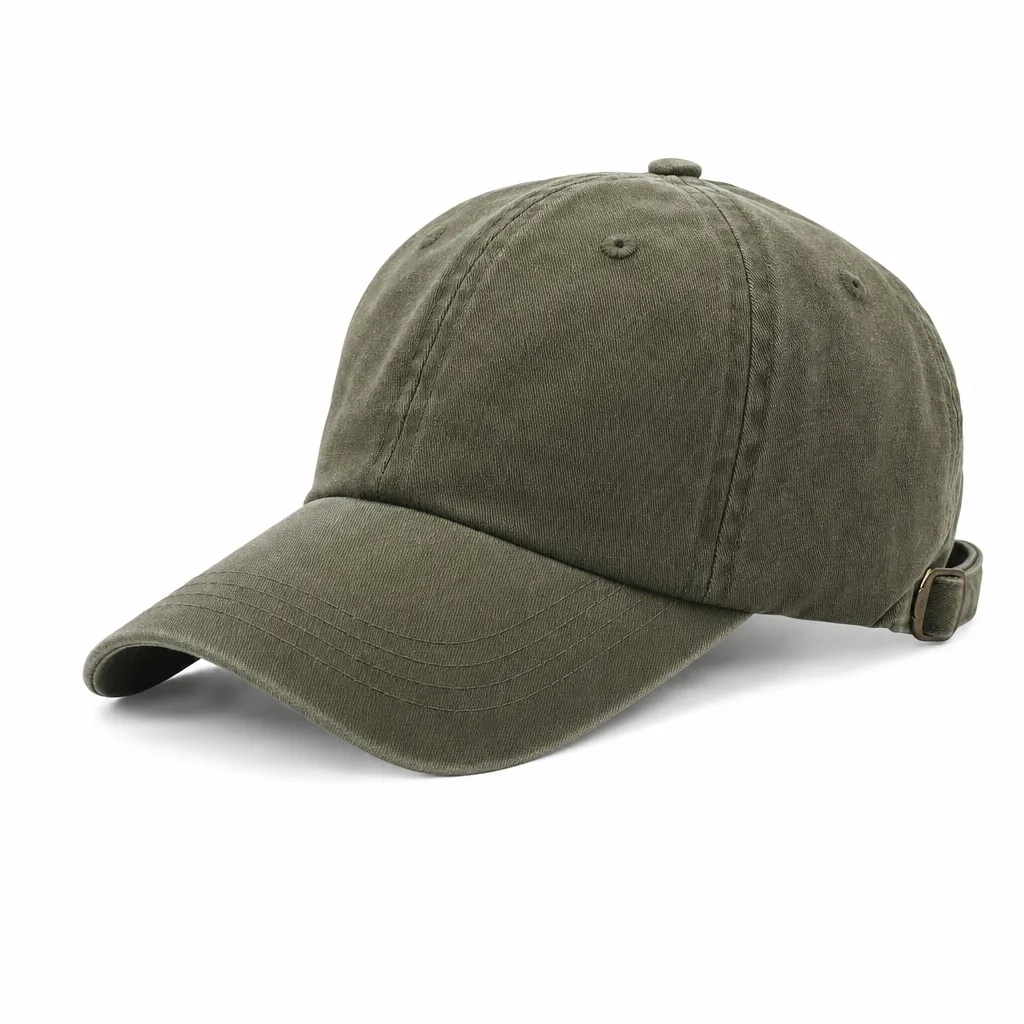
The volume leader is still the performance baseball cap, and for most custom golf hats programs it remains the lowest-risk SKU to buy deep. The commercial sweet spot is a 6-panel, mid-profile silhouette with a pre-curved visor, built in 110-160 gsm polyester twill, dobby, or micro-perforated stretch woven with 3% to 8% spandex. That shape sells because it fits the broadest age range, stacks cleanly in pro shops, and works equally well for tournament registration bags and $28-$40 retail. The safest spec on the factory floor is a structured front, stitched visor rows at 6-8 lines, side eyelets or laser vents, and a 180-220 gsm moisture-management sweatband in poly terry or poly-spandex. Decoration needs to respect the shell: on slick lightweight fabrics, high stitch-count embroidery often causes tunneling and puckering, so molded TPU patches, silicone heat transfers, or low-density flat embroidery usually present cleaner than forcing a heavy fill. Visor symmetry is the detail that separates sellable stock from rejects; if the brim arc is off by more than about 2-3 mm side to side, it reads crooked instantly and will not survive a reasonable AQL 2.5 visual inspection.
The fastest-growing retail shapes are the 5-panel low-profile cap and the rope hat because both give the logo a cleaner front presentation than a standard 6-panel seam break. A 5-panel body creates a better embroidery field for custom golf hats, especially on Tajima or Barudan machines running fine 120D/2 thread, 3 mm satin borders, and restrained 3D foam only where the front buckram can support it. Fabric choice matters more than many buyers expect: peach-finish nylon, cotton-nylon blends, and matte performance polyester photograph well under pro-shop lighting, while shiny tricot and high-luster poly tend to cheapen even a strong crest or wordmark. Rope hats are a separate commercial lane, but a profitable one for member-guest tournaments, private-label club shops, and resort crossover assortments. The standard winning build is a semi-structured 5-panel crown, semi-curved visor, and 3 mm twisted polyester rope in white, navy, or contrast stripe combinations. Buckets and visors stay smaller in volume, but they earn their place in hot-weather assortments: buckets need 90-120 gsm recycled polyester, mesh eyelets, and an EVA-supported brim that recovers after packing, while visors need balanced brim stiffness, anti-slip inner banding, and closure cycling tests because sunscreen staining, crocking, and hook-and-loop misalignment are common failure points in warm-weather resort channels.
Why golf demands performance fabric (not cotton twill)
Cotton twill is a poor spec for serious golf headwear because it absorbs and holds moisture exactly where golfers notice it first: the forehead, lower front crown, and seam tape. A brushed cotton twill shell usually falls around 220-280 gsm, and once the sweatband is saturated, the cap gets heavier, darker, and noticeably slower to dry. On a 4- to 5-hour round in 82-95°F heat, that translates into a hotter front panel, salt buildup at the band, and a hat that stays damp long after the ninth hole. For custom golf hats, the better starting point is typically 100-150 gsm polyester microfiber or a 90/10 to 92/8 poly-spandex performance weave. Those constructions have low moisture regain, wick through capillary action, and evaporate faster, which is why functional golf headwear should be engineered more like technical training apparel than a heritage baseball cap.
Fiber choice alone does not fix the problem; construction determines whether the hat stays cool without losing shape. Filament polyester with a smooth face and stable air permeability works well with laser-perforated side panels, mesh-backed vents, and lighter seam assemblies because it moves air without making the crown collapse. In factory terms, a reliable build for custom golf hats is often 110-130 gsm microfiber combined with a 35-45 mm polyester sweatband, sometimes with an antimicrobial finish for resort, tournament, and multi-day event programs. Performance fabrics also give buyers tighter decoration control: sublimation, heat-transfer marks, and cationic-dyed polyester generally maintain color better than cotton after repeated sweat exposure, with a practical production target of Delta-E under 1.5-2.0 against approved Pantone references. Just as important, the cap dries overnight in a locker or golf cart and recovers its shape by morning, which cotton twill rarely does well.
UPF sun protection for golf programs
If your spec says UPF 50+, do not let anyone substitute “lightweight performance fabric” for an actual test result. In cap production, plenty of 140-160 gsm polyester interlocks, microfibers, and brushed twills only test in the UPF 30-40 range, and laser-perf side panels or athletic mesh can pull the finished hat down even further. UPF is controlled by cover factor, yarn denier, knit or weave density, dye depth, and any UV-absorber finish applied at the mill; hand feel tells you almost nothing. For custom golf hats headed to junior academies, resort caddie teams, and tournament staff in high-UV markets, the right buying practice is to lock the exact shell fabric code, color, and lot before sampling, then request a mill declaration and verify it with SGS, Intertek, or Bureau Veritas on the same material. If the report is not tied to the approved colorway and fabric lot, treat the UPF claim as sales language, not compliance.
The toughest buyers on this point are usually in Australia, Arizona, Florida, and Hawaii, where six-hour wear windows make UV exposure a procurement risk, not a styling detail. Most serious programs reference AS/NZS 4399 or AATCC 183, and third-party testing typically runs about $300-$500 per SKU depending on turnaround and whether the lab tests fabric only or the finished panel set. That matters because changing crown fabric, vent material, seam layout, or even moving from a dark underbill to a pale one can shift the result enough to trigger retesting. Our standard practice is to test pre-production yardage before bulk cutting, because certifying after embroidery, tape changes, or trim substitutions is how programs end up with reports that no longer match the shipped goods. Ask for the full lab report, not a hangtag claim: it should list the test method, fiber content, color, measured UPF, and any laundering or conditioning used to support the rating. UPF 50 and UPF 50+ are not interchangeable, and neither survives a sloppy spec.
Moisture-wicking sweatband: the detail buyers don't notice until summer
The sweatband is where custom golf hats either earn repeat orders or come back with summer complaints. A 100% cotton twill band may look fine at approval stage, then fail after two rounds in 30–35°C heat because cotton absorbs quickly, dries slowly, and traps salt, sunscreen, and sebum at the forehead contact zone. That is what creates the dark tide line buyers blame on the cap, even when the crown fabric is still stable. For warm-weather programs, cotton is the wrong spec unless the order is purely cost-led. The safer build is a moisture-management knit in 92/8 or 95/5 polyester-elastane at 180–220 gsm, ideally with a brushed skin side and hydrophilic finish that moves sweat from the inner face to the outer surface so it can evaporate through mesh, laser-perforated polyester, or performance piqué panels. On bulk runs, that upgrade usually adds only $0.15–$0.25 per cap, which is cheap compared with markdowns on logo-heavy product. The specs worth locking down are not vague “performance” claims but measurable controls: colorfastness to perspiration at grade 4 minimum, wash shrinkage under 3%, stretch recovery after repeated extension, and finished sweatband circumference within ±3 mm so it does not twist or bag out after sewing. If the shell is microfiber, perforated poly, or a lightweight 75D–150D performance weave, pairing it with cotton inside creates a moisture bottleneck exactly where the wearer feels it first. Better custom golf hats in the $4.50–$7.00 FOB range usually treat a wicking band as standard, not an upgrade, because pro-shop customers notice comfort long before they notice fabric composition on a spec sheet.
Switching to a polyester-elastane sweatband is straightforward in theory, but it exposes weak sewing control fast. The tape is slicker than cotton, so poor tension or uneven feed causes tunneling, edge roll, or back-seam twist, especially on unstructured six-panel golf caps. On Juki or Brother single-needle stations, operators need balanced upper and bobbin tension to keep the band flat around the lower crown radius; otherwise the cap feels fine in hand but starts rubbing once worn for four hours. That is also why embroidery matters here. Dense underlay, rough backing edges, or badly trimmed inside finishes can turn a technically good sweatband into a forehead abrasion point by the 12th hole. Inspection has to focus on wear, not just appearance. Our standard practice is to check seam-join bulk, confirm the band lays flat after crown closing, and run post-embroidery wear tests because comfort failures rarely show up on a table. Shade control matters too: if a black sweatband lot drifts more than roughly Delta-E 1.0–1.5 from the shell, the mismatch is obvious the moment the cap comes off. Buyers do not usually ask for these checks by name, but they should. In peak summer, the sweatband is one of the quickest ways to tell whether custom golf hats were built as real performance headwear or just styled to look the part.
Rope hats: why this silhouette became the golf hero category
Rope hats became the golf hero category because they solve two problems at once: they look cleaner than a trucker cap, and they merch better than a standard sandwich-brim dad cap. The silhouette usually sits on a shallow-to-mid crown 5-panel or 6-panel body, with a braided rope set 6 to 10 mm above the visor seam, often in a contrast polyester cord. On the course, that small trim detail matters more than buyers think. It gives the front panel a visual break, frames embroidery nicely, and makes a simple left-chest-style logo feel more premium when translated onto headwear. For brands sourcing custom golf hats, rope styles also photograph better for ecommerce because the crown profile reads clearly from a front three-quarter angle, especially with structured buckram and a slightly curved visor.
The style did not start in golf; it came out of fishing, resort, and broader outdoor headwear, then got pulled into golf when brands like Imperial, Melin, and Branded Bills proved there was commercial demand for a retro-performance crossover. What changed in the 2020s was fabric and fit. Older rope caps often used stiff cotton twill that ran hot after 18 holes. Today, the better custom golf cap programs use lightweight performance microfiber at 120 to 160 gsm, 100% polyester dobby, or poly-spandex blends with laser-perforated side panels, moisture-wicking sweatbands, and UPF-focused finishes. If a buyer wants custom golf hats with logo for tournament merch or pro-shop resale, I usually recommend testing crown depth carefully: too deep and it starts looking like lifestyle streetwear; too shallow and it alienates broad consumer fit. The sweet spot is usually a front crown height around 8.5 to 9.5 cm, depending on closure and panel count.
From a production standpoint, rope hats are attractive because they give a golf hat manufacturer room to differentiate without forcing expensive tooling. The rope itself adds only about $0.12 to $0.28 per cap depending on braid quality and attachment method, while premium touches such as TPU patches, matte silicone transfers, or 3D satin-stitch embroidery on Tajima or Barudan heads do most of the branding work. At MOQ 100 pieces, equivalent programs are realistic, but buyers should control three things tightly: rope color against Pantone TCX reference, visor curve consistency, and front-panel tension so logos do not distort after packing. Our standard practice is to approve rope placement against a sealed sample and inspect under AQL 2.5 because a 2 mm rope misalignment is visible immediately at retail. For wholesalers buying wholesale golf hats or building a custom golf hat collection, this silhouette wins because it feels specific to golf without being locked into one age group or club tier.
Tournament + club merchandise compliance and timing
Lead time fails more tournament programs than sewing capacity does. For PGA section events, member-guest tournaments, and sponsor-funded outings, serious buyers place custom golf hats 90 to 120 days before the in-hand date because approvals pile up fast: vector cleanup, Pantone thread mapping, pre-production sample, packaging approval, carton assortment, and freight booking. The common delay is internal sign-off, not factory output. When the club pro, sponsor marketing team, and merchandise chair all need to approve the same strike-off, a three-day artwork delay can easily turn into a 10- to 14-day schedule slip. Color control cannot be handled by eye or by saying a stock thread is “close enough.” If the crest calls for Pantone 289 C and 186 C, the approval sample should be checked under D65 lighting, with a practical target of Delta-E under 2.0 on dyed trims and under 3.0 on embroidery, where stitch angle, satin fill direction, and thread luster naturally shift the visual read. That is standard floor discipline, not overkill, when the finished hats are sold through a pro shop or handed to sponsors.
Decoration approval needs to be treated like engineering review, not branding admin. A custom golf hat with 3D front embroidery, a side sponsor logo, and an underbill print usually needs separate approvals because each process changes cap framing, stitch density, and packing method. On Tajima or Barudan heads, serif lettering under 4 mm routinely closes up on structured fronts once density is increased enough to keep edges clean, especially on brushed cotton twill or performance poly with fused buckram. It is cheaper to simplify fine detail before bulk than to debate legibility after 5,000 units are sewn. For event programs, the inspection plan should cover front logo centering to the seam, crown height tolerance, visor curve consistency, sweatband construction, closure torque, and carton segregation by player gifts, volunteer packs, and retail stock. AQL 2.5 is normal for bulk production, but tournament orders often justify 100% visual inspection for logo position because one crooked crest creates more trouble with a sponsor than twenty minor loose-thread defects.
Club retail runs on a different calendar, but the discipline is the same. If a pro shop needs May-through-September sell-through, January is the safe PO window for custom golf hats, especially when the line uses 110 to 140 gsm polyester microfiber, laser-perforated side panels, stretch woven shells, or moisture-wicking sweatbands. Those materials are often allocated early for spring programs, and mills will not guarantee repeat shade matching unless the dye lot is reserved. That matters when the hats sit beside polos, outerwear, and quarter-zips and the buyer expects a visual match within commercial tolerance. Compliance also extends beyond the cap body: fiber content labels, country-of-origin marking, UPC or EAN barcode stickers, hangtags, and polybag suffocation warnings all need approval before packing. From China, ocean freight typically runs 30 to 35 days port-to-port plus customs buffer, while DDP air usually lands in 7 to 12 days and adds roughly $1.20 to $2.80 per cap depending on destination, carton density, and total volume.
Working with CrownsForge on golf programs
The expensive error in golf headwear is approving decoration before you prove the fabric can hold it. For custom golf hats, the front panel has to keep crown memory after sweat, UV exposure, steaming, and repeated wear, so fabric spec comes first. A structured performance cap usually starts at 110-140 gsm mechanical-stretch polyester twill; lighter technical builds often use 150-180 gsm mini-ripstop; high-airflow styles move into 75D-100D laser-perforated microfiber. Those materials do not behave the same on the floor. A low-profile 6-panel run on a Tajima or Barudan head needs different backing, needle choice, and stitch density than a high-profile A-frame, or the logo will tunnel, pucker, or sink into the panel curve. Rope placement is another common miss: a 5 mm braided cord that looks balanced on a taller crown can read visibly low on a modern mid-profile golf silhouette unless the pattern and seam allowance are adjusted first. Color control matters just as much. Body fabric, rope, underbill, closure tab, and sweatband binding should be approved against Pantone TCX with an agreed tolerance, ideally Delta-E under 1.5 for adjacent whites and under 2.0 for tonal components, because pro-shop lighting exposes dye-lot drift immediately.
Any performance claim that cannot be backed by test data is just copied packaging. On custom golf hats sold through club, resort, or tournament retail, UPF should be verified on bulk fabric, not only on the mill card, because protection shifts with knit density, perforation ratio, and finishing chemistry. Vented side panels are where buyers get caught: open laser holes may improve airflow, but larger hole diameter and tighter pitch can reduce UPF faster than expected. Sweatband construction deserves the same scrutiny. In golf, moisture management is baseline, not an upgrade; brushed tricot or poly terry bands generally outperform standard cotton twill on dry-back time, salt-mark resistance, and recovery after steaming. Decoration also has to respect shallow crown geometry. On low-profile fronts, our standard practice is lighter underlay, lower stitch density, and more open stitch angles to keep embroidery clean on curved panels; otherwise even a well-digitized logo can distort after hooping. Commercially, a realistic schedule is 7-12 days for pre-production samples and 25-32 days for bulk once artwork, Pantone approvals, and packing marks are frozen. FOB pricing typically lands around $3.20-$4.80 for clean performance builds, while rope hats with molded TPU patches, premium snap closures, or multi-location branding commonly run $5.80-$6.80 at standard MOQs.
Frequently Asked Questions
What file format should I send for my logo?
Vector files (AI, EPS, PDF) are ideal. High-resolution PNG or JPG at 300 dpi on transparent background works as a fallback. Provide Pantone color references for accurate reproduction.
How long does production take?
Sampling takes 7 to 12 days. Bulk production runs 20 to 30 days depending on quantity, fabric availability and decoration complexity. Inspection and packing adds another 3 to 5 days before shipment.
Can I order a sample before bulk production?
Yes. We strongly recommend approving a pre-production sample before mass production. Samples are charged at 35 to 60 USD each plus express shipping, fully refundable against confirmed bulk orders over 500 pieces.
What is the minimum order quantity (MOQ) for custom hats?
Our standard MOQ is 100 pieces per design and color, with sampling available from 1 piece. For complex multi-color logos or premium fabric upgrades, the MOQ can be lowered with a small per-piece surcharge.
Which shipping methods do you support?
We support FOB, CIF and DDP shipping. Air express for samples and small orders, sea LCL for 100 to 500 pieces, sea FCL for 5,000+ pieces. Door-to-door DDP available for US, EU, UK, Canada and Australia.
What's the MOQ for custom embroidered baseball caps no minimum?
When evaluating custom embroidered baseball caps no minimum, the key considerations are construction quality, decoration capability, MOQ flexibility and lead time. Performance baseball cap with curved brim, 5-panel low-profile golf cap, rope hat with rope detail above the brim, performance bucket hat, and visor. Each has a specific use case — driving range, tournament play, club merchandise programs and pro-shop retail. Standard cotton twill absorbs perspiration and stays heavy. Golf demands moisture-wicking polyester (typically…
How does ordering baseball cap custom logo work?
When evaluating baseball cap custom logo, the key considerations are construction quality, decoration capability, MOQ flexibility and lead time. Performance baseball cap with curved brim, 5-panel low-profile golf cap, rope hat with rope detail above the brim, performance bucket hat, and visor. Each has a specific use case — driving range, tournament play, club merchandise programs and pro-shop retail. Standard cotton sweatband saturates within 9 holes of summer play; polyester-elastane wicking sweatband moves…
How does ordering custom baseball team hats work?
When evaluating custom baseball team hats, the key considerations are construction quality, decoration capability, MOQ flexibility and lead time. Performance baseball cap with curved brim, 5-panel low-profile golf cap, rope hat with rope detail above the brim, performance bucket hat, and visor. Each has a specific use case — driving range, tournament play, club merchandise programs and pro-shop retail. Rope hats (a 5-panel or 6-panel cap with decorative rope above the brim, often in contrast color) became the golf…
What's the MOQ for custom logo hats no minimum?
When evaluating custom logo hats no minimum, the key considerations are construction quality, decoration capability, MOQ flexibility and lead time. Rope hats (a 5-panel or 6-panel cap with decorative rope above the brim, often in contrast color) became the golf cap of the 2020s. Originally a fishing/outdoor silhouette adopted by Imperial, Melin and Branded Bills. We produce equivalents at MOQ 100 pieces. Performance baseball cap with curved brim, 5-panel low-profile golf cap, rope hat with rope detail above the brim,…
Ready to start your custom hat project?
Send us your tech-pack, sketch or even just an inspiration photo. We will respond with a detailed quotation and digital mock-up within 24 hours.
Request a free quoteRelated guides
Custom Hats for Men: A 2026 B2B Sourcing Guide - 2026 Buyer's Guide
Read article →
Slouchy Beanie: Properties, Costs and How to Spec It Right
Read article →
Launching a Hat Brand: Marketing Playbook for the First 12 Months
Read article →If you are ready to take the next step on custom golf hats: a manufacturer's guide to performance headwear - 2026 buyer's guide, our team can put a tailored quotation and digital mock-up in your inbox within 24 hours. Send the inquiry form on our contact page or message us directly on WhatsApp.