
Custom Flat Brim Snapback Bulk: A 2026 B2B Sourcing Guide - Cost & MOQ Breakdown
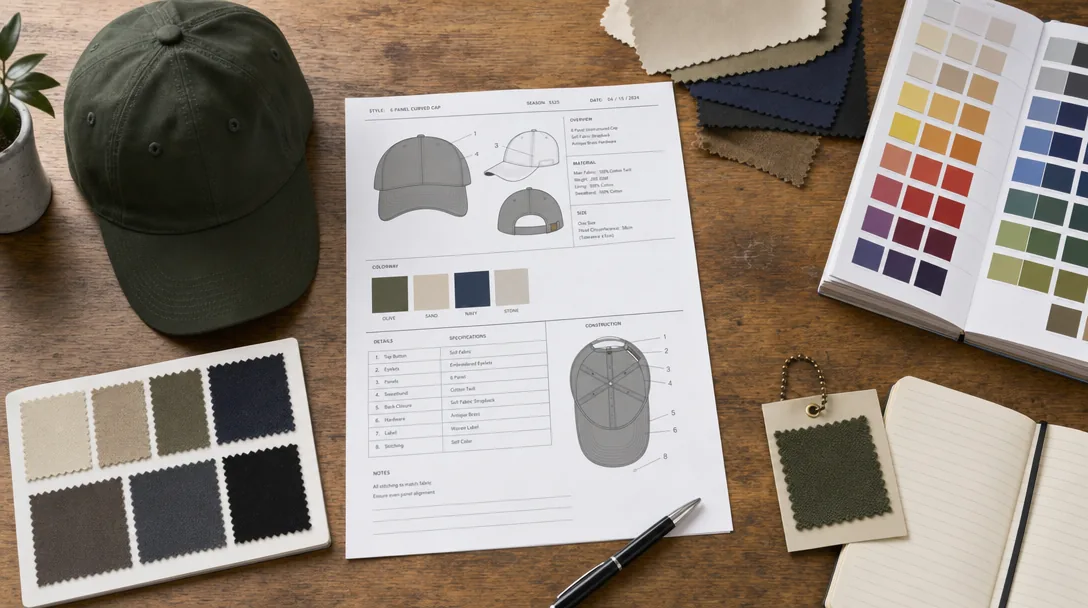
Every week, our sales team answers detailed questions about custom flat brim snapback bulk: a 2026 b2b sourcing guide - cost & moq breakdown. We wrote this guide so that wholesalers, streetwear brands, corporate buyers and promotional resellers can compare options with full information, and avoid the traps that show up only after production has started.
Custom Sun Visor Cap Bulk
Visor quality is won or lost in the brim package and closure system, not in how many logos you stack onto the band. For a solid custom sun visor cap bulk spec, lock the shell and sweat-contact materials first: 7 to 10 oz cotton twill works for resort, golf, and promo programs; 150D to 300D microfiber polyester is more practical for running and tennis; and moisture-management pique at 180 to 220 gsm gives faster dry-down without the slick hand feel of cheap tricot. The visor core is usually 2.0 to 3.0 mm PE or EVA, then either turn-and-stitched or edge-bound; bound edges look cleaner on premium builds but also expose uneven tension faster at inspection. Sweatbands should be defined before sampling, because 100% cotton terry absorbs well but gains weight with perspiration, while polyester-spandex cool-dry bands stay lighter and recover faster. Logo method matters too: flat embroidery runs cleanly on Tajima or Barudan heads after band assembly, but 3D puff is unstable on visors because there is no buckram-supported front panel to hold foam height the way a custom flat brim snapback bulk style does.
Compared with a custom flat brim snapback bulk program, a visor uses fewer pattern pieces and usually develops faster, but fit tolerance is less forgiving because the band sits directly on the head with no crown depth to hide mistakes. A usable tech pack should call out visor width and arc, band height, finished circumference, closure type, sandwich contrast, logo position, and tolerance limits—plus or minus 2 mm on logo placement is standard, and main fabric color should be referenced to Pantone TCX or Pantone Coated with a bulk target of Delta-E below 1.5. In Zhejiang, MOQ is commonly 144 to 300 pieces per colorway for stock twill with flat embroidery, while dyed-to-match binding, molded rubber patches, or custom jacquard elastic usually push the line to 500 to 1,000 pieces. At current market levels, a basic cotton twill visor at 300 pieces typically lands around $2.10 to $3.40 FOB Ningbo; a performance version with microfiber shell, silicone heat transfer, woven flag label, and upgraded hook-and-loop or metal buckle closure is more realistically $3.80 to $5.80.
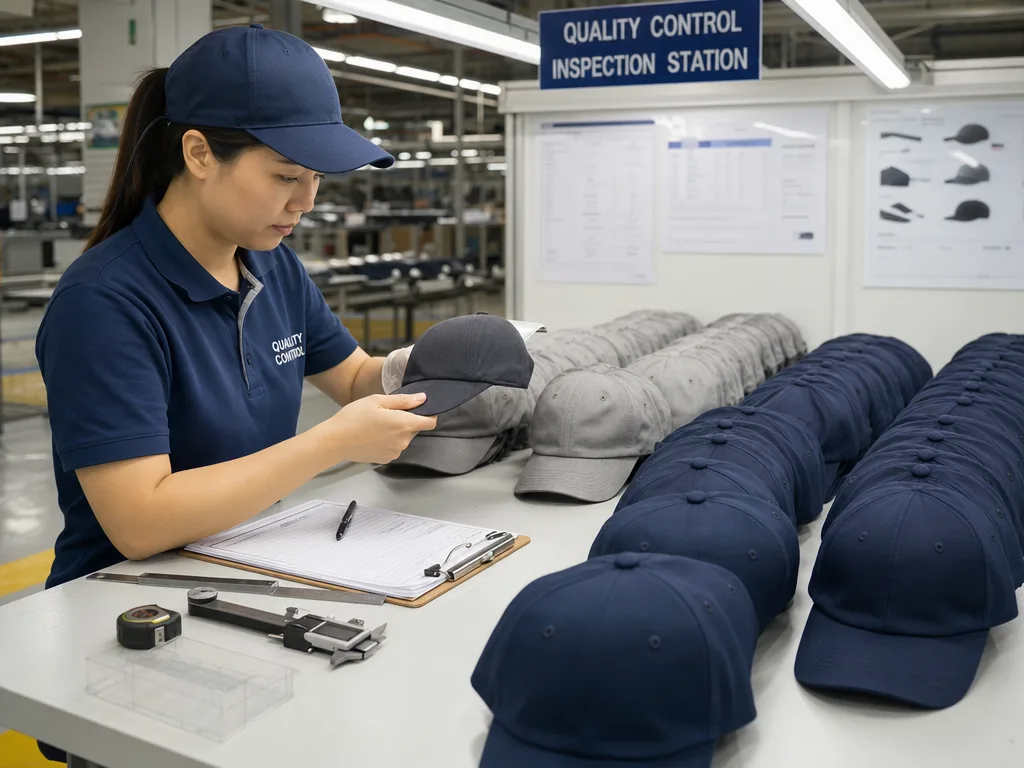
Most visor failures show up in bulk inspection, not at proto stage. The checkpoints that actually matter are left-right brim symmetry, visor core show-through after pressing, binding tension consistency, closure centering, sweatband join cleanliness, and embroidery registration. Dark colors are more likely to fail crocking or shade variation if the dye lot is unstable; white or pastel visors more often reveal needle oil, glue shadow, and heat-press marks that operators miss on the line. Packing spec is not a minor detail either: nested packing saves cube, but over-nesting or overloaded master cartons can flatten the visor arc and leave a permanent set by arrival. For that reason, the PO should define bagging method, nested quantity, carton dimensions, and whether the shipment is flat-packed or nested. AQL 2.5 is the normal final inspection baseline, but visors deserve stricter judgment on major defects because one twisted brim can cheapen the whole carton at retail. If a factory can hold visor specs lot by lot under D65 light and repeated closure-cycle checks, it is usually a better candidate for larger custom flat brim snapback bulk programs later.
Custom Dad Hat Low Minimum
Low-minimum dad hats are the cheapest way to test artwork execution and factory discipline before committing to custom flat brim snapback bulk. The build is simpler: 6-panel, unstructured crown, low profile around 8.5-9.0 cm, pre-curved visor with a PE insert, and no hard front buckram to distort during sewing or packing. That cuts labor minutes, reduces blocking risk, and keeps fabric utilization higher than a structured snapback. If the goal is a true low MOQ, stay inside the factory’s stock-body program: 260-300 gsm brushed cotton twill, washed chino twill, or 12-14 wale corduroy, with one embroidery position run on Tajima or Barudan heads and a standard tuck strap or metal slide closure. In China, that usually means 48-100 pieces per colorway is realistic. MOQ climbs fast when buyers add development-heavy trims. Pantone-matched shell fabric, custom seam tape, laser-engraved brass buckle, woven label at the back opening, or dyed-to-match closure webbing push the order out of stock material territory and into custom sourcing, where mills and trim vendors often want 100-300 units per component before cutting starts. In practice, the cleanest low-minimum spec is one shell fabric, one closure style, one approved Madeira thread palette, and no special enzyme wash or garment-dye lot approval. Once you introduce wash variance control, branded hardware, or multi-location embroidery, the “cheap test order” stops being cheap.
Most small buyers under-spec the details that actually cause rework. A usable tech pack should lock down crown height, visor length and curvature, fabric composition, gsm tolerance of +/-5%, sweatband material, eyelet finish, back-strap construction, embroidery stitch count, and thread reference by Pantone TCX or an approved Madeira chart. If color accuracy matters, write a measurable target into approval: Delta-E under 1.5 for fabric lab dips and a signed thread card for logo colors. Without that, you should expect visible shade drift between the body, under-visor, and embroidery, especially on washed black, khaki, and vintage navy programs. For 2026 sourcing, a straightforward embroidered dad hat usually sits around $2.10-$3.60 FOB at 100-300 units using stock fabric and one logo location; pre-production samples with digitizing, setup, and courier generally cost $35-$80. Even on a small run, inspection should still follow AQL 2.5, with extra attention on logo centering within 2 mm, visor symmetry, strap bartack security, sweatband join bulk, and crocking on dark washes. Our standard practice is that if a supplier cannot keep a low-profile dad hat consistent at this level, they usually struggle once custom flat brim snapback bulk introduces hard buckram, flatter visor geometry, tighter panel alignment, and higher front-logo density.
Custom Bucket Hat Small Batch
Small-batch bucket hats are unforgiving. A 6-panel custom flat brim snapback bulk program can hide minor variance inside buckram, visor board, and structured front panels; a bucket hat cannot. If the brim sandwich is cut off-grain, or the side band is eased unevenly into the crown, the whole silhouette corkscrews after washing. A usable tech pack should lock the fabric before price discussion: 100% cotton twill at 210-260 gsm, washed canvas at 240-300 gsm, or nylon taslon at 120-160 gsm all behave differently in shrinkage, brim memory, and stitch tension. Buyers should also specify finished brim width, crown height, size grading, eyelet construction, sweatband composition, seam tape, and artwork method, whether that means a 6,000-stitch flat embroidery file or a woven label matched to Pantone TCX. An inspiration photo is not enough; without measurable specs, the dispute later is always about brim stiffness, collapse, and post-wash shape. The bucket hat has lower tooling than a snapback, but it does not tolerate loose cutting control or vague approvals.
MOQ is where most small-batch math breaks. In Zhejiang, a realistic starting point is 100-150 pieces per colorway in one shell fabric; 50-piece runs are possible only if you keep one size curve, standard trims, and minimal artwork changes. A basic cotton twill bucket hat with flat embroidery typically prices around US$3.20-US$4.80 FOB at 300 pieces, while washed heavy canvas, satin lining, woven patch application, or reactive print pushes it to roughly US$5.50-US$7.20. Packaging also moves the needle more than buyers expect: polybag with suffocation warning, barcode, size sticker, and hangtag string adds about US$0.18-US$0.45 per unit, and a low-run embroidery setup on Tajima or Barudan heads often adds US$40-US$80 per design when colorways are fragmented. QC should be handled at AQL 2.5 with point-by-point measurement, not a quick carton glance: brim width, crown height, circumference, embroidery centering, topstitch parallelism, and sweatband join all need checks, with circumference variance held within plus or minus 0.5 cm. If a supplier cannot keep a bucket hat clean on those basics, it is a warning sign for any broader custom flat brim snapback bulk program.
Custom Fitted Cap No Minimum
A true no-minimum fitted-cap program only works when the factory refuses to reopen the pattern. The cost is not the missing snap closure; it is size grading and size control. Once you cover a full run from 6 7/8 to 7 5/8, you are managing different sweatband lengths, adjusted back-curve geometry, and a finished head opening tolerance that should stay within ±3 mm after steaming. If a buyer asks for a new crown block, a nonstandard depth, or a custom size spec, most Zhejiang factories move straight to 144-288 pcs per colorway because marker efficiency drops and each size split creates extra cutting, bundling, and inline QC work. Below that threshold, “custom” usually means a stock fitted body with custom shell fabric, visor sandwich color, seam tape print, woven labels, underbill, and embroidery rather than a fully re-engineered fit. For a standard wool-blend fitted, the usual spec is 20% wool / 80% acrylic at 380-420 gsm, front-panel buckram at 0.8-1.0 mm, and PE visor board around 2.8-3.2 mm to hold a flat profile without warping in carton pressure.
Compared with custom flat brim snapback bulk, fitted caps get expensive because the factory loses simplicity on the sewing floor. The front logo may still run on a Tajima, Barudan, or ZSK 15-head machine, but fitted production adds manual sorting by size, more WIP handling between operations, and stricter final measurement at packing. In 2026, a basic fitted with flat embroidery, woven label, and stock-body customization usually lands at $4.20-$6.80 FOB Ningbo at 288 pcs. Add 3D puff, satin appliqué, metallic thread, or a contrast undervisor and the realistic band is $6.50-$8.90. Under 100 pcs, unit pricing often jumps 25%-45% because digitizing, line changeover, and fabric waste do not scale down. The tech pack needs to be tighter than for custom flat brim snapback bulk: crown height, brim width, panel construction, sweatband fiber content, Pantone TCX fabric references, Pantone Solid Coated thread references, and acceptable Delta-E targets should be locked before sampling—typically under 1.5 for polyester and under 2.0 for wool-blend. If those limits are vague, buyers end up calling normal fitted-cap tolerance drift a factory defect.
Foam Front Trucker Hat Custom
A foam-front trucker should not be costed or engineered like a standard structured cap in a custom flat brim snapback bulk program. The front panel is typically 3-5 mm EVA or PU foam laminated to tricot, paired with polyester mesh in the 120-160 gsm range, a polyester or poly-cotton sweatband, and a PE brim insert that can be built flat, slight-curve, or mule-style square. The common failure is decoration, not sewing: buyers approve heavy-fill logos meant for buckram-backed twill, then wonder why the foam tunnels, sinks, or tears. On Tajima, Barudan, and ZSK heads, dense satin columns and tight fill stitches can knife the foam and leave a washboard halo around the logo. In production, the safer lane is 1-color or 2-color screen print, heat transfer, chain stitch, woven patch, or low-density embroidery kept around 0.35-0.40 mm stitch spacing with underlay reduced to match the substrate. The tech pack needs measurable specs, because “high crown trucker” tells the factory almost nothing. Call out 5-panel or 6-panel construction, front crown height in centimeters, foam thickness tolerance, mesh hole pattern, bill length and width, flat-brim angle, snap closure material, sweatband composition, seam tape artwork, and carton ratio. If the trucker sits inside a broader line of caps, lock color to Pantone TCX and set acceptance standards up front: Delta-E under 1.5 for dyed fabric is realistic, while molded plastic snaps and trims usually need a looser cap around 2.0. Two hats at the same FOB can feel completely different if one supplier swaps in lower-density foam, recycled mesh with weak rebound, or brittle PP snaps that crack during fitting.
MOQ on foam truckers stays reasonable only while you use stock components. With standard mesh, a common 7-hole snap, and a regular brim mold, most factories will quote 144-300 pieces per colorway; once you move to custom-dyed mesh, logo-molded snaps, printed seam tape, rope, or a proprietary brim profile, the practical floor usually jumps to 500-1,000 pieces because trim setup, dye minimums, and material waste rise fast. For 2026 FOB China, a basic foam trucker with 1-color screen print is typically $2.10-$3.40, flat embroidery runs closer to $2.80-$4.60, and a fully trimmed version with woven patch, inside taping print, hangtag, sticker, and private-label polybag lands around $4.20-$6.20. Below 100 pieces, the math usually breaks harder than it does in custom flat brim snapback bulk because the decoration and molding setup gets spread over too few units. Inspection needs to focus on the defects that pre-shipment photos hide. The recurring problems are foam delamination along needle lines, bubbling after heat application, mesh skew that torques the crown, broken snap posts, brim warpage, odor from low-grade adhesive, and embroidery collapse where dense fills crush the foam. AQL 2.5 is fine for most runs, but retail and licensed programs should tighten logo placement to +/-2 mm and compare brim angle against the sealed approval sample on a head form, not flat on a table. Foam truckers win when the brief calls for louder graphics and lower opening price; they still lose to structured snapbacks on hand feel, edge definition, and long-term shape retention after repeated wear and packing.
Blank Flat Bill Snapback Wholesale
Blank programs go wrong on structure before they go wrong on fabric. In custom flat brim snapback bulk, the spec has to read like a tech pack, not a sales description: 6-panel high-profile crown, finished crown height 11.5-12.5 cm, visor length 7.0-7.5 cm, head circumference 58 cm +/- 0.5 cm, 100% cotton twill at 260-280 gsm or 80/20 acrylic-wool, PE or HDPE visor board at 1.8-2.2 mm, and a standard 7-hole plastic snap. That still is not enough unless the supplier confirms front buckram grade, front-panel stiffness after steaming, sweatband composition, top-button lock, and seam-tape alignment across all six joins. A “blank snapback” quote without those details tells you almost nothing about how the cap will behave once embroidered. Decorators expose every weakness fast. A Tajima or Barudan run on a front logo will immediately show whether the crown holds shape, whether the front panel bubbles, and whether the visor sits square to center front. The blank standard I trust is simple: six visor rows with no stitch drift, left-right crown symmetry controlled to a sealed sample, centered seam tape, and buckram that does not delaminate after heat, steaming, or packing pressure. At CrownsForge, we also check visor-to-crown alignment and snap setting torque during inline QC because those are the defects buyers end up paying for twice—first in rework, then again in decorator complaints or returns.
MOQ and price move sharply once you leave stock trims. In Yiwu, a plain blank flat bill snapback made from stock cotton twill, stock snap, and stock sweatband usually lands at 144-288 pcs per color, with realistic FOB pricing around $2.10-$3.40. Acrylic-wool versions are typically $2.60-$4.20 FOB because the fabric is less forgiving in cutting and sewing, and waste runs higher. Once you specify Pantone TCX-matched shell and undervisor, custom inside taping, branded size stickers, woven labels, or non-stock snap colors, the practical MOQ usually steps up to 500-1,000 pcs per style, sometimes higher if the factory has to dye-match small lots across multiple trim suppliers. The smartest buyers of custom flat brim snapback bulk write tolerances into the PO instead of using vague words like “premium” or “clean.” Put in fabric weight tolerance at +/- 5%, Delta-E under 1.5 to approved standard, stitch density at 6-8 SPI, AQL 2.5 final inspection, and carton pack-out by color and size ratio. The expensive failures are predictable: twisted brim alignment, uneven crown height, cracked snaps after cold-weather transit, bubbling front panels after embroidery, and color shift between crown, visor, and closure lots. In practice, paying another $0.15-$0.25 per cap for better buckram, stable HDPE visor boards, and proper inline QC is usually cheaper than dead stock sitting in a 3PL or debit notes from decorators.
Working with CrownsForge for custom flat brim snapback bulk programs
Lock the sample path before you haggle on pennies. In a custom flat brim snapback bulk program, the real risk is not paying $0.12 too much; it is approving an unstable spec and then fighting remake costs, missed ship windows, and color inconsistency in bulk. A practical timeline is 1-2 business days for digital mockups, 5-7 days for a sewn proto in stock fabric, and 7-10 days if the cap needs 3D puff digitizing, applique placement, molded silicone, or a new deboss mold. For a first PO, 144 pcs per colorway is realistic on standard 80/20 acrylic-wool, 100% cotton twill, or 600D recycled polyester, but that only holds if crown pattern, visor curve, buckram weight, sweatband, and fabric lot stay the same. Once you start changing profile, under-visor color, closure hardware, or patch base material, the line loses efficiency and MOQ usually jumps to 288 pcs per SKU. FOB China pricing in 2026 for a mid-grade build is usually $4.30-$6.90 at 500-3,000 pcs, based on 6-panel construction, plastic snap closure, woven main label, and standard flat embroidery. Raised embroidery, wool-blend melton, faux suede, custom metal clasp, or multi-location decoration can push landed factory cost above $7.50 before freight. The biggest cost levers are usually stitch count, panel consumption, visor board grade, and whether trims can be shared across SKUs; buyers obsess over sewing labor while ignoring that a 14,000-stitch front logo versus a 7,500-stitch logo can move price more than the operator rate. Our standard practice is to quote against a locked tech pack with Pantone references, fabric gsm, closure spec, and packaging method, because vague assumptions are where margin disputes start.
Decoration control is where mediocre suppliers get exposed fast. Flat-brim construction does not forgive weak front-panel support or bad digitizing: soft buckram, excessive stitch density, or uneven crown tension will cause tunneling, crushed 3D puff, drifting logo position, and visors that rack sideways in the carton. The safer setup is in-house embroidery on Tajima, Barudan, or ZSK heads, plus controlled attachment for PVC, TPU, felt, leatherette, woven, and merrowed patches. If the factory outsources core decoration, expect more variation between PPS and bulk, especially on high-profile crowns where logo centering tolerance should stay within about 2-3 mm. For color-critical programs, dyed fabric, binding, top button, visor sandwich, and snap closure should be matched to Pantone TCX or coated references, with lab-dip approval and a defined Delta-E tolerance on piece-dyed components. Compliance and order discipline matter as much as decoration quality in custom flat brim snapback bulk. Buyers should expect current sedex-audit-cap-supplier-guide.html">BSCI 2.0 or Sedex SMETA 4-Pillar audit status, needle-control logs, metal detection where required by customer protocol, restricted-substance screening for prints and trims, and AQL 2.5 final inspection with carton drop and assortment checks. A clean production flow is tech-pack review, quotation tied to material assumptions, pre-production sample approval, bulk trim sign-off, line-start confirmation, in-line QC, final random inspection, then FOB Ningbo or Shanghai shipment; DDP only makes sense when the supplier can show they actually control customs paperwork instead of handing it to a forwarder and hoping for the best. That process sounds rigid, but on the factory floor it is what prevents a 2,400-piece program from turning into four different shade lots and a claims argument.
Frequently Asked Questions
What logo decoration techniques do you offer?
3D puff embroidery, flat embroidery, woven patch, leather patch, PVC patch, screen printing, sublimation, applique and laser etching, all in-house with no subcontracting.
Can I order a sample before bulk production?
Yes. We strongly recommend approving a pre-production sample before mass production. Samples are charged at 35 to 60 USD each plus express shipping, fully refundable against confirmed bulk orders over 500 pieces.
What is the minimum order quantity (MOQ) for custom hats?
Our standard MOQ is 100 pieces per design and color, with sampling available from 1 piece. For complex multi-color logos or premium fabric upgrades, the MOQ can be lowered with a small per-piece surcharge.
How long does production take?
Sampling takes 7 to 12 days. Bulk production runs 20 to 30 days depending on quantity, fabric availability and decoration complexity. Inspection and packing adds another 3 to 5 days before shipment.
What file format should I send for my logo?
Vector files (AI, EPS, PDF) are ideal. High-resolution PNG or JPG at 300 dpi on transparent background works as a fallback. Provide Pantone color references for accurate reproduction.
What's the MOQ for custom leather patch hat low minimum?
When evaluating custom leather patch hat low minimum, the key considerations are construction quality, decoration capability, MOQ flexibility and lead time. Cover everything buyers ask about custom dad hat low minimum: how it's manufactured, what specs to request from a factory, typical MOQ and pricing, common quality issues to inspect for, and how this ties back to the broader custom flat brim snapback bulk sourcing decision. Cover everything buyers ask about custom bucket hat small batch: how it's manufactured, what specs to…
What should I know about custom rope hat wholesale bulk?
When evaluating custom rope hat wholesale bulk, the key considerations are construction quality, decoration capability, MOQ flexibility and lead time. Cover everything buyers ask about custom dad hat low minimum: how it's manufactured, what specs to request from a factory, typical MOQ and pricing, common quality issues to inspect for, and how this ties back to the broader custom flat brim snapback bulk sourcing decision. Cover everything buyers ask about custom bucket hat small batch: how it's manufactured, what specs to…
What should I know about custom corduroy dad hat bulk?
When evaluating custom corduroy dad hat bulk, the key considerations are construction quality, decoration capability, MOQ flexibility and lead time. Cover everything buyers ask about custom dad hat low minimum: how it's manufactured, what specs to request from a factory, typical MOQ and pricing, common quality issues to inspect for, and how this ties back to the broader custom flat brim snapback bulk sourcing decision. Cover everything buyers ask about custom bucket hat small batch: how it's manufactured, what specs to…
How does ordering custom flat brim hat work?
When evaluating custom flat brim hat, the key considerations are construction quality, decoration capability, MOQ flexibility and lead time. Cover everything buyers ask about custom dad hat low minimum: how it's manufactured, what specs to request from a factory, typical MOQ and pricing, common quality issues to inspect for, and how this ties back to the broader custom flat brim snapback bulk sourcing decision. Cover everything buyers ask about custom bucket hat small batch: how it's manufactured, what specs to…
Looking for a reliable hat manufacturer in China?
CrownsForge has produced custom hats for 800+ brands across 40 countries. From 100-piece launches to 100,000-piece retail programs, we deliver on time and on spec.
Get in touchRelated guides
BSCI vs Sedex vs WRAP vs WCA: Compliance Audit Standards Compared (2026 Update) - 2026 Buyer's Guide
Read article →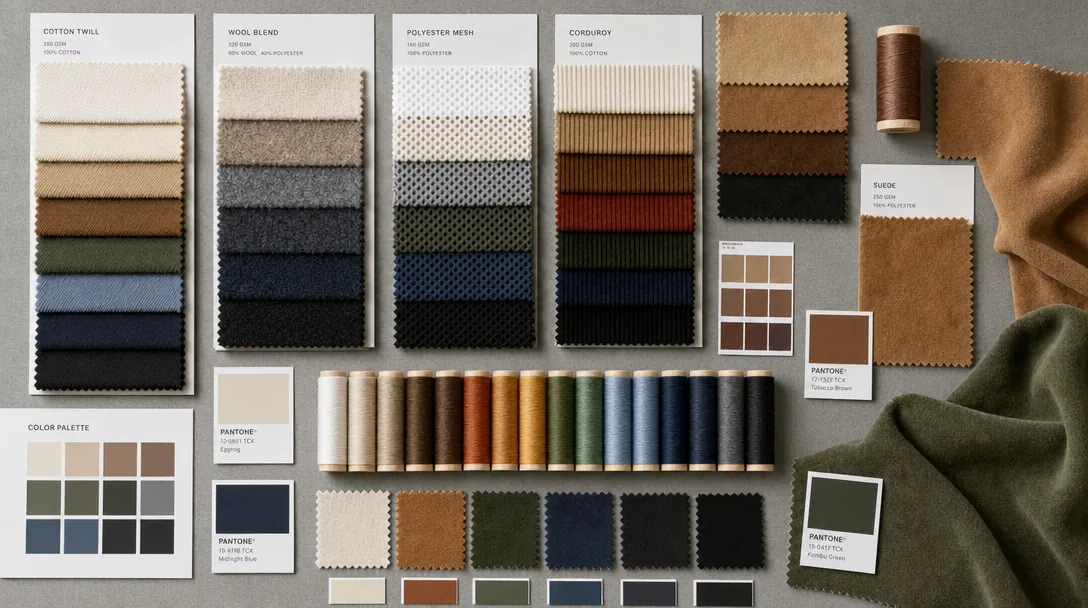
Sustainable Cap Packaging: Options, Costs and Retail-Buyer Demands - 2026 Buyer's Guide
Read article →Bucket Hat Corduroy Fabric And Trim Spec Guide for Custom Hat Buyers
Read article →Sourcing custom hats does not have to be complicated. With the right manufacturing partner, clear specifications and a small upfront investment in sampling, you can launch a retail-quality product in 30 to 45 days.