
Custom Embroidered Patches: When to Use It, Costs, and What to Ask Your Factory - 2026 Buyer's Guide
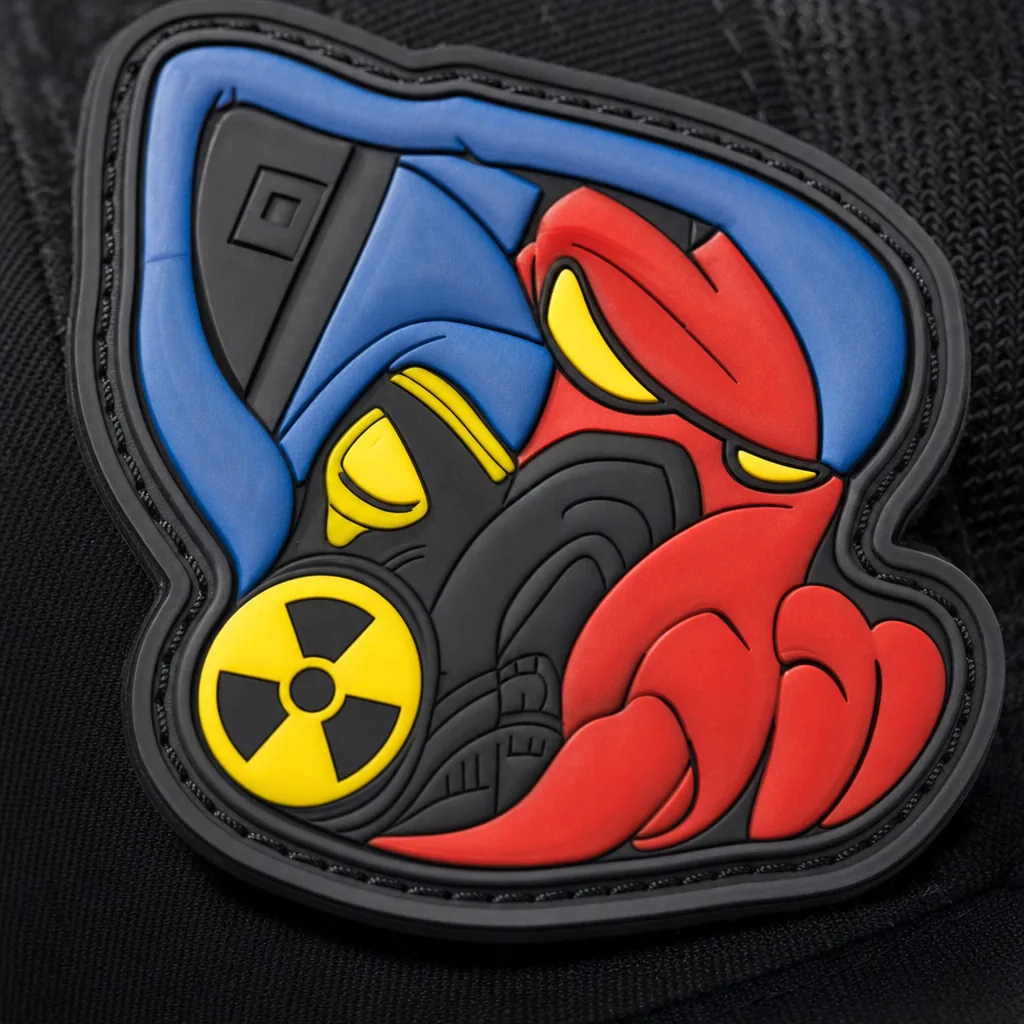
For brand owners, wholesalers and procurement teams entering the custom headwear category, custom embroidered patches: when to use it, costs, and what to ask your factory - 2026 buyer's guide is one of the highest-leverage decisions you will make. Get it right and your unit economics, retail story and reorder cycle all improve. Get it wrong and you carry the cost for years.
Custom Logo Hats
Patch construction decides whether a hat looks retail-clean or cheap by the second carton, because the patch changes how the front panel feeds, flexes, and recovers after sewing. For custom embroidered patches, stitch-down is still the dependable method on structured 6-panel caps, A-frame truckers, and buckram-backed baseball hats; heat press alone is risky unless the patch is light, the crown is stable, and the adhesive spec is actually tested. Merrowed borders work for heritage badges, but you usually need a minimum 3 mm edge width and enough dead space around the artwork to avoid a crowded look. If the design is tighter, laser-cut patches with a satin edge usually present better at 2.25-2.75 inches. What causes most failures is not the logo file; it is excessive fill density, thick felt or twill backing, and oversized patches on 260-300 gsm cotton twill fronts, which telegraph puckering across the crown almost immediately. Quote the patch and cap as one operation, not two disconnected line items, because the real cost sits in temporary fixing, placement jigs, hooping, sewing sequence, and rehandling. In a typical Yiwu line, custom embroidered patches are run first on Tajima, Barudan, or ZSK heads, then caps move into panel joining, brim insertion, sweatband setting, top-button attachment, steaming, and final shaping. Once the patch spec is wrong, the sewing floor cannot rescue it downstream. As a working range, a stock twill cap with a 2.5 inch embroidered patch usually lands around $2.20-$3.80 FOB at 144-300 pieces per colorway; a more premium build with camo, sandwich visor, woven label, custom seam tape, or alternative patch materials can move to $4.80-$7.50 FOB before freight and duty.
The spec sheet needs to lock down more than artwork and size, or you will get avoidable variation lot to lot. For custom embroidered patches, call out finished dimensions in millimeters, border type, backing material, stitch coverage, thread brand, and the nearest Pantone TCX reference for each critical color. On branded programs, I would hold patch placement at plus or minus 2 mm from approved centerline and keep visible color variance below Delta-E 2.0 against the signed standard, especially on navy, black, and red where thread substitutions show fast. Also define the cap shell clearly: a 280 gsm cotton twill front panel behaves nothing like brushed poly twill or 600D polyester when the needle starts driving through patch backing, seam allowance, and buckram. Inspection should be run to AQL 2.5, but the pass-fail points must focus on patch-to-cap interaction, not just generic sewing defects. The common failures are skewed placement, loose lockstitch at patch corners, border lift after carton compression, bubbling from bad heat assist, and a hard ridge above the sweatband that the wearer feels on the forehead. Ask the factory to send one pre-production sample and one bulk-sewn golden sample after line setup, because a clean loose patch does not prove the sewn cap will wear correctly. Our standard practice is to check crown distortion after 24 hours packed, then remeasure placement and edge lift before approving bulk, since some problems only appear after compression and recovery.
Custom Hat with Patch
A patch cap is a two-stage build, so it needs tighter engineering than direct embroidery. The patch runs first on a flat embroidery line—typically polyester twill, cotton twill, or wool-blend felt on Tajima, Barudan, or ZSK heads—then gets a merrow edge, satin stitch border, or laser-cut edge before it ever touches the hat. That extra process is exactly why custom embroidered patches make sense when you need the same logo to land consistently across 5-panel campers, structured 6-panels, truckers, beanies, and jackets without re-digitizing for each shape. But patches are not magic: text below about 3 mm cap height, counters smaller than 1 mm, or outlines under 0.4 mm usually start to close up. At that point, woven patches or direct cap embroidery often reproduce detail better and cost less in approvals. Treat the patch as a separate component, not just a decoration note on the cap PO. Lock size in millimeters, base fabric, border type, stitch coverage, backing, and attachment method, then tie thread colors to Pantone C or Pantone TCX standards. If the ground fabric is piece-dyed, set a realistic color tolerance—Delta-E under 1.5 for premium retail programs, under 2.0 for standard bulk—and approve against the actual shell fabric, not just a loose patch card. A 280 gsm brushed cotton twill front panel can absorb a sewn badge cleanly, while a 150D polyester foam trucker front or a soft unstructured crown with no buckram is much more likely to show seam bridging, edge lift, or puckering after attachment. On center-seam placements, I would always request a sewn sample, because a patch that looks flat on paper can tent badly once it crosses the crown break.
Cost only becomes clear when you separate patch manufacturing from patch application. In China, a standard 2.25 to 3 inch custom embroidered patch usually runs about $0.22 to $0.65 ex-factory, depending on stitch density, thread count, border finish, and whether the backing is plain, paper-coated, hook-and-loop, or heat-seal. Sewing that patch onto the cap typically adds another $0.12 to $0.30, while heat pressing can reduce labor but is less forgiving on curved crowns, mesh-backed truckers, and textured shells. If a factory is quoting a finished patch hat at $2.80 to $6.50 ex-factory, that range is usually driven more by cap body, fabric, closure, and secondary trims than by the patch itself. MOQ is commonly 100 to 300 pieces per colorway for finished caps, though patch-only MOQ may be 50 to 100 when several logos are ganged in one run. Inspection needs to focus on assembly defects, because that is where patch caps usually fail. The repeat issues I see are placement drift beyond plus or minus 3 mm, uneven border width, exposed merrow core, glue bleed on light shells, and panel distortion from overfeeding during sewing. On structured caps, check whether the patch tents over the center seam; on unstructured caps, check wrinkling after packing and recovery after 24 hours out of carton. AQL 2.5 is a normal final standard, but I would add targeted checkpoints for color match, stitch density consistency, edge cleanliness, and crocking risk on black, navy, and dark red threads. If the artwork includes tiny copy, gradients, or a hard target cost, do not default to a patch—quote custom embroidered patches, woven labels, TPU badges, and direct embroidery side by side before releasing bulk.
Custom Patch for Hat
For a hat patch, construction matters more than artwork because it determines front-panel bulk, edge stability, sew yield, and long-term wear. On caps, the practical choices are merrowed embroidered patches, laser-cut embroidered patches, woven patches, and molded PVC or TPU badges when thread cannot hold the design cleanly. Most custom embroidered patches for hats are built on poly-cotton twill or felt in the 200-280 gsm range, embroidered on Tajima or Barudan multi-head machines using 75D or 120D rayon or polyester thread, then finished with a merrow border, satin stitch edge, or heat-cut edge. On a structured 6-panel cap with buckram, stitch-down attachment is still the safest specification; adhesive-only application saves a few cents but is the first thing to fail after sweat, crown flexing, or a container leg that hits 60°C in summer transit. Our standard practice is to reject glue-only front patches unless the buyer explicitly accepts the durability risk.
The spec sheet needs more than a logo file. Lock the patch size in millimeters, edge type, backing, stitch coverage, thread colors against Pantone Coated or Pantone TCX, and placement from both the center-front seam and visor seam. If the patch crosses the center seam, state it clearly, because seam bulk and buckram can cause tunneling or puckering on flat shapes. Detail limits are where many cap programs fall apart: embroidered text should generally stay above 3 mm cap height, and outlines below 0.3 mm tend to break, fill in, or disappear after production tensioning. That is why custom embroidered patches are usually the wrong choice for gradients, hairline serifs, or tonal logos with subtle shading; a woven patch will often hold finer detail with lower rejection risk and a cleaner hand.
Cost moves more with stitch density and attachment method than with patch outline. In 2026 buying terms, a standard 2.5-inch front custom embroidered patch on a twill cap usually adds about $0.30-$0.70 FOB China at normal coverage and stitch-down attachment, while a dense felt-base patch with 70%-90% thread coverage, complex laser cutting, and careful front-panel sewing can run $0.85-$1.35 per hat. Digitizing is typically $15-$40 per design, and standalone patch runs usually need 500-1,000 pieces to absorb setup, while cap-plus-patch orders often start at 144-300 pieces per colorway. Inspection is straightforward if written into the PO: border must be even with no skipped merrow wraps, laser-cut edges must show no fray or melt line, and center-front placement should stay within about +/-1.5 mm because a 2 mm drift is obvious on the shelf. At final inspection, treat the patch as both trim and decoration under AQL 2.5, checking for patch lift, crooked sewing, puckering, loose trims, needle damage, and visible color shift where thread sheen changes the perceived navy or black against the cap fabric.
Custom Patch Hat
A custom patch hat is really two production lines that have to meet without fighting each other: the patch shop and the cap line. If that handoff is sloppy, the hat looks cheap no matter how good the embroidery is. For custom embroidered patches, the safest base is usually 100% polyester twill in the 180-220 gsm range because it holds stitch tension better than cotton and stays flatter after heat and handling. Most factories run patches on Tajima, Barudan, or ZSK multi-head machines, then finish them with a merrow edge, satin border, laser cut, or die cut. The border choice should follow the artwork, not the merch moodboard. Merrow works for simple badges with rounded geometry; satin-edge laser-cut patches handle sharper contours; woven labels beat embroidery once text drops below roughly 3 mm letter height or fine lines fall under about 0.8 mm. TPU, PVC, and leatherette badges are valid options, but they are not substitutes for custom embroidered patches when the design depends on thread texture and depth. Attachment method matters as much as the patch itself because the crown is not a flat billboard. Sew-on is still the most reliable for wash durability, flex, and long-term edge security, especially on structured 6-panel caps with buckram support. Heat press can work for PU or TPU badges, but only with controlled dwell time and platen temperature; on brushed cotton or polyester foam fronts, too much heat can leave shine marks, panel warping, or adhesive read-through. Hook-and-loop adds function for tactical or team programs, but expect extra crown bulk and roughly $0.15-$0.30 per piece added cost. On better runs, the patch is applied to the front panel before final cap assembly when size and machine access allow it; trying to sew a large patch onto a finished crown often causes needle deflection, off-center placement, and puckering around the seam line.
Most failures on patch hats are basic factory-control issues, not design mysteries: patch placement drift, loose merrow wrap, jump stitches at corners, front-panel puckering, scorch from over-pressing, or crown collapse when a heavy badge sits on weak buckram. A vague note like "3-inch patch" is how buyers get inconsistent bulk. A real spec should read more like this: 75 x 50 mm patch, polyester twill ground, merrow border, satin-fill embroidery, sew-on application, centered on front panel, bottom edge 15 mm above visor seam, placement tolerance +/-2 mm, thread colors matched to Pantone TCX or Pantone Coated, and color variance held within an agreed Delta-E if the patch must match apparel or packaging. Our standard practice is to approve both a loose patch sample and a finished-cap sample because a clean patch can still sew badly on a cap body. In Yiwu and Dongguan, MOQ is typically 100-144 pieces per colorway for stock caps, while fully custom cap bodies with custom embroidered patches usually start closer to 300 pieces per style-color. On current FOB China pricing, a basic 6-panel cotton twill or brushed chino cap with a standard front patch generally lands around $2.20-$3.80 at 300-500 pieces. Oversized patches, hook-and-loop backing, suede, corduroy, heather wool blends, or leather-look badges can push the same program into the $4.50-$6.50 range. For inspection, I would use AQL 2.5, verify stitch density and border finish on patch lots before application, and then check finished hats for centering, crown shape, seam alignment, and post-sew puckering. That is where patch programs usually fail—not in the artwork file, but in the assembly discipline.
Custom Patch Hats
Patch hats fail when buyers treat the patch and the cap as one process. They are not. Patch production has its own tolerances, then cap sewing introduces a second set of risks: placement drift, panel distortion, puckering, and needle damage. For hats, the common constructions are merrowed embroidered patches, laser-cut embroidered patches, woven labels, and molded TPU badges, but on structured 6-panel caps and truckers, stitch-down attachment is still the safest choice. It holds better than low-grade hot-melt film in heat, sweat, and abrasion, especially once caps sit in cartons at 40°C-plus during summer transit. If you are sourcing custom embroidered patches for hats, ask whether the patch is made in-house or subcontracted. Outsourcing typically adds 3 to 7 days and creates visible variation in thread shade, merrow width, and edge finish unless both suppliers are matching to the same approved standard. Your patch spec needs to read like a production sheet, not a mood board. Lock size in millimeters, border type, twill ground, backing, attachment method, stitch coverage, and placement tolerance from center front and visor seam. If color matters, provide Pantone TCX or solid coated references and cap acceptable variance at Delta-E 1.5 to 2.0 under D65 lighting. On Tajima, Barudan, or ZSK heads, well-digitized custom embroidered patches can look sharp, but curved borders go ragged when the merrow is underspecified or the satin column is too narrow for the radius. A 60 x 30 mm patch may balance well on a mid-profile snapback and look clumsy on a low-profile dad hat, so approve patch size, crown height, buckram stiffness, and placement together, not as separate decisions.
Price is driven by both the hat body and the patch build, not just logo dimensions. In China, a practical MOQ for a custom patch hat program is usually 144 pieces per colorway; some factories will accept 100 to 120 pieces, but expect a surcharge of about $0.20 to $0.50 per cap because setup and line inefficiency do not scale down nicely. A standard 2.25 to 2.5 inch custom embroidered patches unit usually costs around $0.28 to $0.75 depending on stitch count, twill base, merrow versus laser-cut edge, and backing. Sewing that patch onto the cap typically adds $0.10 to $0.35. A finished brushed cotton twill cap with snapback or metal buckle commonly lands at $2.80 to $5.50 FOB China at 300 to 500 pieces; suede, camouflage matching, woven labels, printed seam tape, or retail polybag-plus-insert packing will push that up quickly. Inspection should treat the patch as a separate quality gate. The most common bulk failures are off-center placement, inconsistent seam-to-patch distance, puckering around stitch-down borders, exposed adhesive on heat-applied badges, loose jump stitches, and uneven merrow thickness. Set final inspection at AQL 2.5 and require checkpoints for left-right alignment, top-to-visor seam distance, stitch security, edge cleanliness, and color consistency under a D65 lightbox. For retail or licensed programs, add rub testing and wash testing after attachment, and confirm whether replacement caps can be remade from the same patch lot to avoid thread-shade drift. That is what separates a sample that photographs well from a bulk run that arrives without chargebacks.
Hat Patch Custom
Construction method determines whether a hat patch looks retail-ready or cheap after two weeks of wear. For caps, the patch is usually produced first, then attached by perimeter sewing, heat-press tacking plus sewing, or direct stitch-down during assembly. In practice, custom embroidered patches are still the safest option for mid-market hats because they give visible texture, tolerate curved panels better than woven labels, and hide minor surface irregularities on chino twill, brushed cotton, or 600D polyester. The limitation is detail, not aesthetics: standard embroidery thread is simply too bulky for copy below about 1.0 mm, hairline serifs, soft gradients, or low-contrast tonal logos. On the factory floor, we digitize the patch file separately from the cap file and run it on Tajima or Barudan heads, then trim, inspect, and attach only after the patch passes shape, thread tension, and border QC. On structured 6-panel caps with buckram, pre-closing application usually gives cleaner needle access and straighter placement; on unstructured dad caps, post-sew attachment is faster but alignment errors and crown puckering show up more easily.
A usable tech pack for a custom hat patch needs exact patch size in millimeters, border type, backing, attachment method, placement tolerance, and Pantone references for both thread and base fabric. If the logo uses more than 6 colors, fine text, or metallic thread, require both a photo approval and a physical strike-off before bulk. A 65 x 45 mm merrow-edge patch behaves very differently from a 1.2 mm laser-cut twill patch with a satin border, especially when it has to sit flat over buckram, foam, corduroy, or washed cotton. Reasonable front-panel placement tolerance is usually +/-2 mm; tighter than that is possible, but you will pay for slower handling and higher rejection. For bulk orders around 300 to 1,000 pieces, adding custom embroidered patches to a cap typically costs $0.28 to $0.75 per hat for a simple 2.5 inch sew-on patch, while metallic thread, felt bases, applique layers, or oversized shapes can push patch cost above $1.00. Inspect at AQL 2.5 and specifically check crooked placement, exposed bobbin thread, uneven merrow width, glue bleed, edge lifting, and crown distortion on a curved headform, because that is where weak patch programs usually fail.
Working with CrownsForge for custom embroidered patches programs
Repeatability is where most custom embroidered patches programs break down; the quoted FOB rate is usually the least important variable. A vector proof tells you almost nothing about how a patch will sew, trim, and behave once it is applied to an actual cap body, so the control point has to be a strict sampling ladder. In practice, that means digitizing review within 24-48 hours, patch strike-off in 3-5 working days, then a full cap sample 5-7 working days later only after shell fabric, backing, border type, and attachment method are locked. That sequence matters because a patch that looks acceptable on a flat approval sheet can pucker on a 5-panel foam trucker, dome on a structured 108x58 cotton twill crown, or collapse on unstructured brushed chino. The physical limits are predictable if the factory is honest about them: satin columns below roughly 0.8 mm start to break, text under 4 mm cap height closes up, merrow borders add seam bulk, and metallic thread can drift visually from an approved Pantone TCX under 4000K versus 6500K lighting. If the buyer signs artwork before those variables are tested, production is not being managed; it is being guessed.
Costing only gets useful once setup charges are separated from running cost. For custom embroidered patches, the fixed cost sits in digitizing, strike-off labor, backing selection, cutting method, and attachment trials, not in thread consumption alone. A standard 3-inch round patch in 75D polyester twill with a merrow edge typically lands around $0.28-$0.55 FOB China at 3,000 pieces, while laser-cut silhouettes, metallic yarn, 3D foam, or hook-and-loop backing can push that well above $0.70. Once the patch is going onto hats, attachment labor becomes the real driver: heat press is fastest but risky on curved fronts and textured fabrics, zig-zag stitch handles irregular edges better, and lockstitch tack is slower but more stable for retail programs. The safer sourcing model is to control the handoff with measurable checkpoints: written tech pack, Pantone callouts or approved swatches, pre-production sample, inline inspection, and final audit at AQL 2.5. Placement tolerance should usually stay within 3 mm, shade variance needs a defined Delta-E target, and edge curl has to be signed off before bulk. Our standard practice is to keep digitizing, embroidery, application, and sewing under one roof whenever possible, because the same team can adjust tension, stitch density, needle size, heat, and jigs instead of blaming a second vendor after the first reorder goes wrong.
Frequently Asked Questions
Which shipping methods do you support?
We support FOB, CIF and DDP shipping. Air express for samples and small orders, sea LCL for 100 to 500 pieces, sea FCL for 5,000+ pieces. Door-to-door DDP available for US, EU, UK, Canada and Australia.
Do you support sustainability certifications?
Yes. We work with GOTS organic cotton, GRS-certified recycled polyester, OEKO-TEX Standard 100 fabrics, and are BSCI and Sedex audited. Certification documentation can be provided per order.
What file format should I send for my logo?
Vector files (AI, EPS, PDF) are ideal. High-resolution PNG or JPG at 300 dpi on transparent background works as a fallback. Provide Pantone color references for accurate reproduction.
How long does production take?
Sampling takes 7 to 12 days. Bulk production runs 20 to 30 days depending on quantity, fabric availability and decoration complexity. Inspection and packing adds another 3 to 5 days before shipment.
What logo decoration techniques do you offer?
3D puff embroidery, flat embroidery, woven patch, leather patch, PVC patch, screen printing, sublimation, applique and laser etching, all in-house with no subcontracting.
How does ordering custom embroidered patch hat work?
When evaluating custom embroidered patch hat, the key considerations are construction quality, decoration capability, MOQ flexibility and lead time. Cover everything buyers ask about custom hat with patch: how it's manufactured, what specs to request from a factory, typical MOQ and pricing, common quality issues to inspect for, and how this ties back to the broader custom embroidered patches sourcing decision. Cover everything buyers ask about custom patch for hat: how it's manufactured, what specs to request from a…
How does ordering custom leather patch hats work?
When evaluating custom leather patch hats, the key considerations are construction quality, decoration capability, MOQ flexibility and lead time. Cover everything buyers ask about custom patch hats: how it's manufactured, what specs to request from a factory, typical MOQ and pricing, common quality issues to inspect for, and how this ties back to the broader custom embroidered patches sourcing decision. Cover everything buyers ask about custom logo hats: how it's manufactured, what specs to request from a factory,…
How does ordering custom embroidered baseball hats work?
When evaluating custom embroidered baseball hats, the key considerations are construction quality, decoration capability, MOQ flexibility and lead time. Cover everything buyers ask about custom logo hats: how it's manufactured, what specs to request from a factory, typical MOQ and pricing, common quality issues to inspect for, and how this ties back to the broader custom embroidered patches sourcing decision. Cover everything buyers ask about custom patch hats: how it's manufactured, what specs to request from a factory,…
What's the MOQ for custom embroidered patches no minimum?
When evaluating custom embroidered patches no minimum, the key considerations are construction quality, decoration capability, MOQ flexibility and lead time. Cover everything buyers ask about custom logo hats: how it's manufactured, what specs to request from a factory, typical MOQ and pricing, common quality issues to inspect for, and how this ties back to the broader custom embroidered patches sourcing decision. Cover everything buyers ask about custom hat with patch: how it's manufactured, what specs to request from a…
Need a low-MOQ test order?
We help emerging brands launch with as few as 100 pieces. Premium fabric, in-house embroidery, retail-ready packaging.
Start a small orderRelated guides
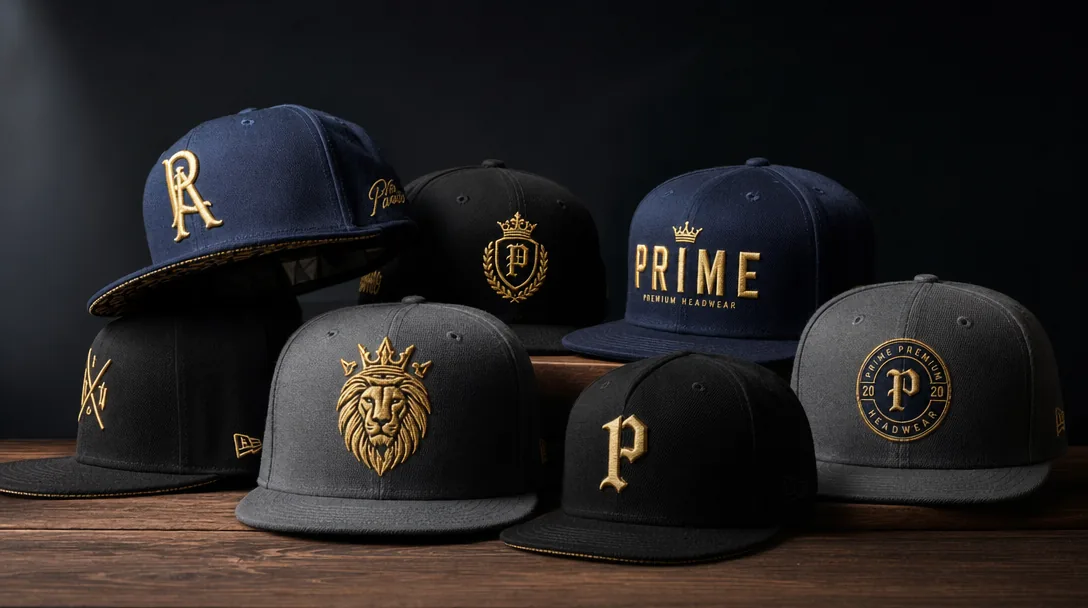
China vs Vietnam vs Bangladesh: Cap Manufacturing Countries Compared 2026 (2026 Update)
Read article →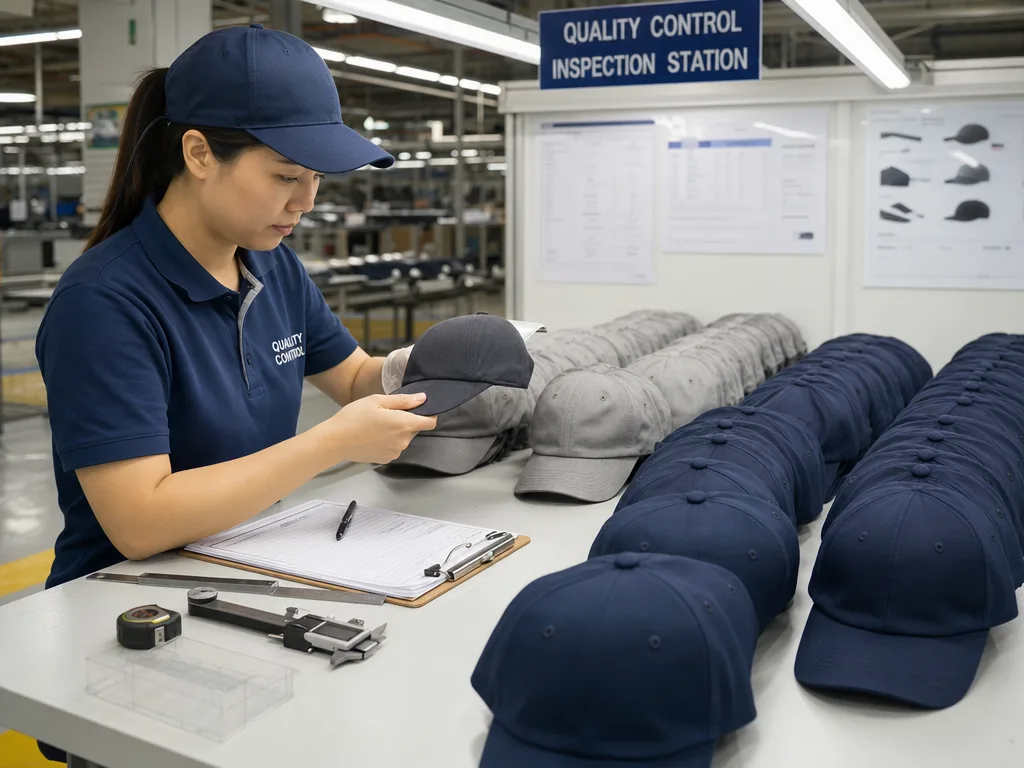
Cap Sample Cost Negotiation Without Losing Quality Control
Read article →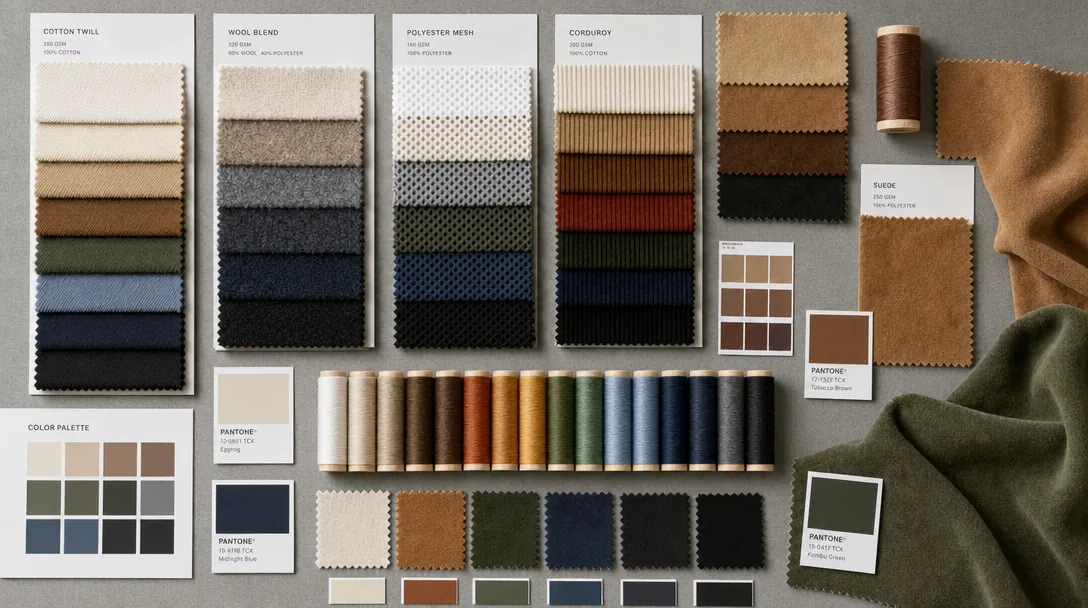
Cotton Twill Baseball Cap: Properties, Costs and How to Spec It Right
Read article →If you are ready to take the next step on custom embroidered patches: when to use it, costs, and what to ask your factory - 2026 buyer's guide, our team can put a tailored quotation and digital mock-up in your inbox within 24 hours. Send the inquiry form on our contact page or message us directly on WhatsApp.