
Custom Cap Closure Options and Cost: Snapback, Strap, Buckle - Supplier Checklist - 2026 Buyer's Guide
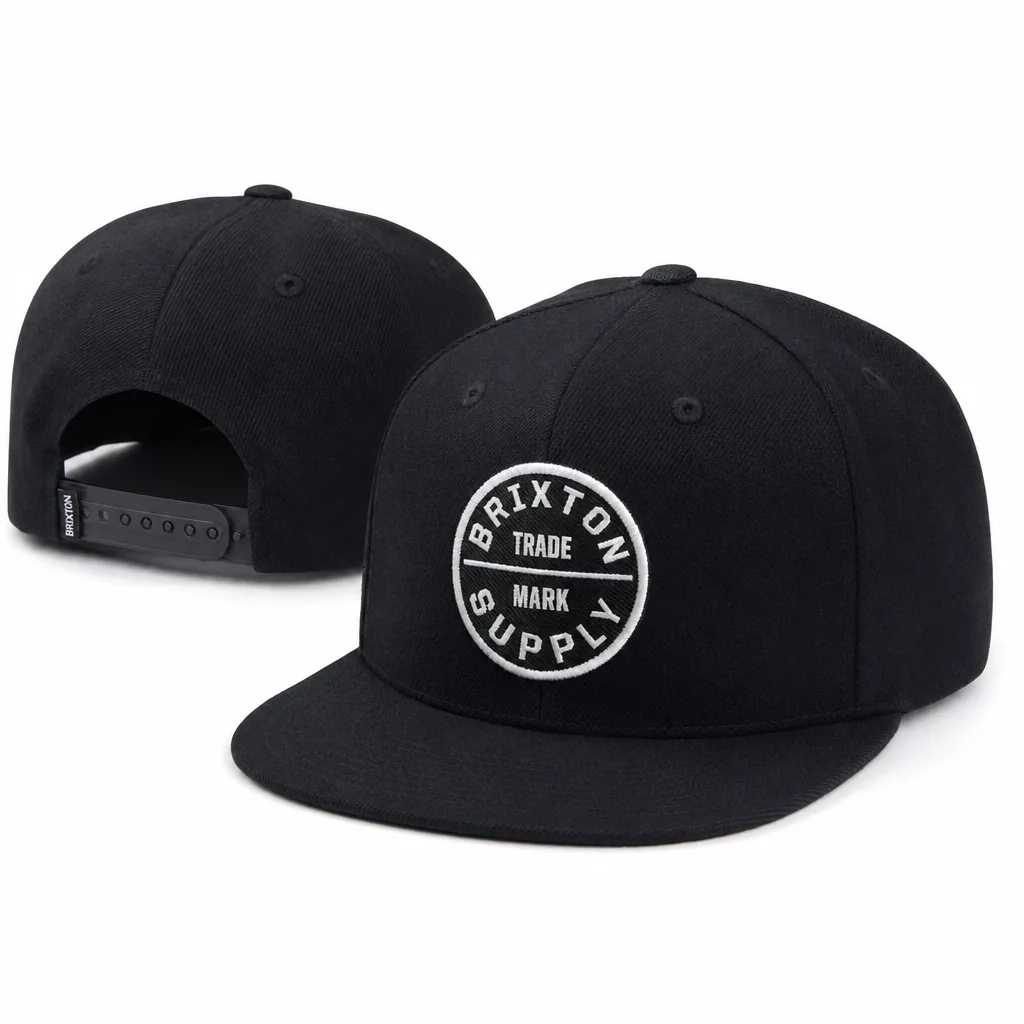
For brand owners, wholesalers and procurement teams entering the custom headwear category, custom cap closure options and cost: snapback, strap, buckle - supplier checklist - 2026 buyer's guide is one of the highest-leverage decisions you will make. Get it right and your unit economics, retail story and reorder cycle all improve. Get it wrong and you carry the cost for years.
What custom cap closure options cost means in real production
The back closure is not a minor trim decision; it changes BOM, line speed, and trim MOQ more than many buyers expect. In real factory costing, custom cap closure options cost comes from three places: the closure itself, sewing minutes at the back-opening station, and the inefficiency of buying non-stock hardware. A standard 7-hole PP snap set in black, white, or navy usually costs $0.06 to $0.12 per cap at 3,000 pieces, with low waste and fast attachment on a basic 6-panel line. A 20 mm polyester webbing strap with plastic tuck, tri-glide, or D-ring usually lands at $0.18 to $0.32 because the operator must cut, heat-seal, fold, position, and bartack the strap in sequence. Genuine leather, split leather, or PU straps with embossed logos and plated buckles typically run $0.45 to $0.90 before rejects, and that reject rate matters: edge paint inconsistency, buckle scratches, and color variation can push trim loss from 1.5% on snaps to 4% to 7% on premium straps. Metal hardware is where quotes drift if the RFQ is vague. Zinc-alloy clasp sets, brass sliders, and logo-stamped buckles often come from separate trim vendors with 500 to 2,000 sets MOQ per finish, and custom dies usually add $60 to $180 per logo, sometimes more for deep emboss or dual-sided marks. Attachment labor also changes by cap structure. On an unstructured 5-panel, a 20 mm strap can distort the rear opening if bartacks drift even 2 mm, so the line runs slower and QC catches more puckering. On our standard practice, snapbacks can run 12% to 18% faster than strap closures on the same sewing line because they feed more consistently and require fewer manual alignment checks. If you are comparing quotations, ask whether the supplier priced stock trims, dyed-to-match trims, or custom-finished hardware; that single distinction can swing the closure package by $0.10 to $0.35 per cap.
The RFQ needs five points locked in writing: material, dimensions, branding method, color standard, and attachment construction. “PU strap” is not a usable spec. A 1.6 mm PU on microfiber backing with raw edge behaves differently from 2.0 mm PU with folded edge and water-based topcoat, both in stitching and in wear. For woven straps, specify exact construction such as 20 mm 600D polyester webbing, 16 mm cotton herringbone tape, or 18 mm nylon twill; each has different thickness, friction, and feed stability under the presser foot. If the closure must match body fabric, woven labels, or sweatband branding, call out Pantone TCX and a realistic Delta-E tolerance. Dyed plastic usually holds color tighter than electroplated metal, while antique brass, gunmetal, and matte nickel can vary noticeably lot to lot. Most expensive surprises happen in development rather than bulk production. A stock snapback needs little engineering time, but a rear strap with inserted woven label, laser-engraved buckle, hidden tuck, and branded flag tag adds approvals, setup, and more AQL 2.5 checkpoints. On runs under 500 pieces per color, factories often bury inefficient labor, mold amortization, or logo-tooling recovery into the unit price, which is why sample and bulk quotes rarely scale cleanly. Ask for separate lines for buckle mold, die stamping, laser engraving, hand assembly, and spare trim stock. Also confirm compliance if the goods are retail or licensed: CPSIA and REACH for metal parts, needle-policy controls, and whether the trim source is covered under sedex-audit-cap-supplier-guide.html">BSCI 2.0 or Sedex SMETA 4-Pillar documentation. That is how you evaluate custom cap closure options cost as a repeat-production issue, not just a one-time quote.
Specs to request before a quote
A usable quote starts with measurable closure specs, not labels like “snapback” or “metal buckle.” Ask for closure type, finished strap width, cut length before fold, adjustment range, hole count and pitch, male/female snap thickness, and the distance from closure set point to sweatband seam. A standard adult 7-hole PE snap usually lands around 85-90 mm assembled width with an 18-20 mm tab; a self-fabric tuck strap is commonly cut at about 160 x 20 mm before turn-and-topstitch; nylon webbing straps are often 18, 20, or 25 mm depending on crown scale. For leather and PU, specify thickness in millimeters and whether it is split, bonded, or microfiber-backed. Split cowhide at 1.8-2.2 mm behaves very differently in folding and edge paint from 0.9-1.1 mm PU running through a tri-glide. If you want clean comparisons on custom cap closure options cost, also request resin grade for plastic snaps, base metal for buckles, plating type, and corrosion target. Iron hardware with flash plating can save $0.03-$0.06 per cap, but it often struggles at 24-hour salt spray; zinc alloy with nickel-free electroplating is usually the safer export spec for only a few cents more.
Material specs without tolerances just push the supplier to build risk into the price. State the closure material separately if it differs from the crown: 100% cotton twill 260 gsm, recycled polyester canvas 300 gsm, nylon webbing 420D, or acrylic herringbone strap. For color-managed programs, provide Pantone TCX or TPX references and an acceptable shade tolerance; on decent trim mills, Delta-E under 1.5 is realistic for stock-dyed trims, while piece-dyed straps are usually safer at Delta-E under 2.0. If the back arch carries decoration, send AI or PDF vectors for woven labels and artwork, or DST/EMB files if digitizing already exists. Rear embroidery around the opening affects closure placement, bartack spacing, and topstitch balance, especially on low-profile 6-panel caps run on Tajima, Barudan, or ZSK cap frames where the back curve is tight and stitch count has to be controlled.
Packing and QC specs change the real quote more than most buyers expect, especially on buckle, leather, and tri-glide styles. Spell out whether you need individual polybags, tissue stuffing, silica gel, barcode stickers, suffocation warning text, hangtags, or e-commerce inner packs. Standard export cartons for caps are often 60 x 45 x 45 cm, but packing density should match the closure: PE snaps tolerate tighter nesting, while metal buckles and thick leather straps create pressure points that can bruise buckram, mark adjacent crowns, or distort the back opening if the carton is overfilled. On inspection, never accept “factory standard.” Specify AQL 2.5 major / 4.0 minor, needle control, pull-test requirement for rivets and snaps, and defect criteria for plating scratches, loose hardware, skewed bartacks, off-center straps, and uneven hole pitch. Our standard practice is to lock those points before sampling, because missing QC language at quote stage is exactly how closure claims show up after shipment rather than before bulk approval.
Factory risks and quality checks
Most closure failures are trim-matching problems, not sewing-speed problems, and they distort the real custom cap closure options cost fast. The defects are repeatable: snap strips from different mold families that feel interchangeable in the warehouse but either bind or release too easily on the line, rear-arch seams drifting 2-4 mm off center, strap cut lengths missing spec by more than 5 mm, and obvious shade mismatch between shell fabric, sweatband tape, and closure webbing. On snapbacks, low-grade PP or brittle recycled resin snaps often fracture after 20-30 open/close cycles, especially after winter storage below 5°C or long container transit. Saving $0.02-$0.04 per cap on the snap strip can easily create a 7-10 day remake, plus sorting labor and emergency airfreight at $4-$6/kg. On webbing or self-fabric straps, the hidden failure is slippage under load: an undersized tri-glide, shallow serrations, or over-calendered tape can let the strap creep 8-15 mm after packing and wear testing.
A workable control plan separates function from cosmetics and starts before bulk sewing. Approve a closure board first: exact snap strip, buckle finish, webbing or self-fabric strap, eyelet, rear label position, seam construction, and stitch count signed against the tech pack. Then run first-piece approval on the first 20 caps, hourly inline patrols, and final inspection at AQL 2.5, with closure faults classified correctly. Broken snap pegs, strap slippage, off-center closure, and plating rub-through are major defects; they should not be buried as minor appearance issues. For metal hardware, write the spec down: black nickel, matte silver, or antique brass plating, with 48-hour neutral salt spray minimum for basic retail and 96 hours for golf, marine, or humid teamwear programs, where edge corrosion shows first. Fabric and tape colors should be approved to Pantone TCX under D65 light, with Delta-E under 1.5 for premium runs and under 2.0 for promo orders. Our standard practice is to pull-test strap stitch boxes to 12-15 kgf and hold closure centering to ±2 mm before packing.
The lowest-risk workflow is closure-first approval, not full-cap-first approval, because once crowns are sewn the expensive mistakes are already locked in. Require a pre-production sample using the exact production trims, and if adult and youth sizes are both in the order, ask for a size set as well. The back-opening radius changes with crown size, and that is where rear embroidery crowding, seam skew, and closure mis-centering show up. Lock tolerances in writing: finished strap length ±5 mm, minimum 6 mm embroidery clearance from the rear seam, no needle marking on PU or coated 210D nylon, and 1%-2% spare closures packed by color for field repairs. If embroidery is close to the back opening, check it on actual machines—Tajima, Barudan, and ZSK heads behave differently around bulky seams. A supplier that waits until final assembly to test snap compatibility or buckle grip is already gambling with your ship date.
MOQ, lead time, and cost drivers
MOQ is where custom cap closure options cost stops being theoretical and becomes arithmetic. Stock PP snap closures in black, white, or common Pantone-adjacent colors can often run at 144-300 pcs per colorway because the 7-hole tab, socket, and pegs are shared trims already sitting in trim inventory. Once you ask for a custom injection mold, embossed logo on the tab, translucent resin, or a Pantone TCX match, the setup cost moves from pennies to tooling: $250-$800 for a simple mold revision, and suppliers usually need 3,000-10,000 closure sets to keep the unit adder under control. Metal hardware is less MOQ-heavy but not cheap. A stock antique brass slider, D-ring, or single-prong buckle usually adds about $0.18-$0.35 per cap; engraved hardware, logo plates, or debossed PU and split-leather straps push that to roughly $0.65-$1.40 before attachment labor. Packing also changes the landed math. A structured 6-panel cap packed 24 pcs per inner and 144 pcs per master carries more cube and more deformation risk than an unstructured dad cap packed 180-200 pcs per carton, so the same closure upcharge does not produce the same delivered unit cost.
Lead time is usually controlled by trim readiness and back-strap finishing, not by whether the buyer chose snapback or strapback. A basic stock snap closure is the fastest route: trim booking 3-5 days, production 18-25 days under normal line loading, then final inspection at AQL 2.5 before FOB booking. Strapbacks take longer because the strap is a separate process path: cutting, edge folding, topstitching, hardware feeding, bartacking or lockstitch attachment, and symmetry checking. A washed cotton twill strap with tuck-in loop and custom metal buckle typically adds 7-12 days. If the strap is genuine leather, buyers should also budget compliance and color-control time for REACH review, California Proposition 65 screening where required, and approval against lab dips or strike-offs; for visible trims, a practical Delta-E tolerance is usually under 1.5-2.0 from the master standard. The most common quoting mistake is blending trim, labor, test, and freight into one vague ex-factory number. In Zhejiang, closure attachment labor alone is often $0.06-$0.22 per cap depending on machine handling versus hand feeding. Nickel-free or nickel-release verification on metal parts adds about $80-$150 per style, and any retailer-requested pull or fatigue test is small but real. At CrownsForge, late-arriving closures are treated as line stoppers because caps can be fully embroidered on Tajima or Barudan heads and still miss vessel cutoff waiting on one buckle carton.
How CrownsForge manages this order type
The biggest cost leak in custom cap closure options cost is approving the body sample before the closure spec is frozen. We lock the closure on a dedicated tech-pack page before counter-sample signoff: strap width, rear opening width, hole pitch, snap post count, buckle finish, webbing denier, thread ticket, and Pantone TCX for every visible part. Tolerances are written, not guessed: typically +/-1.5 mm on strap cut length, +/-2.0 mm on back-arch opening, and +/-0.5 mm on buckle position from center back. If the closure is branded, we also define mold ownership, logo depth, cavity count, resin grade, plating standard, and whether replacement hardware must come from the same approved vendor. That discipline matters because a stock 7-hole PP snap and a custom molded logo snap are not interchangeable once fit, color, and tooling are tied to the approved sample. The actual cost swing is usually small per cap but large across a PO. A standard plastic snapback in matched color might add only $0.03-$0.06 over a basic self-fabric tuck strap, while a custom injection snap typically adds $0.08-$0.28 per cap plus 12-18 calendar days for tooling. Die-cast buckles are where buyers get surprised: custom molds commonly run $180-$400, and plated finishes such as black nickel or antique brass need a finish card signed against the lab dip, not a phone photo. At CrownsForge, we build approval samples using the same shell fabric, buckram, sweatband construction, and hardware family planned for bulk, because a closure that feels balanced on 260 gsm brushed twill can pull or collapse on 180 gsm chino, and a 1.2 mm leather strap behaves nothing like PU.
Sampling is only useful if production can repeat it. Rear embroidery, seam bulk, and closure assembly have to be engineered together, especially on 6-panel structured caps where the back arch sits close to seam intersections. On Tajima, ZSK, or Barudan heads, digitizing around the rear opening changes once the crown is formed, so we account for frame clearance, needle path distortion, and reinforcement under the closure seam before approving the sew file. The pre-production file set should be complete and revision-controlled: approved comments, BOM, closure strike-off, buckle finish swatch, snap color chip, barcode position, carton ratio, and exact closure orientation. Factories that manage this through scattered chat screenshots usually miss practical points like buckle tongue direction, tuck-loop position, or hook-and-loop overlap length. Bulk control should be functional first, cosmetic second. We check centering, bartack density, edge sealing, usable size range, and hardware performance inline, then audit finished goods at AQL 2.5 unless the buyer sets a tighter plan. Snap closures must engage cleanly through the approved size range without accidental release; hook-and-loop needs consistent peel, straight die-cut edges, and no exposed hook scratch points; metal buckles are checked for burrs, plating rub, and finish consistency against the approved master. For black nickel, gunmetal, and antique brass, we normally ask the hardware supplier for basic salt-spray verification because weak plating is where sweat corrosion complaints start. Reorders need the same control: archived molds, plating swatches, vendor records, and color standards. Otherwise cost drifts quietly through substituted PP resin, off-shade webbing beyond Delta-E 1.5, or a buckle vendor change that alters fit even when the cap body stays the same.
Frequently Asked Questions
Do you support sustainability certifications?
Yes. We work with GOTS organic cotton, GRS-certified recycled polyester, OEKO-TEX Standard 100 fabrics, and are BSCI and Sedex audited. Certification documentation can be provided per order.
Can I order a sample before bulk production?
Yes. We strongly recommend approving a pre-production sample before mass production. Samples are charged at 35 to 60 USD each plus express shipping, fully refundable against confirmed bulk orders over 500 pieces.
What logo decoration techniques do you offer?
3D puff embroidery, flat embroidery, woven patch, leather patch, PVC patch, screen printing, sublimation, applique and laser etching, all in-house with no subcontracting.
What file format should I send for my logo?
Vector files (AI, EPS, PDF) are ideal. High-resolution PNG or JPG at 300 dpi on transparent background works as a fallback. Provide Pantone color references for accurate reproduction.
What is the minimum order quantity (MOQ) for custom hats?
Our standard MOQ is 100 pieces per design and color, with sampling available from 1 piece. For complex multi-color logos or premium fabric upgrades, the MOQ can be lowered with a small per-piece surcharge.
How do I find a reliable custom waterproof cap manufacturer?
When evaluating custom waterproof cap manufacturer, the key considerations are construction quality, decoration capability, MOQ flexibility and lead time. Explain custom cap closure options cost in the context of a custom headwear RFQ, with the production details a buyer should verify before sampling. Cover dimensions, materials, tolerances, decoration files, carton requirements, AQL level, and the evidence a capable factory should provide.
How much does branded bills custom hat cost typically cost?
When evaluating branded bills custom hat cost, the key considerations are construction quality, decoration capability, MOQ flexibility and lead time. Explain custom cap closure options cost in the context of a custom headwear RFQ, with the production details a buyer should verify before sampling. Cover dimensions, materials, tolerances, decoration files, carton requirements, AQL level, and the evidence a capable factory should provide.
How do I find a reliable custom hat manufacturer usa?
When evaluating custom hat manufacturer usa, the key considerations are construction quality, decoration capability, MOQ flexibility and lead time. Explain custom cap closure options cost in the context of a custom headwear RFQ, with the production details a buyer should verify before sampling. Cover dimensions, materials, tolerances, decoration files, carton requirements, AQL level, and the evidence a capable factory should provide.
How does ordering custom embroidered snapback hat work?
When evaluating custom embroidered snapback hat, the key considerations are construction quality, decoration capability, MOQ flexibility and lead time. Explain custom cap closure options cost in the context of a custom headwear RFQ, with the production details a buyer should verify before sampling. Cover dimensions, materials, tolerances, decoration files, carton requirements, AQL level, and the evidence a capable factory should provide.
Looking for a reliable hat manufacturer in China?
CrownsForge has produced custom hats for 800+ brands across 40 countries. From 100-piece launches to 100,000-piece retail programs, we deliver on time and on spec.
Get in touchRelated guides
Baseball Caps Canada: A Vertical-Specific Sourcing Guide
Read article →
Refreshing a Hat Collection: A Repeat-Order Playbook for Established Brands (2026 Update)
Read article →Funny Bucket Hats: A Vertical-Specific Sourcing Guide
Read article →We hope this guide demystifies custom cap closure options and cost: snapback, strap, buckle - supplier checklist - 2026 buyer's guide and helps you move forward with confidence. If you have questions specific to your project, our English-speaking sales engineers are one message away.