
Cotton vs Polyester vs Wool: A Cap Fabric Decision Tree - Supplier Checklist
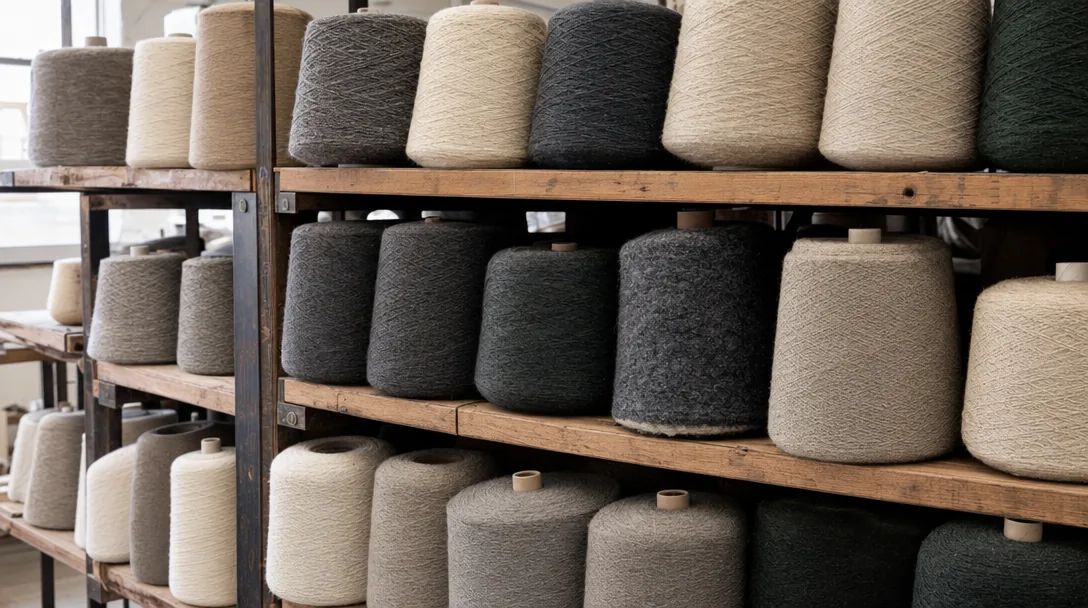
For brand owners, wholesalers and procurement teams entering the custom headwear category, cotton vs polyester vs wool: a cap fabric decision tree - supplier checklist is one of the highest-leverage decisions you will make. Get it right and your unit economics, retail story and reorder cycle all improve. Get it wrong and you carry the cost for years.
The three dominant cap fabric families
Three fabric families dominate cap production because they are the only ones that stay predictable across cutting, sewing, embroidery, pressing, and AQL 2.5 inspection: cotton, polyester, and wool blend. In a typical export factory, those three account for roughly 90% of unit volume. Cotton usually means 100% brushed twill at 260-320 gsm or canvas around 8-10 oz, with a matte face, higher moisture regain, and cleaner uptake in pigment or reactive dyeing. Polyester is more standardized: woven twill at 150-220 gsm, or performance microfiber built from 75D-150D filaments, giving a smoother surface, lower water absorption, and better crown stability after heat setting. Wool is rarely pure wool in mass programs; the workhorse is 80/20 acrylic-wool for structured snapbacks, while premium runs may use 100% melton wool at 380-450 gsm when a denser hand and firmer visor wrap are worth the extra cost.
The real cotton vs polyester cap decision is process behavior under actual wear, not catalog language. Cotton is easier to sew, softer out of the box, and usually tracks Pantone TCX shades more naturally, but dye-lot discipline matters; if front panels and visor pieces come from mixed lots, a Delta-E above 1.5 will show under retail LEDs. Polyester is the safer call for team, golf, workwear, and promo caps that face sweat, UV, and repeat washing, because it holds dimensions better, dries faster, and resists panel torque after fusing. On Tajima or Barudan heads, poly twill and microfiber also give cleaner embroidery under dense fills or 3D satin columns, with less visible needle cutting than lightweight cotton, assuming backing is matched correctly.
Wool blend still earns its place because structure cannot be faked cheaply with finishing alone. An 80/20 acrylic-wool shell supports a high-profile crown, recovers better after carton compression, and carries raised embroidery with fewer ripples than washed cotton twill. At scale, the surcharge is usually manageable: a wool-blend snapback often lands only $0.40-$0.90 higher than standard cotton twill, while 100% melton can add $1.20 or more depending on mill source, MOQ, and color count. That cost gap is also why fabrics like corduroy, denim, faux suede, or ripstop nylon stay niche in commercial programs; they look distinctive, but they complicate shrinkage control, visor wrapping, and shade consistency during final inspection. For most buyers, these three families cover the real commercial options before fashion fabrics start adding risk instead of value.
When cotton wins
Cotton wins when the customer judges the cap in the first three seconds by hand-feel, drape, and washed appearance—not by moisture-wicking claims. In a cotton vs polyester cap decision, 220 to 260 gsm cotton twill is still the safest bet for streetwear, resort, and casual retail because it gives a matte surface, softer break, and more convincing garment-washed character than most 75D to 150D polyester shells. Brushed twill, peach finish, and enzyme-washed cotton all create immediate tactile value without relying on oversized patches or metal trims to fake a premium look. On the factory floor, this matters most on unstructured 6-panel dad hats, low-profile baseball caps, and relaxed strapbacks, where a crisp synthetic face cloth makes the crown look cheap and overbuilt. At 500 to 1,000 pieces, a basic custom cotton cap typically lands around $2.20 to $3.40 FOB China depending on closure, embroidery count, and wash level, which is still a realistic range for programs that need retail credibility without pushing cost into premium territory. Cotton also behaves better for casual embroidery when the cap is engineered for softness instead of treated like a structured polyester blank. A 230 to 255 gsm cotton twill paired with matched front-panel fusing and 35 to 40 gram cutaway backing will usually hold satin columns and fill areas cleaner than lightweight polyester, especially on lettering above 4 mm and standard stitch densities around 0.35 to 0.40 mm on Tajima or Barudan heads. You get less panel torque, less needle bounce, and fewer post-wash puckering claims, provided the digitizing file is built for a soft crown and not copied from a high-crown athletic shape. Where cotton loses is heat and sweat: golf events in August, race merch, and outdoor promotions where salt marks, slower drying, and shrinkage become actual complaint drivers. For washed black, khaki, olive, and muted Pantone TCX earth tones, though, a practical shade variance around Delta-E 1.5 to 2.0 often reads as intentional character rather than a defect, which is exactly why cotton remains the right retail fabric in this category.
When polyester wins
Polyester wins when the cap has to handle sweat, sun, and repeat washing without losing shape. For golf tournaments, run clubs, fishing brands, and team-issue programs, a 100% polyester or rPET shell at 120 to 180 gsm will usually dry far faster than a 260 to 320 gsm cotton twill, and it holds crown structure better after long-haul summer transit where carton interiors can spike past 50°C. In a real cotton vs polyester cap decision for hot-weather or active use, that performance gap is hard to ignore: polyester absorbs less moisture, sheds it faster, and is less prone to brim distortion after repeated soak-dry cycles. The better executions are not commodity poly twill. They use 75D to 150D microfiber or ripstop shells, laser-perforated side panels, and birdseye or mesh-knit sweatbands that move moisture off the forehead instead of letting it pool at the seam tape. Polyester also gives buyers more control over color and graphics. If the artwork relies on sublimation, neon gradients, sponsor-heavy side panels, or all-over camo, high-poly surfaces are the safe option because cotton cannot match the same saturation or registration. On solid-dyed polyester, mills commonly work to Delta-E below 1.5 against an approved Pantone reference, and sublimated panels generally outperform pigment-printed cotton on wash and light fastness. That matters for esports merchandise, outdoor capsules, and promo orders where reorder consistency is non-negotiable. The caution is embroidery: ultralight microfiber below 140 gsm can pucker under dense fills unless the design is digitized for the fabric, backing is matched to panel stability, and the machine setup is tightened properly. On Tajima or Barudan heads, that usually means lighter underlay, reduced stitch density, and a smaller needle than you would run on cotton twill.
Recycled polyester is no longer a compromise fabric; in many sports and outdoor programs it is now the baseline. rPET made from post-consumer bottles typically costs about 8 to 18% more than conventional polyester at the fabric line, depending on denier, finish, MOQ, and whether the mill provides GRS transaction certificates lot by lot. Buyers should ask for more than a recycled claim. The useful checkpoints are colorfastness to perspiration, crocking, seam slippage, and wash stability, because lightweight performance caps fail in predictable ways: side seams grin, sweatbands bleed, and front panels telegraph embroidery distortion when the base fabric is too soft for the stitch count. Our standard practice is to review both fabric test data and the embroidery area construction before bulk approval, because recycled content does not fix a weak cap build. The buying logic is simple. If the brief is performance first, vivid graphics second, and low-maintenance wear over a long season, polyester is usually the right answer. It is especially effective for unstructured six-panel runners, perforated rope caps, and technical snapbacks that need to stay light, resist fading, and recover after being stuffed into a gym bag. Cotton still has the better natural hand and heritage look, but that is a different brief. In an honest cotton vs polyester cap comparison, polyester earns its place when the end user will sweat in it, wash it, crush it, and still expect the cap to look retail-clean after months of wear.
When wool blend wins
An 80/20 acrylic-wool melton wins when the cap needs a tall, structured crown that still looks expensive after blocking, embroidery, packing, and retail handling. For pro-style snapbacks and fitteds, cap-grade melton at 380-450 gsm gives you the density to hide front-panel seam grin, hold a clean visor break, and keep the crown from collapsing the way 220 gsm brushed polyester or 260-280 gsm cotton twill often does. In a standard cotton vs polyester cap discussion, both fabrics can be serviceable, but neither gives the same combination of loft, surface depth, and shape retention buyers expect on heritage sports product, licensed team programs, or fall streetwear. If melton drops much below about 360 gsm, the face starts reading flat and the crown loses that firm, shelf-ready profile buyers are actually paying for. Embroidery is where the wool blend surcharge usually makes sense. A stable melton face takes satin columns, tatami fills, and 3D foam embroidery with less puckering because the front panel resists hoop distortion better than softer cotton canvas or lightweight poly. On Tajima or Barudan machines, structured melton fronts usually sew cleaner at 650-750 spm for logos around 8,000-12,000 stitches, especially with dense edge runs and tight inside corners. Pair it with 0.8-1.2 mm PE-coated buckram and the cap will hold its front profile through carton pressure and ocean transit better than most softer builds. That is the practical reason wool blend stays relevant: not nostalgia, but cleaner embroidery definition and more reliable crown memory.
The tradeoff is cost, heat, and narrower use-case. In China, melton typically adds about $0.35-$0.80 per cap over basic cotton chino twill or standard brushed polyester, and darker heathers usually need stricter lab dip control to stay within Delta-E 1.5 of the approved shade. Wool blend also absorbs more moisture than polyester, dries slower after light rain, and wears warmer on head, so it is a poor fit for summer giveaways, golf programs, or price-driven promo orders where FOB has to stay under a hard ceiling. If the target is lightweight comfort or easy-care performance, melton is usually solving the wrong problem. The right way to specify wool blend is by silhouette and sales channel, not by nostalgia about “premium” fabric. Use it when the brief calls for a high crown, a firm hand, retail-grade embroidery, and cold-weather positioning; skip it when the customer wants breathable daily wear, washed texture, or low-maintenance performance. A generic cotton vs polyester cap comparison misses that distinction because wool blend is not competing on versatility. It is competing on structure. For structured retail programs, team-style snapbacks, and fall/winter capsules, melton still earns its place because the fabric itself helps the cap keep value on the shelf, not just on the spec sheet.
Cost differential and retail positioning
Fabric cost matters less than buyers think; the bigger lever is whether the material story matches the retail lane. On a standard 6-panel structured cap, 210-220 gsm cotton twill remains the clean benchmark in East China because Zhejiang and Jiangsu mills keep both greige and reactive-dyed programs running with short replenishment cycles. In real FOB costing, upgrading from baseline 6.5 oz cotton twill to 7.5 oz brushed twill or enzyme-washed cotton usually adds just $0.20-$0.40 per cap, assuming normal marker utilization and self-fabric underbill. That is why cotton still dominates promotional and mid-price programs: the hand feel improves, the embroidery run stays stable on Tajima or Barudan heads, and the retail jump can exceed the factory delta by 4x to 6x. A cotton vs polyester cap decision gets mispriced all the time because buyers compare commodity polyester to finished performance polyester. Plain 150D polyester twill can land near cotton, but once you specify peach finish, moisture-wicking chemistry, laser-perforated side panels, or recycled GRS-certified yarns, the add-on is typically $0.25-$0.55 per cap over basic cotton. That extra spend buys faster drying, better crown recovery, and lower sweat staining, but it also changes sewability and embroidery behavior; high-density logos on slick polyester often need underlay adjustment and tighter thread tension to avoid puckering. In our standard practice, performance polyester earns its margin in teamwear, golf, and active retail, not in price-driven giveaway programs where the end user will not pay for technical specs they cannot feel immediately.
Wool only works when the customer is prepared to merchandise texture, seasonality, and a more premium silhouette. A 20/80 wool-acrylic blend generally adds $0.80-$1.20 per cap over basic cotton twill, while 100% wool melton is more commonly $1.50-$2.30 higher once you account for lower cutting yield, brushing loss, and stricter shade approval. Wool also narrows your tolerance window: bulk lots should normally stay within Delta-E 1.0-1.5 to the signed lab dip, because black, charcoal, and forest tones drift visibly under retail LED lighting. If the factory is audited to AQL 2.5, wool caps also tend to generate more attention on panel shading, seam grin, and crown shape retention than cotton or polyester programs. The retail spread is far wider than the factory spread, which is why fiber choice should be tied to channel before sampling starts. A cap with only $0.40 more in fabric cost can usually support a $6-$12 higher retail if the material creates a credible shelf story, whether that is recycled polyester for licensed team programs or melton wool for fall streetwear drops. Cotton twill still wins where price discipline and broad color continuity matter most; polyester performs best when the sell sheet leads with moisture management and durability; wool belongs in fashion accounts that merchandise caps next to outerwear, not low-cost tees. That is the commercial reality behind cotton vs polyester cap positioning: the right fabric is the one the retailer can explain in one sentence and the end customer can justify in one purchase.
Decoration receptiveness by fabric
Decoration is where a cotton vs polyester cap decision becomes visible in seconds. Midweight cotton twill remains the easiest substrate for consistent embroidery: 10 oz twill, typically 260-280 gsm, on a structured 6-panel front with 1.2-1.5 mm buckram gives clean needle penetration and stable thread lay on Tajima or Barudan heads. In production terms, that means sharper satin columns, less flagging, and better readability on small copy; as a practical limit, text under 4 mm usually holds more cleanly on cotton twill or canvas than on lightweight polyester. Cotton also accepts flat embroidery, 3D puff, woven patches, direct appliqué, and leather patches with fewer machine adjustments than most synthetics. Its weak point is fiber bloom: brushed, peached, or enzyme-washed cotton can fuzz along stitch edges after wash testing, so digitizing normally needs firmer underlay, a slight density increase, and a sew-out on actual bulk fabric rather than stock swatches.
Polyester is narrower in its sweet spot but unbeatable for the right decoration method. Sublimation works only on white or very light polyester and usually needs a shell with at least 65% polyester content; cotton will not take disperse-dye transfer, and wool is the wrong base entirely. For embroidery, TPU patches, heat-seal badges, silicone transfers, and some screen print applications, 150D-300D performance polyester with a PU coating performs well, but press settings are less forgiving than cotton. Once platen temperature moves past roughly 145-155°C, you start seeing glazing, shrinkage, or front-panel distortion, especially on low-profile unstructured caps. Dark polyester also brings dye migration risk: apply white twill or light transfers without a blocker layer and the logo can shift pink, gray, or beige after pressing. Wool melton, usually 20-24 oz, gives the best visual depth for 3D puff, dense tatami fills, and bold satin borders, but it needs slower head speeds—around 650-750 rpm instead of 850-900 rpm—plus lower presser-foot pressure to control pile drag and stitch sink. On wool, a pre-production sew-out checked for edge clarity and registration against AQL 2.5 standards is cheap insurance; in most factories that adds only about $30-50 per style and saves far more than a failed bulk run.
Sustainability framing
Certification is the part buyers can actually defend; fiber marketing is not. In a cotton vs polyester cap decision, the sustainability claim has to survive retailer compliance, customs checks, and licensee paperwork, not just a hangtag. “Eco cotton” means nothing if the factory cannot show scope certificates, transaction certificates, and lot traceability back to the spinner or recycler. GOTS covers organic fiber content plus restricted chemistry and processing controls across the textile chain. GRS verifies recycled input, chain of custody, and chemical and social requirements for rPET programs. RWS is narrower: it addresses animal welfare and land management for wool, but it does not certify dyehouse wastewater, trims, or the full cap bill of materials. Ask for the certificate number, certified percentage by weight, and a written statement showing whether the claim includes shell fabric only or also sweatband, seam tape, buckram, visor board, closure strap, and sewing thread. At CrownsForge, our standard practice is to break certified and non-certified components out line by line so the final claim matches the BOM instead of overstating it on packing lists or hangtags.
The surcharge is usually modest until the certified scope and MOQ collide with a mixed-material cap. Moving from conventional 240-280 gsm cotton twill to GOTS-certified organic twill commonly adds $0.18-$0.45 per cap at 3,000-10,000 pieces, assuming standard reactive dyeing and no low-volume custom Pantone TCX development. GRS-certified 300D or 600D recycled polyester usually adds $0.12-$0.35, but that can jump if the mill requires a full-color lot or separate transaction certificate by shipment. RWS wool blends are less forgiving, often adding $0.30-$0.80 because cost moves with micron grade, blend ratio, and seasonal grease wool prices. Performance still matters. Recycled polyester is the safer choice for lightweight 5-panels, outdoor promos, and teamwear because it holds shape better under sweat, abrasion, and repeated packing. Cotton still gives cleaner stitch definition for dense front logos on Tajima or Barudan heads, especially on structured 6-panel caps. Wool needs the tightest process control: pre-test shrinkage, set an approved bulk standard, and define acceptable shade variance up front, typically within Delta-E 1.0-1.5 under D65 lighting, or the sustainability story gets lost in avoidable quality claims.
Frequently Asked Questions
What logo decoration techniques do you offer?
3D puff embroidery, flat embroidery, woven patch, leather patch, PVC patch, screen printing, sublimation, applique and laser etching, all in-house with no subcontracting.
Can I order a sample before bulk production?
Yes. We strongly recommend approving a pre-production sample before mass production. Samples are charged at 35 to 60 USD each plus express shipping, fully refundable against confirmed bulk orders over 500 pieces.
What is the minimum order quantity (MOQ) for custom hats?
Our standard MOQ is 100 pieces per design and color, with sampling available from 1 piece. For complex multi-color logos or premium fabric upgrades, the MOQ can be lowered with a small per-piece surcharge.
Which shipping methods do you support?
We support FOB, CIF and DDP shipping. Air express for samples and small orders, sea LCL for 100 to 500 pieces, sea FCL for 5,000+ pieces. Door-to-door DDP available for US, EU, UK, Canada and Australia.
What file format should I send for my logo?
Vector files (AI, EPS, PDF) are ideal. High-resolution PNG or JPG at 300 dpi on transparent background works as a fallback. Provide Pantone color references for accurate reproduction.
What's the MOQ for custom embroidered trucker hats no minimum?
When evaluating custom embroidered trucker hats no minimum, the key considerations are construction quality, decoration capability, MOQ flexibility and lead time. Cotton (woven twill or canvas), polyester (woven twill or microfiber performance), and wool blend (typically 80/20 acrylic-wool or 100% melton). 95% of custom caps fall into one of these three families; specialty fabrics (corduroy, denim, suede, nylon ripstop) appear in 5% of orders. Cotton twill 6.4-7.5 oz is the streetwear and casual retail default. Soft hand-feel, takes…
What's the MOQ for custom embroidered baseball caps no minimum?
When evaluating custom embroidered baseball caps no minimum, the key considerations are construction quality, decoration capability, MOQ flexibility and lead time. Cotton (woven twill or canvas), polyester (woven twill or microfiber performance), and wool blend (typically 80/20 acrylic-wool or 100% melton). 95% of custom caps fall into one of these three families; specialty fabrics (corduroy, denim, suede, nylon ripstop) appear in 5% of orders. Cotton twill 6.4-7.5 oz is the streetwear and casual retail default. Soft hand-feel, takes…
How does ordering custom trucker hat near me work?
When evaluating custom trucker hat near me, the key considerations are construction quality, decoration capability, MOQ flexibility and lead time. Cotton (woven twill or canvas), polyester (woven twill or microfiber performance), and wool blend (typically 80/20 acrylic-wool or 100% melton). 95% of custom caps fall into one of these three families; specialty fabrics (corduroy, denim, suede, nylon ripstop) appear in 5% of orders. Cotton twill 6.4-7.5 oz is the streetwear and casual retail default. Soft hand-feel, takes…
What's the MOQ for custom embroidered hats no minimum no setup fee?
When evaluating custom embroidered hats no minimum no setup fee, the key considerations are construction quality, decoration capability, MOQ flexibility and lead time. Cotton (woven twill or canvas), polyester (woven twill or microfiber performance), and wool blend (typically 80/20 acrylic-wool or 100% melton). 95% of custom caps fall into one of these three families; specialty fabrics (corduroy, denim, suede, nylon ripstop) appear in 5% of orders. Cotton twill 6.4-7.5 oz is the streetwear and casual retail default. Soft hand-feel, takes…
Is cotton or polyester better for a cap?
Polyester twill offers superior durability and wrinkle resistance compared to its cotton counterpart. This synthetic fabric is highly resistant to stretching and shrinking, ensuring hats maintain their shape and size over time.
Looking for a reliable hat manufacturer in China?
CrownsForge has produced custom hats for 800+ brands across 40 countries. From 100-piece launches to 100,000-piece retail programs, we deliver on time and on spec.
Get in touchRelated guides
Country Hats For Men Export Shipping Checklist for Custom Hat Buyers
Read article →
Embroidery Stitch Count & Thread Density: A Cost-and-Quality Reference
Read article →
Baseball Hats For Men Retail Packaging Guide for Custom Hat Buyers
Read article →If you are ready to take the next step on cotton vs polyester vs wool: a cap fabric decision tree - supplier checklist, our team can put a tailored quotation and digital mock-up in your inbox within 24 hours. Send the inquiry form on our contact page or message us directly on WhatsApp.