
Custom Hats for Corporate, Business and Branded Merchandise Programs - Cost & MOQ Breakdown
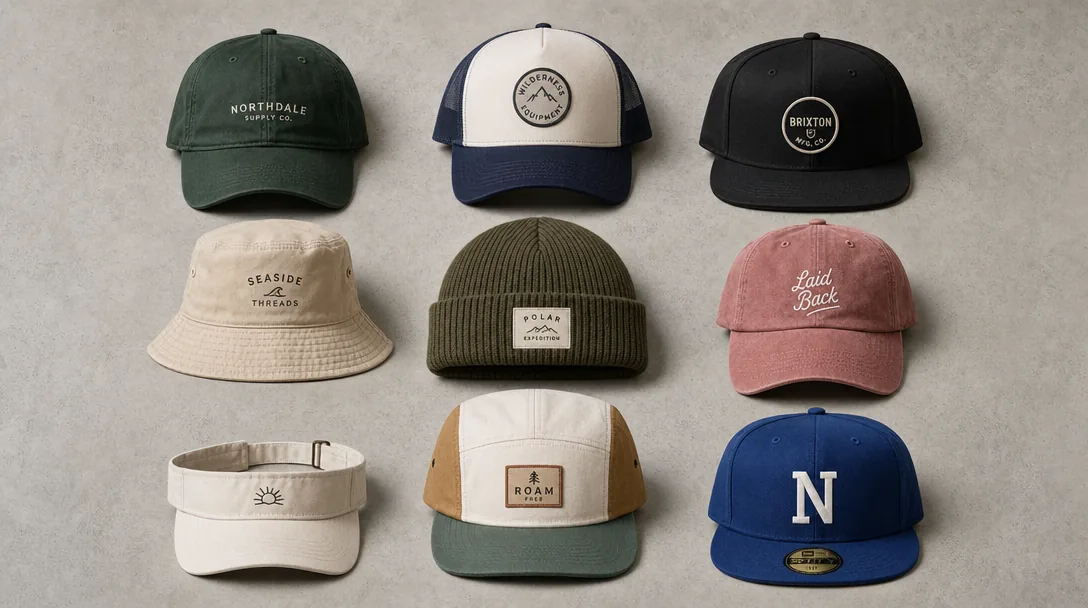
Every week, our sales team answers detailed questions about custom hats for corporate, business and branded merchandise programs - cost & moq breakdown. We wrote this guide so that wholesalers, streetwear brands, corporate buyers and promotional resellers can compare options with full information, and avoid the traps that show up only after production has started.
The four corporate-cap use cases that drive most procurement budgets
Trade-show giveaway programs usually absorb the biggest cap volumes, so the real purchasing lever is cost per qualified lead, not fancy construction. The safest spec is a structured 5-panel or 6-panel cap in 180-220 gsm cotton twill or brushed polyester, paired with a PP snapback, self-fabric strap, or basic Velcro closure and one decoration method only: flat embroidery, a woven patch, or heat transfer artwork kept to roughly 6,000-8,000 stitches equivalent. At 1,000-5,000 pieces, FOB China is commonly $2.10-$3.40 per cap; moving from a stock snap to a metal buckle might add $0.18-$0.35, while heavier fabric or dense embroidery can add more than a silhouette change ever will. For these custom business hats, consistent logo presentation matters more than luxury finishing. Smart buyers lock Pantone TCX fabric references early, hold trim color within Delta-E 1.5-2.0, and maximize carton density instead of paying for custom seam tape, woven interior labels, or premium moisture-wicking sweatbands that most recipients will never notice. Employee merchandise and internal uniform programs sit in a different budget category because staff actually wear the cap for months, not 20 minutes at a booth. That means stepping up to 260-300 gsm chino twill, washed cotton, 75D-150D performance polyester, or cotton-nylon blends with better crown memory, softer sweatbands, cleaner taping, and decoration that can carry more depth, such as 3D puff embroidery, HD woven patches, or molded silicone badges. At 300-1,000 pieces, a realistic FOB range is $4.20-$7.80 depending on fabric, profile, closure hardware, and secondary details like contrast underbill, sandwich brim, or inner taping. This is also where sampling discipline separates good factories from sloppy ones: embroidery should be approved off an actual Tajima or Barudan production run, not a touched-up photo sample, and wear testing should check puckering, shape loss after compression, sweatband abrasion, and wash response before bulk approval. Client gifting and event merchandise get grouped together too often, but the economics are not the same. Client gifts are intentionally premium: brushed canvas, wool blends, recycled polyester, suede-touch microfiber, leather strapbacks, antique brass buckles, edge-painted tabs, and sometimes one-by-one box or pouch packing. In the 100-500 piece range, FOB pricing typically lands around $7.50-$14.00, and QC has to tighten around embroidery registration, buckle plating tone, edge paint cleanliness, and presentation because perceived value is doing half the branding work. Conference or event merchandise usually sits lower at $3.80-$6.50 FOB, where speed, comfort, and easy on-site distribution beat gift packaging. The right spec is usually lightweight twill or poly-spandex with forgiving fit, barcode-ready hangtags, and an AQL 2.5 final inspection so the caps can survive a full day on a merch table without looking cheap. For buyers sourcing custom business hats across both use cases, mixing these two lanes into one RFQ is how budgets get distorted fast.
Pricing tiers by corporate use case
Price custom business hats by use case, not by cap style. On factory quotes, decoration, inspection standard, and pack-out usually move landed cost more than the shell fabric. For tradeshow giveaways, a realistic FOB China target is $2.10-$4.20 at 300-1,000 pieces for a standard foam-front trucker built with 5 mm EVA foam, 75D-100D polyester front panels, nylon mesh back, plastic snap closure, and one front flat embroidery hit in the 4,000-6,000 stitch range. Add a side hit, woven flag label, barcode sticker, or mixed carton assorting by event, and you usually add $0.35-$0.85 per cap. If a supplier is quoting under $2.00, the savings normally come from somewhere visible: weak thread coverage, low-density foam that crushes in transit, crooked crown height, cheap snaps, or inspection held at AQL 4.0 instead of AQL 2.5. That matters because promo hats are still judged like branded merchandise the moment they leave the booth.
Employee issue and onboarding programs sit a tier higher because internal brand consistency is less forgiving than giveaway use. A common spec is a 6-panel brushed cotton twill cap at 260-280 gsm with buckram-backed front panels, pre-curved visor, tuck strap with metal slider, and 2-6 color embroidery in the 5,000-8,000 stitch range; that usually lands at $4.20-$6.40 FOB for 300-800 units. When logos include fine text below 4 mm cap height, digitizing quality on Tajima or Barudan heads matters more than adding thread colors; bad underlay, poor pull compensation, and loose registration make custom business hats look cheap immediately. Executive gifting and client merch move into a different bracket: $7.20-$12.50 at 100-300 pieces for 10 oz cotton canvas, garment-washed chino twill, wool blends, or recycled performance fabrics with leather patches, high-density 3D embroidery, chain stitch, or applique. Packaging is often the real cost driver at that level: an FSC-certified folding box, tissue wrap, insert card, and sticker seal can add $1.20-$2.50 per piece before freight, which is why low-MOQ gifting programs get expensive faster than most procurement teams expect.
Logo decoration that reads at giveaway distance
If a logo does not read from 10 to 15 feet, it fails as giveaway branding no matter how good it looks on screen. For custom business hats, the front panel should work like a roadside sign: one brand message, high contrast, no legal line, no tagline, no ornamental border stealing width. On a standard 6-panel structured cap, the practical embroidery zone is usually 100 mm wide x 55 mm high, but the cleanest execution is often an 80 to 95 mm logo with open spacing and limited color breaks. On Tajima and Barudan machines, flat embroidery holds best when satin columns stay above roughly 1.2 mm and negative spaces inside letters such as A, R, P, and e remain at least 1.0 mm after pull compensation. Below that, thread spread starts closing counters, especially on brushed cotton twill, chino, and washed canvas where surface nap blurs edges. Black on stone, white on navy, or a Pantone-matched thread against a contrasting crown will almost always beat a detailed four-color crest from across a booth aisle.
Most approval problems start with artwork that was built for print or web, then forced into stitches without simplification. Gradients, hairline outlines, fine serif fonts, and subtext under 4.5 mm cap height do not survive production well; once a front logo climbs past about 9,000 to 10,000 stitches, density management becomes more critical than design intent. For most event programs, 5,000 to 8,000 stitches is the efficient range: readable at distance, stable in sewing, and typically about $0.35 to $0.80 per cap at 1,000 to 5,000 units depending on thread changes and run speed. Above that, a dense multi-color logo or second location can push decoration cost beyond $1.20 per cap before FOB freight. The simplest field test is still the right one: print the art at actual size, place it on a sample crown, and step back 4 meters. If the company name is not instantly legible, the artwork needs to be reduced to core elements or moved to a woven patch, TPU badge, or screen-printed transfer. For trade-show custom business hats, bold direct embroidery usually wins because it survives handling, passes repeated wear, and still reads at giveaway distance.
MOQ and lead time for corporate programs
For most corporate programs, 100 pieces per colorway is the practical MOQ if you want stable costing and a realistic sewing slot. Anything lower still carries the same setup burden: shell fabric booking, buckram, sweatband tape, closure hardware, embroidery digitizing, thread matching, cartons, and inline QC. On a standard structured 6-panel cap in 260-280 gsm brushed cotton twill with flat embroidery, 100-300 pieces usually lands around $3.20-$4.80 FOB China; at 500 pieces per color, the same spec often drops 8-15% because marker efficiency, cutting loss, and line balancing improve. For custom business hats with one logo used across several departments or branches, consolidating into 100-piece color blocks is usually cheaper than forcing 36- or 48-piece micro runs, which commonly add $0.60-$1.20 per cap or push the factory toward stock blanks plus decoration instead of full custom production. MOQ is quoted by color, not by total order, because mixed-color programs are not one production lot just because the embroidery file stays the same. A split like 200 navy, 100 red, and 100 white can share one Tajima or Barudan embroidery program, but cutting, sewing, finishing, and inspection still run separately by body color and dye lot. White caps need tighter stain control, red fabric often gets extra crocking checks, and dark navy can hide puckering until final trimming and pressing. Lead time is usually 22-28 calendar days for bulk after artwork approval: 3-5 days for material booking, 2-3 days for pre-production sample and trims confirmation, 7-10 days for cutting, embroidery, sewing, and shaping, then 2-4 days for finishing, packing, and final inspection to AQL 2.5. If the program also requires barcode labeling, carton drop testing, or metal detection, add 2-5 days.
Factory lead time is only half the schedule; landed timing is where buyers of custom business hats usually get caught out. Air freight or truck-air to the US or EU may be sold as 7-12 days, but that number rarely includes export paperwork, flight space allocation, customs clearance, CFS handling, warehouse appointments, or document corrections after booking. In real programs, experienced procurement teams budget 50-60 days from PO to warehouse receipt, especially when the order includes multiple colorways, retailer routing guides, or franchise distribution packing. A supplier promising a neat 30-day door-to-door timeline on a fully custom cap program is usually compressing sampling, production, and transit into one unrealistic headline number. The biggest delays usually happen upstream, not on the sewing line. One rejected pre-production sample over embroidery coverage, one Pantone TCX mismatch, or one fabric shade deviation outside Delta-E 1.5-2.0 can consume a full week before bulk cutting even starts. Compliance steps can add more drag: sedex-audit-cap-supplier-guide.html">BSCI 2.0 or Sedex SMETA 4-Pillar paperwork reviews, carton labeling format checks, and retailer-specific packing requirements all create admin hold points that do not show up in a simple factory schedule. CrownsForge separates ex-factory lead time from landed lead time for exactly this reason. Buyers should ask for both numbers in writing, along with milestone dates for PP sample approval, bulk completion, inspection booking, and ETD, so delays are visible before they become missed launch dates.
Compliance for client gifting in regulated industries
In banking, pharma, and public-sector gifting, compliance is a sourcing gate, not a paperwork formality after the sample is approved. Buyers of custom business hats should validate the actual production site before artwork sign-off: a current BSCI 2.0 report or Sedex SMETA 4-Pillar audit needs to show the factory name, physical address, audit date, grade, and CAP status, not a trading company profile with vague subcontracting language. Scope matters just as much as pass/fail. If the audit covers sewing but excludes embroidery, washing, or final packing, the factory can still be rejected during vendor onboarding even when finished caps pass AQL 2.5. The clean approach is to request the audit ID, validity window, and scope matrix on day one, then match those documents against each process used on the PO, including Tajima or Barudan embroidery, finishing, needle control, and export packing.
Healthcare and pharma programs add a second layer: traceability, labeling accuracy, and formal change control. For custom business hats going into hospital systems, medical congress giveaways, or rep-distributed kits, buyers often require fiber content, country of origin, care labels, carton markings, and SKU-level packing accuracy that a standard promo order would never need. Once the BOM is approved, even a minor trim change can trigger reapproval. If the shell stays 100% cotton twill at 270 gsm but the sweatband changes to 150D recycled polyester, labels, declarations, and carton specs all need revision before bulk runs. Small errors hold freight. A missing "Made in China" on the inner label can stop a shipment faster than an embroidery issue, even if the logo is within Delta-E 1.5 of the approved Pantone TCX standard.
The cost hit is usually administrative, not structural, provided the factory already maintains current social-compliance records. In most cases, compliance itself adds only about $0.00 to $0.05 per piece; the real increases come from extra labels, controlled documents, and tighter trim discipline. A woven compliance label typically adds $0.06 to $0.12, an adhesive retail label another $0.03 to $0.08, and document control or pre-production spec handling around $80 to $200 per PO. MOQ also gets less flexible once regulated packaging is involved. A stock 6-panel brushed cotton cap might still be workable at 144 to 288 pieces, but once you add custom labels, polybag suffocation warnings, or size-broken assortments, the efficient run usually moves closer to 300 to 500 pieces. Those constraints should be quoted before PO issue, not after bulk fabric is booked.
Repeat-order economics for annual corporate programs
Annual programs get cheaper when you remove variance from the supply chain, not when you grind suppliers for another $0.07 per cap. For employee anniversaries, dealer incentives, branch openings, or quarterly merch drops, buyers usually save 8% to 15% against spot buys once they lock a 12-month forecast and reserve core inputs. On custom business hats, the real cost leaks are nearly always off-quote: fabric lot changes, a second PPS round, thread rematching to a new Pantone TCX reference, and airfreight when approvals slide. The practical fix is simple: block the recurring materials early and release against them. That usually means reserving 260 gsm brushed cotton twill, 280-300 gsm recycled polyester, matching sweatband tape, closure hardware, and standard carton specs against forecasted volume, then issuing quarterly call-off POs. The threshold for a true annual agreement is usually about $25,000 in yearly spend or 5,000-8,000 caps across repeat SKUs. At that level, pricing can be locked by construction and decoration method instead of being renegotiated from zero every release. A standard 6-panel structured cap in 260 gsm cotton twill with 8,000-10,000 stitches on Tajima or Barudan heads typically lands around $3.10-$4.40 FOB China at repeat volume. A better-trimmed snapback in 600D polyester or polyester/wool blend with flat embroidery, woven loop label, and branded seam tape is more often $4.80-$6.20. The quiet savings come from non-recurring charges that stop repeating: digitizing at $35-$80 per logo, metal mold fees at $120-$250, strike-offs, label sampling, and revised packing mockups.
Once the first production run is approved, repeat-order economics improve because quality stops being a debate and becomes a specification. The smart way to run multi-release programs is to freeze a golden sample, BOM, embroidery file, thread chart, crown height, visor curve, closure type, and carton pack-out, then inspect later lots to AQL 2.5 against that same standard. That matters more than most buyers think. A 1.0-1.5 Delta-E shade shift between fabric lots or a softer crown profile on the second shipment does more damage to brand consistency than a 3% unit-cost increase, especially when custom business hats are shipping to multiple offices, franchisees, or event teams under one corporate identity. The best annual programs separate fixed specs from variable costs. Hold the cap body, decoration method, labels, barcode placement, polybag rules, and master carton dimensions under one pricing agreement; only reopen freight, duties, and destination-specific compliance marks by release. Our standard practice is to keep approved Pantone references, embroidery density, and finishing notes on file so the second, third, and fourth release do not restart sampling from scratch. That is where repeat orders actually pay back: fewer approvals, tighter shade consistency, lower risk of mixed trims, and far fewer emergency air shipments attached to business logo launches.
Packaging that protects the brand-impression
The packaging spec should protect shape and cleanliness first, because most buyers overpay for presentation that gets destroyed in line-haul transit. For trade shows, onboarding kits, and high-volume giveaways, the most efficient format for custom business hats is still a single PE polybag in 0.03-0.04 mm thickness, either self-adhesive or tape-sealed, with a size sticker or outer-carton code only. That typically costs $0.03-$0.06 per cap and solves the real factory-floor problems: sweatband contamination, dust pickup, embroidery snagging, and hook-and-loop abrasion during carton loading. On structured 5-panel and 6-panel caps, the bigger protection factor is not a fancier inner pack but correct carton discipline—usually 100-144 pieces per master carton, crown direction controlled, visor nesting consistent, and export cartons in 5-ply corrugate at roughly 200-250 lb burst strength. Add an unnecessary retail box to a 2,000-5,000 piece order and you usually increase cube by 20%-35%, labor by one extra handling step, and the risk of crushed corners without improving the cap itself.
Mid-tier programs need packaging that identifies the brand without choking the packing line. For employee issue, franchise uniforms, dealer kits, or reseller drops, a polybag plus branded hangtag is the practical middle ground for custom business hats. A 300-350 gsm coated tag with Pantone-matched offset print, barcode or QR code, fiber content, country-of-origin marking, and PO-level carton coding usually adds $0.08-$0.18 per unit depending on quantity and whether the tag is single- or double-sided. If color consistency matters across reorders, approve the tag to a Pantone solid reference and hold print variation to Delta-E under 2.0; dark navy, black, and charcoal programs show drift immediately under office lighting. Premium gift packaging only makes sense when the hat is being presented, not stocked. A foldable SBS or E-flute box typically runs $0.45-$1.20, tissue adds $0.05-$0.12, and an insert card another $0.06-$0.20, which can consume 15%-20% of a $3.80-$6.50 FOB cap cost before freight. If that box cannot survive carton compression, edge crush, and last-mile handling, the brand impression collapses the moment it arrives.
Frequently Asked Questions
What file format should I send for my logo?
Vector files (AI, EPS, PDF) are ideal. High-resolution PNG or JPG at 300 dpi on transparent background works as a fallback. Provide Pantone color references for accurate reproduction.
How long does production take?
Sampling takes 7 to 12 days. Bulk production runs 20 to 30 days depending on quantity, fabric availability and decoration complexity. Inspection and packing adds another 3 to 5 days before shipment.
What logo decoration techniques do you offer?
3D puff embroidery, flat embroidery, woven patch, leather patch, PVC patch, screen printing, sublimation, applique and laser etching, all in-house with no subcontracting.
Do you support sustainability certifications?
Yes. We work with GOTS organic cotton, GRS-certified recycled polyester, OEKO-TEX Standard 100 fabrics, and are BSCI and Sedex audited. Certification documentation can be provided per order.
What is the minimum order quantity (MOQ) for custom hats?
Our standard MOQ is 100 pieces per design and color, with sampling available from 1 piece. For complex multi-color logos or premium fabric upgrades, the MOQ can be lowered with a small per-piece surcharge.
What's the MOQ for custom embroidered baseball caps no minimum?
When evaluating custom embroidered baseball caps no minimum, the key considerations are construction quality, decoration capability, MOQ flexibility and lead time. Conference and tradeshow caps need logos readable from 10-15 feet (so attendees see the brand on others wearing it). Use 8-10 cm wide flat embroidery, simple monochrome colorways, bold sans-serif logo treatments. Avoid intricate emblems that disappear at distance. Tradeshow caps: standard polybag, fast distribution. Employee swag: polybag + branded hangtag with company URL.…
What's the MOQ for custom trucker hat no minimum?
When evaluating custom trucker hat no minimum, the key considerations are construction quality, decoration capability, MOQ flexibility and lead time. Tradeshow giveaway: $2-$4 per cap (polyester foam-front trucker, 1-color flat embroidery, polybag packaging). Employee swag: $4-$6 per cap (cotton twill 6-panel, multi-color embroidery, polybag + hangtag). Client gift: $7-$12 per cap (premium fabric, leather patch or 3D embroidery, FSC box, branded sticker). Conference merchandise: $4-$7 per cap (variants of the above based…
What's the MOQ for custom embroidered trucker hats no minimum?
When evaluating custom embroidered trucker hats no minimum, the key considerations are construction quality, decoration capability, MOQ flexibility and lead time. Tradeshow giveaway: $2-$4 per cap (polyester foam-front trucker, 1-color flat embroidery, polybag packaging). Employee swag: $4-$6 per cap (cotton twill 6-panel, multi-color embroidery, polybag + hangtag). Client gift: $7-$12 per cap (premium fabric, leather patch or 3D embroidery, FSC box, branded sticker). Conference merchandise: $4-$7 per cap (variants of the above based…
How does ordering baseball cap custom logo work?
When evaluating baseball cap custom logo, the key considerations are construction quality, decoration capability, MOQ flexibility and lead time. Tradeshow giveaway: $2-$4 per cap (polyester foam-front trucker, 1-color flat embroidery, polybag packaging). Employee swag: $4-$6 per cap (cotton twill 6-panel, multi-color embroidery, polybag + hangtag). Client gift: $7-$12 per cap (premium fabric, leather patch or 3D embroidery, FSC box, branded sticker). Conference merchandise: $4-$7 per cap (variants of the above based…
Need a low-MOQ test order?
We help emerging brands launch with as few as 100 pieces. Premium fabric, in-house embroidery, retail-ready packaging.
Start a small orderRelated guides
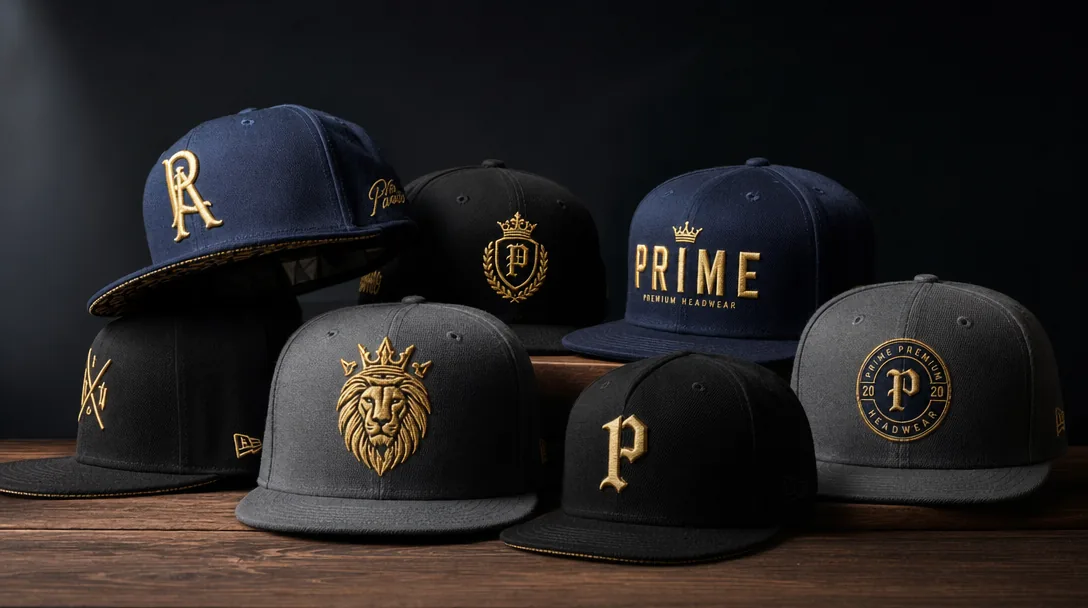
China vs Vietnam vs Bangladesh: Cap Manufacturing Countries Compared 2026 - Cost & MOQ Breakdown
Read article →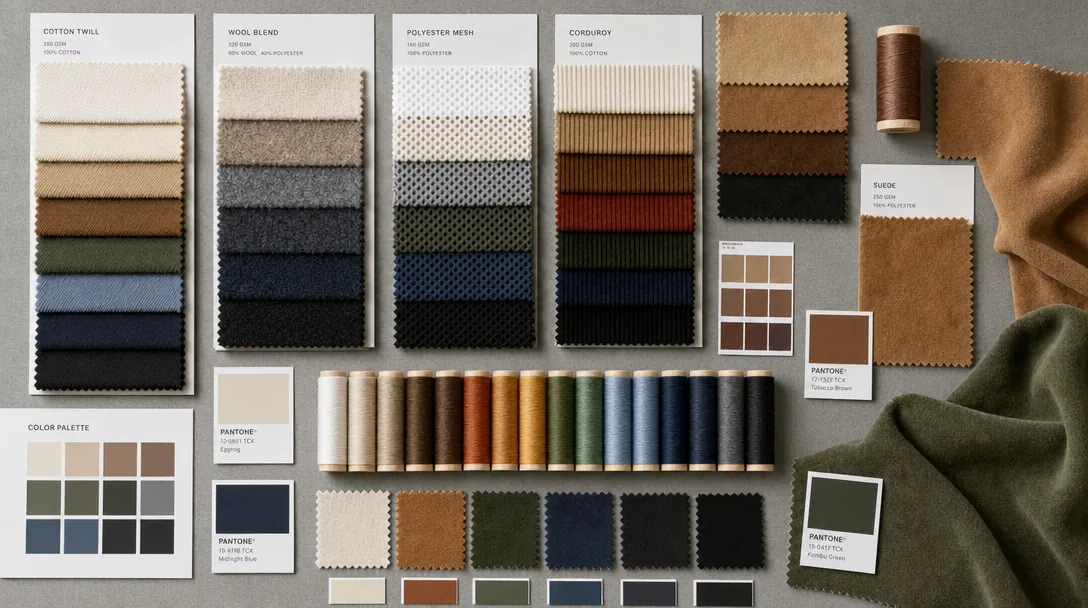
Bucket Hat Women: Properties, Costs and How to Spec It Right - Cost & MOQ Breakdown
Read article →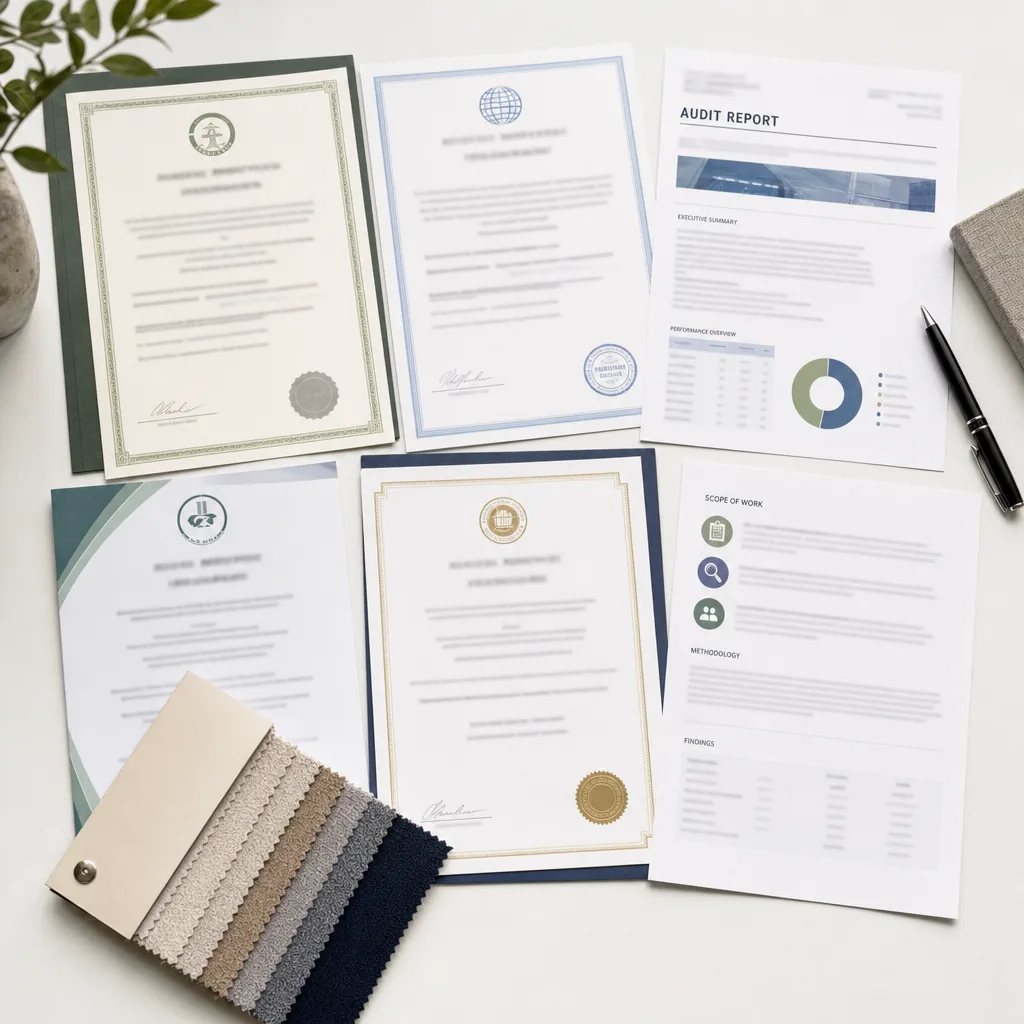
Kids' & Children's Cap Manufacturing: CPSIA Compliance and Sizing
Read article →Sourcing custom hats does not have to be complicated. With the right manufacturing partner, clear specifications and a small upfront investment in sampling, you can launch a retail-quality product in 30 to 45 days.