
Bucket Hat Women: Properties, Costs and How to Spec It Right - Cost & MOQ Breakdown
Every week, our sales team answers detailed questions about bucket hat women: properties, costs and how to spec it right - cost & moq breakdown. We wrote this guide so that wholesalers, streetwear brands, corporate buyers and promotional resellers can compare options with full information, and avoid the traps that show up only after production has started.
Camouflage Bucket Hat
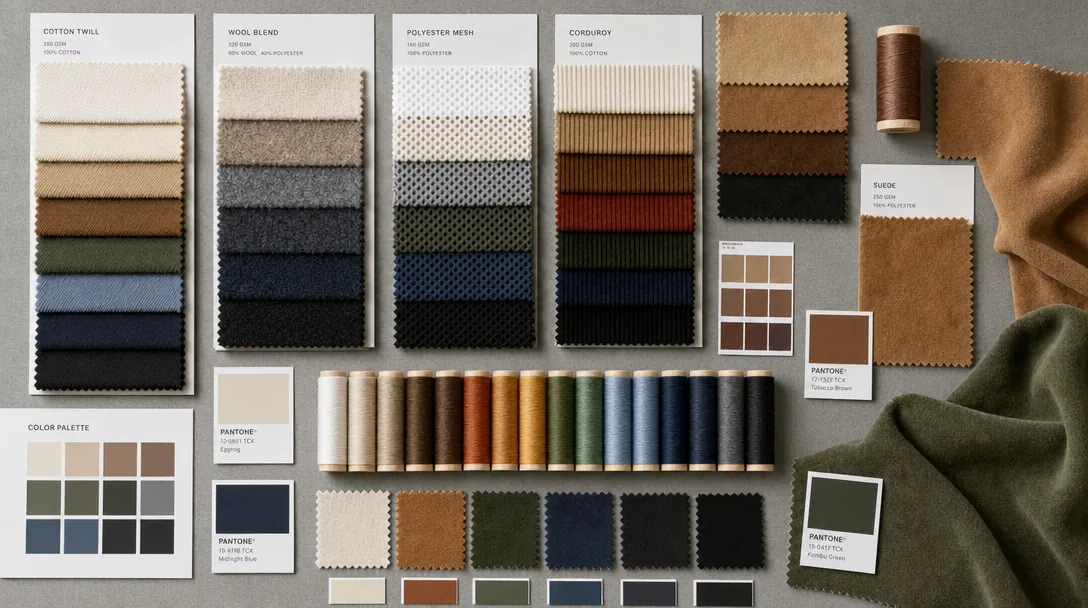
Print control decides whether a camouflage bucket hat looks intentional or cheap. For a retail-grade bucket hat women program, the safest shell is usually 100% cotton twill at 210-240 gsm if you need a firm brim and clean silhouette, or 65/35 cotton-poly ripstop at 150-180 gsm if the brief leans outdoor and quick-dry. Do not treat “camo” as one generic print method: reactive printing on cotton gives a softer hand and typically reaches wash fastness around grade 4, while pigment print is cheaper but more prone to a harsher surface and edge crocking. On repeat programs above 1,000 pieces, rotary screen is still the cost-efficient route; digital works for short custom runs, but the fabric cost can jump 15-25% on common twill bases. Lock construction before sampling: brim width 55-65 mm, crown height 80-90 mm, 6-8 rows of brim stitching at 5-6 mm pitch, woven eyelets or embroidered eyelets, and a 25-30 mm sweatband in polyester twill or cotton tape depending on target price. Camouflage still needs hard color standards. I would freeze the dominant greens, khakis, and blacks to Pantone TCX references, then approve bulk strike-offs under D65 and TL84 because camo that passes in daylight can shift badly under store lighting. On serious production, keep Delta-E within 1.5-2.0 on the key tones and confirm print registration before spreading fabric; once panels are cut off-grain or from different shade lots, sewing cannot correct it. Our standard practice is to mark panel direction on the marker so the front seam does not split the darkest motif awkwardly and the brim shows balanced repeat coverage instead of random blotching.
Cost is driven first by whether the camouflage fabric is stock or custom, and second by how much matching loss the cutting room has to absorb. If you buy ready-made camo twill from the market, MOQ is commonly 300-500 pieces per colorway, and FOB China for a basic bucket hat women style usually lands around $2.20-$3.50 with self fabric outer band, standard care label, and no extra trim. Once you move to custom artwork, fresh printing, enzyme wash, chin cord, cord lock, or branded woven tape inside, MOQ usually shifts to 800-1,200 pieces and FOB climbs to roughly $3.90-$5.90. Lead time also stretches in a real way: stock fabric orders can run in 20-25 days, while custom print programs more often need 35-45 days because the mill must print, cure, relax, and shade-check yardage before cutting starts. Bulk failures on camouflage hats are predictable and easy to spot if the factory is honest. The most common are front-seam motif mismatch, brim tunneling caused by shell and interlining shrinkage moving differently after wash, and crocking on the black or dark olive areas. AQL 2.5 is the normal inspection level, but on camo I would add a stricter visual check for panel balance, top-button centering within 3 mm, brim width tolerance of plus/minus 3 mm, and head circumference tolerance of plus/minus 5 mm. Lab results should cover dry and wet rubbing, wash colorfastness, and dimensional stability after one wash cycle. If a supplier cannot hold repeat matching and shade consistency on camouflage, it is a warning sign for any fashion-level bucket hat women order.
Corduroy Hat Men's
Corduroy bucket hats are won or lost on fabric control, not silhouette. For bucket hat women programs, 11-wale cotton corduroy at 250 to 280 gsm is the safest commercial range because it gives the crown and brim enough body without the stiff, bulky hand you get from 8-wale qualities above 300 gsm. Mills often quote 8-wale, 11-wale, and 14-wale as if they are interchangeable; they are not. Wider wale reads visibly rougher at retail, while 14-wale can flatten out once you add 6 to 8 rows of brim topstitching. Put the full textile spec into the tech pack: fiber content, wale count, finished weight, usable width, shrinkage tolerance, and Pantone TCX target for shell, lining, and sweatband. If the hat needs to sit next to matching apparel, ask for lab dips and hold bulk color to Delta-E 1.5 or better under D65 lighting. Corduroy also exposes weak cutting discipline fast. Nap direction has to run one way across every crown and brim panel or you will see apparent shade mismatch under store lighting even when the dye lot passes. On 100% cotton shell fabric, pre-shrinking is not optional; 3% to 5% movement after steaming or garment wash is common if the mill finish is unstable. Compared with chino twill or brushed cotton, corduroy cuts slower, rejects higher, and needs more operator control at the sewing line, especially around brim torque and panel alignment. That is why a custom bucket hat women style in corduroy usually costs more than a basic twill version even before decoration is added.
If you want a usable quote, send a real tech pack rather than reference images. Lock crown height, brim width, finished head circumference by size, lining material, sweatband construction, eyelet finish, brim edge method, wash standard, and decoration placement. Decoration matters more on corduroy than on flat twill because the ribs interfere with stitch formation. Direct embroidery on Tajima or Barudan heads usually needs lighter density and clean underlay to avoid sinking into the wale; on coarse 8-wale goods, a woven or merrowed patch often gives a sharper result than flat stitching. For most Zhejiang factories, MOQ is realistically 300 to 500 pieces per colorway in stocked corduroy, while dyed-to-order shell fabric often pushes the workable minimum closer to 800 pieces because mills dislike short dye lots. FOB pricing in East China for a custom corduroy bucket typically lands around $3.40 to $5.90 per piece at 500 units, assuming a 260 gsm shell, standard cotton twill lining, woven main label, and one embroidery hit. Add roughly $0.25 to $0.60 for enzyme or garment wash, $0.15 to $0.40 for metal eyelets or upgraded trims, and $0.35 to $0.80 for retail packing with size sticker, barcode label, insert card, and individual polybag. QC should be set at AQL 2.5 with appearance standards agreed before bulk: brim width tolerance of plus or minus 0.3 cm, finished circumference plus or minus 0.5 cm, embroidery centering within 0.5 cm, and zero visible nap shading between adjacent panels. That is the real tradeoff for bucket hat women in corduroy: stronger fall-winter texture and higher perceived value, but more labor minutes and more ways to miss spec than plain twill.
Organic Cotton Newborn Hat
Compliance drives the spec on an organic cotton newborn hat; aesthetics come second. Use 100% organic combed ring-spun cotton jersey at 160-190 gsm for a single-layer cap, or organic interlock at 220-260 gsm if you need more warmth and shape retention. GOTS is the safer ask than OCS because it covers wet processing, dyestuffs, and chemical inputs, not just fiber origin. For U.S. orders, the file should include CPSIA tracking-label compliance, fiber-content declarations, and test records for lead, phthalates, azo dyes, formaldehyde, and total heavy metals if prints or trims are involved. Construction tolerance also has to be tighter than a standard bucket hat women program: 4-thread overlock seams should stay flat with no roping, seam bulk at the crown join should be controlled, and finished head circumference should hold within +/-0.5 cm after wash. Most infant buyers also prohibit metal trims outright; if snaps are unavoidable, require nickel release confirmation and documented pull-test results.
A workable tech pack needs exact knit type, gsm tolerance, stitch count, finished circumference by age band, crown depth, cuff height, label placement, and wash standard before sampling starts. Color control should be written, not assumed: set Pantone TCX references and cap lab dips at Delta-E 1.0-1.5 under D65, because light shades like oatmeal, blush, and sage can drift badly between dye lots. Certified organic newborn hats usually start at 300-500 pieces per color in stock greige or natural shades; custom reactive-dyed colors more often land at 500-1,000 pieces because the mill has to segregate lots and maintain traceability paperwork. Real FOB China pricing is typically $1.10-$1.75 for a plain single-jersey cap and $1.55-$2.35 for double-layer, cuffed, or knot-top versions, with GOTS woven labels adding around $0.08-$0.18 each. Inspection should not stop at AQL 2.5 carton sampling; check spirality after wash, needle damage, internal thread ends, seam grin, pH, odor, and colorfastness to saliva and perspiration. A factory that handles bucket hat women well can still fail infant knitwear if finishing control is sloppy.
Corduroy Hat Wholesale
Corduroy pricing is driven less by the word "corduroy" and more by wale count, weight, and cutting control. For a bucket hat women program, the workable range is usually 100% cotton corduroy at 11W, 14W, or 16W in about 220-280 gsm. I push buyers toward 14W most of the time because it holds a cleaner crown and brim line without making a smaller silhouette look heavy. At 11W, the ribs can look too chunky for fashion retail; at 16W, you start losing the texture contrast that justifies the material upgrade over brushed twill. The mistake that ruins appearance fastest is inconsistent wale direction across crown, side band, and brim. Under retail lighting, even a few degrees of skew makes the hat read cheap. On the cost side, stock-dyed corduroy bucket hats in Yiwu typically MOQ at 300-500 pcs per color, while custom-dyed fabric often requires 800-1,000 meters per shade. A basic unstructured style usually lands around $2.20-$3.60 FOB China at 500 pcs, and added metal eyelets, washed finish, contrast binding, or custom trims can push it to $4.20-$4.80.
A usable spec sheet needs exact construction data, not just color and logo callouts. For bucket hat women styles, I would lock composition, wale count, finished weight tolerance at +/-5%, crown height, brim width, seam allowance, SPI, sweatband material, and whether the corduroy is pre-shrunk, enzyme-washed, or both before cutting. Color approval should reference Pantone TCX with bulk held to Delta-E 1.5-2.0 against the approved lab dip, because corduroy reflects light unevenly and the pile often reads darker than flat twill. Embroidery needs its own note: dense fills on Tajima or Barudan heads will sink into the ribs unless the digitizer builds proper edge-run and zigzag underlay, reduces stitch density, and adds pull compensation. QC is where margin disappears. The recurring failures are pile crush from overpacking, seam slippage at the side band, eyelet puckering, brim waviness after wash, logo distortion in the hoop, and crocking on dark shades like black, navy, and forest. For retail orders, I would hold final inspection at AQL 2.5, measure circumference and brim symmetry from the sample size set, and check topstitch alignment under angled light, because crooked rows hide in corduroy until the hat is worn.
Wholesale Hat Manufacturers Usa
Most buyers searching “wholesale hat manufacturers usa” are not actually comparing U.S. manufacturing; they are comparing three different supply models with very different cost structures: domestic cut-and-sew, imported stock bodies decorated in the U.S., or offshore OEM sold through a U.S. office. For a bucket hat women program, that distinction matters more than the logo size. A proper spec starts with construction, not artwork: crown panels, top disc diameter, brim width, stitch-row count, PE sheet or woven fusible interlining, sweatband width, eyelet type, seam taping, and final pressing standard. “100% cotton” is not a usable fabric callout. Lock it down to something real, like 210-240 gsm cotton twill, 250-280 gsm brushed canvas, or 8-12 wale corduroy, then approve against a submitted swatch. If the style uses camouflage or allover print, confirm whether it is reactive print, pigment print, or yarn-dyed jacquard, because shrinkage, crocking, and shade repeat will not behave the same in production.
Fast quotes from U.S. wholesalers usually mean they are buying ready-made bodies and only adding embroidery, heat transfers, or patches locally. That model can work, but ask where sewing happens, whether the mill can provide fiber-content and colorfastness reports, and how shade approval is controlled across repeat orders. For branded bucket hat women styles, I would require Pantone TCX reference, D65 light-box review, and shell-fabric color tolerance no looser than Delta-E 1.5. A supplier that cannot tell you whether the eyelets are self-fabric wrapped or metal set, or whether the brim is sewn at 6 SPI versus 8 SPI, is brokering, not managing production. Pricing reflects that split: imported stock bodies with U.S. decoration commonly start at 144-300 pcs per color, while full custom OEM is more often 500-1,000 pcs per colorway. Current market levels are about $4.20-$7.80 FOB China for standard cotton, $5.80-$9.50 for printed fabric, and $7.50-$11.50 for washed corduroy, while U.S.-finished programs typically land around $9.00-$16.00 before domestic freight and fulfillment.
The tech pack is where most bucket hat women orders either stay controlled or go sideways. Artwork and head circumference are not enough. Lock crown height, head opening by size, brim width tolerance, stitch-row count, seam allowance, sweatband attachment method, fabric weight tolerance, wash standard, and decoration method. If embroidery is included, specify the machine class—Tajima, Barudan, or ZSK—and confirm the file was digitized for curved hat panels, not a flat cap front. Fine serif lettering and skinny outlines often collapse into brushed twill or washed canvas if underlay, pull compensation, and density are not adjusted. On inspection, the repeat-killers are predictable: wavy brims from uneven interlining tension, off-center embroidery from bad hoop placement, crown panels cut off grain, burrs on metal eyelets, wash puckering, and finished circumference running 1.0-1.5 cm small because the sweatband was sewn under tension. Check brim symmetry on a flat table, count stitch rows, test dark shades for crocking, and inspect to AQL 2.5 against appearance and measurement points.
Black Beanie Hat
A black beanie looks easy on a tech pack, but the real cost driver is knit construction, not color. Cut-and-sew jersey beanies are the cheapest route because they use tubular knit fabric and basic overlock assembly; fully fashioned versions on 7GG, 9GG, or 12GG flat knitting machines cost more but hold shape better at the crown and cuff. For entry-price programs, factories usually quote 100% acrylic or 70/30 acrylic-polyester in 1x1 or 2x2 rib at 65-95 g finished weight, typically with a 7-9 cm double cuff and 21-23 cm body height. If you want a softer hand and lower static, cotton-acrylic or viscose-poly-nylon blends are a better call, but black yarn is unforgiving: pilling, oil stains, fly fiber, and yarn contamination show faster than on heather or mid-tone colors. The spec should lock down measurements and performance, not just silhouette. Set finished weight tolerance at about plus or minus 5 g, cuff depth tolerance within 0.5 cm, and require stretch recovery after repeated pulls so the opening does not bag out after fitting. For color, use a Pantone TCX reference and check bulk under D65 light; on black knitwear, a practical shade-control target is Delta-E 1.0-1.5 between panels, cuff, and approved lab dip. That matters even more when the beanie sits in the same retail story as a bucket hat women collection, because cross-category black mismatch is obvious on shelf and makes the assortment look poorly controlled.
MOQ on black beanies is usually set by yarn availability and trim setup, not by the silhouette itself. A plain stock-yarn acrylic beanie generally starts at 300-500 pcs per color, with FOB China pricing around US$1.10-US$1.90 depending on gauge, weight, and cuff construction. Cotton-rich, recycled polyester, or RWS wool-blend options more often land at US$1.80-US$3.20 FOB, and custom-dyed black yarn can push MOQ to 1,000 pcs because mills dislike small shade lots. Decoration moves the needle fast: a woven label is commonly US$0.05-US$0.12, folded label insertion adds labor, and front embroidery on Tajima or Barudan machines typically adds US$0.18-US$0.60 depending on stitch count, backing, and run time. The recurring quality failures are predictable if you have spent time on a knit line. On jersey builds, watch for twisted side seams and weak crown overlock; on rib knits, the usual problems are uneven tension, cuff depth drifting more than 1 cm, needle lines, and logo placement off-center by over 5 mm. Black also picks up lint easily and can crock onto polybags if the dyeing and finishing are rushed. The right control package is straightforward: AQL 2.5 final inspection, colorfastness and dry/wet rub testing, stretch-and-recovery checks, and measurement audits on at least 32 pcs per lot. If the same vendor is also quoting bucket hat women styles, ask for recent knit-cap inspection reports; a supplier that handles woven headwear cleanly is not automatically competent at knit tension control.
Working with CrownsForge for bucket hat women programs
Weak spec control is what breaks a bucket hat women program; labor cost is usually not the real problem. A factory can sew an excellent sales sample from a loose sketch, then miss bulk because the critical points were never frozen: brim width 7.0 cm plus or minus 0.3 cm, crown height 8.5 to 9.0 cm, topstitch spacing 6 to 8 mm, label position plus or minus 3 mm, and finished head circumference by size. A usable tech pack should include Pantone TCX references, artwork dimensions, seam construction, SPI target, wash standard, packing method, and an approved trim card. For washed cotton twill at 220 to 260 gsm, brushed chino around 240 gsm, or 8-wale corduroy in the 280 to 320 gsm range, keeping greige goods on hand avoids custom dye MOQs that often start at 500 to 800 meters per color. First prototypes normally need 5 to 7 working days after artwork and materials are confirmed; minor revisions such as brim angle, crown depth, or embroidery position usually take 3 to 5 days. In real production, 300 pieces per colorway per style is a practical MOQ, and most factories can split that into 2 or 3 sizes if shell fabric, sweatband, eyelets, and trim package stay unchanged.
Bucket hats expose weak sewing and weak QC faster than caps because the brim gives you a full 360-degree audit line. If topstitch rows wander by even 1.5 mm, if the brim fuses unevenly, or if panel shade varies more than about Delta-E 1.0 to 1.5 on pale colors, the defect is obvious at first glance. For bucket hat women styles with front embroidery, softer twill and washed fabrics need lower stitch density, proper edge-run underlay, and clean backing selection on Tajima or Barudan heads; otherwise the logo tunnels and the front panel puckers after wash. Woven patches and merrowed badges also need discipline: edge thickness, stitch bite, and patch placement matter more than piling on decorative trim that adds cost without improving sell-through. The standard control points should be thread shade approval under D65 light, logo placement held to plus or minus 3 mm, brim symmetry checks, SPI verification, seam puckering review, and bulk inspection to AQL 2.5. On compliance, sedex-audit-cap-supplier-guide.html">BSCI 2.0 or Sedex SMETA 4-Pillar reports, azo-free dye declarations, and any GOTS or OCS transaction certificates should be cleared before hangtags are printed. A realistic FOB Zhejiang range is $2.10 to $3.80 for a 220 to 260 gsm cotton twill bucket with woven label or basic embroidery; corduroy, patchwork, all-over print, or heavier trim packages usually push cost to $4.20 to $5.80 before duty and DDP freight.
Frequently Asked Questions
How long does production take?
Sampling takes 7 to 12 days. Bulk production runs 20 to 30 days depending on quantity, fabric availability and decoration complexity. Inspection and packing adds another 3 to 5 days before shipment.
Do you support sustainability certifications?
Yes. We work with GOTS organic cotton, GRS-certified recycled polyester, OEKO-TEX Standard 100 fabrics, and are BSCI and Sedex audited. Certification documentation can be provided per order.
What is the minimum order quantity (MOQ) for custom hats?
Our standard MOQ is 100 pieces per design and color, with sampling available from 1 piece. For complex multi-color logos or premium fabric upgrades, the MOQ can be lowered with a small per-piece surcharge.
What logo decoration techniques do you offer?
3D puff embroidery, flat embroidery, woven patch, leather patch, PVC patch, screen printing, sublimation, applique and laser etching, all in-house with no subcontracting.
Can I order a sample before bulk production?
Yes. We strongly recommend approving a pre-production sample before mass production. Samples are charged at 35 to 60 USD each plus express shipping, fully refundable against confirmed bulk orders over 500 pieces.
What should buyers know about organic cotton bucket hat?
When evaluating organic cotton bucket hat, the key considerations are construction quality, decoration capability, MOQ flexibility and lead time. Cover everything buyers ask about organic cotton newborn hat: how it's manufactured, what specs to request from a factory, typical MOQ and pricing, common quality issues to inspect for, and how this ties back to the broader bucket hat women sourcing decision. Cover everything buyers ask about camouflage bucket hat: how it's manufactured, what specs to request from a…
What should buyers know about men's corduroy bucket hat?
When evaluating men's corduroy bucket hat, the key considerations are construction quality, decoration capability, MOQ flexibility and lead time. Cover everything buyers ask about corduroy hat men's: how it's manufactured, what specs to request from a factory, typical MOQ and pricing, common quality issues to inspect for, and how this ties back to the broader bucket hat women sourcing decision. Cover everything buyers ask about corduroy hat wholesale: how it's manufactured, what specs to request from a factory,…
What should buyers know about cotton beanie men?
When evaluating cotton beanie men, the key considerations are construction quality, decoration capability, MOQ flexibility and lead time. Cover everything buyers ask about corduroy hat men's: how it's manufactured, what specs to request from a factory, typical MOQ and pricing, common quality issues to inspect for, and how this ties back to the broader bucket hat women sourcing decision. Cover everything buyers ask about organic cotton newborn hat: how it's manufactured, what specs to request from a factory,…
What should buyers know about ralph lauren corduroy bucket hat?
When evaluating ralph lauren corduroy bucket hat, the key considerations are construction quality, decoration capability, MOQ flexibility and lead time. Cover everything buyers ask about corduroy hat men's: how it's manufactured, what specs to request from a factory, typical MOQ and pricing, common quality issues to inspect for, and how this ties back to the broader bucket hat women sourcing decision. Cover everything buyers ask about corduroy hat wholesale: how it's manufactured, what specs to request from a factory,…
Ready to start your custom hat project?
Send us your tech-pack, sketch or even just an inspiration photo. We will respond with a detailed quotation and digital mock-up within 24 hours.
Request a free quoteRelated guides
Snapback vs Fitted vs Adjustable: Cap Closure Systems Compared
Read article →Sustainable Custom Hats: Eco-Friendly Materials, Recycled Fabrics & Certifications
Read article →
Woven Label Beanie Custom Bulk: A 2026 B2B Sourcing Guide
Read article →Sourcing custom hats does not have to be complicated. With the right manufacturing partner, clear specifications and a small upfront investment in sampling, you can launch a retail-quality product in 30 to 45 days.