
Custom Hats for Corporate, Business and Branded Merchandise Programs - 2026 Buyer's Guide
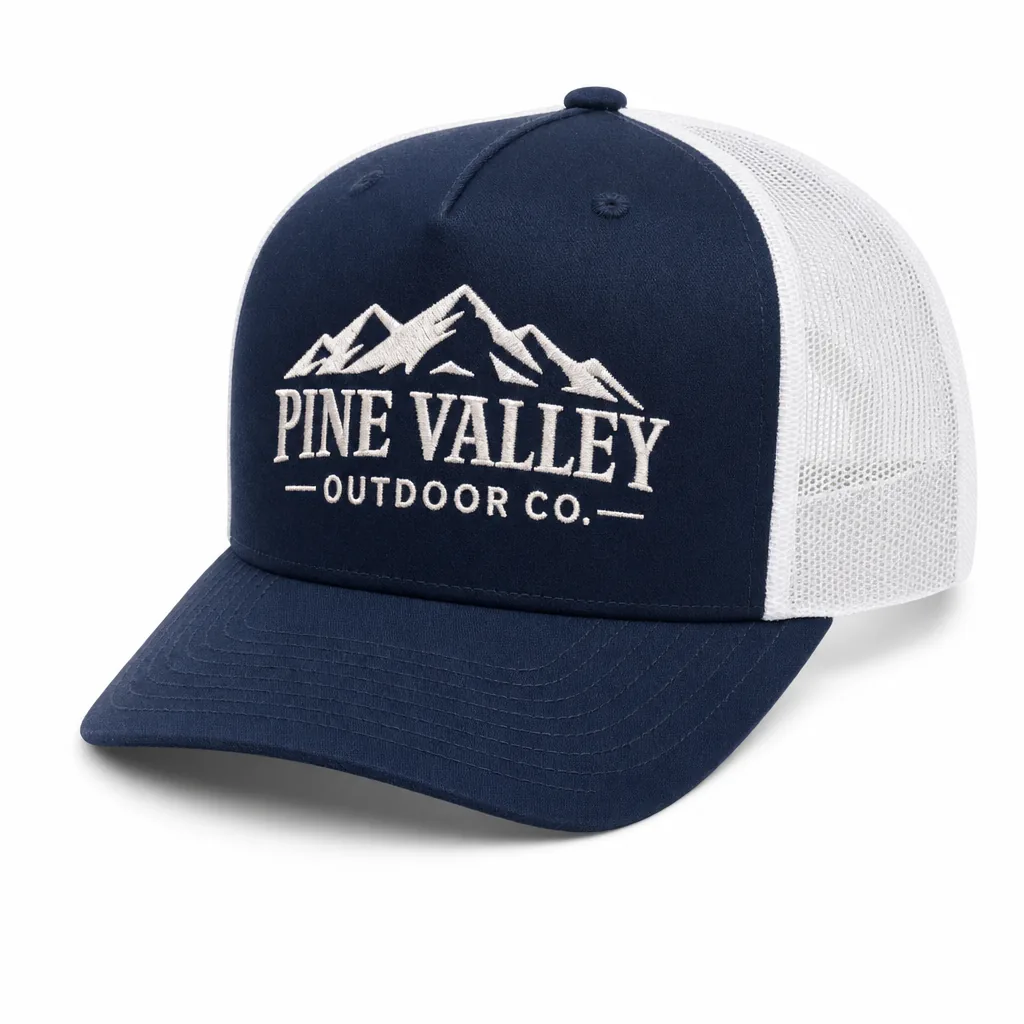
For brand owners, wholesalers and procurement teams entering the custom headwear category, custom hats for corporate, business and branded merchandise programs - 2026 buyer's guide is one of the highest-leverage decisions you will make. Get it right and your unit economics, retail story and reorder cycle all improve. Get it wrong and you carry the cost for years.
The four corporate-cap use cases that drive most procurement budgets
Budget follows use case, not silhouette. Trade-show giveaway programs usually sit at 500 to 5,000 pieces and live or die on cost per impression, so the safe spec is a 5-panel or 6-panel unstructured cap in 108x58 cotton twill at 180 to 220 gsm or entry brushed chino. Keep decoration simple: 1-color flat embroidery on Tajima or Barudan heads gives the best balance of stitch speed, clean coverage, and low rejection. If logo strokes drop below about 0.8 mm, direct embroidery starts to fill in; a woven patch or heat-cut label is normally the cleaner choice. Buyers sourcing custom business hats for expo use should police trim creep hard, because sandwich piping, metal buckles, printed seam tape, hangtags, and individual polybags routinely add $0.18 to $0.65 per cap before freight. At this level, carton pack-out, replenishment lead time, and commercial shade control within Delta-E 2.0 to approved Pantone TCX standards matter more than decorative ambition.
Employee-issue programs deserve a different spec because staff wear the cap for months, not one afternoon. This is the middle of the budget curve, but the quality threshold should be higher: heavier brushed cotton, recycled poly-cotton, or performance microfiber around 160 to 200 gsm, chosen by job environment rather than price alone. The sweatband is where cheap caps fail first. A nonwoven band pills, salts out, and stains quickly; a 210D moisture-wicking sweatband with taped internal seams holds shape and looks presentable far longer. 3D puff embroidery only works on a buckram-backed front panel; put it on a soft unstructured crown and the logo collapses after a few wear cycles. AQL 2.5 is standard, but the real pass-fail points are visor symmetry, embroidery registration, needle cuts on dark fabric, and closure fatigue after repeated adjustment.
Client gifting and conference merchandise are often quoted together, but that is lazy procurement because the retention target is different. Gift-tier caps need visible premium signals: wool blends, peach-finish nylon, fine-count taslon, cleaner low-profile blocks, and decoration such as applique, matte metal badges, or high-density embroidery on ZSK heads for sharper edge definition. Packaging also shifts from bulk pack to tissue wrap, shape inserts, kraft boxes, or custom sleeves. That usually moves FOB from roughly $2.20 to $3.80 for a solid mid-range cap up to $6.50 to $11.00 for a true gifting build once upgraded trims, presentation, and tighter QC are included. Conference merchandise sits lower, but still has to earn post-event wear. Neutral colors, understated branding, and wearable silhouettes outperform loud sponsor graphics almost every time. In that channel, custom business hats should be judged on wear rate, not just unit price; paying $0.70 more for a cap that gets worn ten times longer is usually the better media buy.
Pricing tiers by corporate use case
Price breaks in corporate headwear come from construction, decoration method, and packing spec—not from the logo size on the rendering. For trade-show giveaways, a realistic ex-factory target is $2.10-$3.90 per cap at 1,000-5,000 pieces for a 5-panel trucker built with a 3 mm EVA foam front, 75D-100D polyester mesh, standard PE visor board, plastic snap closure, and one front hit in flat embroidery or a woven patch. Keep the artwork to 1 color and roughly under 8,000 stitches; once a supplier quotes below $2.00, the cost is usually being stripped out of the unseen parts: 120 gsm sweatband fabric instead of 180 gsm, weak mesh rebound, lighter foam, uneven topstitch SPI, or embroidery with poor underlay and loose thread tension. Acceptable giveaway quality still means Pantone thread matching within normal commercial tolerance, consistent crown height, stable brim curvature, and final inspection at AQL 2.5 before master carton sealing.
For employee uniform programs, custom business hats typically sit at $4.20-$6.40 per piece at 300-1,500 units because comfort and repeat wear matter more than pure promo pricing. The common spec is a 6-panel structured cap in 220-260 gsm cotton twill or brushed cotton, with buckram-backed front panels, a pre-curved visor, cotton sweatband, and 2D multicolor embroidery sewn on Tajima or Barudan machines. Practical upgrades add up fast: a metal tuck strap can add $0.25-$0.40, a woven inside label $0.12-$0.18, an enzyme wash $0.30-$0.55, and a branded hangtag with string another $0.08-$0.15. When comparing quotes, check whether digitizing, embroidery backing, export polybags, carton assortment, and the usual 2%-3% overrun are already included.
Client gifting and retail-style conference merchandise belong in a separate tier because materials, decoration depth, and presentation start driving cost. Gift-grade custom business hats usually land at $7.50-$12.50 at 200-1,000 pieces when the build shifts to wool blend melton, 228T recycled nylon, heavy brushed cotton, or performance microfiber, then adds 3D puff embroidery, a debossed leather patch, silicone transfer, or satin appliqué. If the program also needs FSC-certified folding boxes or rigid drawer cartons, expect packaging alone to add $0.70-$2.20 per unit depending on board weight and insert design. Conference merchandise is usually more restrained at $4.50-$7.20, often for upgraded twill caps or trucker hybrids with side embroidery, retail swing tags, and cleaner finishing. At that level, carton pack ratios, color-size assortment planning, and 30-45 day replenishment windows usually have a bigger effect on total margin than squeezing another $0.15 out of first cost.
Logo decoration that reads at giveaway distance
Readability at 10 to 15 feet is the real pass-fail test. If the logo blurs at giveaway distance, the cap stops working as branded merchandise and turns into leftover stock. On most standard 6-panel caps, the front decoration needs to use the available real estate correctly: roughly 80 to 100 mm wide, centered with enough clearance from the center seam, eyelets, and crown curve so the wordmark does not distort after sewing. For custom business hats, the safest artwork is usually the least ambitious: a bold sans-serif wordmark, block initials, or one stripped-down icon. The files that fail are predictable—taglines, hairline outlines, registration marks, ™ symbols, and strokes under about 1.0 mm. Once that art is digitized for a Tajima or Barudan head, small counters start closing, satin borders thicken, and textured fabrics like brushed cotton twill or heather poly cause even more visual loss. What looked sharp on a screen turns into a dark embroidered mass by the time someone sees it across a booth aisle.
Contrast matters almost as much as size, and brand teams often get this wrong by forcing exact brand colors where legibility should win. On black, navy, charcoal, or forest caps, white, ecru, or light-gray thread usually reads better than a perfect Pantone TCX match with weak separation. If the brand guide calls for tonal decoration, use it on premium employee merch, not high-volume event distribution where first-glance recognition is the job. For custom business hats used at trade shows, I usually keep front embroidery to one thread color, or two at most. Every extra color change adds machine time and typically another $0.08 to $0.20 per cap depending on volume, while dense multi-color fills push logos into the 12,000-plus stitch range where detail starts fighting itself. A clean 7,000 to 10,000-stitch sew-out on a structured 250 to 300 gsm cotton twill or poly-cotton crown will almost always outperform a softer unstructured build. Our standard floor check is simple: review the sample under normal indoor light, step back 4 to 5 meters, and if the brand name is not instantly readable, the artwork is still too complicated for bulk production.
MOQ and lead time for corporate programs
For most corporate programs, the real planning constraint is not embroidery capacity but color-by-color minimums. A standard factory MOQ is 100 pieces per colorway for a single cap style, even when the logo, panel construction, and closure stay identical across the order. If you book 400 total units as 200 navy, 100 red, and 100 white, that is usually treated as one artwork setup but three separate production runs because each color requires its own fabric allocation, cutting spread, and shade approval. That matters for custom business hats because buyers often assume total volume can be pooled freely; on the factory floor, it usually cannot unless you move to stock fabrics already held in inventory. For brushed cotton twill around 260-280 gsm or polyester performance fabric in the 140-180 gsm range, the MOQ is manageable, but specialty materials like recycled ripstop, heather jersey, or wool blends often push the usable minimum higher due to mill constraints.
Mixed-color tradeshow programs are where sourcing discipline shows up fast. A navy/red/white assortment sounds simple, but each lot still needs its own dye-lot control, and that is where cheap vendors get exposed. If the body fabric misses target by more than a Delta-E of roughly 1.5 to 2.0 against approved Pantone TCX references, the caps will look inconsistent under retail lighting and even worse when merch teams photograph them together. Our standard practice at CrownsForge is to hold one logo digitizing file for all colorways, then run separate pre-production confirmations for fabric shade, thread mapping, and trim match before bulk cutting starts. On embroidery lines like Tajima or Barudan, the stitch file may stay identical, but thread substitutions for contrast, edge definition, or 3D puff underlay often need to be adjusted by cap color so the same business logo hats do not read too heavy on white and too weak on navy.
A realistic lead time for corporate custom hats is 22 to 28 days for bulk production, then another 7 to 12 days for air or express-forwarder delivery once goods leave the factory. If you need cartons checked into a U.S. or EU warehouse, budget 50 to 60 days from PO approval to in-warehouse receipt so there is room for artwork approval, sample confirmation, production, final inspection, and customs handling. The failures usually happen upstream: delayed vector files, late Pantone sign-off, or a buyer changing closure type from Velcro to metal buckle after sample approval. A capable company hat manufacturer should be quoting lead time from approved sample date, not from first inquiry date, and should define whether the schedule includes AQL 2.5 final inspection, carton drop testing, and DDP paperwork. For branded merchandise hats tied to events, I usually tell buyers to work backward from the wear date and keep at least a 10-day buffer, because one missed dye-lot or embroidery revision can consume a full production week.
Compliance for client gifting in regulated industries
Compliance screening usually happens before artwork approval, and that is where custom business hats programs for banks, pharma companies, and public entities most often stall. Buyers are not asking for a generic “factory audit”; they want a current sedex-audit-cap-supplier-guide.html">BSCI 2.0 report or Sedex SMETA 4-Pillar audit issued for the exact production address shown on the PO, commercial invoice, and packing list. They will cross-check working-hour records, payroll, subcontracting registers, dormitory conditions, grievance channels, and fire-safety CAP closures. If sampling is done at one address but bulk sewing, embroidery, or finishing is pushed to a satellite workshop, vendor approval can be suspended on the spot. In real sourcing timelines, an expired audit or address mismatch can cost 30 to 60 days, which is enough to miss a board meeting, product launch, or fiscal-quarter gifting window. The practical rule is blunt: the audit scope must match the actual cut-sew-embroider site, and the compliance file needs to be complete before the order enters line booking.
Healthcare, government, and speaker-program kits usually carry tighter labeling and traceability rules than ordinary promo merchandise. Buyers often require fiber content, country of origin, and care instructions on the sweatband label or a sewn-in side flag even when the cap is not for retail sale. If the shell is 100% cotton twill at 260 gsm, recycled polyester at 150 denier, or a 65/35 poly-cotton in 108x58 construction, that composition must match the PO, carton marks, and packing list exactly; even a small wording discrepancy can trigger a hold. Post-arrival relabeling is expensive and slow, typically adding $0.12 to $0.35 per piece plus local labor, reinspection, and repacking. Public-sector accounts also expect a traceability pack with factory-address consistency across all shipping documents, component declarations for fabric, buckles, and hook-and-loop closures, plus final inspection records to AQL 2.5. A capable factory should issue that file with decoration details, including whether embroidery ran on Tajima or Barudan heads at the audited site, because on regulated gifting programs paperwork errors delay deliveries more often than sewing defects do.
Repeat-order economics for annual corporate programs
Forecast accuracy saves more money than squeezing factory margin. In annual programs for employee recognition, channel incentives, or event merch, the real advantage is that the factory can buy against a schedule instead of reacting to one-off POs. On programs worth roughly $25,000 to $80,000 per year, we typically see landed cost come down 8% to 15% versus the same volume split into separate rush orders. The savings are not mysterious: reserved shell fabric, fixed embroidery rates, and amortized setup charges. For custom business hats, the economics are strongest when the cap platform stays stable — same 6-panel structured body, same closure, same sweatband spec — while only the front logo, side hit, or campaign copy changes between releases. That lets the buyer keep one approved fit block and one packaging standard while still refreshing the look each quarter. Fabric reservation is usually the biggest missed lever. If the program runs on 260 gsm brushed cotton twill, 300D rPET, or 70D nylon taslon in a Pantone-matched shade, booking yardage up front avoids small-lot dyeing surcharges and reduces lot-to-lot color movement. A mill will quote more aggressively on scheduled call-offs than on an urgent 1,200-piece reorder with no visibility behind it. The practical control point is to keep approved lab dips and sealed bulk swatches on file, then verify incoming lots to an agreed Delta-E tolerance — commonly under 1.5 for core corporate colors before cutting. That matters when the hats need to sit next to polos, softshells, or booth graphics without the navy reading purple under trade-show lighting.
Setup amortization is the second lever, and most buyers underestimate how much noise it adds to small runs. Even a straightforward corporate cap can carry fixed charges for embroidery digitizing for Tajima or Barudan heads, 3D puff sampling, woven label loom setup, heat-transfer placement trials, inside taping screen setup, and master carton validation for parcel and bulk channels. On a single 576-piece order, those costs can easily add $0.35 to $1.20 per cap; spread across 8,000 to 20,000 units annually, they become almost invisible. That is why repeat programs often beat ad hoc buying even when the quoted FOB price looks similar at first glance: the hidden setup cost has already been absorbed into the annual plan. The operational upside is just as valuable as the unit-cost reduction. A serious repeat-order program should freeze the technical package early: approved Pantone TCX references, embroidery file version, stitch count tolerance, AQL 2.5 final inspection, measurement tolerance such as +/-0.5 cm on crown height and head opening, carton pack-out, and SKU split by warehouse or event channel. Once those standards are locked, replenishment runs move faster because the factory is not re-approving every trim and print position from zero. For teams buying custom business hats across multiple offices or activation calendars, that usually means shorter lead times, fewer color disputes, and less internal admin than rebidding every drop to the lowest spot quote.
Packaging that protects the brand-impression
Packaging sets the quality signal before anyone notices stitch count or panel symmetry, so spec it around distribution, not decoration. For trade shows, conference kits, and field handouts, the most efficient format for custom business hats is still one cap per clear PE polybag, typically 0.03-0.05 mm thick, packed 100-144 pcs per 5-ply export carton depending on crown height and bill curve. That keeps pack-out cost in the $0.03-$0.06 range per piece, prevents dust pickup, and lets event crews hand out clean product without carton rub on the visor edge. On structured 6-panel caps, foam-front truckers, and high-profile snapbacks, I strongly prefer a light crown insert or tissue wrap; otherwise the front panel can flatten under top-load pressure in airfreight ULDs or parcel sortation belts, and once buckram is creased, the cap rarely recovers cleanly.
For employee kits, dealer meetings, and recruiting programs, add brand identity without adding cube. The practical upgrade is a PE bag plus a branded hangtag on 350 gsm C1S or coated art card with matte lamination, fixed with a kimble fastener or nylon loop; in China, that usually adds $0.12-$0.22 per cap and gives enough surface for a URL, QR code, fiber content, and campaign copy. If color control matters, compare the shell fabric and printed tag together under D65 lighting against the approved Pantone TCX standard. A cap body within Delta-E 1.5 can still look off if the printed card drifts warm or cool. For premium client mailers, boxed presentation only makes sense when execution is disciplined: an FSC folding carton with tissue, seal label, and insert card can add $1.05-$1.60 to a $6.50 FOB hat, so packaging defects such as glue smear, die-cut burrs, crushed corners, or logo misregistration should be inspected at the same AQL 2.5 level as the hats themselves.
Frequently Asked Questions
What logo decoration techniques do you offer?
3D puff embroidery, flat embroidery, woven patch, leather patch, PVC patch, screen printing, sublimation, applique and laser etching, all in-house with no subcontracting.
Do you support sustainability certifications?
Yes. We work with GOTS organic cotton, GRS-certified recycled polyester, OEKO-TEX Standard 100 fabrics, and are BSCI and Sedex audited. Certification documentation can be provided per order.
What is the minimum order quantity (MOQ) for custom hats?
Our standard MOQ is 100 pieces per design and color, with sampling available from 1 piece. For complex multi-color logos or premium fabric upgrades, the MOQ can be lowered with a small per-piece surcharge.
How long does production take?
Sampling takes 7 to 12 days. Bulk production runs 20 to 30 days depending on quantity, fabric availability and decoration complexity. Inspection and packing adds another 3 to 5 days before shipment.
Can I order a sample before bulk production?
Yes. We strongly recommend approving a pre-production sample before mass production. Samples are charged at 35 to 60 USD each plus express shipping, fully refundable against confirmed bulk orders over 500 pieces.
What's the MOQ for custom embroidered baseball caps no minimum?
When evaluating custom embroidered baseball caps no minimum, the key considerations are construction quality, decoration capability, MOQ flexibility and lead time. Conference and tradeshow caps need logos readable from 10-15 feet (so attendees see the brand on others wearing it). Use 8-10 cm wide flat embroidery, simple monochrome colorways, bold sans-serif logo treatments. Avoid intricate emblems that disappear at distance. Tradeshow caps: standard polybag, fast distribution. Employee swag: polybag + branded hangtag with company URL.…
What's the MOQ for custom trucker hat no minimum?
When evaluating custom trucker hat no minimum, the key considerations are construction quality, decoration capability, MOQ flexibility and lead time. Tradeshow giveaway: $2-$4 per cap (polyester foam-front trucker, 1-color flat embroidery, polybag packaging). Employee swag: $4-$6 per cap (cotton twill 6-panel, multi-color embroidery, polybag + hangtag). Client gift: $7-$12 per cap (premium fabric, leather patch or 3D embroidery, FSC box, branded sticker). Conference merchandise: $4-$7 per cap (variants of the above based…
What's the MOQ for custom embroidered trucker hats no minimum?
When evaluating custom embroidered trucker hats no minimum, the key considerations are construction quality, decoration capability, MOQ flexibility and lead time. Tradeshow giveaway: $2-$4 per cap (polyester foam-front trucker, 1-color flat embroidery, polybag packaging). Employee swag: $4-$6 per cap (cotton twill 6-panel, multi-color embroidery, polybag + hangtag). Client gift: $7-$12 per cap (premium fabric, leather patch or 3D embroidery, FSC box, branded sticker). Conference merchandise: $4-$7 per cap (variants of the above based…
How does ordering baseball cap custom logo work?
When evaluating baseball cap custom logo, the key considerations are construction quality, decoration capability, MOQ flexibility and lead time. Tradeshow giveaway: $2-$4 per cap (polyester foam-front trucker, 1-color flat embroidery, polybag packaging). Employee swag: $4-$6 per cap (cotton twill 6-panel, multi-color embroidery, polybag + hangtag). Client gift: $7-$12 per cap (premium fabric, leather patch or 3D embroidery, FSC box, branded sticker). Conference merchandise: $4-$7 per cap (variants of the above based…
Ready to start your custom hat project?
Send us your tech-pack, sketch or even just an inspiration photo. We will respond with a detailed quotation and digital mock-up within 24 hours.
Request a free quoteRelated guides
Sports Team Caps & Uniform Headwear: Bulk Manufacturing for Clubs and Schools
Read article →
Buckram vs Foam vs Unstructured: Cap Crown Construction Compared
Read article →Custom Trucker Hats: The 2026 Sourcing & Manufacturing Playbook
Read article →We hope this guide demystifies custom hats for corporate, business and branded merchandise programs - 2026 buyer's guide and helps you move forward with confidence. If you have questions specific to your project, our English-speaking sales engineers are one message away.