
Corduroy Hat Vintage Fabric And Trim Spec Guide for Custom Hat Buyers (2026 Update)
Every week, our sales team answers detailed questions about corduroy hat vintage fabric and trim spec guide for custom hat buyers (2026 update). We wrote this guide so that wholesalers, streetwear brands, corporate buyers and promotional resellers can compare options with full information, and avoid the traps that show up only after production has started.
Why corduroy hat vintage fabric and trim spec guide needs a separate sourcing plan
A separate sourcing plan is justified because corduroy fails in ways standard cap fabrics do not. In a proper corduroy hat vintage fabric and trim spec guide, the first decision is not color; it is wale count, pile height, and finished gsm, because those three variables control both the visual age of the cap and whether the crown will sew cleanly. For unstructured 5-panel and relaxed 6-panel caps, 8-wale to 10-wale cotton corduroy at 220 to 280 gsm usually gives the right heritage face without turning the front panel bulky. For bucket hats, 14-wale to 16-wale at 180 to 230 gsm is safer if you want drape instead of a stiff bell shape. If you approve swatches only by handfeel, you miss where corduroy actually causes trouble: visor joins, eyelet punching, and top-button build-up, where rib thickness compounds across seam allowances and distorts shape. Pile direction is the second reason generic sourcing plans break down. Nap changes color perception under store LEDs, especially on dark olive, rust, tobacco, and washed black, so all crown panels and visor parts need one-way marker planning or the hat will read as mismatched before anyone checks sewing quality. Embroidery setup also has to be reworked for ribbed surfaces. On Tajima, Barudan, and ZSK heads, we typically reduce fill density by 10 to 15 percent, increase pull compensation, and lock down a firmer underlay so stitches sit above the wale instead of sinking into it. Text below 4 mm cap height is usually a reject risk on corduroy; woven labels, merrow patches, or high-definition heat transfer hold detail better after washing. Testing should start before digitizing approval, not after: dry and wet crocking, seam slippage, and wash shrinkage will all affect logo registration on vintage enzyme-washed programs.
Trim is where most vintage corduroy developments get expensive. A credible old-school build is a system: shell fabric, visor board, seam tape, sweatband, eyelets, fusible, closure, and wash chemistry have to survive the same finishing process without drifting in color or shape. Enzyme and pigment washes can move shell color by roughly Delta-E 0.8 to 1.5, which is enough to make a matching cotton twill back strap or seam tape look wrong if it was approved only as a loose component. Hardware is another common failure point. Antique brass and gunmetal buckles often darken after garment wash, salt spray, or basic warehouse humidity when plating thickness is inconsistent, so trim cards should be signed off as washed assemblies, not parts in a pouch. Sweatbands need the same discipline: a 180 to 220 gsm cotton twill band feels premium, but if its residual shrinkage is not balanced to the shell, it will torque the opening after wash. Lead time and QA also need their own plan because corduroy is less forgiving in bulk than chino or brushed twill. Stock 11-wale cotton corduroy can sometimes be booked in 5 to 7 days, but custom Pantone TCX dyeing with lab dips, nap-direction approval, and wash tests usually puts fabric readiness closer to 18 to 28 days before cutting. Most mills will ask for 800 to 1,000 meters per color, so small runs become expensive unless you consolidate a cap and bucket order into one shade lot. Inspection has to focus on appearance defects that standard AQL tables do not capture well: nap crush, shading, seam grin, rib mismatch at panel joins, and visor top/bottom color shift after wash. Our standard practice is AQL 2.5 with bulk fabric approval, corrosion checks on plated trims, and compliance files ready before production release, typically sedex-audit-cap-supplier-guide.html">BSCI 2.0 or Sedex SMETA 4-Pillar plus azo-free and colorfastness reports. That discipline is cheaper than remaking 3,000 hats because one washed lot came back half a shade off.
Factory capability checks before quoting
The fastest way to kill a bad quote is to verify the factory can decorate corduroy correctly, not just assemble a generic six-panel cap. In a serious corduroy hat vintage fabric and trim spec guide, I check embroidery, patch application, and front-panel handling before I look at FOB price, because wale direction, nap crush, and center-seam bulk will wreck logo clarity faster than buyers expect. A capable supplier should tell you exactly what they run—Tajima, Barudan, or ZSK heads, cap frame type, and whether they have sampled on 8 wale, 11 wale, or baby cord around 280 to 320 gsm. Ask for unedited close-up video on actual corduroy showing direct embroidery, chain stitch, woven patch, merrowed patch, felt appliqué, and TPU badge attachment. If they only show twill or brushed cotton references, the quote is still theoretical. The technical response should be equally precise. On corduroy, competent digitizers usually cut fill density back to roughly 0.35 to 0.40 mm, reduce underlay on raised ribs, add knockdown where needed, and avoid dense fills crossing the front center seam on structured crowns. They should proactively mention pile show-through, needle deflection, registration drift, and when a pre-sewn patch is safer than direct stitch. Fabric capability also has to be measurable: fiber content such as 100% cotton or 98/2 cotton-spandex, shrinkage at 3% or less after washing, and Pantone TCX approval within Delta-E 1.5 to 2.0 under D65 light. If the supplier cannot discuss sulfur dye, pigment wash, crocking risk against sweatbands, or seam allowance adjustments for thick cord stacks, the price is not reliable.
Sample-room discipline is where most factories get exposed. A real cap maker should turn a first proto in 5 to 7 working days, revise fit or trims in another 3 to 4 days, and issue a spec sheet that names crown height, visor length, seam allowance, top-button size, closure spec, and visor curve tolerance by style. For vintage corduroy programs, I want to know who owns pattern corrections when nap direction changes drape on unstructured crowns, five-panels, or bucket hats. That is where brim waviness, crown collapse, and side-panel torque show up. Pre-production approval should include tape-measure photos, macro shots of seam bulk, and trim sign-off for sweatband composition, seam tape width, eyelet method, snap resin grade, and buckle plating thickness in microns. QC and compliance answers should be just as concrete. If a supplier cites BSCI 2.0 or Sedex SMETA 4-Pillar, ask for the audit month, factory site name, and CAP status rather than accepting a logo in a deck. Inspection should default to AQL 2.5 major and 4.0 minor, with defined checkpoints for shade-lot consistency, embroidery placement within plus or minus 2 mm, visor symmetry, closure pull strength, and needle control or metal detection when the customer requires it. Carton specs matter too: export-grade 5-ply corrugate, inner poly moisture protection for sea freight, carton gross weight under about 15 kg, and a stated drop-test standard. At CrownsForge, vague answers at this stage usually predict sampling delays, shade claims, and trim substitutions later.
MOQ, pricing and sample approval
MOQ on a corduroy order is driven by fabric and trim supply, not by whether the body is a 6-panel cap, 5-panel, or bucket. If you stay with stock 8-wale or 11-wale cotton corduroy in mill-held shades like black, navy, coffee, or olive, a realistic factory MOQ is 144 to 300 pcs per colorway. Once you ask for custom dyeing to Pantone TCX, branded herringbone seam tape, molded metal adjusters, FSC hangtags, or GRS/OCS-certified labels, the practical MOQ usually jumps to 500 to 1,000 pcs because the mill wants a full dye lot and trim vendors have tooling and plating minimums. Split sizing matters more than many buyers expect: S/M and L/XL should be costed as separate SKUs because they change marker efficiency, carton ratios, and replenishment risk. Decoration also carries setup charges that do not show in a headline piece price: embroidery digitizing is commonly $25 to $60 per file, woven patch setup $45 to $120, and custom buckle mold fees $80 to $200. One hard rule from the factory floor: 3D puff is usually a bad match for corduroy because the wale texture fights the foam edge and gives uneven loft.
Price moves faster on trims and finishing than on the shell fabric itself. For 2026, a clean 300 to 500 pc program in stock corduroy with standard flat embroidery generally lands around $4.20 to $6.80 ex-factory for a cap; bucket hats usually run $4.60 to $7.20 because binding, circumference joining, and crown handling add labor minutes. Add-ons stack quietly: branded seam tape, antique brass buckle, faux-leather strap, zipper polybag, barcode sticker, and recycled kraft insert can add $0.45 to $1.20 per hat without touching the shell fabric. OCS-certified or organic cotton corduroy typically adds another $0.35 to $0.90 depending on wale count, gsm, and whether the certification transaction covers the full chain. If a quote looks suspiciously low, check what has been stripped out: inner tape print, hangtag stringing, spare button allowance, export carton spec, metal detector requirement, and whether inspection is priced to AQL 2.5 or just loose in-line checking.
Sample approval is where margin and timeline are either protected or wasted. A usable corduroy hat vintage fabric and trim spec guide has to lock every visible point before bulk: shell fabric, undervisor, sweatband, seam tape, embroidery thread, woven label ground, closure finish, edge stitching, and final packing method. For dyed corduroy, use Pantone TCX or Pantone Solid Coated as the reference and write tolerance into the approval standard; on vintage shades, I would hold Delta-E under 1.5 for hero colors and under 2.0 for internal components, because pile direction and light angle can make the same dye lot read visibly different. Embroidery approval also has to be done on the real production fabric. On Tajima, Barudan, or ZSK heads, logos that work on brushed twill often sink into 8-wale corduroy unless the digitizer opens spacing, adjusts underlay, and increases column width; 0.35 to 0.40 mm fill spacing is usually safer than a dense satin-heavy file that crushes the pile. Our standard practice is not to release bulk until the PPS confirms inside finishing, closure function, visor shape retention, wash handfeel, and pack-out, because late claims often come from crown deformation and packaging rub, not sewing defects.
Quality inspection and shipping risk
Visual consistency is the first failure point on corduroy headwear; seam strength is rarely what gets a shipment rejected. Corduroy exaggerates defects that would pass unnoticed on twill: reversed wale direction, pile crush from over-pressing, side-panel shade variation, or needle tracks on high ribs. For bulk release, I would write final random inspection directly into the PO under ANSI/ASQ Z1.4, normal inspection, single sampling, AQL 2.5 major and 4.0 minor. Tolerances should be style-specific and measurable: finished head circumference ±0.5 cm, crown height ±0.3 cm, visor length ±0.3 cm, buckle placement ±0.5 cm, and bucket brim width controlled separately at ±0.4 cm because that error shows immediately on head. Inspect top-button centering, panel symmetry, seam matching, visor curve consistency, and wale direction across every panel set. On 8-wale to 14-wale cotton corduroy in the 220-300 gsm range, I also check for pile bruising at sweatband joins and puckering where seams cross the ribs, especially on unstructured 6-panel caps and bucket styles.
Color control is where most vintage-looking corduroy programs drift off spec. Washed olive, tobacco, chestnut, and faded black can look acceptable under factory LEDs, then miss badly in daylight. A usable corduroy hat vintage fabric and trim spec guide should require approval under a D65 lightbox against the sealed Pantone TCX reference or approved lab dip, with Delta-E not exceeding 1.5 on body fabric and 1.0-1.2 on prominent contrast embroidery. Fastness should be verified, not assumed: ISO 105-X12 rubbing fastness minimum Grade 4 dry and Grade 3-4 wet, plus ISO 105-C06 wash fastness Grade 4 for body fabric after wash or enzyme treatment. If embroidery sits on the corduroy, inspect for registration drift above 1.0 mm, bobbin show-through, startup birdnesting, and fill distortion between wales. Tajima and Barudan heads can run this fabric cleanly, but only if underlay, stitch angle, and hoop tension are tuned to the wale structure instead of using a standard twill file.
Shipping losses usually come from packing pressure and paperwork errors, not ocean transit itself. Corduroy pile marks easily, and bucket brims deform when suppliers overpack cartons to shave freight cost. The spec sheet should lock packing ratios before production: units per polybag if used, units per inner, units per export carton, carton size, gross weight limit, and an explicit no-overcompression rule. For soft bucket hats, I would require a packed-carton drop test and photo approval of shape retention before balance payment. Carton marks should include style, color, size, PO, carton dimensions, gross/net weight, country of origin, and sequence numbers such as 1/24 to 24/24. If routing to Amazon FBA or a 3PL, FNSKU and carton-label format need approval before bulk packing, not after inspection when relabeling starts damaging cartons and delaying handover. Incoterms matter just as much: FOB is usually cleaner once volume exceeds roughly 8-10 CBM and the buyer has a forwarder who knows headwear classification, while DDP is often lower-risk for small launches where destination charges and customs errors can wipe out margin.
Buyer checklist for the next RFQ
A workable RFQ for a corduroy program starts with measurable construction data, not mood-board photos. State the silhouette first—6-panel dad cap, 5-panel camper, unstructured snapback, or bucket—then lock the pattern dimensions in millimeters: crown height, peak length, peak width, front panel width, head opening, and for buckets, brim width plus side-wall height. Corduroy must be specified by wale count, fiber content, and finished weight because 8-wale 100% cotton at 280-320 gsm behaves nothing like 14-wale 97/3 cotton-spandex at 220-240 gsm. If you are using this corduroy hat vintage fabric and trim spec guide as your base document, add the nap direction requirement and whether the factory must cut all panels in one direction; that detail alone can change yield by 3-5% and prevent shade swing across seams. Color should be called out as Pantone TCX for dyed fabric or Pantone C for printed trims, with lab-dip approval under D65 and a Delta-E tolerance of 1.5 max. Also specify the finish: enzyme wash, garment wash, pigment dye, sulfur dye, or no wash. Wash choice affects shrinkage, crocking grade, seam grin, and embroidery registration, especially on dark olive, tobacco, and washed black shades.
Quote mistakes usually come from trims, artwork, and compliance gaps rather than the corduroy shell. Send logos as AI, EPS, or layered PDF, and specify decoration method, finished logo size, stitch-count ceiling, backing, and placement tolerance in millimeters. On wide-wale corduroy, direct embroidery can drop into the ribs and distort letterforms; if your smallest type is under 4 mm high or satin columns are under 1.2 mm, call for a woven patch, twill applique, or faux-suede badge instead. If 3D foam is required, note foam thickness, target satin width, and whether a Tajima, Barudan, or ZSK sample run is mandatory before price approval. Then list every trim item: closure type, buckle plating, eyelet material, sweatband composition, seam tape artwork, visor board spec, care label, main label, hangtag, barcode sticker, and polybag warning copy. Finish the RFQ with the commercial data buyers often omit: quantity by color, size split, carton pack, Incoterm, destination port or ZIP, target ex-factory date, test requirements for CPSIA or REACH, claim support for OCS or GOTS if relevant, social audit standard such as BSCI 2.0 or Sedex SMETA 4-Pillar, and final inspection at AQL 2.5. A realistic FOB range in China today is about $3.20-$4.80 for 300 washed caps with stock trims, while a 3,000-piece order with custom hardware, branded tape, and DDP delivery can add $1.50-$3.00 per unit depending on destination and duty rate.
Working with CrownsForge
The make-or-break step in any corduroy hat vintage fabric and trim spec guide is freezing fabric behavior before decoration, because corduroy exposes mistakes that brushed twill can hide. Our standard practice at CrownsForge is to lock wale count, finished weight, fiber content, and wash recipe on the first proto. A 14-wale 100% cotton corduroy at 280-300 gsm is the safe range for structured 6-panel caps; it feeds cleanly, holds crown shape, and gives enough body for a 2.2-2.5 mm PE visor board. For softer buckets and unstructured low-profile caps, 18- to 21-wale cotton/spandex or cotton/poly blends at 220-240 gsm behave better and reduce seam bulk at the side joins. Buyers asking for a true vintage hand usually land at 260-320 gsm with enzyme wash, sand wash, or light pigment wash, but that is exactly where crocking, panel shading, and 3-5% post-wash shrinkage start to move from theory to claim risk. Color control on washed corduroy has to be written tighter than most buyers expect. Lab dips should be approved against Pantone TCX under D65 and TL84, then rechecked after wash because a pre-wash approval is meaningless once the pile opens and the dye drops back. On visible shell panels, bulk should be held around Delta-E 1.0-1.5 lot to lot, with nap direction standardized across all crown pieces; if the cutter flips panels to save yield, the hat will show obvious shade reversal under store lighting. We also pre-test seam slippage, needle cutting on pronounced ribs, and torque after wash, especially on bucket hats where spiral distortion shows up fast after retail laundering or humid storage. Cheap programs usually fail at shell-to-lining contraction mismatch, which is why puckering at the lower band is so common on washed vintage silhouettes.
Decoration is where margin disappears if the factory digitizes corduroy like flat chino. Pile height and wale direction swallow detail, so embroidery needs to sit on top of the fabric instead of driving into it. On Tajima, Barudan, or ZSK heads, we normally reduce tatami density by 10-15% on 8- to 12-wale cloth, open stitch length, and rebalance edge-run plus underlay to avoid tram lines showing through the ribs. Serif text below 4.5 mm is a bad bet on broad-wale fabric, and even 3D puff can collapse unevenly where the wales break the foam support. In practice, chain stitch, merrowed patches, felt applique, woven labels, or direct embroidery over a twill base deliver cleaner sellable results than forcing fine-detail logos into the pile. On bucket hats, sidewall art also has to be mapped for crown taper and seam draw, or circles sew into visible ovals after assembly. QC and packing need to be built around corduroy's actual failure points: pile crush, nap mismatch, pressure marking, and unstable trims. Inline checks should verify visor symmetry within 3 mm, stitch consistency on sweatband joins, embroidery registration, and panel-by-panel nap direction before final pressing. Final inspection at AQL 2.5 major / 4.0 minor is standard, but washed programs with dark shades or mixed trims often justify tighter appearance criteria because defects are harder to rework once packed. For ocean shipments, tissue interleave and master cartons of 24-36 pieces are usually the limit if you want to avoid flattening the pile. Trim approval should cover plating tone on antique-brass buckles, faux leather pull-up effect, woven flag density, heat-cut label edge sealing, and interior taping shade. If the PO carries organic claims, keep certification language precise: GOTS or OCS on shell fabric does not automatically extend to visor board, thread, sweatband elastic, buckles, or label yarn.
Frequently Asked Questions
How long does production take?
Sampling takes 7 to 12 days. Bulk production runs 20 to 30 days depending on quantity, fabric availability and decoration complexity. Inspection and packing adds another 3 to 5 days before shipment.
Do you support sustainability certifications?
Yes. We work with GOTS organic cotton, GRS-certified recycled polyester, OEKO-TEX Standard 100 fabrics, and are BSCI and Sedex audited. Certification documentation can be provided per order.
What file format should I send for my logo?
Vector files (AI, EPS, PDF) are ideal. High-resolution PNG or JPG at 300 dpi on transparent background works as a fallback. Provide Pantone color references for accurate reproduction.
What is the minimum order quantity (MOQ) for custom hats?
Our standard MOQ is 100 pieces per design and color, with sampling available from 1 piece. For complex multi-color logos or premium fabric upgrades, the MOQ can be lowered with a small per-piece surcharge.
Can I order a sample before bulk production?
Yes. We strongly recommend approving a pre-production sample before mass production. Samples are charged at 35 to 60 USD each plus express shipping, fully refundable against confirmed bulk orders over 500 pieces.
What should buyers know about organic cotton bucket hat?
When evaluating organic cotton bucket hat, the key considerations are construction quality, decoration capability, MOQ flexibility and lead time. Explain the buyer intent behind corduroy hat vintage fabric and trim spec guide, when it differs from generic hat sourcing, and what decisions affect cost, lead time and compliance. Describe how CrownsForge manages corduroy hat vintage fabric and trim spec guide programs with sampling, decoration, QC and export coordination.
What should buyers know about brown corduroy bucket hat?
When evaluating brown corduroy bucket hat, the key considerations are construction quality, decoration capability, MOQ flexibility and lead time. Explain the buyer intent behind corduroy hat vintage fabric and trim spec guide, when it differs from generic hat sourcing, and what decisions affect cost, lead time and compliance. Describe how CrownsForge manages corduroy hat vintage fabric and trim spec guide programs with sampling, decoration, QC and export coordination.
What should buyers know about bucket hat men nike?
When evaluating bucket hat men nike, the key considerations are construction quality, decoration capability, MOQ flexibility and lead time. Explain the buyer intent behind corduroy hat vintage fabric and trim spec guide, when it differs from generic hat sourcing, and what decisions affect cost, lead time and compliance. Describe how CrownsForge manages corduroy hat vintage fabric and trim spec guide programs with sampling, decoration, QC and export coordination.
What should buyers know about vintage bucket hat mens?
When evaluating vintage bucket hat mens, the key considerations are construction quality, decoration capability, MOQ flexibility and lead time. Explain the buyer intent behind corduroy hat vintage fabric and trim spec guide, when it differs from generic hat sourcing, and what decisions affect cost, lead time and compliance. Describe how CrownsForge manages corduroy hat vintage fabric and trim spec guide programs with sampling, decoration, QC and export coordination.
What are corduroy hats made of?
While it is usually made with cotton, corduroy can also be woven with blends of polyester and cotton or even full polyester. Textile producers also sometimes make corduroy with wool, but the ridges present on wool corduroy are not as visible as the ridges on corduroy made with other materials.
How to identify corduroy?
The ridges themselves are referred to as 'wales' so a corduroy will have a certain 'wale count'. This refers to how many ridges there are in 1 inch. The lower the number, the wider the 'wale' and this gives a chunkier cord. The higher the number the narrower the wale and this gives a finer cord.
What is the width of corduroy fabric?
These cords, also known as wales, appear 11 times per inch of fabric and repeat every 1/8 of an inch, vertically. 11 Wale Standard Corduroy fabric measures 58/59 inches in width, is 0.70 millimeters thick, has a 295 GSM, and weighs approximately 14 ounces per linear yard.
What is the HS code for corduroy fabric?
HS Codes 58013200 : HS Classification of Cut corduroy Harmonized System Codes of Chapter Special woven fabrics; tufted textile fabrics; lace; tapestries; trimmings; embroidery. : Special woven fabrics; tufted textile fabrics; lace; tapestries; trimmings; embroidery.
Looking for a reliable hat manufacturer in China?
CrownsForge has produced custom hats for 800+ brands across 40 countries. From 100-piece launches to 100,000-piece retail programs, we deliver on time and on spec.
Get in touchRelated guides
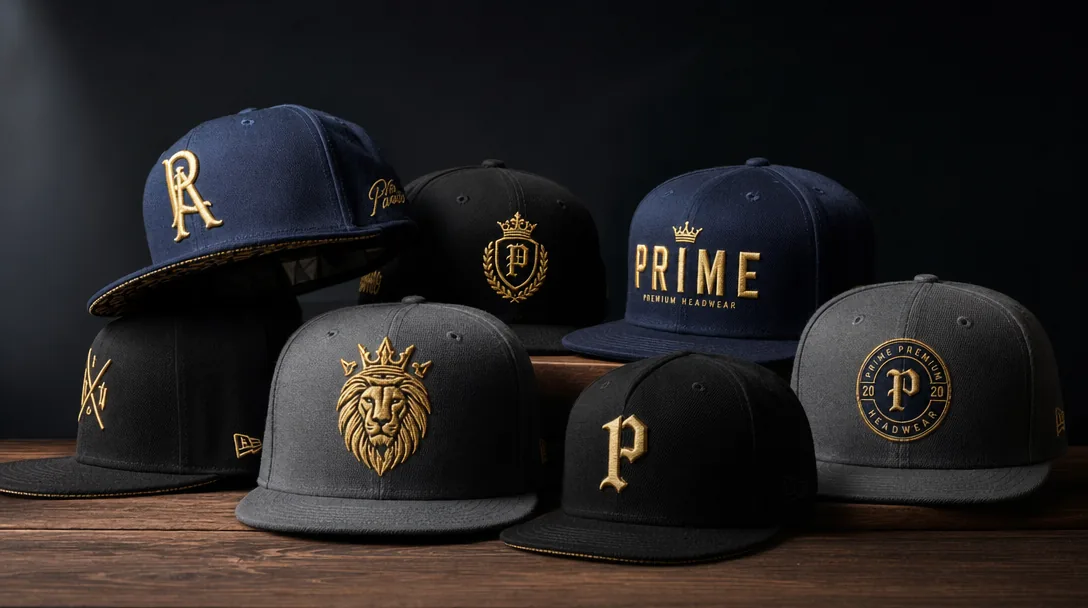
Custom Leather Patch Hat Low Minimum: A 2026 B2B Sourcing Guide
Read article →Mens Beanies: Properties, Costs and How to Spec It Right
Read article →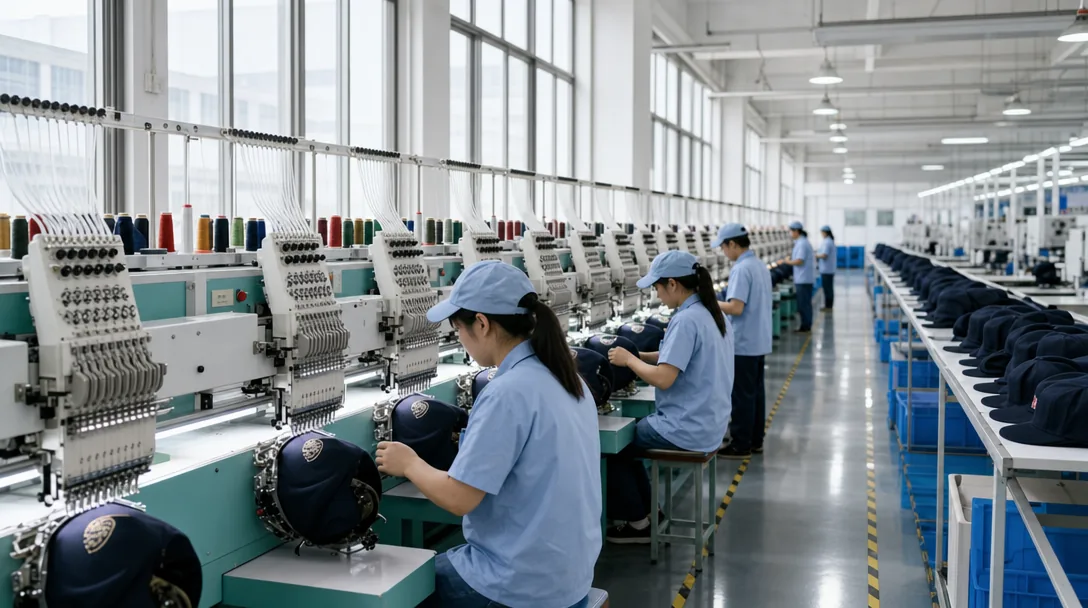
Bulk Trucker Hats Export Shipping Checklist for Custom Hat Buyers - Cost & MOQ Breakdown - Supplier Checklist
Read article →We hope this guide demystifies corduroy hat vintage fabric and trim spec guide for custom hat buyers (2026 update) and helps you move forward with confidence. If you have questions specific to your project, our English-speaking sales engineers are one message away.