
Corduroy Hat Vintage Export Shipping Checklist for Custom Hat Buyers - Cost & MOQ Breakdown - Cost & MOQ Breakdown
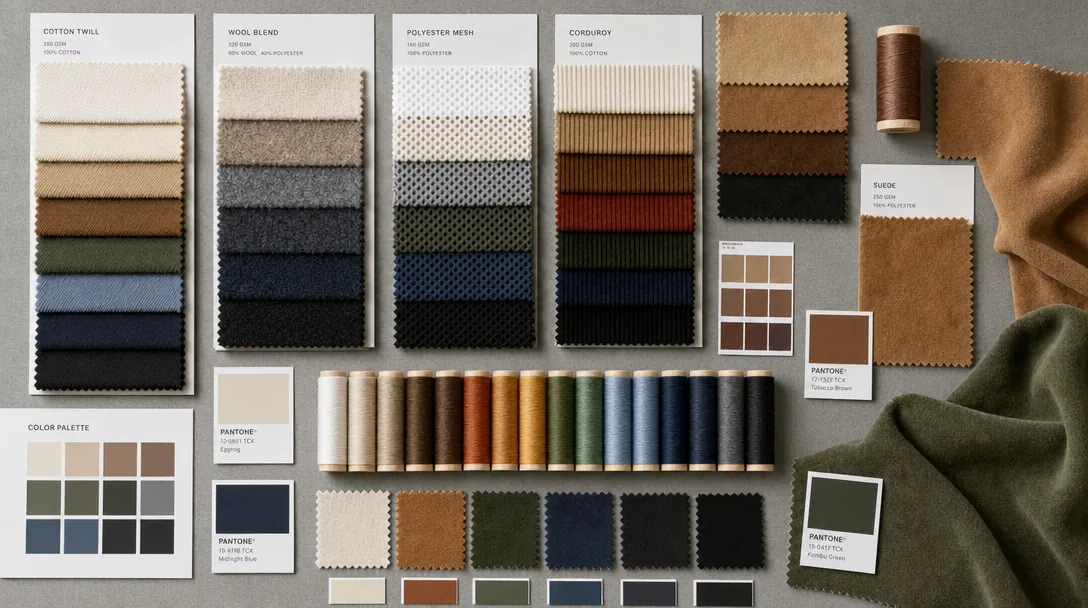
Every week, our sales team answers detailed questions about corduroy hat vintage export shipping checklist for custom hat buyers - cost & moq breakdown - cost & moq breakdown. We wrote this guide so that wholesalers, streetwear brands, corporate buyers and promotional resellers can compare options with full information, and avoid the traps that show up only after production has started.
Why corduroy hat vintage export shipping checklist needs a separate sourcing plan
A corduroy hat vintage export shipping checklist needs its own sourcing plan because the main risk is not sewing capacity; it is fabric behavior after dyeing, washing, decoration, and packing. An 8-wale cotton corduroy at 280-320 gsm gives a heavier workwear hand, while 14-wale fine corduroy at 210-230 gsm looks cleaner but loses structure faster after enzyme or stone wash. Those fabrics cannot share one shrinkage allowance. On stable cotton corduroy, I plan for 2-4% panel movement after garment wash; on loose-finished fabric or aggressive vintage fading, 5-7% is realistic. That difference changes crown height, seam tension, brim fit, and carton count. Brown, rust, olive, and washed black should be approved against Pantone TCX under D65 and TL84, with Delta-E agreed before bulk dyeing. A window-side color check is not enough for export production. CrownsForge usually adds 3-7 days at sampling for shade-band review, wash testing, and bulk-equivalent fabric approval because one unstable dye lot can make a 1,000-piece order look like three separate runs.
MOQ and cost should be built around the corduroy source, not a generic cap price. Stock corduroy can sometimes support 300-500 pieces per color for a 6-panel dad cap, but custom-dyed 100% cotton corduroy often starts at 800-1,500 pieces because fabric mills set vat minimums and charge for dye loss. Organic cotton corduroy with GOTS transaction certificates can add 12-25% to fabric cost and 10-15 days for document tracing, especially for EU buyers who need proof beyond a hangtag claim. Decoration also needs bulk-equivalent testing. A 9,000-stitch front logo that runs clean on brushed twill may need 15-20% more underlay or thread coverage on corduroy because the pile swallows narrow satin columns. Tajima, Barudan, and ZSK heads can all handle the job, but the digitizer must decide stitch direction, topping film, cutaway backing, and needle size before the final embroidery quote is reliable.
Shipping and compliance are where this checklist separates serious sourcing from a normal cap order. Washed corduroy bucket hats and unstructured 5-panels do not compress like twill caps; a 58 x 42 x 48 cm export carton may hold only 80-120 pieces instead of 150-200, which can raise DDP air freight to the U.S. or EU by about $0.70-$1.30 per unit depending on chargeable weight. Labels must be locked before bulk packing: fiber content, country of origin, care symbols, RN or importer details where required, and documented support for any recycled, organic, or low-impact dye claim. Final inspection at AQL 2.5 should include pile direction, shade bands across panels, seam puckering after wash, brim symmetry, snap or buckle function, needle detection records, and carton drop-test condition. For licensed retail or department-store programs, confirm sedex-audit-cap-supplier-guide.html">BSCI 2.0 or Sedex SMETA 4-Pillar status before deposit; an expired audit or open CAP can delay shipment longer than fabric sourcing.
Factory capability checks before quoting
Do not quote a vintage corduroy cap until the factory proves decoration on the exact wale, weight, and finish being ordered. Corduroy ribs distort small satin stitches, especially on 8-wale and 11-wale fabric, so require an embroidery strike-off from Tajima, Barudan, or ZSK heads on nominated 280-340 gsm corduroy, not leftover cotton twill. For logos under 6 mm, I normally reduce stitch density 10-15% versus twill and reject 3D puff on narrow text because the foam edge turns rough after brushing, steaming, and blocking. Woven patches need merrowed or laser heat-cut edges with no loose yarns after abrasion; leather patches need backing colorfastness tested against wet pile; PVC or rubber patches usually need an $80-$180 mold charge before unit price is meaningful. For washed black, olive, burgundy, and tobacco brown, specify Pantone TCX under D65 light with Delta-E 1.5-2.0 tolerance, because pile direction can make a correct dye lot look half a shade off.
Construction capability is where many cheap quotes collapse. A 6-panel corduroy hat must keep wale direction consistent from crown panels through the visor top; one cross-grain panel creates a false shading defect even when lab dips are approved. Bucket hats need separate patterns for 8-wale, 11-wale, and 14-wale goods because seam bulk, brim roll, and crown collapse change between 280 gsm light corduroy and 340 gsm heavier winter fabric. Ask for three separate approvals: fit sample, decoration strike-off, and pre-production sample, with realistic timing of 7-12 working days after artwork, trim card, and fabric color are confirmed. Closures should be itemized, not buried in one FOB number: brass buckle with tuck strap adds about $0.18-$0.35, plastic snapback $0.10-$0.22, and hook-and-loop $0.08-$0.16 depending on grade. If the supplier cannot explain MOQ by fabric color, dye-lot minimum, cutting loss, and decoration setup, the price is not reliable enough for a purchase order.
A practical corduroy hat vintage export shipping checklist starts during quotation, not when cartons are already sealed. Buyers supplying retail chains, licensed teams, or university bookstores should collect current BSCI 2.0, Sedex SMETA 4-Pillar, or equivalent audit files, plus needle-control records and metal-detection procedures for youth sizes. Confirm the factory accepts AQL 2.5 final inspection, color-shading segregation by carton, barcode scanning, carton-mark approval, and a basic drop test before production begins. Our standard practice at CrownsForge is to control the tech pack, trim card, wash standard, HS code notes, Incoterms, carton dimensions, and shipping marks on one approval sheet so merchandising and logistics work from the same version. A capable supplier should answer MOQ, sample timing, fabric lead time, decoration limits, FOB basis, and DDP assumptions within 24-48 hours. Slow, vague answers during quoting usually become real costs later, especially when vessel cutoff, customs documents, or a failed pre-shipment inspection needs same-day correction.
MOQ, pricing and sample approval
Quote MOQ by fabric color, wale count, and dye lot, not by cap silhouette. Corduroy is directional; if a 14-wale front panel and 21-wale side panel are mixed, or if the nap is cut against grain, the hat will show panel shading even when the lab dip is correct. For stock 100% cotton corduroy in 14-wale or 21-wale, a realistic export MOQ is 300 pieces per color. Piece-dyed Pantone TCX fabric usually starts at 500 pieces per color, while GOTS organic cotton corduroy with transaction certificates is rarely worth quoting below 1,000 pieces because mill minimums and certification paperwork eat the margin. At 500 pieces, a soft unstructured 6-panel cap in 280-320 gsm corduroy normally lands at USD 3.30-5.90 FOB Yiwu. A lined corduroy bucket hat is higher, usually USD 4.70-7.40 FOB, because the brim consumes fabric and needs cleaner pressing.
Decoration and trim are where many vintage programs miss the real cost. Flat embroidery digitizing is usually USD 25-60 per logo; 3D puff requires a separate file, 2-3 mm foam testing, and a pull check after steaming. Chenille, felt applique, or debossed vegan leather patches commonly add USD 80-150 for dies or molds before bulk production starts. On Tajima, Barudan, or ZSK heads, embroidery on corduroy should avoid heavy satin columns; 0.38-0.42 mm stitch spacing is safer because dense thread crushes the wale and leaves a shiny pressure mark. Antique brass buckles, branded snaps, woven taping, printed sweatbands, and custom care labels often carry 500-1,000 piece trim MOQs, even when the sewing MOQ is only 300 pieces. Our standard practice at CrownsForge is to approve fabric, thread, trims, barcode, carton mark, and care label together before bulk cutting.
The pre-production sample is the buyer’s physical contract, so the corduroy hat vintage export shipping checklist should treat PPS approval as a shipment gate, not a courtesy photo. A usable PPS approval must lock crown height, brim width, panel symmetry, wale direction, seam allowance, embroidery placement tolerance within 2 mm, label position, packaging method, and barcode scan result. Lab dips should be checked under D65 and TL84 light, with Delta-E below 1.5 for solid piece-dyed corduroy and below 2.0 for pigment-washed vintage goods. Stock-fabric samples usually cost USD 50-120 and take 7-10 days; custom dye, molded buckles, or applique molds can push sampling to USD 180-300 and 15-25 days. After approval, plan 25-35 days for 300-800 pieces, 35-50 days for multi-color assortments, plus extra buffer before Lunar New Year. Final release should include AQL 2.5 major / 4.0 minor inspection, 175 lb burst-strength cartons, silica gel for humid routes, and confirmed HS code, duty, and DDP surcharge assumptions.
Quality inspection and shipping risk
The highest-risk point in a vintage corduroy cap is still the cutting table, not final packing, because pile direction can make the same dye lot look like two colors. Every panel should be cut with the wale running in the approved direction and checked under a D65 light box against the sealed lab dip or Pantone TCX standard. For solid cotton corduroy at 260-320 gsm, I normally hold Delta-E to 1.5-2.0, but black, olive, chocolate, and rust need visual approval because pile shadow can hide side-to-side shade bands. Dry crocking should reach Grade 4 and wet crocking Grade 3-4 under ISO 105-X12, especially when the cap has a white sweatband, light lining, or clear poly bag. Final inspection should use ANSI/ASQ Z1.4 Level II with AQL 2.5 for major defects, AQL 4.0 for minor defects, and zero tolerance for critical issues. On a 3,000-piece lot, that means a 125-piece sample and rejection at 8 major defects.
The inspection sheet must call out corduroy-specific failures instead of burying them under general sewing comments. Reversed pile panels, crooked wale alignment at the front seam, crushed brim edges, exposed buckram, shade bands, oil marks, off-center eyelets, and nap flattened by over-pressing should be major defects. For bucket hats, measure brim width, crown height, binding width, and head circumference across at least 13 pieces per size/color group; keep visible dimensions within +/-3 mm and circumference within +/-5 mm unless the approved vintage fit is intentionally loose. Embroidery needs extra attention because raised wales magnify registration errors. On Tajima, Barudan, or ZSK heads, the digitizer should use firm underlay, reduce density on high pile, avoid satin columns under 1.2 mm, and test backing removal before bulk sewing. Inspectors should compare thread to the approved Madeira or Gunold card and reject puckering, needle cuts, backing show-through, skipped stitches, loose bobbin loops, and thread tails over 3 mm.
A useful corduroy hat vintage export shipping checklist prevents retailer deductions after the goods have already passed QC. Before booking FOB Ningbo, FOB Shanghai, or DDP delivery, match carton marks, SKU labels, country-of-origin labels, fiber content, care instructions, poly bag suffocation warnings, HS code, packing ratio, carton dimensions, gross weight, and net weight against the PO and packing list. Use 5-ply export cartons for corduroy caps and keep gross weight around 12-15 kg; overloading 180-200 pieces into weak cartons may save $0.03-$0.06 per unit but often causes crushed brims, deformed crowns, and chargebacks that cost far more. For organic cotton or recycled claims, the scope certificate, transaction certificate, BOM, and commercial invoice wording must match exactly. CrownsForge archives the signed pre-production sample, fabric cutting approval, embroidery strike-off, AQL report, invoice, packing list, and forwarder SO number so reorders do not drift in shade, fit, labeling, or landed cost.
Buyer checklist for the next RFQ
Start the RFQ by locking the product, because a “vintage corduroy cap” can mean five different factory routings. Name the silhouette: 6-panel unstructured dad cap, 5-panel camper, low-profile snapback, bucket, or trapper. Then specify crown height in cm, brim length and board thickness, panel count, seam tape color, sweatband material, closure type, eyelet count, and brim shape: flat, pre-curved, or sandwich. For the corduroy hat vintage export shipping checklist, define fabric by wale and weight, not just color. An 8-wale cotton corduroy at 280-320 gsm gives a heavier retro hand, while 11-wale at 240-270 gsm is cleaner for small embroidery. If you claim organic cotton, state whether you require GOTS-certified fabric with transaction certificates or only organic yarn content. Use Pantone TCX references for shell, thread, strap, and underbrim, with Delta-E under 1.5 on lab dips and under 2.0 on bulk production.
Decoration details should be quote-ready, not guessed from a mockup. Send AI or PDF vector artwork, plus DST or EMB files if the logo has already been digitized; a 300 dpi PNG is only a placement reference. Give logo width in mm, position from center front or side seam, stitch type, thread count expectations, and minimum letter height. Tajima, Barudan, and ZSK heads can run clean flat or 3D embroidery on corduroy, but serif text under 4 mm usually fills in because the ribs lift the stitch path. For patches, define woven, felt, leather, rubber, or printed twill, plus border, backing, and attachment method. If the vintage effect depends on enzyme wash, pigment wash, garment wash, or snow wash, approve decoration after washing; circumference can shrink 0.5-1.0 cm, crown panels soften, and embroidery tension can shift.
Commercial terms need the same precision as the tech pack. State quantity by color and size, Incoterm, target ship date, destination port or ZIP code, packing method, carton marks, barcode needs, and inspection level. Typical MOQs are 100-300 pieces per color for stock corduroy, 500-1,000 pieces for custom Pantone TCX dyeing, and 1,000+ pieces when certified organic fabric is required. A basic corduroy cap usually lands around USD 3.20-4.80 FOB China; pigment wash, 3D embroidery, custom buckle, branded taping, and retail polybag/carton packing can move it to USD 5.50-8.50. Our standard practice at CrownsForge is to separate sample fee, digitizing or mold charge, bulk unit price, export carton packing, freight basis, and third-party inspection cost. Before bulk, confirm AQL 2.5 for major defects, AQL 4.0 for minor defects, and whether BSCI 2.0 or Sedex SMETA 4-Pillar documents are required.
Working with CrownsForge
Lock fabric risk before logo placement; corduroy fails first at shade, shrinkage, and pile direction. A workable corduroy hat vintage export shipping checklist should specify wale count, finished gsm, shrinkage tolerance, and Delta-E before sampling starts. For vintage 6-panel caps and unstructured dad hats, 8-wale or 11-wale cotton corduroy at 260-320 gsm gives enough body without making the crown boxy; bucket hats usually sew cleaner at 230-260 gsm because the brim needs to fold after parallel topstitching. Lab dips should be matched to Pantone TCX under D65 lighting, with Delta-E held under 1.5 for black, navy, forest, chocolate, and washed brown. Brown is the risky one: after enzyme wash or garment wash it can drift red, olive, or gray. Our standard practice at CrownsForge is to approve roll shade bands, shrinkage after wash, and pile direction before bulk cutting, not during inline QC when the loss is already built into the order.
Decoration has to be engineered for corduroy ribs, not copied from a cotton twill cap file. On Tajima, Barudan, or ZSK heads, small text needs stronger edge-run underlay, lower top-stitch density, and satin columns tested around 0.35-0.40 mm so thread does not sink between the wales. Fine script under 5 mm height is usually a bad bet unless the buyer accepts thread bridges and reduced legibility. For distressed streetwear artwork, chenille, felt applique, woven patches, and debossed leather patches often look better and create fewer rejects than dense direct embroidery. MOQ is driven by fabric, not sewing capacity: stock corduroy colors can often run at 300-500 pieces per color, while custom-dyed corduroy is more realistic at 1,000-2,000 pieces because dyeing, lab dips, shrinkage testing, and roll-by-roll inspection carry fixed costs. Sampling typically costs USD 50-120 per style, and bulk FOB Ningbo pricing usually lands around USD 4.20-7.80 depending on structure, wash, patch, closure, and label package.
Write QC and shipping requirements into the purchase order before deposit, because late compliance fixes are expensive. Incoming inspection should check crushed pile, oil marks, shade bands, roll width, skew, usable meters, and fabric handfeel after steam. Inline QC should measure crown height, brim width, panel symmetry, stitch count, embroidery registration, sweatband alignment, back-strap length, buckle finish, and label position. Final inspection should use AQL 2.5 for major defects and AQL 4.0 for minor defects, with needle detection or metal detection when required by the buyer’s retailer manual. Before cartons are sealed, confirm HS code, fiber composition label, country-of-origin marking, polybag warning text, carton dimensions, gross weight, barcode format, and Incoterms. A 500-piece FOB Ningbo LCL shipment may cost about USD 180-350 before destination charges; DDP air for a launch deadline can add USD 3.50-7.00 per hat depending on carton volume, delivery zip code, and fuel surcharge. Request BSCI 2.0 or Sedex SMETA 4-Pillar documents before deposit, not after retailer compliance review.
Frequently Asked Questions
How long does production take?
Sampling takes 7 to 12 days. Bulk production runs 20 to 30 days depending on quantity, fabric availability and decoration complexity. Inspection and packing adds another 3 to 5 days before shipment.
Do you support sustainability certifications?
Yes. We work with GOTS organic cotton, GRS-certified recycled polyester, OEKO-TEX Standard 100 fabrics, and are BSCI and Sedex audited. Certification documentation can be provided per order.
What file format should I send for my logo?
Vector files (AI, EPS, PDF) are ideal. High-resolution PNG or JPG at 300 dpi on transparent background works as a fallback. Provide Pantone color references for accurate reproduction.
What is the minimum order quantity (MOQ) for custom hats?
Our standard MOQ is 100 pieces per design and color, with sampling available from 1 piece. For complex multi-color logos or premium fabric upgrades, the MOQ can be lowered with a small per-piece surcharge.
Can I order a sample before bulk production?
Yes. We strongly recommend approving a pre-production sample before mass production. Samples are charged at 35 to 60 USD each plus express shipping, fully refundable against confirmed bulk orders over 500 pieces.
What should buyers know about organic cotton bucket hat?
When evaluating organic cotton bucket hat, the key considerations are construction quality, decoration capability, MOQ flexibility and lead time. Explain the buyer intent behind corduroy hat vintage export shipping checklist, when it differs from generic hat sourcing, and what decisions affect cost, lead time and compliance. Describe how CrownsForge manages corduroy hat vintage export shipping checklist programs with sampling, decoration, QC and export coordination.
What should buyers know about brown corduroy bucket hat?
When evaluating brown corduroy bucket hat, the key considerations are construction quality, decoration capability, MOQ flexibility and lead time. Explain the buyer intent behind corduroy hat vintage export shipping checklist, when it differs from generic hat sourcing, and what decisions affect cost, lead time and compliance. Describe how CrownsForge manages corduroy hat vintage export shipping checklist programs with sampling, decoration, QC and export coordination.
What should buyers know about bucket hat men nike?
When evaluating bucket hat men nike, the key considerations are construction quality, decoration capability, MOQ flexibility and lead time. Explain the buyer intent behind corduroy hat vintage export shipping checklist, when it differs from generic hat sourcing, and what decisions affect cost, lead time and compliance. Describe how CrownsForge manages corduroy hat vintage export shipping checklist programs with sampling, decoration, QC and export coordination.
What should buyers know about vintage bucket hat mens?
When evaluating vintage bucket hat mens, the key considerations are construction quality, decoration capability, MOQ flexibility and lead time. Explain the buyer intent behind corduroy hat vintage export shipping checklist, when it differs from generic hat sourcing, and what decisions affect cost, lead time and compliance. Describe how CrownsForge manages corduroy hat vintage export shipping checklist programs with sampling, decoration, QC and export coordination.
How to ship vintage hats?
In general, you can safely package most hats inside cardboard boxes. You should wrap them in a protective layer or place enough packing material inside to protect the hat from any residue that leaks onto the box. Most hats have a hard brim, visor, bill, or crown that must retain its shape during shipping.
How to clean a thrifted corduroy hat?
As long as it's not a vintage hat, needing special care, spot clean the hat with mild, diluted detergent before submerging it completely in water. Let it soak for up to 15 minutes. Then, rinse the hat thoroughly in warm or cold water before gently patting it dry with a towel, reshaping it and leaving it to air dry.
Can I ship hats in poly mailers?
You can wrap the hat in tissue paper or place it in a plastic bag for added protection against moisture or dust. Make sure it fits comfortably without being overstuffed. If you're using a poly mailer, you might add a small piece of bubble wrap for extra protection.
What size box to ship a hat in?
Something I learned this year: ship your hats in 16x16x6 boxes.
How to ship a hat without a box?
In some instances, maybe you don't need a box. Instead of always using a box, you can choose to ship soft and bendable hats in a plastic shipping bag with some protective material. This method can save you on shipping costs, but you do lose the protection of the box to keep the shape of the hat.
What size box should I use to ship a hat?
And then the distance.
What is a shipping checklist?
A shipping checklist is a vital tool for businesses involved in shipping goods. It ensures that all necessary steps are followed, reducing the risk of errors that could lead to delays, additional costs, or customer dissatisfaction.
Can you ship a hat in a poly mailer?
Because they're soft and pliable, beanies and many winter hats usually don't need boxing and padding for shipping. These packaging tips will help them arrive ready to ward off the cold: Use a poly mailer. Skip the box.
What is the best way to mail a hat?
In general, you can safely package most hats inside cardboard boxes. You should wrap them in a protective layer or place enough packing material inside to protect the hat from any residue that leaks onto the box. Most hats have a hard brim, visor, bill, or crown that must retain its shape during shipping.
Looking for a reliable hat manufacturer in China?
CrownsForge has produced custom hats for 800+ brands across 40 countries. From 100-piece launches to 100,000-piece retail programs, we deliver on time and on spec.
Get in touchRelated guides
Custom Leather Patch Hat Low Minimum: A 2026 B2B Sourcing Guide
Read article →
Mens Beanies: Properties, Costs and How to Spec It Right
Read article →
Custom Hat Patch: When to Use It, Costs, and What to Ask Your Factory - Cost & MOQ Breakdown (2026 Update)
Read article →We hope this guide demystifies corduroy hat vintage export shipping checklist for custom hat buyers - cost & moq breakdown - cost & moq breakdown and helps you move forward with confidence. If you have questions specific to your project, our English-speaking sales engineers are one message away.