
Corduroy Hat Men's: Properties, Costs and How to Spec It Right - Cost & MOQ Breakdown - Cost & MOQ Breakdown
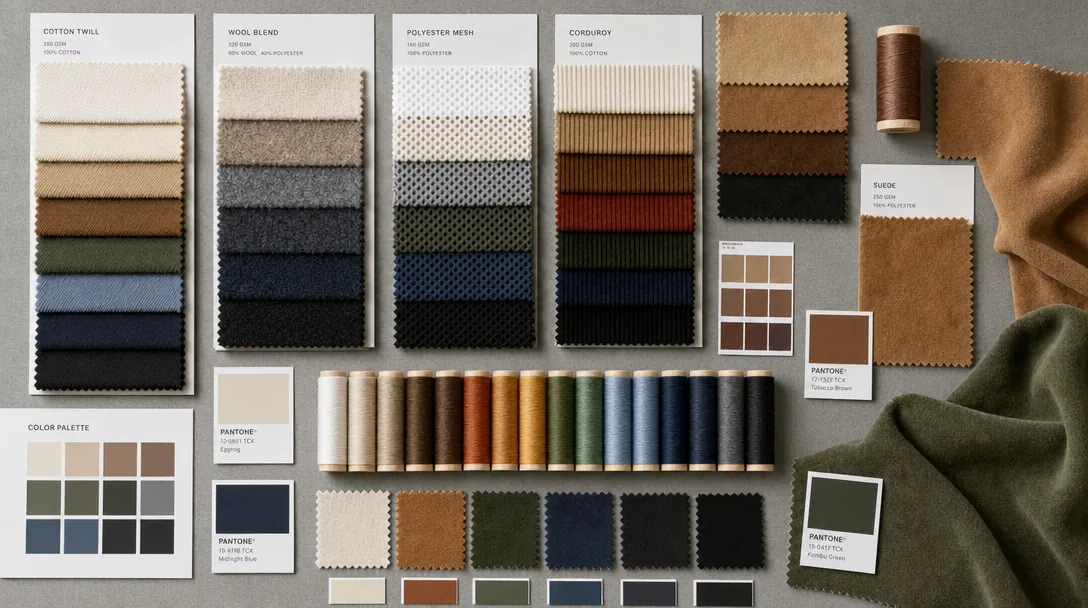
Corduroy Hat Men's: Properties, Costs and How to Spec It Right - Cost & MOQ Breakdown - Cost & MOQ Breakdown is one of the most-asked questions we receive from international buyers, and for good reason. With dozens of factories competing for your order and an alphabet soup of technical terms in every supplier quote, even experienced importers can feel lost. This guide consolidates what we have learned producing custom hats for clients in 40+ countries.
Bucket Hat Women
Fabric spec is what separates a sellable women’s bucket from a giveaway, and the same discipline applies when you benchmark against a corduroy hat men's line. Write the shell clearly in the tech pack: 11W to 14W cotton corduroy gives a pronounced wale and enough body for a clean brim roll, while 16W micro-cord reads lighter and less bulky for spring deliveries. For bucket construction, 220–280 gsm is the safe range; under 210 gsm the brim loses recovery after export carton compression, and over 300 gsm you start fighting seam torque and crown distortion unless the pattern adds easing. If stretch matters, specify 97/3 cotton-spandex or 98/2, not vague language like “slight elasticity,” because mills, cutting rooms, and QC teams will all interpret that differently. Most factories cut a bucket as 6 or 8 side panels, a round top, and a separate brim ring, then back selected zones with 40–75 gsm nonwoven fusible to keep shape without making the hat feel hard. Corduroy also needs the nap direction marked panel by panel; if one brim section is flipped, the shade can look one to two tones darker under retail lighting even when the lot is perfectly matched. If you are color-matching to Pantone TCX, ask for a lab dip tolerance of Delta-E 1.5 or tighter on dark fashion colors, because corduroy’s pile reflects light unevenly and makes loose approvals look worse on finished goods than on flat swatches.
MOQ is driven far more by fabric and trim decisions than by the bucket silhouette itself. In Zhejiang, a stock-color bucket usually starts around 300–500 pieces per color per style, but custom-dyed corduroy often requires 800–1,000 meters per shade at the mill. Depending on marker yield and brim width, that can push practical MOQ to 1,000 pieces or more. FOB pricing at 500 pieces for a basic stock-twill women’s bucket is typically $2.10–$3.20; a corduroy version lands closer to $2.80–$4.40 once you include lining, woven main label, sweatband, and a 5,000–7,000 stitch front logo run on Tajima or Barudan heads. Buyers comparing it with a simpler corduroy hat men's cap usually miss how quickly small trim upgrades stack up. The defects worth policing are predictable. Brim waviness usually comes from the wrong SPI on heavier wale fabric or poor feeding where the brim seam crosses bulk; on corduroy, that problem shows immediately when the hat is worn. Embroidery puckering is the next common failure because digitizers reuse a flat twill file instead of reducing density, adding pull compensation, and using water-soluble topping so stitches do not sink into the ribs. Our standard practice is AQL 2.5 inspection with checkpoints for brim circumference tolerance, eyelet symmetry, seam slippage, sweatband join cleanliness, crocking on dark colors, and needle damage along the wale. Those controls matter on any corduroy hat men's program, but bucket hats expose mistakes faster because the circular brim makes even small distortions obvious on head.
Camouflage Bucket Hat
Camouflage bucket hat cost is dictated by fabric and print strategy, not the pattern itself. The most commercial setup is cut-and-sew in stock camo cotton twill at 180 to 220 gsm or poly-cotton ripstop around 210D to 300D; that usually keeps MOQ at 300 to 500 pcs per colorway and FOB China around $2.20 to $3.80 for a basic 4-panel or 6-panel bucket with woven main label and care label. Custom camouflage changes the math fast. Rotary or screen-printed yardage is the cheapest at volume, but digital pigment printing is more practical below roughly 800 to 1,000 pcs when artwork has fine branches, marsh patterns, or sharp contrast transitions. Yarn-dyed camouflage exists, but in headwear it is niche, slow to source, and hard to justify unless the program has strict wash durability or licensing requirements. A usable tech pack should lock brim width at 7.5 to 9.0 cm, brim stitch rows at 6 to 8, eyelet inner diameter at 4 to 5 mm, sweatband spec, and whether the underbrim stays self-fabric or switches to solid olive, black, or khaki to reduce visual clutter. For licensed, hunting, or military-inspired orders, lab approval is only half the job. Require a Pantone TCX reference or physical swatch, then set Delta-E tolerance under 1.5 on dominant tones and under 2.0 on secondary tones, but also approve print placement on actual cut panels. Camouflage can match in the light box and still look wrong once the marker cuts through light and dark areas unevenly. Bulk specs should include shrinkage below 3 percent after wash, stitch density at 8 to 10 SPI, seam allowance, brim interlining weight, and colorfastness to crocking and perspiration. If decoration is added, specify the machine class; Tajima, Barudan, or ZSK heads hold cleaner satin text and small fills on curved bucket panels than low-tension generic setups, especially over coarse twill or ripstop. Compared with a structured corduroy hat men's cap, a bucket is usually cheaper to sew because there is no buckram, less crown shaping, and fewer pressing steps, but print balance makes pre-production approval more demanding.
Inspection is where camouflage bucket programs usually break down. The repeat defects are easy to spot on the line: panel-to-panel print imbalance, topstitch waviness on the brim from poor feed control, skewed eyelets, and brim interlining that softens or buckles after washing. Set final inspection at AQL 2.5 and do more than a tabletop visual check. Measure brim width at four points with tolerance clearly stated, confirm finished circumference, count stitch density, and pull-test the sweatband join because a bucket can look acceptable while still feeling cheap in hand. On printed fabric, the critical checkpoint is before sewing: compare cut components against the approved strike-off and marker plan. Once the lay is off and light zones stack on one side of the crown, no end-line QC can rescue the visual balance. Custom-printed camouflage usually pushes MOQ to 800 to 1,200 pcs because fabric mills want minimum print runs and cutting waste is higher than buyers expect; FOB commonly lands at $3.80 to $6.50 with inside taping, woven labels, and standard polybag packing. Add-ons move cost quickly: metal eyelets add about $0.08 to $0.18 per piece, a chin cord with stopper about $0.20 to $0.45, and all-over embroidery can add $0.60 to $1.20 depending on stitch count and machine time. Our standard practice is to review lay planning before bulk cutting, because marker placement decides whether the finished hat reads balanced or patchy. Buyers developing both camouflage buckets and corduroy hat men's styles in one program should not combine approvals: corduroy risk sits in wale direction, pile crush, and nap shade variation, while camouflage bucket risk sits in print placement, brim stability, and stitch consistency.
Organic Cotton Newborn Hat
Paperwork and chemical compliance drive the risk on an organic cotton newborn hat; sewing is the easy part. If the PO says only “organic,” the factory still cannot know whether the claim must be backed by GOTS, OCS 100, or a mill self-declaration, and that changes segregation, transaction certificates, and carton labeling at export. For infant headwear, I would spec combed organic cotton jersey at 180–220 gsm for a soft hand and low bulk, or 1x1 rib at 240–280 gsm when you need stretch recovery without adding 3–5% elastane that weakens recyclability claims. Shade control should be written into the spec: lot-to-lot Delta-E 1.5–2.0 max under D65 lighting, azo-free dyestuffs, formaldehyde within infant limits, and pH in the 4.0–7.5 range. If there is any trim at all, require nickel-free snaps or eyelets, though most serious buyers avoid metal entirely on newborn programs.
The spec sheet needs measurable tolerances, not soft language. Call out finished circumference by age band, garment weight tolerance at ±5%, shrinkage below 5% after three home-laundry cycles, washing colorfastness grade 4 minimum, and saliva or perspiration fastness where the market requires it. Construction should be 4-thread overlock with a turned hem or coverstitch, with bartacks only where tabs or knots create stress points; otherwise extra reinforcement just adds bulk against sensitive skin. In Yiwu-area production, MOQ for true organic segregation is typically 1,000–1,500 pcs per colorway on cut-and-sew baby hats, while stock fabric programs can open around 300–500 pcs. FOB pricing usually lands at $0.85–$1.40 at 3,000 pcs for a simple beanie, then climbs to $1.60–$2.30 with all-over print, gift box packing, or GOTS handling fees.
Most failures show up before final inspection if you know where to look: twisted seams from cutting before fabric relaxation, oil stains from neglected overlock stations, seam grin after wash, and harsh hand feel from overdone enzyme finishing. A 1 cm circumference error is a bigger retail problem here than on a corduroy hat men's style because infant fit windows are narrow and return rates jump fast when the hat rolls or binds. Do not approve from a salesman sample made off lab-dip yardage; insist on a pre-production sample cut from bulk-knitted fabric after 24-hour relaxation and wash testing. Our standard practice is AQL 2.5 final inspection with extra checks on needle logs, carton cleanliness, label placement, odor, and bowing after wash. Suppliers that also run corduroy hat men's orders may have decent discipline on pile direction and shade matching, but infant organic programs still require tighter chemical paperwork and cleaner handling on the sewing floor.
Beanies for Men
Beanies for men do not share a production logic with a corduroy hat men's program, and buyers who copy cap specs into knitwear usually create avoidable failures. A beanie is knitted on computerized flat or circular machines—typically 3GG, 5GG, 7GG, or 12GG depending on hand feel and seasonality—then linked at the crown, cuffed, steamed, measured, metal-checked, and packed. The biggest quality lever is yarn specification. If the tech pack just says “acrylic beanie,” the supplier will almost always cost it with commodity 100% acrylic 2/28Nm or a weak acrylic/poly blend that pills fast and loses rebound after limited wear. For better retail performance, specify fiber content, yarn count, gauge, and finish: 100% cotton 21s/2 for spring, 50% viscose/30% polyester/20% nylon for a softer fashion hand, or 55% recycled polyester/45% acrylic with anti-pilling finish for winter. Lock in finished weight, relaxed opening, body height, cuff height, and stretch-recovery criteria. For color, approve to Pantone TCX and hold bulk within Delta-E 1.5, especially on black, navy, and forest where lot drift shows immediately under retail LEDs.
Cost moves first with yarn choice, knit structure, and decoration method. A basic 1x1 rib beanie in stock-color acrylic usually makes sense at 300-500 pcs per color, with FOB China around $1.20-$2.10; add a woven loop label and real pricing is closer to $1.35-$2.30. Once you shift into custom-dyed yarn, jacquard logos, intarsia, pom-poms, sherpa or polar-fleece lining, MOQ often rises to 1,000 pcs per color because the yarn mill minimum, setup waste, and slower sewing content all stack up. In practice, those programs usually land around $2.40-$4.80 FOB with 7-12 extra days on top of a standard 25-35 day production window. Embroidery on finished knit can be done on Tajima or Barudan heads, but fine copy under 4 mm and thin outlines tend to distort because the knit shifts under hoop tension. Inspection is where margins are protected. Approval photos never catch spiraling seams, dropped stitches, oil marks, cuff torque, twisted labels, or poor recovery after washing. AQL 2.5 is a reasonable baseline, but premium retail programs should tighten measurement tolerances and pilling checks because those are the defects that drive returns. Our standard practice is to measure body height relaxed and stretched, verify straight needle lines, check cuff lay-flat, and run basic crocking on dark shades that may rub against light outerwear. Keep technical files separate by category: adult knit caps, infant hats, and corduroy hat men's products do not share the same compliance or construction risks, and the cheapest knit vendor is rarely the right factory for all three.
Corduroy Hat Wholesale
Corduroy hat wholesale is decided by fabric control long before silhouette or logo method. “8-wale corduroy” is only a surface description; it is not a production spec. For a reliable corduroy hat men's program, lock the fabric to fiber content, finished weight, wale count, pile direction, shrinkage, and color standard before asking for price. The safest commercial range is 100% cotton or 98/2 cotton-spandex at 240-320 gsm, with 8W or 11W working best for most 6-panel baseball caps and 14W better suited to cleaner 5-panel fashion shapes. Pile direction has to run consistently across all crown panels and the visor top, or the same navy will read as two shades under store LEDs because corduroy reflects light differently depending on nap. I would spec Pantone TCX plus a Delta-E tolerance checked under D65 lighting; on black, dark navy, and forest, holding bulk fabric within Delta-E 1.5 is realistic if the mill is disciplined about dye lots. Without that control, you end up arguing about “shade variation” that is really nap inconsistency.
Trim and construction specs matter more on corduroy than on chino twill because the ridges create bulk, memory, and embroidery instability. Call out front-panel support, buckram or fusible type, visor insert material, sweatband composition, closure hardware finish, and logo application in the tech pack. Dense text and tight satin columns will fill in on ridged ground unless the digitizer opens the artwork, reduces stitch count, and compensates for pile push; on Tajima or Barudan heads, 650-750 spm is a practical ceiling for dense embroidery on 8W corduroy if you want to avoid flagging, thread breaks, and pile crush. For semi-structured caps, our standard practice is light fusible support on the front panels because unsupported corduroy tends to ripple around eyelets and the center-front seam after steaming or carton compression. Typical MOQs are 144-300 pcs per color with standard trims, rising to 500-1,000 pcs for custom dyeing, branded seam tape, or bespoke labels. In Yiwu or Dongguan, FOB on a basic 6-panel corduroy hat men's cap with direct embroidery is usually $3.20-$4.80 at 300-500 pcs; with custom lining, metal clasp, patch application, and audited production under sedex-audit-cap-supplier-guide.html">BSCI 2.0 or Sedex SMETA 4-Pillar, $4.80-$6.80 FOB is a more honest number.
The failure points are predictable, so write them into PP comments and final inspection instead of negotiating them after shipment. The first defects I check are nap shading between adjacent panels, visor twist caused by bulky seam turn-ins, seam slippage at side crown joins, embroidery distortion across ribs, and pile crush from overpacking. AQL 2.5 is suitable for most wholesale orders, but the checklist has to be corduroy-specific: confirm pile direction panel by panel, visor-to-crown alignment, eyelet stitch density, closure attachment strength, and finished head opening after pressing. Corduroy can relax 0.5-1.0 cm after final steam, so circumference tolerance should be written into the spec, not assumed from a twill cap standard. On dark shades, ask for dry and wet crocking results and require fabric photos in both brushed and reverse-pile directions; that catches weak dye fixation and lot-to-lot shade drift much earlier than a hanger swatch. When comparing suppliers, consistent fabric sourcing and competent embroidery digitizing are worth far more than a quote that is $0.20 cheaper on paper.
Wholesale Hat Manufacturers Usa
When buyers search wholesale hat manufacturers usa for a corduroy hat men's program, the useful question is not where the sales rep sits; it is who controls fabric, cutting, and cap QC. Most U.S. importers are still buying the body offshore because domestic cut-and-sew on small runs usually lands around $7.50 to $12.00 per cap, while a stable China or Vietnam line can hold a clean 6-panel FOB around $3.20 to $5.80 before duty and freight. For corduroy, I would not spec below 280 gsm. The safe range is 280 to 320 gsm in 100% cotton 8-wale or 11-wale; lighter cloth tends to creep at the seam, show needle drag, and lose shape after pressing. If the silhouette needs structure, call out a low-shrink woven fusible on the two front panels and specify the visor insert, typically HDPE or recycled PE board at 1.8 to 2.2 mm. The weak point on many wholesale programs is not the shell fabric but the components hidden inside. A cheap brushed tricot sweatband saves only a few cents yet feels noticeably hotter and rougher than a 180 to 220 gsm cotton twill or poly-cotton band. Closure hardware also affects retail perception: plated buckles chip, imitation leather cracks, and low-grade hook-and-loop pills quickly against cord pile. Any vendor claiming experience should be able to discuss nap direction control during cutting, center-front wale alignment notching, and how they prevent pile crush during hooping, steaming, and carton packing. If they cannot answer that in technical terms, they are probably treating corduroy like generic chino twill.
The spec sheet is where most corduroy hat men's orders are won or lost. Lock the shell to a Pantone TCX reference, require lab dips within Delta-E 1.5, and define crown height, brim curve, seam allowance, eyelet type, stitch count, closure construction, and logo method instead of leaving those to factory judgment. Embroidery behaves differently on ribbed fabric: flat embroidery is usually safest, while 3D puff can wash out the wale or create tunneling if the foam height, underlay, and pull compensation are wrong. On soft 8-wale, a woven or merrowed patch often gives a cleaner result than direct stitching. Ask what heads they run—Tajima, Barudan, or ZSK—because small text, satin columns, and pile suppression do not sew identically across machines. MOQ is usually driven by trim count and color complexity, not by whether the supplier calls itself wholesale. A basic unstructured 6-panel with self-fabric strap and roughly 5,000 to 8,000 stitches normally starts at 300 to 500 pieces per colorway. Cost is typically $3.20 to $5.80 FOB China; add genuine leather strap, custom seam tape, printed lining, or individual box packing and the range moves closer to $5.90 to $8.50 FOB. Sampling commonly runs $45 to $120, plus $15 to $35 for digitizing unless credited back on bulk. For final inspection, set AQL 2.5 and inspect specifically for seam drift on the center-front wale, hoop burns, visor waviness after pressing, crocking on dark dye lots, front-panel torque above 5 mm, and visor asymmetry above 3 mm. Those are the defects buyers notice the moment cartons are opened.
Working with CrownsForge for corduroy hat men's programs
A corduroy hat men's program goes wrong when the factory handles corduroy like brushed twill. The fabric has direction, memory, and visible pile crush, so the non-negotiables are wale alignment across the two front panels, visor top, and button wrap, plus controlled pressing temperature to avoid glazing the pile. For a clean retail result, we normally spec 8-wale or 11-wale cotton corduroy at 280-320 gsm for structured 6-panel caps, with panel-to-panel shade variation kept tight and approved against Pantone TCX references. A usable first proto takes 5-7 working days only if the tech pack already includes crown height, visor curve, closure type, sweatband spec, artwork layers, and label placement; custom lab dips, embossed PU tabs, or strike-offs on dyed-to-match fabric usually add 2-3 working days. MOQ is typically 144-300 pieces per colorway on stock corduroy, but once you ask for custom dye lots, matching underbrim fabric, or mixed decoration, 500-1,000 pieces per style is where marker utilization and trim purchasing stop inflating your unit cost.
Decoration is where most corduroy hat men's samples expose whether the supplier has real cap experience. Ribbed surfaces swallow detail, so front embroidery needs a file digitized for texture, not reused from a twill cap: lower stitch density, wider edge run, and underlay adjusted so the thread bridges the wale instead of sinking into the groove. On Tajima or Barudan heads, small serif logos and thin outlines often look soft unless you open them up by 0.2-0.4 mm in the artwork. 3D puff can work, but only selectively; on narrow-wale corduroy, foam higher than about 2 mm tends to distort the pile and telegraph unevenly after packing. Cleaner options are woven patches, merrowed emblems, suede appliqué, or nickel-free metal logo plates fixed with washers through reinforced panels. Sample budgeting should be realistic: $35-75 for a standard sewn sample, $80-150 if the cap needs custom hardware, several decoration trials, or new paper patterns. At CrownsForge, we treat bulk control the same way a disciplined headwear factory should: PPS approval before cutting, inline checks at 20-30% output, and final inspection to AQL 2.5 with attention to visor symmetry, seam puckering, loose backtack threads, and color tolerance around Delta-E 1.0-1.5 where the shell fabric allows it.
Frequently Asked Questions
What file format should I send for my logo?
Vector files (AI, EPS, PDF) are ideal. High-resolution PNG or JPG at 300 dpi on transparent background works as a fallback. Provide Pantone color references for accurate reproduction.
Which shipping methods do you support?
We support FOB, CIF and DDP shipping. Air express for samples and small orders, sea LCL for 100 to 500 pieces, sea FCL for 5,000+ pieces. Door-to-door DDP available for US, EU, UK, Canada and Australia.
Can I order a sample before bulk production?
Yes. We strongly recommend approving a pre-production sample before mass production. Samples are charged at 35 to 60 USD each plus express shipping, fully refundable against confirmed bulk orders over 500 pieces.
What logo decoration techniques do you offer?
3D puff embroidery, flat embroidery, woven patch, leather patch, PVC patch, screen printing, sublimation, applique and laser etching, all in-house with no subcontracting.
What is the minimum order quantity (MOQ) for custom hats?
Our standard MOQ is 100 pieces per design and color, with sampling available from 1 piece. For complex multi-color logos or premium fabric upgrades, the MOQ can be lowered with a small per-piece surcharge.
What should buyers know about organic cotton hat?
When evaluating organic cotton hat, the key considerations are construction quality, decoration capability, MOQ flexibility and lead time. Cover everything buyers ask about organic cotton newborn hat: how it's manufactured, what specs to request from a factory, typical MOQ and pricing, common quality issues to inspect for, and how this ties back to the broader corduroy hat men's sourcing decision. Cover everything buyers ask about bucket hat women: how it's manufactured, what specs to request from a factory,…
What should buyers know about cotton beanie men?
When evaluating cotton beanie men, the key considerations are construction quality, decoration capability, MOQ flexibility and lead time. Cover everything buyers ask about organic cotton newborn hat: how it's manufactured, what specs to request from a factory, typical MOQ and pricing, common quality issues to inspect for, and how this ties back to the broader corduroy hat men's sourcing decision. Cover everything buyers ask about bucket hat women: how it's manufactured, what specs to request from a factory,…
What should buyers know about men's corduroy bucket hat?
When evaluating men's corduroy bucket hat, the key considerations are construction quality, decoration capability, MOQ flexibility and lead time. Cover everything buyers ask about bucket hat women: how it's manufactured, what specs to request from a factory, typical MOQ and pricing, common quality issues to inspect for, and how this ties back to the broader corduroy hat men's sourcing decision. Cover everything buyers ask about camouflage bucket hat: how it's manufactured, what specs to request from a factory,…
What should buyers know about organic cotton men's shirts?
When evaluating organic cotton men's shirts, the key considerations are construction quality, decoration capability, MOQ flexibility and lead time. Cover everything buyers ask about organic cotton newborn hat: how it's manufactured, what specs to request from a factory, typical MOQ and pricing, common quality issues to inspect for, and how this ties back to the broader corduroy hat men's sourcing decision. Cover everything buyers ask about bucket hat women: how it's manufactured, what specs to request from a factory,…
Ready to start your custom hat project?
Send us your tech-pack, sketch or even just an inspiration photo. We will respond with a detailed quotation and digital mock-up within 24 hours.
Request a free quoteRelated guides
Custom Logo Hats: When to Use It, Costs, and What to Ask Your Factory - Supplier Checklist - Cost & MOQ Breakdown
Read article →
Cap Fabric Guide: Cotton Twill, Wool Blend, Polyester & Performance Materials
Read article →
Custom Wool Blend Ball Cap: A 2026 B2B Sourcing Guide - Supplier Checklist - 2026 Buyer's Guide
Read article →If you are ready to take the next step on corduroy hat men's: properties, costs and how to spec it right - cost & moq breakdown - cost & moq breakdown, our team can put a tailored quotation and digital mock-up in your inbox within 24 hours. Send the inquiry form on our contact page or message us directly on WhatsApp.