
Custom Wool Blend Ball Cap: A 2026 B2B Sourcing Guide - Supplier Checklist - 2026 Buyer's Guide
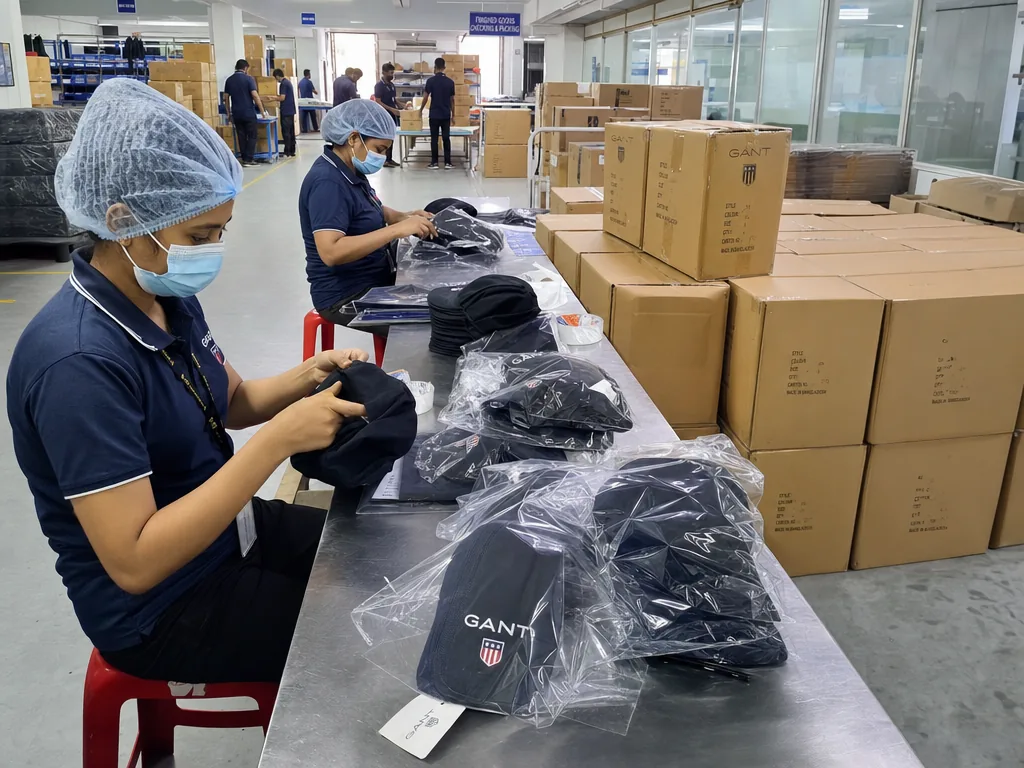
Every week, our sales team answers detailed questions about custom wool blend ball cap: a 2026 b2b sourcing guide - supplier checklist - 2026 buyer's guide. We wrote this guide so that wholesalers, streetwear brands, corporate buyers and promotional resellers can compare options with full information, and avoid the traps that show up only after production has started.
Organic Cotton Cap Wholesale Custom
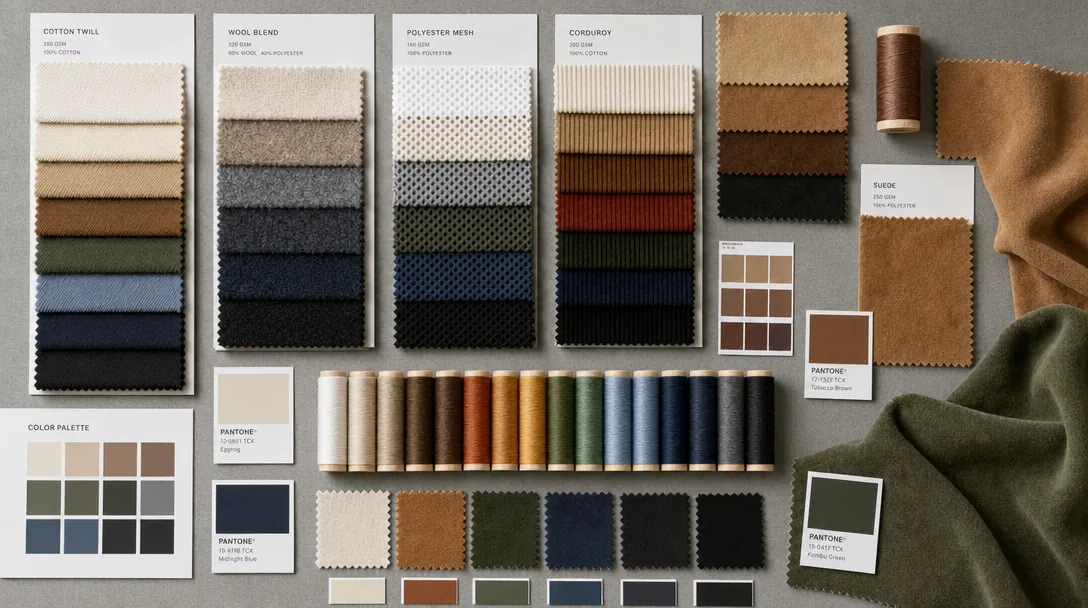
Fabric specification is where organic programs either stay clean or become a claims dispute. “Organic cotton” is not a usable PO term by itself; you need the exact cloth and certification scope: 8 oz brushed chino at 270 gsm, 10 oz twill at 300 gsm, or 12 oz canvas at 340 gsm each sew and wash differently, and the crown behavior changes with every step up in weight. Lock fiber content, weave, gsm tolerance at +/-5%, preshrink status, and colorfastness grades for dry/wet crocking and laundering. If the mill claims GOTS or OCS, ask for the transaction certificate before bulk cutting, and confirm whether only the shell fabric is certified or also the sweatband, seam tape, fusible, and label package. On construction, specify panel structure, buckram grade, visor board material, stitch density at 7-9 SPI, eyelet execution, and closure hardware on the tech pack rather than approving from a photo sample. Embroidery needs special handling on organic cotton because the base fabric has more give than acrylic twill or a typical custom wool blend ball cap front. If the digitizer runs standard fill density, small text will tunnel and the front panel will pucker after capping. We normally reduce fill density, rebalance edge-run and tatami settings, increase pull compensation, and test underlay on Tajima or Barudan heads before approving PPS. MOQ economics are also less forgiving than many buyers expect: stock certified fabric can work at 300-500 pcs per color, but custom Pantone matching on certified yarn is usually inefficient below 800-1,200 pcs because of dye-lot minimums, lab dips, and certificate paperwork. In Yiwu pricing, a 6-panel organic cotton cap with flat embroidery and self-fabric strap typically runs about $3.20-$5.80 FOB China at 500 pcs, with enzyme wash, recycled hook-and-loop, metal trim, or contrast seam tape adding roughly $0.25-$0.90 per piece.
The costly defects in organic cotton caps are usually subtle enough to slip through a casual inline check. Shade variation is the first one to control: compare cut panels to the approved standard under D65 lighting and hold Delta-E to 1.5-2.0, because organic dye lots often drift more than conventional cotton, especially on dark navy, olive, and washed black. After that, measure crown height within +/-0.5 cm, visor symmetry left to right, seam alignment at the center front, and skipped stitches where the sweatband joins the back seam. Softer yarns also increase the risk of needle cutting and seam grin, so a post-wash inspection matters more here than on polyester or heavier wool blends. AQL 2.5 is the right final standard only if the checklist is written for caps rather than generic sewn goods. Include bill curve consistency, closure pull strength, embroidery puckering after wash, carton humidity control, and barcode traceability by lot so any shade or sewing issue can be isolated back to the fabric roll. Against a custom wool blend ball cap, organic cotton is the better choice for summer retail, resort merchandise, and brands that need a straightforward sustainability story at a lower FOB. Wool blends justify the extra fabric cost when the program needs cleaner crown memory, better structured retention, and a more premium cold-season hand. Buyers who want the look of wool but lower risk in wet finishing should not assume the two materials are interchangeable; they fail in different ways on the production floor.
Recycled Polyester Cap Manufacturer Bulk
Traceability is the first pass/fail point on any recycled-poly cap order. If a supplier cannot provide GRS or RCS transaction certificates matched to the exact PO, color lot, and yarn source, the recycled claim is just sales copy. Most bulk programs run rPET filament yarn woven into 150-220 gsm brushed twill for standard six-panel caps, while lighter 120-160 gsm taslon, mini ripstop, or dobby is used when the brief calls for faster dry time and a more technical hand. Denier changes cap performance more than many buyers expect: 75D-150D gives a tighter face and cleaner embroidery definition, while 210D-300D holds crown shape better but feels stiffer and less like a classic custom wool blend ball cap. Water resistance also gets misstated constantly; a C0 or C6 DWR only improves spray shedding. If the cap is being sold as weather-resistant, the spec should state coating type and a target hydrostatic head, typically 1,000-3,000 mm, plus a note that most curved crown seams and eyelets are not realistically seam-tape friendly.
The spec sheet should control recycled polyester as tightly as a custom wool blend ball cap, because vague inputs create avoidable rework. Lock down fiber composition, gsm tolerance within plus or minus 5%, Pantone TCX reference, Delta-E tolerance of 1.0-1.5 under D65 lighting, crown height, visor length, sandwich bill detail, closure tape color, sweatband composition, buckram grade, carton pack-out, and approved pressing temperature so the shell does not glaze. Embroidery needs early validation on the actual fabric, not a similar stock swatch. Tajima, Barudan, and ZSK heads all run rPET well, but slick shell surfaces are more prone to registration drift, thread shine shift, and puckering on detail under 1.2 mm. A pre-production sew-out should confirm needle size, top-thread tension, and underlay choice—edge-run, center-run, or tatami—based on fabric weight and backing.
MOQ and FOB are usually driven by fabric and trim minimums, not sewing time. If the factory is cutting stocked black, navy, or stone rPET twill, 300-500 pieces per color is realistic. Once you move to custom-dyed recycled fabric, matched webbing, branded labels, and dyed-to-match closure tape, the practical MOQ normally rises to 1,000-1,500 pieces per color because dye-lot minimums and trim loss start to hurt yield. In China today, a standard six-panel recycled polyester cap with flat embroidery typically sits around $2.10-$3.40 FOB at 1,000 pieces; ripstop builds with laser vents, bartacks, or loop patch zones run closer to $3.20-$5.10; coated, more weather-resistant versions can reach $4.20-$6.80 depending on coating chemistry, seam complexity, and rejection risk. QC failures are predictable, so write them into the inspection plan: panel shade variation, visor warpage after carton compression, skipped eyelet stitches, sweatband delamination, seam slippage on lighter shells, and press marks. AQL 2.5 for major and 4.0 for minor is standard, but add closure fatigue cycling, dry and wet crocking, crown recovery after 24 hours, and heat-exposure color review if the line sits alongside a custom wool blend ball cap program.
Ripstop Tactical Cap Manufacturer
A capable ripstop tactical cap manufacturer is defined by fabric control, not by how many patch options sit on the sales sheet. The baseline is usually 65/35 poly-cotton ripstop at 210-240 gsm with a 3-5 mm box grid, or 100% nylon ripstop at 120-160 gsm built from 70D, 100D, or 160D yarns when weight and dry time matter. If the supplier cannot state yarn spec, coating system, and test data—colorfastness to crocking, tear strength, spray rating—they are probably buying open-market lots and accepting shade and hand-feel drift. Tactical buyers should freeze the construction early: 6-panel or 5-panel layout, low or mid crown, seam allowance, PE brim board thickness, loop-field dimensions, sweatband fiber content, and whether the shell uses PU coating, C0 DWR, or TPU lamination. Those decisions control noise, stiffness, sewability, and field durability more than trim details ever will. Water resistance claims need numbers, not vague “outdoor” language. Ask for hydrostatic head, Martindale abrasion, and lab-dip approval by Delta-E; on dark tactical shades like ranger green, coyote, and OD, I would hold bulk fabric to Delta-E 1.5 or tighter against the master standard under D65 lighting. On assembly, major seams should generally run 8-10 SPI because over-dense stitching turns ripstop into a perforated failure line along the grid. Coated panels also force different embroidery settings on Tajima, Barudan, or ZSK heads: lower speed, sharper needle selection, firmer backing, and better panel clamping to avoid drag marks and puckering. That matters even if the broader program includes a custom wool blend ball cap, because ripstop stabilization behaves nothing like melton or wool-blend twill.
MOQ and price move with fabric source more than most buyers expect. With stock greige or mill-stock dyed ripstop, 300-500 pieces per colorway is realistic; custom-dyed tactical shades usually start closer to 1,000 pieces because mills do not want short runs on niche military tones. In China, a basic ripstop tactical cap with loop panels, woven label, and standard embroidery typically lands around $3.20-$5.80 FOB. Once you add coated nylon, laser-cut appliqué, molded rubber patch, seam sealing trials, or branded metal hardware, the factory cost more realistically becomes $6.50-$9.50 FOB. The jump is mostly labor and process loss, not just fabric: bartacks at stress points, slower embroidery speed, coating compatibility checks, and tighter in-line QC all consume minutes that generic cap shops leave out of quotes. The weak points are consistent across factories: ripstop grid skew, crown torque after wash or rain simulation, failed bartacks at rear-strap anchors, coating delamination at seam folds, and embroidery that walks off-square against the reinforcement grid. Inspection should be set at AQL 2.5, but appearance alone is not enough; add closure pull testing, visor recovery, seam slippage, and water-entry checks around eyelets, top-button seams, and all needle penetrations. Our standard practice is to treat tactical caps and a custom wool blend ball cap as separate process families, with different needles, stabilizers, hooping methods, and finishing criteria. A supplier can manufacture both competently, but only if they control incoming fabric QA, machine settings, and final inspection at factory-floor level instead of pushing every style through one generic baseball-cap line.
Working with CrownsForge for custom wool blend ball cap programs
Sampling discipline is what separates a two-week launch from a five-week loop of avoidable revisions. For a custom wool blend ball cap, 5 to 7 working days for a fit proto and 7 to 10 for a fully decorated sales sample is realistic only after the buyer freezes the bill of materials: shell fabric, crown profile, visor radius, closure, seam tape copy, sweatband spec, and Pantone TCX references. Most delays are self-inflicted. A 3 mm logo resize can force a new embroidery run; changing from firm 0.8 mm buckram to a softer front support alters crown shape and logo registration; revising seam tape text after cutting creates dead stock. Fabric behavior matters just as much. A 60/40 wool-poly melton at 380 to 420 gsm holds a structured 6-panel crown cleanly, while a 50/50 wool-acrylic brushed twill wraps a curved visor more easily but puckers faster if stitch tension, SPI, or panel alignment is off. MOQ has to follow fabric economics, not forecast optimism. If the shell is stock-supported, 144 to 300 pieces per colorway is a workable trial quantity. Once the buyer wants custom-dyed wool blend with shade tolerance tighter than Delta-E 1.5, the practical MOQ usually moves to 500 to 1,000 pieces because the mill will not run a clean short lot at an efficient cost. Sampling costs should be quoted with the same honesty: a stock-fabric development sample typically lands at $45 to $75, while custom-dyed fabric, branded seam tape, woven main label, and custom metal closure can push development above $120 per style before bulk production starts. Our standard practice is to lock sweatband material, eyelet finish, and closure plating before the first decorated sample, because those small trims create more approval churn than most buyers expect.
Decoration and production control are where weak suppliers start drifting after the first 500 units. Front logos on a custom wool blend ball cap should be tested on the exact crown construction planned for bulk, not on a convenient substitute shell. Tajima, Barudan, or ZSK multi-head embroidery lines can all produce stable results, but only if the digitizing matches the fabric and panel structure. On wool-rich shells, 40 wt polyester thread is usually the safer default because it holds color and abrasion better than rayon; 3D foam, flat stitch, applique, woven patch, and leatherette patch each pull the front panel differently, so the strike-off must confirm stitch count, underlay, pull compensation, backing, and thread tension before pre-production approval. If those settings are guessed instead of locked, tunneling, panel distortion, and inconsistent logo height show up fast on low-profile or unstructured caps. A $0.20 unit-price gap matters less than whether the supplier can hold version control through repeat orders. The minimum documented sequence should be tech pack review, BOM sign-off, pre-production sample approval, inline inspection, final audit at AQL 2.5, carton drop test, and shipping document check before balance release. Any export-ready factory should be able to produce current sedex-audit-cap-supplier-guide.html">BSCI 2.0 or Sedex SMETA 4-Pillar reports, needle-control logs, and restricted-substance support for dyes, coatings, and trims. Reorder discipline is equally important: approved DST or EMB files, visor curve by SKU, stitch-per-inch tolerance, top button diameter, and color standards archived against each PO. After sample approval, 25 to 35 days for bulk is normal in-season; if a supplier ignores wool mill lead times, Lunar New Year congestion, or vessel space constraints, treat that as a planning risk, not optimism.
Frequently Asked Questions
What logo decoration techniques do you offer?
3D puff embroidery, flat embroidery, woven patch, leather patch, PVC patch, screen printing, sublimation, applique and laser etching, all in-house with no subcontracting.
What file format should I send for my logo?
Vector files (AI, EPS, PDF) are ideal. High-resolution PNG or JPG at 300 dpi on transparent background works as a fallback. Provide Pantone color references for accurate reproduction.
How long does production take?
Sampling takes 7 to 12 days. Bulk production runs 20 to 30 days depending on quantity, fabric availability and decoration complexity. Inspection and packing adds another 3 to 5 days before shipment.
Do you support sustainability certifications?
Yes. We work with GOTS organic cotton, GRS-certified recycled polyester, OEKO-TEX Standard 100 fabrics, and are BSCI and Sedex audited. Certification documentation can be provided per order.
Which shipping methods do you support?
We support FOB, CIF and DDP shipping. Air express for samples and small orders, sea LCL for 100 to 500 pieces, sea FCL for 5,000+ pieces. Door-to-door DDP available for US, EU, UK, Canada and Australia.
How do I find a reliable custom waterproof cap manufacturer?
When evaluating custom waterproof cap manufacturer, the key considerations are construction quality, decoration capability, MOQ flexibility and lead time. Cover everything buyers ask about recycled polyester cap manufacturer bulk: how it's manufactured, what specs to request from a factory, typical MOQ and pricing, common quality issues to inspect for, and how this ties back to the broader custom wool blend ball cap sourcing decision. Cover everything buyers ask about ripstop tactical cap manufacturer: how it's manufactured,…
How does ordering custom embroidered ball cap work?
When evaluating custom embroidered ball cap, the key considerations are construction quality, decoration capability, MOQ flexibility and lead time. Cover everything buyers ask about organic cotton cap wholesale custom: how it's manufactured, what specs to request from a factory, typical MOQ and pricing, common quality issues to inspect for, and how this ties back to the broader custom wool blend ball cap sourcing decision. Cover everything buyers ask about recycled polyester cap manufacturer bulk: how it's…
How does ordering baseball cap custom embroidery work?
When evaluating baseball cap custom embroidery, the key considerations are construction quality, decoration capability, MOQ flexibility and lead time. Cover everything buyers ask about organic cotton cap wholesale custom: how it's manufactured, what specs to request from a factory, typical MOQ and pricing, common quality issues to inspect for, and how this ties back to the broader custom wool blend ball cap sourcing decision. Cover everything buyers ask about recycled polyester cap manufacturer bulk: how it's…
What should I know about custom golf cap rope bulk?
When evaluating custom golf cap rope bulk, the key considerations are construction quality, decoration capability, MOQ flexibility and lead time. Cover everything buyers ask about recycled polyester cap manufacturer bulk: how it's manufactured, what specs to request from a factory, typical MOQ and pricing, common quality issues to inspect for, and how this ties back to the broader custom wool blend ball cap sourcing decision. Cover everything buyers ask about organic cotton cap wholesale custom: how it's…
Ready to start your custom hat project?
Send us your tech-pack, sketch or even just an inspiration photo. We will respond with a detailed quotation and digital mock-up within 24 hours.
Request a free quoteRelated guides
Camouflage Bucket Hat: Properties, Costs and How to Spec It Right
Read article →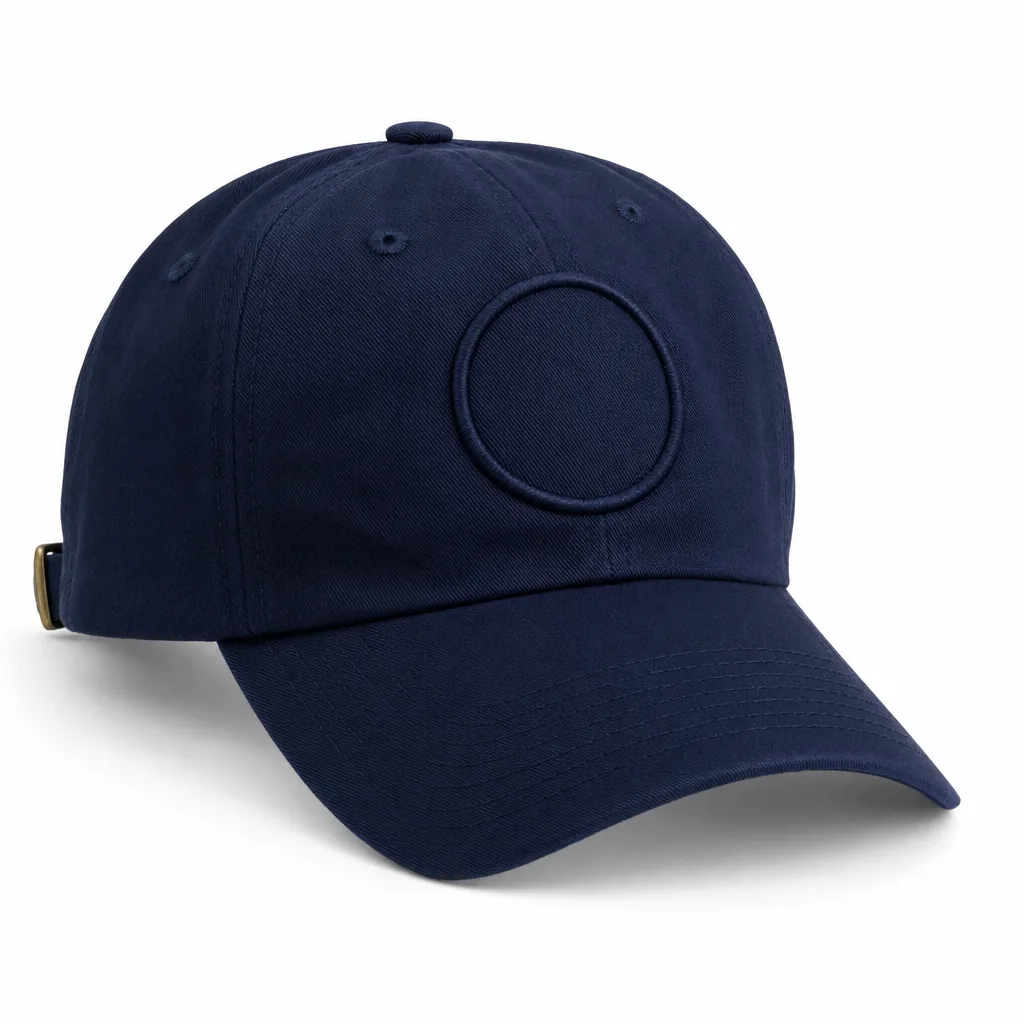
Custom Made Trucker Hat: The 2026 Sourcing & Manufacturing Playbook (2026 Update) - Supplier Checklist
Read article →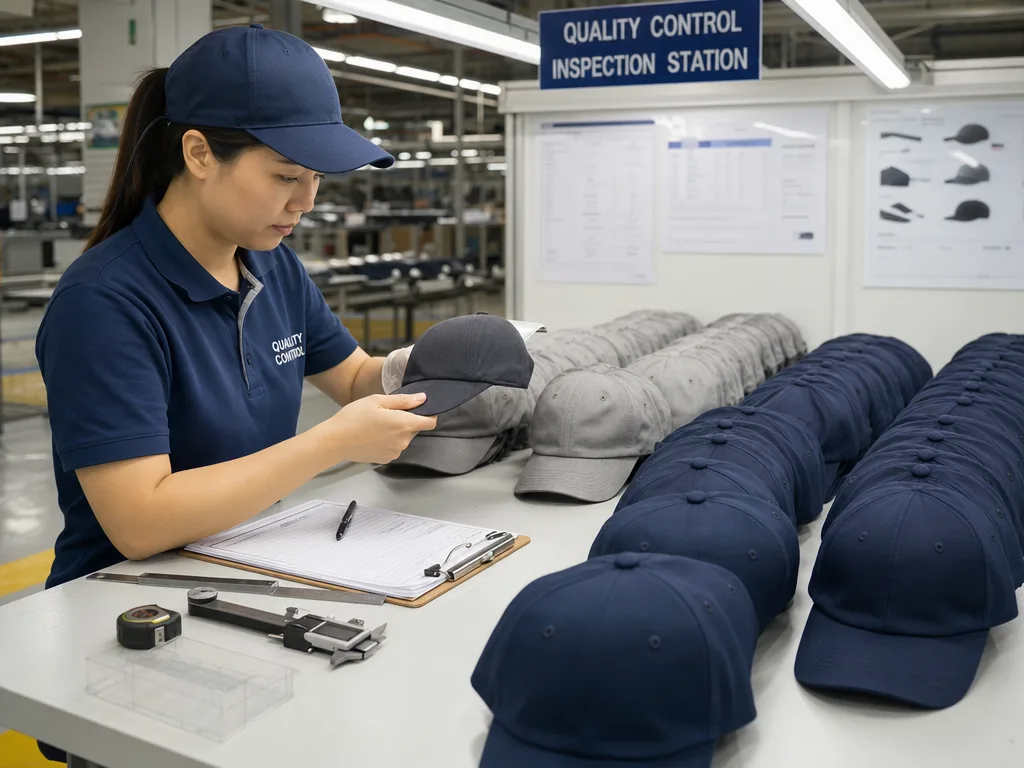
BSCI vs Sedex vs WRAP vs WCA: Compliance Audit Standards Compared (2026 Update) (2026 Update) (2026 Update)
Read article →Sourcing custom hats does not have to be complicated. With the right manufacturing partner, clear specifications and a small upfront investment in sampling, you can launch a retail-quality product in 30 to 45 days.